

Experience Everything It Has to Offer! The Complete Guide to Tokyo Tower
Tokyo Tower has remained a beloved symbol of Tokyo since opening in 1958.
Along with the spectacular views from its observation decks, its picturesque exterior and distinctive presence continue to captivate visitors.
It continues to evolve through periodic renovations, offering plenty to see both inside and out.
This article introduces Tokyo Tower’s essential information, the highlights of each floor, and its illuminations, helping first-time visitors make the most of their trip.
This complete guide also covers key attractions, recommended photo spots, souvenirs, and other useful sightseeing information, so be sure to read to the end.
What Is Tokyo Tower?
Located in Shiba Park, Minato City, Tokyo Tower is a 333-meter-tall self-supporting steel broadcasting tower completed in 1958.
Modeled after the Eiffel Tower in France, it is known for its striking International Orange and white exterior.
When completed, it was the world’s tallest broadcasting tower and became an architectural symbol of Japan’s postwar reconstruction and rapid economic growth.
Even 67 years after opening, it continues to serve as a broadcasting tower while maintaining a strong presence as a major tourist attraction.
Tokyo Tower’s main highlights are the views from its two observation decks: the Main Deck, 150 meters above ground, and the Top Deck, 250 meters above ground.
Both offer sweeping views of the Tokyo cityscape, and on clear days, visitors can see spectacular sights such as Rainbow Bridge and Mount Fuji.
The atmospheric illuminations after dark are another highlight.
At the base of the tower is FootTown, a commercial complex filled with restaurants and shops, making Tokyo Tower a destination where visitors can easily spend an entire day.

Why Tokyo Tower Is Red and White
Tokyo Tower’s distinctive red and white color scheme is required by law to ensure that it remains visible to aircraft during the day.
With its unmistakable presence, Tokyo Tower has become a landmark beloved by the people of Tokyo.
Digital terrestrial television signals are now transmitted from TOKYO SKYTREE, while Tokyo Tower continues to transmit FM radio signals through its antennas.
Tokyo Tower Facts That Will Make Your Visit Even More Enjoyable
Beyond its color scheme, here are some interesting facts that can make a visit to Tokyo Tower even more enjoyable.
The more you know, the more deeply you will be able to appreciate the tower.
- Tokyo Tower is 333 meters tall because that was considered the height needed to transmit signals throughout the Kanto region. Coincidentally, it was completed in Showa 33, or 1958.
- Illuminating Tokyo Tower costs approximately ¥21,000 in electricity per day.
- The tower is repainted approximately every seven years, with skilled workers completing the job by hand.
- It has a flexible structure adapted to earthquake-prone Japan and is designed to withstand major earthquakes.
- Skilled workers assembled Tokyo Tower’s steel framework by hand, completing construction in just a year and a half.
- Some of the steel used to build Tokyo Tower was recycled from U.S. military tanks.
Differences Between TOKYO SKYTREE and Tokyo Tower
Some travelers considering a visit to Tokyo Tower may wonder whether they should go there or to TOKYO SKYTREE.
As the newer attraction, TOKYO SKYTREE is highly convenient and is surrounded by a wide range of shopping and leisure facilities.
Tokyo Tower, meanwhile, offers a closer sense of connection to the cityscape, romantic nighttime views, and facilities featuring the latest entertainment.
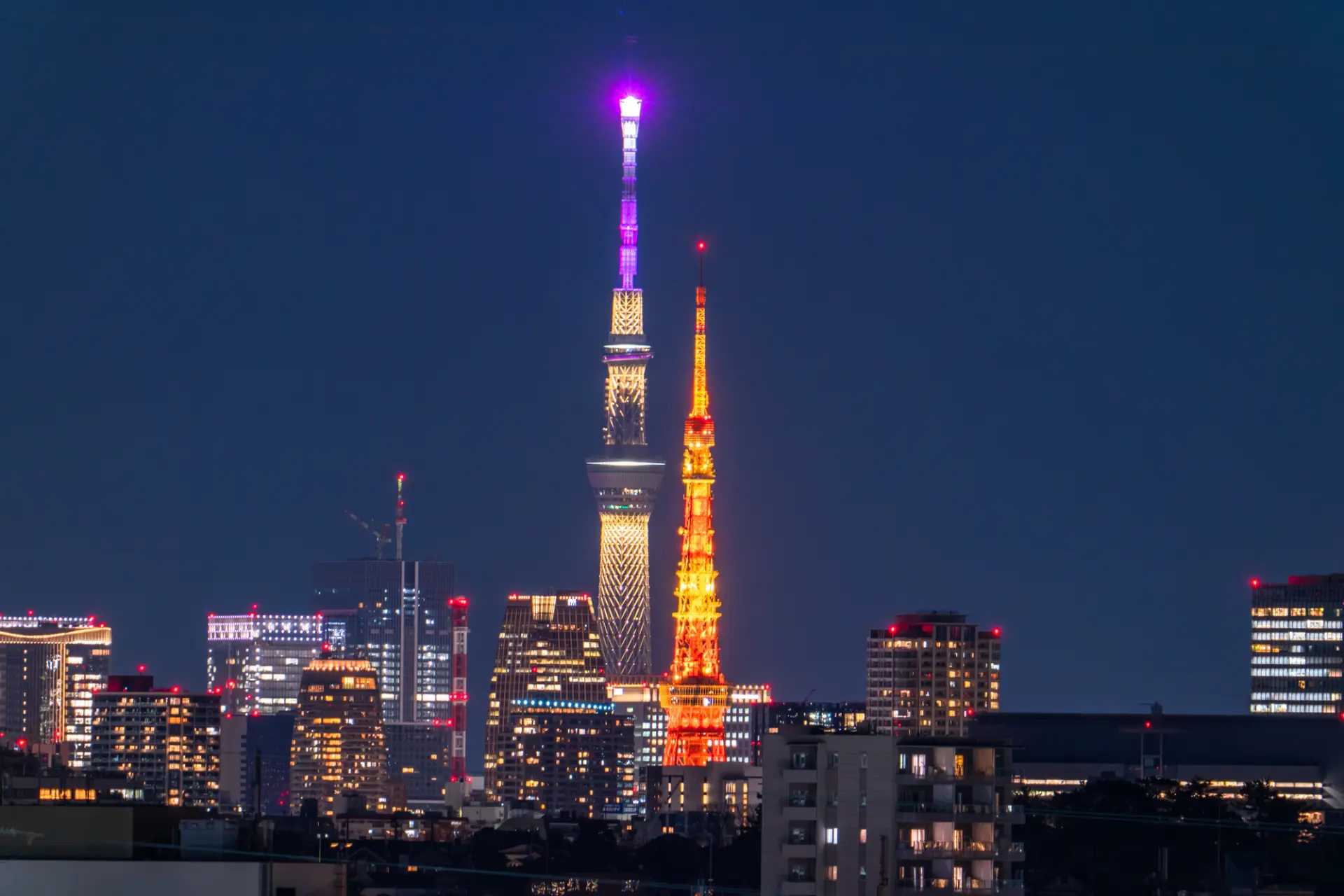
Each tower has its own distinctive appeal, and since traveling between them takes about an hour, visitors who cannot decide may want to experience both and compare the differences.
How to Get to Tokyo Tower
Tokyo Tower’s three main nearest stations are Akabanebashi Station on the Toei Oedo Line, Kamiyacho Station on the Tokyo Metro Hibiya Line, and Onarimon Station on the Toei Mita Line.
Each is only a few minutes’ walk from the appropriate exit, so choose the most convenient route based on your current location or where you are staying.
For JR lines, Hamamatsucho Station is the nearest, approximately a 15-minute walk away. Although slightly farther, the walk can easily be combined with sightseeing.
The table below summarizes routes and approximate travel times to Tokyo Tower from major stations in Tokyo.
| Departure Station | Route | Travel Time |
|---|---|---|
| Tokyo Station | Take the Tokyo Metro Marunouchi Line to Ginza Station, transfer to the Tokyo Metro Hibiya Line, get off at Kamiyacho Station, Exit 1, and walk approximately 7 minutes | Approximately 25 minutes |
| Shinjuku Station | Take the Toei Oedo Line toward Roppongi and Daimon, get off at Akabanebashi Station, Akabanebashi Exit, and walk approximately 5 minutes | Approximately 20 minutes |
| Shibuya Station | Take the Tokyo Metro Hanzomon Line to Aoyama-itchome Station, transfer to the Toei Oedo Line toward Roppongi and Daimon, get off at Akabanebashi Station, Akabanebashi Exit, and walk approximately 5 minutes | Approximately 25 minutes |
| Ueno Station | Take the Tokyo Metro Hibiya Line toward Naka-meguro, get off at Kamiyacho Station, Exit 1, and walk approximately 7 minutes | Approximately 30 minutes |
| Shinagawa Station | Take the Keikyu Main Line, get off at Daimon Station, Exit A6, and walk approximately 10 minutes | Approximately 20 minutes |
Tokyo Tower Hours
Tokyo Tower’s hours are listed below.
The Top Deck Tour and TOKYO DIAMOND TOUR may be suspended due to severe weather or other circumstances.
The Main Deck’s final admission time may also be moved earlier depending on crowd levels, so plan your visit with plenty of time to spare.
- Main Deck
- 9:00 a.m.–11:00 p.m. Note: Final admission at 10:30 p.m.
- Top Deck Tour
- 9:00 a.m.–10:45 p.m. Note: Final admission at 10:15 p.m.
- TOKYO DIAMOND TOUR Departure Times
-
12:00 p.m.
1:00 p.m.
2:00 p.m.
3:00 p.m.
4:00 p.m.
5:00 p.m.
6:00 p.m.
Tokyo Tower Admission Fees
Tokyo Tower offers three types of admission tickets, with four age categories, depending on the observation decks visited.
The options are the Main Deck, the Top Deck Tour, which includes the Main Deck and Top Deck, and the TOKYO DIAMOND TOUR, which includes the Main Deck, Top Deck, and Maple Lounge.
All tickets can be purchased at the ticket counter on the 1st floor.
Ticket prices are listed in the table below.
Advance online reservations for the Top Deck Tour receive a ¥200 discount in each age category.
FootTown, the five-story commercial complex at the base of Tokyo Tower, is generally free to enter, except for RED° TOKYO TOWER.
| - | Adults | High School Students | Children, Elementary and Junior High School Students | Preschool Children, Ages 4 and Older |
|---|---|---|---|---|
| Main Deck | ¥1,500 | ¥1,200 | ¥900 | ¥600 |
| TOP DECK TOUR | ¥3,500 | ¥3,300 | ¥2,300 | ¥1,700 |
| TOKYO DIAMOND TOUR | ¥7,000 | ¥6,500 | ¥4,700 | ¥3,300 |
Consider the 1DAY Pass for Unlimited Same-Day Admission
Tokyo Tower’s 1DAY Pass is a convenient ticket that provides unlimited admission to the Main Deck throughout the day.
Using this ticket gives you more flexibility when sightseeing around Tokyo Tower and lets you experience it in several different ways.
For example, you can view the Tokyo cityscape and distant Mount Fuji during the day, then return in the evening for the sunset and nighttime scenery, fully appreciating how the view changes by time of day.
You can also challenge yourself to climb the 600 stairs connecting the ground level and Main Deck or leave to visit other attractions before returning. Details are listed below.
- Admission
-
Adults: ¥2,700
High school students: ¥2,200
Children, elementary and junior high school students: ¥1,400
Preschool children, ages 4 and older: ¥1,000 - Sales Hours
- 9:00 a.m.–7:30 p.m. Note: The pass is unavailable on certain dates, including New Year’s Day.
- How to Purchase and Use the Pass
-
1. Purchase a 1DAYPASS at the ticket counter on the 1st floor
2. When entering for the first time, have a staff member check your ticket and stamp the back of your hand with a special stamp
3. Show the stamp when reentering
Highlights of Each Floor at Tokyo Tower
As mentioned above, Tokyo Tower is broadly divided into three sections, with commercial facilities occupying the 1st through 5th floors.
The following sections introduce the features, appeal, and highlights of each floor.
Use this information to decide how to explore the tower and whether to join the Top Deck Tour or TOKYO DIAMOND TOUR.
The Top Deck Observation Deck, 250 Meters Above Ground
The Top Deck, Tokyo Tower’s highest accessible point at 250 meters above ground, is a special observation deck offering views across central Tokyo.
It was renovated in 2024 to showcase the scenery even more effectively.
The interior features geometric mirrors, with symmetrically arranged mirrored walls and ceilings creating a futuristic space.
Along with the impressive 360-degree panorama, the scenery reflected in the mirrors creates an experience found nowhere else.
At night, the deck takes on an entirely different appearance as LED lights illuminate the floor with an atmospheric glow.
Admission requires a ticket for either the reservation-only Top Deck Tour or the TOKYO DIAMOND TOUR.
The tours offer enhanced service and presentations, including a dedicated elevator, audio guides, and assistance from staff.
Admission to the Main Deck is also included, allowing visitors to compare the views from each level.
Here is an overview of each tour and its highlights.
Top Deck Tour
The Top Deck Tour is an 80-minute observation experience that takes participants to the Top Deck, 250 meters above ground.
The entrance is located on the Main Deck, and passing through the gate at the reserved time leads participants into an extraordinary world.
The tour’s main features are outlined below.
- Tower Archives
- Experience a projection presentation introducing the history of Tokyo and the origins of the tower across a total of 59 monitors.
- Memory Library
- A secret area whose contents are revealed only to tour participants. Join the tour to discover what awaits inside.
- Maple Club
- This area is a contemporary recreation of Koyokan, a social club that once stood on this site. Its chic, relaxed atmosphere allows visitors to leisurely view Tokyo Tower’s steel framework and the Tokyo cityscape at the same time.
- Commemorative Photo Service and Welcome Drink
- Receive one complimentary black-and-white commemorative photo. Color photos are available for a fee and can be collected on FootTown’s 3rd floor. A welcome drink is also provided while participants wait for the elevator to the observation deck.
- Top Deck Viewing
- The climax of the tour. Take your time appreciating a view that will never appear exactly the same way twice.
Note: Visitors may reenter the Main Deck after the tour as long as they have not exited the facility.
TOKYO DIAMOND TOUR
The TOKYO DIAMOND TOUR is a premium tour limited to a maximum of 100 participants per day.
It is offered seven times between 12:00 p.m. and 6:00 p.m., with no more than 10 participants in each small group.
During the tour, an attendant provides detailed explanations about Tokyo Tower, including stories from its construction, its functions, and how it is maintained each day. A brief overview is provided below.
- Maple Lounge
- Gather in an exclusive lounge for tour participants and relax with complimentary drinks and official snacks before departure. Note: Participants may enter and leave the lounge as often as they wish throughout the day.
- Main Deck
- Follow the attendant through a dedicated entrance and take the Diamond Lane to a privately reserved section of the Main Deck.
- Tower Archives and Memory Library
- Explore the memories and history contained within Tokyo Tower through a variety of presentations.
- Maple Club
- This area is a contemporary recreation of Koyokan, a social club that once stood on this site. Its chic, relaxed atmosphere allows visitors to leisurely view Tokyo Tower’s steel framework and the Tokyo cityscape at the same time.
- Top Deck Viewing
- Take your time appreciating the expansive 360-degree panorama.
- Recollection Gate
- See images of the day’s scenery and tour participants displayed before you.
- Maple Lounge
- As you reflect on the tour, receive a special gift from Tokyo Tower.
Note: Participants may enter and leave the Main Deck as often as they wish.
More Than an Observation Deck: The Main Deck’s Many Highlights
The Main Deck, 150 meters above ground, offers a vivid, three-dimensional view from the heart of Tokyo.
During renovations completed at the end of 2019, the windows were enlarged and widened, giving even young children an open and dramatic view of the scenery.
The 360-degree panorama includes the Tokyo cityscape and, in the distance, impressive sights such as Mount Fuji and the Boso Peninsula.
The view also changes by time of day and season, with the distinctly Japanese scenery of the four seasons and the atmospheric nighttime view filled with countless lights being especially appealing.
The mesh-patterned carpet underfoot is another feature worth noting.
Trick art makes the flat floor appear distorted for an added thrill, and sections are illuminated with blue lights at night.
The deck consists of two floors and contains a wide variety of facilities, including a café, an official shop, and photo spots.
Here is a closer look at the Main Deck’s highlights.

1. Skywalk Window
The Skywalk Window, a transparent section of the Main Deck floor, is one of Tokyo Tower’s signature attractions, offering a direct, full-body sense of the city below.
The reinforced glass provides ample safety while creating the sensation of walking through the air.
The view from 145 meters above ground feels remarkably immediate, producing a distinctive experience that combines fear with excitement.
During the day, visitors can see buildings and cars moving along the roads, while at night, the window reveals a sparkling nighttime cityscape.


2. Café La Tour
Café La Tour is the only café on the 1st floor of the Main Deck.
Visitors can enjoy light meals such as hot dogs and drinks alongside the spectacular view from 150 meters above ground. The counter seats are especially suited to relaxing while looking over the Tokyo cityscape.
A popular menu item is the Premium Tower Soft Serve, served with a monaka wafer printed with Tokyo Tower’s official mascots, the Noppon Brothers.
Along with enjoying soft-serve ice cream against a spectacular backdrop, the cone-shaped container turns into Tokyo Tower when placed upside down and can be taken home as a souvenir.
Float drinks and alcoholic beverages served in original tower-shaped cups exclusive to the café are also recommended.
Since the café remains open until 10:30 p.m., it is an ideal place to rest after exploring the Main Deck.


3. Tower Daijingu Shrine
Tower Daijingu Shrine, located on the Main Deck’s 2nd floor, is a venerable shrine situated higher than any other shrine in Tokyo’s 23 wards.
It was established in 1977, Tokyo Tower’s 20th anniversary year, to pray for the safety and health of tower visitors.
The shrine enshrines Amaterasu Omikami and attracts many worshippers throughout the year.
It is said to offer blessings particularly for relationships, success in examinations, and academic achievement.
Original goshuin shrine stamps and tower-shaped ema prayer plaques are also recommended as souvenirs or keepsakes.
Beyond sightseeing, it is a sacred place where visitors can quietly make a wish and is well worth stopping by.

Shopping, Dining, and More at FootTown
FootTown is the multipurpose complex connecting ground level to the Main Deck.
It occupies five floors, from the 1st through 5th floors of Tokyo Tower, and can be considered a sightseeing area combining dining, shopping, and entertainment.
Along with restaurants, cafés, and shops selling exclusive merchandise, it features interactive attractions and exhibition spaces.
Entry is generally free, so visitors can relax before or after visiting the observation decks or experience the atmosphere of Tokyo Tower through FootTown alone.
From buying souvenirs and taking a short break to learning about the tower’s history, it offers carefully designed experiences that keep both adults and children engaged while providing a deeper appreciation of Tokyo Tower.
Here are the highlights and activities available on each floor of FootTown.
Cutting-Edge Entertainment on FootTown’s 5th Floor
FootTown’s 5th floor is the Ultimate Zone of RED° TOKYO TOWER, one of Japan’s largest digital amusement parks.
RED° TOKYO TOWER is a highly entertaining, interactive facility themed around anime, games, music, and more. A separate admission fee is required.
The floor is also known as the former location of Tokyo One Piece Tower, and limited-time events and pop-up stores are occasionally held here.
Current areas include Sky Stadium, which combines real and virtual elements for an impressive experience, and RED E-MOTOR, which immerses visitors in the world of motorsports.
Visitors can also play board games and poker, making this a stimulating stop before or after visiting the observation decks.

Exciting Attractions on FootTown’s 4th Floor
Like the 5th floor, FootTown’s 4th floor is dedicated to RED° TOKYO TOWER and features more than 15 attractions.
One highlight is LEKE VR, a globally popular VR ride making its first appearance in Japan.
Flying Cinema, for example, places riders in seats that rotate 360 degrees, creating a flight experience with the thrills of a roller coaster.
Space Shuttle 2.0 transports visitors into a world where they must survive an attack by approaching dinosaurs. Eight special effects, including wind, sound, and vibration, create an experience engaging all five senses.
Other attractions include horror games, physically interactive projection-mapping content, and a wellness care platform.

A Wide Variety of Facilities on FootTown’s 3rd Floor
FootTown’s 3rd floor contains a variety of facilities, including RED° TOKYO TOWER’s Inspiration Zone, the Mother Farm CAFÉ Tokyo Tower location, and a photo pickup center.
One particular highlight is GALAXY, Tokyo Tower’s official shop.
The spacious store carries a wide variety of stylish tower merchandise available only here, ranging from snacks to miscellaneous goods.
You are sure to find a suitable souvenir for yourself or a gift for someone else.
TOWER GALLERY, set in a simple, uncluttered space, is another recommended stop.
Along with displays where visitors can learn about Tokyo Tower’s valuable history and structure, it hosts regular special exhibitions that provide deeper knowledge and spark curiosity.

Take a Break on FootTown’s 2nd Floor
FootTown’s 2nd floor primarily contains a food court, a convenience store, and shops selling Tokyo souvenirs.
The food court offers a wide range of dining options, from major chains such as MOS Burger and Baskin-Robbins to international cuisine and restaurants specializing in fresh pasta.
SAKE CAFE DIAMOND, which serves Japanese-inspired sweets and alcoholic beverages, is also an ideal place to rest between sightseeing stops.
Tokyo Omiyagedo, which opened in 2024, carries many products reflecting Japanese culture, including finely crafted Japanese tableware, folding fans, and incense made from natural materials.
It also offers a wide selection of products commemorating a trip to Tokyo, not just a visit to Tokyo Tower.

Start Your Tokyo Tower Visit on FootTown’s 1st Floor
FootTown’s 1st floor is an entertainment-filled gateway welcoming visitors.
It serves as the starting point for building excitement and making the overall Tokyo Tower experience even more rewarding.
Along with the ticket counter and elevators to the observation decks, the floor has an information desk and operations center where visitors can ask questions.
Histories Alley, located to the right of the entrance, displays a diorama recreating the Tokyo streetscape of the late 1950s before Tokyo Tower was built, along with rare photographs from its construction and early years of operation.
Consider stopping by before heading to the observation decks and reflecting on the hopes of the people who lived at that time.
Approximately half of the floor is occupied by RED° TOKYO, where visitors can dine and experience boat racing.

A Tokyo Tower Activity: The Open-Air Outdoor Stairs Walk
The Open-Air Outdoor Stairs Walk is an activity that involves climbing approximately 600 outdoor steps from ground level to the Main Deck, taking about 15 minutes.
Its greatest appeal is the sense of accomplishment and satisfaction that comes from climbing Tokyo Tower while directly experiencing the surrounding scenery, something an elevator ride cannot provide.
Dedicated stairway photo spots, terrace spaces, and quizzes presented by the Noppon Brothers make the climb enjoyable as the Tokyo cityscape gradually changes around you.
Those who complete the upward climb also receive an exclusive Noppon-certified stair-climbing certificate that is not available for purchase.
Visitors cannot switch to an elevator partway up, although they may do so while descending, so climb at your own pace while taking breaks and staying hydrated.
The stairs are open only on weekends, national holidays, and during designated periods such as spring break. The upward stairs are open from 9:00 a.m. to 4:00 p.m., while the downward stairs are open from 9:00 a.m. to 8:00 p.m.
A Main Deck or tour ticket is required.

After-Sunset Entertainment: Tokyo Tower Illuminations
After sunset, do not just admire the nighttime view from Tokyo Tower—be sure to see the tower itself illuminated.
It takes on a different appearance from the daytime, with each light adding color to the special moments of the evening.
In addition to the regular illuminations introduced below, limited-time displays are held for occasions such as Valentine’s Day and Christmas. Check the official website and make the most of these special moments.
Landmark Light
Landmark Light is Tokyo Tower’s standard illumination, using 180 lights to beautifully illuminate the entire structure.
Except on Mondays, Thursdays, and special dates, it is illuminated nightly from sunset, around 7:00 p.m. in summer and 5:00 p.m. in winter, until midnight. Two different seasonal patterns are used in summer and winter.
The summer version, displayed from the night of Tanabata through the end of September, primarily uses white metal-halide lamps to create a cool summer-night atmosphere.
The winter version begins in early October and uses warm orange high-pressure sodium lamps, whose gentle glow suggests the arrival of winter.
Both versions emphasize Tokyo Tower’s graceful silhouette, adding seasonal character and a special atmosphere to Tokyo’s nighttime scenery.

Infinity Diamond Veil
Infinity Diamond Veil is a newer illumination display first introduced in 2019.
Its 268 LED lights, installed across 17 levels, produce an endless range of colors and expressive patterns.
Delicate, jewel-like lights envelop the entire tower, creating a brilliant and dramatic atmosphere.
The regular display is illuminated every Monday and Thursday from 8:00 p.m. to 10:00 p.m., featuring a designated color for each month.
Examples include Reborn Yellow, a golden color celebrating the New Year in January, and Cherry Pink, signaling the arrival of spring in March. The colors are inspired by the seasons and Japanese traditions.
Two designs alternate every 30 minutes, and the four-minute transition, during which white lights slowly shimmer, is another highlight.

Pure White Sparkle
Pure White Sparkle is a special Tokyo Tower illumination display.
It is illuminated for just two minutes at the top of every hour from sunset until midnight.
The Diamond Tiara above the Top Deck and the Diamond Choker above the Main Deck shine brightly in pure white.
The lights create a striking contrast with Tokyo’s nighttime cityscape and produce an atmospheric scene.
The display is dynamic and dignified, while its fleeting nature, disappearing after only a few minutes, gives it an additional sense of beauty.
It may not be illuminated during other special displays or under certain circumstances, so check the official website in advance.

3 Souvenirs to Buy at Tokyo Tower
The shops on FootTown’s 2nd and 3rd floors sell a variety of items inspired by Tokyo Tower.
Along with distinctive merchandise such as keychains, snacks, and stationery, the shops offer a wide selection of exclusive products.
Here are some particularly recommended souvenirs.
If you are unsure what to choose, use this list to select a product for yourself or as a gift.
1. 1/1000 TOKYO TOWER
The 1/1000 TOKYO TOWER is a detailed scale model of Tokyo Tower.
Although the miniature stands just 333 millimeters tall, it faithfully reproduces the tower’s details, allowing its elegant structural design to be appreciated at home.
The red and white coloring matches the actual tower, making the model an attractive piece for interior decoration or a collection.
It comes with a dedicated display stand and serves as a special item that brings back memories of sightseeing in Tokyo whenever it is displayed.
No tools or glue are required, and assembly is simple: just fit together the prepainted parts.

2. GeoCraper Landmark Unit Tokyo Tower
The GeoCraper Landmark Unit Tokyo Tower is a detailed three-dimensional model recreating Tokyo Tower at 1/2500 scale.
Although it is a palm-sized model measuring approximately 17.5 centimeters tall, careful attention has been given to details such as FootTown’s entrances and parking signs, giving it a strong presence.
The transparent cylindrical package, inspired by a laboratory beaker, includes measurement markings and looks stylish when displayed as interior décor.

3. Tokyo Tower Caramels
Tokyo Tower Caramels contain 10 mildly sweet milk caramels.
The set includes five cube-shaped boxes, each containing two caramels, making them easy to distribute among friends and acquaintances.
Tokyo Tower is illustrated on all six sides of the red boxes, while the white boxes feature designs including Tokyo Tower, sightseeing buses, and Mount Fuji.
At ¥280 per package, they are also reasonably priced.

5 Recommended Tokyo Tower Photo Spots
Many visitors want to capture an attractive photograph of Tokyo Tower, one of the city’s best-known symbols.
If you are looking for a good photo spot, visit one of the following five locations.
Taking photos at any of them should help you capture a favorite shot to remember your trip.
1. Tokyo Tower Underground Parking Lot Stairs
The Tokyo Tower Underground Parking Lot Stairs have gained international attention on social media as a highly photogenic location.
They are located on the south side behind FootTown, with Tokyo Tower rising above the top of the stairs.
If you have difficulty finding them, walk toward Tokyo Shiba Tofuya Ukai, which is nearby.
The upward-looking angle from ground level lets you frame the tower as though the surrounding structures were wrapping around it.
The orange and white framework feels exceptionally close, making it easy to capture a striking photograph.
The location is particularly recommended from sunset into the evening during the magic hour.
After sunset, the illuminations begin, surrounding Tokyo Tower with a gentle glow and creating an atmospheric contrast between the dark stairway and the shining tower.
Be considerate and avoid obstructing people using the parking lot.
Photo location: Google Maps

2. Zojoji Temple
Zojoji Temple, adjacent to Shiba Park, has deep connections to the samurai warlord Tokugawa Ieyasu and is widely known as a temple associated with good fortune in achieving victory.
The composition of Tokyo Tower rising proudly behind the temple’s historic main hall creates an image where tradition and modernity come together.
Looking up from the main approach or temple grounds reveals Tokyo Tower emerging above the building’s roof, producing a distinctive and powerful view.
The changing seasonal scenery, including cherry blossoms and fall foliage, is another attraction, giving the view a different appearance depending on the time of year.
Photo location: Google Maps

3. Shiba Park Block 4
Metropolitan Shiba Park, one of Japan’s oldest parks, is divided into Blocks 1 through 4, each offering a different angle of Tokyo Tower.
Shiba Park Block 4 is an open, attractive photo spot where Tokyo Tower rises directly beyond a spacious lawn.
It is a classic location frequently used for television productions and wedding photography.
The green lawn, blue sky, and red-and-white tower complement one another, offering an excellent composition that makes it easy to fit the entire tower into the frame.
Angles that emphasize perspective are particularly popular, and the location is suitable for picnic-style shots and full-body commemorative photographs.
The recommended time to visit is between daytime and early evening. At sunset, the sky turns orange, and soft natural light brings out Tokyo Tower’s silhouette for a memorable photograph.
Photo location: Google Maps

4. Rainbow Bridge Promenade
This lesser-known photo spot offers sweeping views of Tokyo Tower and Tokyo Bay and is ideal for capturing distant scenery.
From the walkway, Tokyo Tower can be seen beyond Odaiba’s waterfront area, creating an expansive panorama together with the city’s modern buildings.
The range of possible compositions makes it easy to photograph a distinctly Tokyo skyline in your own style.
Visiting from late afternoon into the evening is recommended.
As the sea and sky take on a gradient of colors and the lights in the buildings gradually appear, Tokyo Tower’s illumination adds a romantic atmosphere.
Tokyo Tower standing out against the sparkling nighttime scenery is especially striking and should provide plenty of memorable photographs.
Photo location: Google Maps

5. Kudanzaka Park
Kudanzaka Park is a roadside park facing the Chidorigafuchi side of Yasukuni-dori Avenue and offers distant views of Tokyo Tower.
The combination of the quiet, tree-lined park, scattered boats on the moat, and the tower peeking out between distant buildings creates a carefully balanced scene of city and nature.
Although the entire tower is not visible and only its upper portion appears, this creates an atmospheric composition with a distinctive sense of depth.
In spring, the combination of Tokyo Tower and cherry trees in full bloom produces especially impressive scenery and makes photogenic shots easy to capture.
Nighttime is the recommended time to visit, when the illuminated tower shines in the distance.
Combined with the park’s peaceful atmosphere, the view creates an evocative mood.
Photo location: Google Maps

5 Popular Attractions Near Tokyo Tower
The area surrounding Tokyo Tower contains many appealing attractions and highlights, offering visitors a wide variety of experiences.
Here are five popular destinations, each with a different character.
Visit the locations that interest you together with Tokyo Tower to make your sightseeing experience even more rewarding.
1. Sangedatsumon Gate and Zojoji Temple
Zojoji Temple, located at the foot of Tokyo Tower, is one of the seven head temples of the Jodo school of Buddhism.
Tokugawa Ieyasu deeply revered the hidden Black Amida Buddha enshrined in the temple’s Ankoku-den Hall and went on to win numerous battles, leading the temple to become associated with good fortune in achieving victory.
The temple grounds include Sangedatsumon Gate, an Important Cultural Property, and the Tokugawa shogun family cemetery.

2. Metropolitan Shiba Park
This was one of the first locations designated as a public park in Japan in 1873. It celebrated its 150th anniversary in 2023.
Adjacent to Zojoji Temple and Shiba Toshogu Shrine, it offers views of nearby Tokyo Tower from throughout the park.
Large camphor, zelkova, and ginkgo trees grow within the grounds, which also contain historic sites such as an ancient burial mound, conveying the park’s long history.

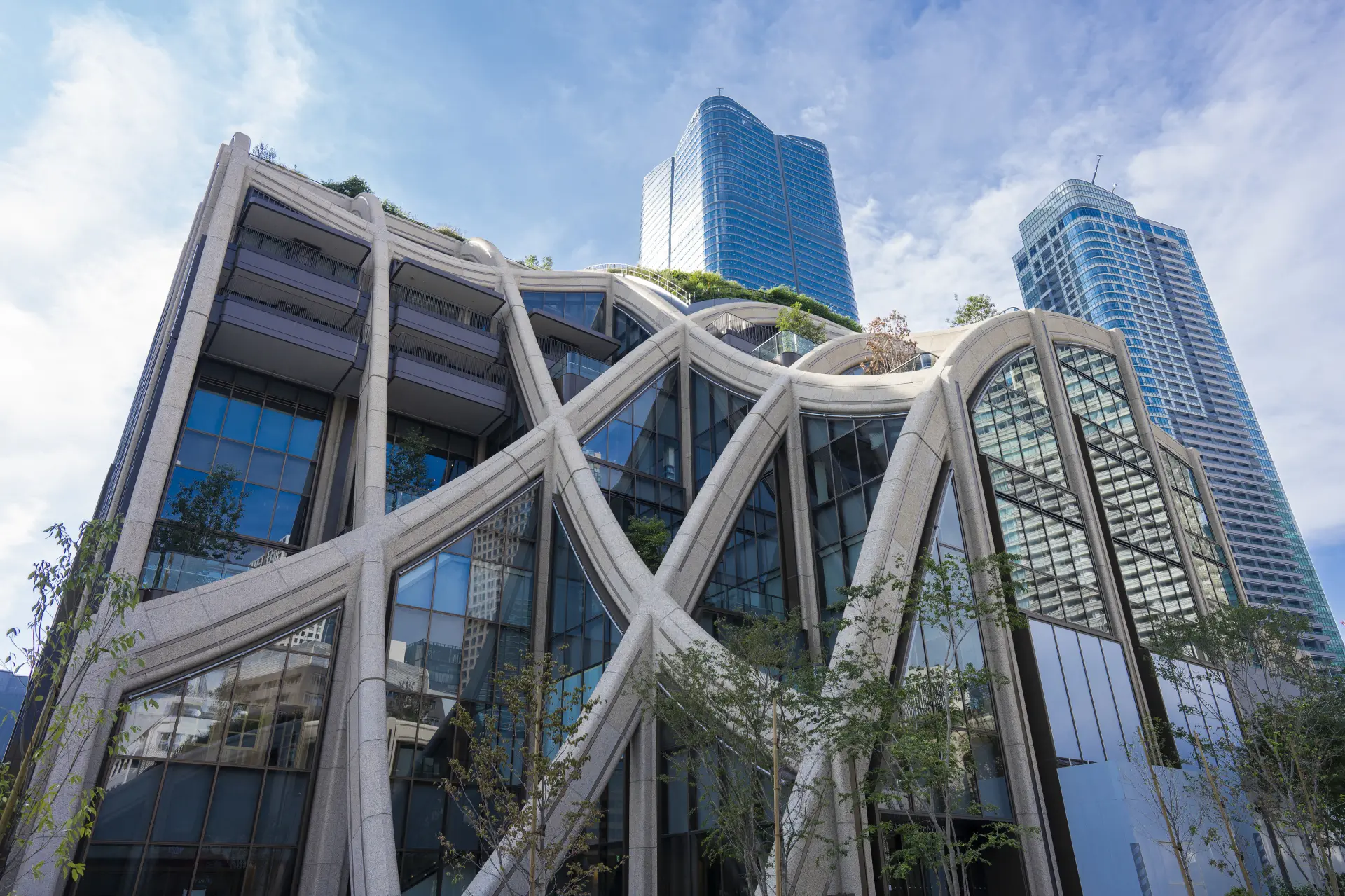
3. Azabudai Hills
This mixed-use complex opened in Azabu in November 2023 and contains approximately 150 shops covering a wide range of categories, including fashion, culture, and food.
The grounds, including the Central Green, are spacious and filled with greenery, allowing visitors to shop and dine in an open atmosphere.
The complex is particularly notable for its many cultural facilities. Highlights include the Azabudai Hills Gallery, a central venue for cultural exhibitions, and Shueisha Manga-Art Heritage, a gallery featuring manga such as ONE PIECE and BLEACH.
4. teamLab Borderless: MORI Building DIGITAL ART MUSEUM
teamLab Borderless, internationally recognized for its impressive spaces created using digital technology, relocated from Odaiba to Azabudai Hills and reopened on February 9, 2024.
One of its new works, Bubble Universe: Physical Light, Bubbles of Light, Wobbling Light, and Environment-Generated Light—One Stroke, presents an impressive exhibition space filled with countless spheres. Within each sphere coexist physical light, large and powerful bubble-like light, and light that wobbles like a mass of jelly.

5. Hama-rikyu Gardens
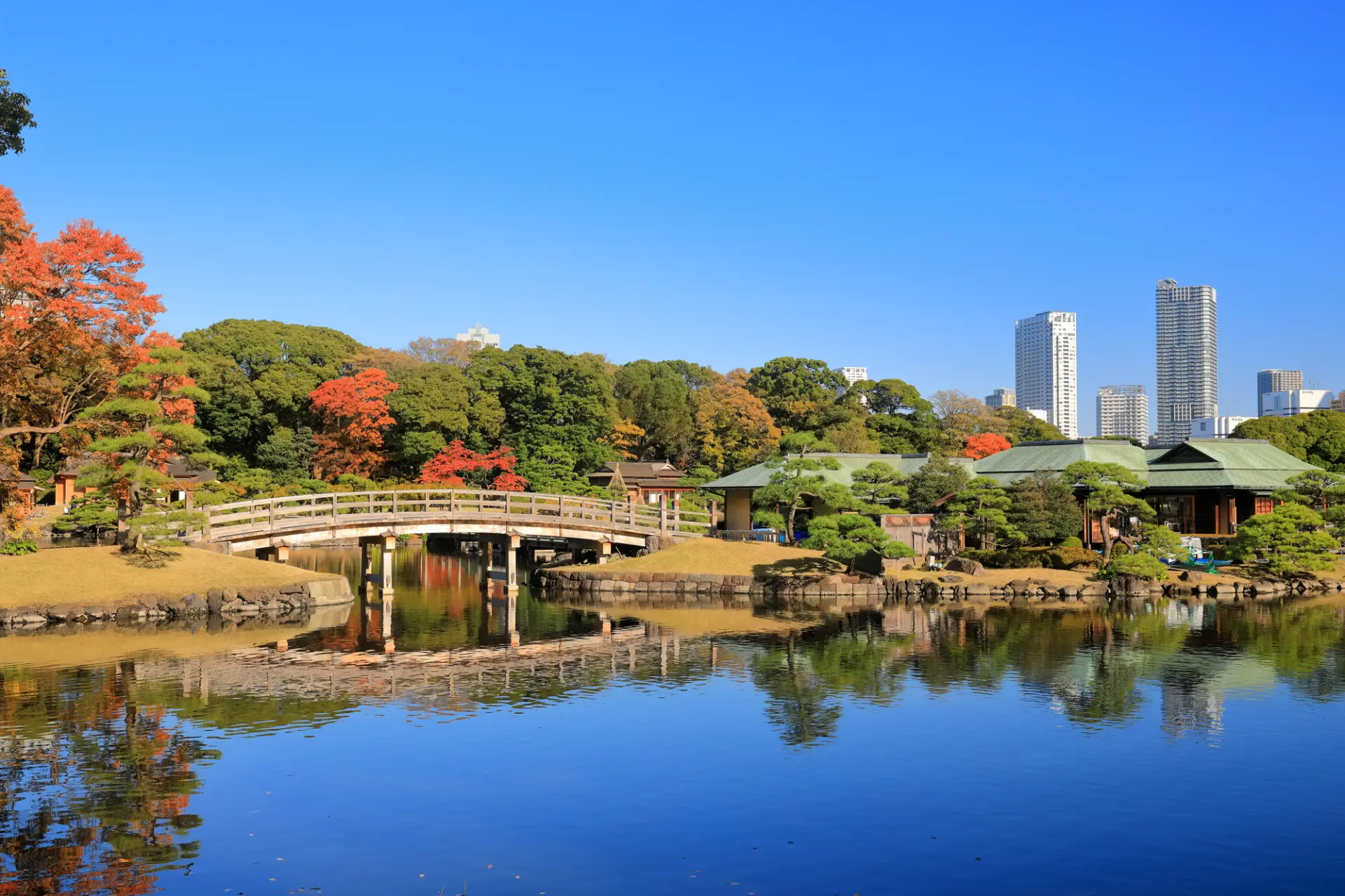
During the Edo period, Hama-rikyu Gardens was known as Hama Goten and served as a villa for the Tokugawa shogun family. It later became an imperial detached palace before being granted to the Tokyo Metropolitan Government and opened to the public in 1945.
The seawater pond changes in appearance with the rise and fall of the tide. A teahouse stands within the pond, and enjoying matcha there is an atmospheric experience.
Spectacular Tokyo Views: 5 Restaurants Overlooking Tokyo Tower
Here is a carefully selected list of restaurants where you can dine while looking out over Tokyo Tower, making them excellent additions to a sightseeing itinerary.
Each combines impressive floor-to-ceiling views, a refined atmosphere removed from everyday life, and dishes carefully prepared by its chefs.
Consider enjoying a memorable dining experience alongside Tokyo Tower as it takes on different appearances by day and night.
1. Terrace Dining TANGO
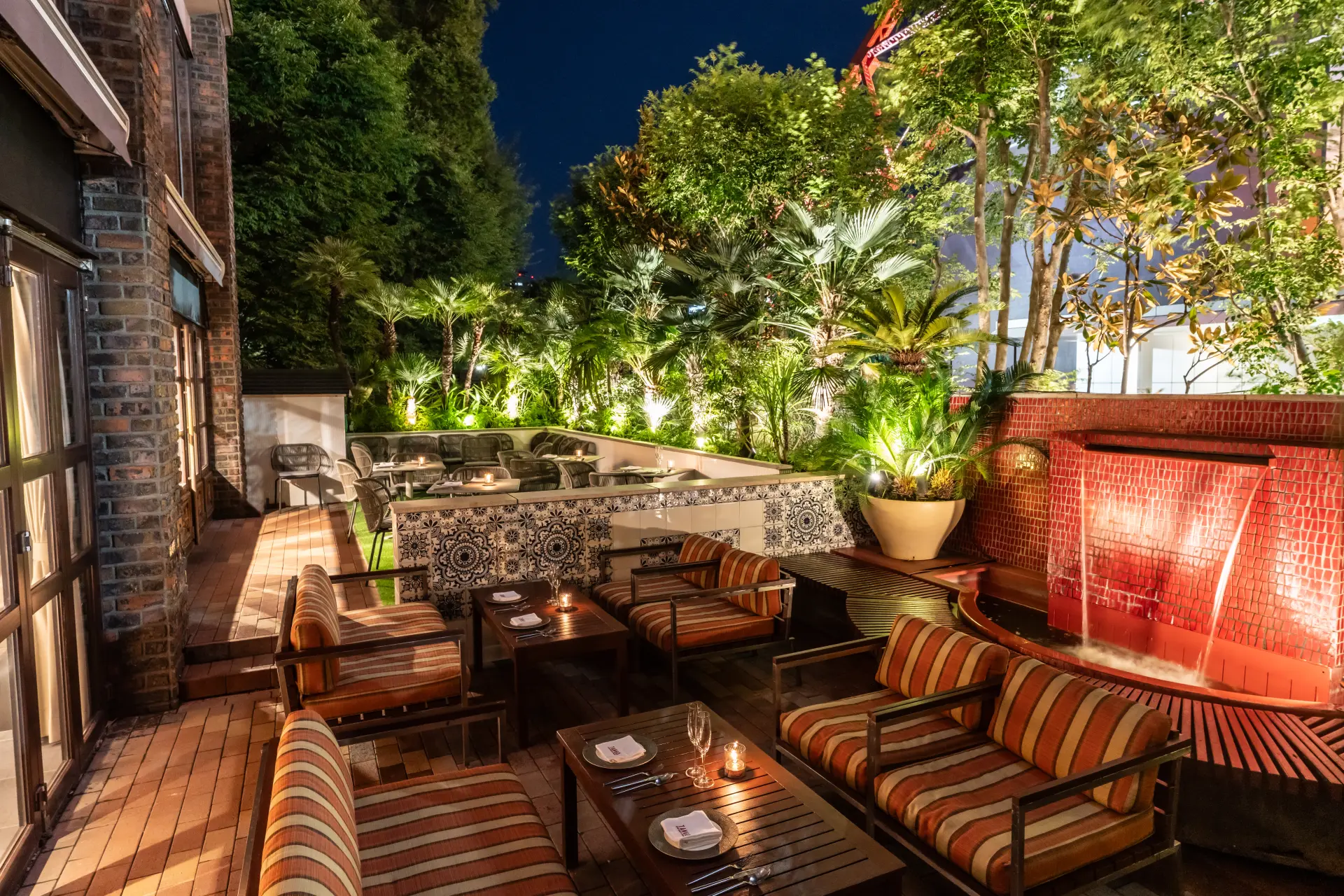
Located at the foot of Tokyo Tower, Terrace Dining TANGO is an Italian restaurant based on the theme of World Seasonal Cuisine.
THE DINING, a modern space blending Japanese and Western elements, and GARDEN TERRACE, an open terrace offering close-up views of Tokyo Tower, create a special setting.
The restaurant primarily serves course meals skillfully incorporating ingredients from throughout Japan, along with a full selection of à la carte dishes and drinks.
It is open for lunch as well as dinner, making it easy to visit casually either before or after sightseeing at Tokyo Tower.
2. Buffet Dining Porto
Buffet Dining Porto is located on the 3rd floor of Tokyo Prince Hotel, a two-minute walk from Tokyo Tower.
From window-side seats, diners can view Tokyo Tower together with the hotel’s lush garden.
The large windows reveal different scenery by day and night. During the day, natural light creates an open atmosphere, while at night, illuminated Tokyo Tower stands out dramatically.
The calm view resembles a garden designed to incorporate Tokyo Tower as borrowed scenery.
The buffet includes Japanese, Western, and Chinese dishes, ranging from roast beef finished by chefs in front of diners and seasonal fair menus to desserts prepared by pastry chefs.

3. Café & Bar Tower View Terrace
Located alongside Buffet Dining Porto, Café & Bar Tower View Terrace offers the luxurious setting of a direct Tokyo Tower view from every seat.
During dinner, seasonal projection-mapping presentations are displayed, while the comfortable dome tent seats are decorated to match the production.
The menu primarily consists of à la carte dishes such as mixed grill plates, salads, and garlic shrimp, but plans featuring seasonal or limited-time course meals are also available.
Enjoy a special experience found only here, combining Tokyo Tower with an atmospheric visual presentation.
-
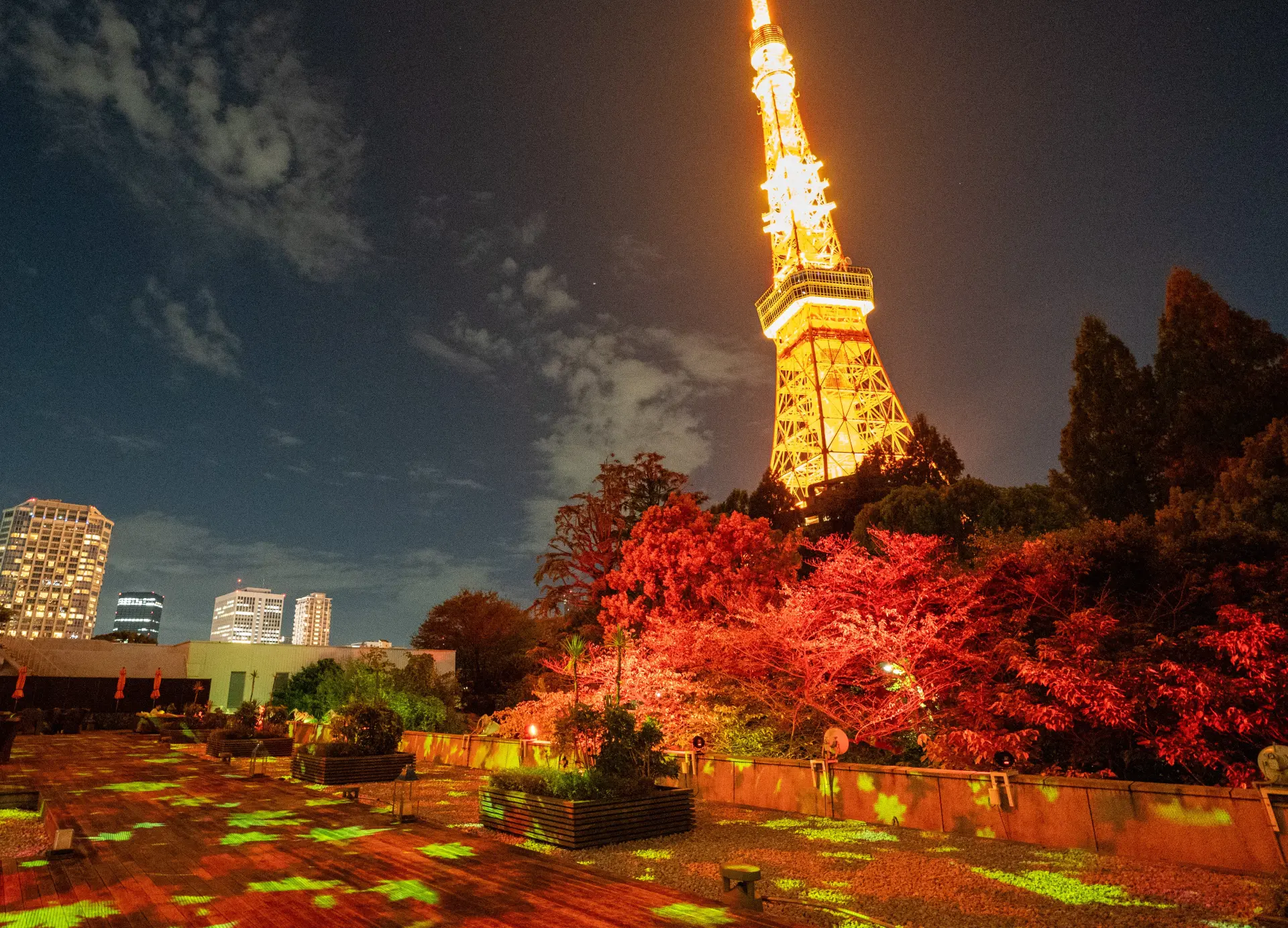
Seasonal projection-mapping presentations
-
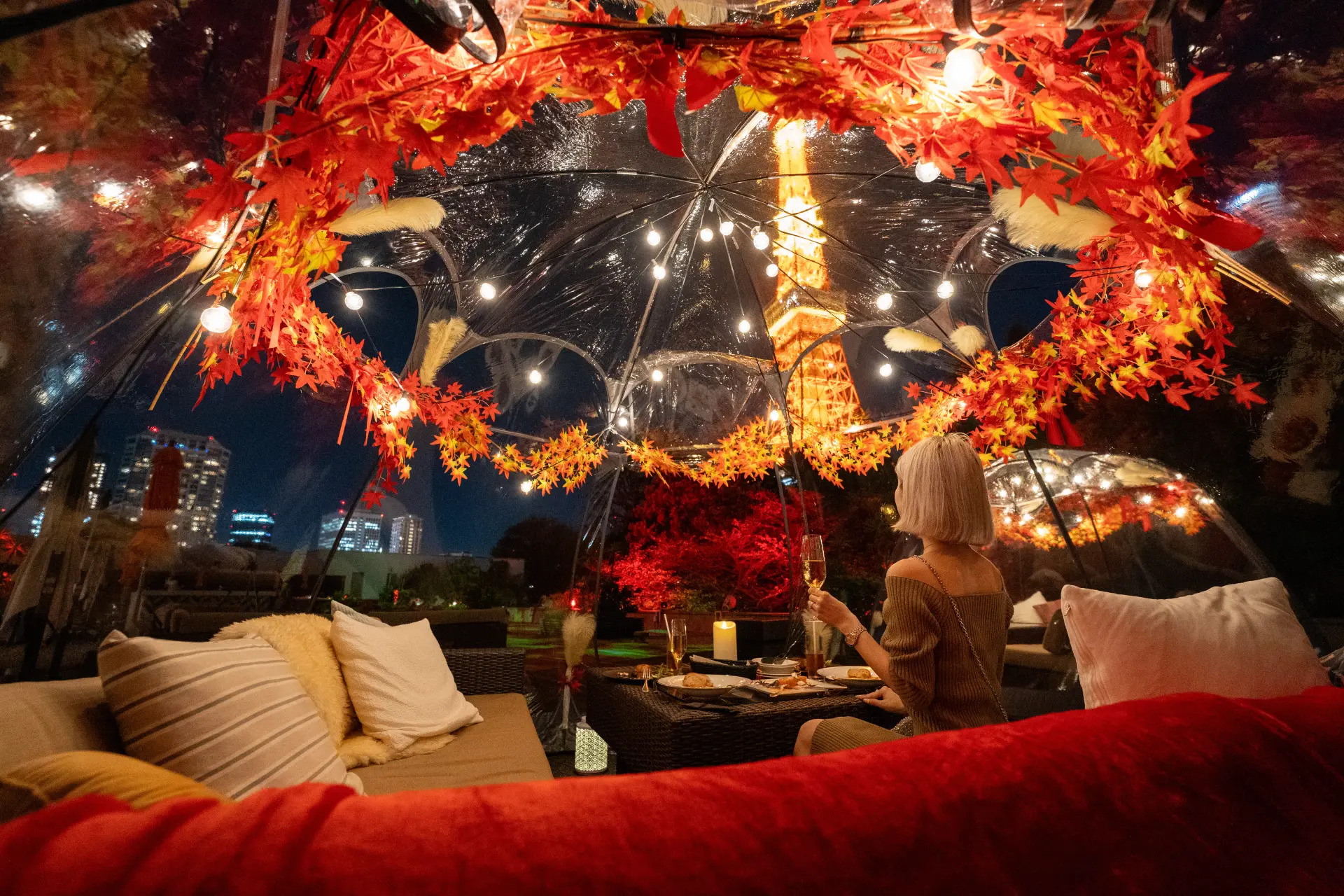
Dome tent seats decorated differently for each season
4. Sky Bar & Dining Stellar Garden
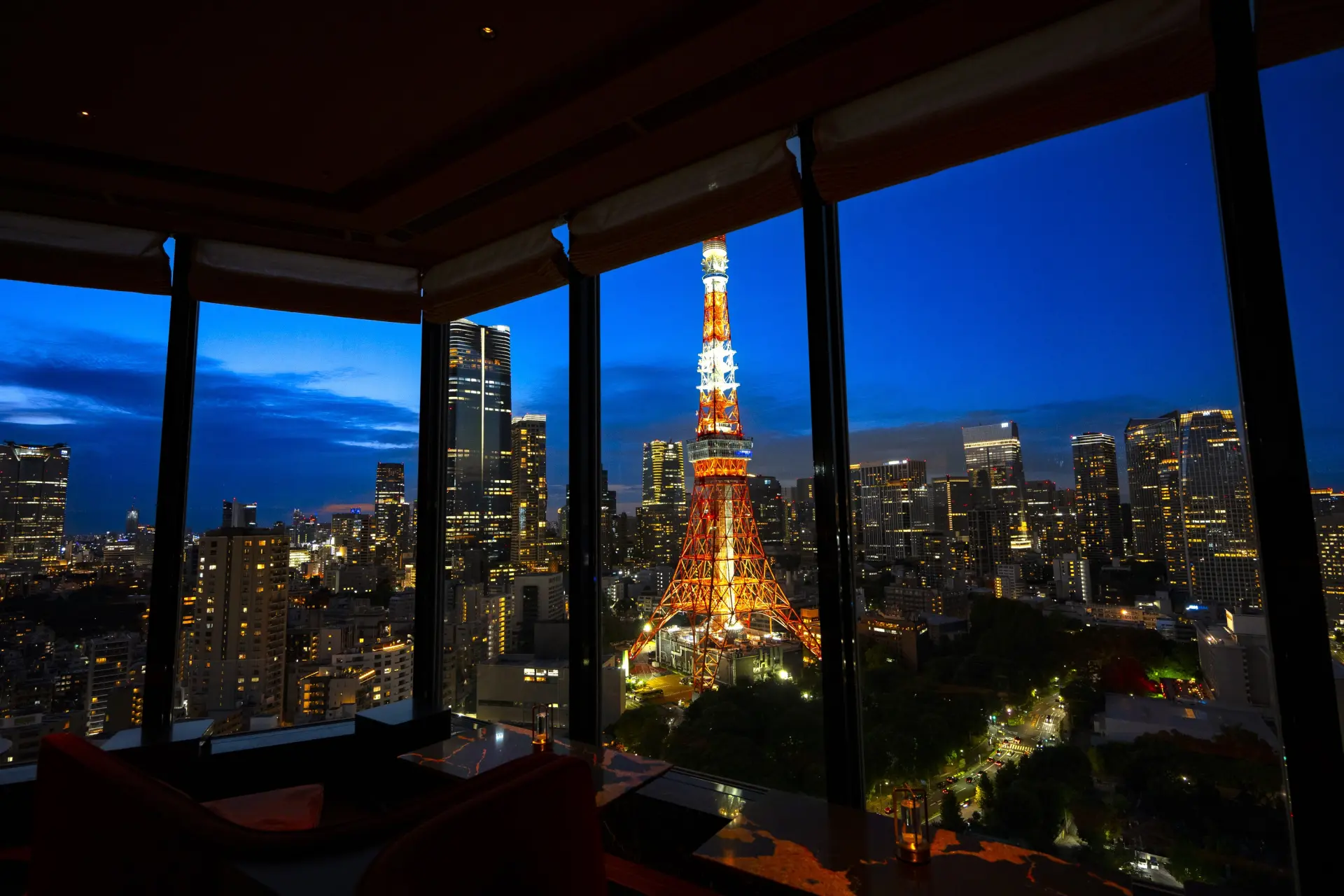
Sky Bar & Dining Stellar Garden is located on the 33rd floor of The Prince Park Tower Tokyo.
Approximately a 10-minute walk from Tokyo Tower, it occupies an excellent location with the tower directly in front of it.
The entire floor is designed as a special space for appreciating the views. Different areas overlook not only Tokyo Tower but also TOKYO SKYTREE, Rainbow Bridge, Mount Fuji, and other sights.
The Tokyo Tower Side area is especially recommended. Illuminated Tokyo Tower and the high-rise buildings behind it stand out against the night sky, framing the sparkle of the city like a painting.
After visiting Tokyo Tower, guests can relax at the bar with a cocktail or enjoy a full-course meal in the dining area. The ability to choose the setting based on the occasion is one of the restaurant’s distinguishing features.
5. TOWERS
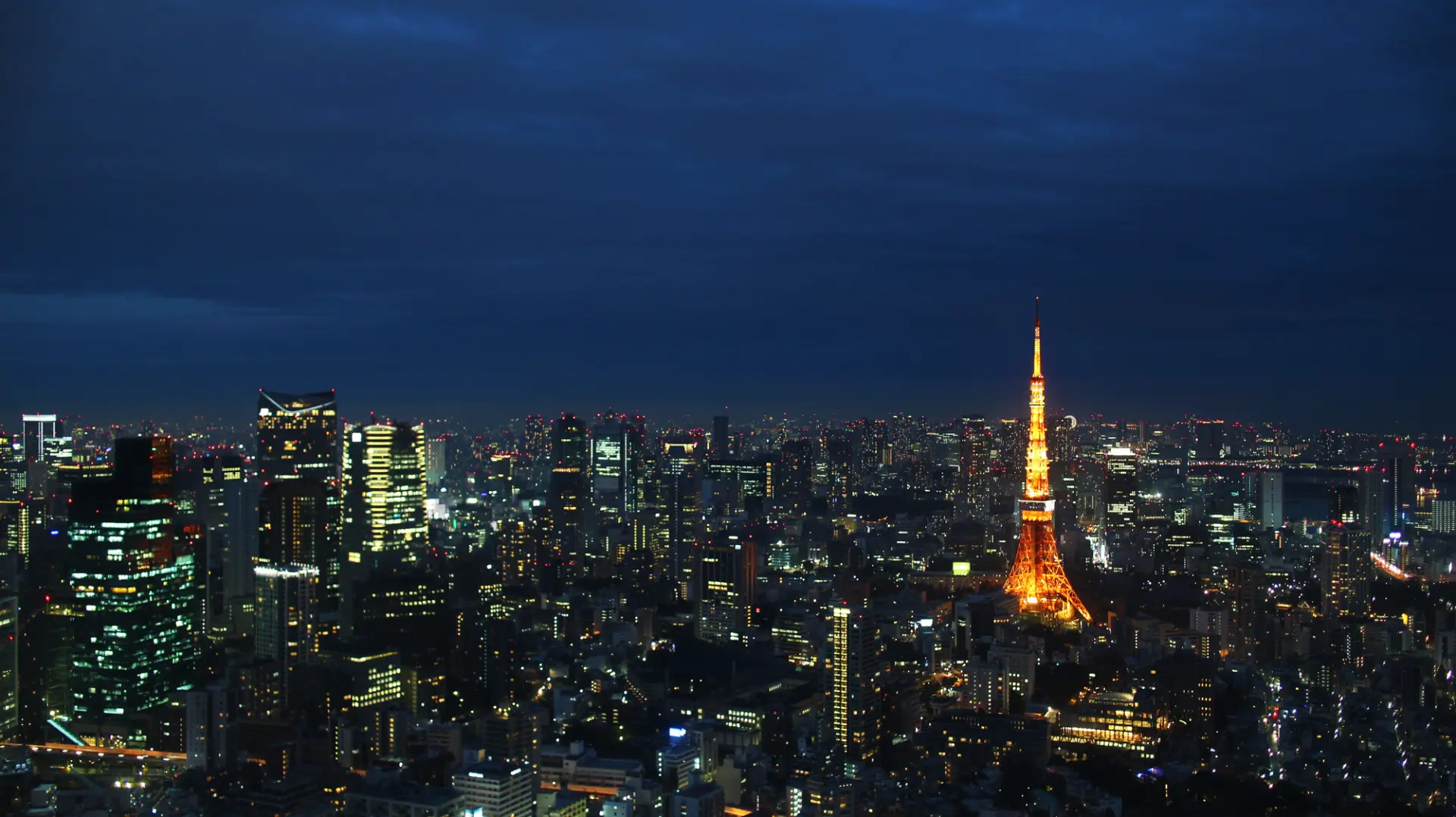
This French restaurant is located on the 45th floor of The Ritz-Carlton, Tokyo in Tokyo Midtown, Roppongi.
As its name suggests, its high-rise windows offer views of both Tokyo Tower and TOKYO SKYTREE.
At dinner, Tokyo’s nighttime scenery combines with the chic interior to create a romantic and sophisticated atmosphere.
The menu applies traditional French techniques to prepare premium ingredients with simplicity and care. Enjoy the food and spectacular view alongside a carefully selected wine.
5 Hotels with Tokyo Tower Views for a Distinctively Tokyo Stay
Next are hotels offering views of Tokyo Tower from their guest rooms for a distinctively Tokyo stay.
Along with the views, each provides luxurious spaces and extensive facilities that create a memorable experience.
They are also highly convenient and well suited as bases for sightseeing in Tokyo.
If you want to experience Tokyo and Tokyo Tower to the fullest, consider staying at one of the following hotels.
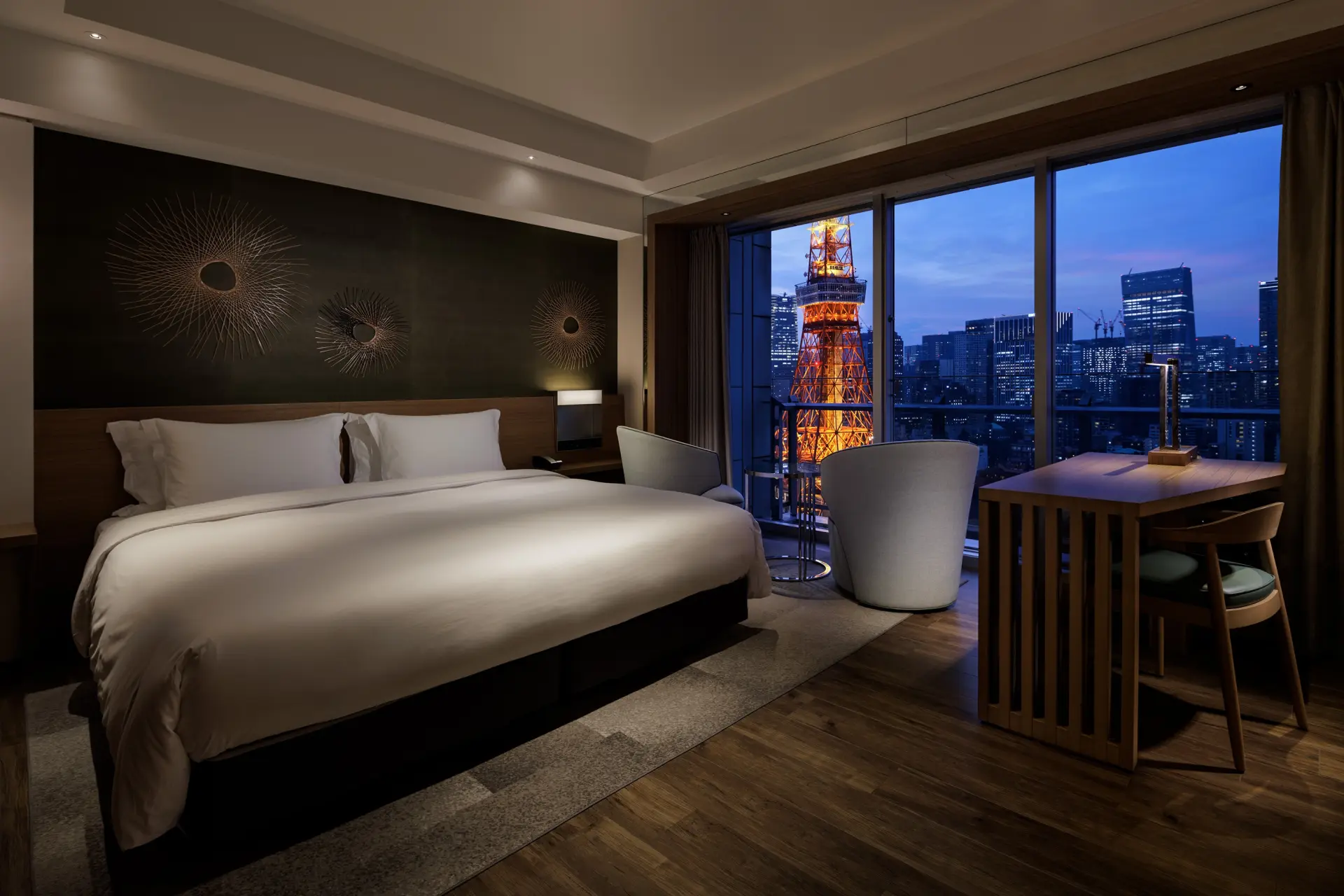
1. The Prince Park Tower Tokyo
The Prince Park Tower Tokyo is popular as one of the hotels offering the closest views of Tokyo Tower.
It has 603 guest rooms in a wide variety of styles, including rooms with whirlpool baths and balconies.
Of these, 257 offer spectacular views of Tokyo Tower. The Tokyo Tower Side Corner Room No. 17, with only one located on each floor, is particularly special.
Along with a powerful view of Tokyo Tower through large, wall-spanning windows, the room is designed so guests can see the illuminated tower from the bathroom, creating the luxurious sensation of spending the night beside it.
2. Tokyo Prince Hotel
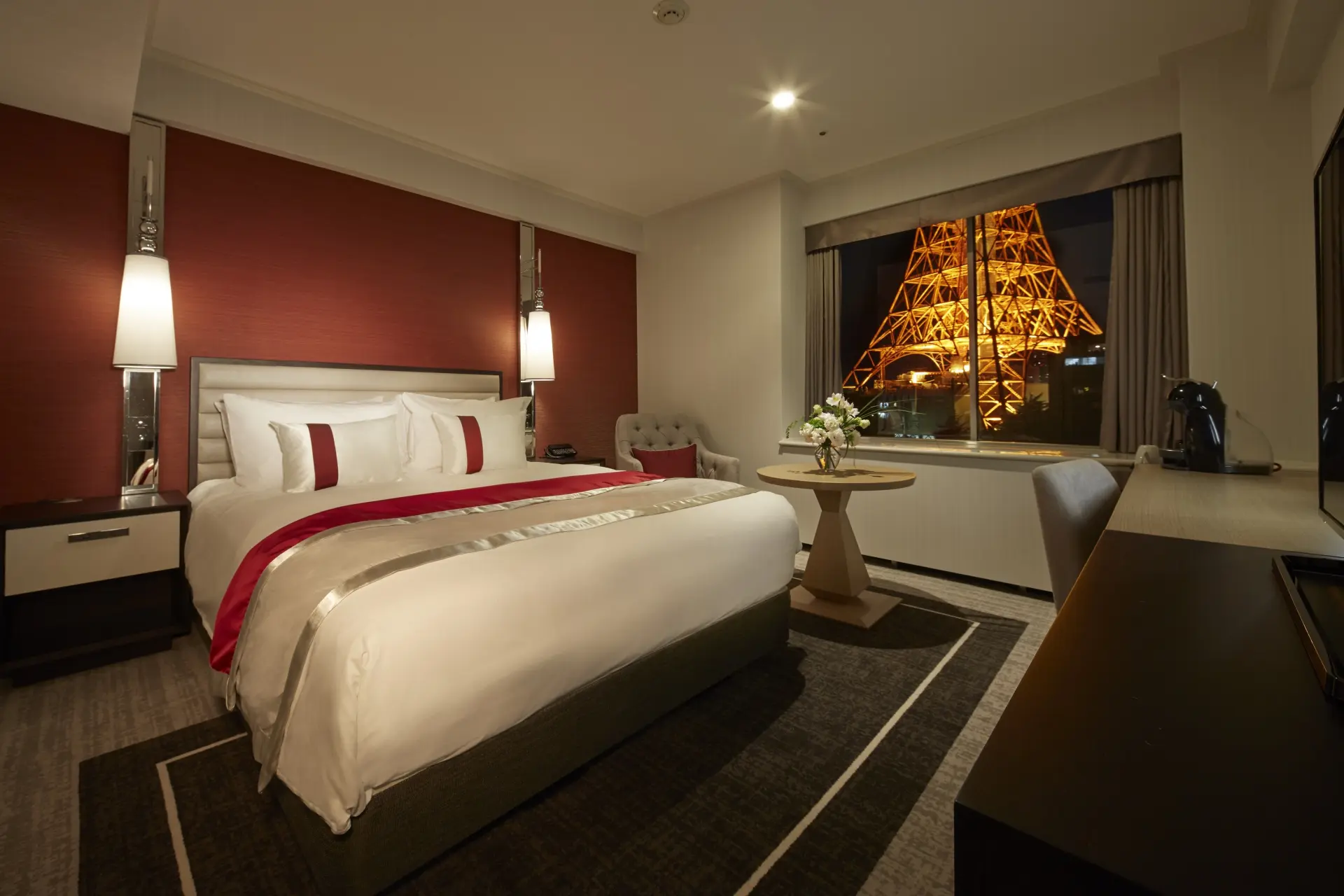
This luxury hotel is located approximately a two-minute walk from Tokyo Tower.
Although set in a peaceful environment surrounded by the greenery of Shiba Park, its greatest attraction is the direct view of Tokyo Tower from its guest rooms and restaurants.
Of its 462 guest rooms, those on the tower side and upper floors offer impressive views of Tokyo Tower as its appearance changes from day to night.
In some rooms, guests can view the illuminated tower while lying in bed.
The hotel also offers anniversary plans and seasonal events, along with facilities such as gardens, cafés, and bars that provide a variety of special experiences.
3. The Royal Park Hotel Iconic Tokyo Shiodome
The Royal Park Hotel Iconic Tokyo Shiodome stands in the sophisticated Shiodome district, approximately a three-minute walk from JR Shimbashi Station. It is approximately 30 minutes from Tokyo Tower by train and on foot.
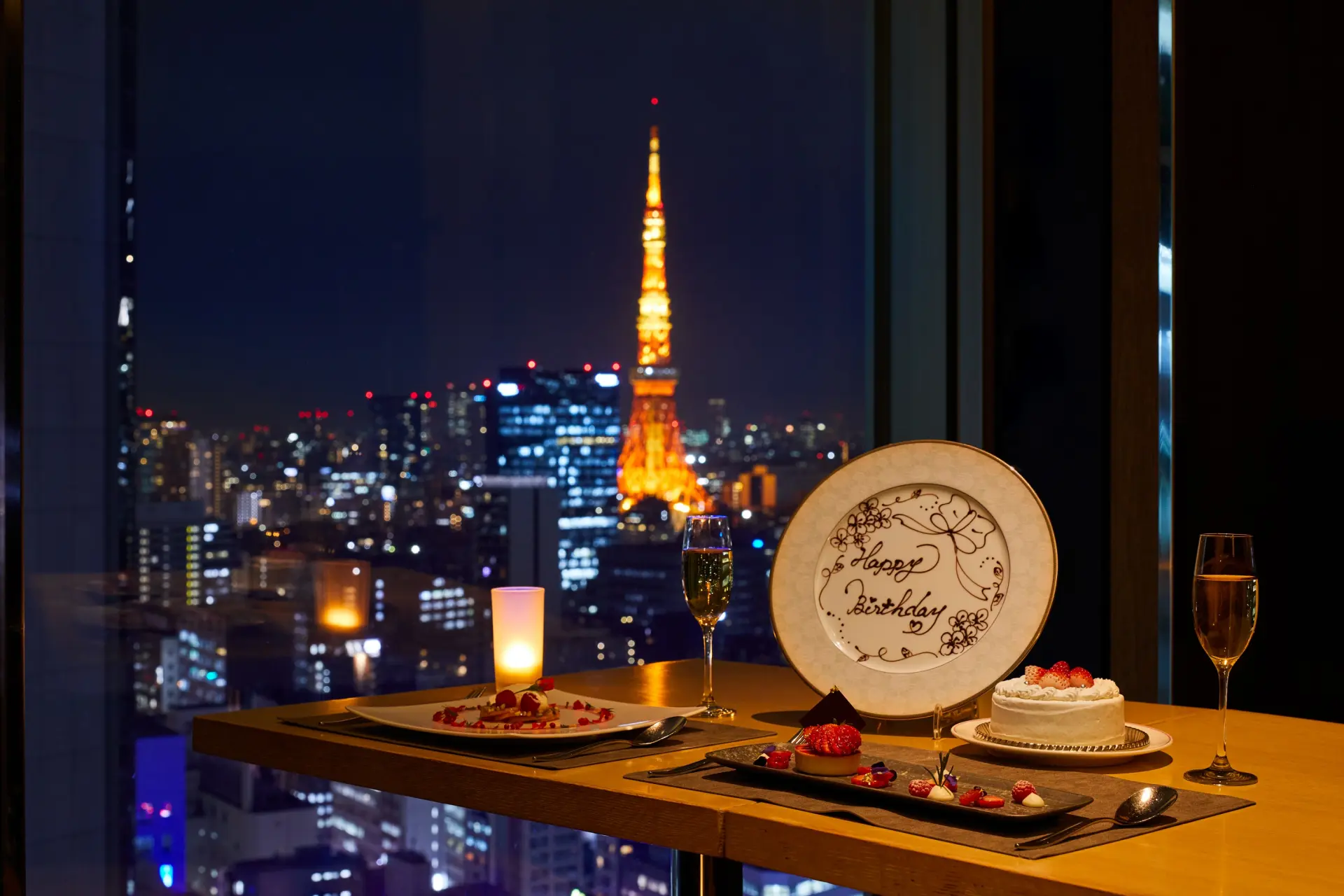
All guest rooms are located on the 26th floor or above, and the hotel’s greatest attraction is the Tokyo nighttime view from its windows.
Rooms facing Tokyo Tower overlook the illuminated tower standing among the high-rise buildings.
Other rooms offer views of TOKYO SKYTREE or Mount Fuji, providing scenery distinctive to Tokyo.
At the all-day dining restaurant, guests can enjoy authentic cuisine at breakfast, lunch, and dinner while spending a luxurious moment overlooking Tokyo Tower.
4. Mitsui Garden Hotel Ginza Premier
Mitsui Garden Hotel Ginza Premier is located in the heart of Ginza.
It offers convenient access from Tokyo Tower, taking approximately 25 minutes by train or 15 minutes by car or taxi.
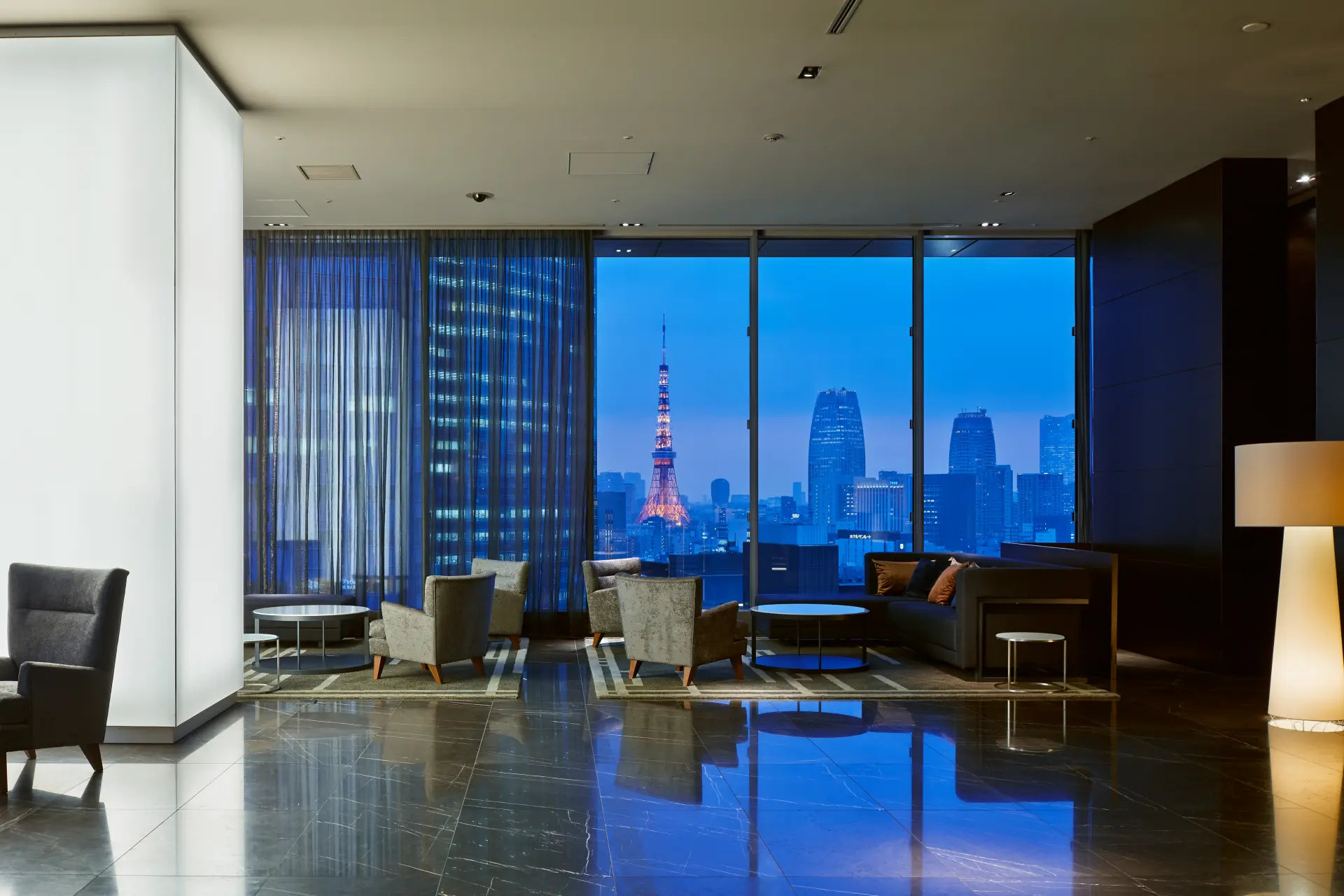
Tokyo Tower can be seen from upper-floor rooms and the lobby. During the day, its silhouette stands out against the cityscape, while at night, its illumination creates an atmospheric view.
The simple, refined guest rooms have a peaceful atmosphere that lets visitors forget the bustle of the city.
Combined with walking and shopping in Ginza, the hotel provides a memorable stay for occasions ranging from sightseeing trips to anniversaries.
5. The Westin Tokyo
This luxury hotel stands within Yebisu Garden Place in Meguro City, Tokyo.
Despite its central Tokyo location, it is surrounded by abundant greenery and offers a calm atmosphere together with refined, comfortable spaces.
The hotel has a wide variety of guest room types, all featuring sophisticated and elegant interiors.
Some upper-floor rooms offer sweeping views of central Tokyo, including Tokyo Tower.
Guests can also enjoy meals and drinks alongside Tokyo’s nighttime scenery at Yebisu Teppanyaki and Sky Bar ESCALIER within the hotel.
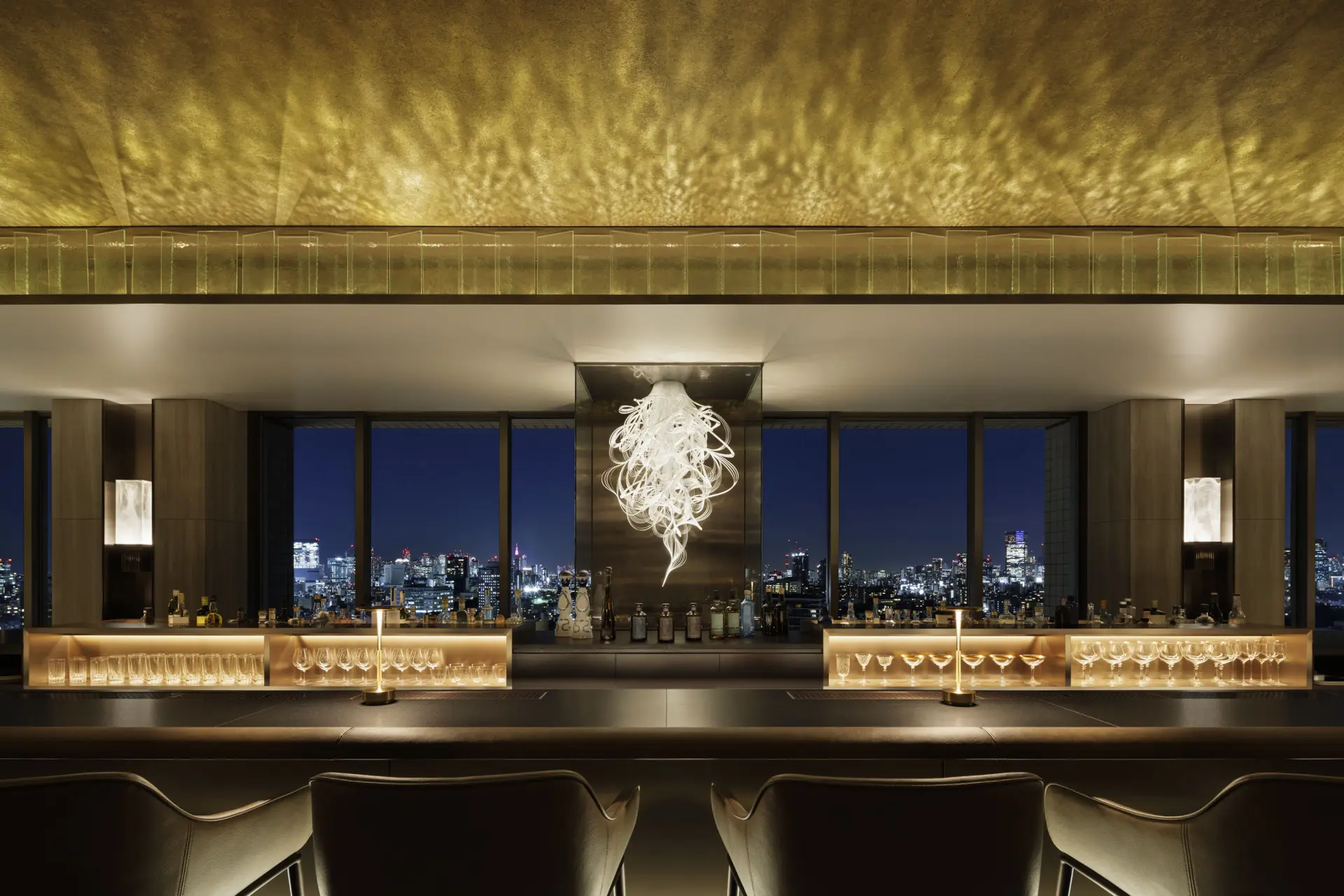
One-Day Sample Itinerary for Tokyo Tower and Nearby Attractions
This one-day sample itinerary begins in central Tokyo. Spend the morning walking around the Imperial Palace Outer Gardens and Marunouchi, experiencing both modern streetscapes and historic scenery.
Have lunch at Terrace Dining TANGO while overlooking Tokyo Tower.
In the afternoon, explore Zojoji Temple and Shiba Park, play at RED° TOKYO TOWER, and view the nighttime scenery from the observation deck.
End the day with a leisurely dinner at Buffet Dining Porto, which offers views of Tokyo Tower.
- 10:30 a.m.
- Walk around the Imperial Palace Outer Gardens and Marunouchi
- 12:00 p.m.
- Have lunch at Terrace Dining TANGO while overlooking Tokyo Tower
- 1:00 p.m.
- Explore Zojoji Temple and Shiba Park while photographing Tokyo Tower
- 3:00 p.m.
- Play at RED° TOKYO TOWER inside Tokyo Tower
- 6:30 p.m.
- Take in the nighttime view from Tokyo Tower’s Main Deck
- 7:30 p.m.
- Enjoy dinner at Buffet Dining Porto
Frequently Asked Questions About Tokyo Tower
Q
What time are Tokyo Tower’s illuminations turned on?
On Mondays and Thursdays, they are illuminated from 8:00 p.m. to 10:00 p.m. On other days, they are illuminated from around 7:00 p.m. until midnight in summer and around 5:00 p.m. until midnight in winter. Special illuminations are also held at certain times, so checking the official website is recommended.
Q
How tall is Tokyo Tower?
It is 333 meters tall. It was the world’s tallest broadcasting tower until TOKYO SKYTREE was completed in 2012.
Q
What are the nearest stations to Tokyo Tower?
The three main stations are Akabanebashi Station, Akabanebashi Exit, on the Toei Oedo Line; Kamiyacho Station, Exit 1, on the Tokyo Metro Hibiya Line; and Onarimon Station, Exit A1, on the Toei Mita Line.
Summary
This guide has introduced Tokyo Tower, a continuing Tokyo landmark, with a focus on its essential information, activities on each floor, and illuminations.
Combining history with the present day, Tokyo Tower is valuable not only as a tourist attraction but also as an architectural symbol of Japan’s development.
It offers scenery and experiences found nowhere else, together with many appealing facilities, making it well worth visiting at least once when traveling to Tokyo.
Also read the following article, which covers classic attractions, shopping areas, and recommended events where visitors can experience the atmosphere of Japan’s capital, and make your trip even more rewarding.
Author
Writers & Editors
GOOD LUCK TRIP Editors
Sharing lesser-known ways to experience Japan with the world!