

Lake Inawashiro Travel Guide: Enjoy Stunning Lake and Mountain Views
Lake Inawashiro, also known as “Tenkyoko,” reflects the beautiful form of Mount Bandai on its surface.
Its ever-changing scenery through the four seasons and marine sports have made it one of Fukushima Prefecture’s top tourist destinations.Lake Inawashiro is also known as "Tenkyoko," meaning "Heavenly Mirror Lake," because its waters beautifully reflect the majestic Mount Bandai.
With its stunning scenery that changes throughout the seasons and a wide range of water sports, the lake is one of the most popular tourist destinations in Fukushima Prefecture.
In this guide, we'll explore the highlights of Lake Inawashiro and the unique attractions each season has to offer, helping you decide on the best time to visit.
Each season brings a different side of the lake to discover, so you're sure to find a time of year that suits your travel interests.
In this article, we’ll introduce the highlights of Lake Inawashiro along with the best seasons for sightseeing and the charm of each one.
With different attractions in every season, Lake Inawashiro may help you discover the best time to visit.
What is Lake Inawashiro Like?
Located in central Fukushima Prefecture, Lake Inawashiro stretches across three municipalities: Inawashiro Town, Aizuwakamatsu City, and Koriyama City.
Covering an area of 103 square kilometers and reaching a depth of 93 meters, it is Japan's fourth-largest lake. Excluding Lake Saroma, a brackish lake containing both seawater and freshwater, Lake Inawashiro ranks as Japan's third-largest freshwater lake.
One of Lake Inawashiro's greatest attractions is its breathtaking scenery, which changes with the seasons. Nearby Mount Bandai is equally beautiful throughout the year, offering a different view in every season.
The mountain's reflection on the lake's surface is so beautiful that Lake Inawashiro has earned the nickname "Tenkyoko," meaning "Heavenly Mirror Lake." Together, the lake and mountain create a truly spectacular landscape.
One of the lake's most fascinating winter sights is shibuki-gori, or splash ice. This natural phenomenon occurs when strong winds blow water from the lake's waves onto trees along the shore, where it freezes into intricate ice formations. Rarely seen in Japan, these icy sculptures create an almost otherworldly scene.
Another highlight is taking a sightseeing cruise across the lake, where you can admire Mount Bandai and the surrounding natural scenery from the water.

Discover Fascinating Facts About Lake Inawashiro Before Your Visit
Lake Inawashiro has only one island, Okinajima, located in its northwestern part.
Several legends explain how Okinajima got its name, but one of the best-known involves Kukai, the founder of the Shingon school of Buddhism, who was posthumously given the title Kobo Daishi.
According to the legend, a poor woman named Okina kindly offered water left over from rinsing rice to a monk who had asked for something to drink.
Sometime later, Mount Bandai erupted, causing the surrounding land to sink beneath the water. Miraculously, the land where Okina lived remained above water, forming an island.
The island is said to have been named Okinajima after her, and the monk in the story is believed to have been Kukai himself.

How to Get to Lake Inawashiro
Here's how to get to Lake Inawashiro from Sendai Station, a major transportation hub for travelers exploring Fukushima Prefecture.
If you want to maximize your sightseeing time, we recommend taking the Shinkansen, although it's more expensive.
- Route
-
1. Take the Tohoku Shinkansen from Sendai Station and get off at Koriyama Station.
2. Transfer to the Banetsu West Line (rapid trains are also available) at Koriyama Station and get off at Inawashiro Station.
3. Take a taxi from Inawashiro Station (about 10 minutes). - Travel time
- Approximately 2 hours
Lake Inawashiro: Seasonal Highlights and Attractions
Winter is our top recommendation for visiting Lake Inawashiro, as it offers unique natural scenery that can only be enjoyed during this season.
However, Lake Inawashiro has plenty to offer throughout the year, with each season bringing its own spectacular natural landscapes and attractions.
Explore the seasonal highlights below to find the best time for your visit.
Spring at Lake Inawashiro: Beautiful Views of Cherry Blossoms, Mountains, and the Lake
One of the greatest attractions of Lake Inawashiro in spring is the chance to admire cherry blossoms, one of Japan's most iconic symbols, alongside Mount Bandai and the lake itself.
The scenery around Funatsu Park, located along the lakeshore, is particularly beautiful. Although there are relatively few cherry trees, the combination of blossoms, mountains, and water creates a distinctly Japanese scene.
Among the cherry blossom spots around Lake Inawashiro, the Kannonjigawa River is especially stunning. Somei Yoshino and weeping cherry trees bloom along a stretch of about 1 kilometer, forming a beautiful tunnel of blossoms.
Listening to the gentle flow of the river while admiring the cherry blossoms makes for a wonderfully peaceful and atmospheric experience.
The cherry blossoms are typically at their best from late April to early May.


Summer at Lake Inawashiro: Outdoor Activities and Stunning Scenery
Summer at Lake Inawashiro is perfect for swimming in the lake, enjoying water sports, and camping. It's an ideal season for travelers who love outdoor activities.
The lake has several sandy beaches, and swimming in its waters is a popular summer tradition. Unlike swimming in the sea, the freshwater leaves your skin feeling less sticky afterward, making it a particularly appealing experience.
There are also plenty of campgrounds along the lakeshore, some of which don't require reservations.
Spending the day enjoying outdoor activities while watching the lake's scenery change with the passing hours is another highlight of a summer visit.


Autumn at Lake Inawashiro: Spectacular Views of Colorful Mountains
Lake Inawashiro is equally stunning in autumn, when the surrounding foliage turns fiery shades of red and orange.
If you're looking for breathtaking natural scenery that leaves a lasting impression, autumn is an ideal time to visit. The vibrant colors and vast landscapes create a powerful sense of natural beauty.
About a 10-minute drive from Lake Inawashiro is Hanitsu Shrine, a renowned spot for viewing fall foliage. The sight of colorful autumn leaves carpeting the ground, set against the brilliant blue sky, is simply breathtaking.
The fall foliage is typically at its best from late October to mid-November, making this a particularly recommended time to explore Lake Inawashiro and its surroundings.


Winter at Lake Inawashiro: Swans and Stunning Splash Ice
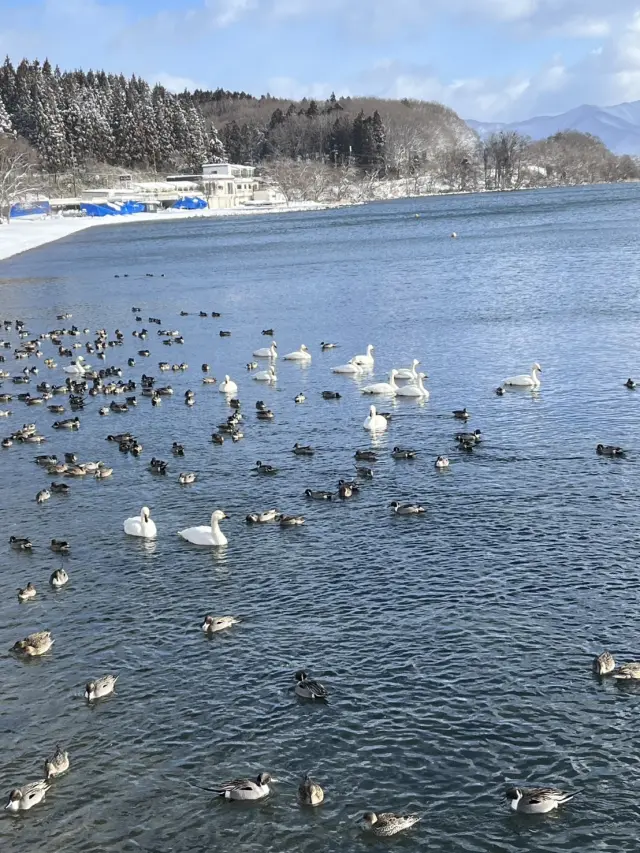
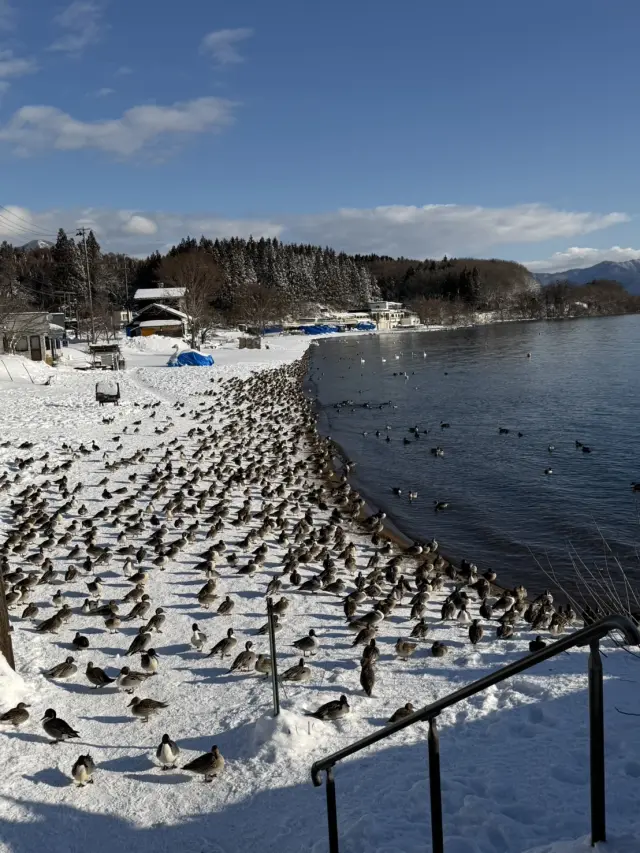
Every winter, around 3,000 swans migrate from Siberia to Lake Inawashiro. These migratory swans are designated as a National Natural Monument of Japan, making their seasonal arrival a special sight to behold.
The sight of swans gathering on the shimmering lake at sunset is particularly enchanting, offering fantastic opportunities for photography. Be sure to keep a respectful distance and avoid disturbing the birds while taking photos. The swans typically begin arriving in December, with their numbers peaking around February.
Another remarkable winter attraction at Lake Inawashiro is shibuki-gori, or splash ice. This unusual natural phenomenon occurs when strong winds whip up waves, sending spray onto trees along the lakeshore, where it freezes into striking ice formations. A rare sight in Japan, splash ice is well worth seeking out during a winter visit.


5 Must-Visit Attractions Around Lake Inawashiro
After enjoying a stroll or outdoor activities at Lake Inawashiro, why not explore some of the nearby attractions?
The area surrounding the lake offers much more than beautiful natural scenery. With a variety of cultural attractions to discover, there are plenty of ways to make the most of your visit.
Use the five recommended spots below to plan a rewarding day of sightseeing around Lake Inawashiro.
1. Hideyo Noguchi Memorial Museum
Hideyo Noguchi (1876-1928) was a world-renowned bacteriologist born near the shores of Lake Inawashiro, best known for his research on yellow fever and syphilis.
The Hideyo Noguchi Memorial Museum opened in 1939 to commemorate his achievements. The museum comprises his childhood home and an exhibition hall, where visitors can learn about his life and research through photographs, personal belongings, and even a robot exhibit. Interactive games that make learning about his achievements fun for the whole family are another popular feature.

2. Bandai-Azuma Skyline
The Bandai-Azuma Skyline is Japan’s first mountain sightseeing road, stretching about 29 kilometers through the Azuma mountain range. It reaches a maximum elevation of 1,622 meters, with an average elevation of 1,350 meters. One section is known for its barren, otherworldly landscape, where volcanic gases emerge from the ground and little vegetation grows. This unusual scenery has attracted attention on social media.
From the road’s reopening in early April until around Golden Week, visitors can drive through a “snow corridor,” with walls of snow on both sides of the road. In autumn, the route offers beautiful fall foliage. The changing seasonal scenery makes it a popular destination for a scenic drive.

3. Goshikinuma Ponds
The Goshikinuma Ponds were formed following a steam explosion in 1888 that created hundreds of lakes and ponds in the area. The name refers to a group of around 30 lakes and ponds of various sizes, including Bishamon-numa, Aka-numa, Midoro-numa, Ryu-numa, and Benten-numa.
In 2016, the Goshikinuma Ponds received one star in the Michelin Green Guide.

4. World Glassware Hall Inawashiro
One of Japan’s largest galleries specializing in glassware, it features around 25,000 items from Japan and around the world.
The extensive collection includes glassware imported directly from various countries, original accessories, antiques, and decorative items. With such a wide variety on display, visitors can discover the beauty and appeal of glassware.

5. Tenkyo-kaku
During his travels in the Tohoku region, Prince Arisugawa Takehito was captivated by the beauty of Lake Inawashiro and had a villa built on its shores. The villa was completed in August 1908.
It is said that the villa was named Tenkyokaku in September of the same year, when Crown Prince Yoshihito (later Emperor Taisho) visited. The name was inspired by the phrase “Meiko Rakutenkyo” from a poem by the Chinese poet Li Bai.

3 Recommended Places to Eat Around Lake Inawashiro
After exploring Lake Inawashiro and the surrounding area, why not try some local specialties?
The area also has lakeside cafes where you can take a relaxing break. Check out the three popular dining spots below and stop by during your sightseeing trip.
1. TARO CAFE
This popular cafe on the shores of Lake Inawashiro is known for its sweets and coffee. Large windows in the spacious interior offer beautiful views of the lake throughout the seasons, while the outdoor terrace is especially popular in summer.
The menu includes a wide variety of desserts, such as chiffon cake, cheesecake, and honey waffles served with seasonal fruit and vanilla ice cream.

2. Aizu Brand Basashi Specialty Okubo Shoten
Okubo Shoten specializes in domestically produced basashi (horse meat sashimi) and is operated by Niku no Okubo, a long-established butcher shop with over 80 years of history.
The Aizu region is Japan’s second-largest producer of horse meat after Kumamoto. Okubo Shoten serves premium domestic basashi certified under the Aizu Brand.
One of its most popular dishes is the “Aizu Brand Basashi Lunch,” featuring tender, flavorful rump meat.

3. Iwahashikan
Iwahashikan is a restaurant specializing in handmade soba noodles. Its name comes from “Iwahashi-yama,” another name for Mount Bandai, which rises to the north of Lake Inawashiro.
Inawashiro Town is one of eastern Japan’s major soba-producing areas. An archaeological site beneath the restaurant has revealed evidence suggesting that people ate soba here long ago.
The restaurant uses locally grown “Inawashiro Amanoka” buckwheat, ground with a stone mill, along with “Yukichikara” wheat flour as a binder. The two flours are blended in an 8:2 ratio to make its handmade soba noodles.

3 Recommended Places to Stay Near Lake Inawashiro
Venture a little beyond Lake Inawashiro to Higashiyama Onsen, a famous hot spring area in Aizuwakamatsu.
From peaceful inns along a mountain stream to accommodations with beautiful views of the town, each offers its own charm, along with relaxing hot springs and the warm hospitality of Aizu.
Here are three recommended places to stay for travelers looking to enjoy both a scenic drive around Lake Inawashiro and a relaxing hot spring getaway.
1. Konjakutei
Nestled along the clear waters of the Yukawa River, this peaceful inn blends into the surrounding forest, offering a beautiful hideaway surrounded by nature.
Although the baths are relatively small, they are continuously filled with fresh hot spring water from the inn’s own source.
The sulfate-rich hot spring water is traditionally known for its skin-beautifying and healing properties, earning it a reputation as a “beauty bath” and a “healing bath.”

2. Aizu Higashiyama Onsen Harataki
Located in Yumoto, Higashiyama-machi, a quiet hot spring area of Aizuwakamatsu, Harataki is a traditional Japanese inn with its own hot spring source. Founded in 1924, it has welcomed guests for over 100 years.
Higashiyama Onsen has a history of around 1,300 years, but few inns in the area offer free-flowing hot spring water directly from their own sources without additional treatment.
Surrounded by mountains, the inn’s grounds are home to a natural waterfall called Harataki, which gave the inn its name. From the open-air bath, guests can enjoy views of the waterfall, the gentle sound of flowing water, and a refreshing riverside breeze.

3. Onyado Toho
Located on a hill at the entrance to Higashiyama Onsen in Aizuwakamatsu, this hot spring hotel has 160 guest rooms across three buildings: the Tower Building, Suzakutei, and the Main Building. Accommodations range from premium rooms to Japanese-style rooms, Western-style rooms, and special suites.
The hotel’s main attraction is its two open-air baths offering panoramic views of the historic castle town. One of them, Sora no Yu, features several baths arranged on different levels, along with facilities designed to help guests relax and unwind.

Reviews
Some reviews are AI-translated.
-
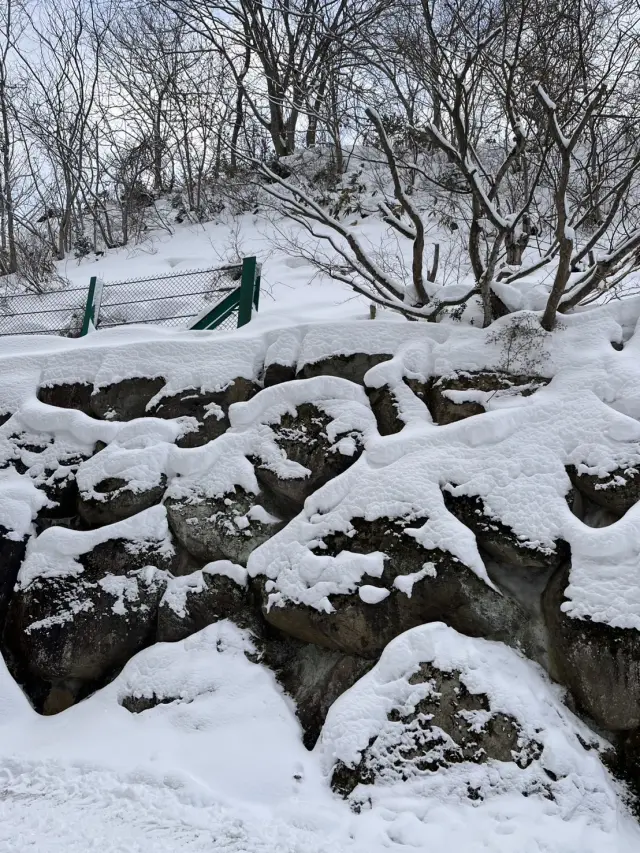
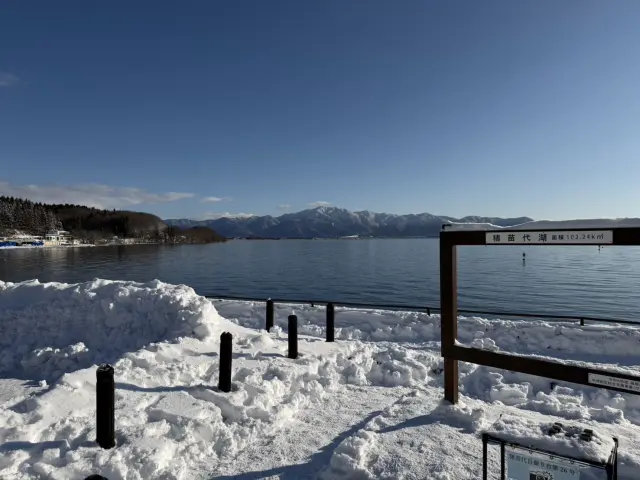
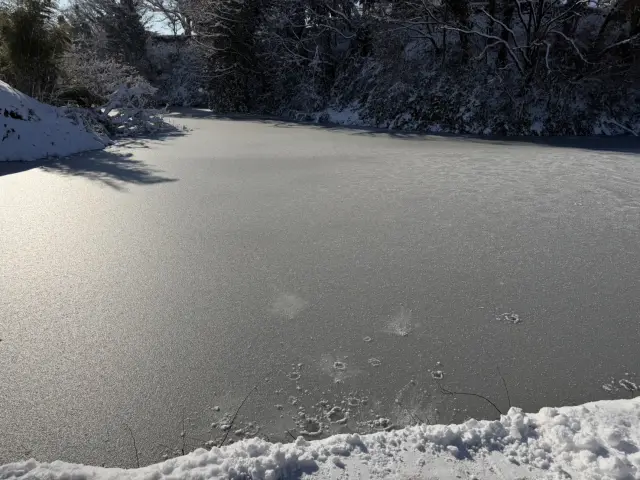
The wind was really strong, and if you go in winter, it’s insanely cold 😂
-
-
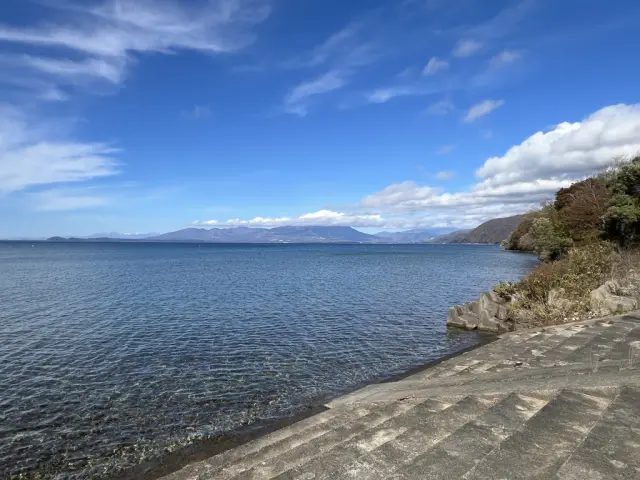
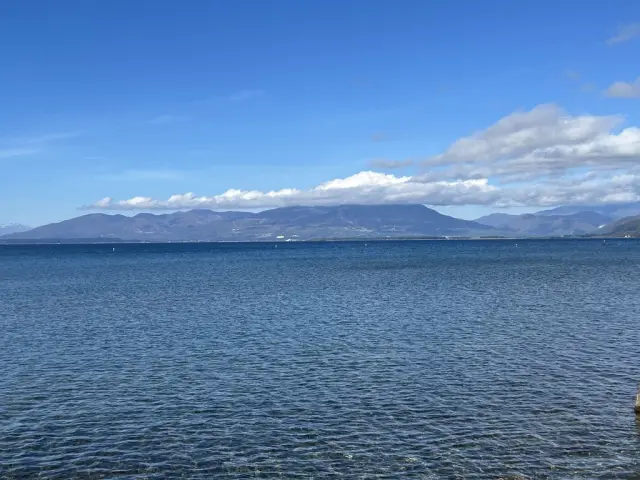
Mount Bandai looks gorgeous across the lake!
The water is so clear and beautiful too! -
-
Lake Inawashiro is huge. Standing by the shore and looking out is seriously so relaxing.
-




FAQ about Lake Inawashiro
Q
What is the best season to visit Lake Inawashiro?
Lake Inawashiro is beautiful year-round, but winter is especially recommended.
Q
What is special about Lake Inawashiro?
Its beautiful scenery changes with the seasons, and visitors can enjoy a wide variety of outdoor activities.
Summary
This article has introduced the seasonal attractions, highlights, and useful travel information you need to plan a visit to Lake Inawashiro.
One of the lake’s greatest attractions is its beautiful scenery, which changes throughout the year. The rare splash ice formations in winter are particularly worth seeing, so consider the best season for your visit based on what you want to experience.
For more ideas, check out the article below featuring a selection of recommended sightseeing spots in Fukushima Prefecture to help you plan your trip.