4 Torokko Trains to Ride from Summer to Fall: Eastern Japan Edition
From local lines that bring you close to dramatic gorges to trains with sweeping views from bridges and narrow-gauge railways through the forest, here are four torokko trains that are easy to reach from the Kanto area. Ride a torokko train through grand natural scenery, feel the refreshing breeze, and head out to landscapes far from the everyday.
1. Torokko Wassy and Torokko Watarase Keikoku
(Kiryu City, Gunma Prefecture to Nikko City, Tochigi Prefecture)
Watarase Keikoku Railway lets you take in some of the Kanto region’s finest gorge scenery from a viewpoint close to the river. When the line opened in 1914, the technology to build long tunnels and railway bridges was not available, so the tracks were laid along the Watarase River as it winds through the mountains. Today, it is popular as a scenic route for views of the gorge and often ranks high among local train lines people want to ride.
The national highway that runs parallel on the map is set higher up, making the close-up views of the gorge and river a sight you can experience only by train.
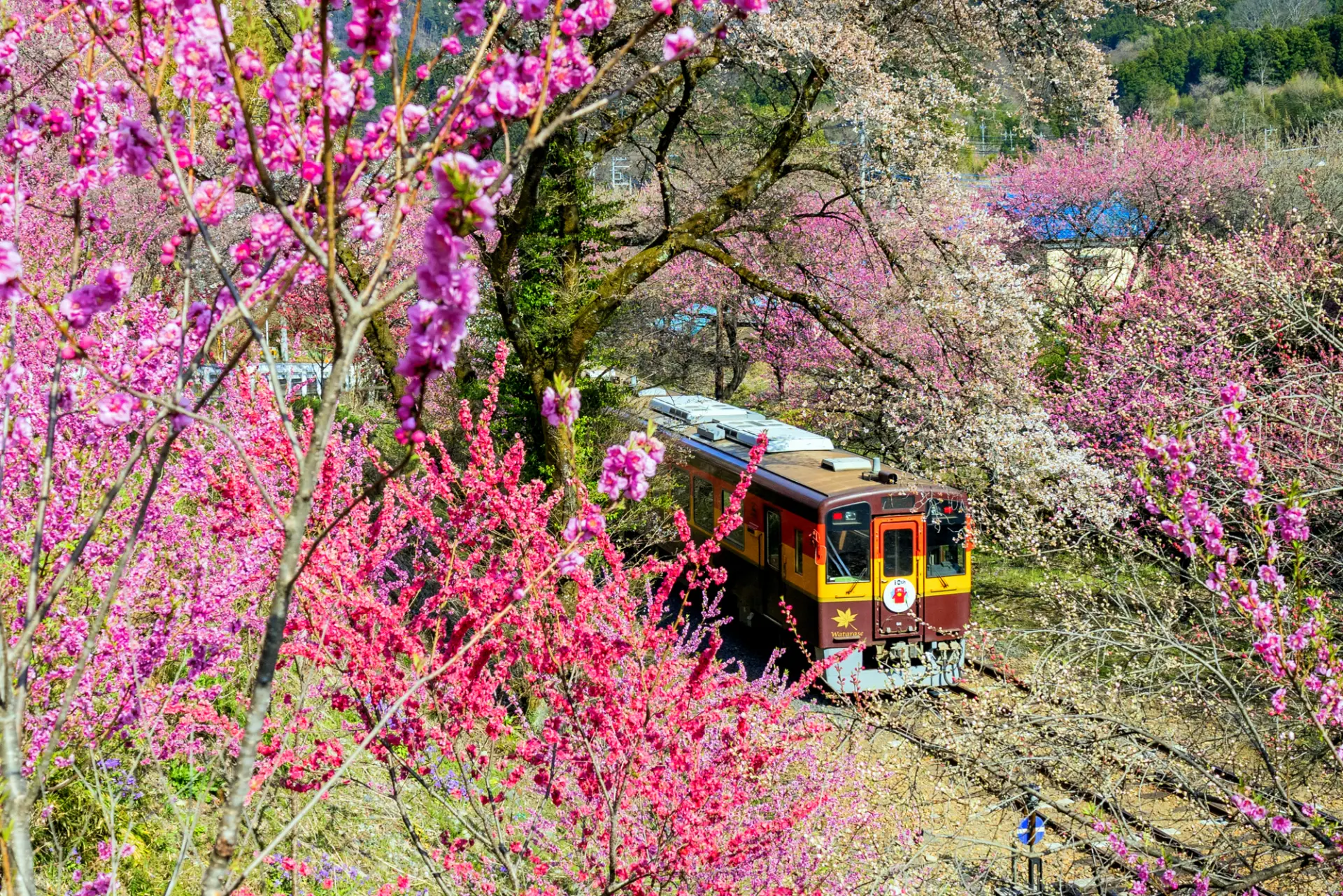
Watarase Keikoku Railway connects Kiryu City in Gunma Prefecture with Ashio-machi in Nikko City, Tochigi Prefecture, over a distance of 44.1 km, with a one-way ride taking about 1 hour and 30 minutes. There is an elevation difference of about 550 m between Kiryu Station, the starting point, and Mato Station, the final stop, so fresh greenery and autumn foliage can be enjoyed in different areas for nearly a month.
There are also many sights along the line, including Takatsudo Gorge, sometimes called “the Yabakei of Kanto,” Tomihiro Art Museum, and Ashio Copper Mine Tourism.
Two Torokko Trains on the Watarase Keikoku Railway
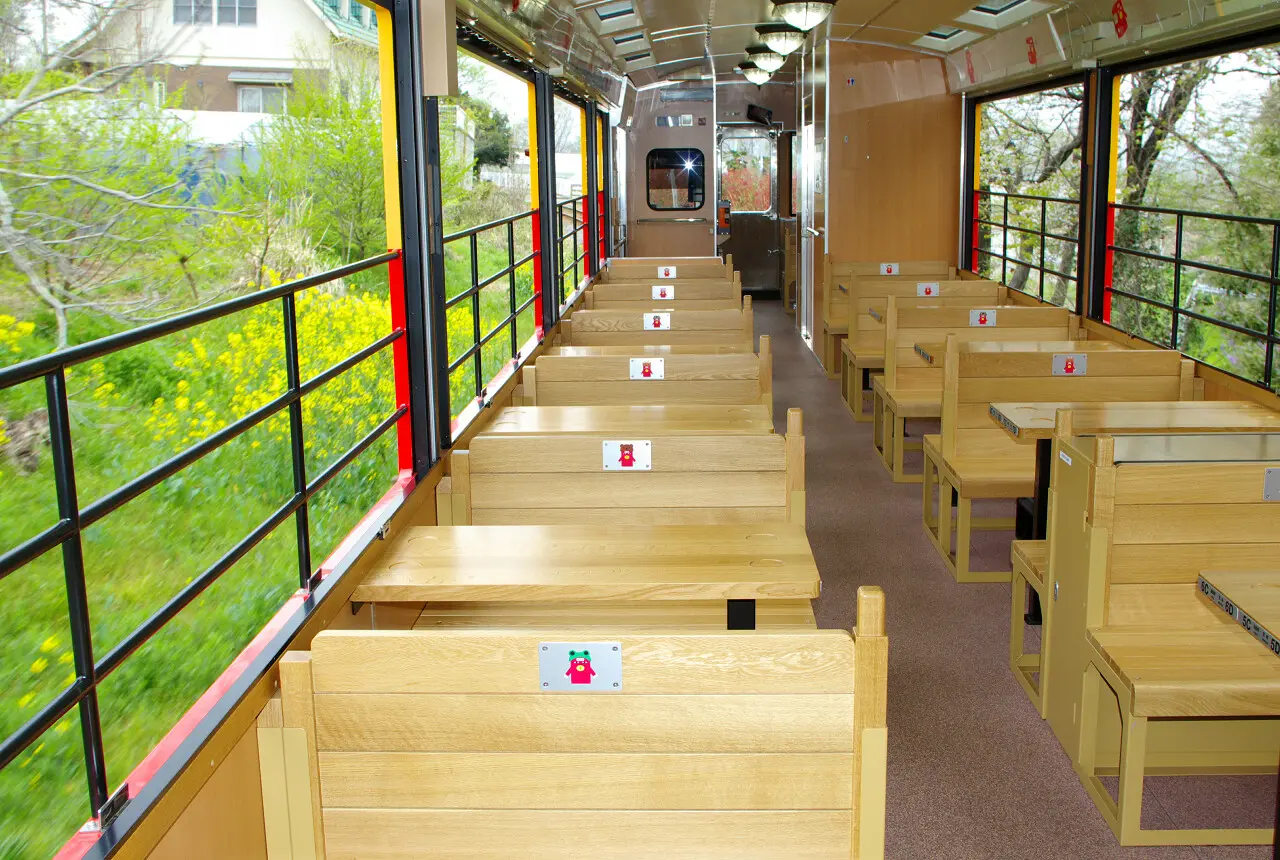
1. The open-air Torokko Wassy
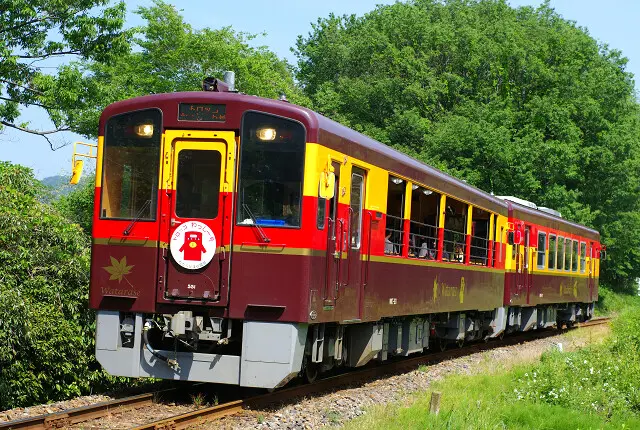
Torokko Wassy operates two round trips per day (service is suspended from July to September 2026; in winter, it operates one round trip per day). Its design is inspired by Watarase Keikoku Railway’s character, “Watetsu no Wassy.” Outside of winter, it runs as an open-air torokko car without window glass.
It operates along the entire line between Kiryu and Mato. It stops at a total of eight stations: Aioi, Omama, Mizunuma, Godo, Sori, Tsudo, Ashio, and Mato.
2. Torokko Watarase Keikoku, pulled by a diesel locomotive
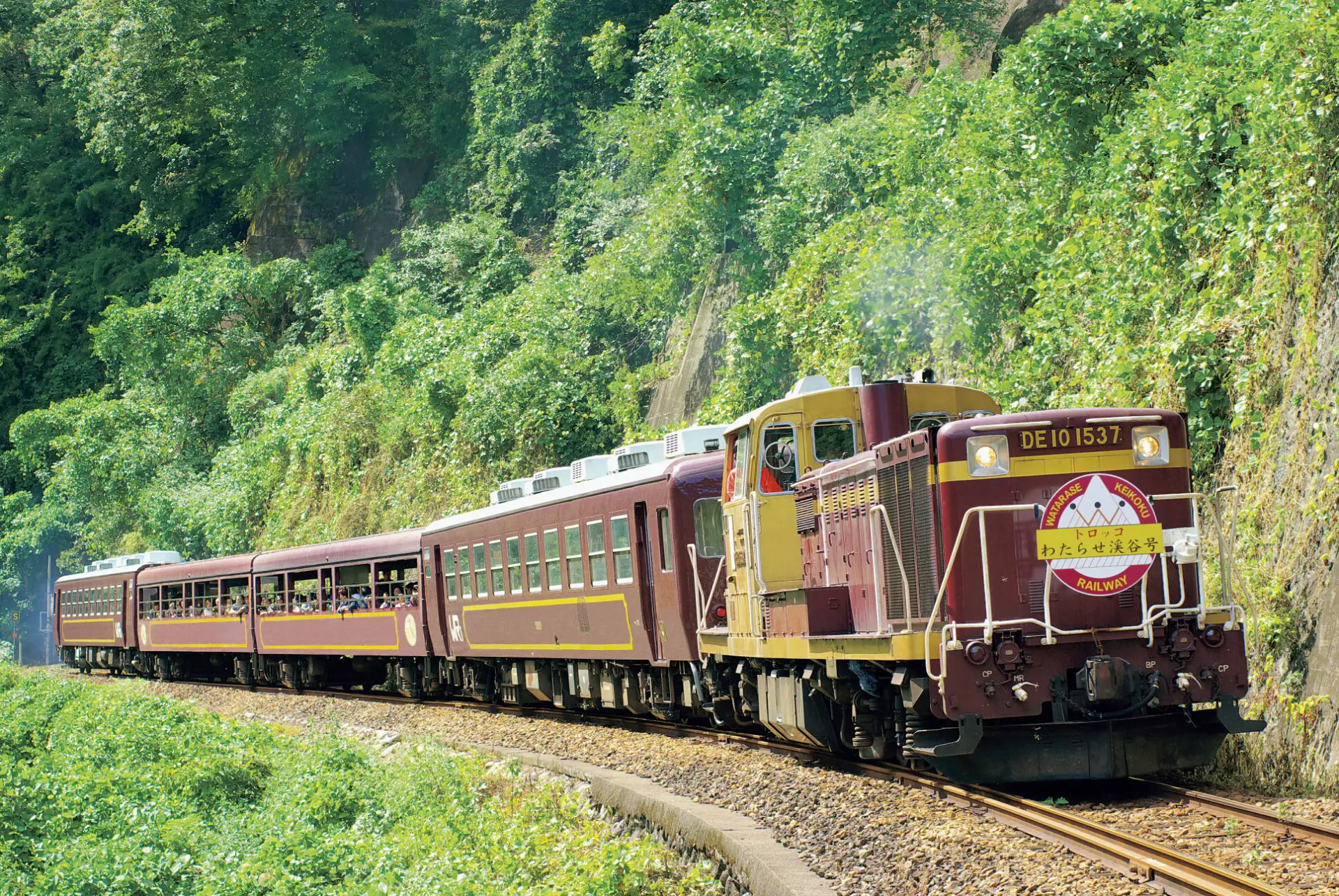
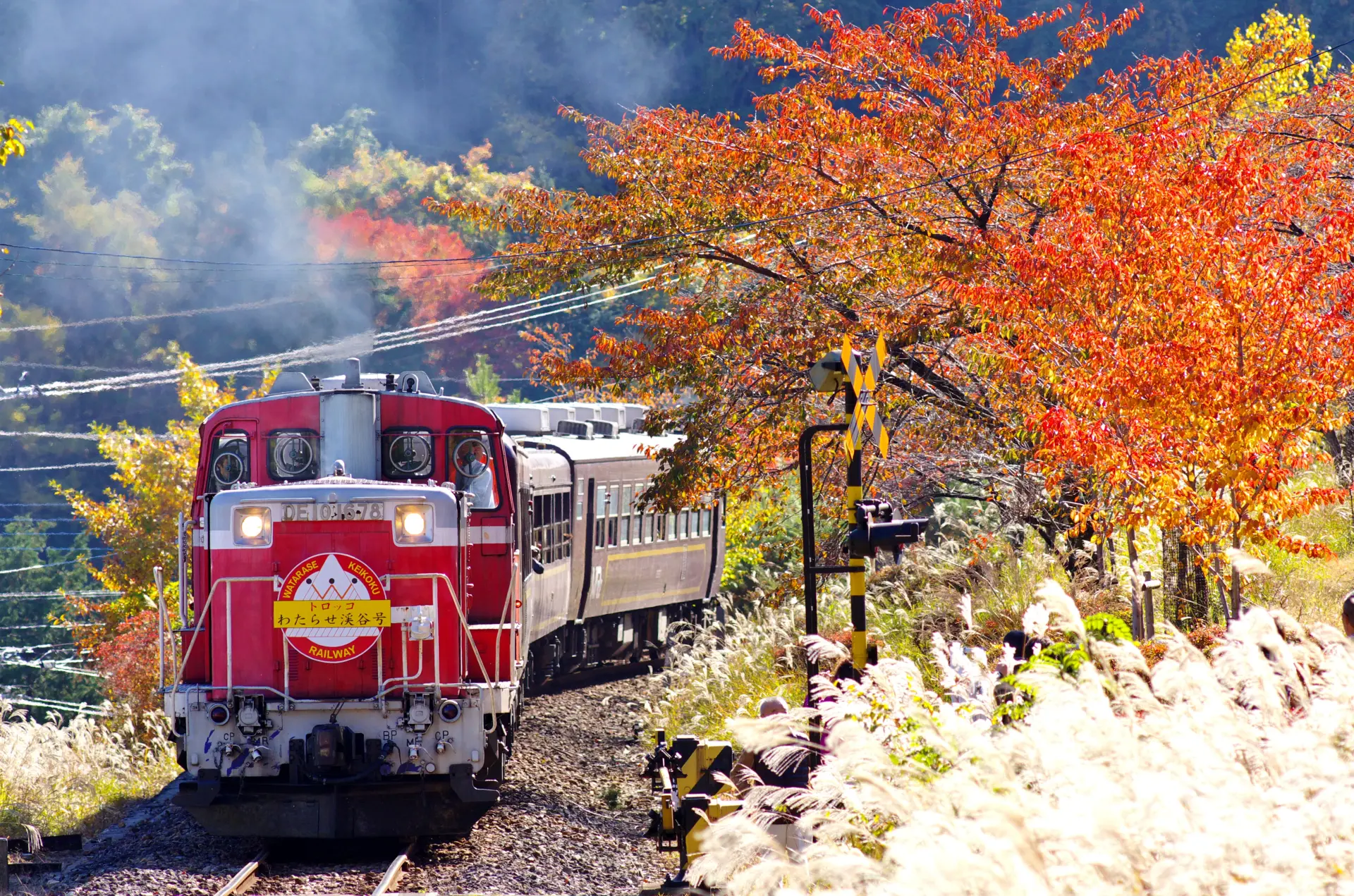
Torokko Watarase Keikoku operates one round trip per day in a classic style, with a diesel locomotive pulling four passenger cars. There are two diesel locomotives: the copper-colored DE10-1537, matching the torokko cars, and the red DE10-1678. The train is formed with two open-air torokko cars without window glass in the middle, flanked by two standard cars with window glass.
Torokko Watarase Keikoku operates on a shorter section than Torokko Wassy, between Omama Station and Ashio Station. It stops at a total of five stations: Mizunuma, Godo, Sori, Tsudo, and Ashio.
How to Get to Watarase Keikoku Railway’s Torokko Wassy and Torokko Watarase Keikoku
The fastest way to reach Watarase Keikoku Railway from Tokyo is to take the Shinkansen to Takasaki, transfer to a conventional JR line, and head to JR Kiryu Station. From Tokyo Station, the Joetsu Shinkansen or Hokuriku Shinkansen takes about 50 minutes to Takasaki Station. From there, transfer to a local train on the JR Ryomo Line to reach JR Kiryu Station in about 40 to 50 minutes. Including transfers, the trip takes just under 2 hours.
The simplest route is to take the Tobu Line from Asakusa to Tobu Railway’s Aioi Station. From Tobu Asakusa Station, the Limited Express Ryomo or Revaty Ryomo takes about 1 hour and 40 minutes to Tobu Railway Aioi Station. From Aioi Station, you can transfer directly to Watarase Keikoku Railway.
Torokko Wassy also stops at Aioi Station, so boarding there is a good option. From Watarase Keikoku Railway’s Aioi Station to Omama Station, it is about 7 minutes by local train over two stops, so you can board Torokko Watarase Keikoku from its starting station, Omama.
Three Highlights of the Watarase Keikoku Railway Torokko Trains
Watarase Keikoku Railway runs along the Watarase River for almost its entire route, offering dynamic views down into the gorge from the train window. Around Tsudo, Ashio, and Mato near the end of the line, industrial heritage sites tucked in the mountains, including former factories and facilities related to the Ashio Copper Mine, are also worth seeing.
1. Kojise Gorge (between Motojuku Station and Mizunuma Station)
After passing Omama Station, the train enters a section that follows the Watarase River. In Kojise Gorge between Motojuku Station and Mizunuma Station, the vivid green of the opposite bank is reflected on the river surface.
2. Autumn foliage route (Omama Station to Mato Station)
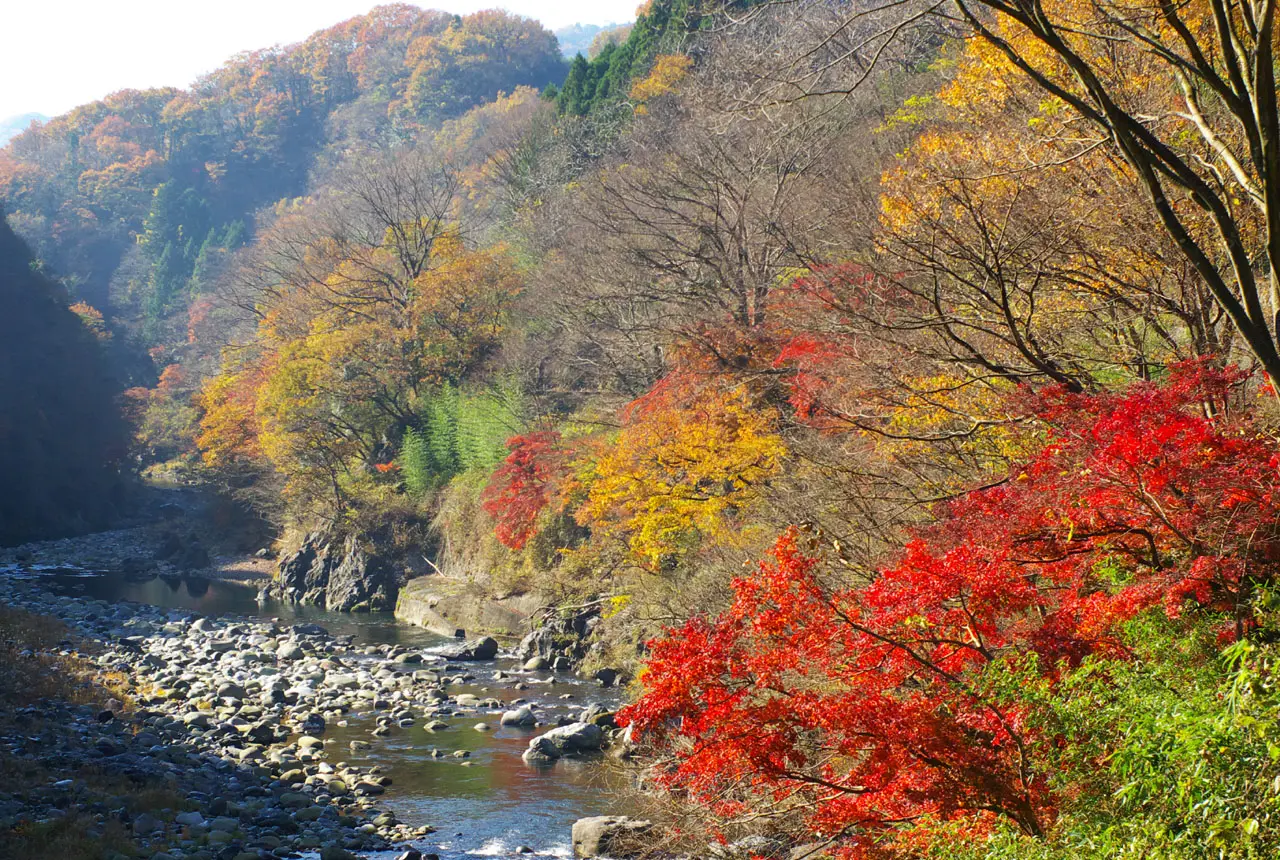
The section between Omama and Mato is the line’s best-known spot for autumn foliage. When the mountainsides along the gorge are covered in color, the scenery resembles a tunnel of fall leaves. The colors begin around Ashio in late October and gradually move down toward Omama over about a month.
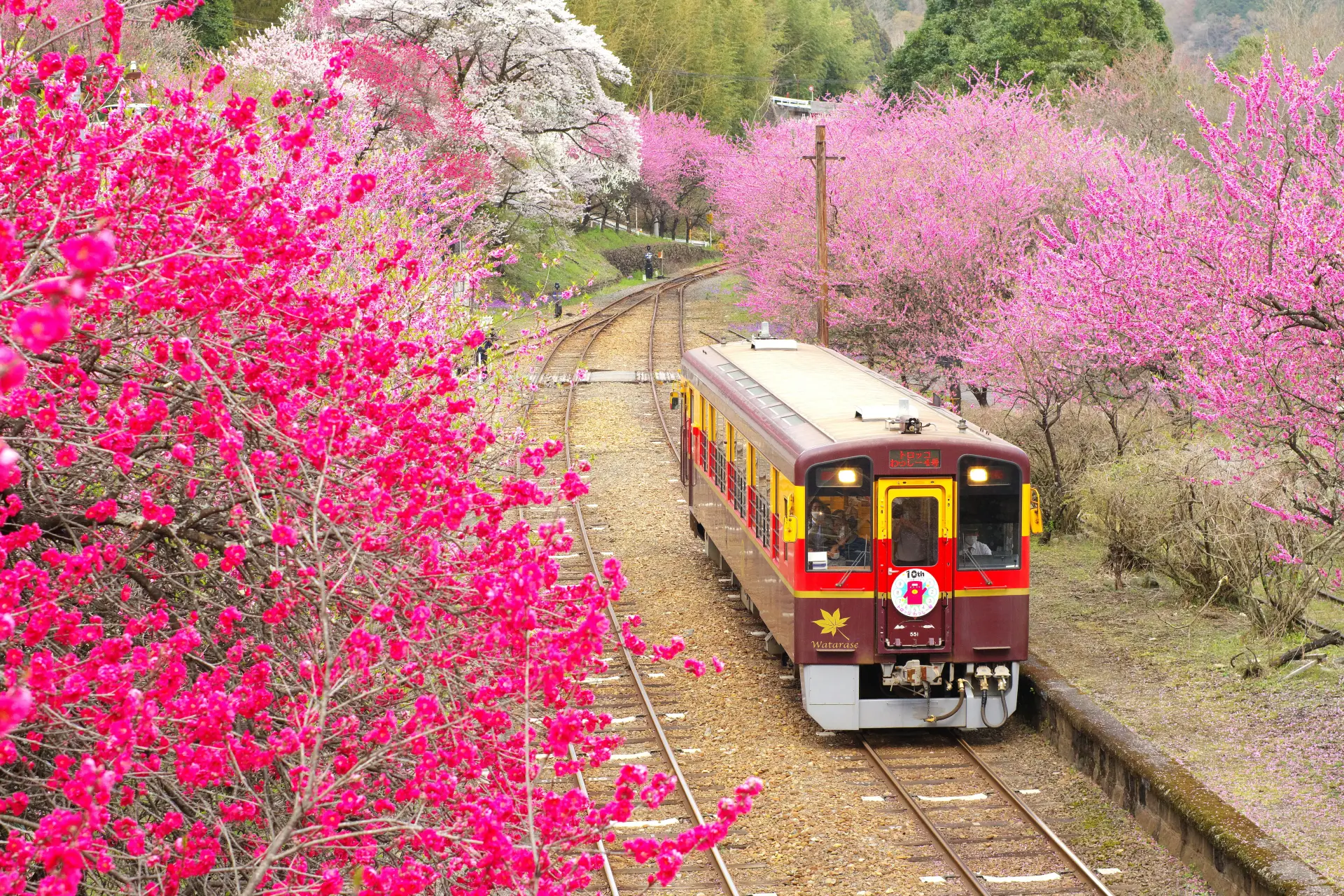
In spring, many flowers, including rapeseed blossoms, cherry blossoms, and flowering peaches, bloom along the Watarase Keikoku Railway. Godo Station is especially known for its flowering peaches, with around 300 trees blooming close to the train.
3. Between Sori Station and Haramuko Station
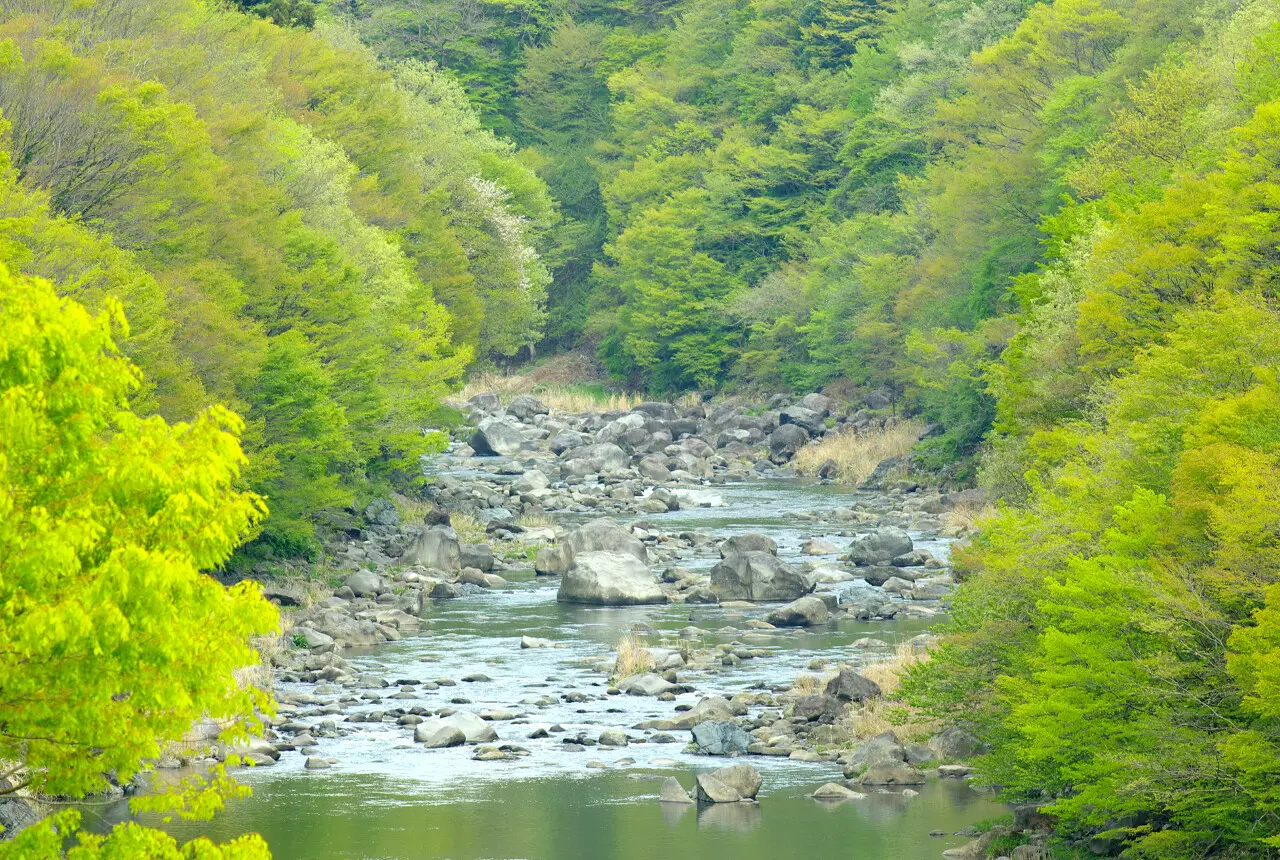
From Godo Station toward Ashio, the line moves away from national and prefectural roads, revealing scenery that can truly be seen only from the railway. One example is the gorge near the prefectural border between Gunma and Tochigi, between Sori Station and Haramuko Station. The contrast between the emerald-green river and white granite is striking, and it is said to be one of the most scenic views along the line.
Two Spots to Visit Along the Watarase Keikoku Railway
1. Station Natural Hot Spring Mizunuma no Yu (Mizunuma Station)
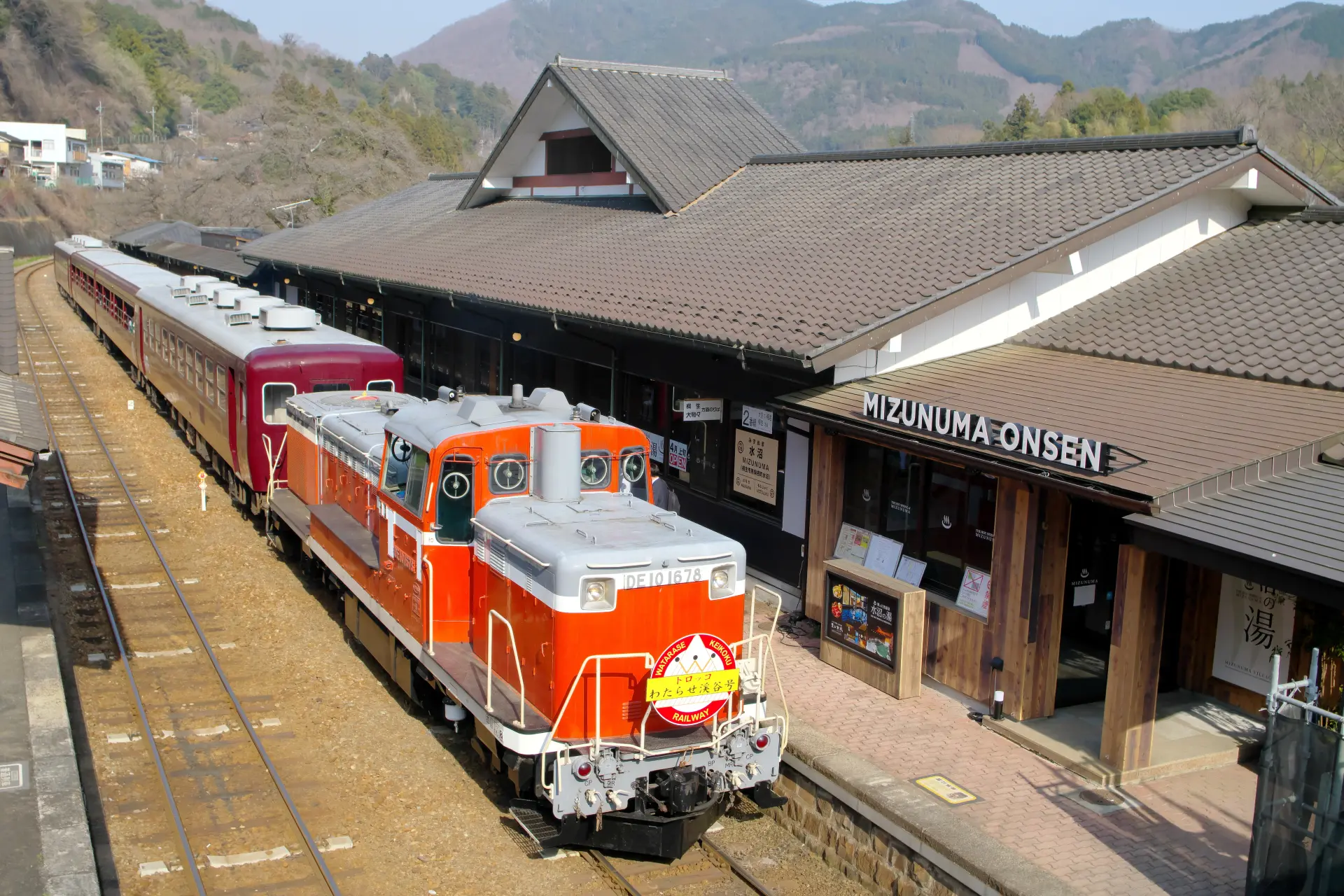
This rare day-use hot spring is located inside the station and directly connected to the platform at Mizunuma Station on the Watarase Keikoku Railway. It features a large bath with an open-air bath and sauna, as well as a spacious outdoor bath overlooking the ridgeline of Mount Kojin right in front of you. It is a relaxing place to ease your travel fatigue during a train trip. After bathing, take a break in the tatami room or on the wooden deck.
2. Train Restaurant Seiryu (Godo Station)
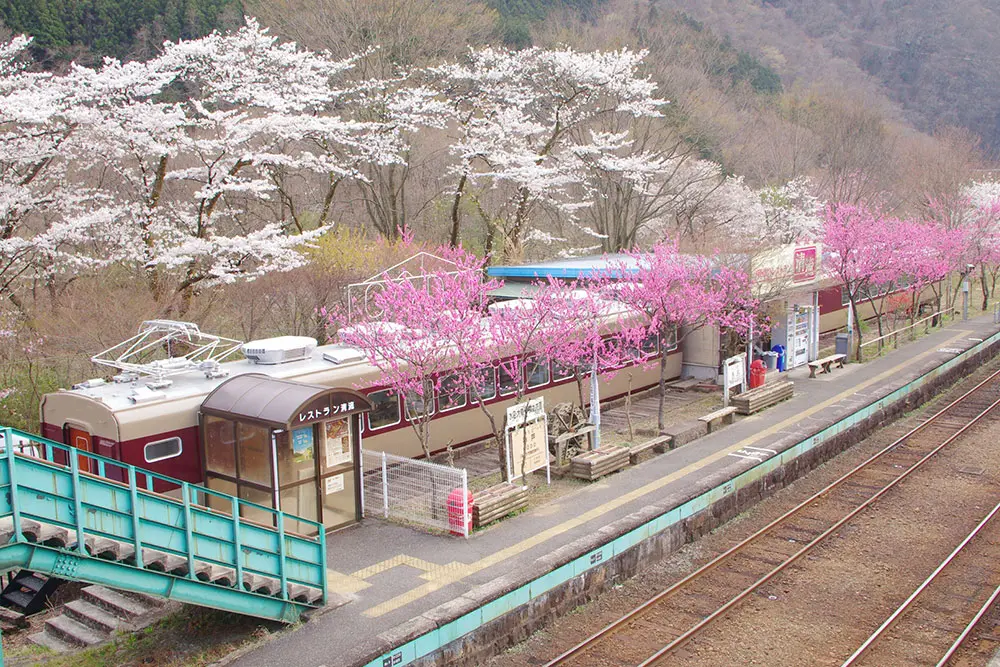
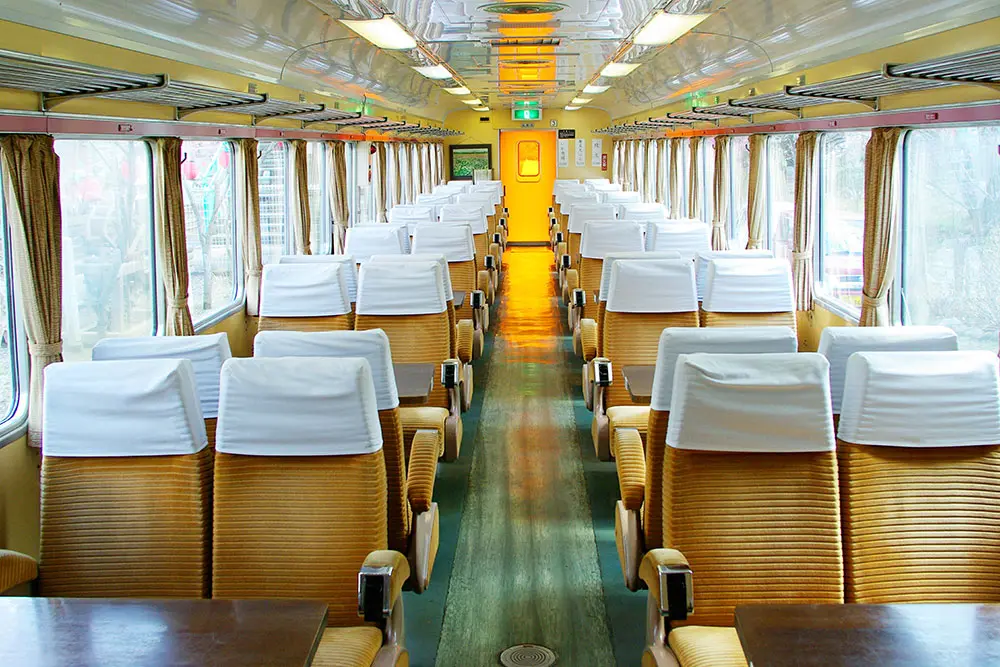
The former train car on Platform 2 at Godo Station is a restaurant that feels just like a dining car. It uses a car from the 1720 series Deluxe Romance Car “Kegon,” a limited express train that once ran on the Tobu Railway Nikko Line from the 1960s to around 1991, with its interior kept largely intact. In the almost-original interior, you can try ekiben-style boxed meals such as Yamato pork bento and torokko bento (1,300 yen with miso soup for dining in, 1,200 yen for takeout), as well as dishes like the maitake mushroom rice set meal for 1,400 yen and Watetsu curry for 1,000 yen.
Basic Information on Watarase Keikoku Railway’s Torokko Wassy and Torokko Watarase Keikoku
- Railway company / train name
- Watarase Keikoku Railway “Torokko Wassy” and “Torokko Watarase Keikoku”
- Operating section / travel time
- Torokko Wassy: Kiryu Station to Mato Station (about 1 hour 30 minutes to about 1 hour 50 minutes); Torokko Watarase Keikoku: Omama Station to Ashio Station (about 1 hour 30 minutes to about 1 hour 40 minutes)
- Operating days
- Torokko Wassy (no service from July to September 2026) and Torokko Watarase Keikoku both operate on the dates listed on the official website
- Number of services
- Torokko Wassy: 2 round trips per day; Torokko Watarase Keikoku: 1 round trip per day
- Price Range
- Fare (Omama to Ashio): 940 yen + torokko boarding ticket: 520 yen (700 yen from September)
- How to buy tickets
- Available at the ticket counters at Aioi, Omama, and Tsudo stations, and also through the official website. *See the official website for details.
- Official website
- Official website (Japanese)
2. Aizu Railway “Ozatoro Observation Train”
(Aizuwakamatsu City, Fukushima Prefecture to Minamiaizu Town, Minamiaizu District)
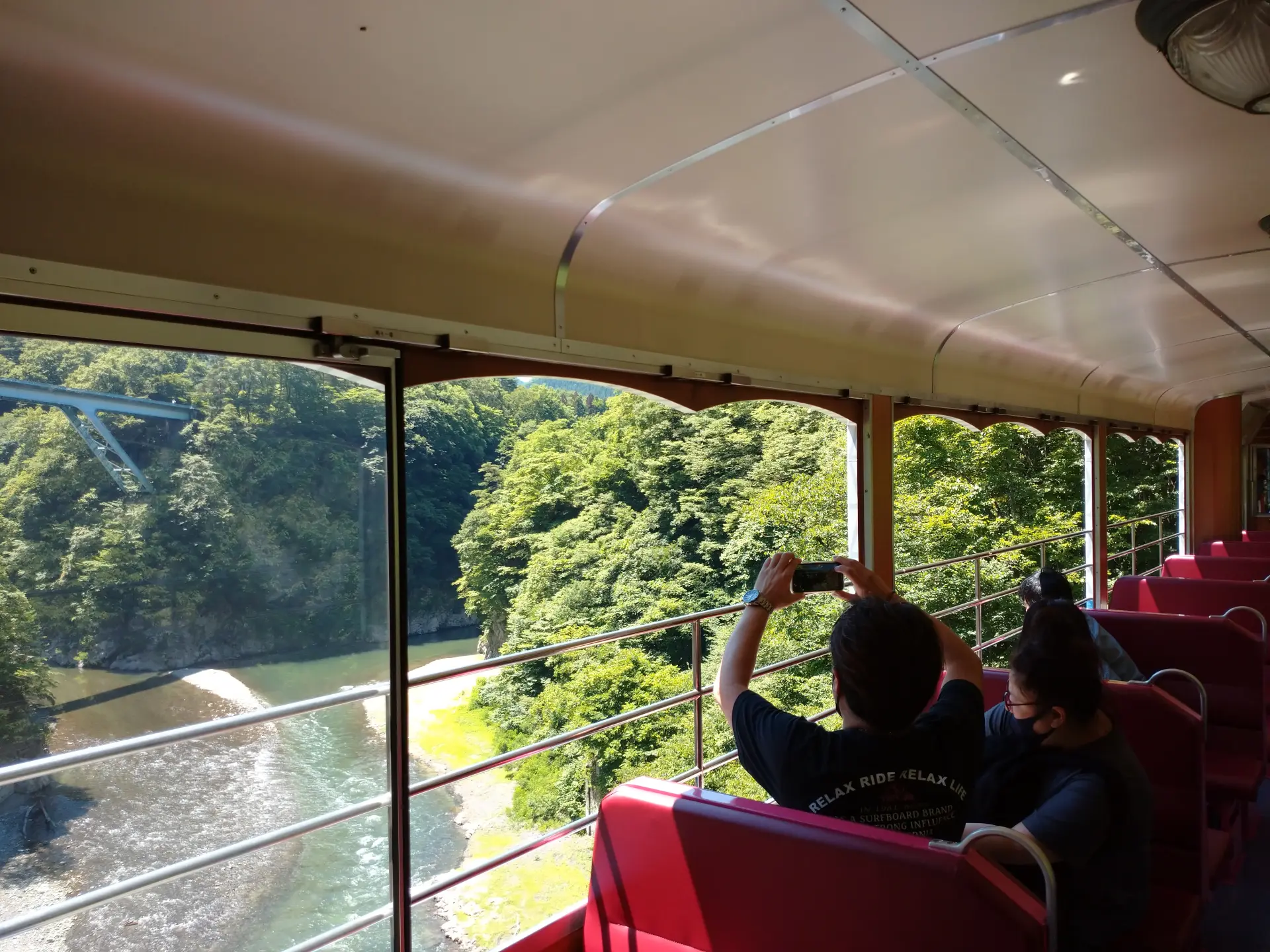
The Ozatoro Observation Train runs through the satoyama countryside of Minamiaizu and includes torokko cars, tatami-style seating cars, and observation cars. You can feel nature directly from the windowless torokko seats, relax in the sunken kotatsu-style tatami seats, or take in the scenery from reclining seats in the observation car, which sits higher than usual. In addition to original merchandise, onboard sales offer alcohol, juice, and snacks, letting you enjoy the nature-filled views from the Aizu Railway Aizu Line at your own pace.
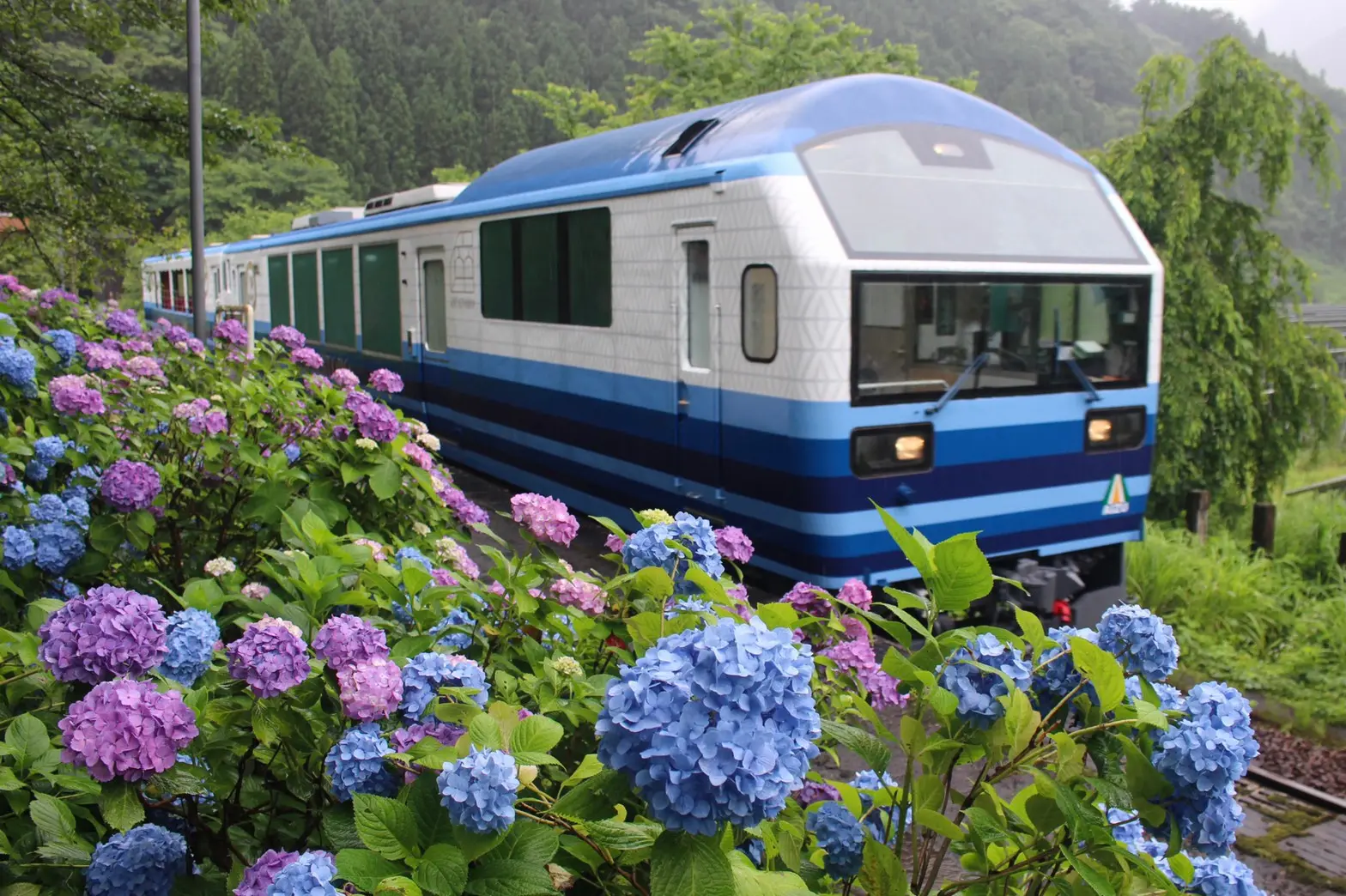
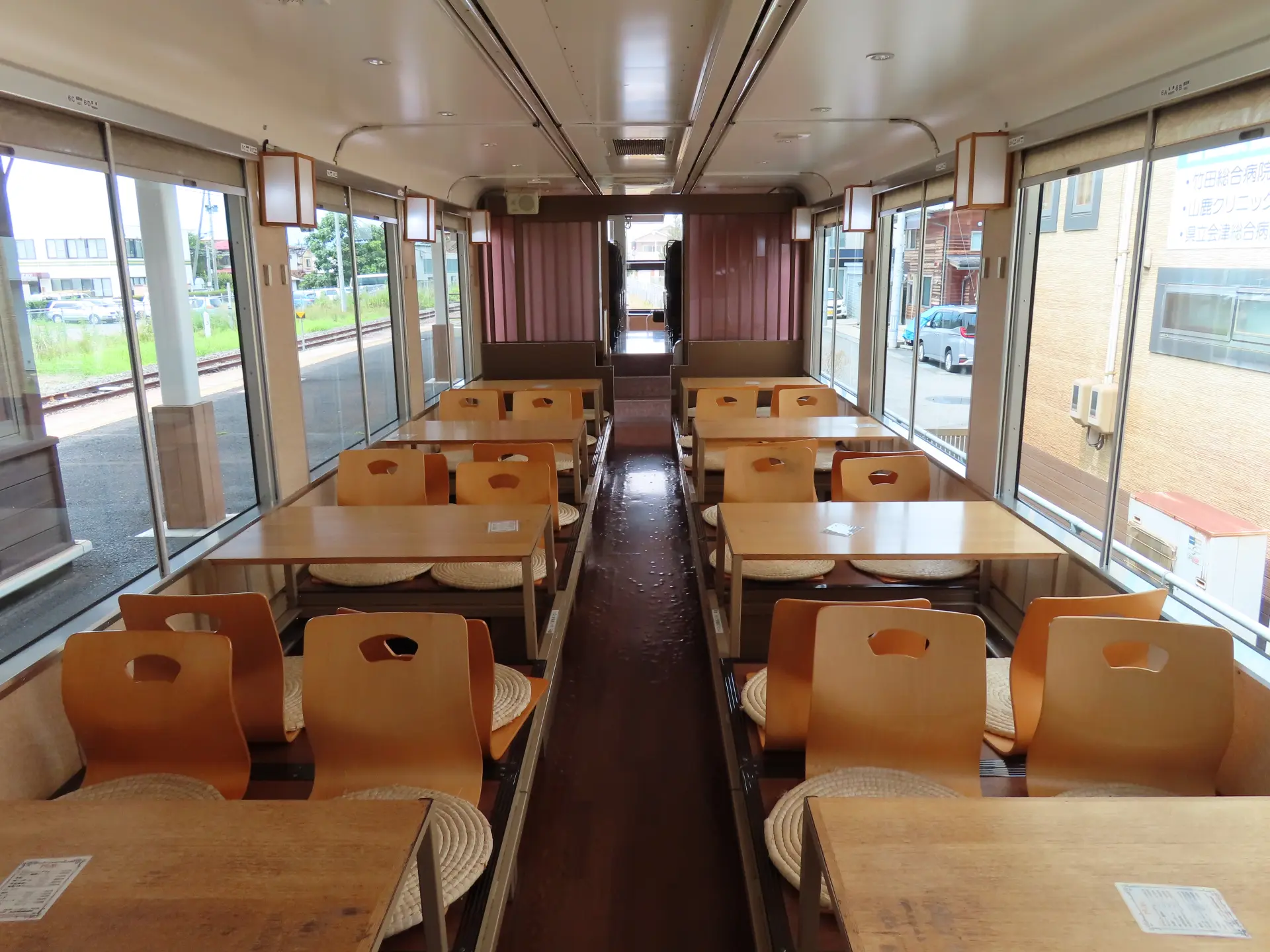
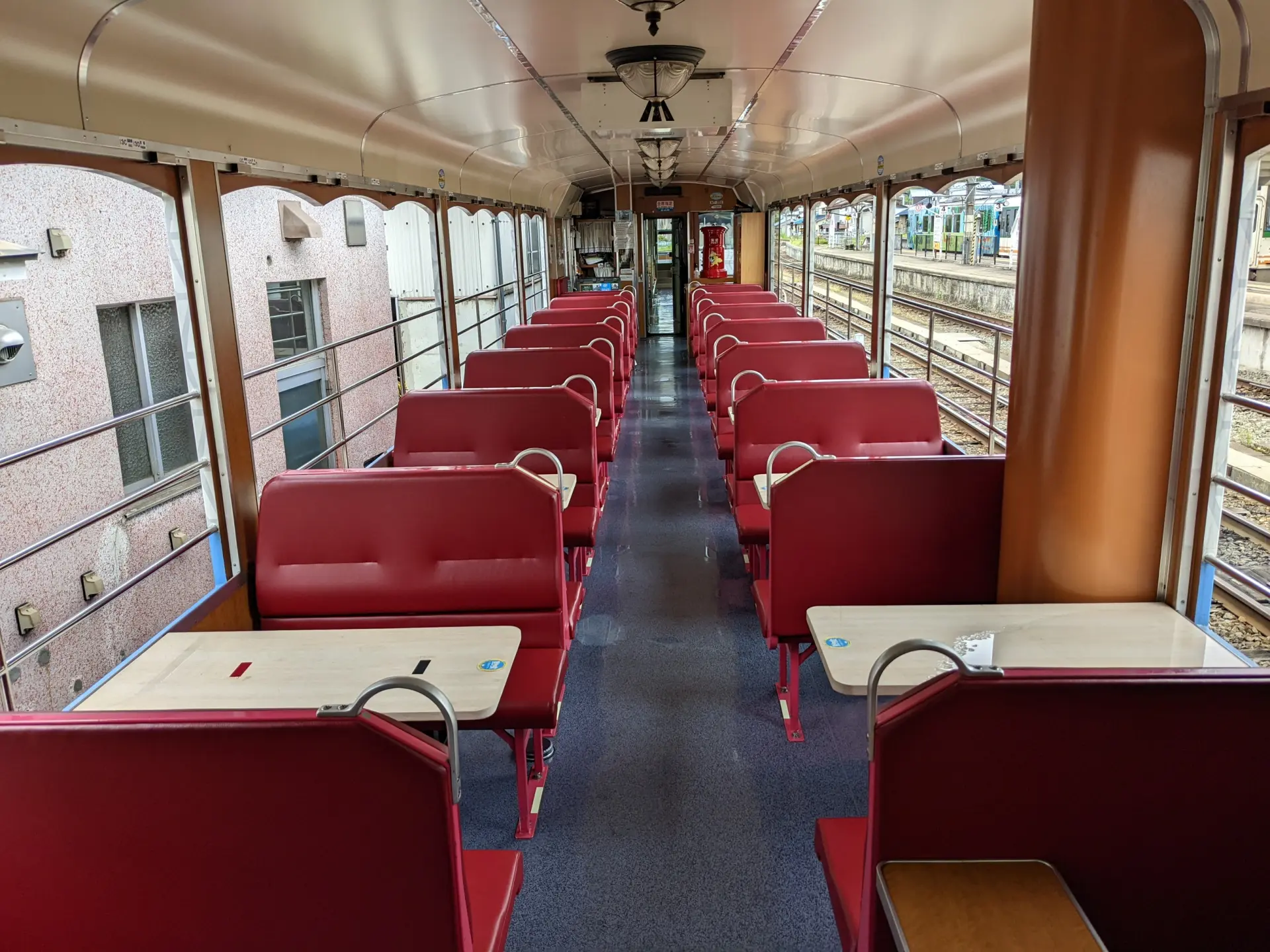
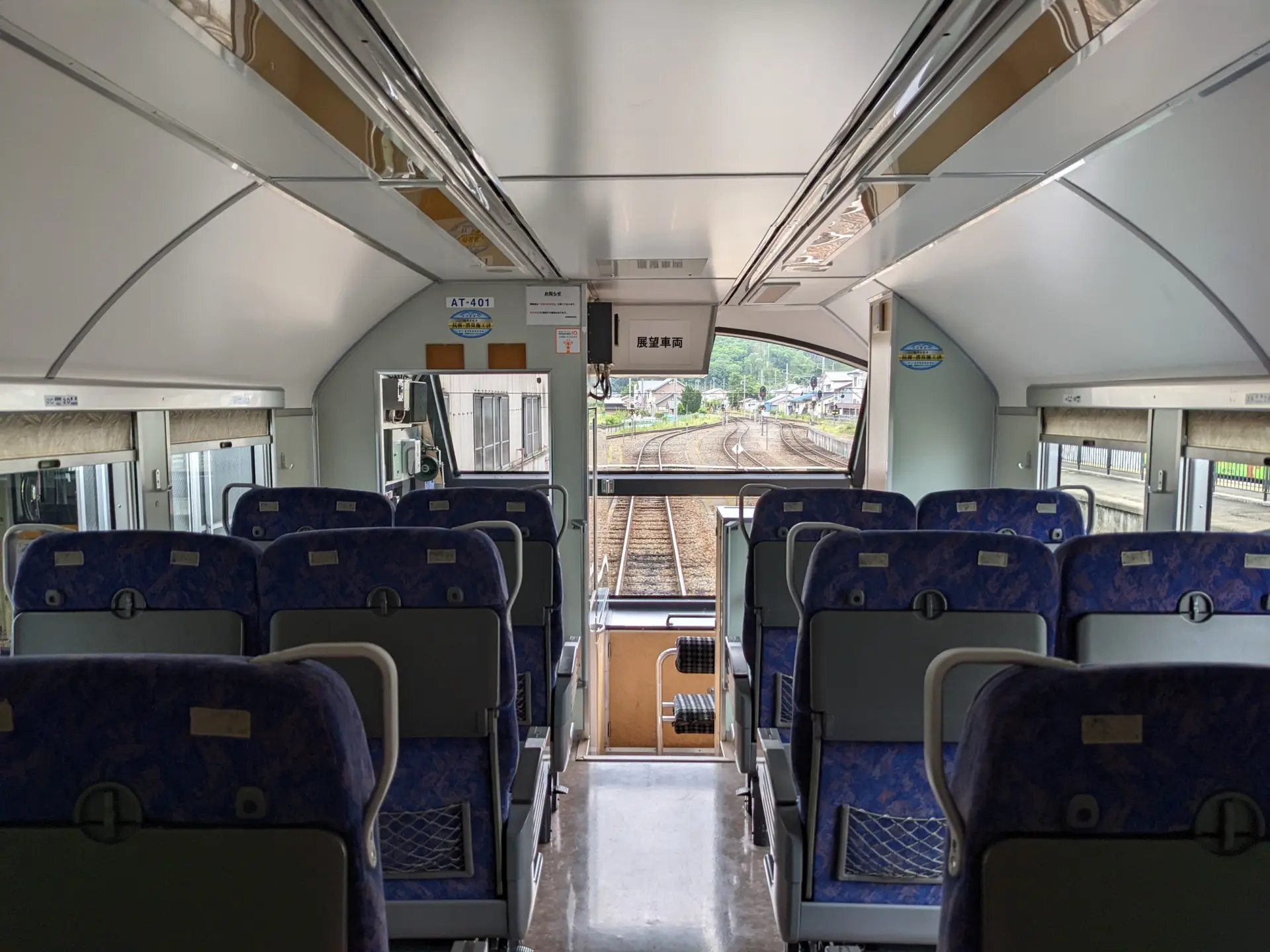
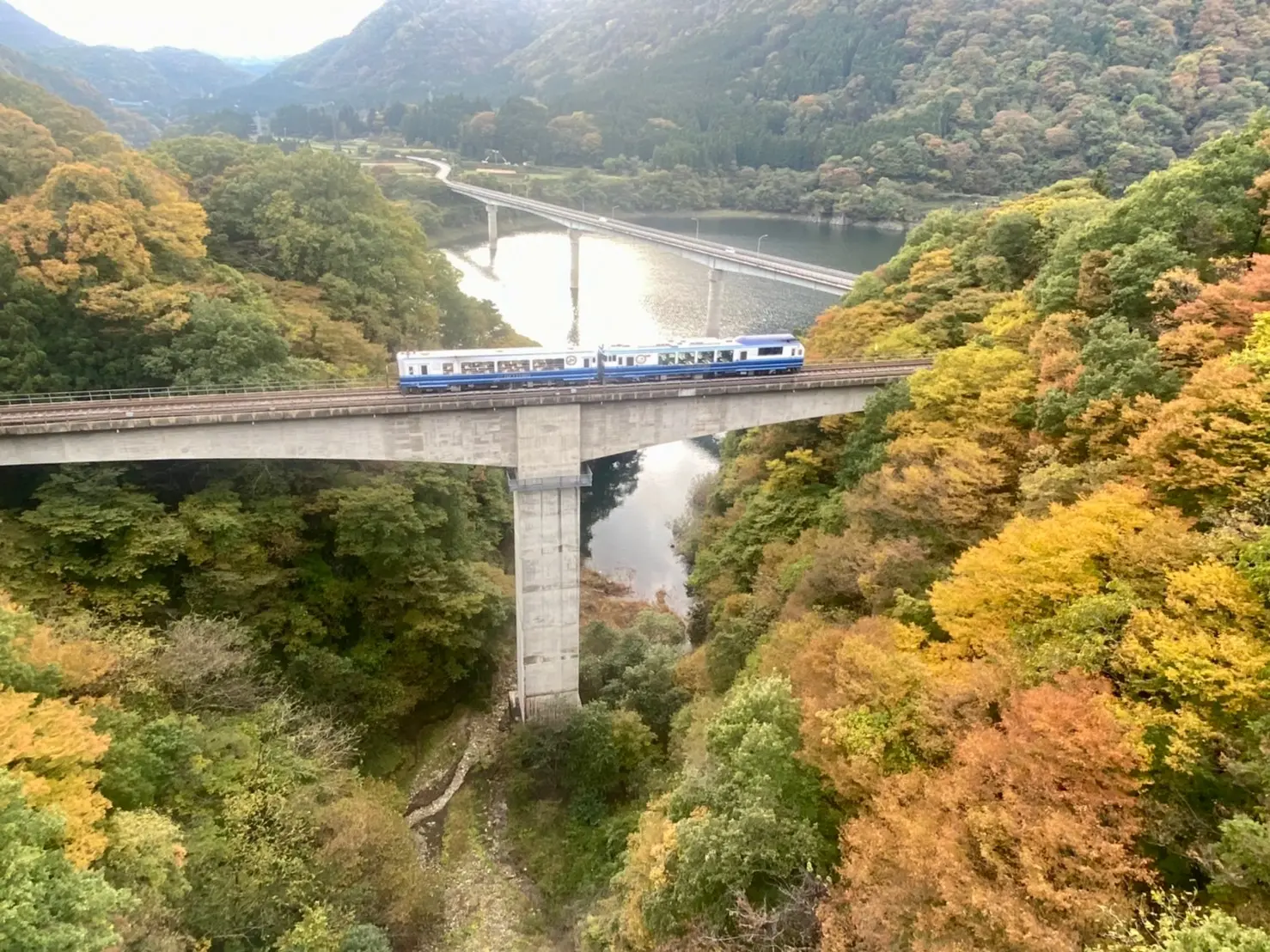
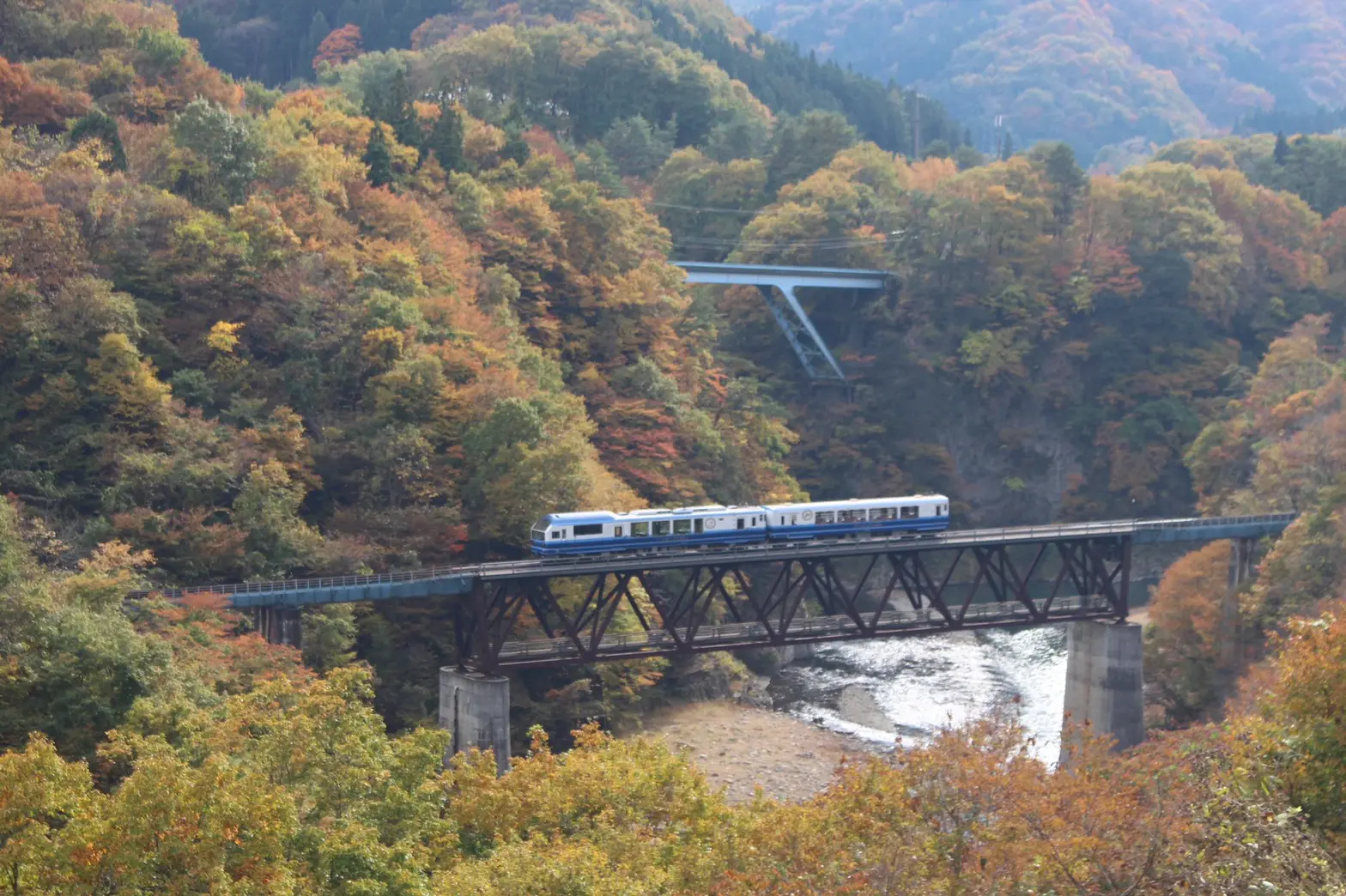
Along with fresh spring greenery and summer greens, the scenery created by the autumn foliage and the Aga River’s mountain stream, typically at its best from mid-October to early November, is also lovely. In particular, the gorge views from the two railway bridges between Ashinomaki Onsen Minami Station and Yunokami Onsen Station are especially impressive. Between Nishi-Wakamatsu Station and Ashinomaki Onsen Station, you can see both Tsurugajo Castle, a symbol of Aizu, and Mount Bandai at the same time.
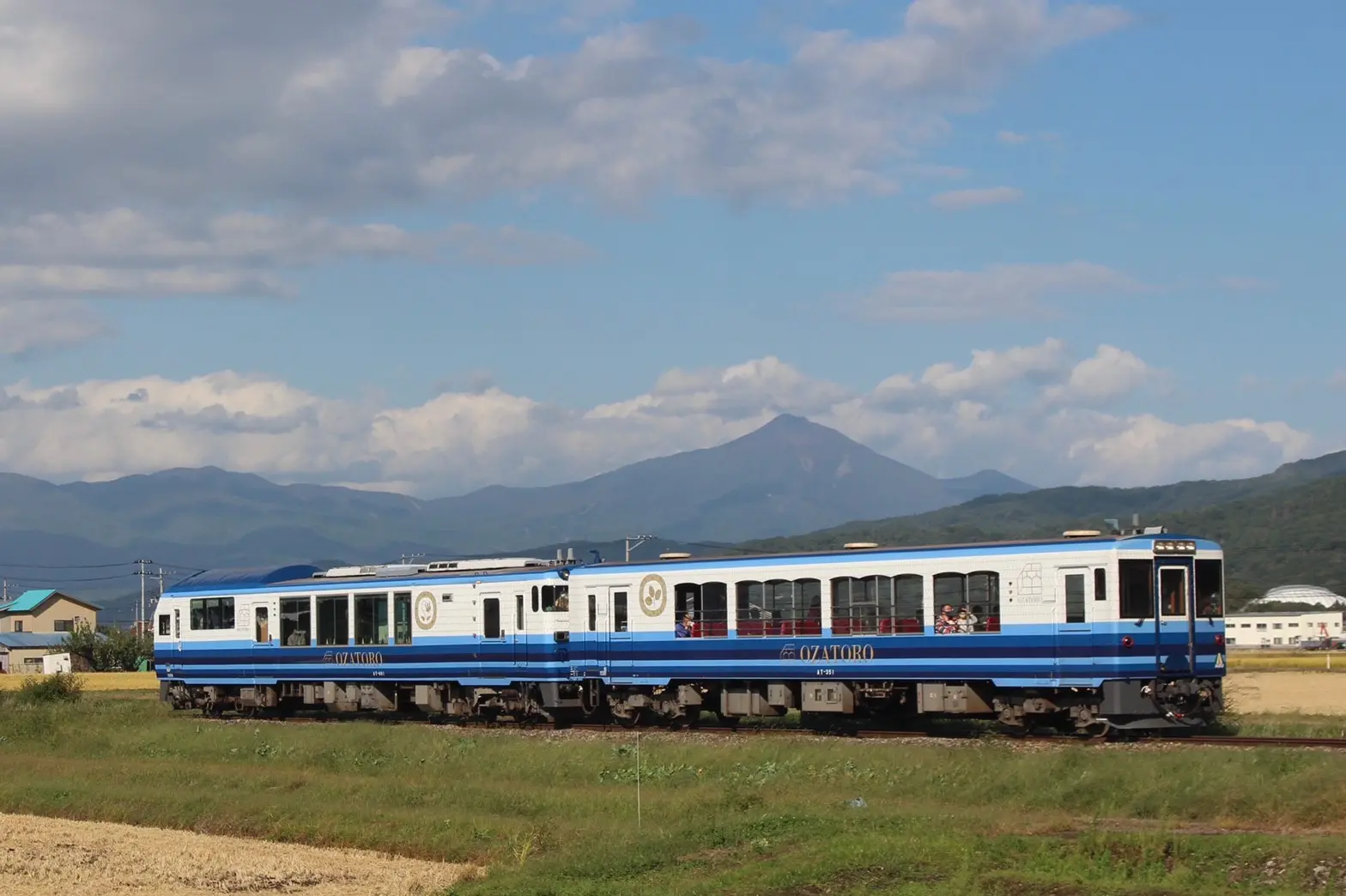
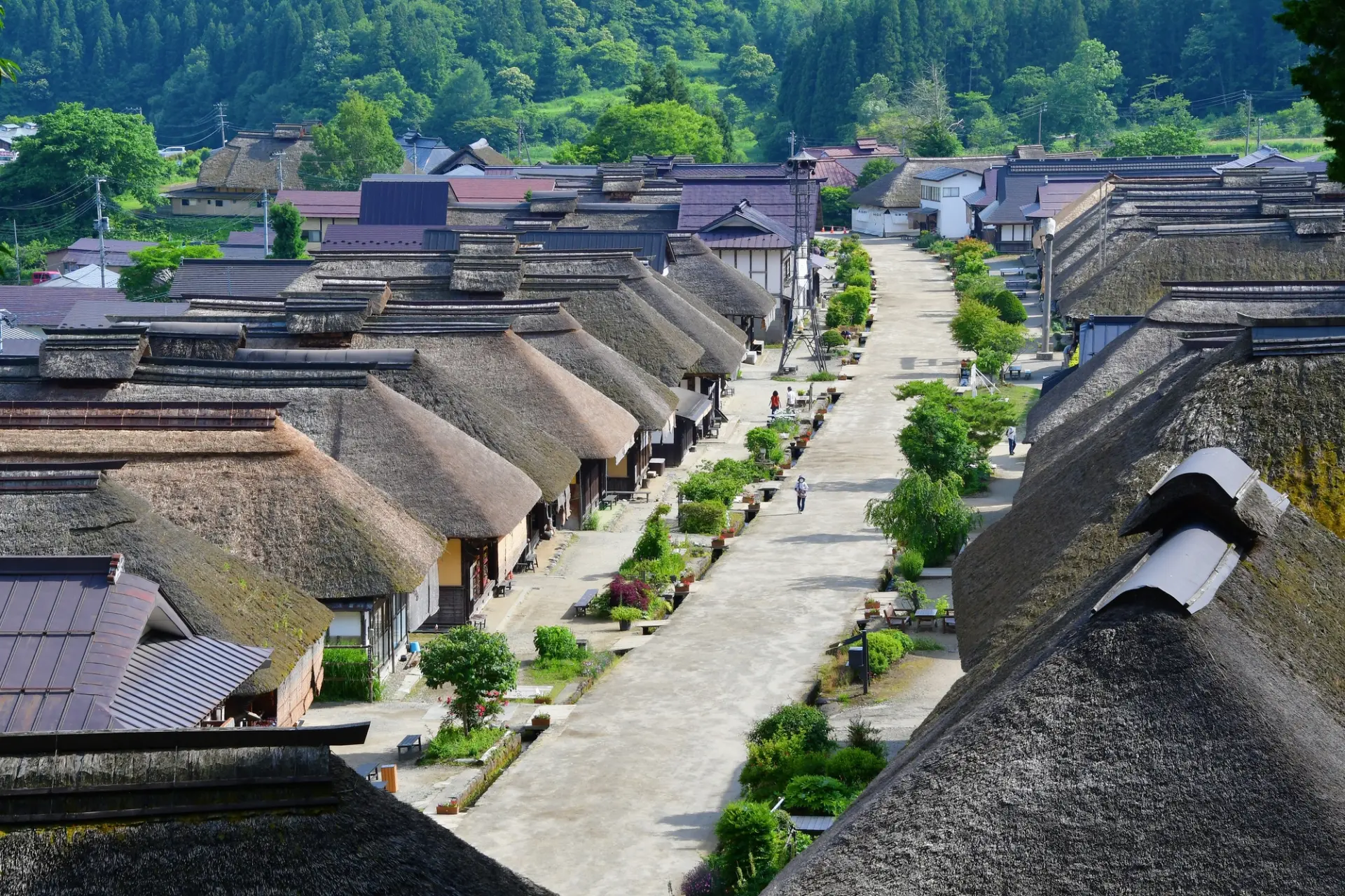
Sights along the line include Aizuwakamatsu, Ouchi-juku, a mountain village of thatched-roof old houses that flourished as a post town on the Shimotsuke Kaido road during the Edo period, and To-no-Hetsuri, a National Natural Monument located along the railway. It is also worth traveling with stopovers along the way.
How to Get to Aizu Railway’s Ozatoro Observation Train
The simplest route from Tokyo is to take the Tobu Line from Asakusa to Aizu-Tajima Station. From Tobu Asakusa Station, the Tobu Limited Express Revaty Aizu takes about 3 hours and 10 minutes to Aizu-Tajima Station. You can transfer directly to the Ozatoro Observation Train at Aizu-Tajima Station.
If you plan to board the Ozatoro Observation Train from Aizuwakamatsu Station, take the Tohoku Shinkansen or Yamagata Shinkansen from Tokyo Station to Koriyama Station in about 1 hour and 20 minutes. From Koriyama Station, transfer to the JR Ban-etsu West Line and reach JR Aizuwakamatsu Station in about 1 hour and 5 minutes. Although Aizuwakamatsu Station is a JR station, Aizu Railway trains also serve it, and it is a departure and arrival station for the Ozatoro Observation Train.
Three Highlights of the Ozatoro Observation Train
1. Temporary stops at three scenic railway bridges (Ashinomaki Onsen Station to To-no-Hetsuri Station)
The appeal of the Ozatoro Observation Train’s window views lies in the grand natural scenery and peaceful satoyama landscapes stretching along the line from Aizuwakamatsu City through Shimogo Town to Minamiaizu Town. The gorge scenery, formed by spring and summer greens, autumn foliage typically at its best from mid-October to early November, and the Aga River’s mountain stream, is especially beautiful. The train makes brief stops at scenic spots such as the 60 m-high Fukasawa Bridge, the Third Okawa Bridge, and the Fifth Okawa Bridge overlooking To-no-Hetsuri, so passengers can take in the gorge views along the Agano River at leisure.
2. To-no-Hetsuri (To-no-Hetsuri Station)
To-no-Hetsuri means “a cliff lined with towers.” It is one of the Aga River’s leading scenic spots, known for the shapes of its unusual rock formations. The view of white rock towers, formed over about 1 million years through repeated erosion and weathering, together with the green mountain stream, leaves a strong impression once you see it.
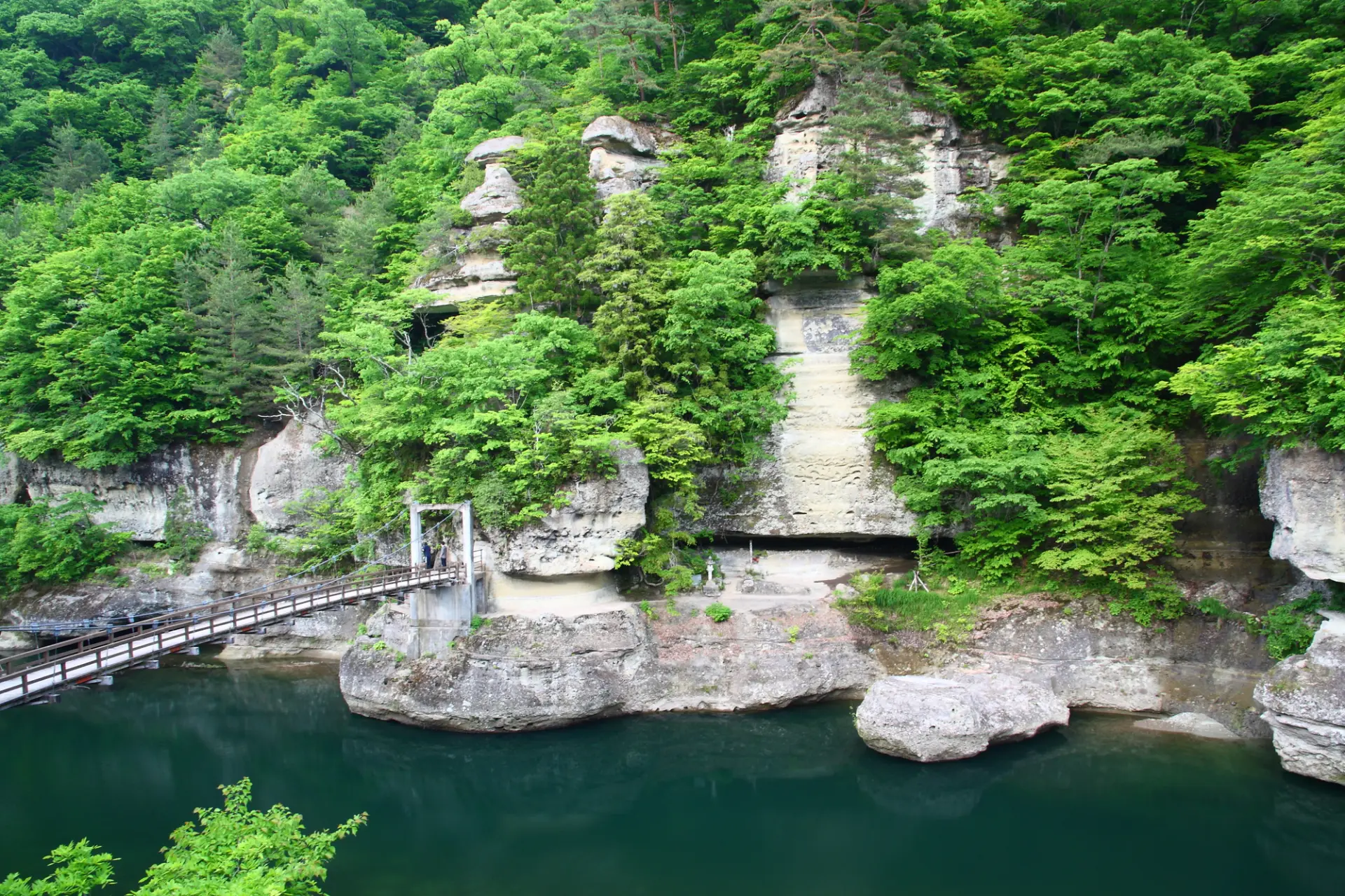
Get off at To-no-Hetsuri Station, and it is about a 5-minute walk to the promenade where you can view the gorge up close. Many visitors enjoy both the train-window scenery and a walk around the area. It is beautiful during the fresh green season, the autumn foliage season, and also when wisteria blooms from early to mid-May in a typical year.
The section from Yunokami Onsen Station through To-no-Hetsuri Station to Aizu-Tajima Station continues through an area of distinctive rock formations around To-no-Hetsuri and deep, steep gorges, and you can see their characteristic rock faces from the train window.
3. Yunokami Onsen Station and Ashinomaki Onsen Station
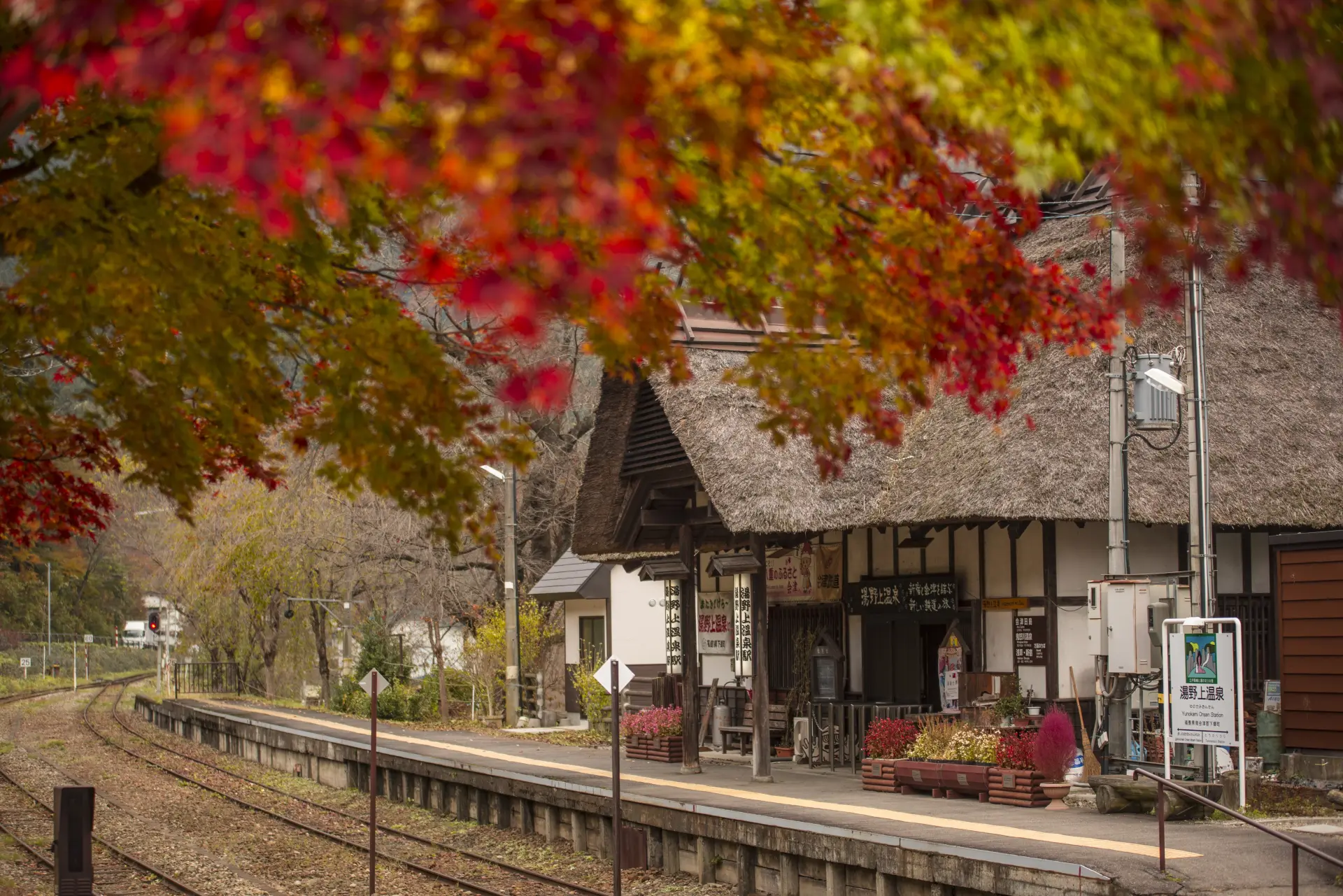
Yunokami Onsen Station, with its thatched roof, and Ashinomaki Onsen Station, known for its cat stationmaster, are two famous stations that Aizu Railway is proud of. Beside the tracks at both stations, fields, villages, and mountain hot spring areas spread out, offering a peaceful rural atmosphere different from the gorge-view sections.
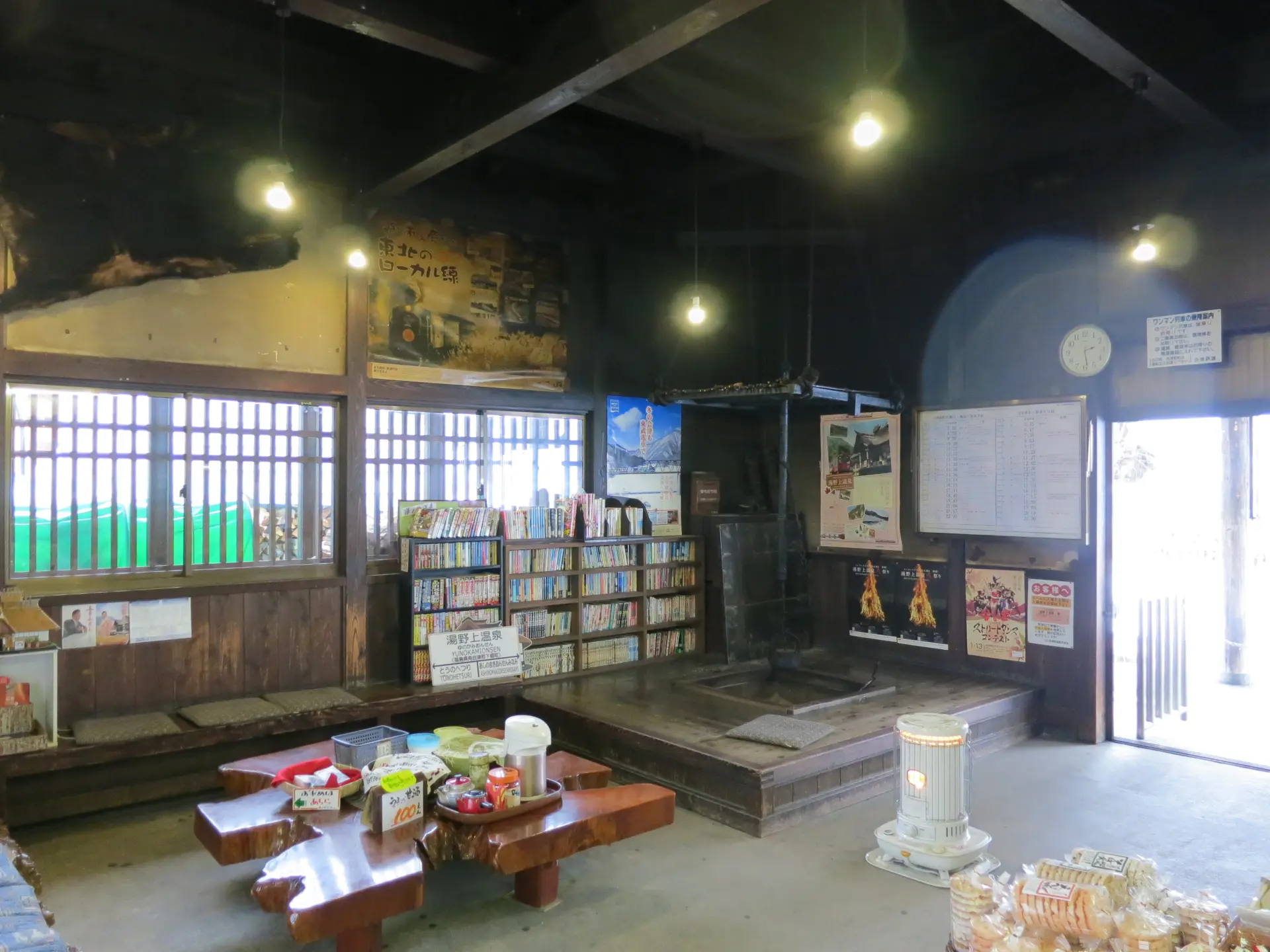
Yunokami Onsen Station, the nearest station to Ouchi-juku, is known for its thatched roof inspired by the townscape of Ouchi-juku. The waiting room inside the station building has an irori sunken hearth, and you can spend time relaxing over tea while waiting for your train. There are many hot spring inns in the area, and you can also soothe your tired feet in Oyako Jizo no Yu, the footbath next to the station building.
Yunokami Onsen Station is also known for cherry blossoms, and during the blooming season you can see the scenery of the thatched-roof station building together with the blossoms.
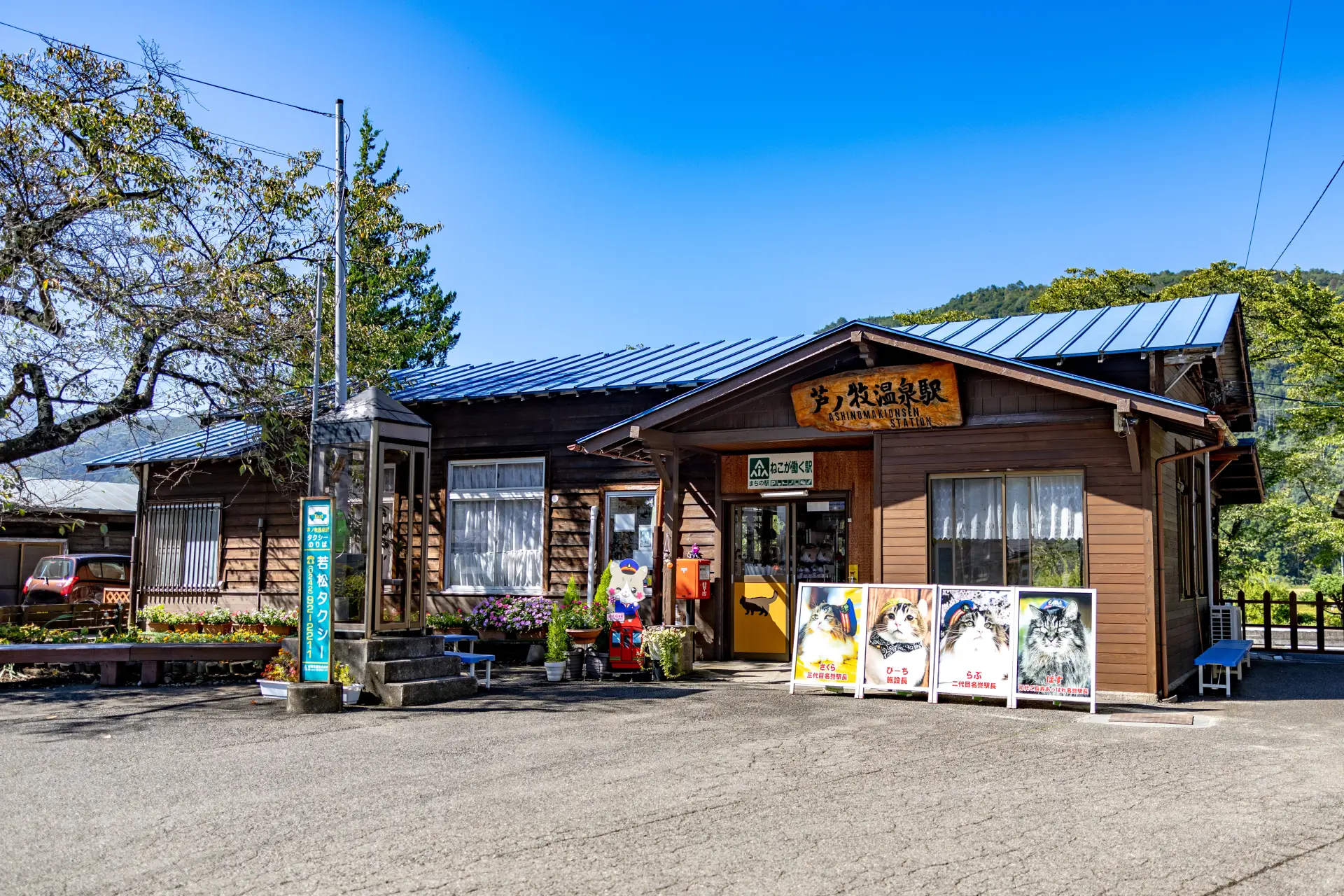
Ashinomaki Onsen Station is irresistible for cat lovers, as you are welcomed by the adorable cat stationmaster, Sakura. The small wooden station building blends with the mountain scenery, creating a travel atmosphere full of charm.

Basic Information on Aizu Railway’s Ozatoro Observation Train
- Railway company / train name
- Aizu Railway “Ozatoro Observation Train”
- Operating section / travel time
- JR Aizuwakamatsu Station to Aizu Railway Aizu-Tajima Station (about 1 hour 10 minutes to 1 hour 30 minutes)
- Operating days
-
Mainly Saturdays, Sundays, and holidays from late March to November. Operates daily in mid-August and early November.
*Check the official website for details. - Number of services
- 2 round trips per day
- Price Range
- Fare (Aizuwakamatsu to Aizu-Tajima): 1,700 yen + Ozatoro reserved-seat ticket: 500 yen
- How to buy tickets
- Reservations accepted on the official website; tickets sold at staffed Aizu Railway stations or travel agencies. *See the official website for details.
- Official website
- Official website (Japanese)
3. Akasawa Forest Railway
(Agematsu Town, Nagano Prefecture)
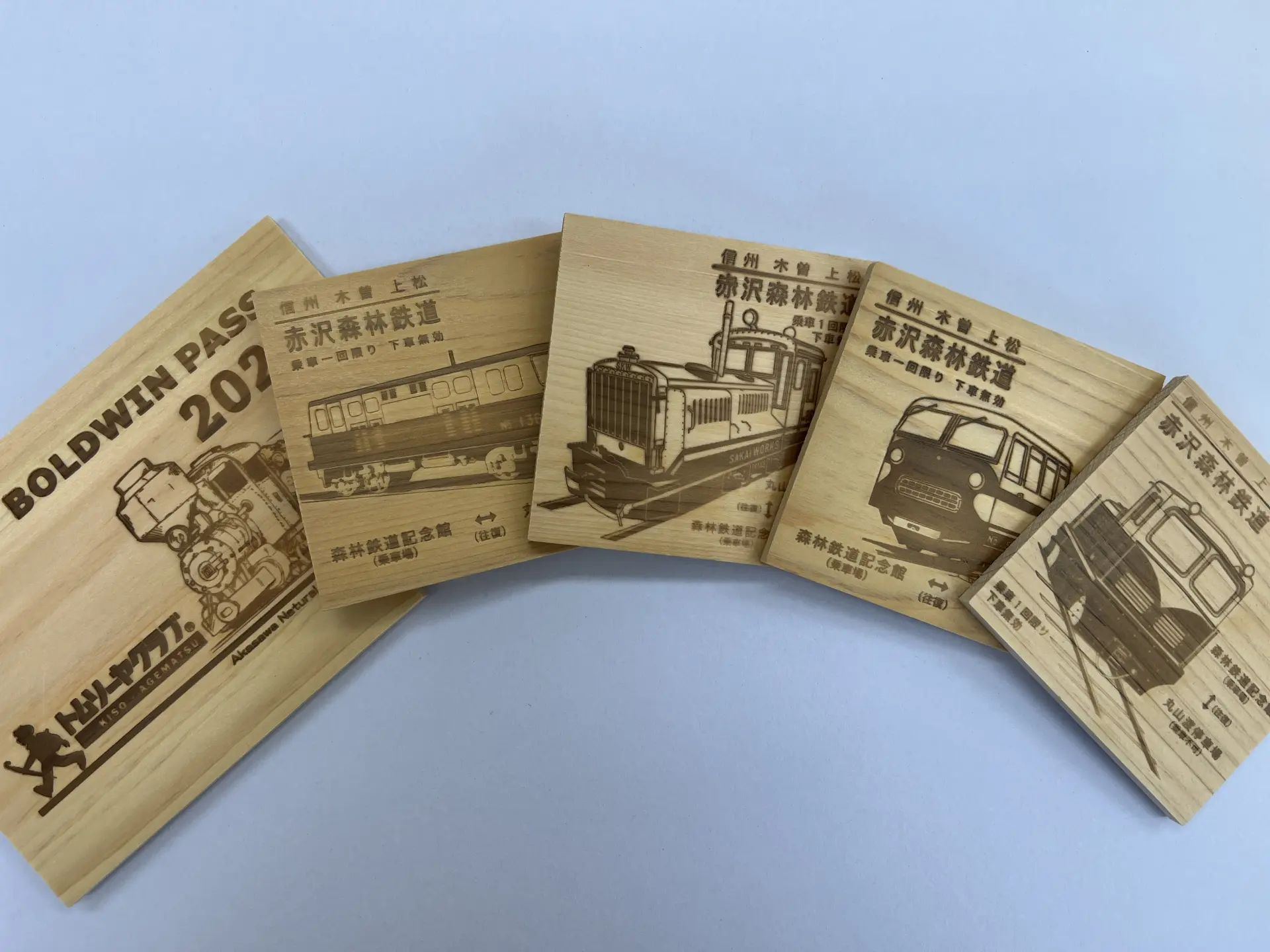
Akasawa Forest Railway is a narrow-gauge sightseeing torokko train (762 mm gauge) that runs through Akasawa Natural Recreational Forest in Agematsu Town, Nagano Prefecture. It usually operates from April to November and lets visitors experience the rich natural setting of natural Kiso hinoki cypress trees more than 300 years old. Its predecessor was a forest railway, once found throughout Japan as a means of transport in mountainous areas. Part of the Kiso Forest Railway, which ran in the forestry-rich Kiso region until 1975, has been revived.
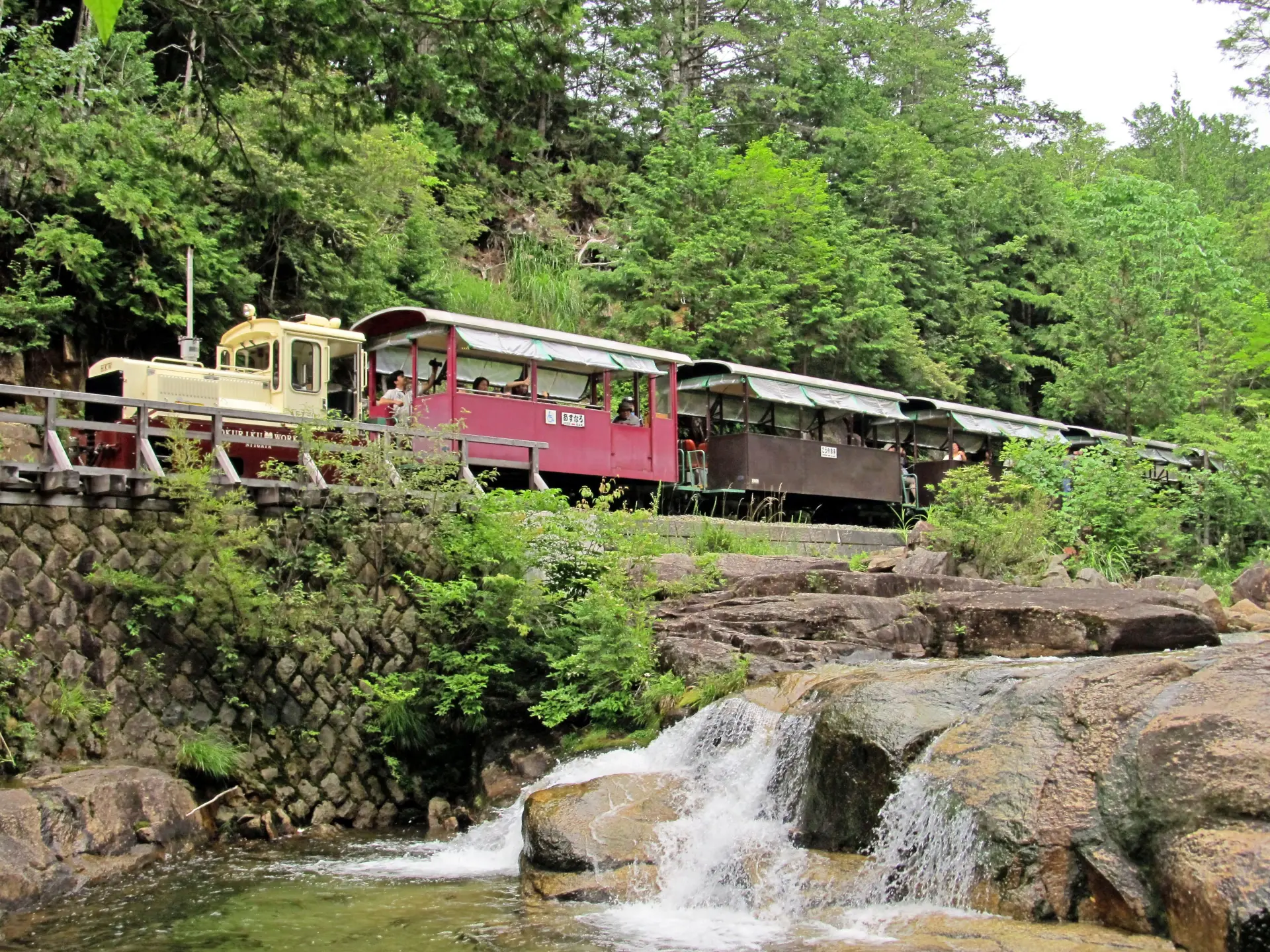
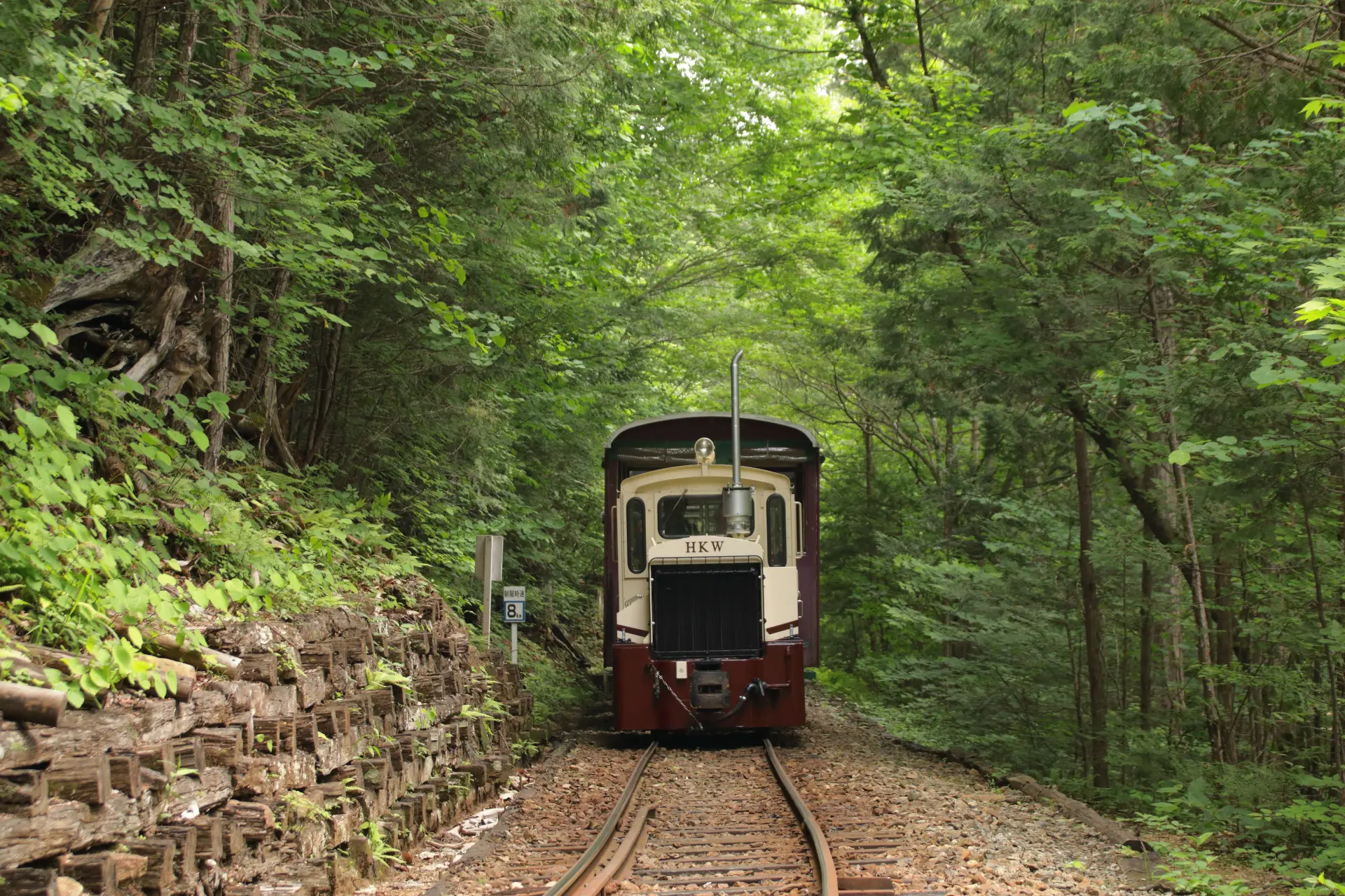
Akasawa Forest Railway runs slowly from the Forest Railway Memorial Museum to Maruyamado and back, covering about 2.2 km round-trip in about 25 minutes. While feeling the refreshing breeze of the birthplace of forest bathing, you can take in the Kiso hinoki forest, counted among Japan’s three great beautiful forests, and the scenery along the mountain stream. The open-air passenger cars are pulled by a newly built locomotive modeled after the diesel locomotives once used to transport timber.
During summer vacation, hands-on programs such as streamside play and woodworking classes are offered as part of the “Tom Sawyer Club Village Kiso-Agematsu Event.” These are recommended for families.
How to Get to Akasawa Forest Railway
Akasawa Forest Railway runs every hour or every 30 minutes during operating hours, and individual visitors generally ride without reservations. As long as you can board during operating hours, from 9:30 am or 10:00 am to 3:00 pm depending on the day, it is an easy trip to plan.
From Tokyo, take the JR Limited Express Azusa from Shinjuku Station to Shiojiri Station in about 2 hours to about 2 hours and 30 minutes. From Shiojiri Station, take the JR Chuo Main Line to JR Agematsu Station in about 1 hour and 10 minutes. From JR Agematsu Station, the Ontake Kotsu bus bound for Akasawa Natural Recreational Forest, which operates only during the park’s open season, takes about 30 minutes. There are 3 to 4 buses per day, so check the schedule in advance.
Three Highlights of Akasawa Forest Railway
1. Akasawa Forest Railway Memorial Museum
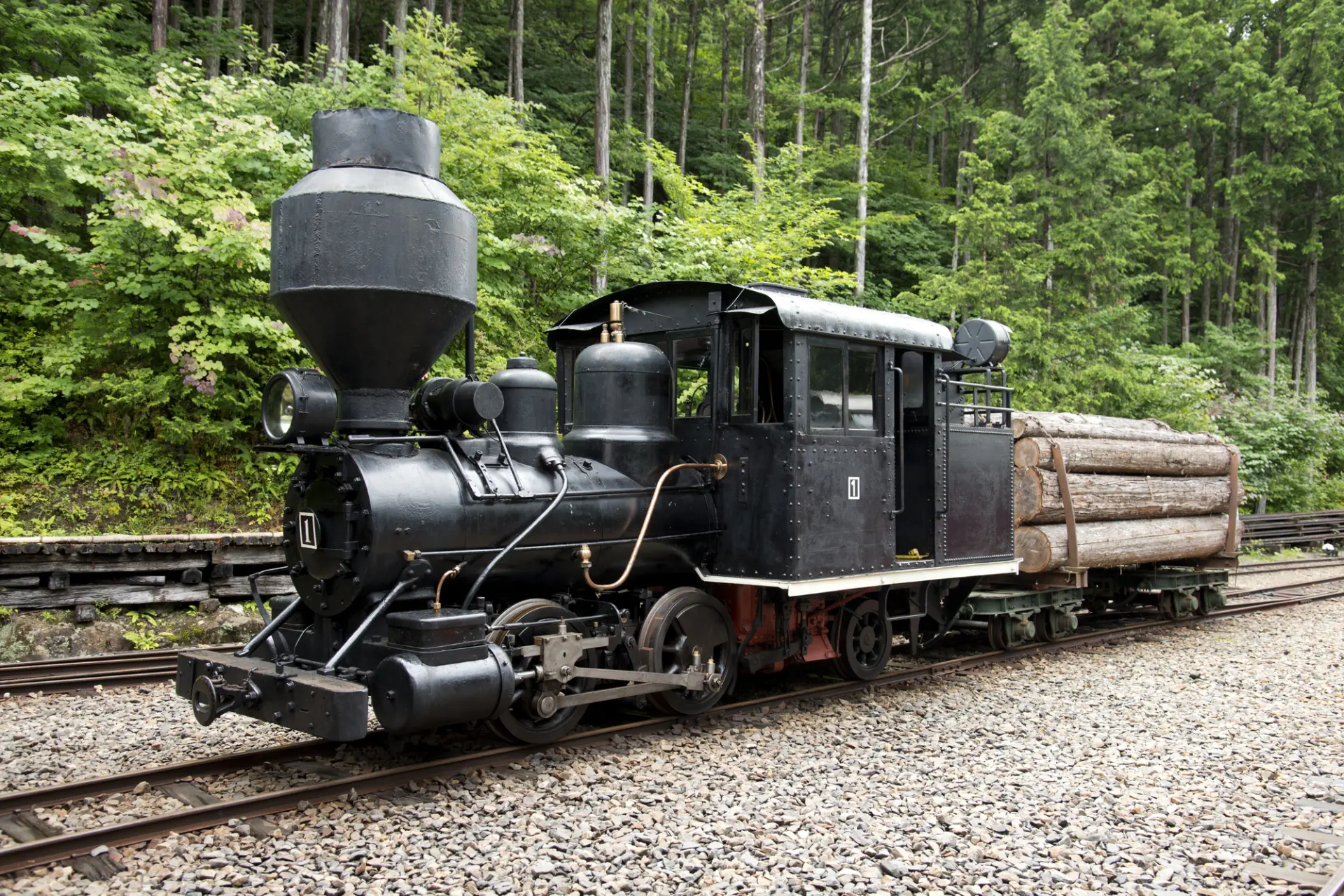
The starting point, Akasawa Forest Railway Memorial Museum, introduces Kiso’s forestry and the Kiso Forest Railway, which once played a central role in transporting timber. You can learn about how the Kiso Forest Railway not only carried wood but also supported transportation in the mountainous Kiso area. A highlight is the actual rolling stock that once served on the Kiso Forest Railway. Valuable vehicles on display include the American-made Baldwin No. 1 steam locomotive, a special car for distinguished guests, a mobile barber car, and motor cars.
2. The section through the Kiso hinoki forest
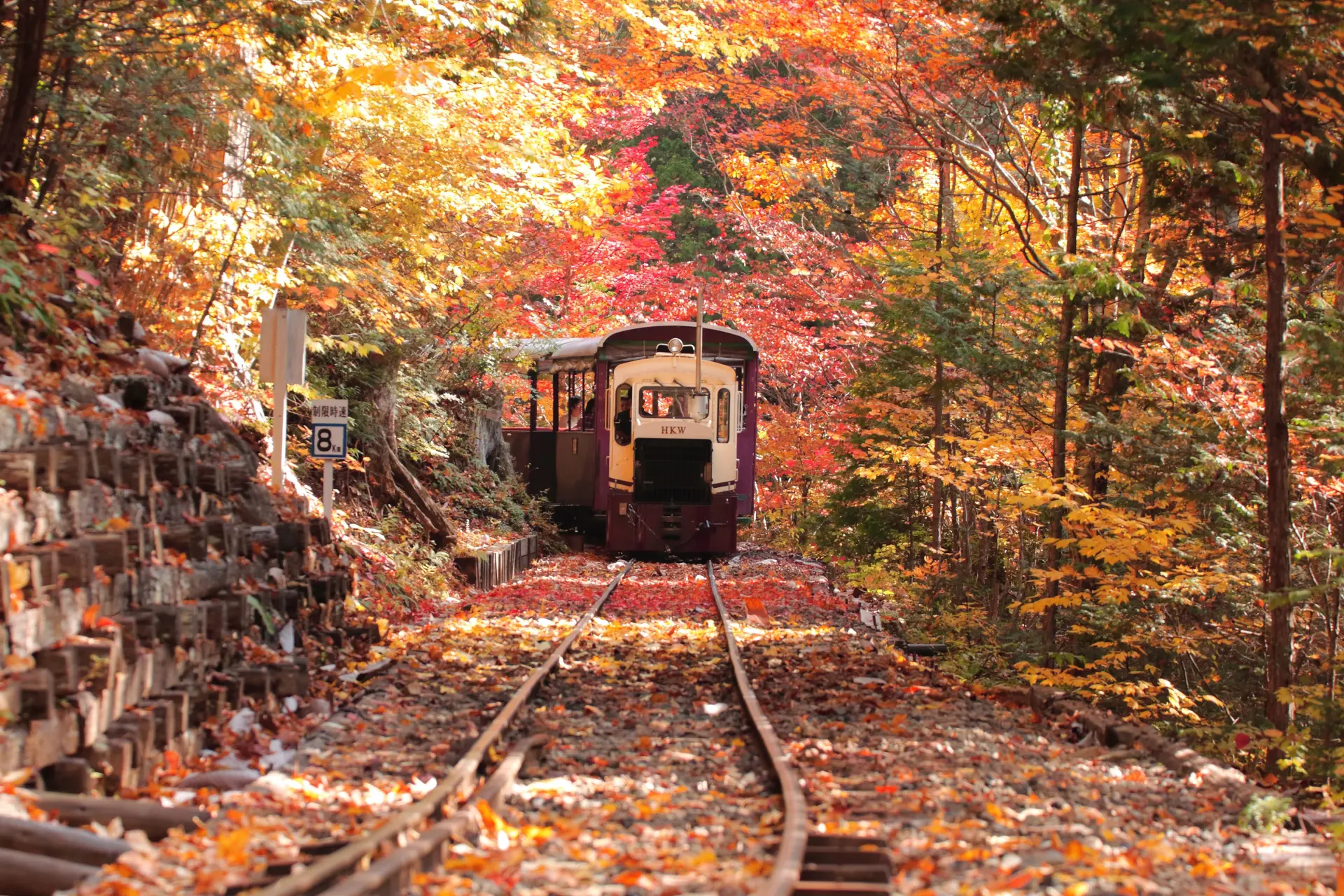
The open-feeling torokko train runs through a deep forest lined with the Kiso Five Sacred Trees. In the section where Kiso hinoki trees more than 300 years old stand, you can see trees so close from the windowless passenger cars that they almost seem within reach. From the pale yellow-green of fresh leaves to the deep greens of summer, feel the scent of hinoki and the dappled sunlight on your skin. In fall, the foliage in the sections lined with deciduous trees is also beautiful, with the reds of maruba and enkianthus and the yellows of kuromoji and mizunara oak filling the train windows.
3. Akasawa Forest is the birthplace of forest bathing
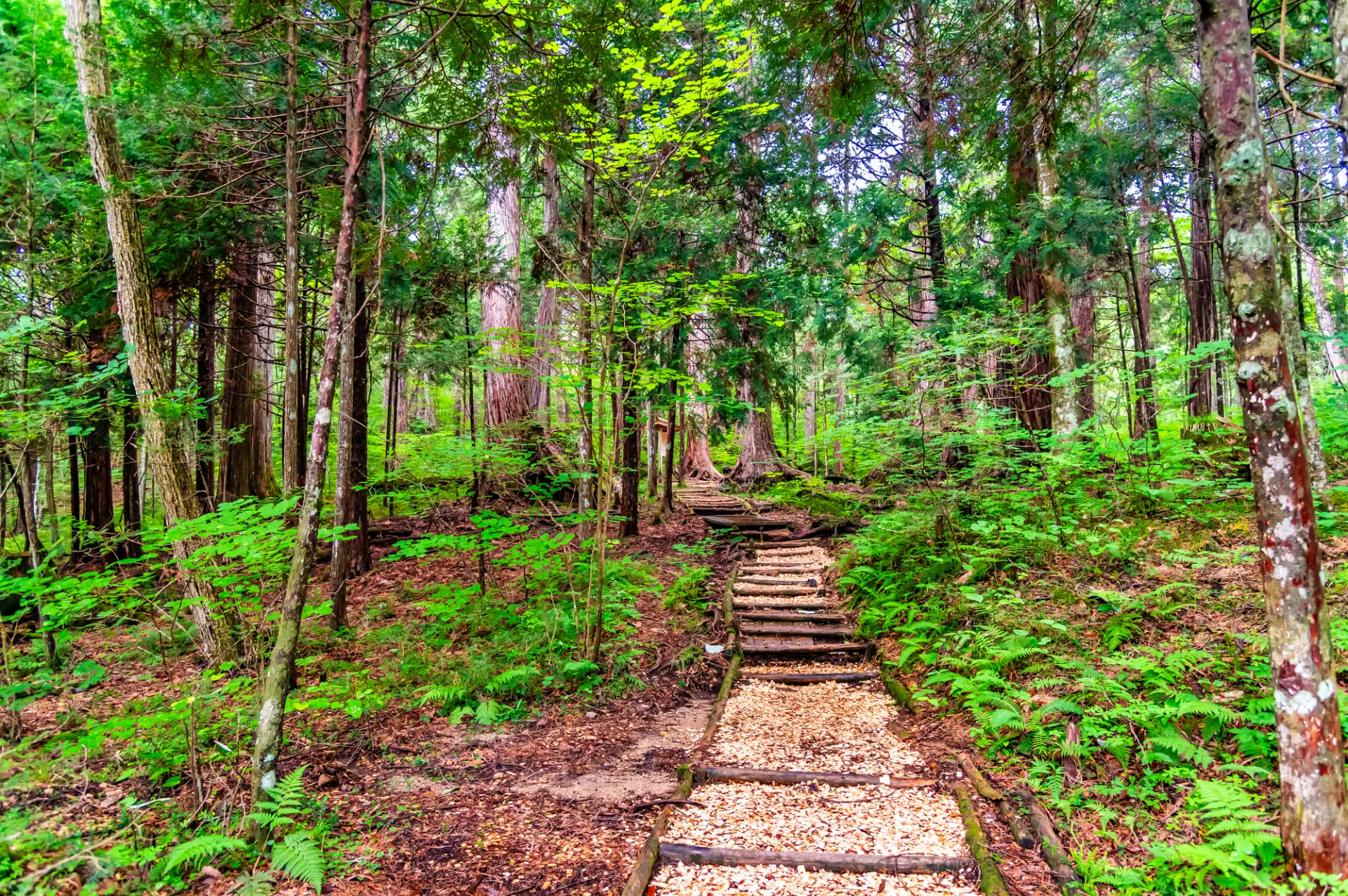
Akasawa Natural Recreational Forest is also known as the birthplace of forest bathing in Japan, where you can spend time away from everyday life in a quiet forest filled with clear air. After getting off the train, it is also worth trying a more immersive forest-bathing walk on one of the park’s seven walking routes. Many routes are covered with hinoki wood chips, making the paths gentle on the feet. The Komadori Course, about 2.7 km one way and about 70 minutes on foot, is packed with Akasawa’s representative sights, including the site where a sacred tree was felled, large hinoki and sawara cypress trees, and Donkumo-buchi, a rest spot by the stream. The Fureai no Michi route, about 2.8 km round-trip and about 1 hour on foot, is a barrier-free course with bridges and paved walking paths, making it easy to use with wheelchairs or strollers.
Basic Information on Akasawa Forest Railway
- Railway company / train name
- Akasawa Forest Railway
- Operating section / travel time
- Round-trip ride between the ticket gate in front of the Akasawa Forest Railway Memorial Museum and Maruyamado Station (about 25 minutes
- Operating days
- Daily during the operating period from late April to early November (except Wednesdays and track maintenance days). *Check the official website for details.
- Number of services
- 1 service every 30 minutes to 1 hour
- Price Range
- Round-trip fare: adults 1,000 yen; ages 4 to elementary school students 600 yen. *An additional 200 yen is charged during the summer vacation event “Tom Sawyer Club Village Kiso-Agematsu.”
- How to buy tickets
- Before boarding, buy a round-trip ticket at the station ticket counter next to the Forest Railway Memorial Museum. *No advance individual reservations or online sales.
- Official website
- Official website (Japanese)
4. Kominato Railway “Boso Satoyama Torokko”
(Ichihara City, Chiba Prefecture to Otaki Town, Chiba Prefecture)
Kominato Railway runs about 40 km inland from Goi Station in the Uchibo area on the Tokyo Bay side of the Boso Peninsula. This peaceful local line connects 18 stations, with the Yoro River flowing through the area along the route. The section between Kazusa-Ushiku Station and Yoro-Keikoku Station features satoyama scenery different from the area around Goi Station, the starting point. The train passes through landscapes ranging from lowland satoyama to gently rolling mountain areas covered with deciduous forest.
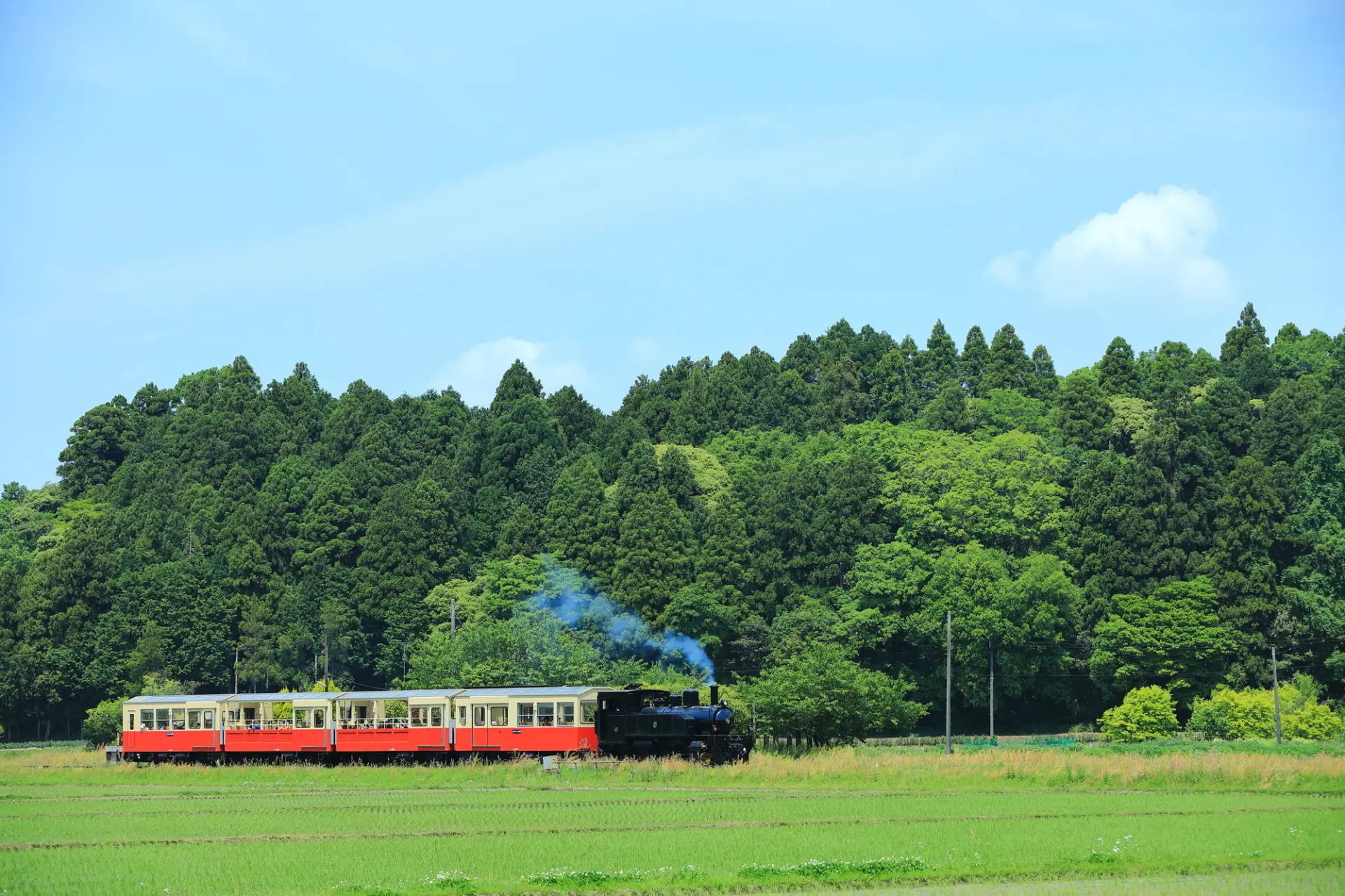
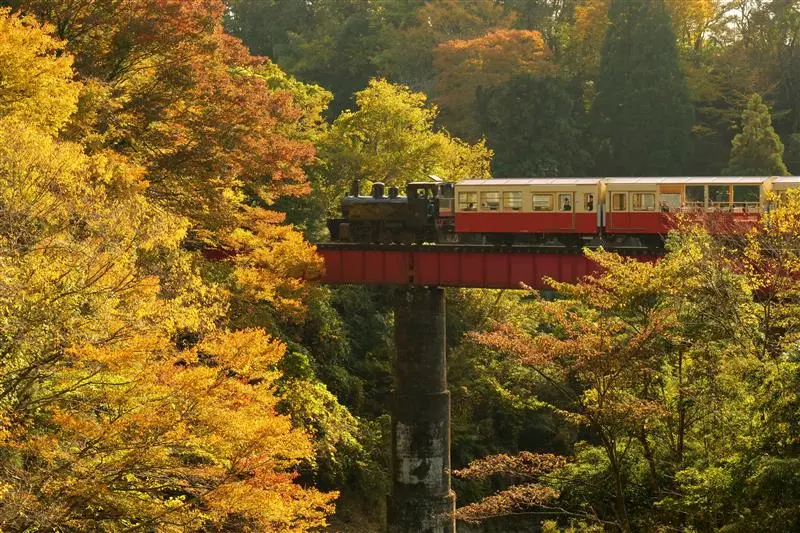
On selected days mainly from Friday to Sunday between mid-March and late December, the Boso Satoyama Torokko operates between Goi Station and Yoro-Keikoku Station. The torokko cars, pulled by a nostalgic SL-style locomotive, travel leisurely at about 25 km/h. The open-air observation cars without window glass let you feel the seasonal breeze, while the standard cars with window glass are equipped with air conditioning for a comfortable ride.
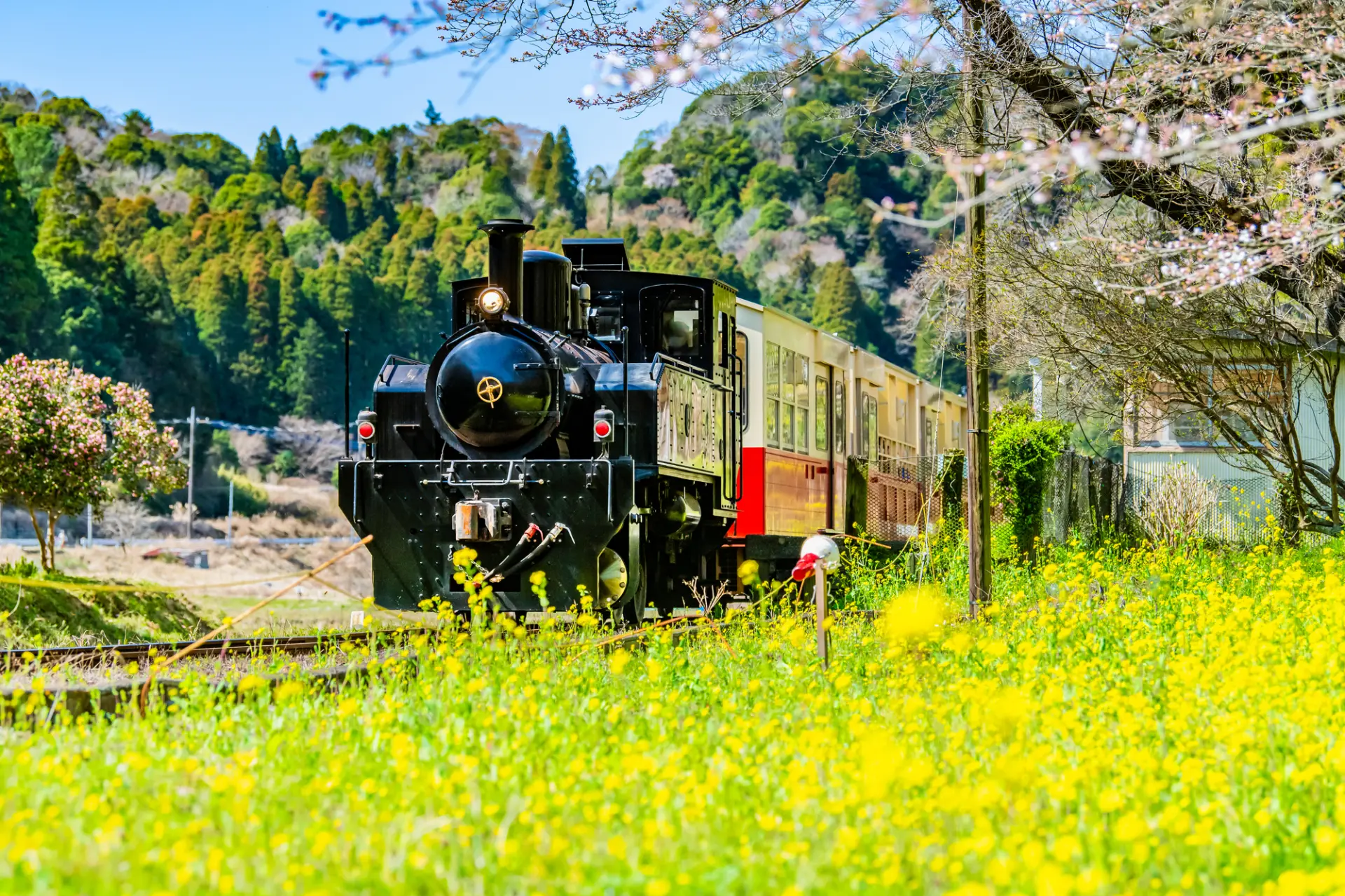
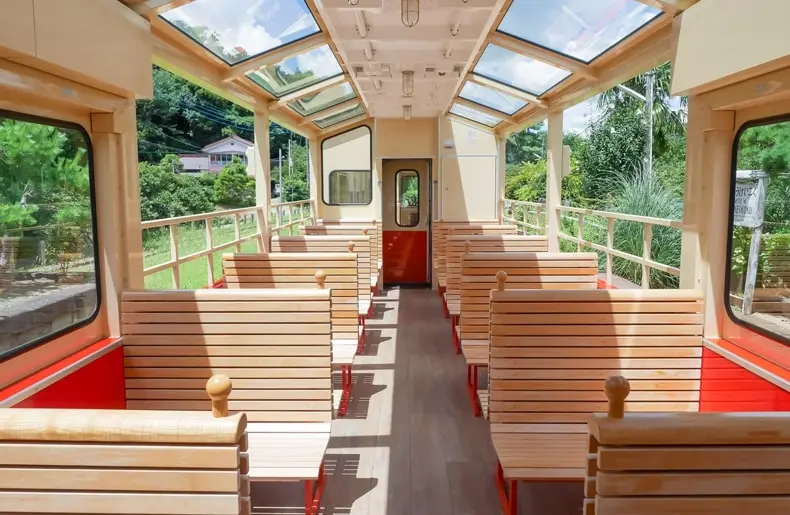
The torokko train is pulled by a diesel locomotive that realistically recreates the C-type Koppel steam locomotive that operated on Kominato Railway during the Taisho period. It is equipped with a Taisho-era steam whistle, so you can hear its nostalgic sound.
Tourist spots dot the line, including Yoro Valley, known for Japan’s latest autumn foliage of the year; ANIMAL WONDER REZOURT Ichihara Elephant Kingdom, home to Japan’s largest number of elephants; Lake Takataki, Chiba Prefecture’s largest artificial lake; and the Ichihara Lakeside Museum by the lake. It can also be visited together with sightseeing nearby.
How to Get to Kominato Railway’s Boso Satoyama Torokko
From Tokyo Station, take the JR Sobu Line Rapid to Goi Station in about 1 hour. From Haneda Airport, take a highway bus to Goi Station in about 1 hour. From Narita Airport, take the JR Narita Line for about 40 minutes, transfer at Chiba Station, and take the JR Uchibo Line for about 20 minutes to Goi Station. A trip that continues onto both Kominato Railway and Isumi Railway is also recommended.
Three Highlights of Kominato Railway’s Boso Satoyama Torokko
1. Seasonal flowers along the line
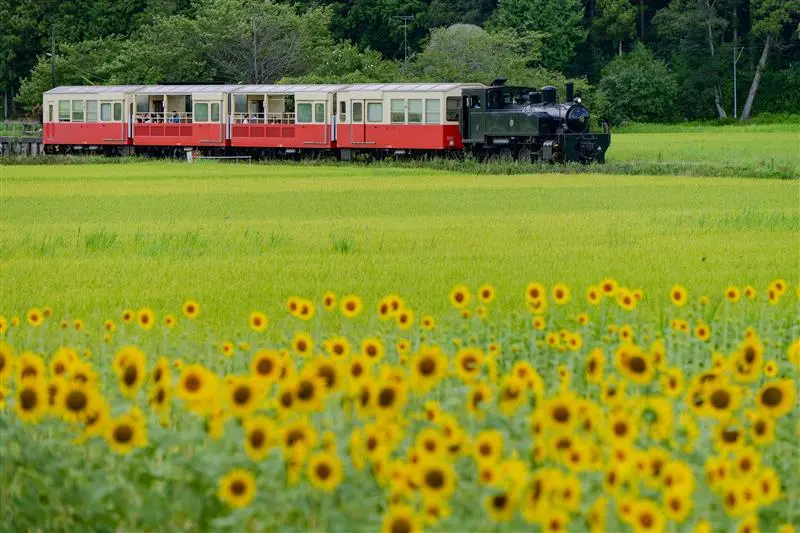
Cherry trees are planted along the line, and from late March to early April, some sections are colored by the vivid contrast of pink cherry blossoms and yellow rapeseed flowers. From early to mid-August, about 140,000 sunflowers bloom across the Ishigami area between Yoro-Keikoku Station and Kazusa-Okubo Station. Enjoy them together with satoyama scenery such as rice fields, the Yoro River, cuttings, and small tunnels.
2. Yoro Valley
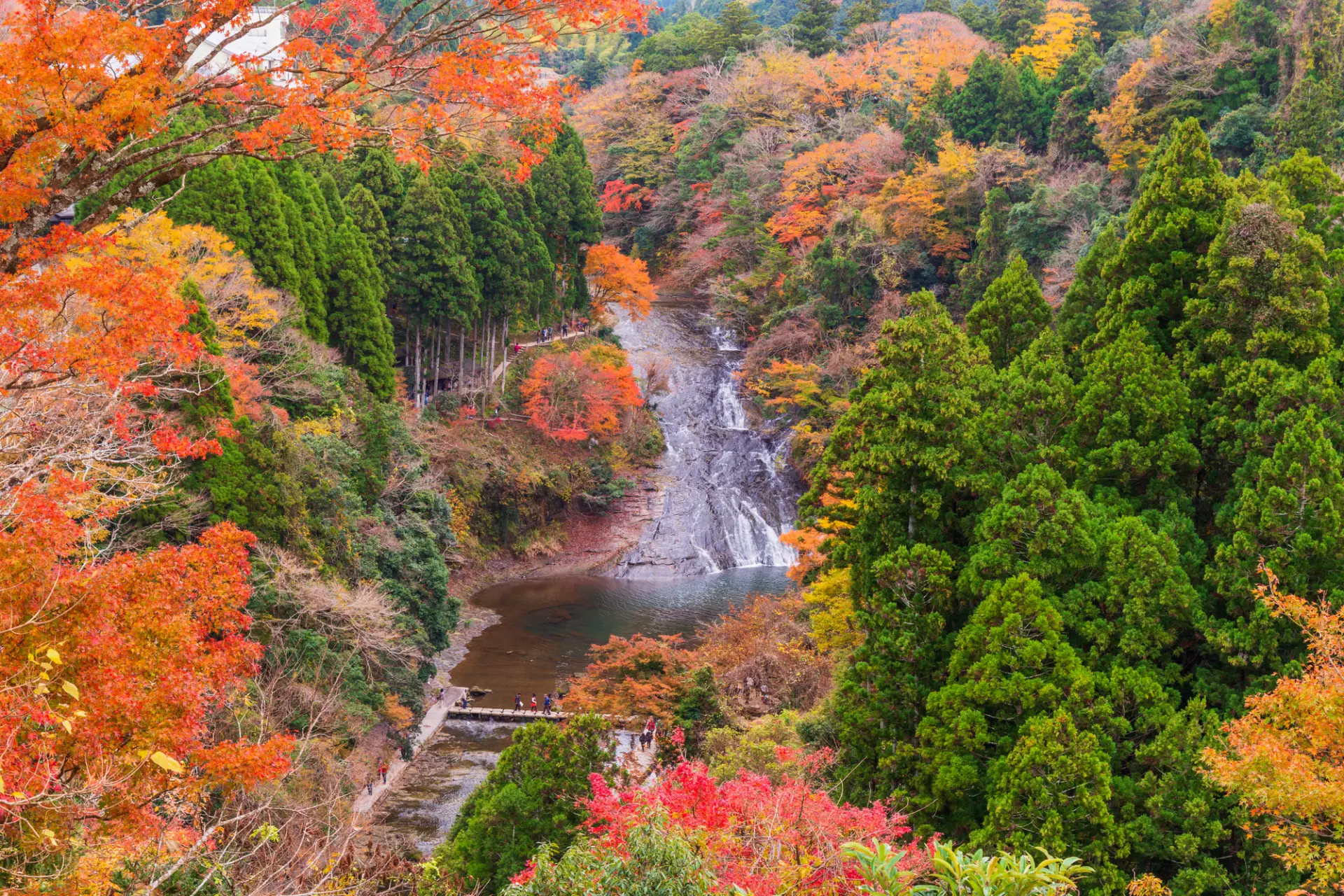
Kominato Railway’s Yoro-Keikoku Station is the final stop of the Boso Satoyama Torokko. Accessible by bus, Yoro Valley is a scenic area located almost in the center of the Boso Peninsula and is known as the “inner retreat of Boso.” This green area around the upper reaches of the Yoro River attracts many visitors from spring through fall. Highlights include Awamata Falls, the symbol of Yoro Valley, which flows gracefully for about 100 m, and walking trails where you can enjoy nature along the stream. The valley is also famous for having the latest autumn foliage season in the Kanto region.
3. Kominato Railway’s own Kominato Waiting Room
Goi Station, the starting station of Kominato Railway, is shared with JR lines. Just down the stairs from the east exit on the right is Kominato Waiting Room, a waiting room and cafe operated by Kominato Railway. Wi-Fi and PC power outlets are available free of charge, and you can use the space as you like, from a short break while waiting for your train to a relaxed cafe stop. From the window seats, you can also watch Kominato Railway’s diesel railcars and torokko trains come and go.
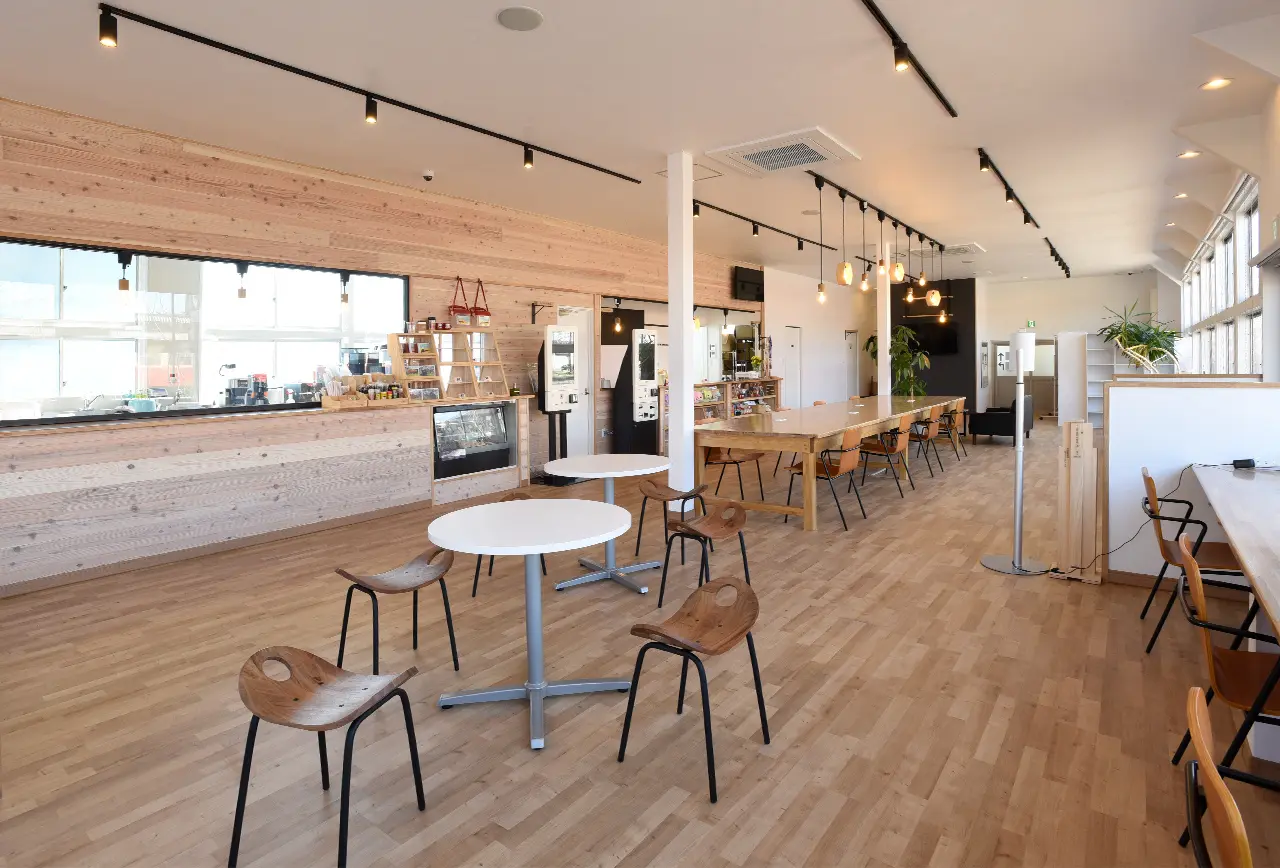
The cafe menu is also extensive, ranging from light meals such as Boso game meat hot dogs to carefully prepared coffee and parfaits. The most popular item is the Anzen Daiichi Curry, made with vegetables from Ichihara City, Chiba Prefecture. Kominato Railway merchandise is also sold here.
Basic Information on Kominato Railway’s Boso Satoyama Torokko
- Railway company / train name
- Kominato Railway “Boso Satoyama Torokko”
- Operating section / travel time
- Kominato Railway Goi Station to Yoro-Keikoku Station; outbound (toward Yoro-Keikoku) about 2 hours 10 minutes; inbound (toward Kazusa-Ushiku and Goi) about 1 hour 50 minutes
- Operating days
- Mainly Saturdays, Sundays, and holidays. *Check the official website for details.
- Number of services
- 1 round trip per day
- Price Range
-
Regular fare: 1,280 yen (Goi Station to Yoro-Keikoku Station) or 1-day free pass: 2,000 yen + separate torokko reserved-seat ticket: 800 yen
*Boso Crossing Commemorative Ticket: 2,000 yen - How to buy tickets
- Available through the official website
- Official website
- Official website (Japanese)
Summary
Torokko trains make the scenery outside the window feel close and turn the journey itself into a rewarding experience. Depending on the weather, bringing rain gear or warm clothing will make the trip more comfortable. Take your time traveling through landscapes that show different faces as the seasons change.