
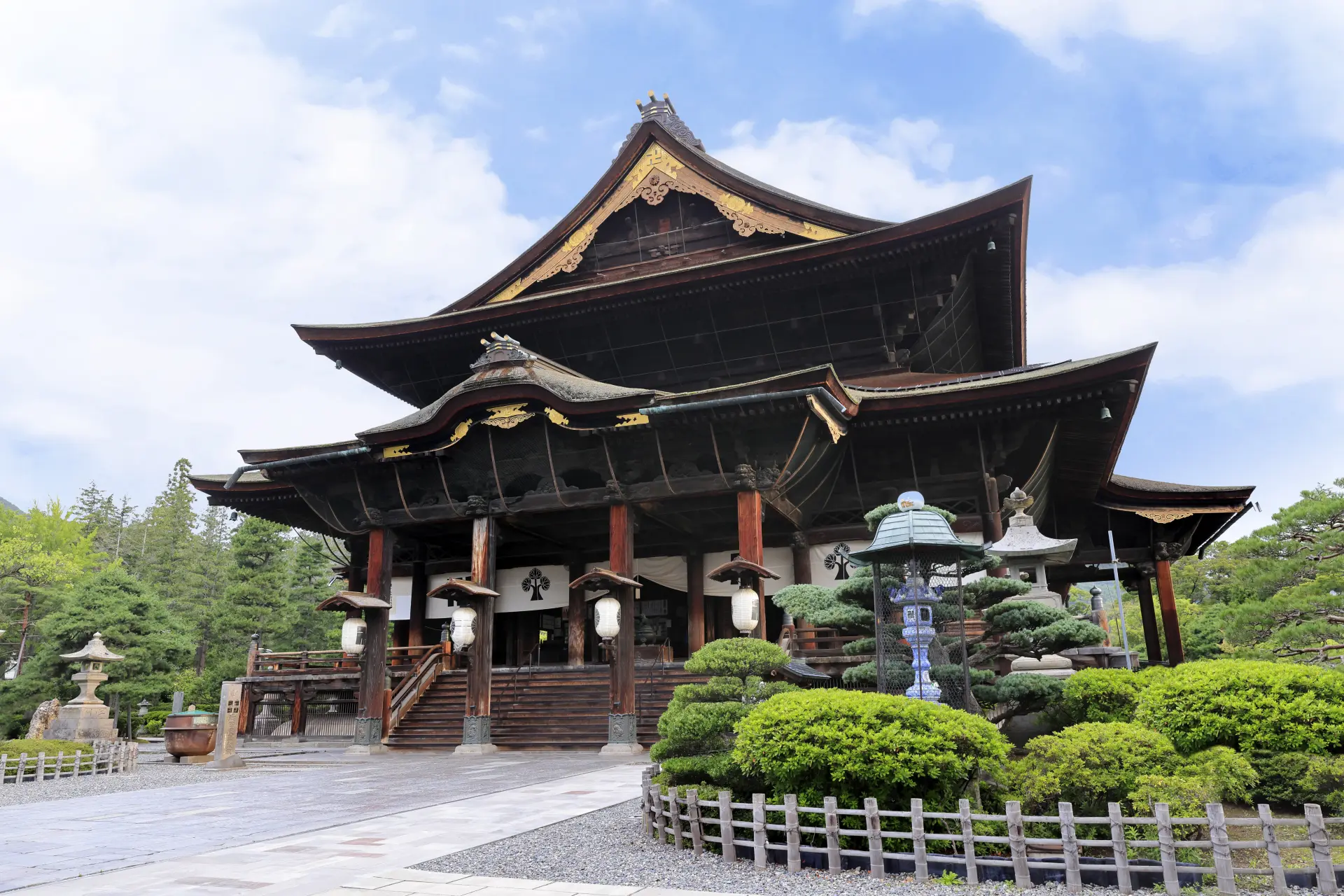
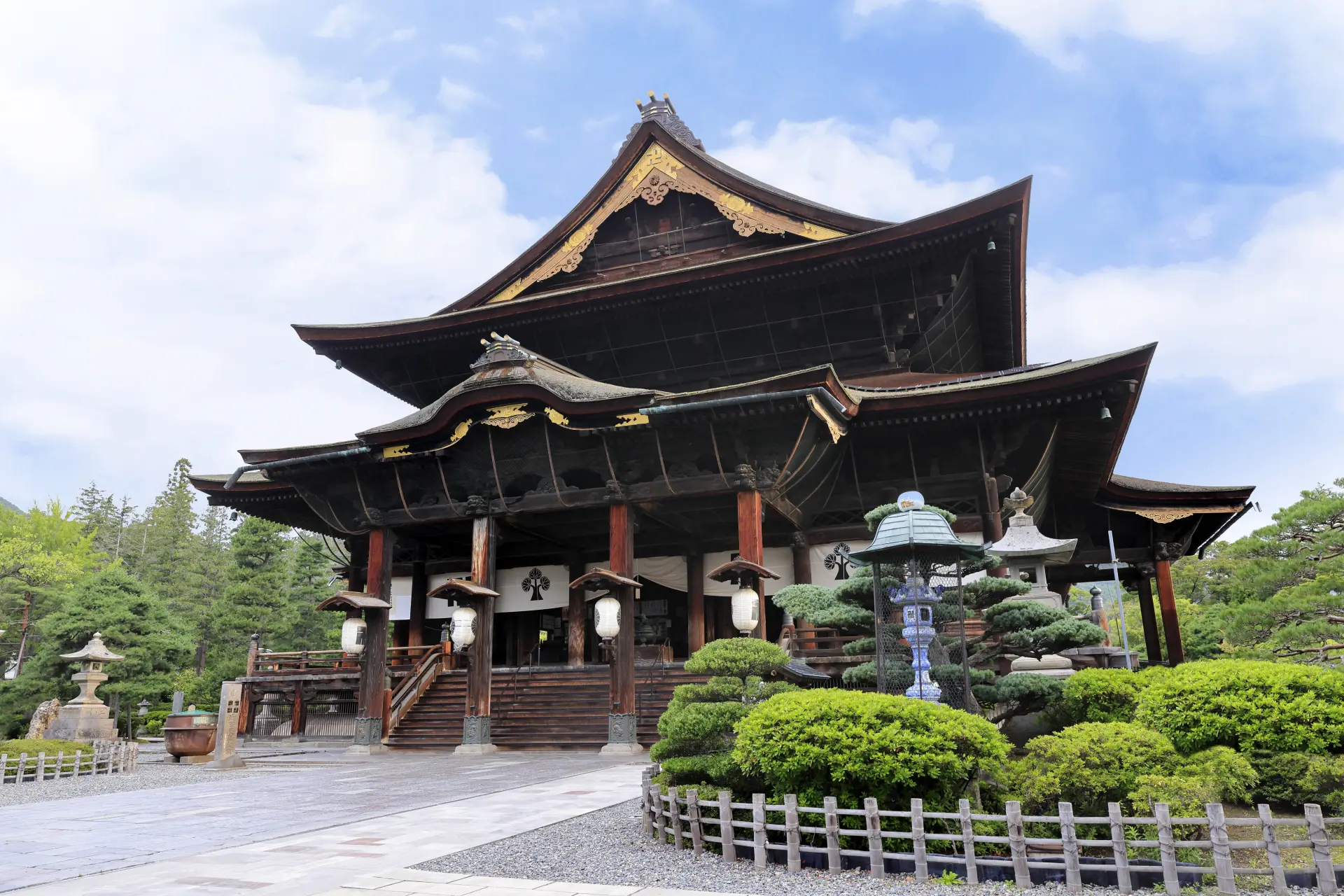
©Zenkoji Temple
A Once-in-a-Lifetime Visit to Zenkoji Temple: A Guide to Its History, Culture, and Memorable Experiences
Located in the heart of Nagano City, Nagano Prefecture, Zenkoji Temple is an ancient temple with a history spanning approximately 1,400 years.
The saying goes that everyone should visit Zenkoji at least once in their lifetime, and the temple has long attracted worshippers regardless of religious denomination or social status.
Its spacious grounds are dotted with places that reflect its culture of faith, including the National Treasure Main Hall and the nationally designated Important Cultural Property Sanmon Gate.
This article introduces Zenkoji Temple, its highlights, and recommended experiences.
Read to the end to learn how to make the most of your first visit.
What Is Zenkoji Temple Like?
Located in the heart of Nagano City, Nagano Prefecture, Zenkoji Temple is an ancient temple with a history spanning approximately 1,400 years.
The saying goes that everyone should visit Zenkoji at least once in their lifetime. As a temple unaffiliated with any single Buddhist sect, it has long attracted worshippers from all walks of life.
Today, it is maintained and administered by two Buddhist institutions: Daikanjin of the Tendai sect and Daihongan of the Jodo sect. Approximately 6 million people visit the temple each year.
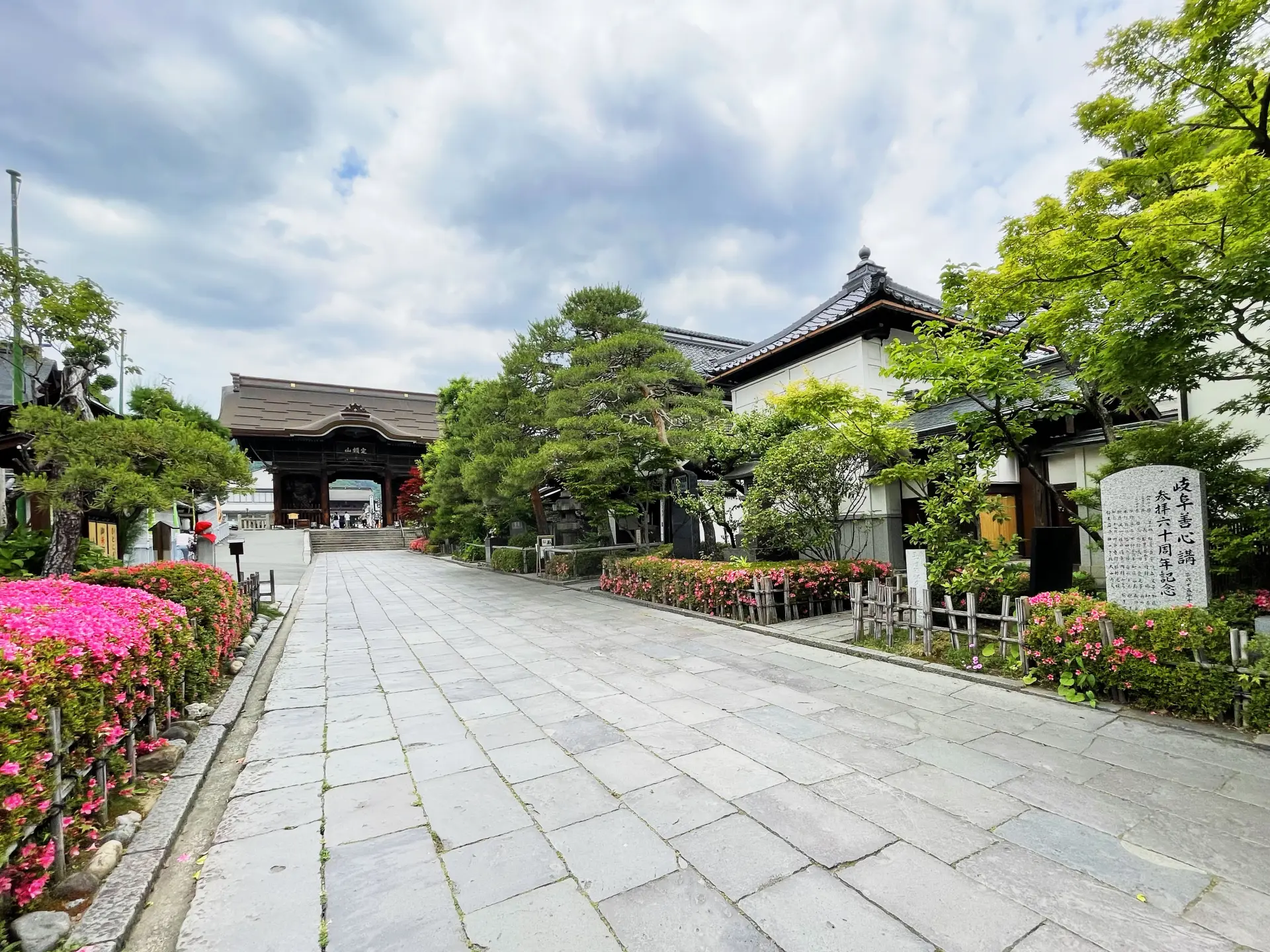
Its principal image is the Ikko Sanzon Amida Nyorai, an Amida triad sharing one halo and believed to be Japan's oldest Buddhist image.
However, because it is an absolute secret Buddha image, it cannot be viewed directly. During the Gokaicho ceremony, a replica known as the Maedachi Honzon is displayed instead.
This sense of mystery is another distinctive feature of Zenkoji Temple.
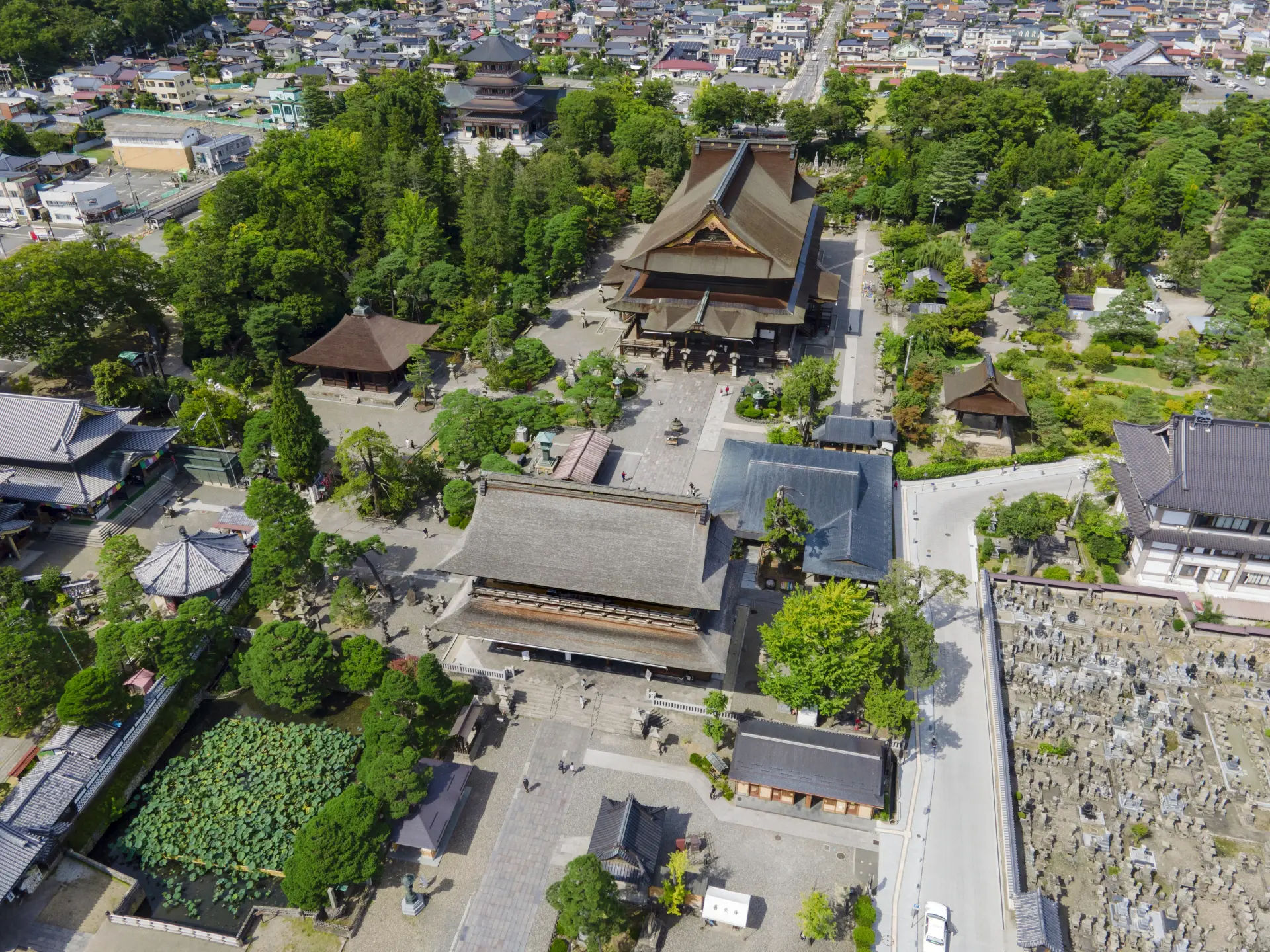
The spacious grounds are home to numerous historic structures, including the National Treasure Main Hall, offering visitors a chance to appreciate the temple's architecture and culture.
The approach to the temple also features Nakamise Street, lined with restaurants and souvenir shops where visitors can sample the flavors of Shinshu.
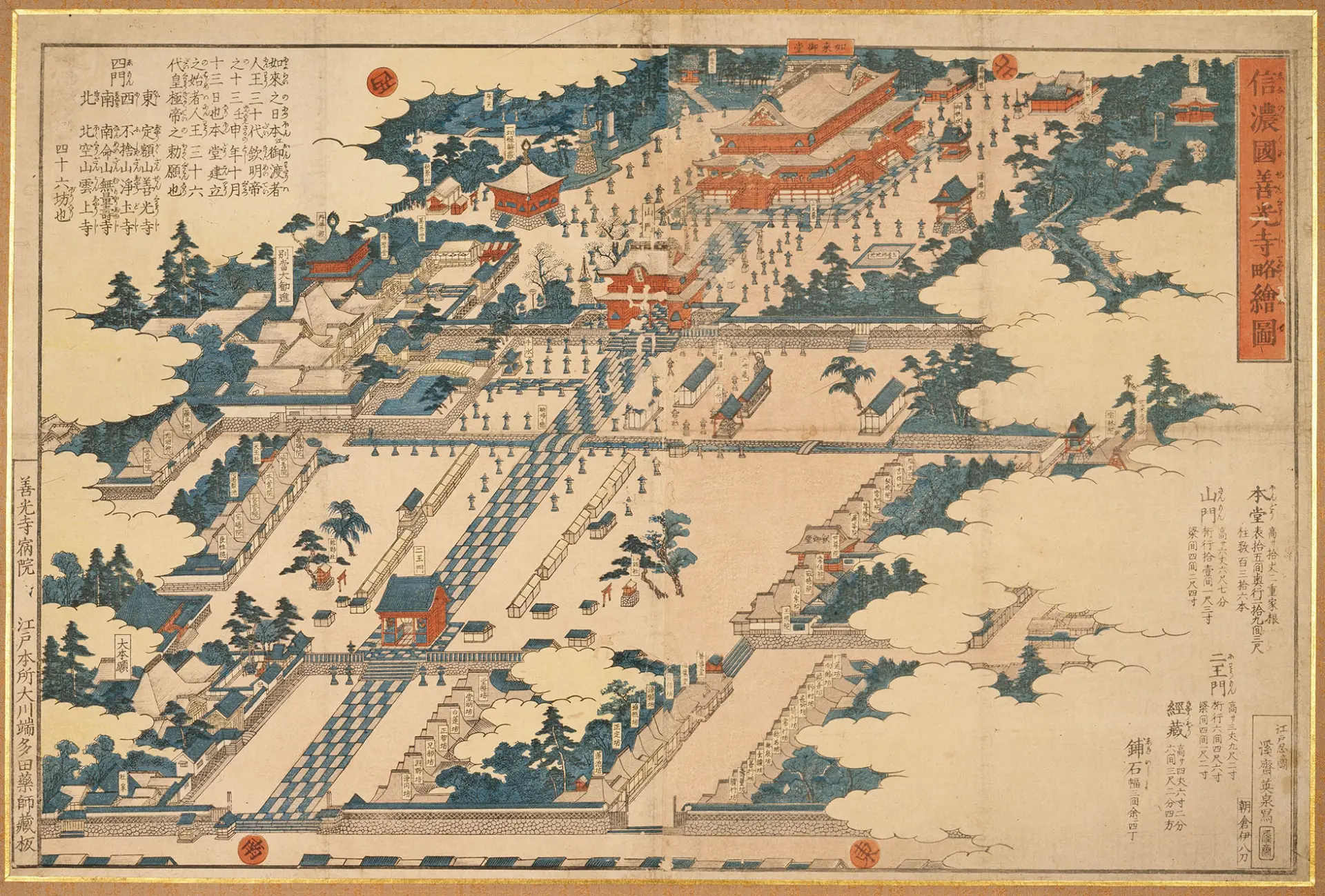
History of Zenkoji Temple
According to the legends of Zenkoji Temple, its principal image, the Ikko Sanzon Amida Nyorai, was brought to Japan with Buddhism in 552 after traveling from India through the Korean kingdom of Baekje.
At the time, however, a conflict arose over whether Japan should accept the new religion of Buddhism. The anti-Buddhist Mononobe clan discarded the image in a canal in Naniwa.
Honda Yoshimitsu later recovered the image and brought it back to Shinano Province, now Nagano Prefecture, before enshrining it at its present location in 642.
Zenkoji Temple traces its origins to 644, when a temple complex was built by imperial order. The temple was named after Honda Yoshimitsu.
It developed as a temple unaffiliated with any single Buddhist sect. During the Kamakura period (1185–1333), it also received strong support from Minamoto no Yoritomo and the Hojo clan.
As faith in Zenkoji spread, new temples bearing the Zenkoji name were established throughout Japan, further extending its influence.
Zenkoji remains one of Nagano's most prominent temples, welcoming many worshippers while preserving its long history and culture of faith.
How to Get to Zenkoji Temple
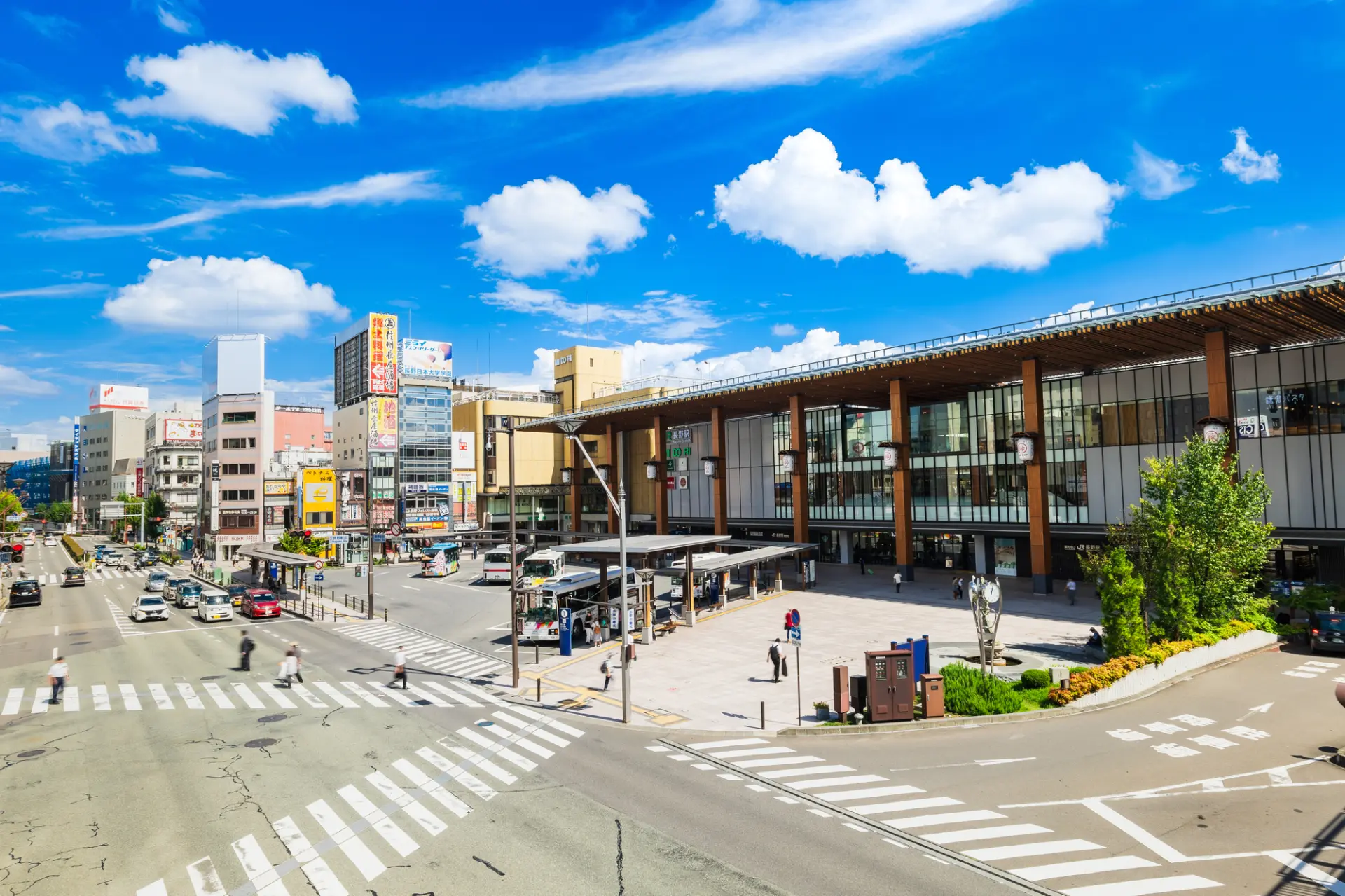
The nearest station to Zenkoji Temple is JR Nagano Station.
From the bus terminal at the station's Zenkoji Exit, take a local bus for approximately 15 minutes and get off at Zenkoji Daimon.
Some bus companies and routes do not accept nationwide transit IC cards such as Suica, so it is a good idea to carry cash.
It takes approximately 30 minutes to walk from the station while taking in the city streets. If you are short on time, a taxi takes approximately 10 minutes.
Zenkoji Temple also has paid Parking Lots 1, 3, and 4 for general visitors, making it possible to visit by rental car.
Below are convenient routes for travelers starting from Tokyo Station or Kanazawa Station.
| Starting Point | Route | Travel Time |
|---|---|---|
| Tokyo Station |
1. Take the Hokuriku Shinkansen from JR Tokyo Station and get off at Nagano Station 2. From Bus Stop 1 at the Nagano Station bus terminal, take a bus bound for Zenkoji Temple and get off at Zenkoji Daimon |
Approximately 2 hours |
| Kanazawa Station |
1. Take the Hokuriku Shinkansen from JR Kanazawa Station and get off at Nagano Station 2. From Bus Stop 1 at the Nagano Station bus terminal, take a bus bound for Zenkoji Temple and get off at Zenkoji Daimon |
Approximately 1 hour and 30 minutes |
Depending on the route, Zenkoji Temple may also be reached from bus stops other than Zenkoji Daimon.
Zenkoji Temple Hours and Admission Fees
Zenkoji Temple's hours and admission fees are listed below.
Entering the temple grounds is free, but admission fees apply to the inner sanctuary of the Main Hall, the Okaidan Meguri passage, and the Sanmon Gate.
Tickets are sold at the individual halls, but a combination ticket is recommended if you plan to visit them all.
Hours
- Main Hall Inner Sanctuary and Okaidan Meguri
-
April–October: From 1 hour before the morning service until 4:30 p.m.
March and November: From 1 hour before the morning service until 4:15 p.m.
December–February: From 1 hour before the morning service until 4:00 p.m.
On December 28, admission is available until 8:30 a.m.; on December 31, until 1:00 p.m. - Sanmon Gate, Sutra Repository, and Museum
- 9:00 a.m.–4:00 p.m.; until 1:00 p.m. on December 31
The morning service generally begins at 5:30 a.m. in summer and 7:00 a.m. in winter.
Admission Fees
| Area or Ticket Type | Adults | Junior High and High School Students | Elementary School Students |
|---|---|---|---|
| Main Hall Inner Sanctuary and Okaidan Meguri | ¥800 | ¥300 | ¥100 |
| Sanmon Gate | ¥800 | ¥300 | ¥100 |
| Sutra Repository | ¥500 | ¥300 | ¥100 |
| Combination Ticket (the three areas above plus the Museum) | ¥1,500 | ¥600 | ¥200 |
Admission is free for preschool children.
5 Highlights of Zenkoji Temple's History and Culture
Here are five highlights of Zenkoji Temple.
Each offers insight into the culture of faith cultivated over the temple's long history.
They include distinctive architecture, panoramic views, and Buddhist images, as well as several hands-on experiences.
Use this guide to explore the many sides of Zenkoji Temple.
1. The National Treasure Main Hall
The Main Hall, one of the largest wooden National Treasure structures in eastern Japan, is one of Zenkoji Temple's essential highlights.
The present hall was rebuilt in 1707 with 108 pillars, said to represent the number of worldly desires. It features a distinctive architectural style known as shumoku-zukuri.
Viewed from above, its T-shaped roof ridge resembles a shumoku, the wooden mallet used to strike a temple bell, which is the origin of the style's name.
Its interior layout is also symbolic, with the entrance representing the secular world and the innermost area representing the Pure Land.
The outer sanctuary contains an image of Enma, the king who judges humanity. The inner sanctuary houses Maitreya and Jizo, saviors of the secular world, while the principal image, the Ikko Sanzon Amida Nyorai, is enshrined on the innermost Ruridan altar.
See for yourself the beauty of this solemn wooden structure and the weight of the faith passed down through generations.
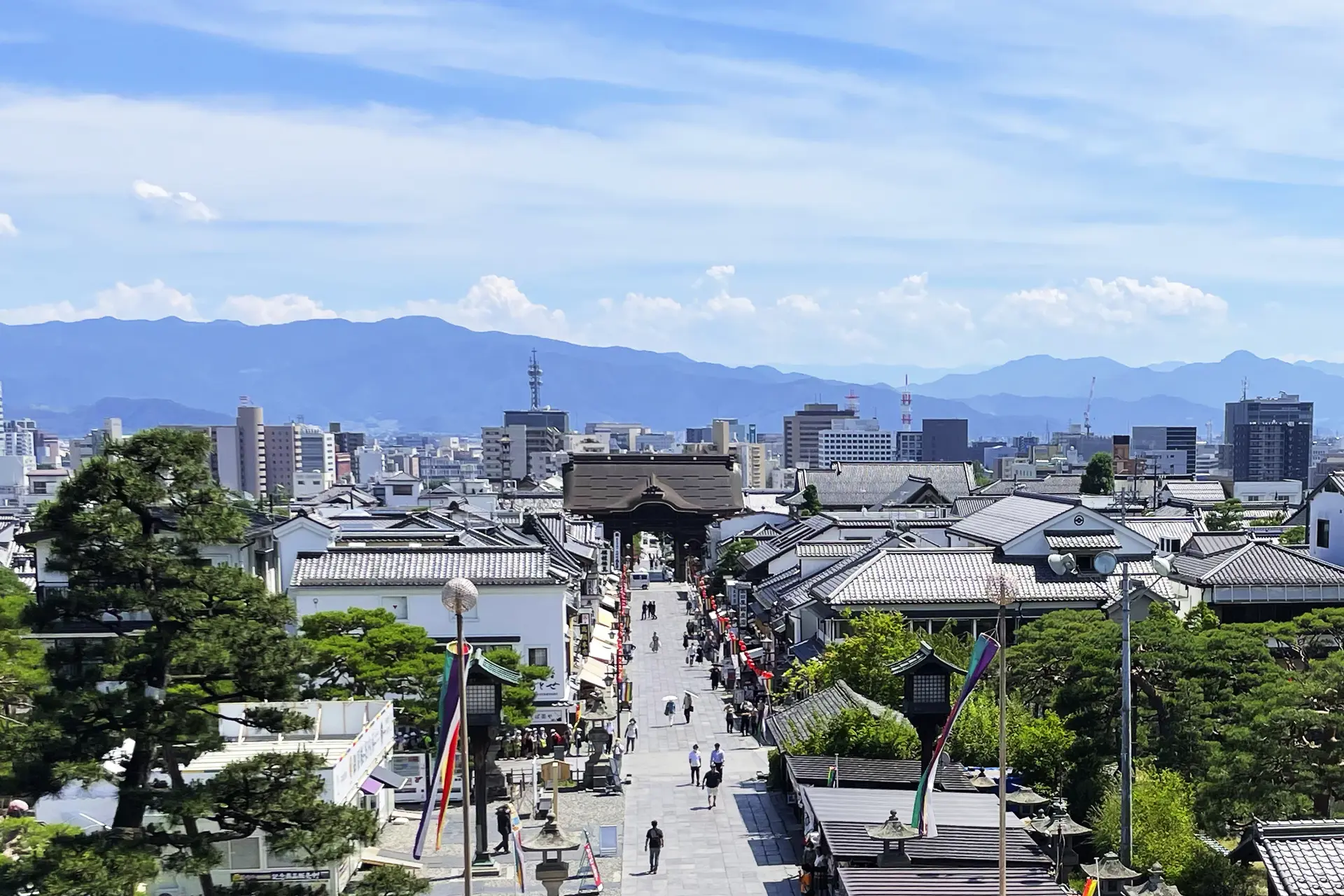
2. The Sanmon Gate, Offering Panoramic Views of Nagano City
The Sanmon Gate, a nationally designated Important Cultural Property, rises directly in front of the Main Hall.
Extensive restoration work was carried out from 2002 to 2007, restoring its tochibuki wooden-shingle roof to its original appearance when the gate was built in 1750.
One feature to look for is the plaque displaying the three Japanese characters for Zenkoji on the upper level.
Five doves are hidden within the characters, earning it the nickname “Dove Character Plaque.” The first character, meaning “good,” is also said to resemble a cow's face.
Visitors can climb to the upper level, where the gallery offers panoramic views of the temple grounds and central Nagano City.
Climbing a gate normally viewed only from below also provides a rare opportunity to see its historic architecture up close.
3. The Sutra Repository, Where One Turn Is Said to Bring Merit
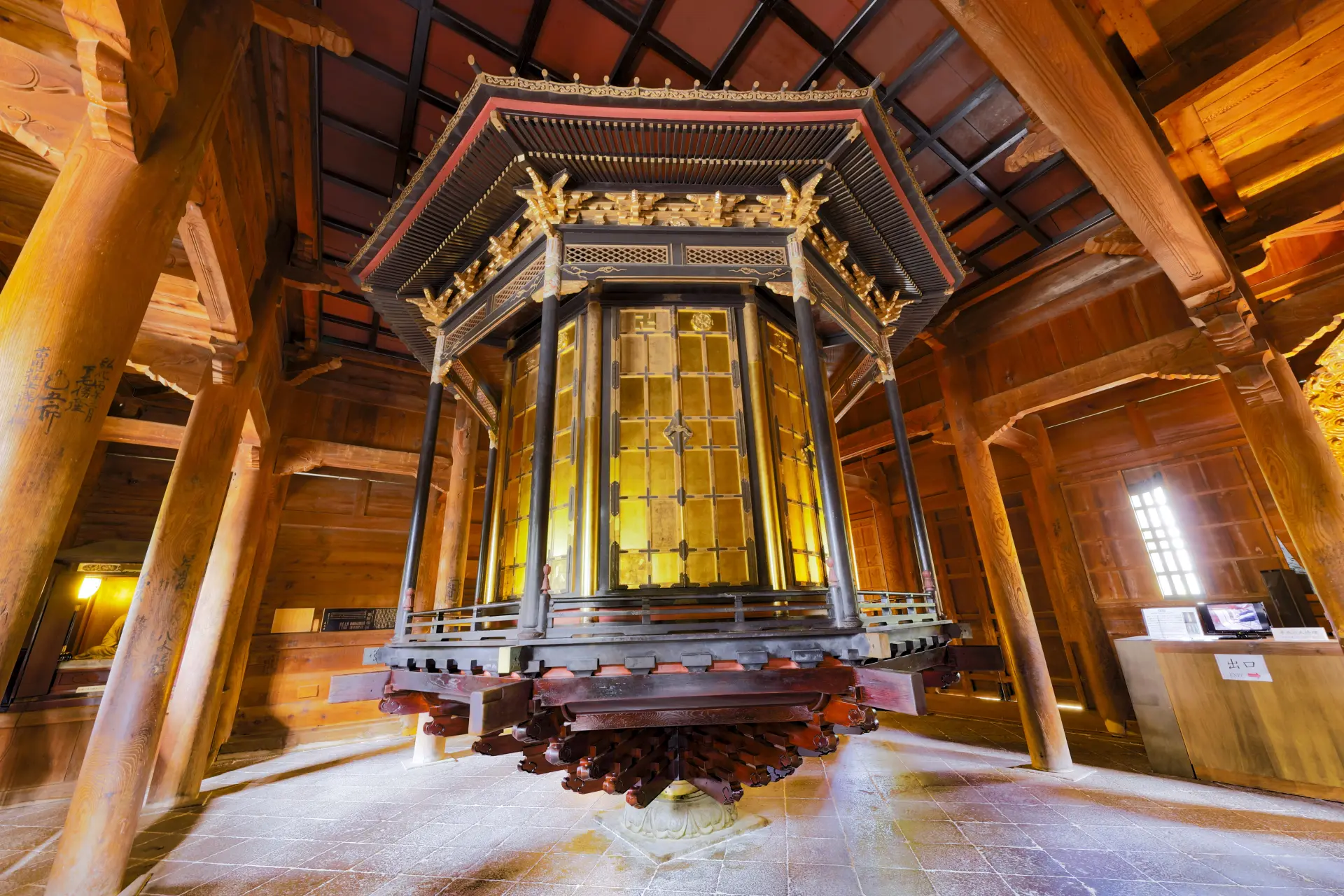
The Sutra Repository, a nationally designated Important Cultural Property, is a square hall built in 1759 and measuring five bays on each side.
At its center stands an enormous octagonal rotating sutra cabinet known as a rinzo, containing all 6,771 volumes of the Issaikyo, a comprehensive collection of Buddhist scriptures.
Visitors can touch the rotating cabinet and push it around themselves.
It is said that turning it once clockwise brings the same merit as reading the entire Issaikyo collection.
Pushing the impressively heavy rinzo around is a special experience found only at Zenkoji Temple.
The hall also enshrines statues of Fu Daishi and the Buddhist masters Dengyo and Jikaku, providing another opportunity to explore Buddhist culture.
4. Binzuru, the Statue Touched While Making a Wish
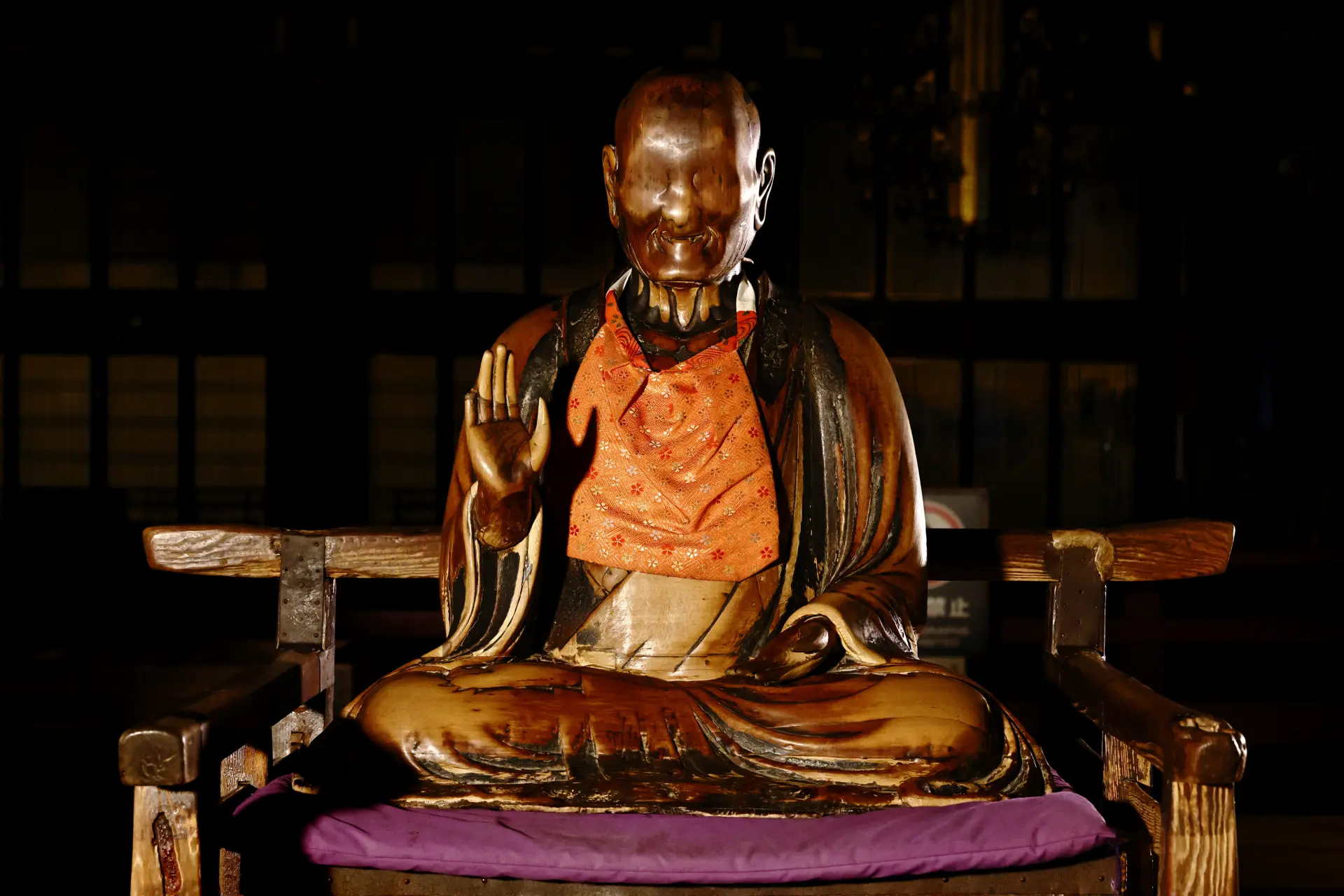
The first figure to catch the eye upon entering the Main Hall's outer sanctuary is Binzuru, one of the Sixteen Arhats and a disciple of the Buddha renowned for his supernatural powers.
Also known as the “Touching Buddha,” the statue is associated with a tradition in which worshippers touch the same part of the figure as the area of their own body that is unwell in hopes of healing it.
Since the statue was enshrined in 1713, countless people have touched it over more than 300 years. Its surface has become so worn that its original facial features can no longer be recognized.
Its appearance is itself a historical testament to the depth of people's faith.
5. Daikanjin, the Head Temple of the Tendai Sect
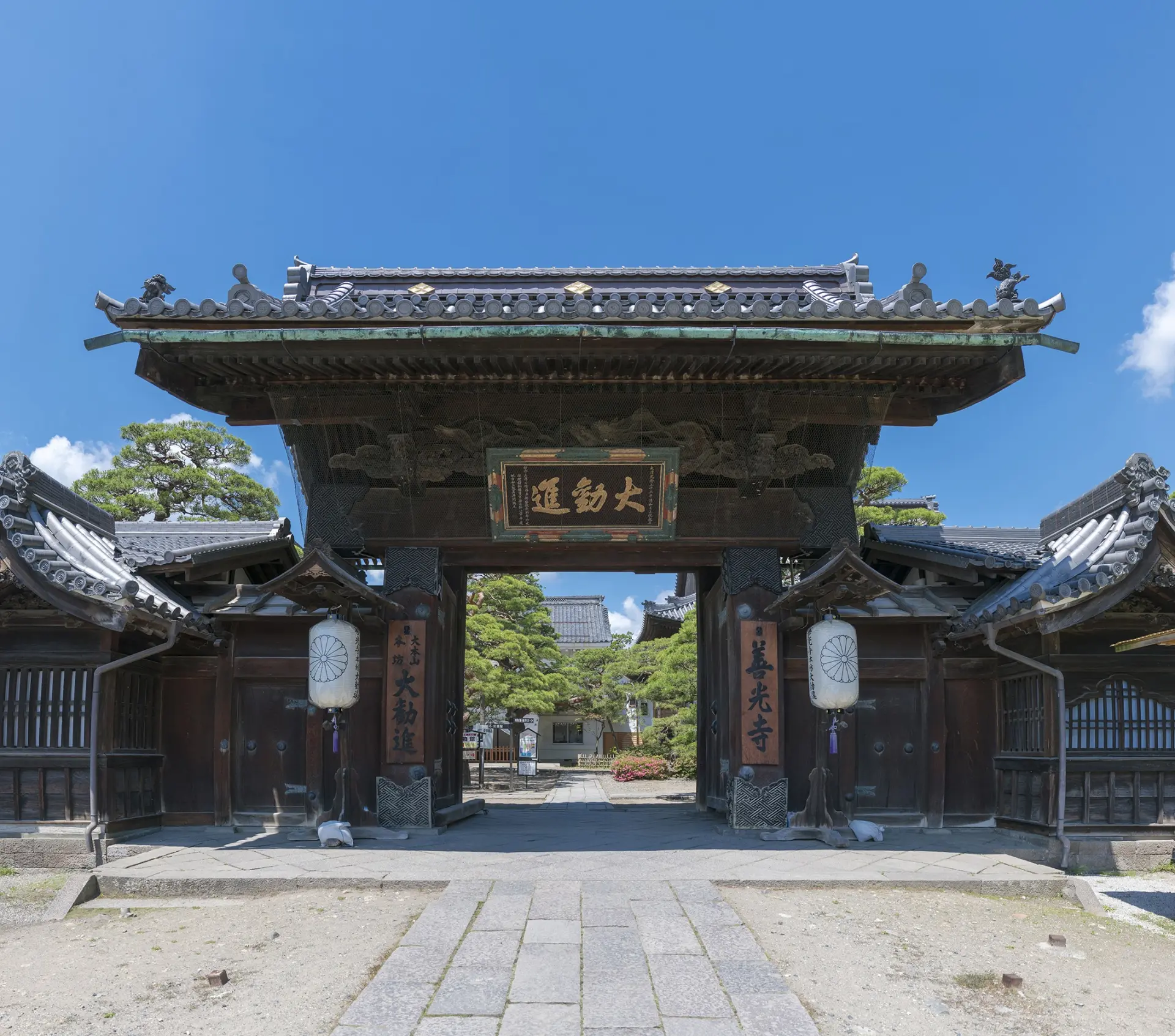
Located in front of the Sanmon Gate, Daikanjin is the head temple of the Tendai sect at Zenkoji.
It oversees 25 subsidiary temples within the Zenkoji complex. Its chief priest, known as the kansu, also serves as a chief priest of Zenkoji Temple, making this an important position.
Its history dates back to the time of the temple's founder, Honda Yoshimitsu. Successive generations have served the Zenkoji Nyorai while teaching the public and maintaining the temple.
The grounds contain numerous places of interest, including Manzendo Hall, Muryoju-den Hall, Shiunkaku Hall, and a treasure museum.
Fudodo Hall in particular holds goma fire rituals, attracting worshippers praying for protection from misfortune and safety for their families.
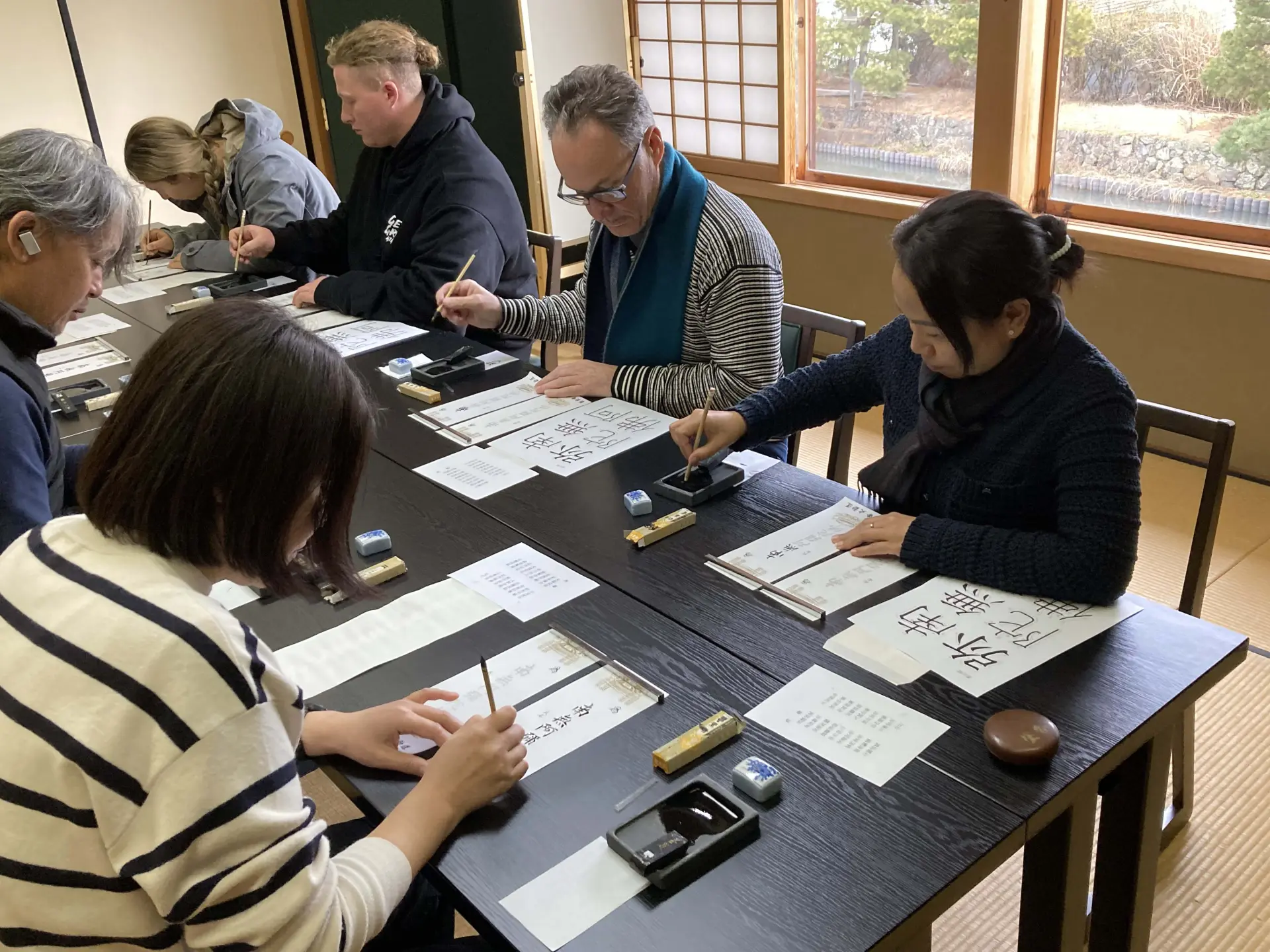
Experiences such as sutra copying and Zen meditation are also available, offering another way to explore Buddhist culture during your visit.
Memorable Experiences at Zenkoji Temple
Zenkoji Temple offers more than historic buildings to explore.
Directly experiencing its long-standing traditions can deepen your understanding and make your visit more meaningful.
Here are five recommended experiences that can leave a lasting impression.
Each has its own character, so try whichever ones interest you.
Form a Bond in the Darkness on the Okaidan Meguri
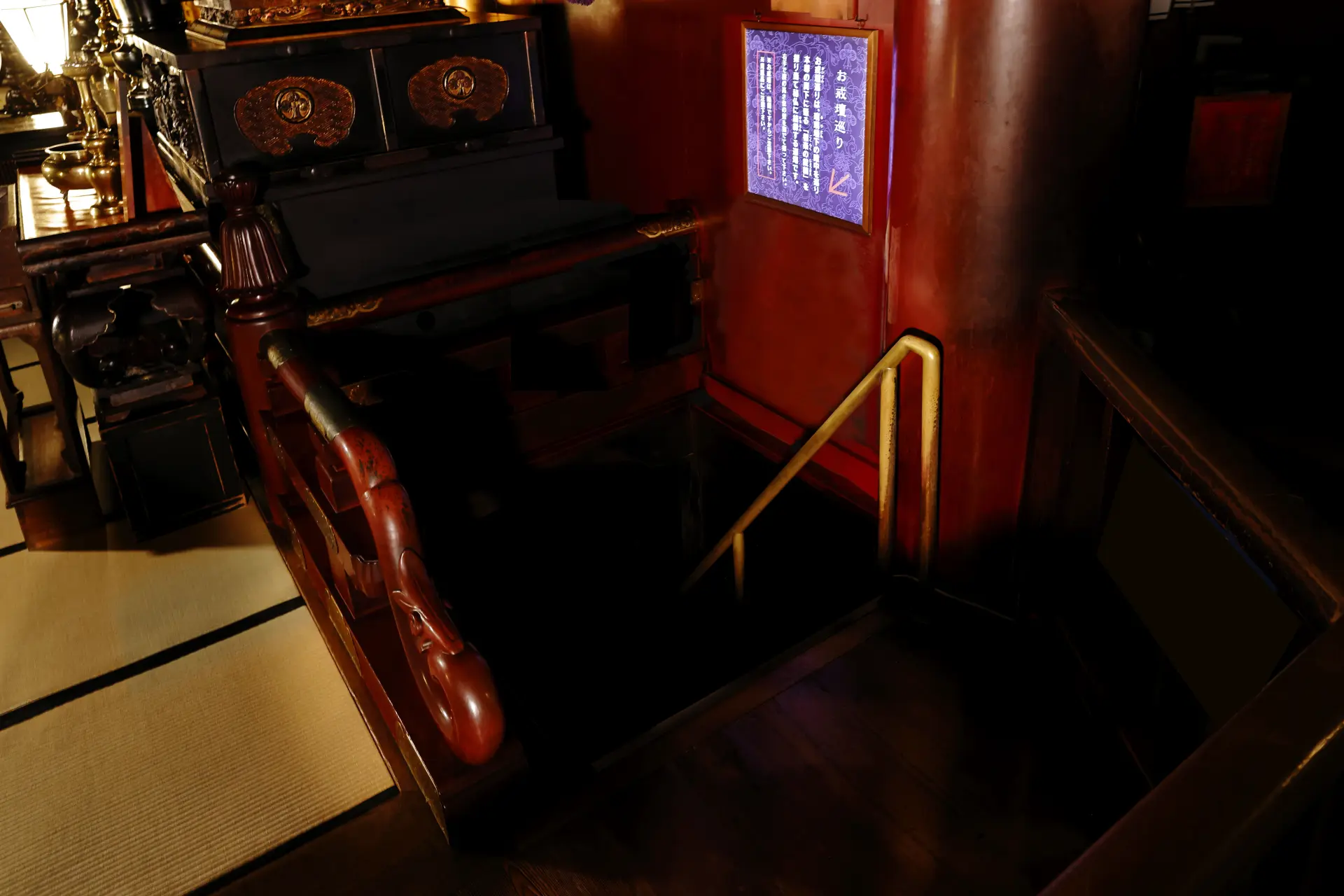
One of the defining experiences of a visit to Zenkoji is the Okaidan Meguri, a walk through a pitch-dark passage approximately 148 feet long beneath the principal image.
The passage is completely dark, creating a distinctive experience as visitors carefully feel their way forward.
Moving through a world without light and relying only on your hands produces a mysterious sensation rarely encountered in everyday life.
Along the way is the “Key to the Pure Land,” said to correspond to the lock of the chamber containing the absolute secret Buddha image.
Touching it is believed to form a direct bond with the principal image and grant the promise of rebirth in the Pure Land.
Collect Goshuin as Mementos of Your Trip
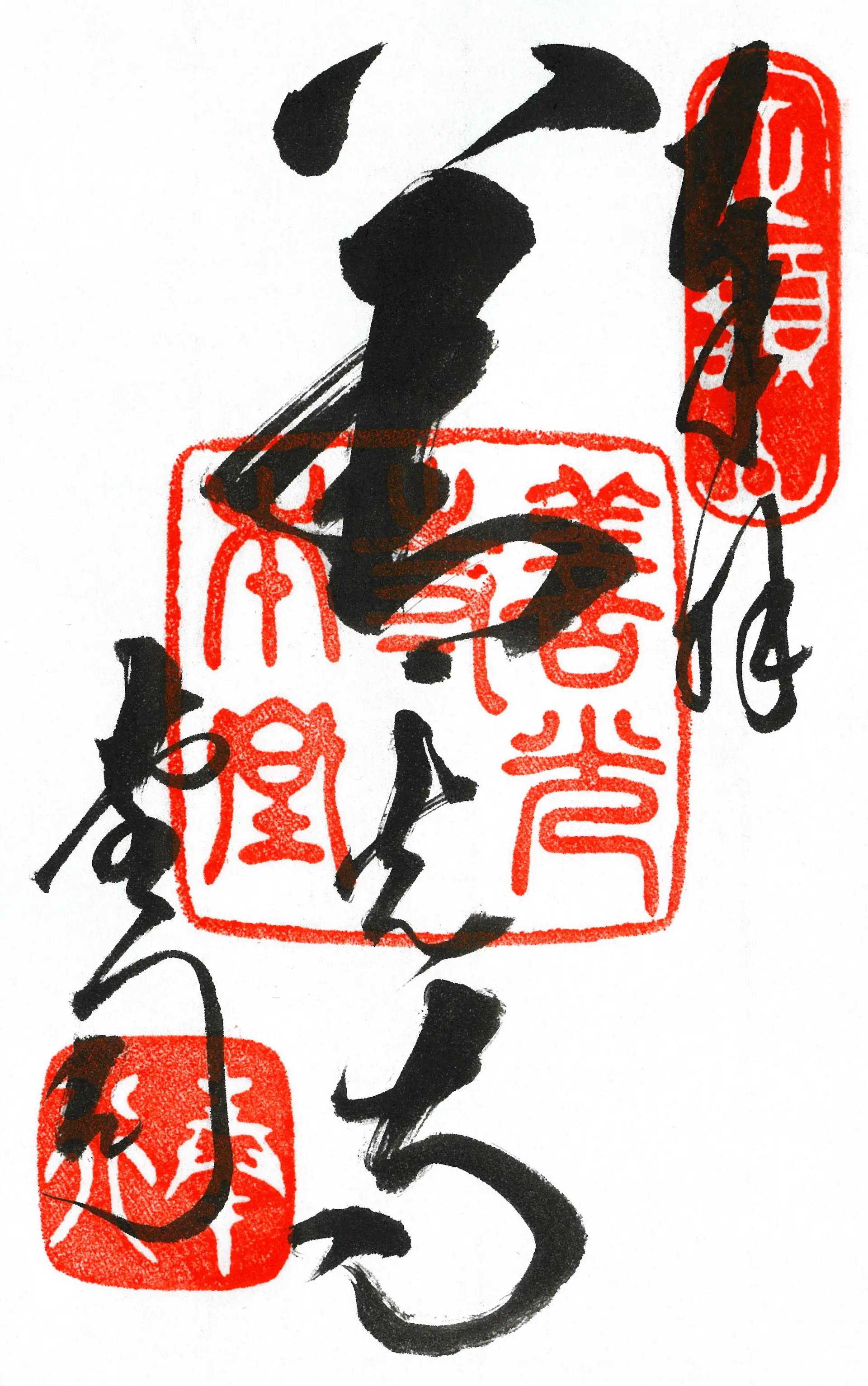
Collecting goshuin temple stamps as mementos of your visit is another recommended activity.
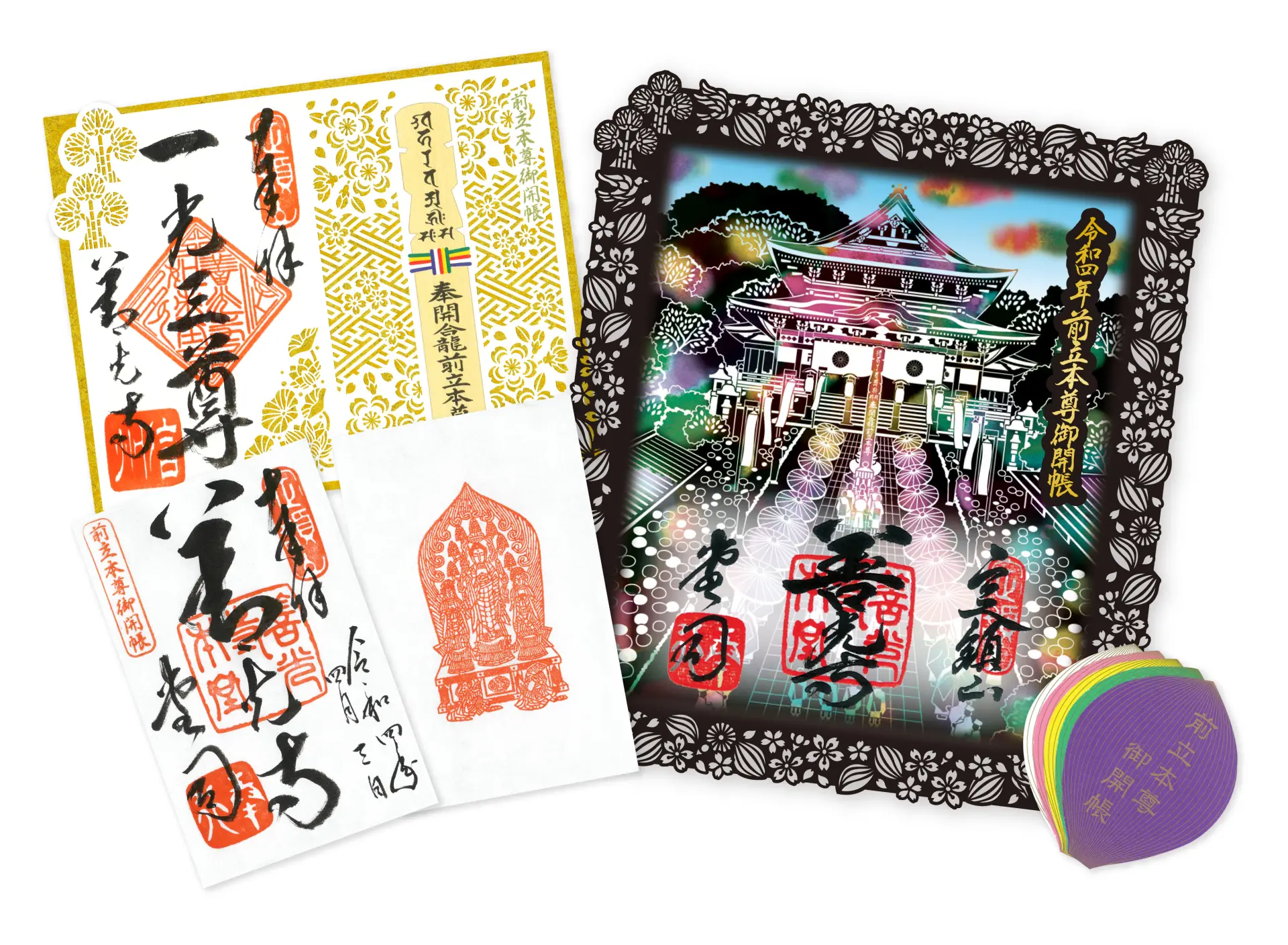
In addition to the standard goshuin bearing the name Zenkoji, limited-edition stamps are available only to visitors who worship at specific structures such as the Main Hall, Sanmon Gate, and Niomon Gate.
Each features a different design. When placed together, the stamps form a single picture depicting the Zenkoji Temple grounds.
This creates an enjoyable way to explore the grounds while collecting the stamps one by one.
There are also many designs closely associated with Zenkoji, including special Binzuru and “Led by a Cow to Zenkoji” goshuin.
Sample Shinshu Cuisine on Nakamise Street
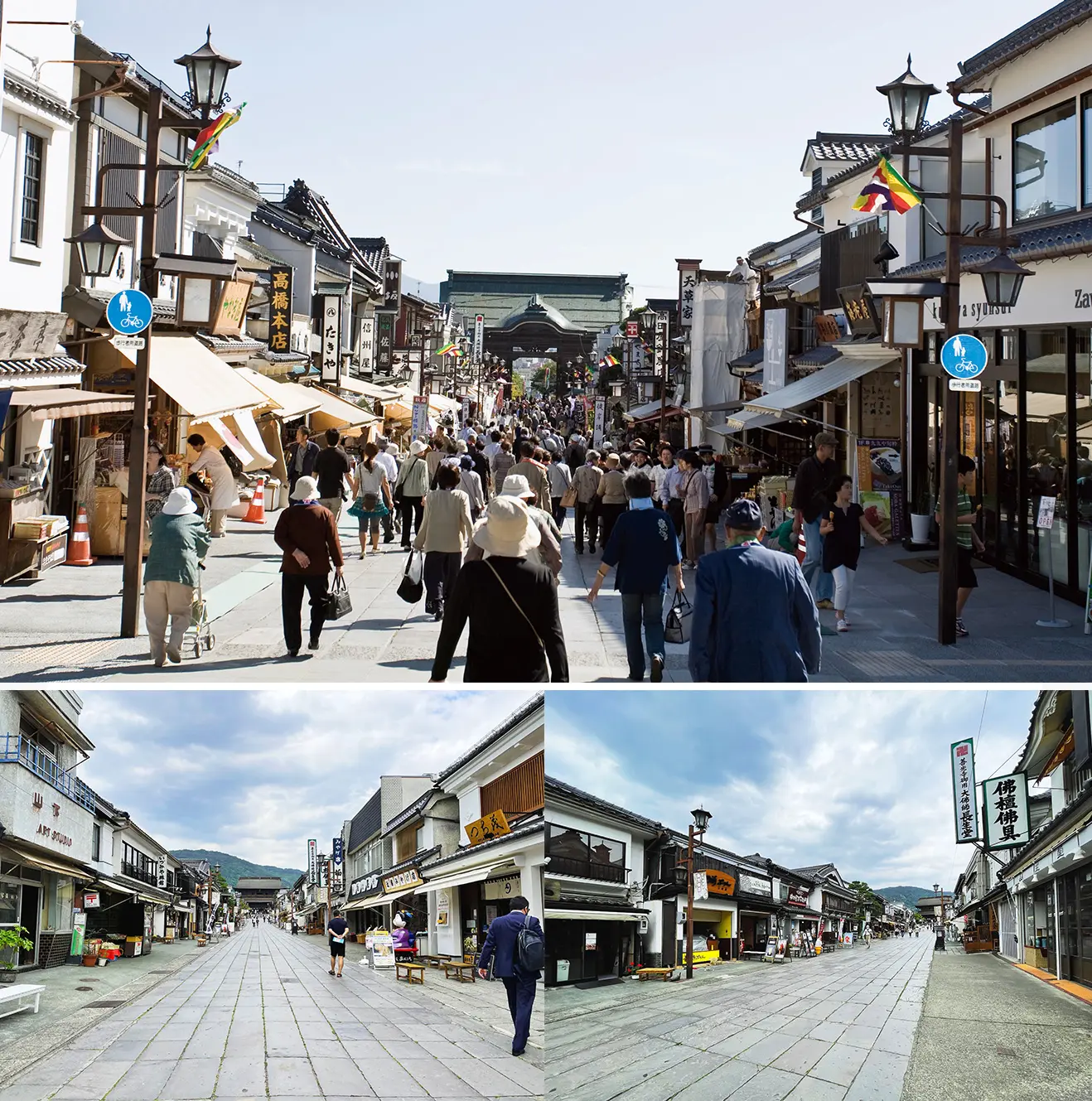
Nakamise Street stretches along the temple approach and is lined with restaurants and souvenir shops, attracting many visitors before and after worship.
Its appeal lies in discovering Nagano's local flavors and products while taking in its traditional atmosphere.
One recommended specialty is oyaki, a traditional Shinshu dish.
These simple dumplings are made by wrapping seasoned vegetables and wild mountain plants in wheat or buckwheat dough.
They come with a variety of fillings, including the classic nozawana pickled greens, and each shop offers its own distinctive variations.
The stone-paved approach leading to the Main Hall is also said to contain approximately 7,777 stones, creating another characteristic Zenkoji scene.
The Morning Traditions of Oasaji and Ojuzu Chodai
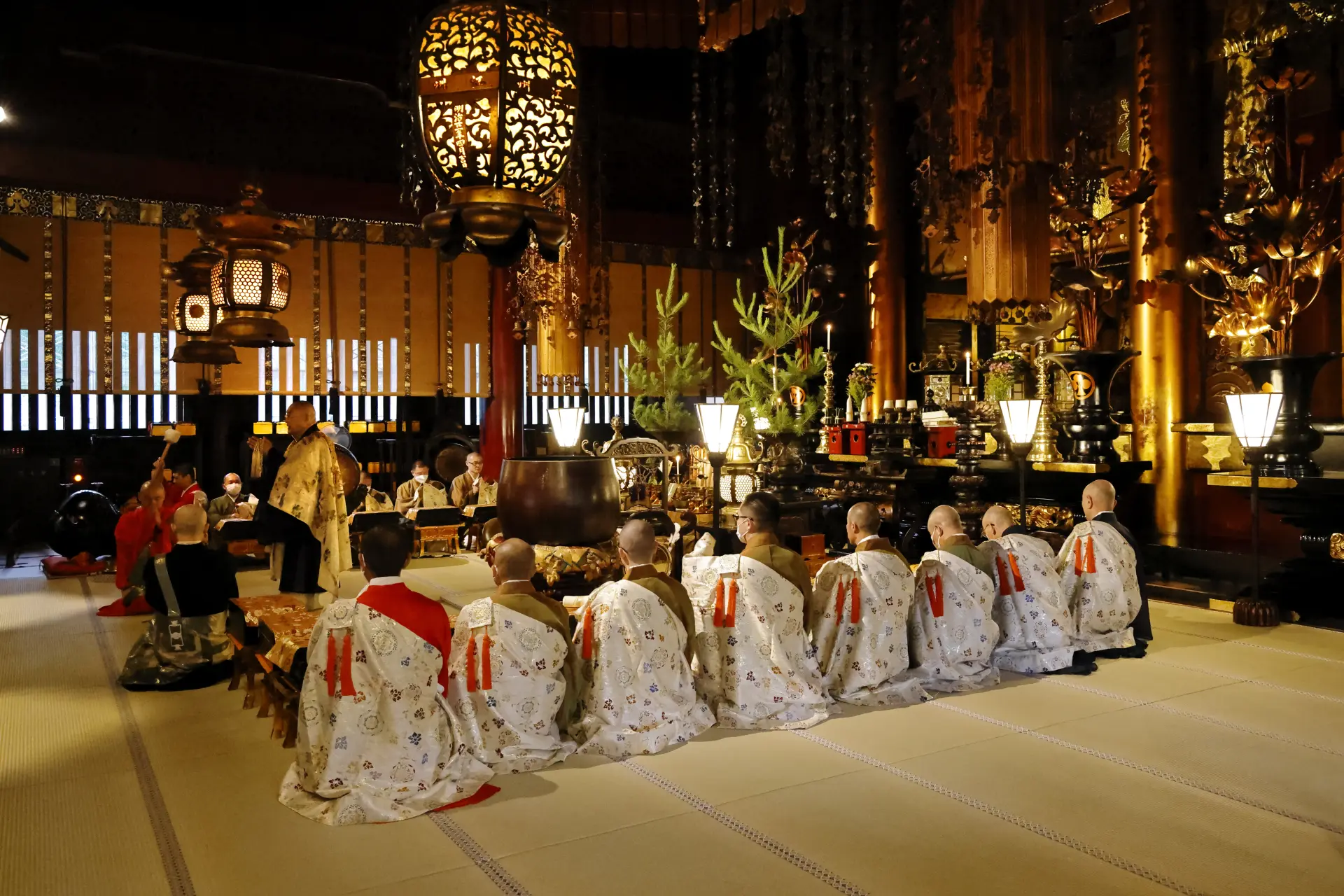
Oasaji is a morning service that begins in the Main Hall at sunrise and is attended by all of Zenkoji Temple's monks.
Monks of the Tendai and Jodo sects conduct the service in succession every day of the year, offering a firsthand sense of the faith passed down throughout Zenkoji's long history.
It is also a rare opportunity to see the Ruridan altar and the shrine containing the principal image when the normally closed curtain is raised.
Another special experience is Ojuzu Chodai, in which a Zenkoji chief priest gently touches worshippers' heads with prayer beads to bestow merit.
It is considered a form of teaching through physical action that conveys the Buddhist path without words. No special application is required, and anyone may participate.
If your schedule allows, listen to the monks' chanting in the quiet temple grounds early in the morning.
A Temple Lodging Experience Unique to Zenkoji
The Zenkoji Temple grounds are home to 39 shukubo, temple lodgings that accommodate worshippers.
Each has its own peaceful atmosphere and character, shaped by generations of tradition, as well as thoughtfully prepared temple cuisine.
In addition to offering an experience unlike a conventional hotel stay, each lodging has a certified guide who accompanies guests to the next morning's Oasaji service.
This provides a special way to attend the solemn early-morning service in the Main Hall and experience the temple's culture of faith more closely.
A stay can refresh both mind and body while making your visit even more memorable, so consider spending the night if you are interested.
Zenkoji Gokaicho: A Grand Ceremony Held Once Every Seven Years
Zenkoji Gokaicho is a grand ceremony held only once every seven years according to traditional Japanese counting.
It is a special opportunity to worship the Maedachi Honzon, a replica of the principal image that normally remains an absolute secret Buddha.
The main highlight is the Eko Pillar, approximately 33 feet tall, erected in front of the Main Hall.
A cord known as the “Cord of Goodness” extends from the right hand of the Maedachi Honzon. Touching the pillar is said to form a direct bond with the image.
During the event, major Buddhist services are also conducted by the Tendai and Jodo sects, giving the temple grounds a solemn atmosphere unlike that of an ordinary visit.
The next Gokaicho will be held for 77 days, from April 4 to June 19, 2027.
As this opportunity may not come many times in a lifetime, consider planning a visit during the ceremony.
3 Popular Attractions Near Zenkoji Temple
Here are three popular attractions near Zenkoji Temple.
Each offers a different way to experience Nagano City, from viewing art and taking a walk to shopping.
They are easy to combine with a temple visit, so use them as inspiration when planning your sightseeing itinerary.
1. Nagano Prefectural Art Museum
The museum houses and exhibits more than 5,500 works, including a valuable collection donated by Japanese-style painter Higashiyama Kaii (1908–1999), who frequently depicted the landscapes of Shinshu, as well as works by local artists and paintings of the region's scenery.
Its bright, open design faces the park and blends into the surrounding scenery, earning it recognition as a “landscape museum.”
When the main building was rebuilt in 2021, the institution was renamed the Nagano Prefectural Art Museum from the Nagano Prefectural Shinano Art Museum, and the Higashiyama Kaii Gallery was also renovated.

- Name in Japanese
- 長野県立美術館
- Postal Code
- 380-0801
- Address
-
1-4-4 Hakoshimizu, Nagano City, Nagano
Google Maps - Telephone
- 026-232-0052
- Closed
- Wednesdays and New Year holidays
- Business Hours
- 9:00am - 5:00pm (Admission allowed until 4:30pm)
- Admission
-
Varies depending on exhibitions
The Collection Exhibition (Valid for the Main Hall and Higashiyama Kaii Museum): 700 yen (College student and Age 75 or older 500 yen, High school student and Age 18 or younger: Free) - Directions
- From Nagano Electric Railway’s Zenkojishita Station, walk 11 min.
- Credit Cards
- Accepted
- Official Website
- Official Website (Japanese)
2. Joyama Park
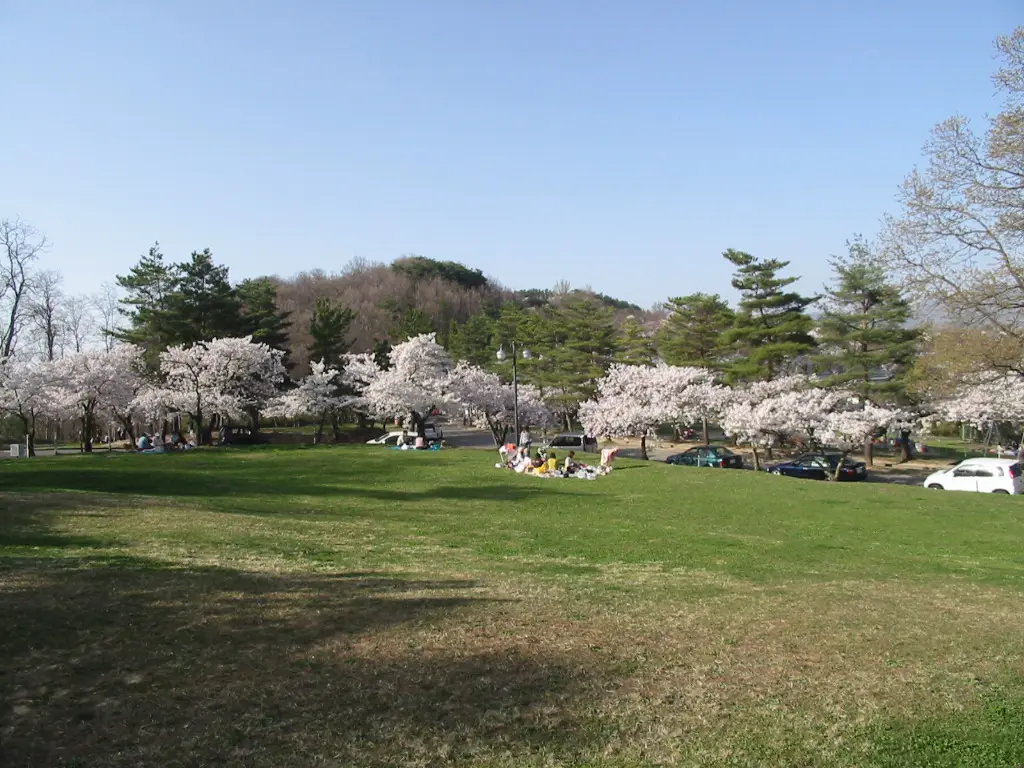
This park spreads across elevated land in Matsumoto City, Nagano Prefecture, and is known for its panoramic views of the Northern Japanese Alps and central Matsumoto. Its origins date to 1842, when Matsumoto feudal lord Toda Mitsutsune planted cherry and maple trees at the ruins of Inukai Castle and opened the grounds to local residents.
In 1875, it became the first site in Nagano Prefecture to be officially designated as a park.
The approximately 15-acre grounds feature walking paths, a lawn, and an observation deck. In spring, the park attracts many visitors as a renowned cherry blossom viewing destination.
- Name in Japanese
- 城山公園
- Postal Code
- 380-0801
- Address
-
1219 Oaza Arigasaki, Matsumoto, Nagano Prefecture
Google Maps - Phone
- 0263-34-3292 (Matsumoto City Cultural Properties Division)
- Closed on
- Open for walking at all times
- Hours
- Open for walking at all times
- Admission
- Free
- Access
- About 8 minutes by car from JR Kita-Matsumoto Station
- Official website
- Official website (Japanese)
3. Yawataya Isogoro Main Store
Yawataya Isogoro operates its main store in Daimoncho, at the foot of the historic Zenkoji Temple in Nagano City, Nagano Prefecture. This specialty spice shop has a history spanning 280 years and sells various blends of shichimi and ichimi chili pepper, including its signature Shichimi Togarashi, available since the company's founding.
The store's signature Shichimi Togarashi combines chili pepper with ginger, shiso, Japanese pepper, dried citrus peel, sesame, and hemp seeds. Seasoned using seven ingredients and a distinctive method that has remained unchanged for generations, this long-selling product balances a rich aroma with noticeable heat and has fans throughout Japan.

- Product name in Japanese
- 根元 八幡屋礒五郎「七味唐からし」
- Manufacturer
- KONGEN Yawataya Isogoro
- Price
- Can (14g) 432 yen; Medium can (28g) 842 yen; Bottle (12g) 454 yen; Bag (8g) 238yen; Bag (18g) 410 yen; Bag (35g) 648 yen; Single-use size (0.2g) x 12 bags 194 yen
- Sales Locations
- KONGEN Yawataya Isogoro stores, etc.
- Official Website
- Official Website (English)
Suggested Zenkoji Temple Itinerary
Based on the attractions introduced above, the following suggested itinerary provides an efficient way to see Zenkoji Temple's main highlights.
You can adjust the times to suit your schedule. If you prefer a more relaxed visit, allow extra time throughout the itinerary.
Adding the nearby Nagano Prefectural Art Museum or Joyama Park is also recommended.
| Approximate Time | Location | Overview |
|---|---|---|
| 10:00 a.m. | Niomon Gate | Enter the temple grounds after viewing the imposing Nio guardian statues at the start of the worship route |
| 10:10 a.m. | Nakamise Street | Walk along the stone-paved approach and take in the atmosphere of the traditional temple town |
| 10:30 a.m. | Sanmon Gate | Climb to the upper level for panoramic views of Nagano City, and be sure to look for the “Dove Character Plaque” |
| 11:05 a.m. | Main Hall | Touch the Binzuru statue, worship in the inner sanctuary, and appreciate the solemn National Treasure architecture |
| 11:35 a.m. | Okaidan Meguri | Search for the “Key to the Pure Land” in the pitch-dark passage beneath the Main Hall |
| 12:00 p.m. | Sutra Repository | Push the rotating rinzo around once inside the Important Cultural Property and receive the same merit as reading the entire Issaikyo collection |
| 12:15 p.m. | Daikanjin | Explore Fudodo Hall and other sites at Daikanjin, the head temple of the Tendai sect at Zenkoji |
| 12:30 p.m. | Lunch | Sample Shinshu specialties such as soba noodles and oyaki on Nakamise Street |
Frequently Asked Questions About Zenkoji Temple
Q
How long does it take to visit Zenkoji Temple?
Approximately 2 hours is enough to see the main highlights. Allow around 3 hours if you prefer to explore at a leisurely pace.
Q
Is there an admission fee for Zenkoji Temple?
Entering the temple grounds is free, but separate admission fees apply to areas such as the Main Hall's inner sanctuary, the Okaidan Meguri, and the Sutra Repository.
Q
When will the next Gokaicho ceremony be held?
It will be held for 77 days, from Sunday, April 4 to Saturday, June 19, 2027.
Summary
This article has introduced essential information about Zenkoji Temple, its highlights, and a suggested sightseeing itinerary. A source of spiritual support for many people since its founding, Zenkoji is one of Nagano's leading landmarks and continues to preserve its culture of faith.
Its appeal extends beyond historic buildings, offering culture, food, and hands-on experiences in one destination. Consider visiting during the Zenkoji Gokaicho beginning April 4, 2027. Experiencing the temple with all five senses is sure to create lasting memories.
Also check out the following article for essential information to help you make the most of your trip to Nagano.