
How Japan’s Railways Crossed the Mountains: A Two-Day, One-Night Journey along the Shinetsu Line and through Usui Pass
Trains on the Shinetsu Main Line once climbed and descended the steepest grade on Japan’s mainline rail network between Yokokawa and Karuizawa. The last trains ran on September 30, 1997, just before Shinkansen service began. Local residents still work to preserve this stretch of railway so future generations can see how engineers of the day overcame the toughest obstacle on the line.
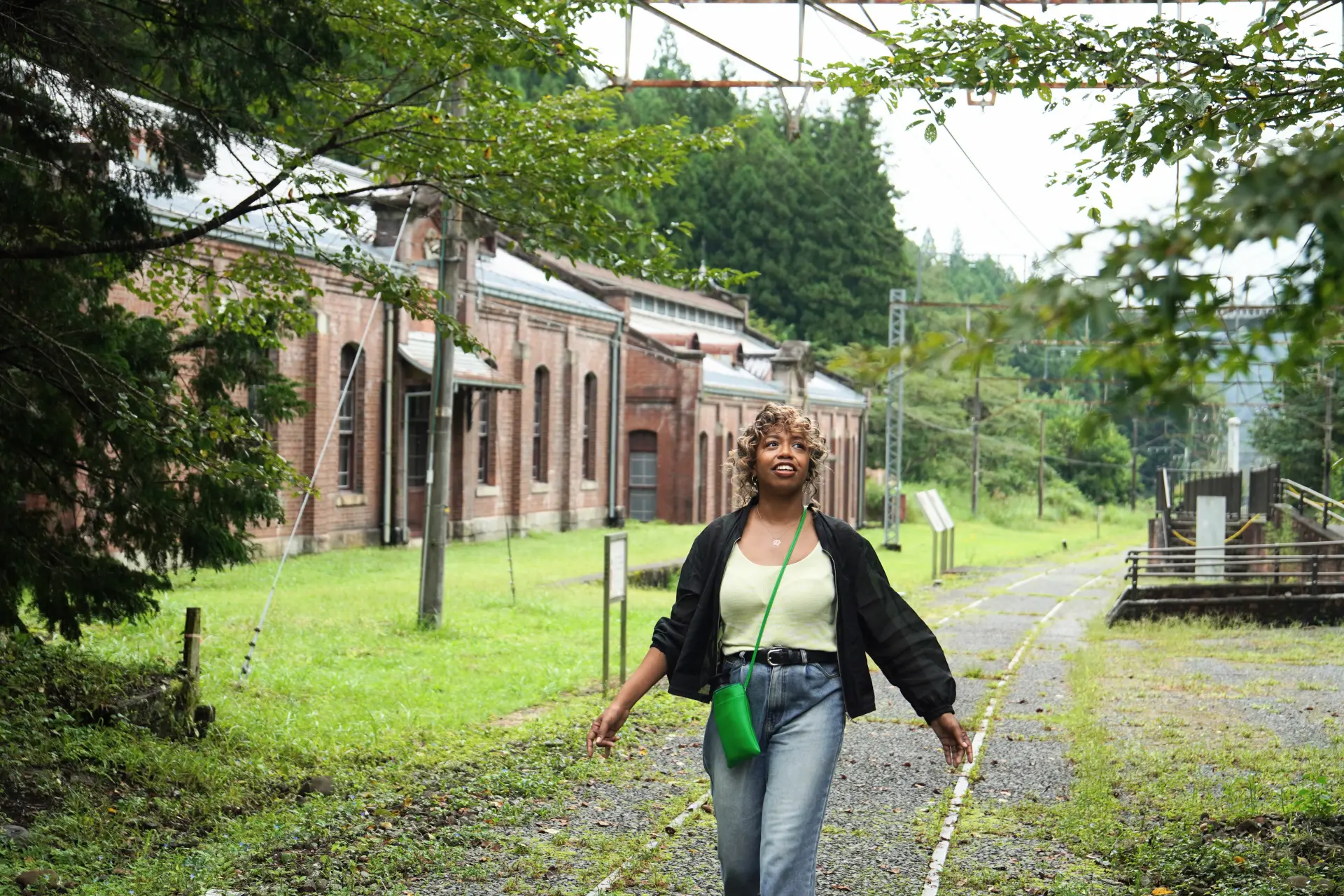
We joined a special walking tour along a section of the old route that’s usually closed to the public. How did trains make it over these mountains? Walk the route with us to find out and discover the stories of the people who worked here.
The Railway on This Itinerary: The Shinetsu Line
The Shinetsu Line once connected Takasaki Station in Gunma Prefecture with Niigata Station via Nagano Prefecture. Following closures and transfers of sections to other operators, today’s JR Shinetsu Line operates in three separate sections, including Takasaki–Yokokawa. It was once a major trunk route linking Tokyo and Niigata. One of its greatest challenges was Usui Pass, between Yokokawa Station in Gunma and Karuizawa Station in Nagano. The maximum gradient was 66.7 per mille—a steep climb of about 66.7 meters over a distance of 1 km—which required a range of railway technologies to negotiate. The Yokokawa–Karuizawa section closed when the Nagano Shinkansen opened in 1997. On this tour, you walk the closed section of the former Shinetsu Line with a guide.
A Two-Day, One-Night Itinerary: Walk the Disused Railway at Usui Pass, Visit Megane-bashi, and Explore Historic Trains
This two-day, one-night itinerary explores the JR Shinetsu Line and the railway heritage of Usui Pass. On Day 1, walk a section of the former Shinetsu Line normally off-limits to visitors. On Day 2, follow the Abt Road walking trail. The local Annaka City Tourism Organization offers guided walks along the disused railway, where tracks, tunnels, and signaling equipment remain, sharing the history of trains crossing Usui Pass. Walk the tracks, tunnels, and bridges once used by trains and experience the history of how Japan’s railways overcame this rugged mountain pass.
Day 1 | Discover Japan’s Railway History on the Abandoned Railway Walk
Join the Abandoned Railway Walk on the first day, heading from Karuizawa Station toward Yokokawa Station. Follow the disused tracks and tunnels of the former Shinetsu Line, normally closed to the public, to experience the history of rail travel over Usui Pass. After plenty of walking, enjoy sake, sweets, and hot springs.
Take the Shinkansen from Tokyo to Karuizawa and Check In for the Tour at the North Exit
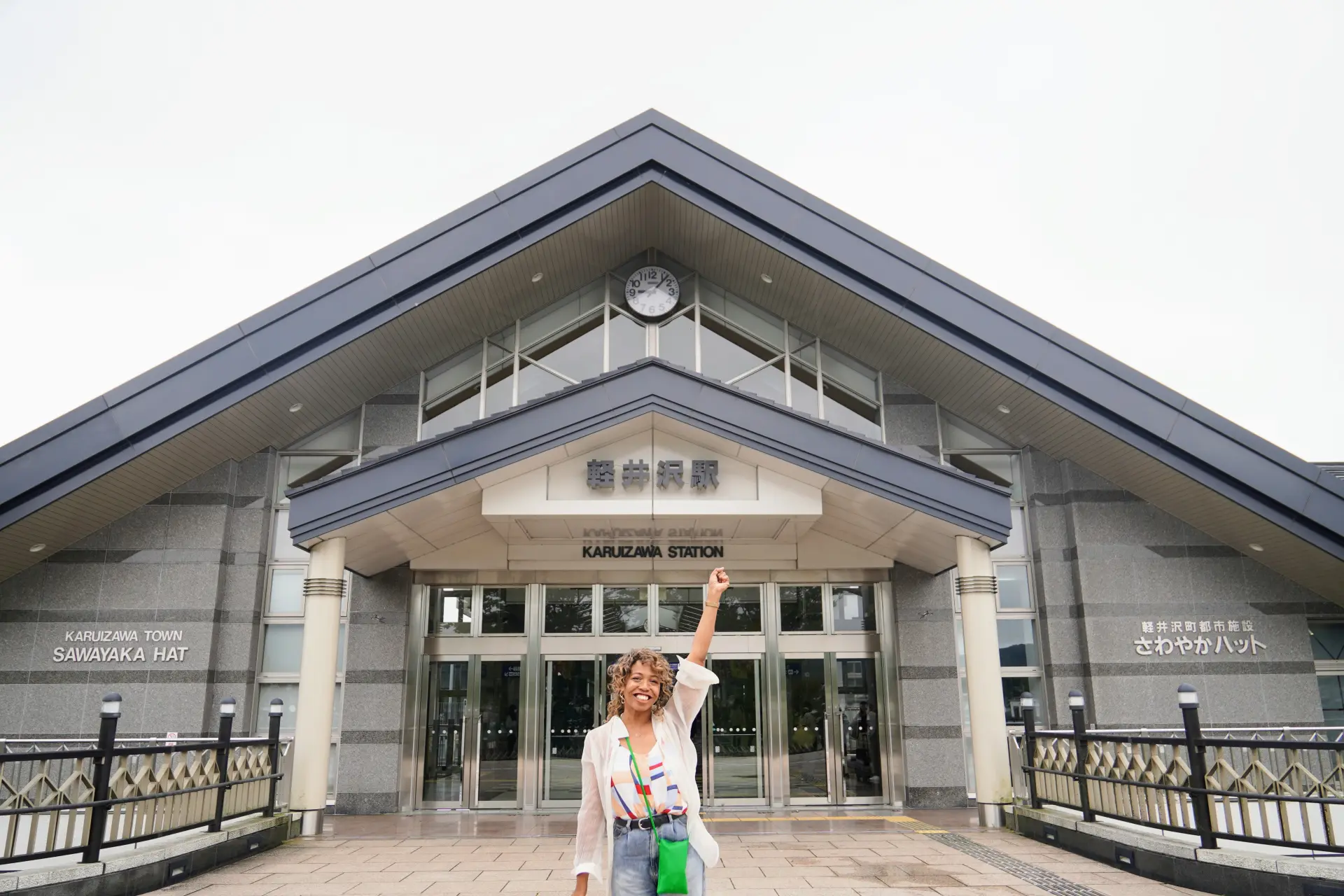
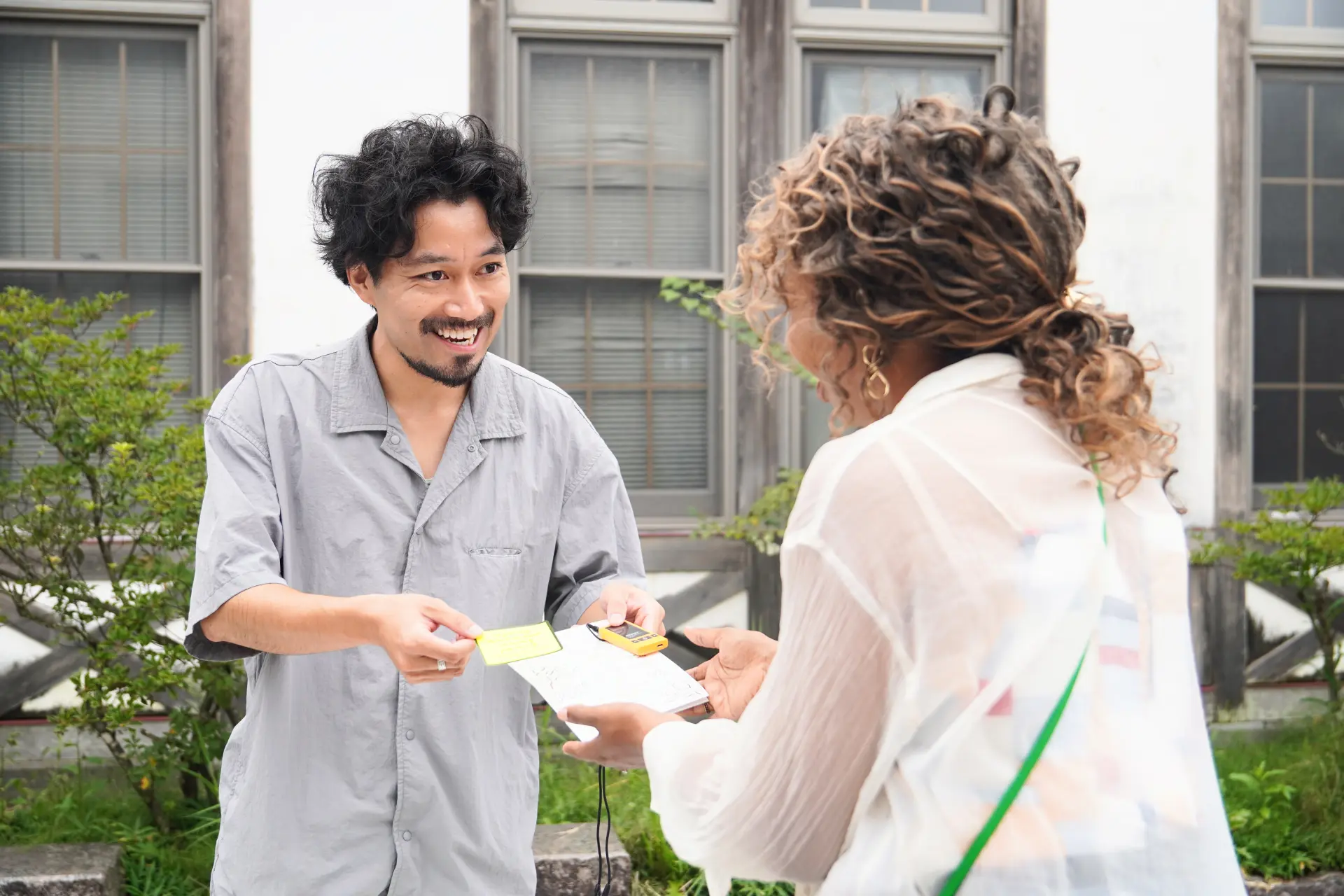
Start by taking the Shinkansen from Tokyo Station to Karuizawa Station in time for the 9:00 am meeting. The Abandoned Railway Walk guides handle check-in near the taxi stand at Karuizawa Station’s North Exit. Give the name used for your reservation and collect a brochure, an audio guide headset, and a souvenir sticker. You can leave large bags and other items you do not need during the tour here.
Put On Your Helmet and Start the Tour
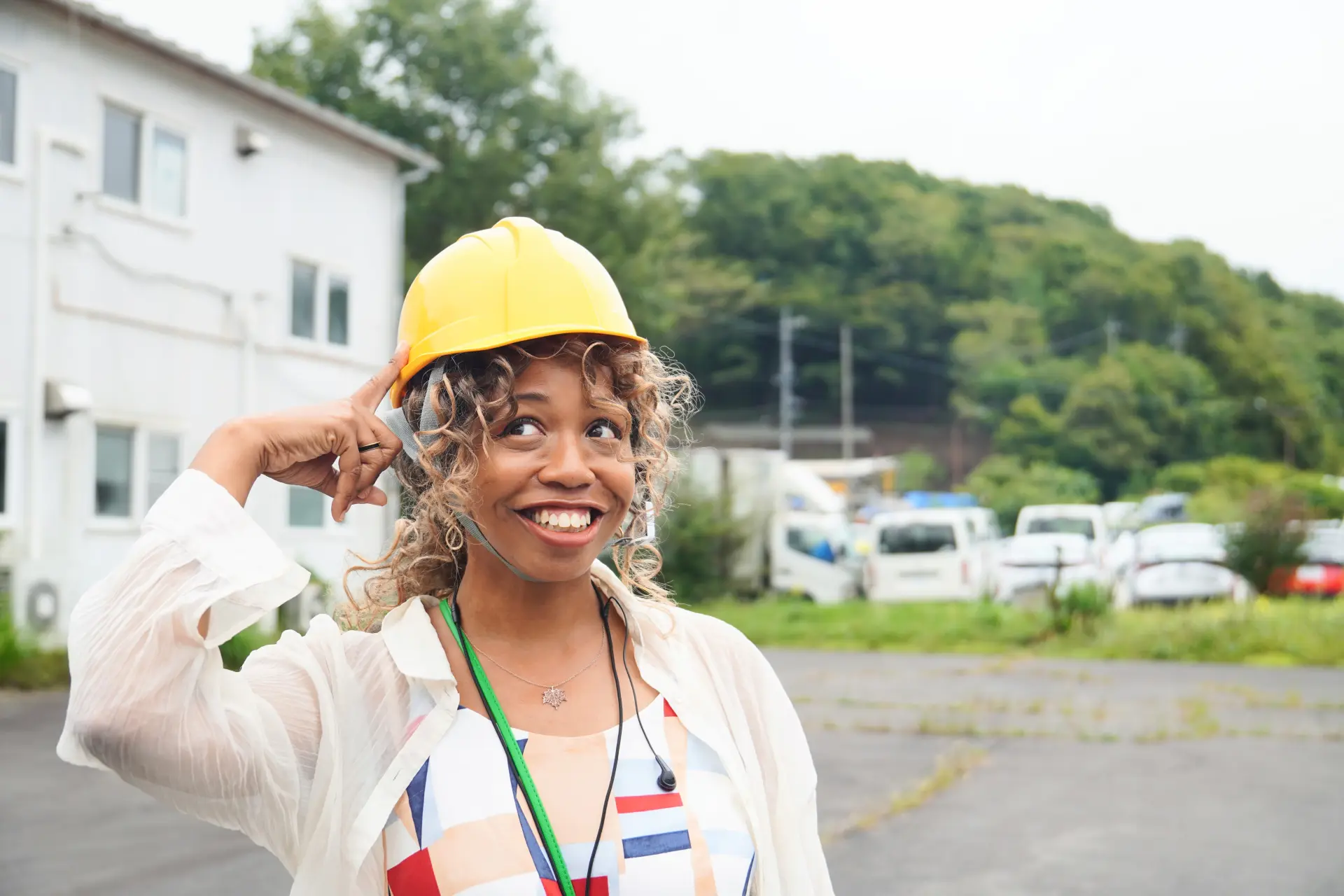
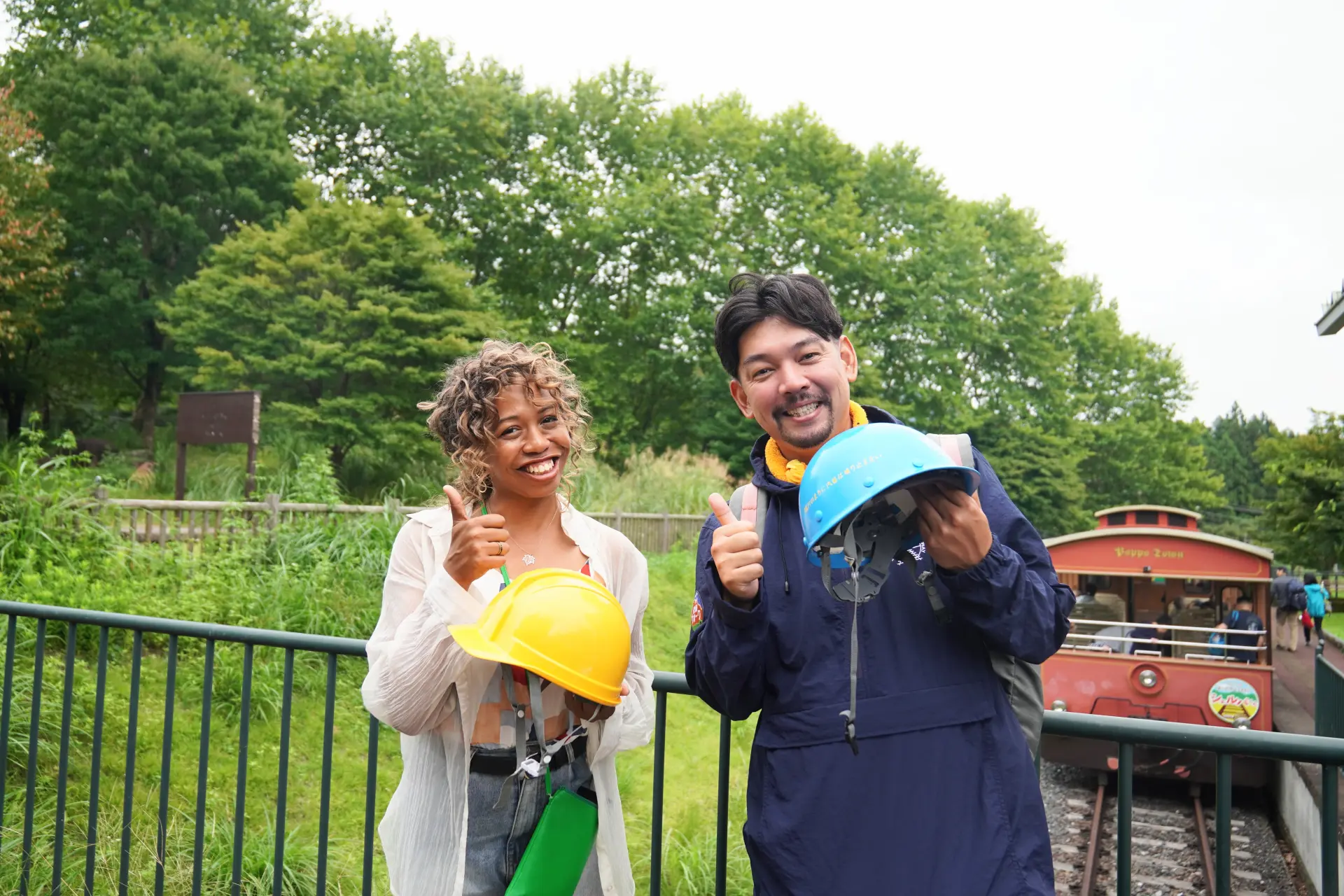
After the briefing at Karuizawa Station, walk alongside the railway for about 10 minutes to the starting point. The audio guide headset lets you hear the commentary even if you fall behind the guide at the front. If you do not understand Japanese, a volunteer interpreter can reportedly accompany you if you let the organizers know in advance. At the starting point, put on your helmet and get your light ready—both are required—and begin the railway walk. If you are not bringing your own, arrange rentals in advance.
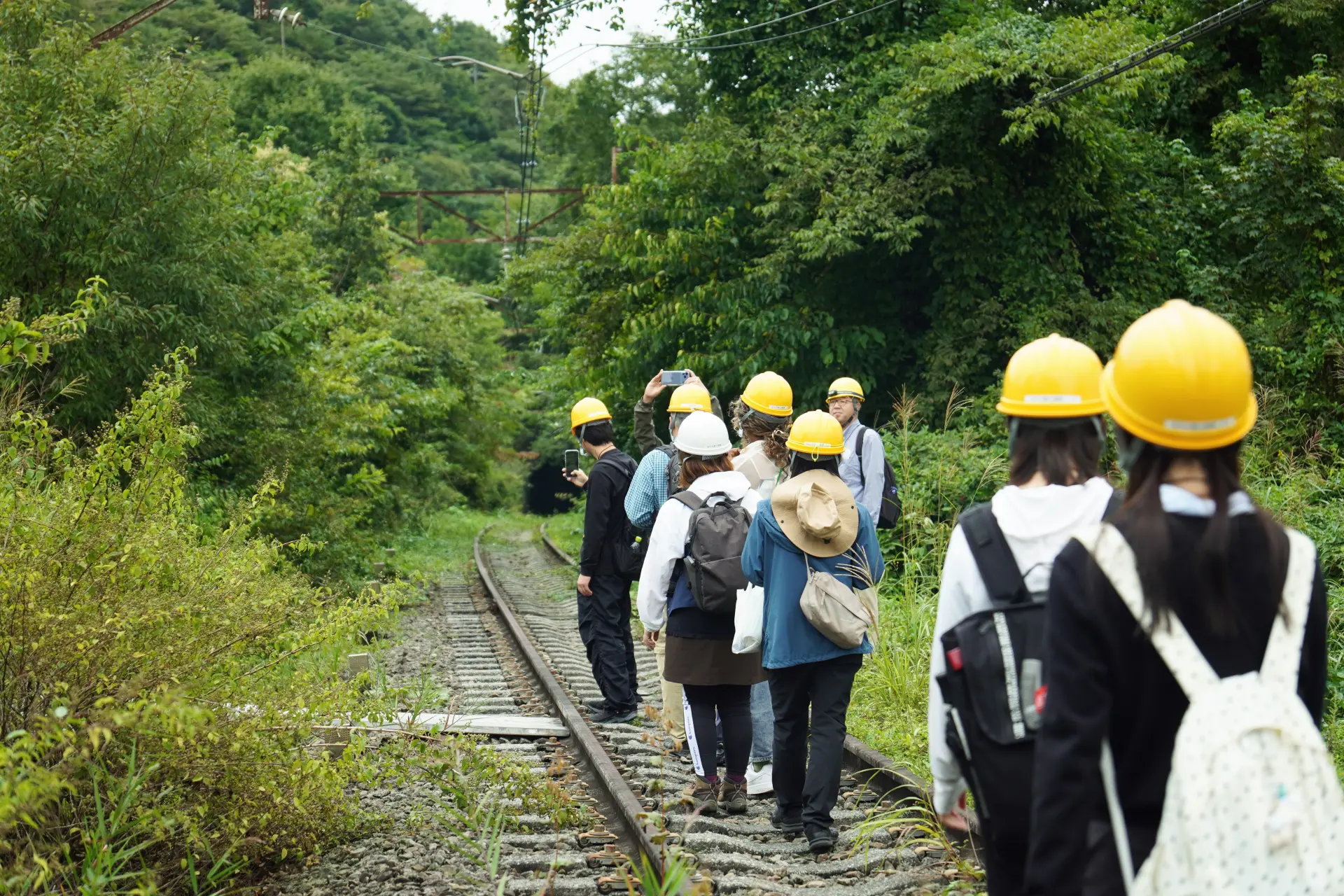
Head into the Tunnels for a Taste of Adventure
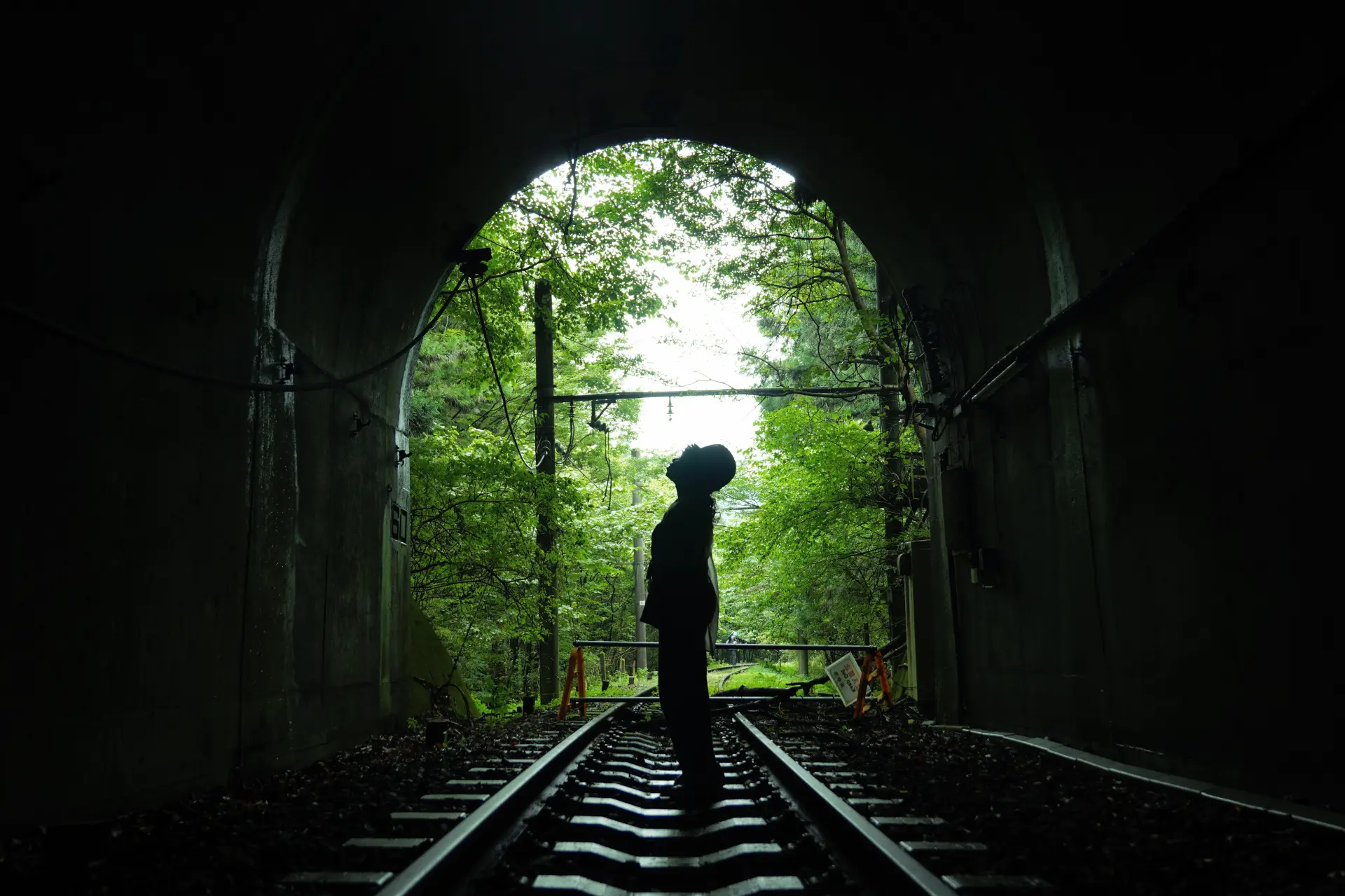
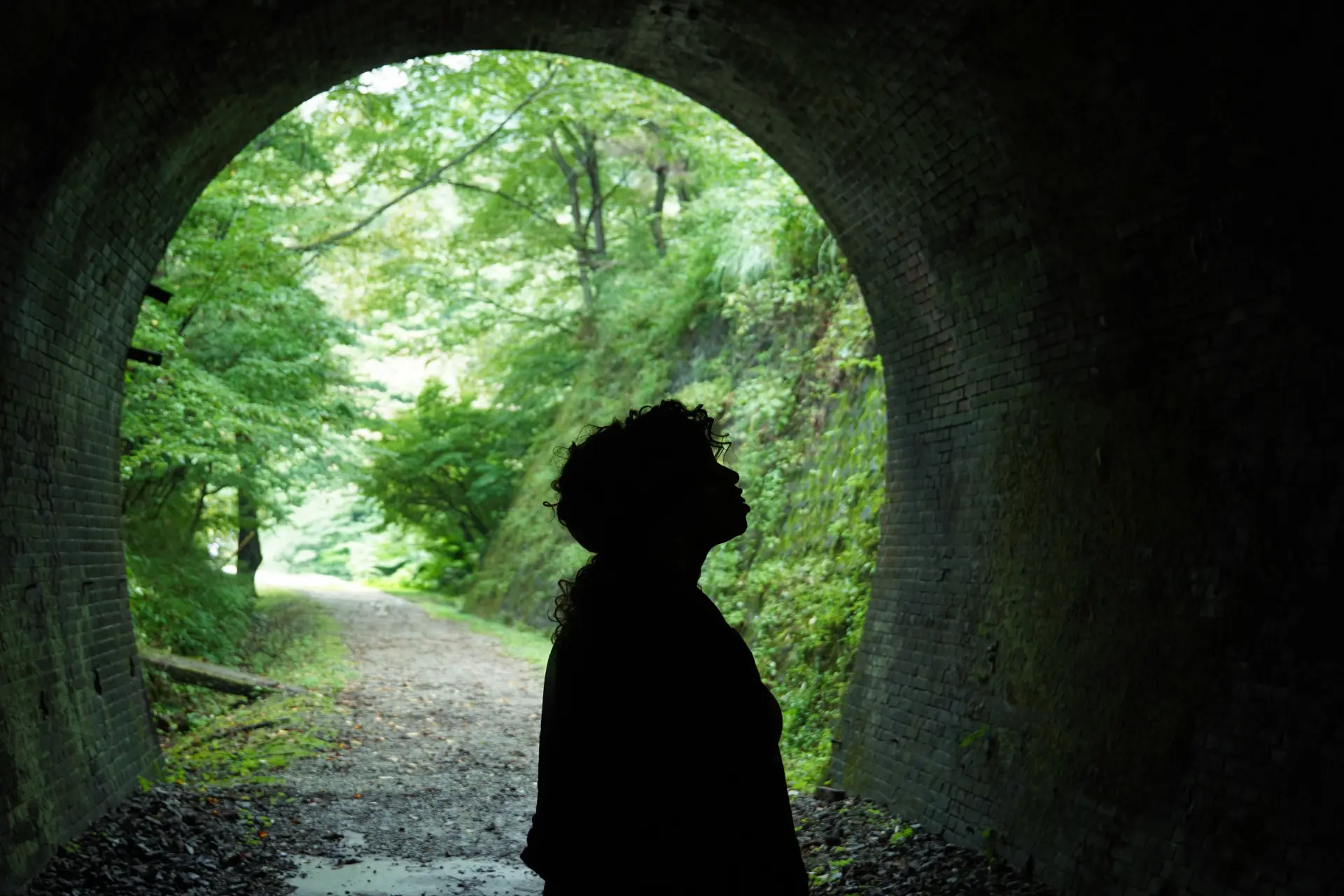
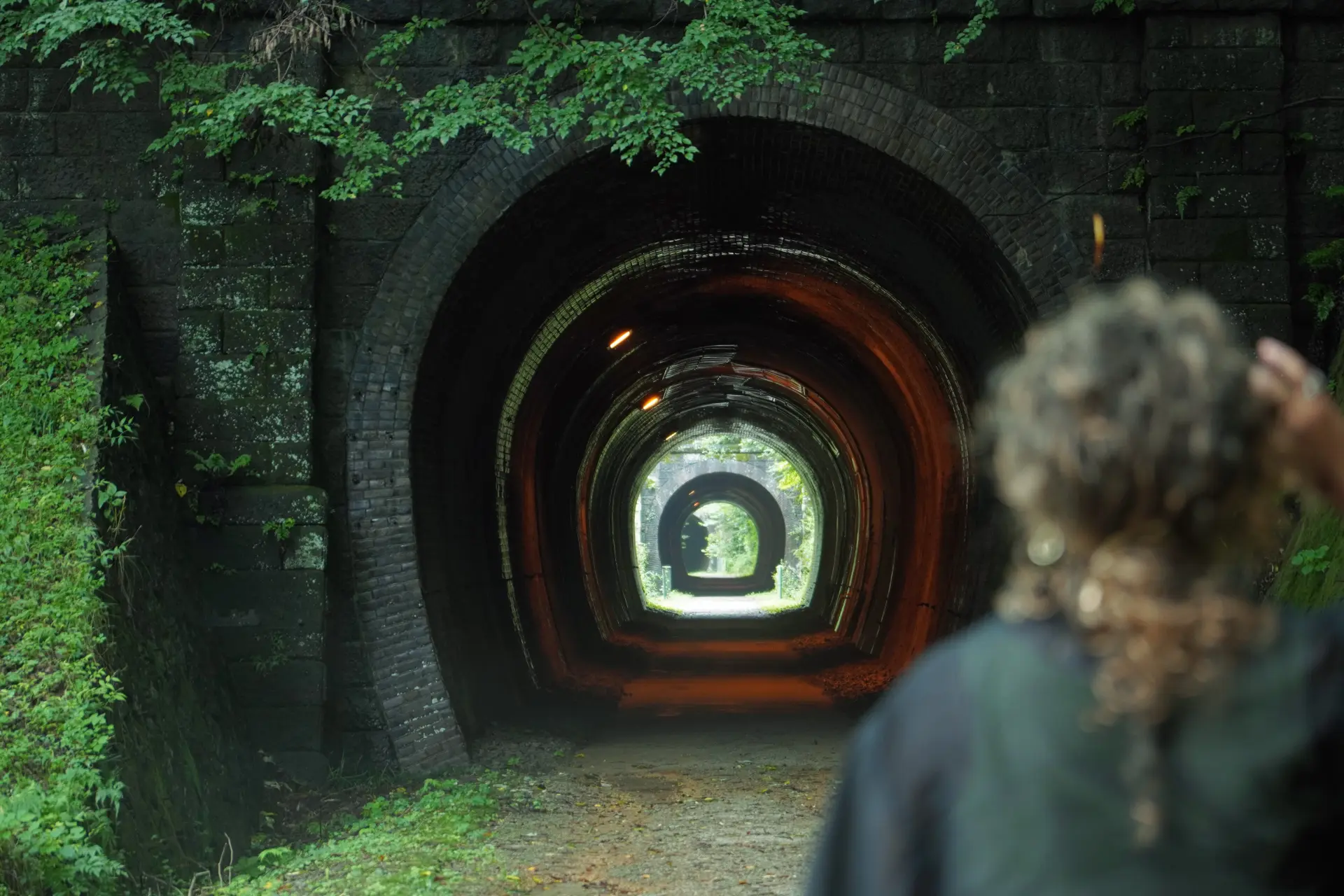
Follow your guide downhill along the tracks, and an old tunnel comes into view. Cool air fills the tunnel; in summer, it can reportedly be about 10°C cooler than outside. Darkness, echoing sounds, and a slightly damp smell surround you. Continue deeper inside, enjoying the unusual experience of walking between the rails.
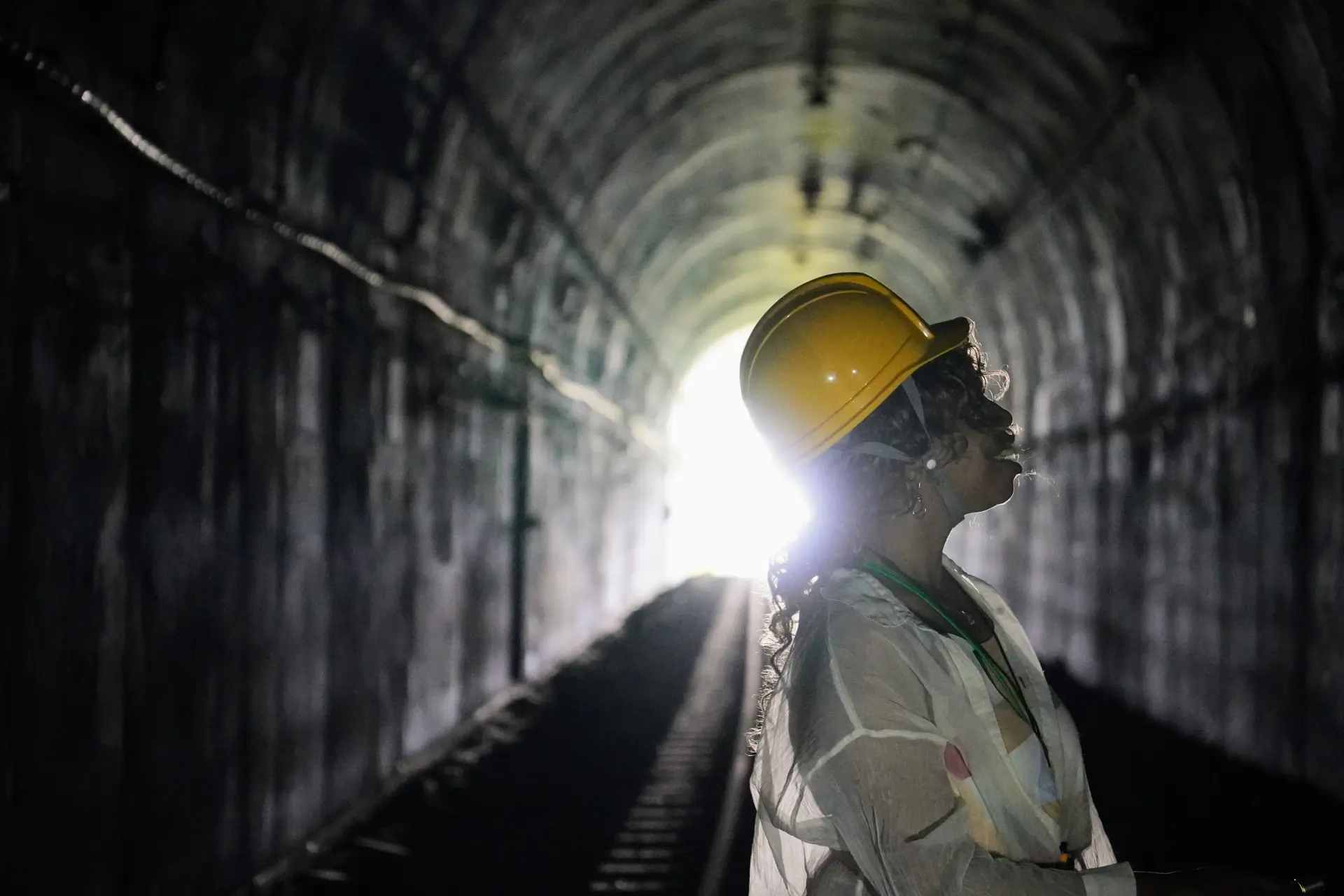
Our guide, Uehara, is a veteran who has been involved with the Abandoned Railway Walk since it began. Alongside extensive knowledge, his humorous commentary brings plenty of smiles. “We allow as much time for photos as possible,” he says. With so many photogenic scenes along the route, having time to stop and take pictures is another pleasure of the tour.
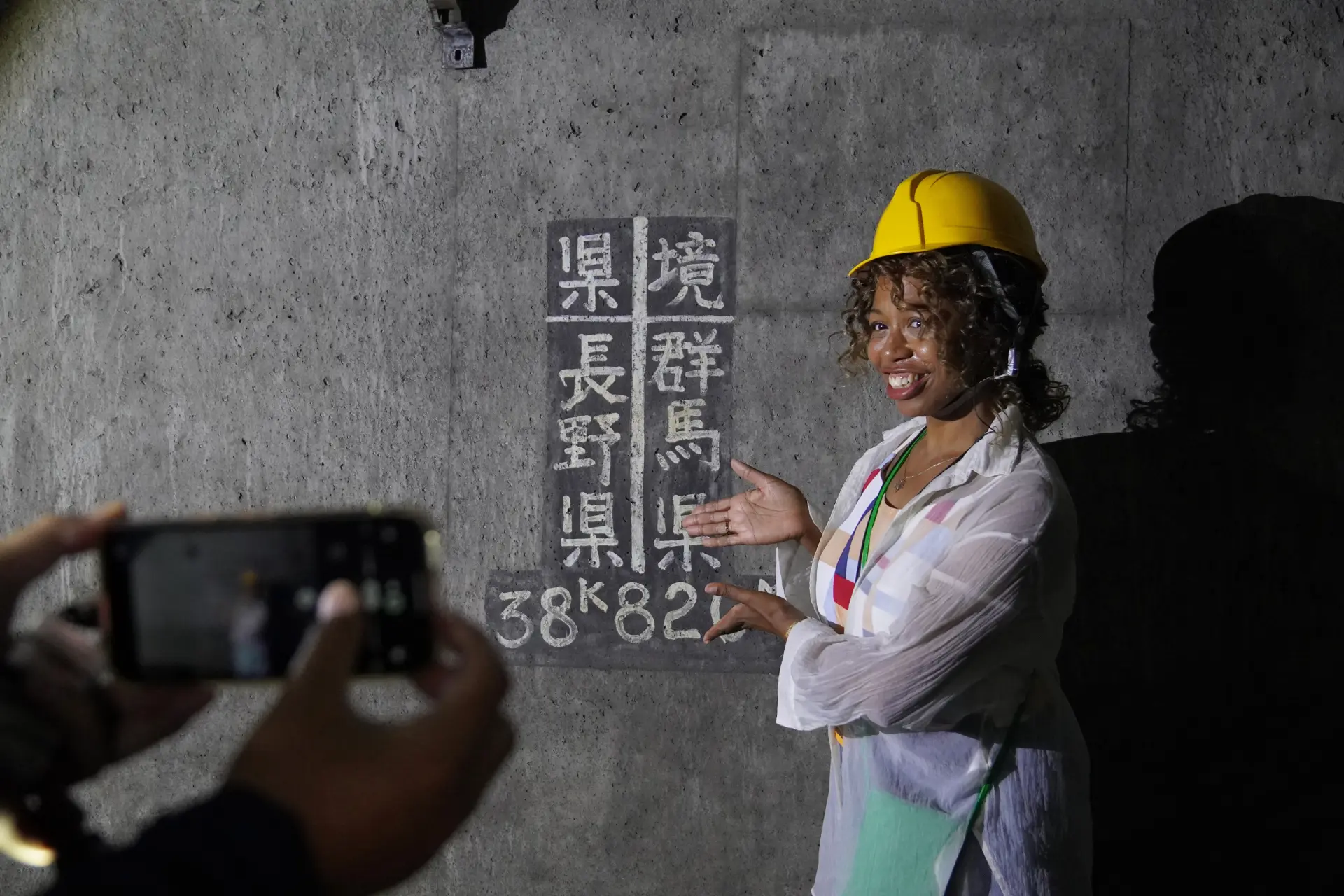
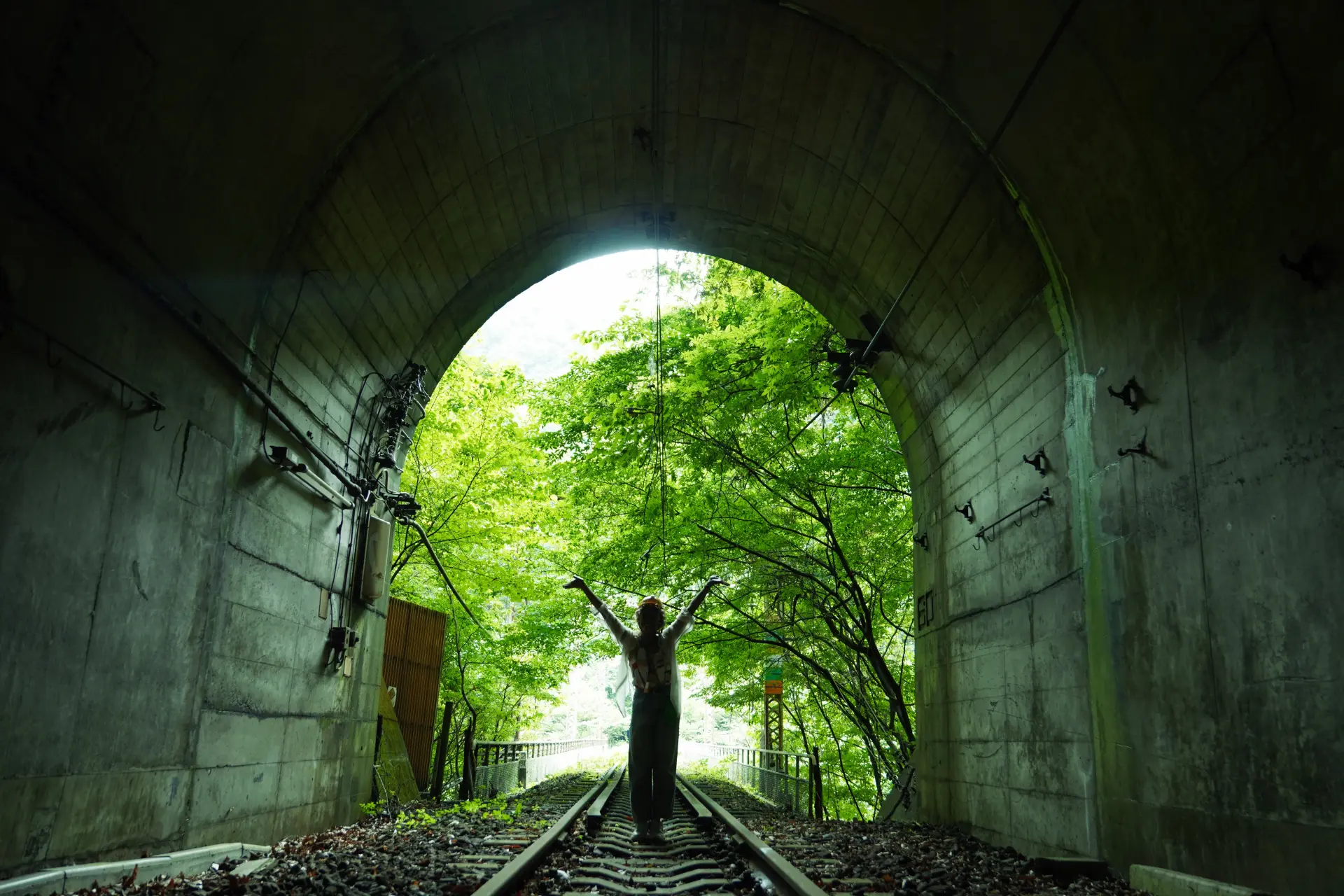
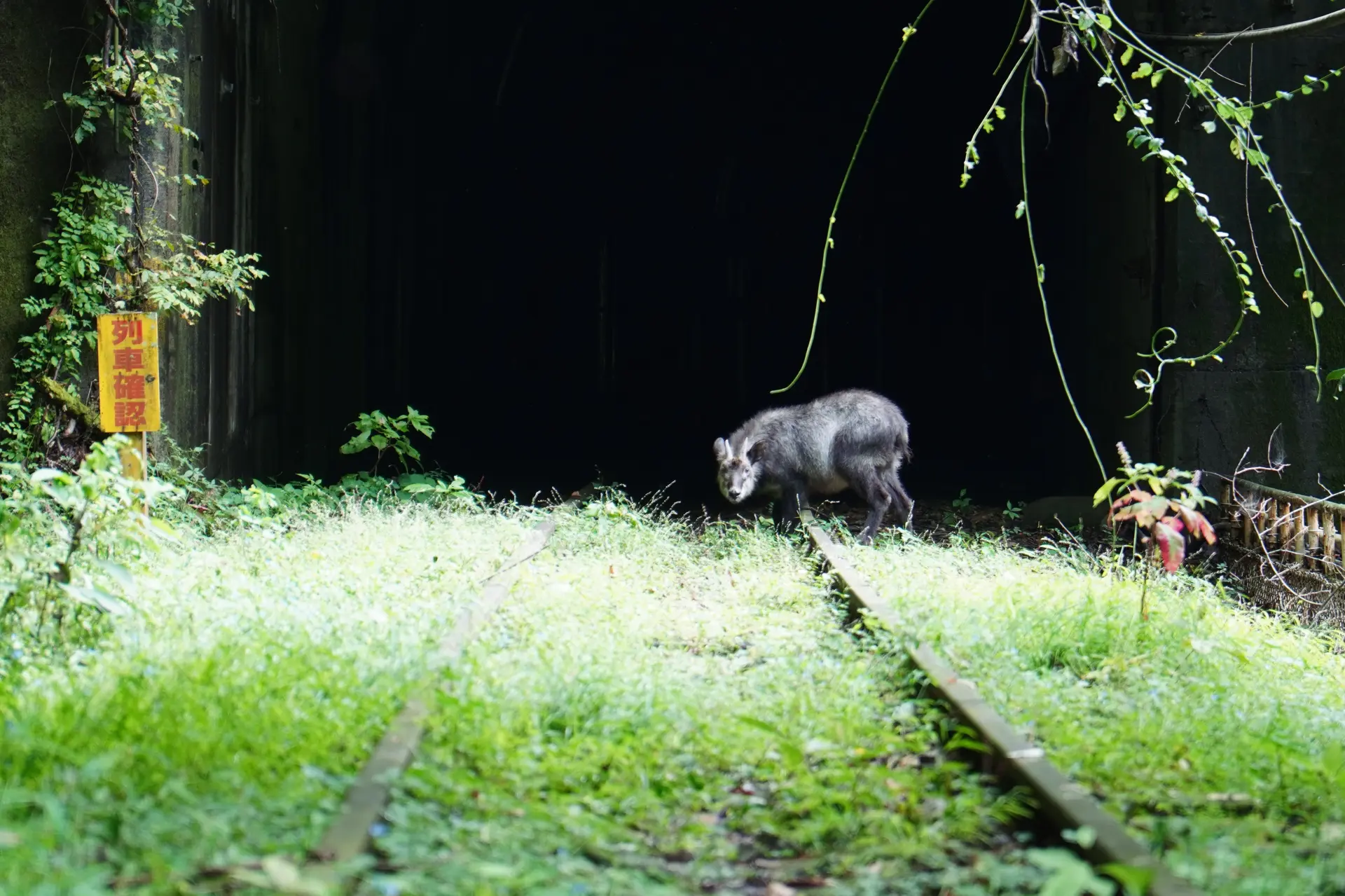
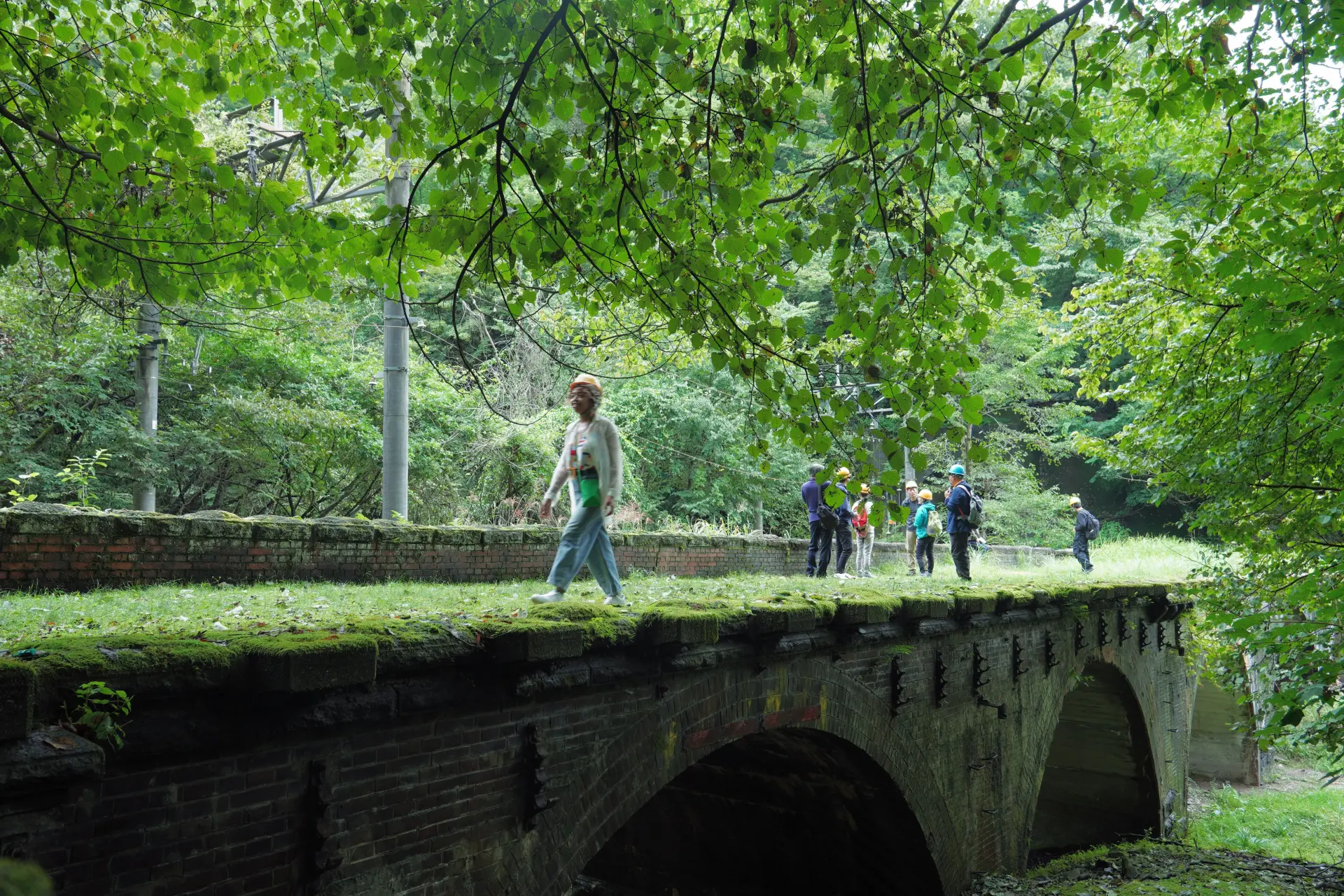
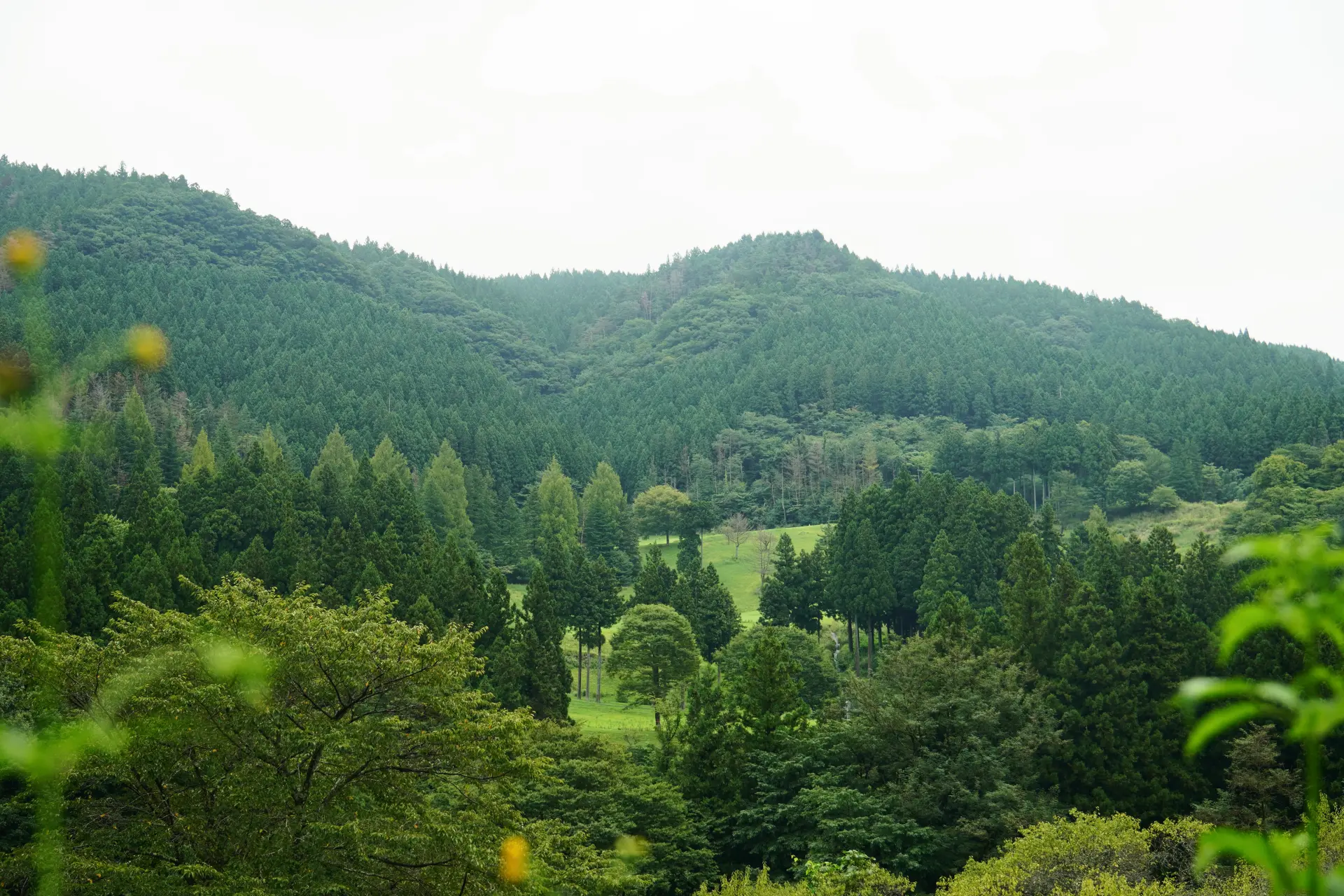
As you continue, the forest grows denser, with the sounds of streams and deer calls around you. If you are lucky, you might encounter wildlife, enjoying the natural beauty of Usui Pass alongside its railway heritage.
Enjoy Oginoya’s Kamameshi, a Longtime Favorite on the JR Shinetsu Line
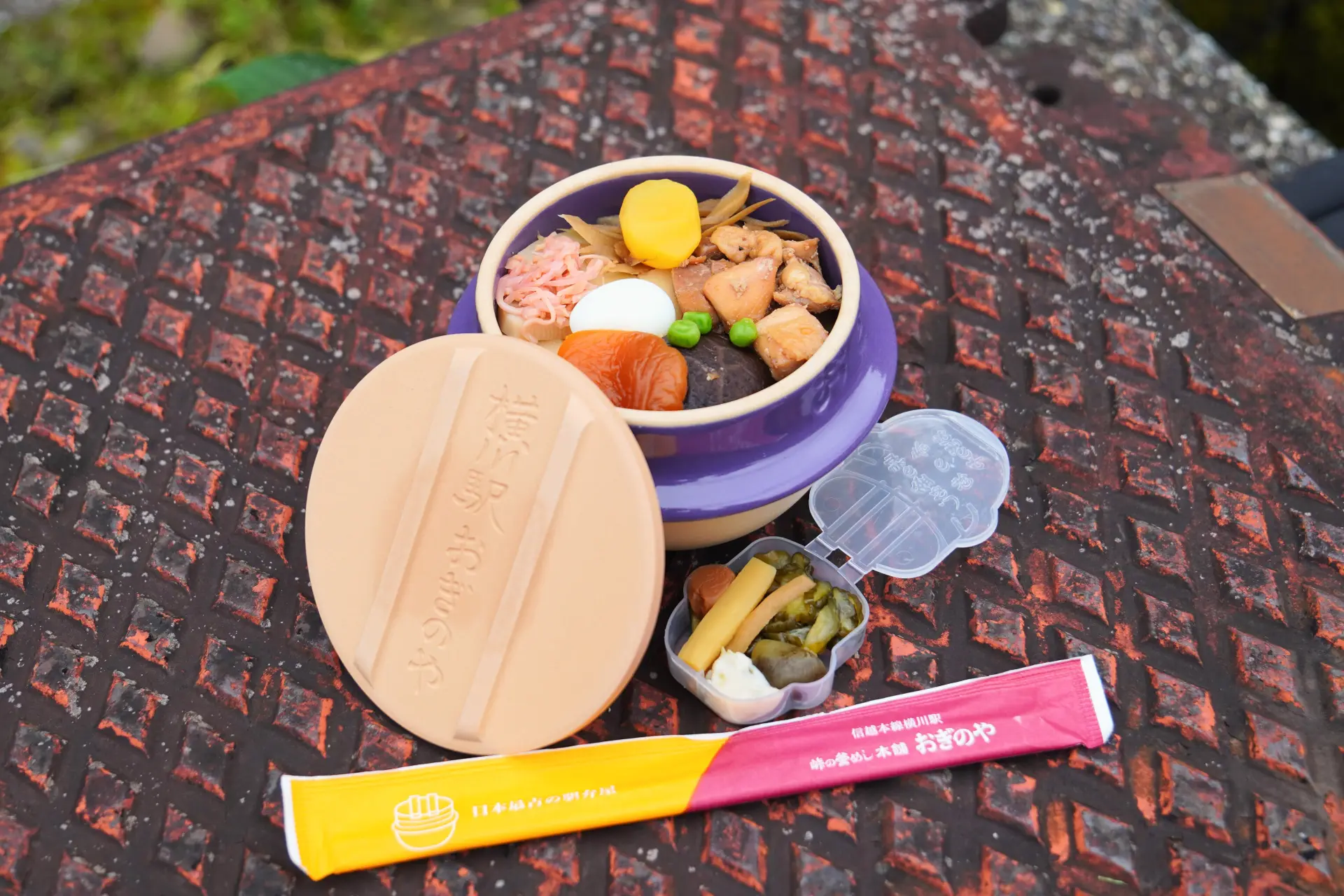
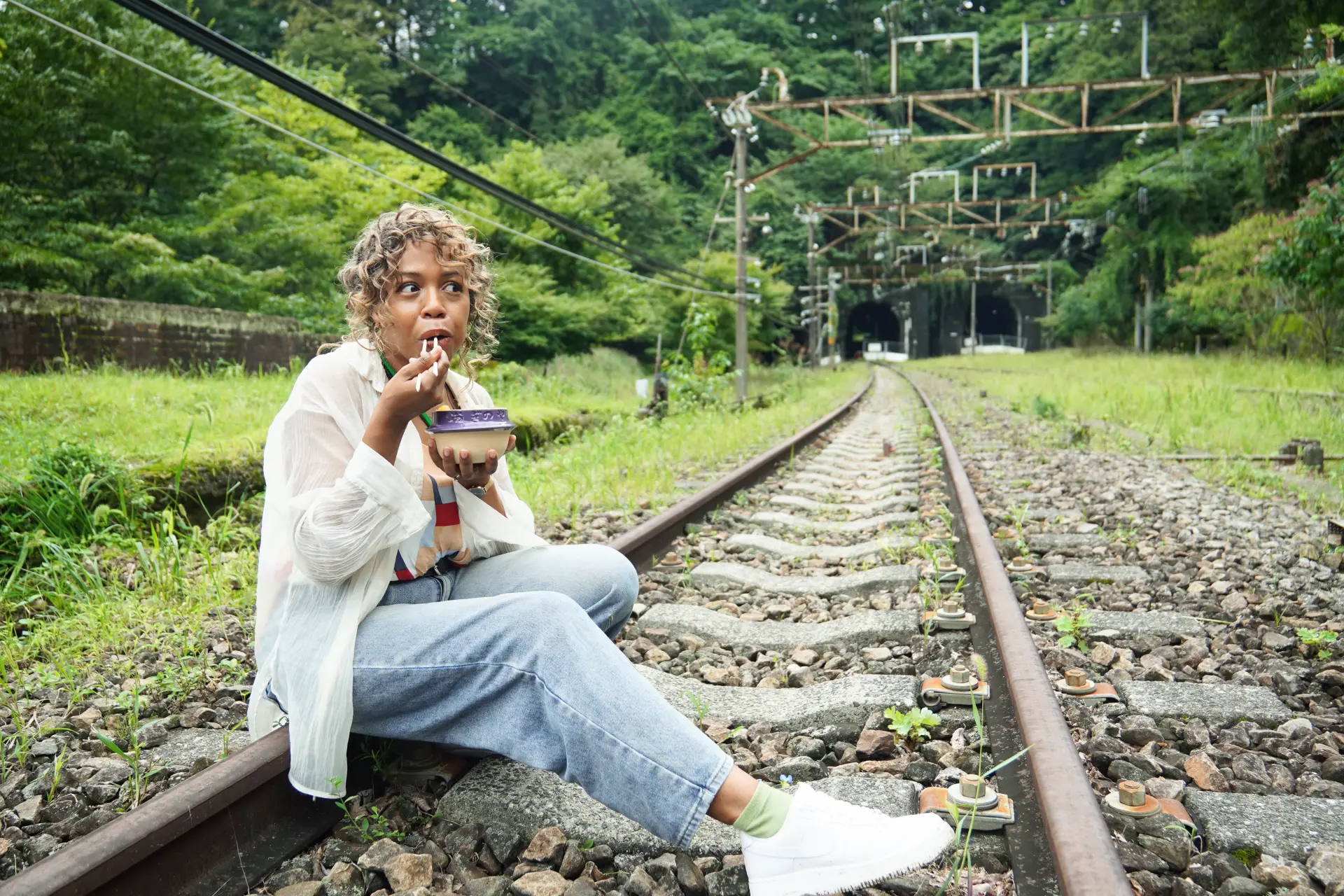
At the former Kumanodaira Station, it is time for the much-anticipated lunch. Waiting for you is Touge no Kamameshi, a pot-cooked rice bento from Oginoya, founded at Yokokawa Station in 1885. In the past, trains made lengthy stops at Yokokawa to couple and uncouple cars or change locomotives before tackling the steep climb over Usui Pass. Cold makunouchi bento boxes with assorted dishes were the norm at the time, but an idea from the fourth president, Mineji Takamizawa, and others led to Touge no Kamameshi, served in a Mashiko ware pot that retains heat well. Sales began in 1958, and it has been a favorite among travelers on the Shinetsu Line ever since. The colorful bento in its pot is still slightly warm, with carefully prepared dishes offering comforting flavors. Sit on the rails of the former Shinetsu Line and savor food whose traditions have been passed down alongside the railway’s history.
Begin the Afternoon with a Screening inside a Tunnel
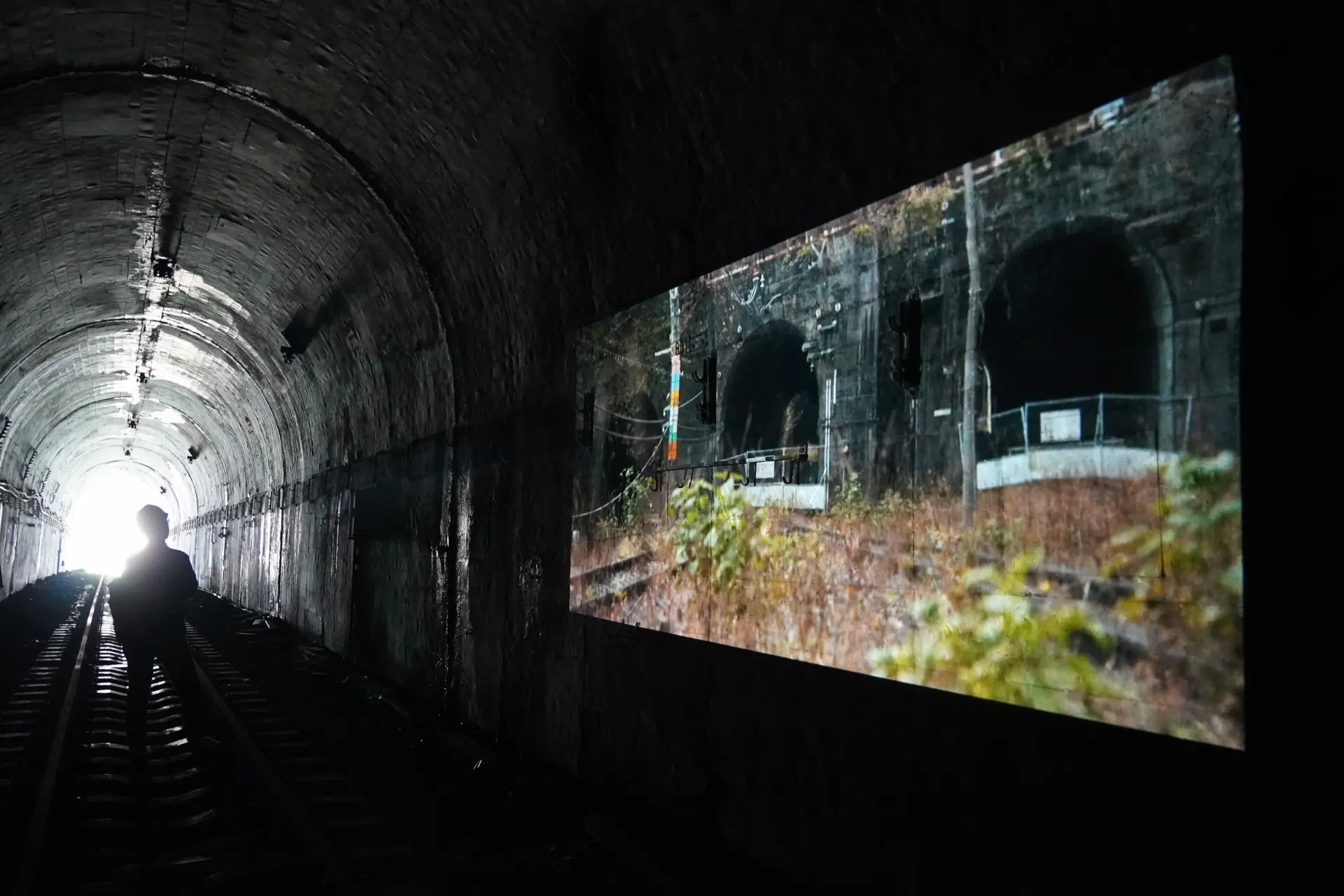
After lunch, the afternoon tour begins with a screening inside a tunnel. Watch footage of trains on the former Shinetsu Line and interviews with people who worked on the railway. Learning what it was like back then makes the rest of the walk even more engaging. This tour passes through 11 tunnels, including one about 1,300 meters long. At one point, everyone switches off their lights to experience complete darkness. Feeling the slope beneath your feet and imagining trains traveling through here brings home the ingenuity of the railway technology used to cross Usui Pass.
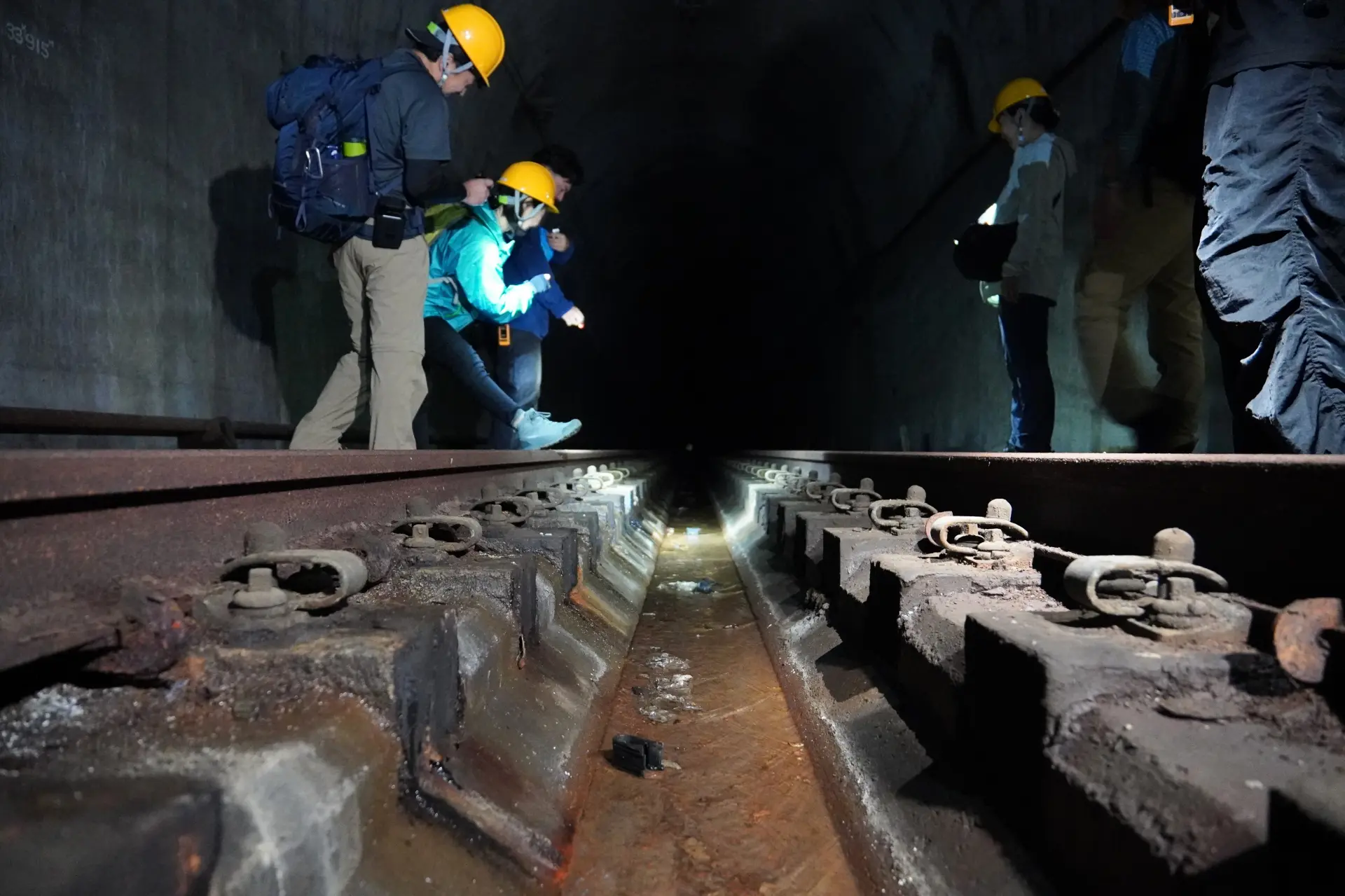
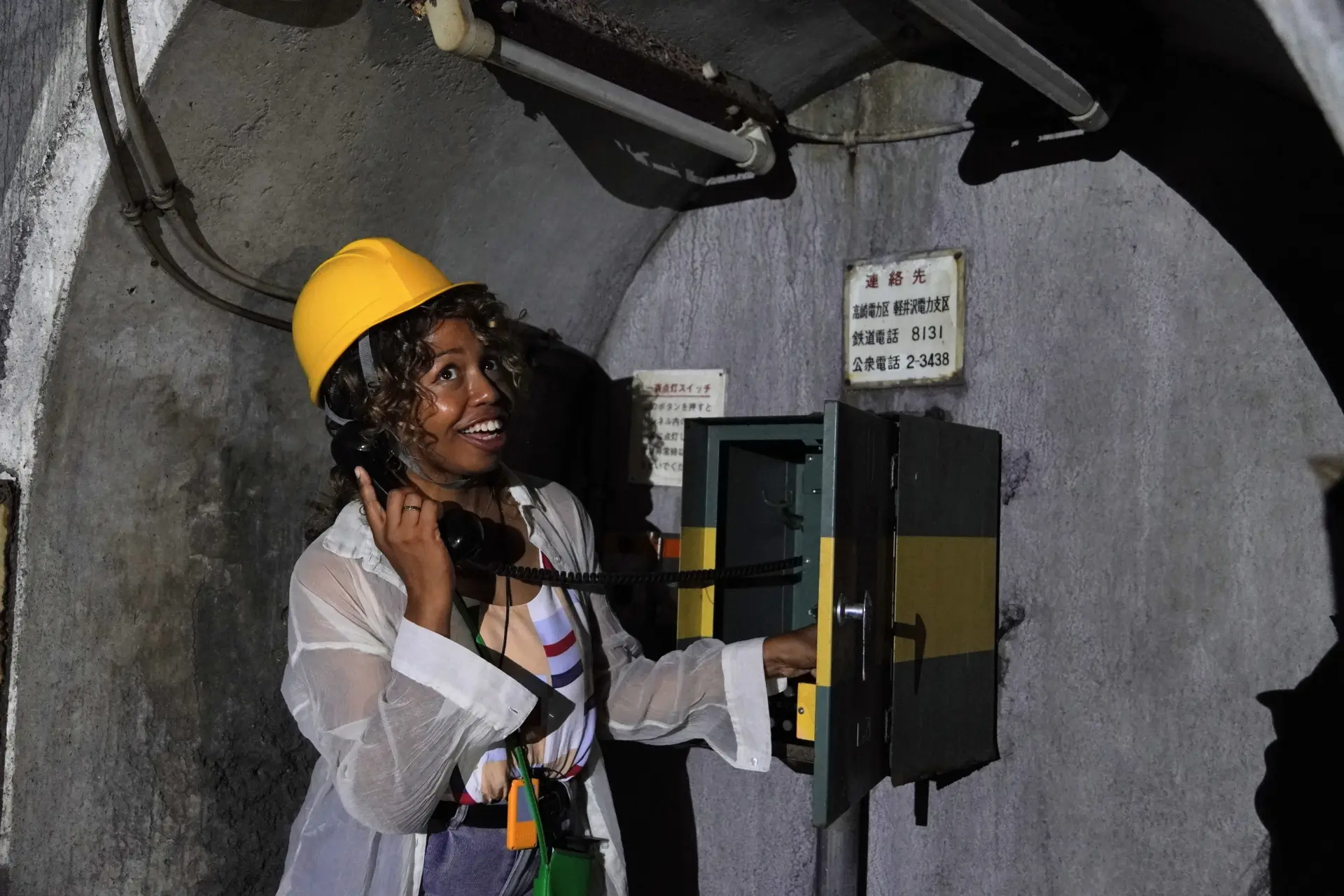
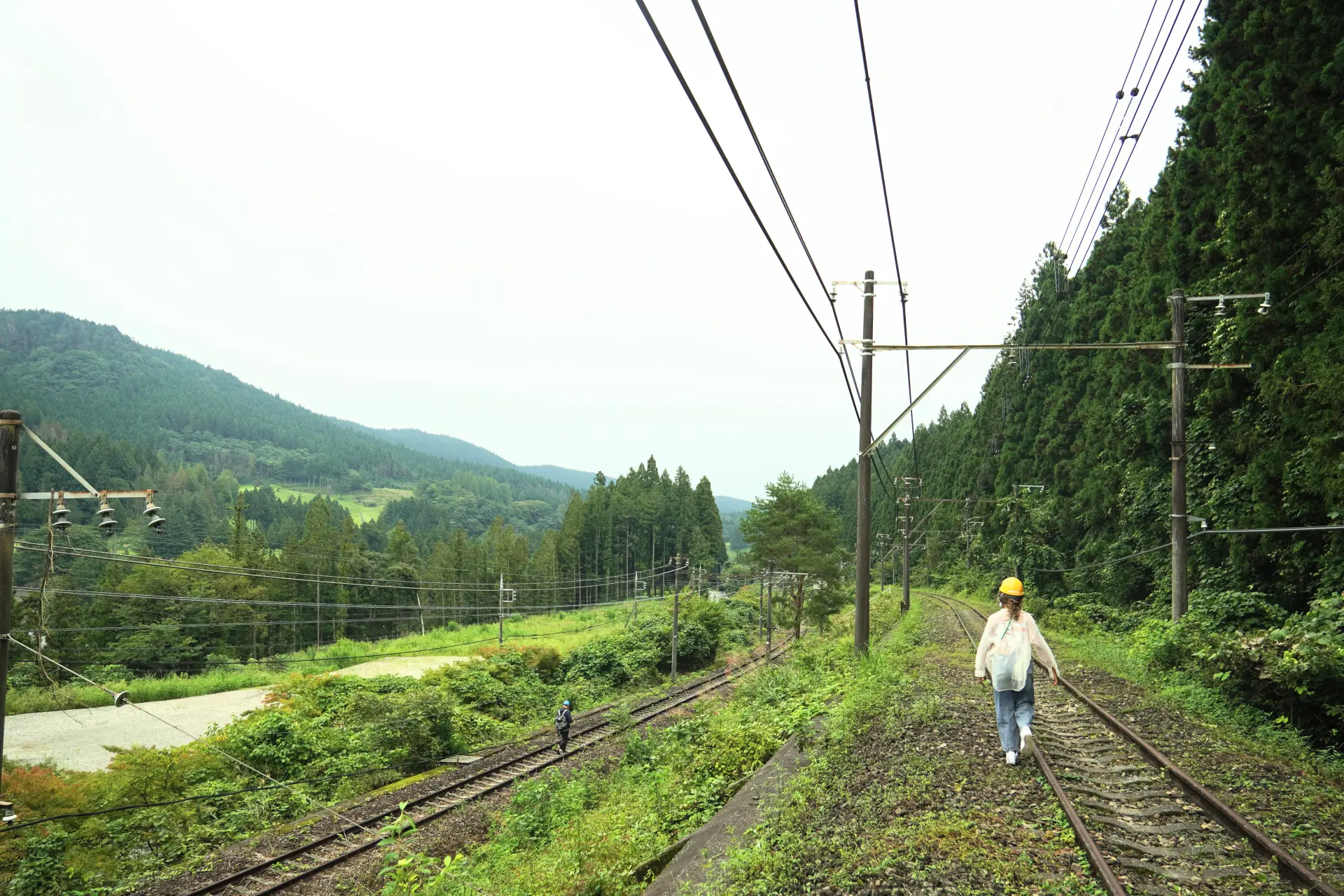
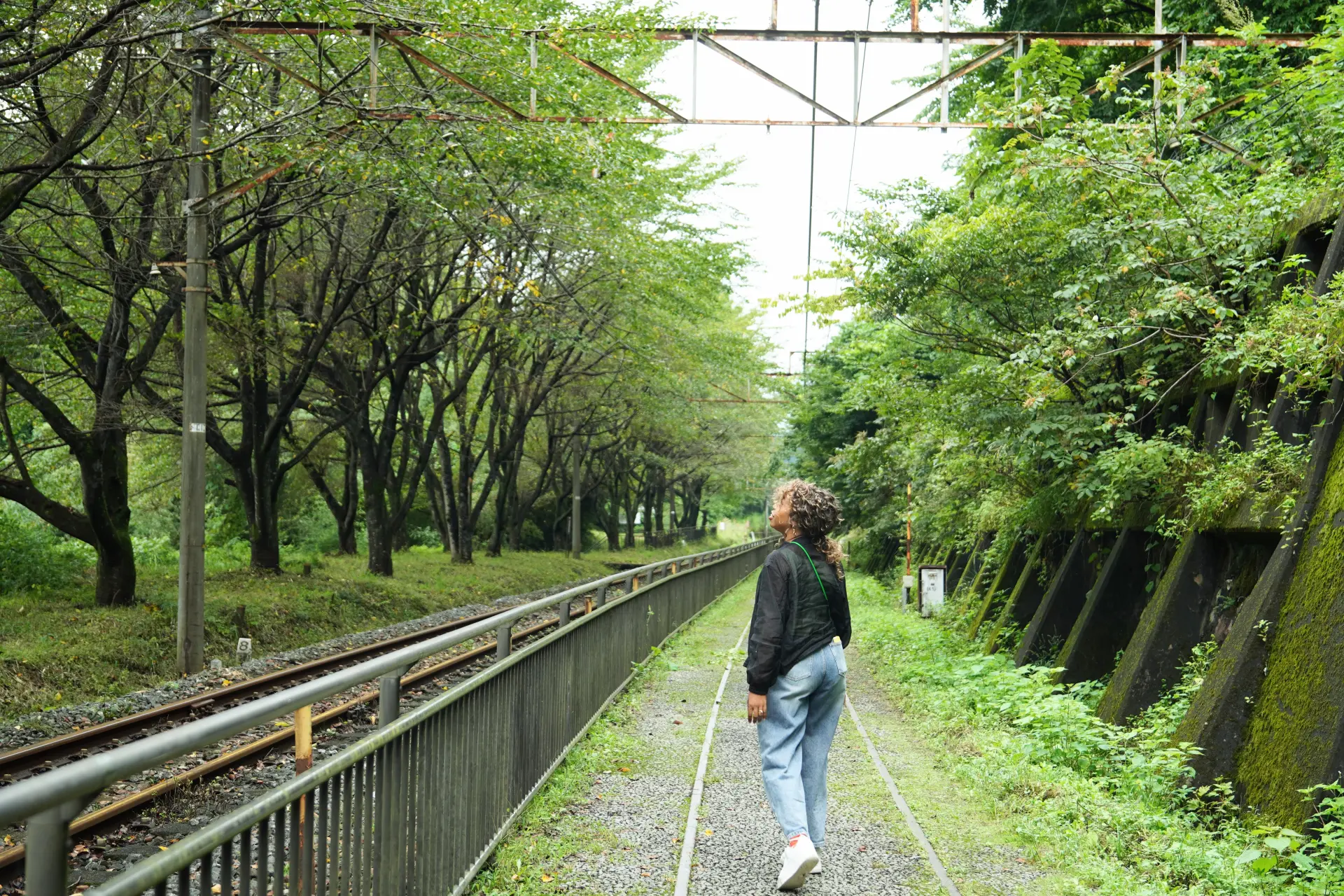
After the final tunnel, the finish is not far away. Along the way, Uehara also shares stories he heard directly from former train drivers, who said they looked forward to seeing the star-filled sky while traveling this section. Walk the disused tracks through the mountains as you reflect on the memories of the people who once worked here. At 3:20 pm, you arrive at Toge-no-Yu, with a special sense of achievement after completing about 11 km along the former railway.
- Japanese Name
- 碓氷峠 廃線ウォーク
- Official Website
- Official Website
Discover Gunma Sake at Takano Saketen
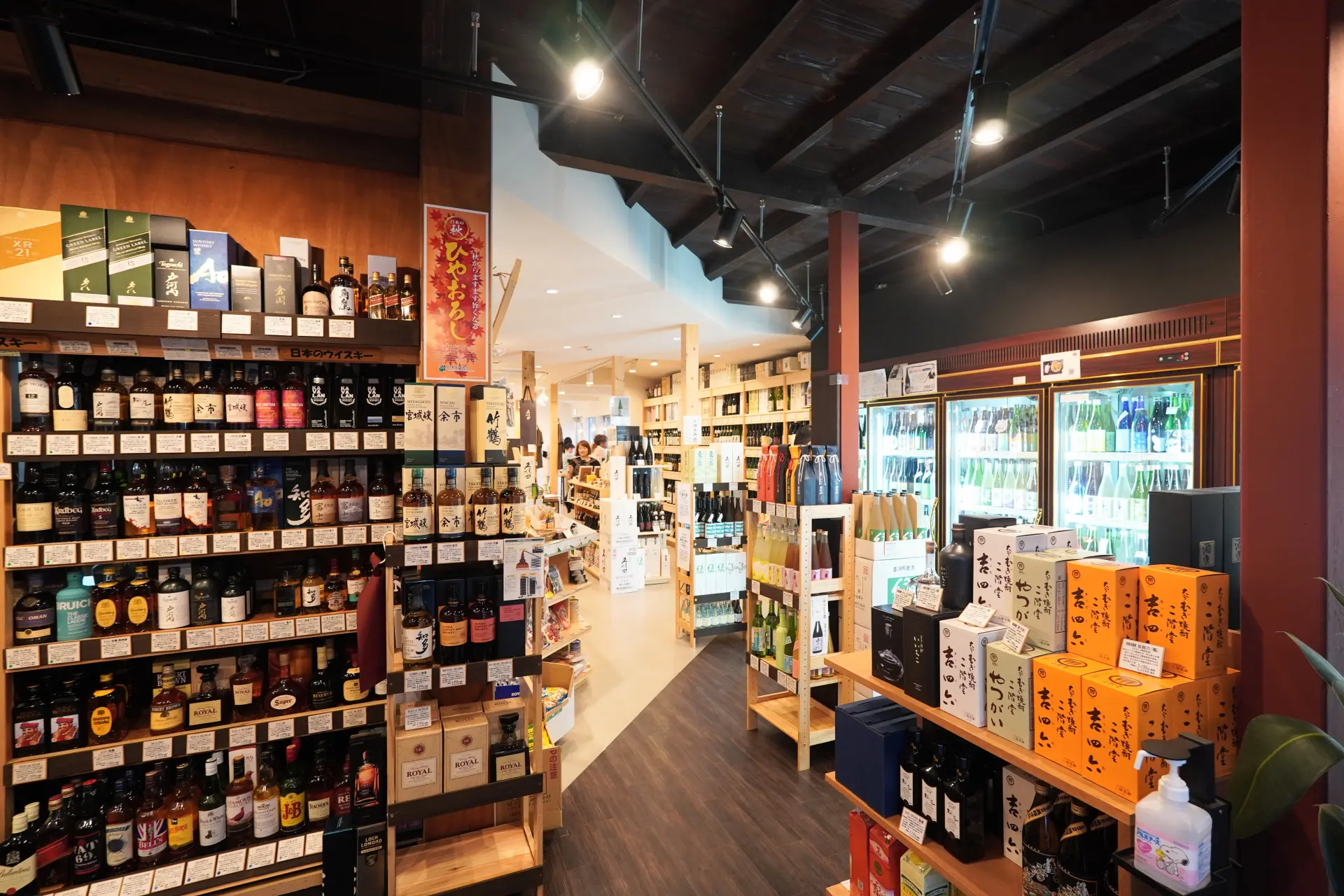
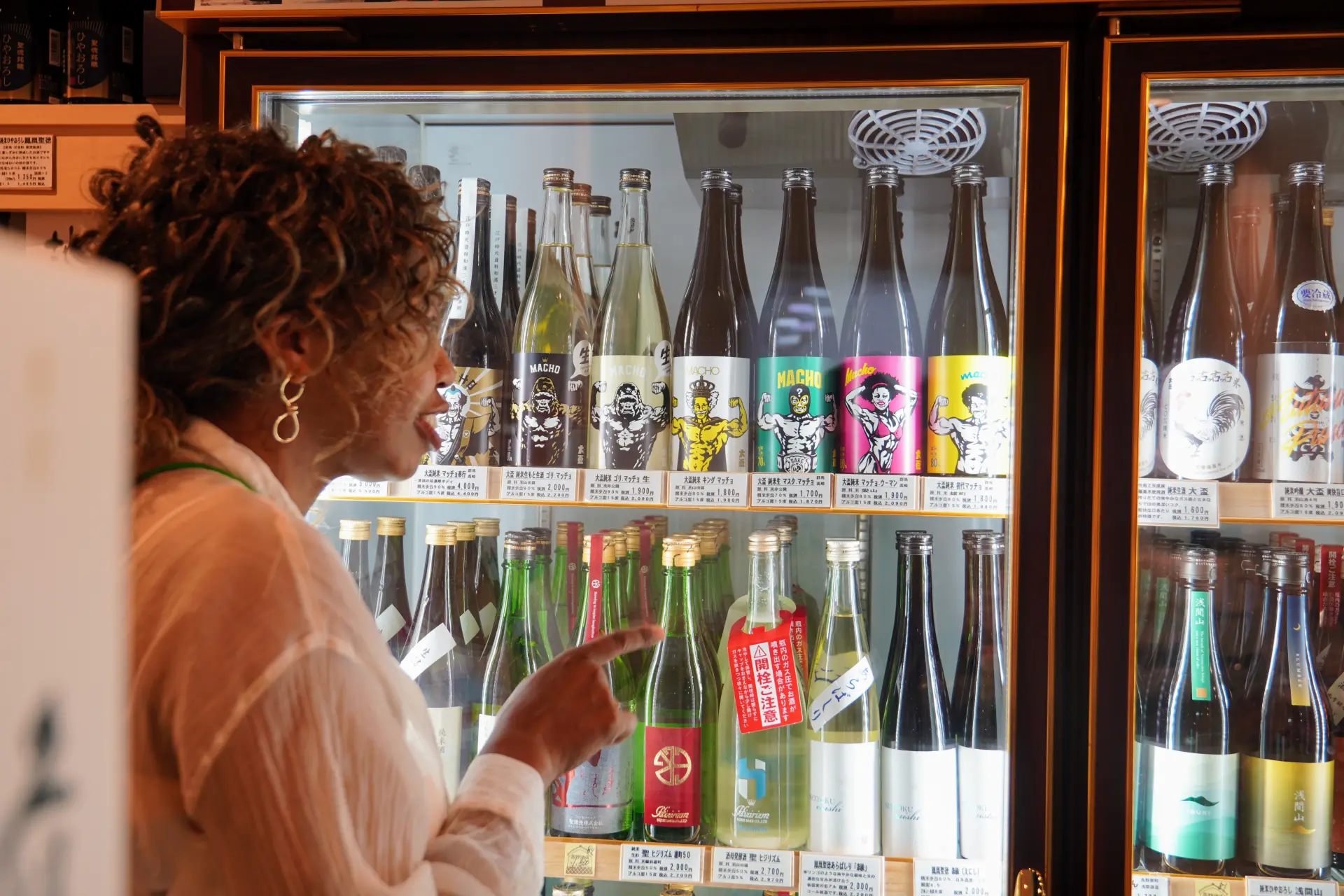
Take a trolley train or taxi to Yokokawa Station, then board the JR Shinetsu Line for Isobe Station. First, stop at Takano Saketen, a liquor store near the station, to discover sake from the region. This longstanding shop carries a wide selection of local Gunma sake. Coin-operated sake dispensers let you easily sample brands that catch your eye. Ask the knowledgeable, experienced owner, Takano, for recommendations as you choose a drink for the evening.
- Japanese Name
- 高野酒店
- Postal Code
- 379-0127
- Address
-
1-14-23 Isobe, Annaka City, Gunma Prefecture
Google Map - Phone
- 027-385-6404
- Hours
- 9:30 am–7:00 pm
- Closed
- Wednesdays and the third Tuesday of each month
- Official Website
- Official Website
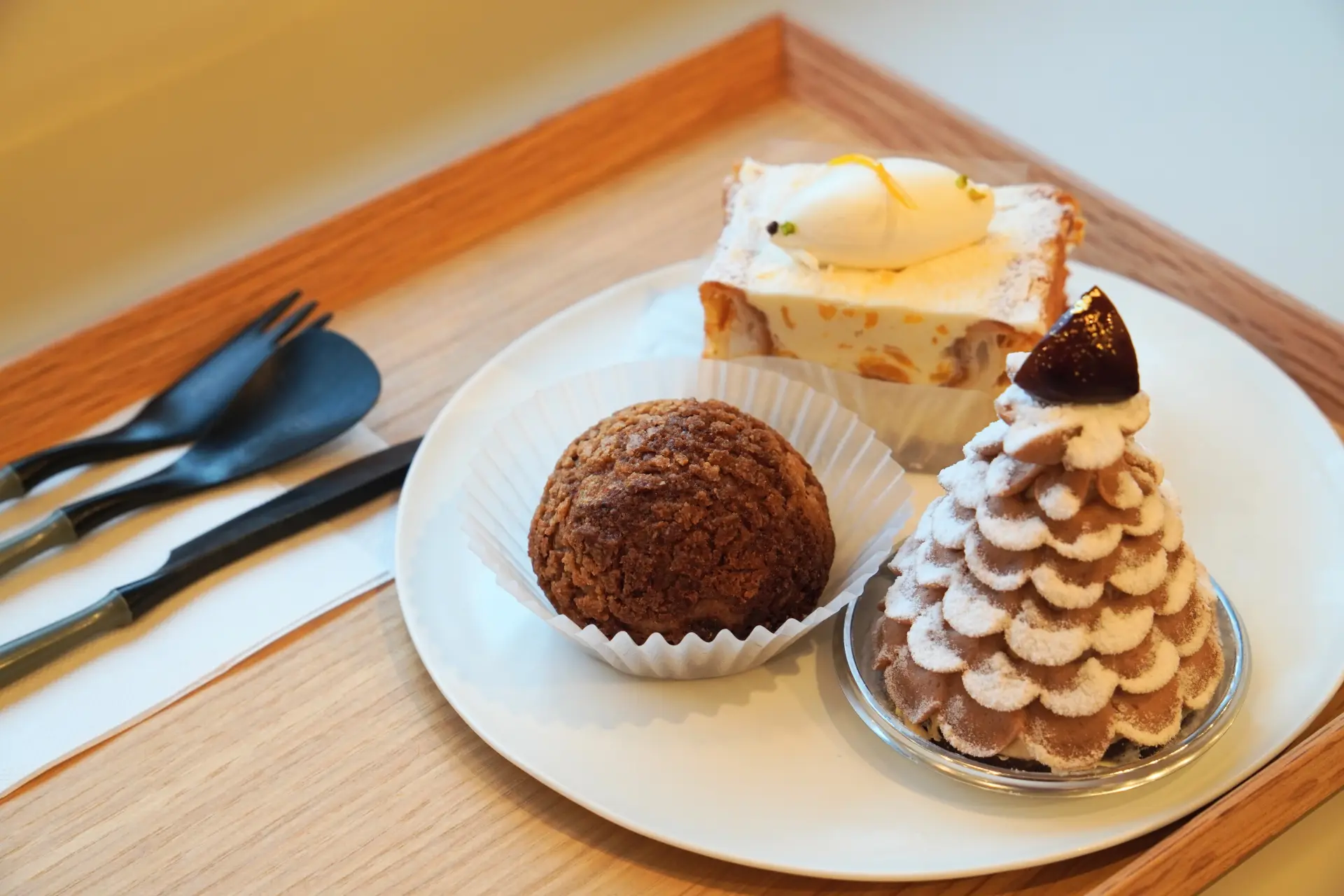
Try Sake Sweets at the Attached TARTANS CAKE STAND
At the back of Takano Saketen is TARTANS CAKE STAND, with a display of charming cakes. It is run by a pastry chef who previously served as head chef at a custom cake shop in Tokyo. Take a break after your hike with some exceptional sweets. Desserts made with Gunma sake are a specialty. For SAKE Jelly, local sake is selected to complement seasonal fruit, creating a dessert for adults that combines the fruit’s sweet-tart flavors with sake’s savory depth and slight bitterness.


- Japanese Name
- TARTANS CAKE STAND
- Postal Code
- 379-0127
- Address
-
Inside Takano Saketen, 1-14-23 Isobe, Annaka City, Gunma Prefecture
Google Map - Phone
- 027-385-6404
- Hours
- 10:30 am–7:00 pm
- Closed
- Mondays, Tuesdays, and Wednesdays
- Official Website
- Official Website
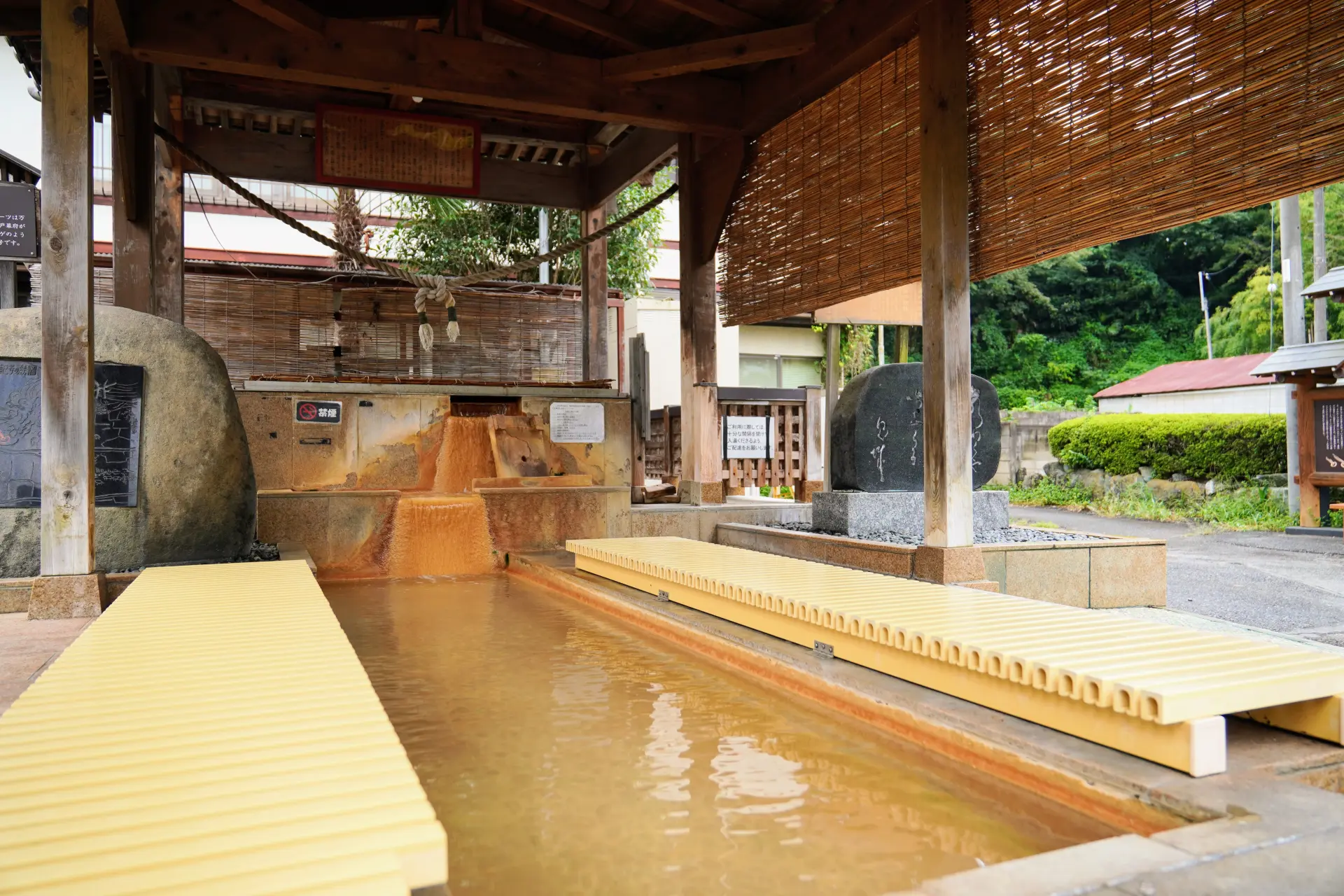
Soothe Tired Muscles at Isobe Onsen
Spend the night at Isobe Onsen, known as the birthplace of Japan’s hot spring symbol. Soak in the waters, which feel soft against the skin and are often called “skin-beautifying waters,” to rest after the railway walk and prepare for the next day.
Day 2 | Walk Abt Road for Photogenic Railway Heritage
On the second day, explore the former route of the Abt rack-and-pinion railway that once carried trains over Usui Pass. Follow traces of its past along Abt Road, a walking trail preserving railway heritage.
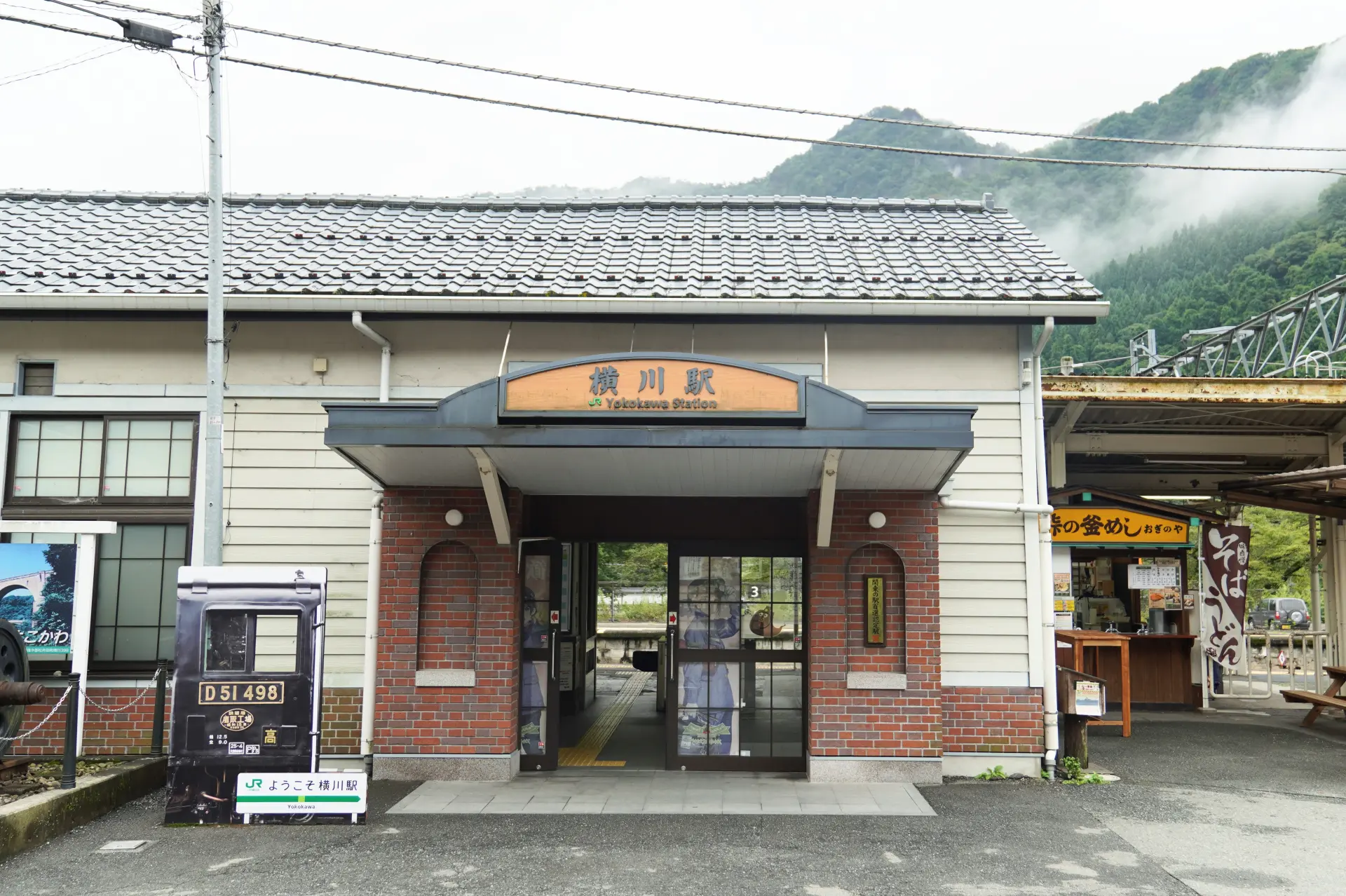
Take the JR Shinetsu Line from Isobe to Yokokawa Station
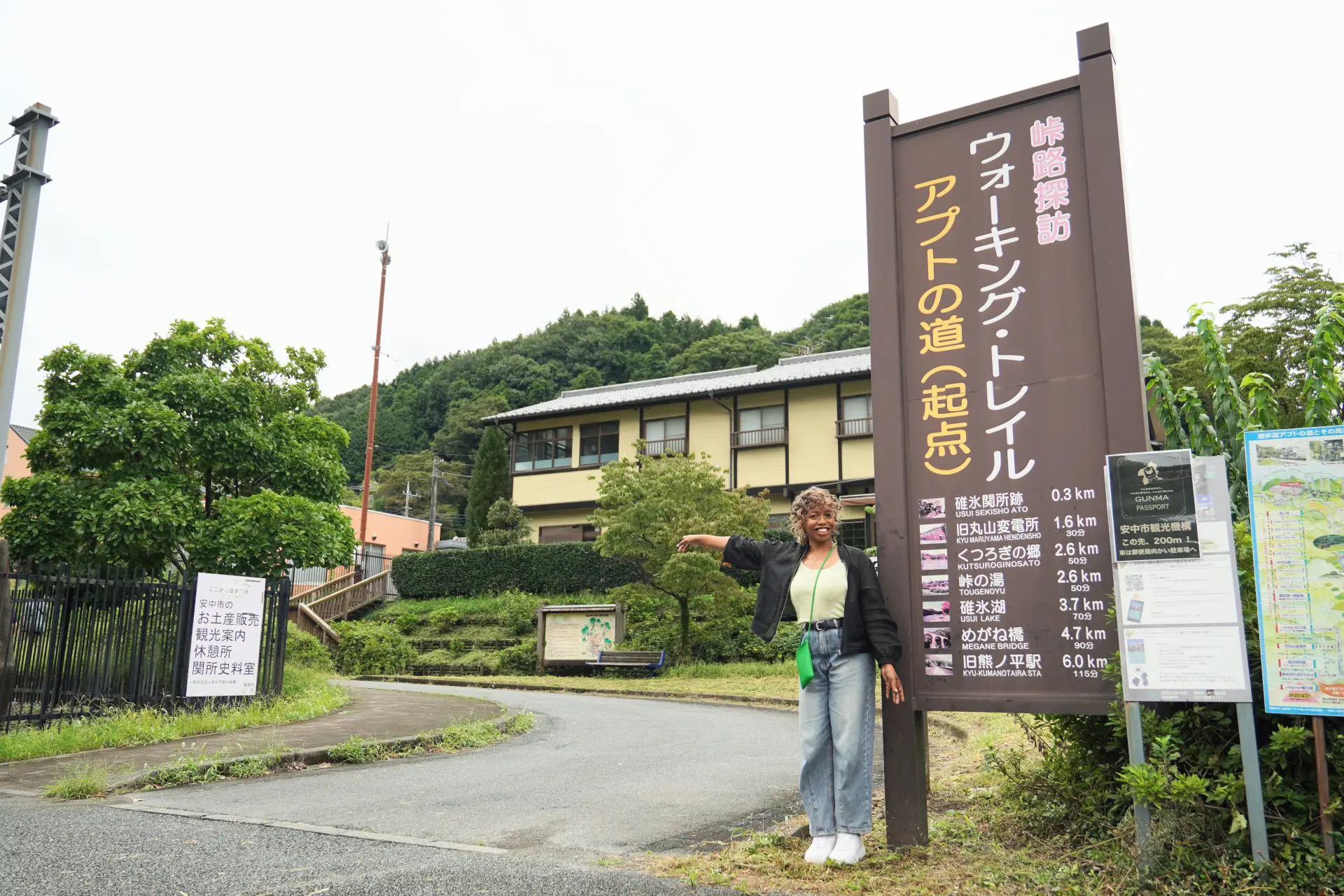
First, take the Shinetsu Line from Isobe Station to Yokokawa Station. The starting point of Abt Road is about a three-minute walk from Yokokawa Station, so you can head straight for the trail after arriving.
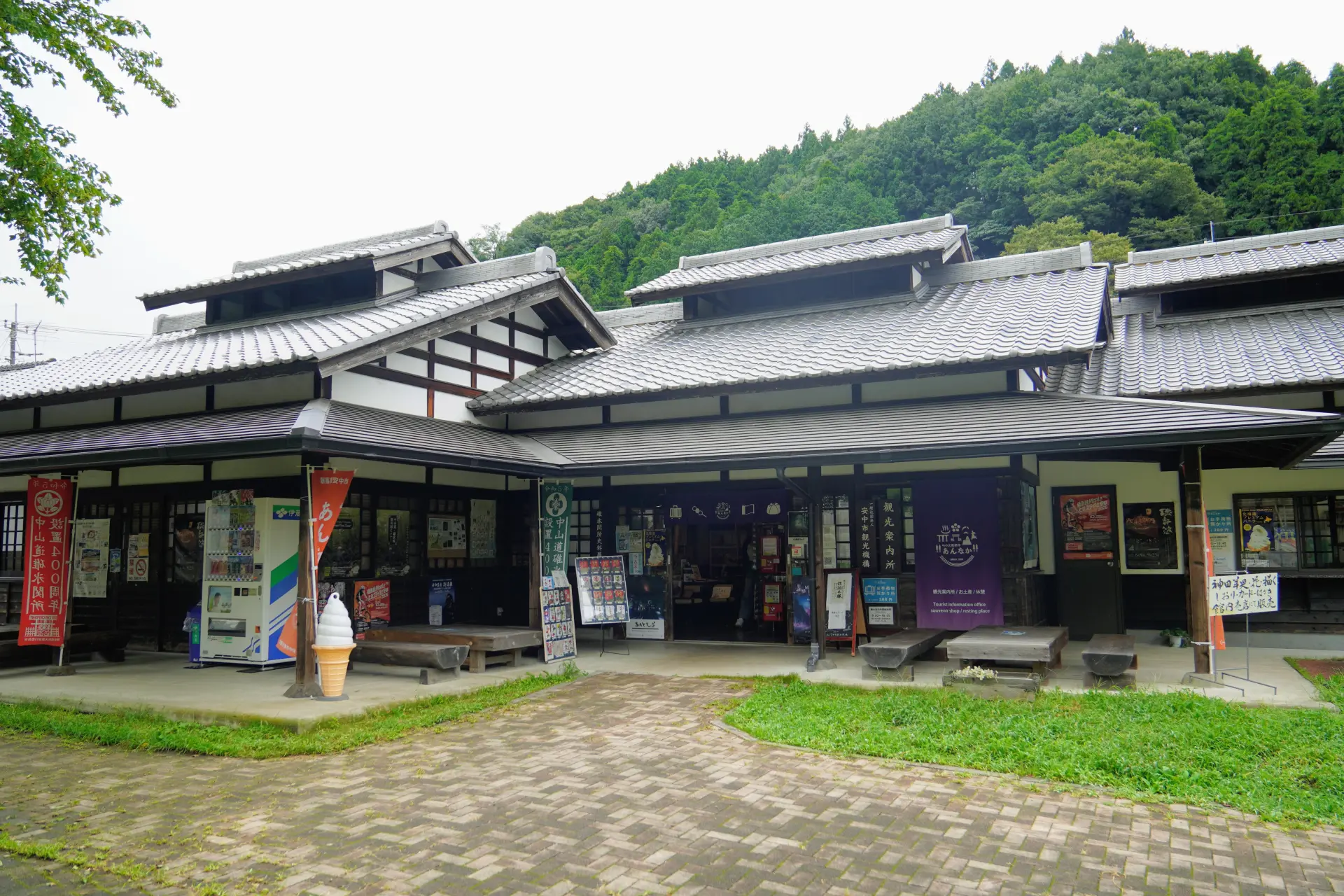
There are no lockers, but if you have large bags, you can leave them at the tourist information center between Yokokawa Station and Abt Road for a fee of 300 yen.
Start Your Hike along Abt Road
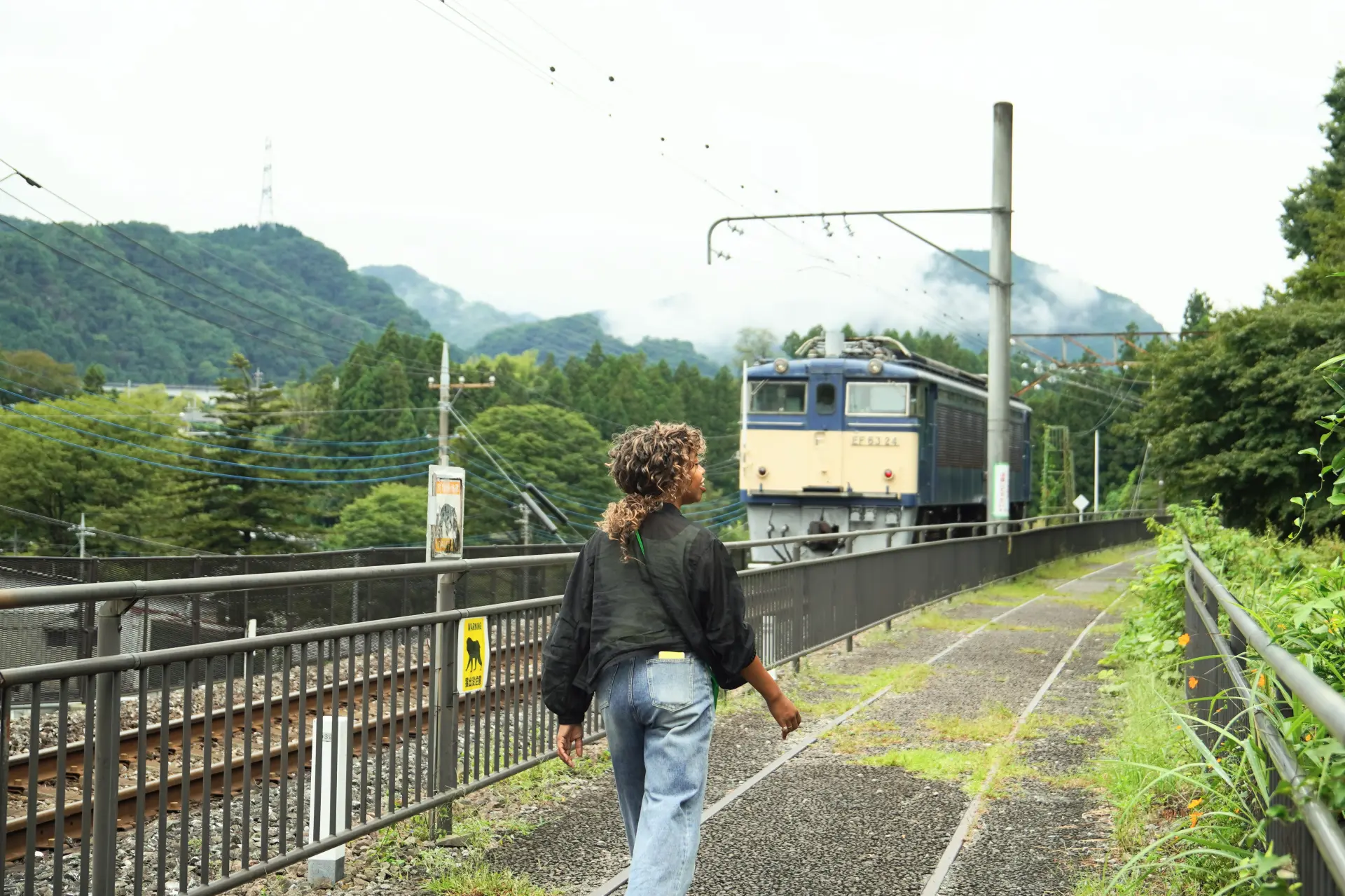
It is time for the day’s main activity: hiking Abt Road. The Abt rack-and-pinion system uses a toothed rail between the two running rails, engaging with gears on the train to climb steep gradients. Follow the former railway route that helped trains cross Usui Pass from 1893 to 1963, walking up the gentle slope.
Photogenic Brick Architecture at the Former Maruyama Substation
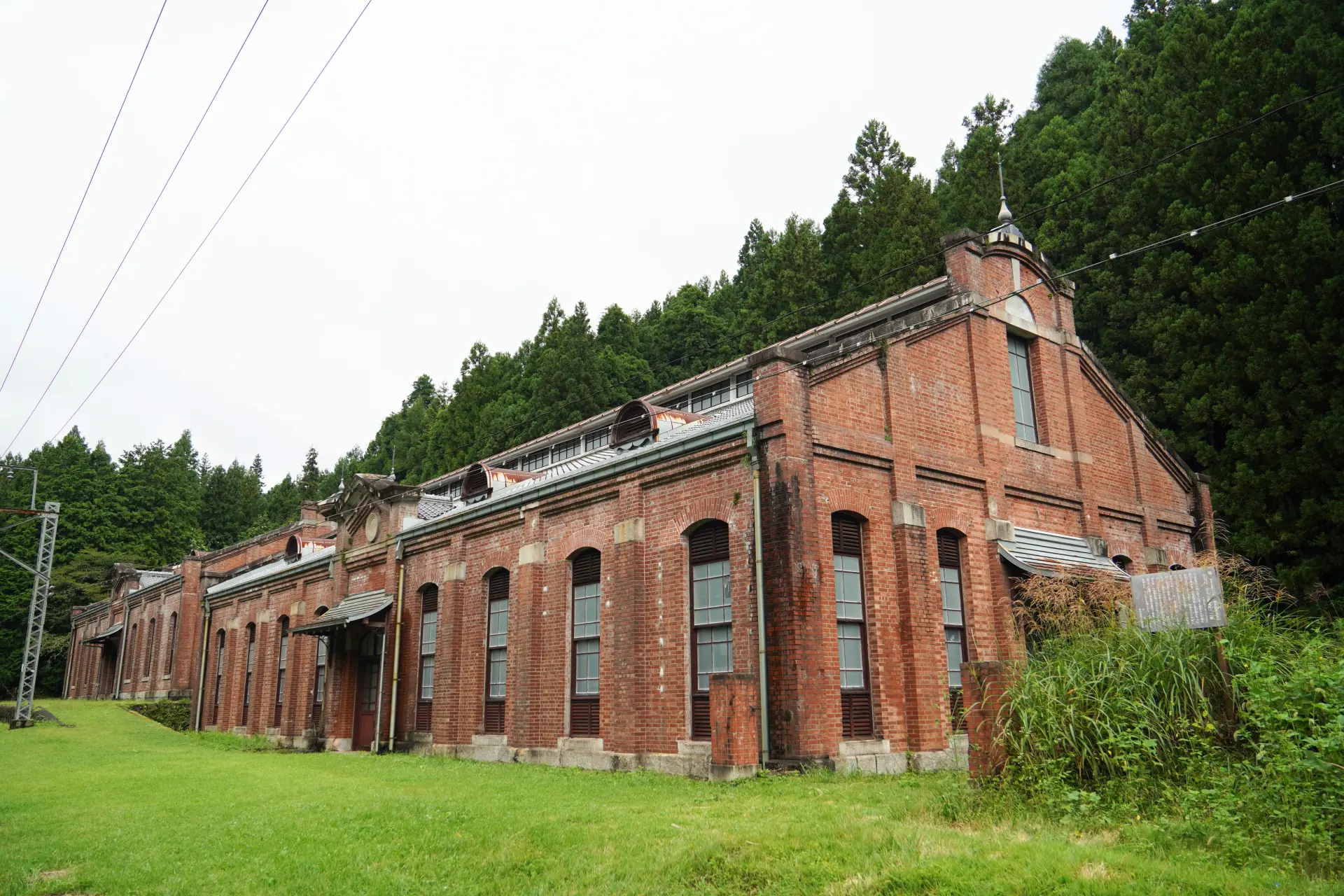
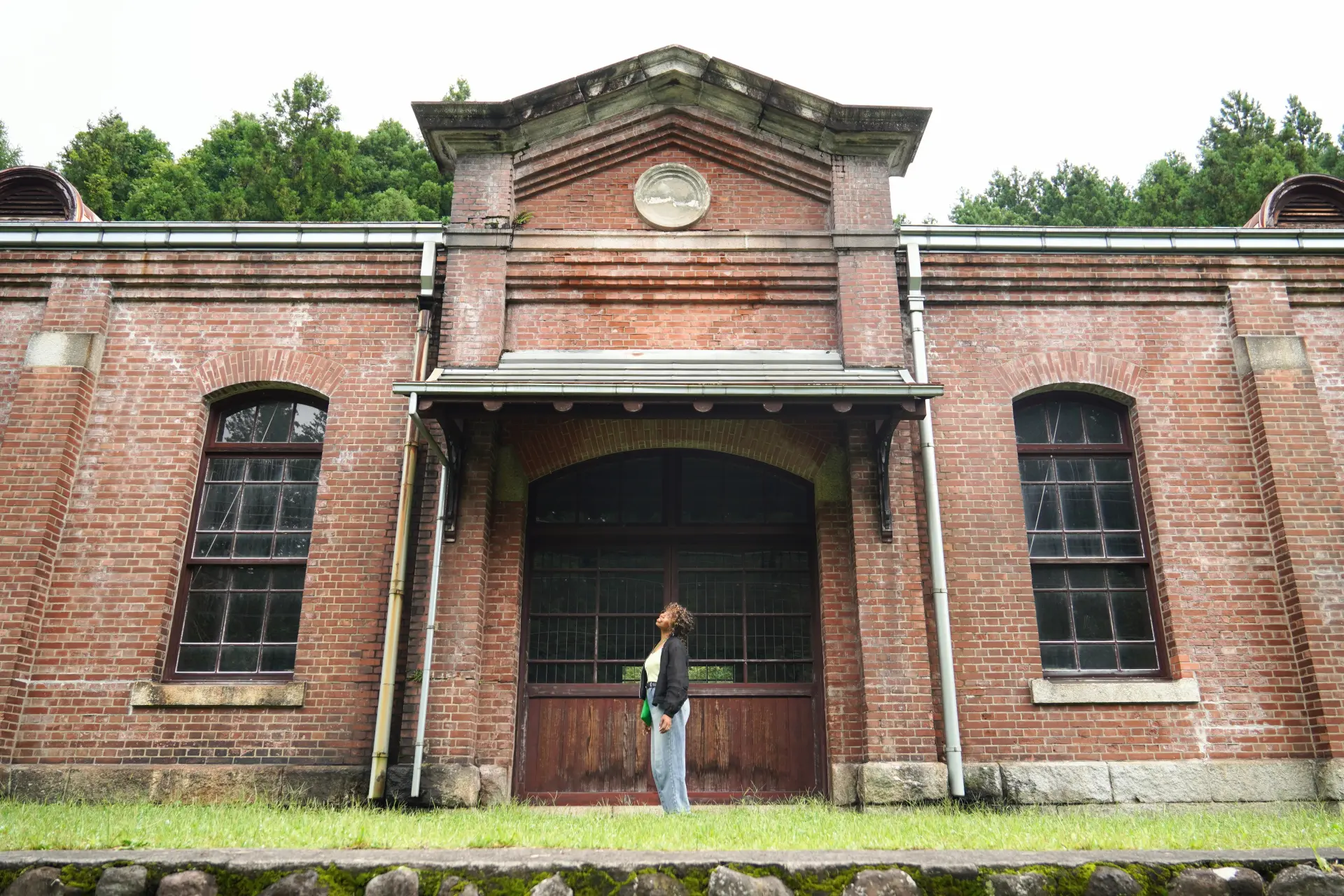
About 30 minutes from the starting point, the brick buildings of the Former Maruyama Substation come into view. This facility supplied electricity to locomotives traveling over Usui Pass and is now nationally designated as an Important Cultural Property.
Take a Break beside Lake Usui
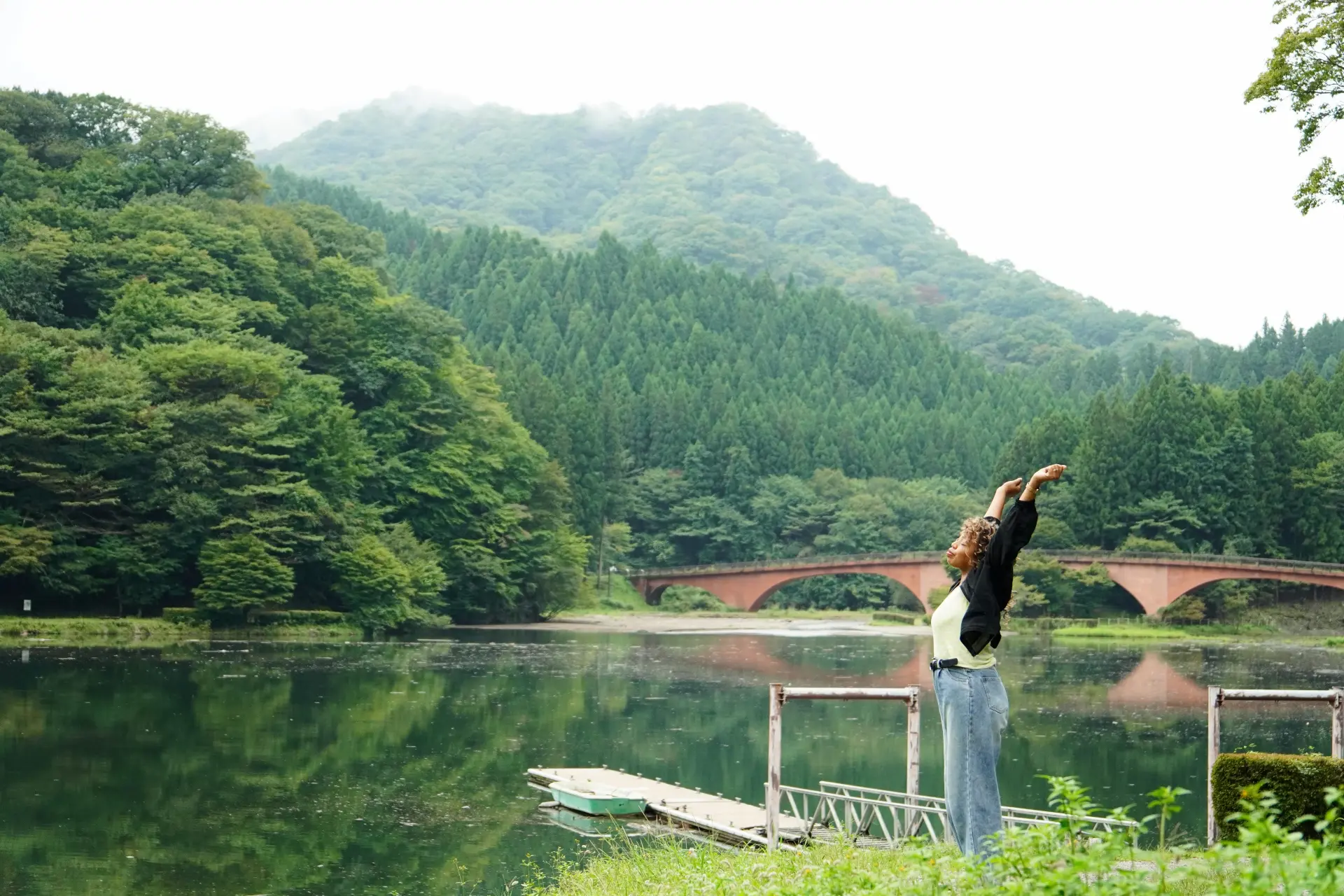
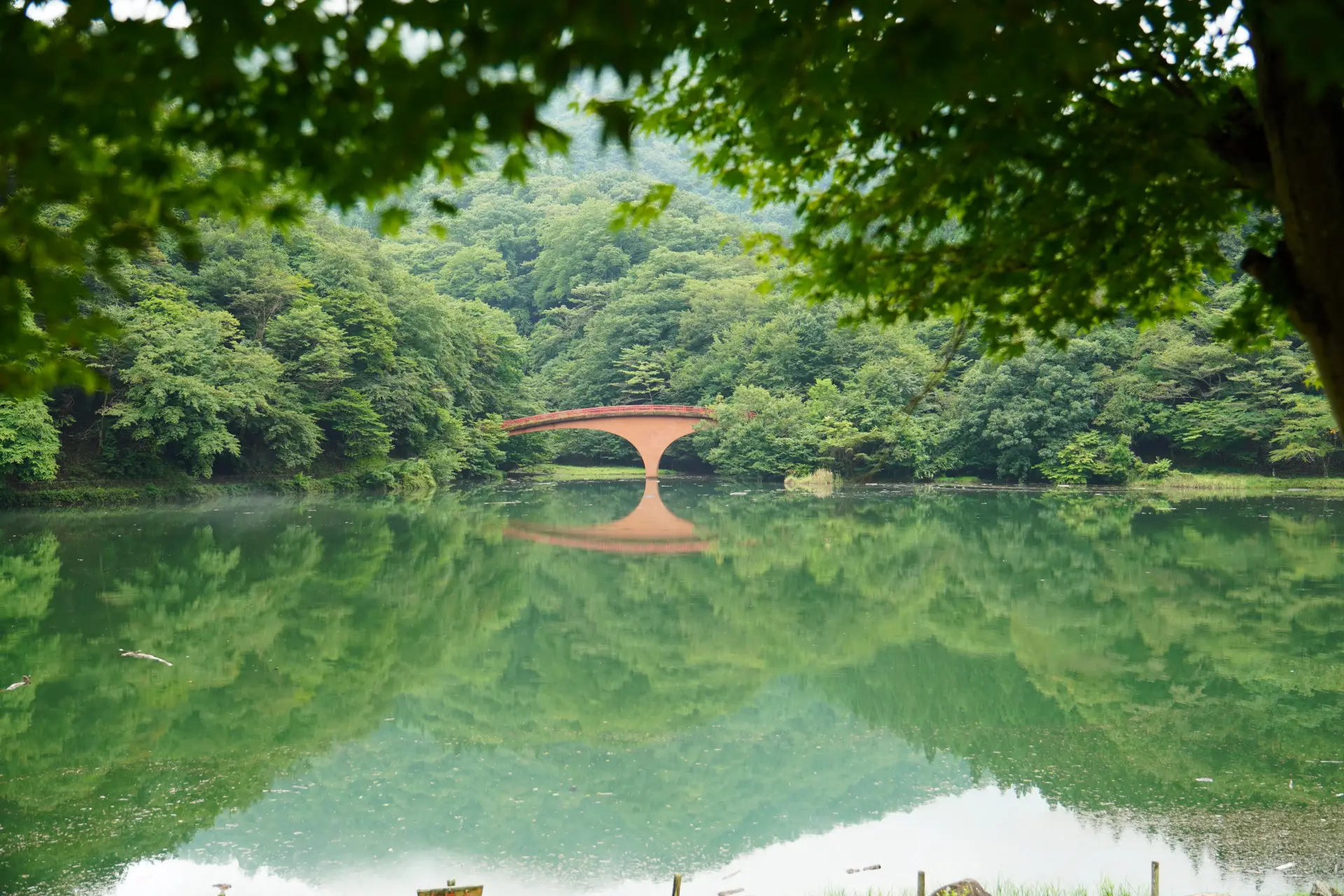
Walk for about another 40 minutes to reach Lake Usui. This artificial lake was created by damming the confluence of the Nakao and Usui rivers, and its surface beautifully reflects the surrounding nature through the seasons. Rest here before continuing your walk.
Take a Souvenir Photo at Megane-bashi, Today’s Turning Point
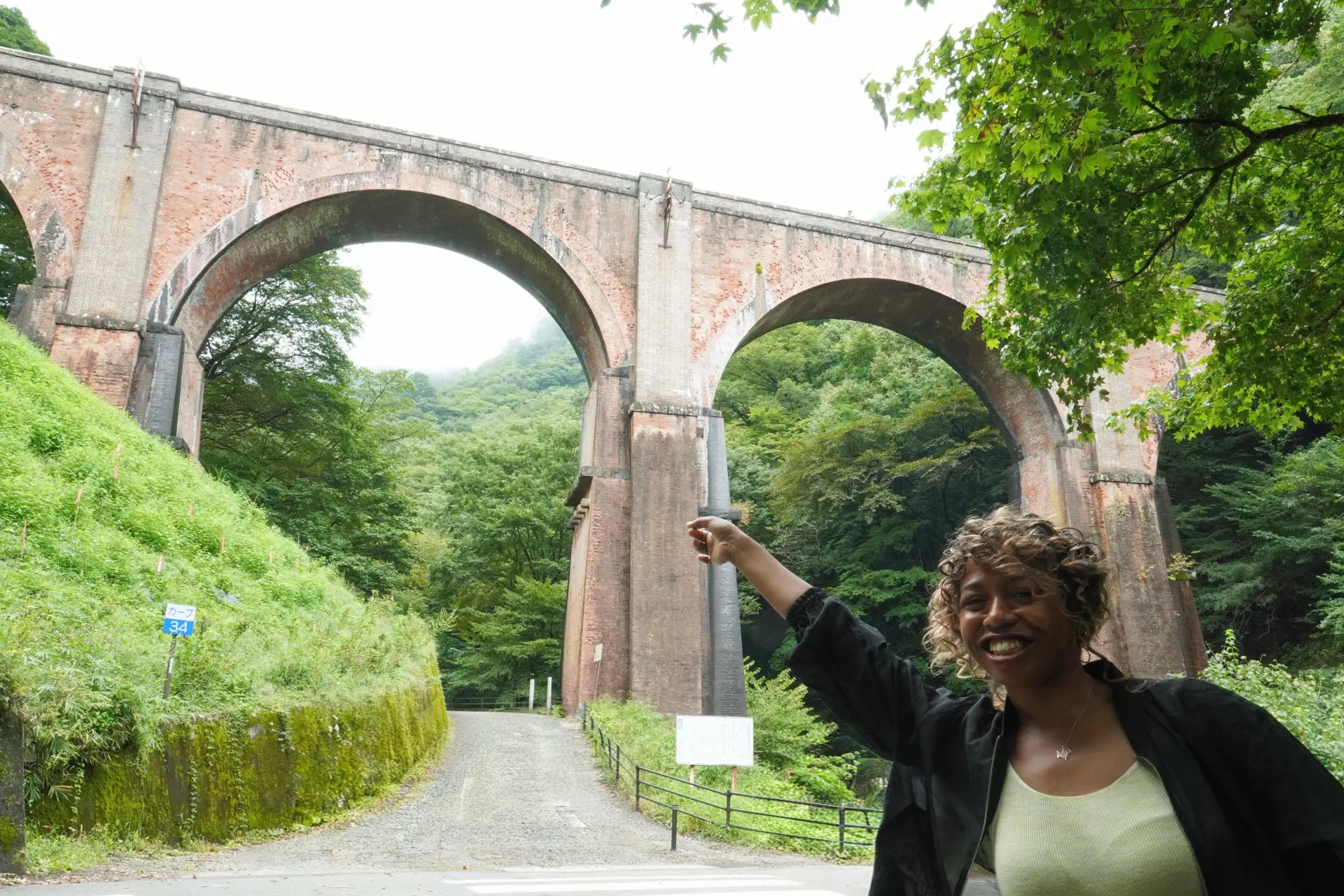
About 30 minutes from Lake Usui, you reach Megane-bashi, the destination of this hike. Its striking four arches give the bridge its distinctive appearance; its official name is Usui 3rd Bridge. One of Japan’s largest brick arch railway bridges, it was used when Abt rack-and-pinion trains ran on the Shinetsu Line. Standing before this enormous brick structure, it is hard not to imagine trains crossing it in its heyday.
If you have enough time and energy, you can continue beyond Megane-bashi to the former Kumanodaira Station, which you visited on Day 1. Check a map beforehand and plan your route with the return journey in mind.
- Japanese Name
- 遊歩道 アプトの道
- Postal Code
- 379-0301
- Address
-
404-12 Yokokawa, Matsuida-machi, Annaka City, Gunma Prefecture (starting point)
Google Map - Official Website (Japanese)
- Official Website (Japanese)
Lunch on Station Soba and Kamameshi at Oginoya in Yokokawa Station
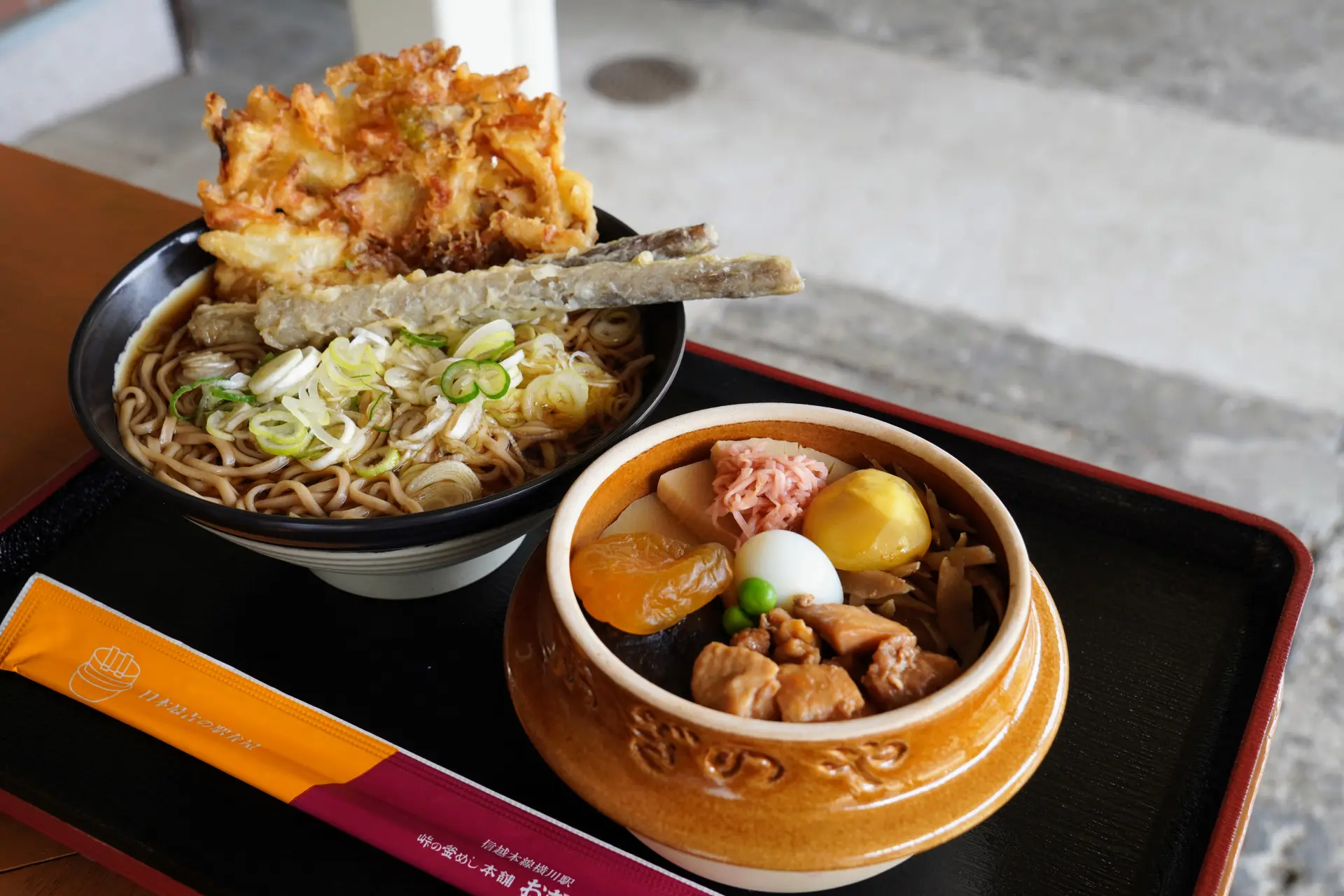
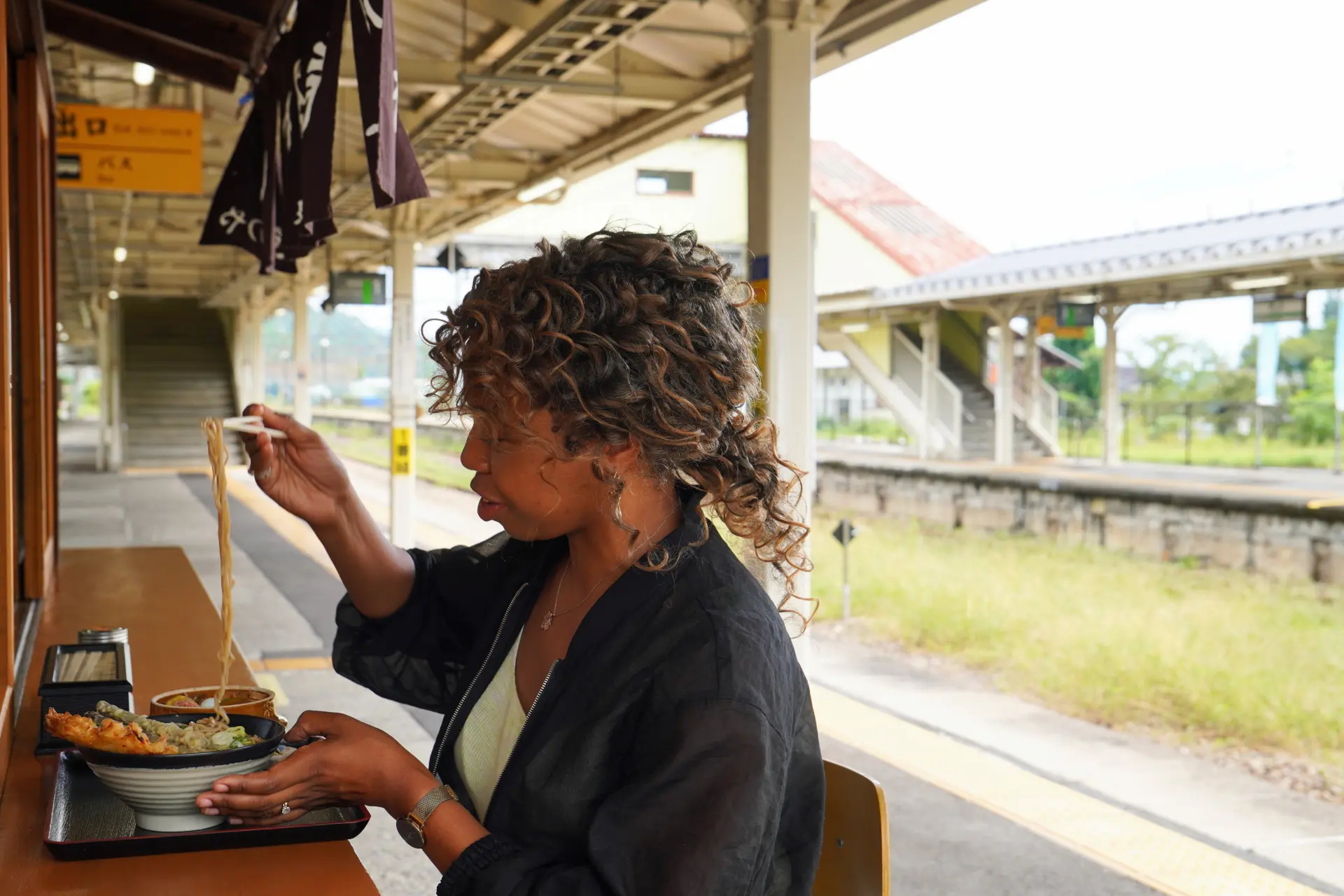
After returning from Abt Road, stop for lunch at Oginoya in Yokokawa Station. Try its signature station soba noodles, or choose Touge no Kamameshi, which is also available.
- Japanese Name
- 峠の釜めし本舗 おぎのや 横川駅売店
- Postal Code
- 379-0301
- Address
-
Inside Yokokawa Station on the JR Shinetsu Line, 399 Yokokawa, Matsuida-machi, Annaka City, Gunma Prefecture
Google Map - Hours
- 10:00 am–4:00 pm
- Closed
- None
- Official Website
- Official Website
See, Touch, and Experience Railway History at Usui Pass Railway Heritage Park
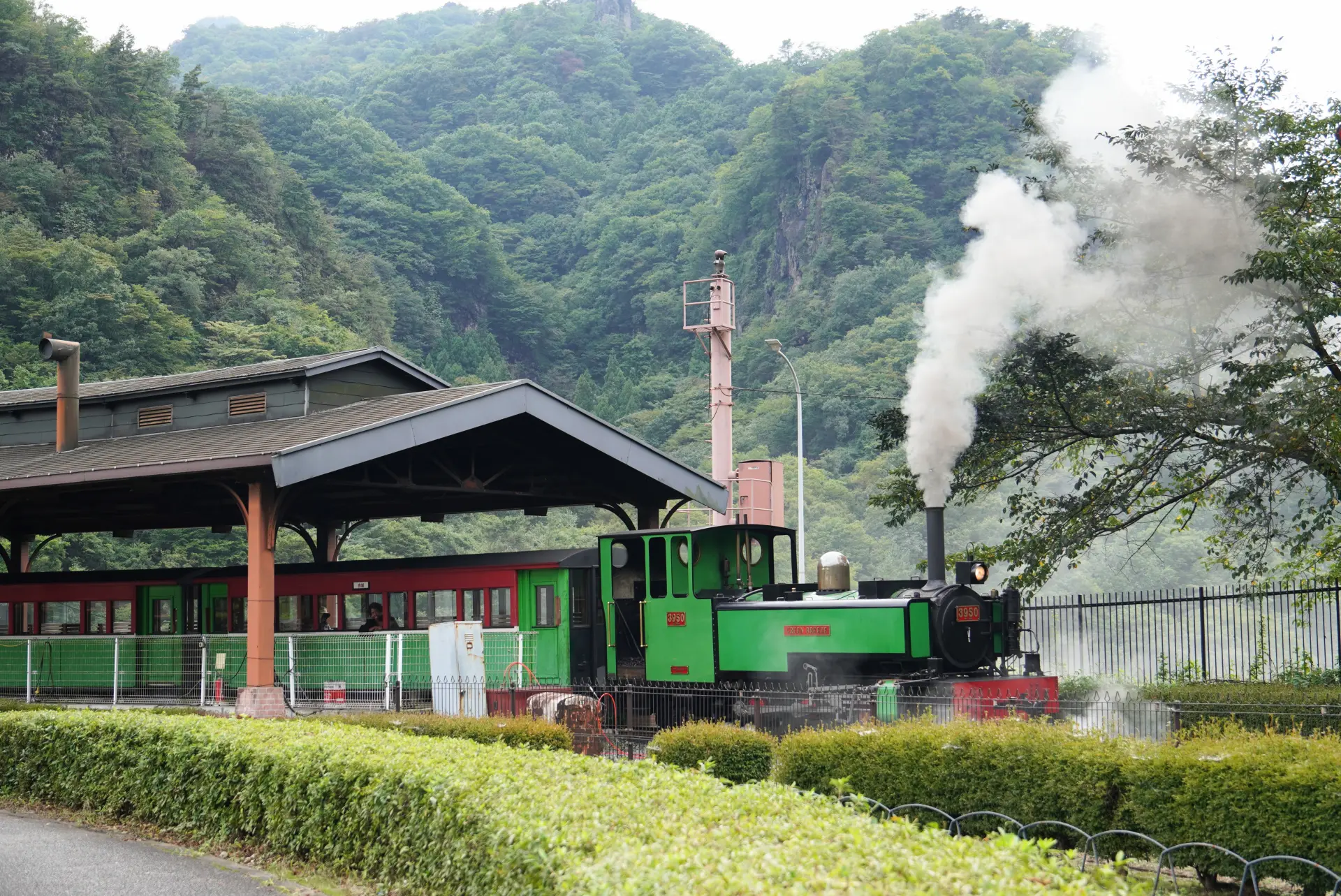
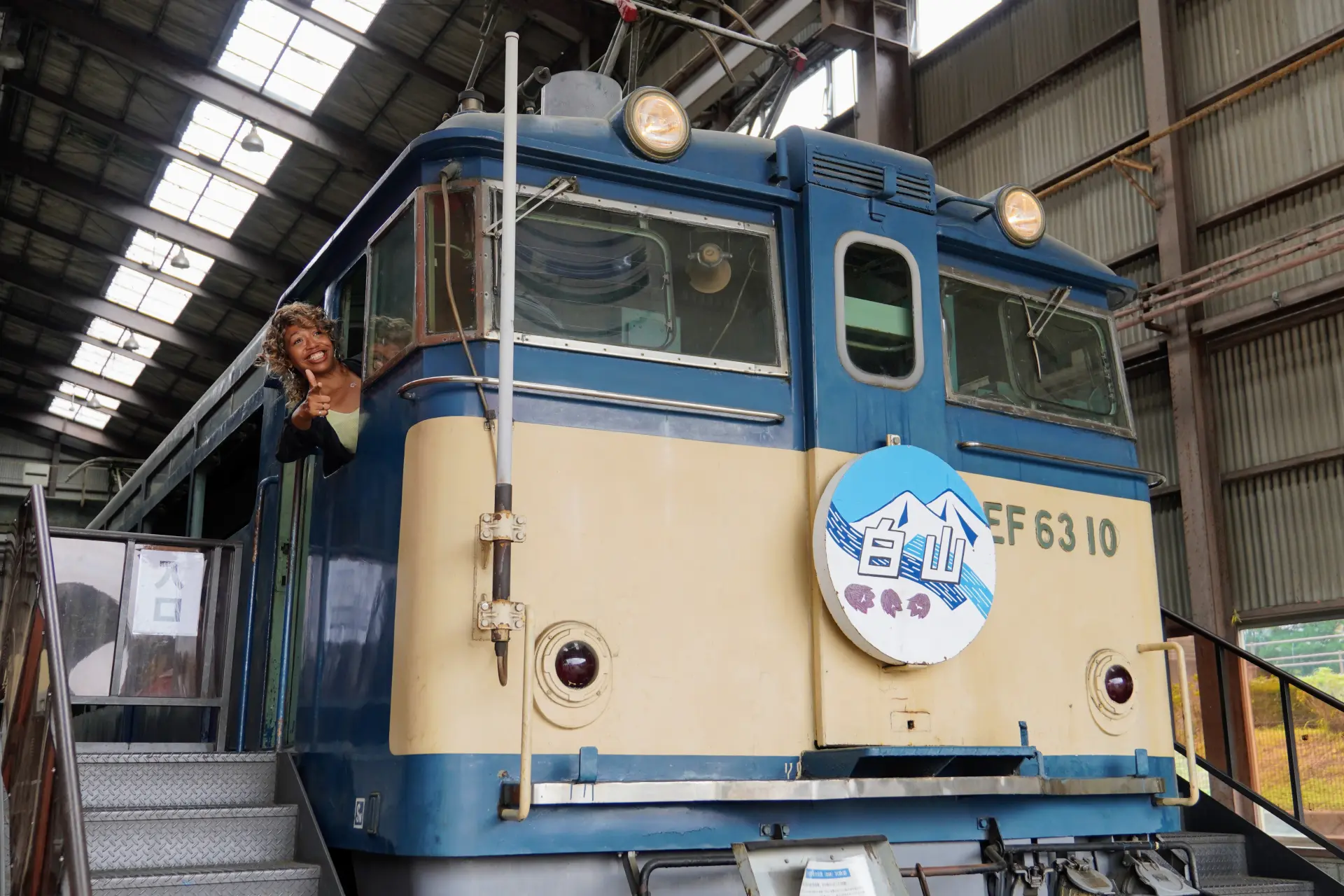
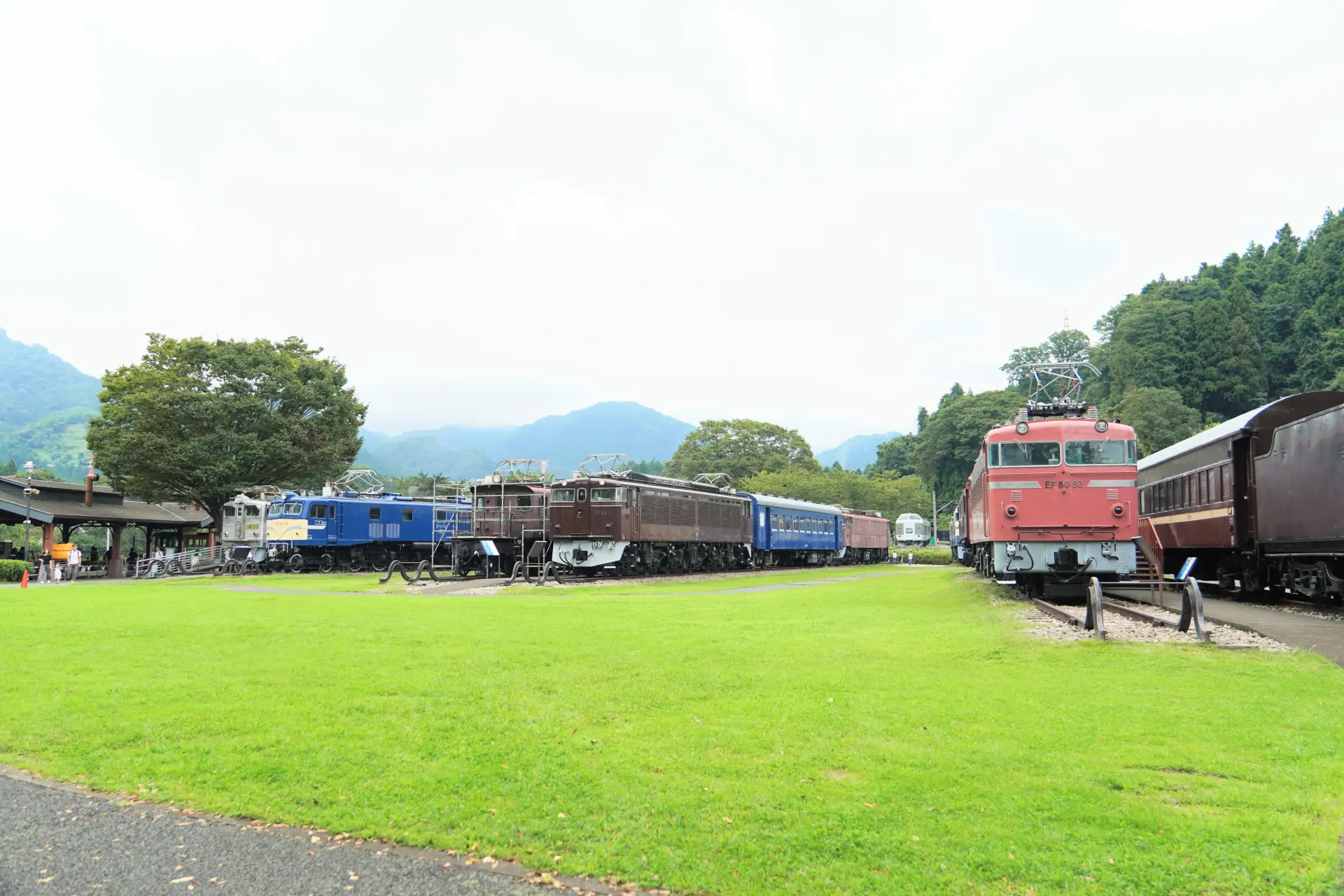
Next, visit Usui Pass Railway Heritage Park, just a short walk from Yokokawa Station. Take a close look at trains that once worked on Usui Pass and reflect on the railway history you have explored over these two days.
Take a Break and Shop for Souvenirs at Oginoya Yokokawa Store
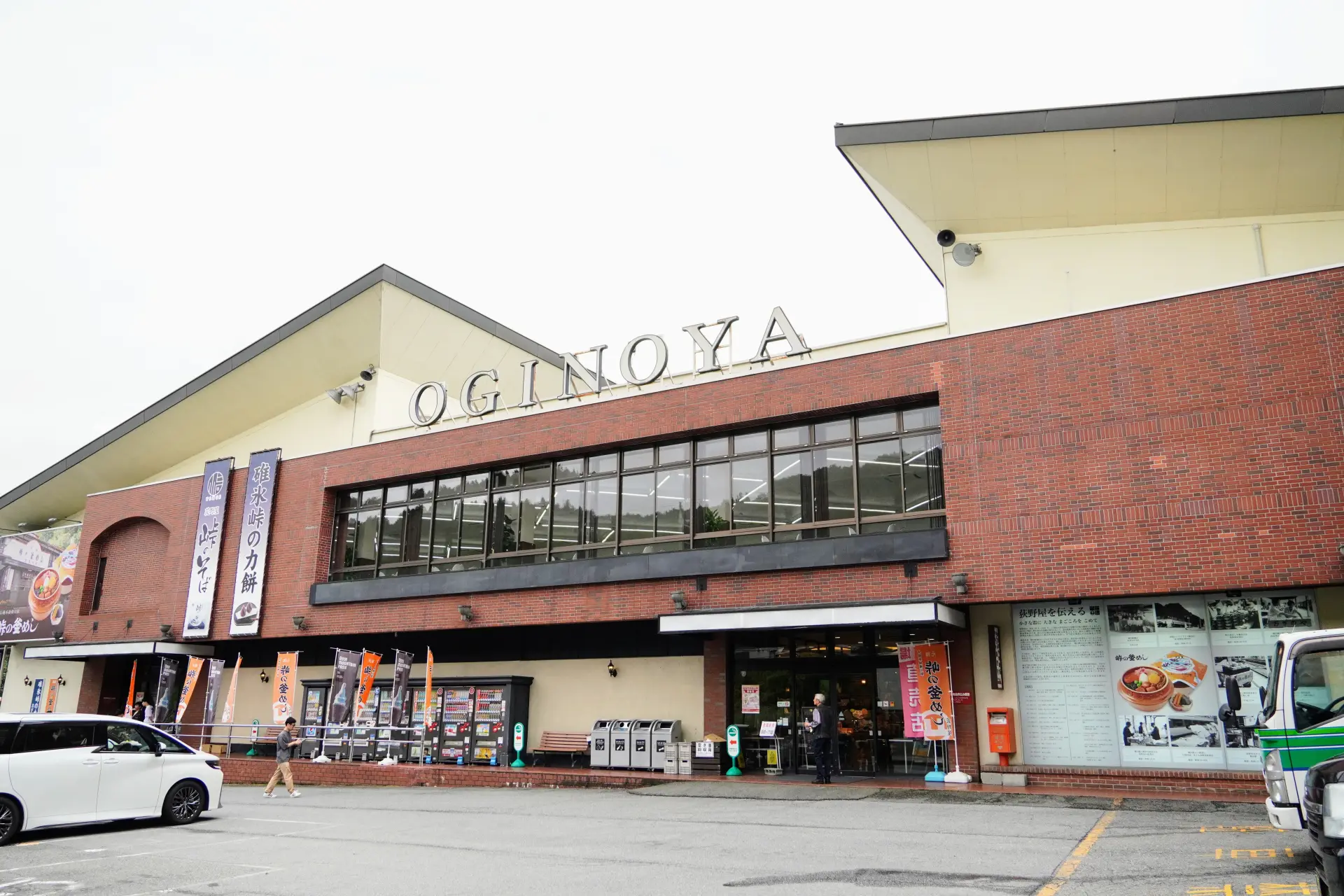
Finish your trip at Oginoya Yokokawa Store. After choosing souvenirs from Gunma, take a break at SAYACAFE inside the facility. Usui Pass is known as one of the settings of the popular manga “Initial D,” and the café draws fans of cars and mountain passes. Its vivid blue ramune-flavored soft-serve ice cream is another popular choice.


- Japanese Name
- SAYACAFE
- Postal Code
- 379-0301
- Address
-
Inside Oginoya Yokokawa Store, 297-1 Yokokawa, Matsuida-machi, Annaka City, Gunma Prefecture
Google Map - Phone
- 027-395-2431
- Hours
- 10:00 am–4:30 pm; Saturdays, Sundays, and public holidays: 9:00 am–4:30 pm
- Closed
- None
- Official Website
- Official Website
After your break at SAYACAFE, it is time to head home. Take the Shinetsu Line from Yokokawa Station to Takasaki Station, then transfer to the Shinkansen for Tokyo Station.
Tips for Enjoying This Itinerary
Both days involve plenty of walking, so comfortable shoes and quick-drying clothes are recommended. Hiking shoes are especially useful on Day 1, when you walk along disused tracks that have not been developed as a walking trail. From May through October, also take precautions against land leeches.
How Japan’s Railways Crossed the Mountains: Access and a Two-Day, One-Night Itinerary
Here are the access details for the starting and finishing point, along with the full two-day, one-night itinerary. Check the travel times and the order of the stops to help plan your trip.
Getting to the Starting and Finishing Point
Suggested Itinerary
Day 1
- 7:52 am Take the Shinkansen from Tokyo Station to Karuizawa Station
- 9:00 am Meet near the railway monument by Karuizawa Station’s North Exit
- 10:00 am Begin the Abandoned Railway Walk
- 12:30 pm Lunch
- 1:20 pm Resume the railway walk
- 3:20 pm Finish the railway walk
- 3:40 pm Take the trolley train to Yokokawa Station
- 4:30 pm Take the Shinetsu Line from Yokokawa Station to Isobe Station
- 4:50 pm Visit Takano Saketen and TARTANS CAKE STAND
- 5:30 pm Stay overnight in the Isobe Onsen area
Day 2
- 7:17 am Take the Shinetsu Line from Isobe Station to Yokokawa Station
- 7:40 am Begin walking Abt Road
- 8:10 am Arrive at the Former Maruyama Substation
- 9:00 am Arrive at Lake Usui
- 9:30 am Arrive at Megane-bashi and turn back along the route
- 12:00 pm Lunch at Oginoya in Yokokawa Station
- 1:30 pm Visit Usui Pass Railway Heritage Park
- 3:00 pm Visit Oginoya Yokokawa Store, the Yokokawa drive-in
- 3:30 pm Take a break at SAYACAFE
- 4:00 pm Take the Shinetsu Line from Yokokawa Station to Takasaki Station
- 5:05 pm Take the Shinkansen from Takasaki Station to Tokyo Station
Frequently Asked Questions about This Shinetsu Line and Usui Pass Itinerary
Q
Who can join the Abandoned Railway Walk?
Participants must be at least six years old. As a rule, anyone under 15 or of junior high school age or younger must be accompanied by a parent or legal guardian.
Q
Who should avoid the Abandoned Railway Walk?
The tunnels are dark, and one is 1.3 km long. People with a fear of darkness or enclosed spaces may prefer not to take part.
Summary
The JR Shinetsu Line was shaped by the ingenuity and technology of the many people who worked to carry trains over the rugged Usui Pass. That history lives on in the disused tracks and railway heritage preserved here. Walk the rails and trace the past to discover the story of how Japan’s railways crossed the mountains. Come and experience that history on foot.
*This article was produced by the Greater Tokyo Tourism Organization, a general incorporated association, with support from the comprehensive DMO support program.
Author
Writers & Editors
GOOD LUCK TRIP Editors
Sharing lesser-known ways to experience Japan with the world!