
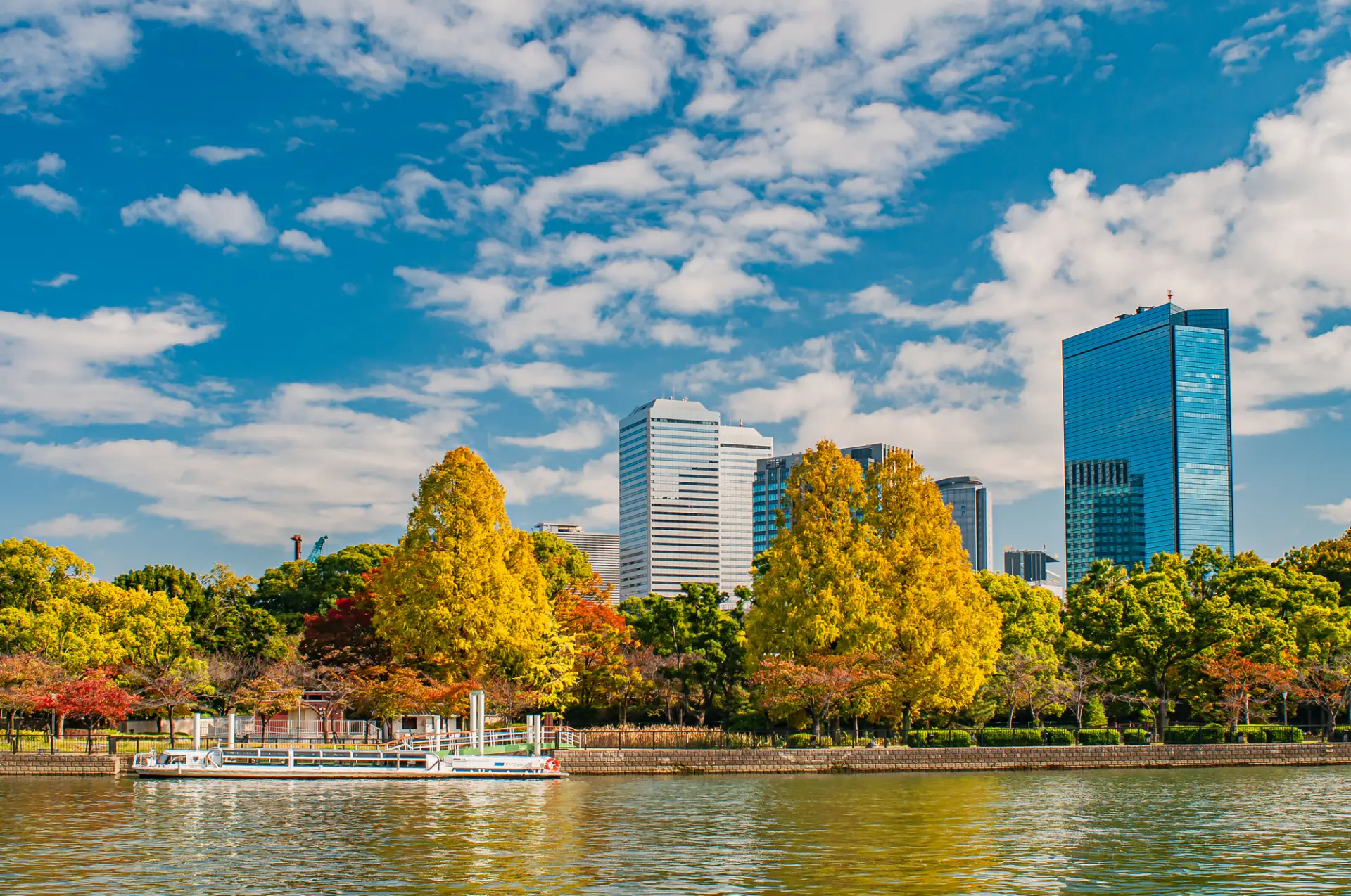
13 Fall Foliage Spots That Reveal a Different Side of Osaka
Osaka is one of Japan’s leading tourist destinations, but it may not immediately come to mind as a place to see fall foliage. In fact, the city and surrounding prefecture have many excellent foliage spots, allowing you to enjoy the autumn colors without traveling as far as Kyoto. In particular, don't miss the distinctive scenery created by Osaka landmarks such as Osaka Castle and the Tower of the Sun surrounded by red and yellow leaves. The combination of dramatic scenery and colorful foliage is something special to Osaka.
This article introduces Osaka’s top fall foliage spots and the best times to visit, helping you make the most of autumn in Osaka.
Discover a Variety of Scenic Views in Osaka in Autumn
Osaka is known as “Japan’s kitchen,” with an abundance of local specialties such as okonomiyaki and takoyaki.
It is also home to many leisure attractions, including Universal Studios Japan, Osaka Aquarium Kaiyukan, and Tennoji Zoo, offering more ways to spend your time than you could fit into a stay of just a few days.
Its fall foliage spots are equally varied, with a wide range of scenic views to discover.
Highlights include Osaka landmarks surrounded by fall foliage, natural landscapes bursting with color that seem far removed from Japan’s second-largest metropolitan area, and autumn gardens filled with a distinctly Japanese atmosphere.
Another appealing feature is the chance to see fall colors in secluded natural settings just a short trip from central Osaka.

Typical Fall Foliage Season in Osaka
Refer to the table below for the typical fall foliage season in Osaka.
These dates are based on averages and may vary somewhat from year to year.
The best viewing period also differs by location, so check the typical season listed for each spot introduced below.
- Osaka Castle Park
- Mid-November to early December
- Midosuji
- Late November to mid-December
- Expo ’70 Commemorative Park
- Early November to early December
- Satsukiyama Park
- Late November to early December
- Katsuo-ji Temple
- Mid-November to early December
- Minoh Park
- Mid-November to early December
- Inunakiyama Onsen
- Mid- to late November
- Hoshi no Buranko
- Mid-November to early December
- Settsukyo Park
- Mid-November to early December
- Daisen Park
- Late November to early December
- Daiitokuji Temple
- Mid- to late November
- Enmeiji Temple
- Late November to early December
- Hirokawa-dera Temple
- Mid- to late November
2026 Fall Foliage Forecast for Osaka
According to a forecast released by Japan Weather Corporation in October 2026, the fall foliage in Osaka is expected to reach its peak around December 4. The timing is forecast to be close to the seasonal average.
However, the best viewing period may shift depending on the location and upcoming temperatures.
Source: Japan Weather Corporation
13 Fall Foliage Spots to Visit in Osaka
The following are some of the most recommended fall foliage spots in Osaka, along with their typical best viewing periods. If you visit Osaka in autumn, consider adding these destinations to your itinerary.
1. Don't Miss Osaka's Iconic Landmark Surrounded by Fall Colors: Osaka Castle Park
This urban park encompasses the nationally designated Special Historic Site of Osaka Castle. Its expansive 105.6-hectare grounds contain numerous Important Cultural Properties, including Osaka Castle’s main tower and 13 structures such as turrets and gates built between the early and late Edo period. The centrally located main tower houses a museum displaying valuable historical materials, including objects associated with Toyotomi Hideyoshi, who built Osaka Castle and unified Japan.
The sight of Osaka Castle, one of the city’s most recognizable landmarks, surrounded by fall foliage at its peak is not to be missed. Red and yellow leaves vividly frame the imposing castle, creating a scene rich in Japanese atmosphere. The ornate details of the castle complement the colorful leaves, resulting in scenery found only here.
- Typical best viewing period
- Mid-November to early December


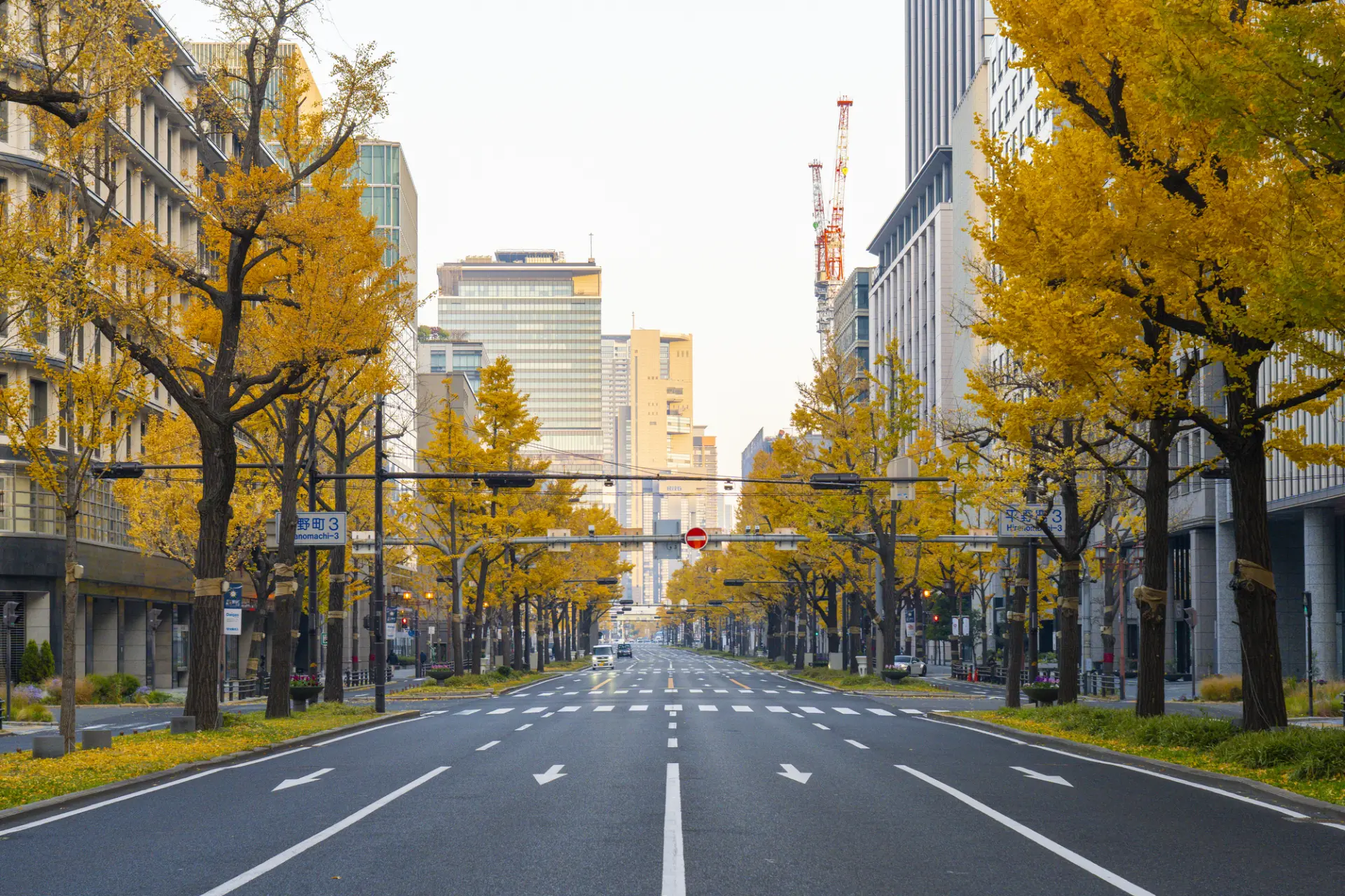
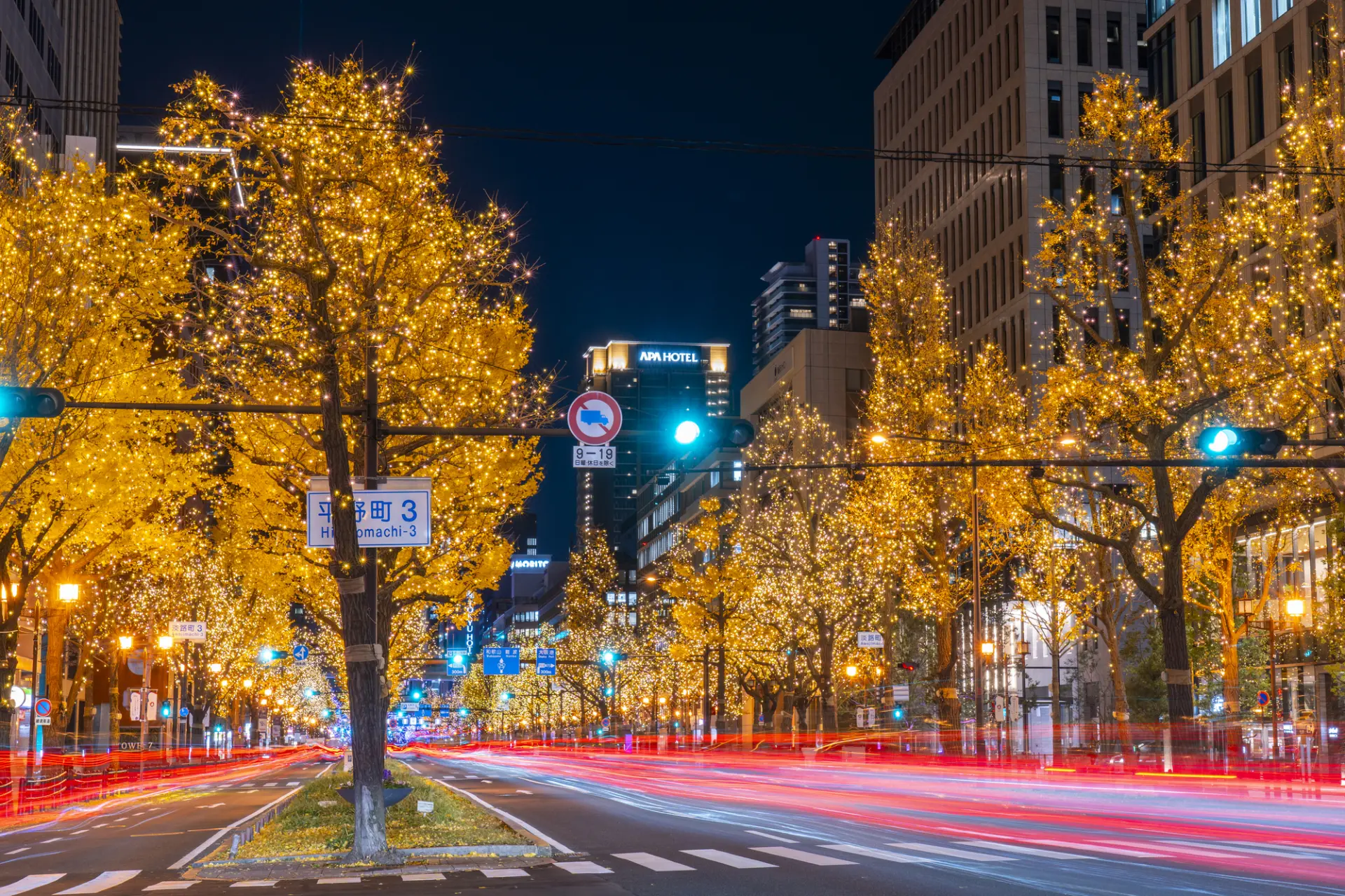
2. Osaka's Main Street Lined with Golden Ginkgo Trees: Midosuji
Midosuji connects Umeda and Namba, running north to south through central Osaka. Completed in 1937, this broad avenue is lined with office buildings and commercial facilities. Its rows of ginkgo trees are a city landmark and have been designated a cultural property by the City of Osaka as a landscape reflecting the history of modern Osaka.
As autumn deepens, the ginkgo leaves turn golden. The contrast between the sunlit yellow leaves and the orderly rows of buildings is one of the avenue’s highlights. After sunset, the trees transform into a corridor of light. During the Midosuji Illumination, the main program of the annual winter event Osaka Festival of the Lights, the ginkgo trees between Umeda and Namba are illuminated together. The event usually runs from early November through the end of the year, overlapping with the fall foliage season and giving the avenue a different appearance by day and night. Consider walking a station or two between shopping and sightseeing.
- Typical best viewing period
- Late November to mid-December
3. Rich Natural Scenery Bursting with Color: Expo ’70 Commemorative Park
Built on the former site of the Japan World Exposition held in 1970, this park features rich natural surroundings, including forests and satoyama landscapes, while Taro Okamoto’s Tower of the Sun welcomes visitors. The extensive grounds include the Natural and Cultural Gardens and Japanese Garden, where seasonal flowers and fall foliage can be seen. At Sorado in the nature park, visitors can look out over the city from an observation tower standing 82 meters above sea level.
At the height of the fall foliage season, approximately 10,000 trees representing around 20 species fill the park with color. Highlights range from an approximately 360-meter avenue of plane trees to the maples in the Japanese Garden. The foliage around the Japanese Garden and Hyotan Pond is especially impressive, combining a distinctly Japanese atmosphere with a sense of fleeting seasonal beauty.
- Typical best viewing period
- Early November to early December


4. Fall Foliage and Autumn Hiking at Satsukiyama Park
Rising 315 meters above sea level, Mount Satsuki is a symbol of Ikeda City. The Ina River flows past its base, and a scenic drive runs across the mountain. Located on the mountain, Satsukiyama Park is a familiar recreational spot for local residents. In addition to seasonal flowers and trees, the park is home to Satsukiyama Zoo.
In autumn, Mount Satsuki becomes one of the leading fall foliage destinations in the Hokusetsu area, attracting many visitors when the colors reach their peak. Hiking trails wind through the park, allowing visitors to stroll beneath the colorful trees. The spacious lawn and large playground equipment are popular with children, while the observation deck offers panoramic views of the Osaka Plain.
- Typical best viewing period
- Late November to early December


5. Spectacular Scenery Covered in Fall Colors at Katsuo-ji Temple
Surrounded by a quasi-national park in Minoh, Katsuo-ji is an ancient temple founded in the Nara period with a history spanning approximately 1,300 years. Its roughly 26.4-hectare grounds contain structures including the main hall and temple gate, rebuilt by Toyotomi Hideyori, and the Sanbo Kojin-do Hall, said to be Japan’s first shrine dedicated to Kojin.
It is one of the most popular fall foliage destinations in Minoh, an area already well known for its autumn colors. The temple grounds turn red and yellow, while the approach is covered by arching maple branches. The temple is also illuminated at night during the foliage season, creating an enchanting atmosphere distinct from its solemn daytime appearance.
- Typical best viewing period
- Mid-November to early December


6. Scenic Fall Foliage and a Waterfall at Minoh Falls
Minoh Park is a 83.8-hectare prefectural park in Minoh City. One of its main attractions is the 33-meter-high Minoh Falls, which has been selected as one of Japan’s Top 100 Waterfalls and provides an up-close view of the area’s impressive natural scenery. The waterfall is said to have been named for its resemblance to a traditional winnowing basket called a mino, a tool used to remove impurities from harvested crops. The name also reportedly became the origin of the local place name.
The naturally rich park offers fall foliage in many colors. Its appearance changes depending on the angle of the sunlight, allowing visitors to watch the scenery transform over the course of the day. Minoh Falls framed by vivid autumn leaves is especially dramatic. Limited-time illuminations are also held, creating an atmospheric setting for viewing the foliage.
- Typical best viewing period
- Mid-November to early December


7. Fall Colors in a Secluded Mountain Setting at Inunakiyama Onsen
Inunakiyama Onsen is a hot spring area in the mountains of Izumisano City, known for its secluded atmosphere. It is also the only hot spring resort area in Osaka Prefecture. The nearly transparent water is said to help relieve neuralgia and skin conditions and is also known for its skin-beautifying properties. Its smooth texture is another distinguishing feature.
The waterfalls of various sizes around Inunakiyama Onsen are another highlight. The area is often used as a base for exploring naturally rich Mount Inunaki and is popular with hikers. In autumn, when the leaves reach their peak, visitors can see the foliage complementing the valley scenery of waterfalls and flowing streams. The main appeal lies in the natural beauty of the leaves as they blend into the surrounding landscape. Take a hike to experience the fall colors with both your eyes and your whole body.
- Typical best viewing period
- Mid- to late November


8. A Thrilling Fall Foliage Spot: Hoshi no Buranko
Hoshi no Buranko is a wooden-deck suspension bridge located 180 meters above sea level. Measuring 280 meters long and reaching a maximum height of 50 meters above the ground, it is one of Japan’s largest pedestrian suspension bridges. The Katano area where the bridge is located is known for its connection to the Tanabata legend. The bridge was nicknamed Hoshi no Buranko, meaning “Star Swing,” as a symbol of this village associated with falling stars.
Crossing the bridge reveals sweeping views of the forest, with seasonal scenery throughout the year. The fall foliage is particularly scenic, featuring soft shades of red and yellow interspersed with green. Looking down on this gradient of autumn colors from the suspension bridge is an experience distinctive to Hoshi no Buranko. Its height and movement also add a touch of excitement to the foliage viewing experience.
- Typical best viewing period
- Mid-November to early December


9. Varied Landscapes Covered in Fall Colors at Settsukyo Park
This park is located along the middle and upper reaches of the Akutagawa River, which runs north to south through Takatsuki City in northern Osaka Prefecture. As a scenic destination in the Hokusetsu area where visitors can experience the natural beauty of the valley, it attracts many people from both Takatsuki and beyond. The park’s expansive 42.65-hectare grounds consist entirely of forested mountain terrain. Facilities include open spaces where children can run and play, as well as nature trails offering views of waterfalls, cliffs, and unusual rock formations such as Gyoja Rock and Hachijo Rock.
One of the main highlights is Maple Valley, where the entire area is enveloped in fall foliage, filling the field of view with red and orange. It also makes an excellent photo spot, so remember to take a commemorative picture. The foliage along the Akutagawa River valley is equally scenic. Spend a relaxing time surrounded by autumn colors and the sound of the clear stream.
- Typical best viewing period
- Mid-November to early December


10. Scenic Fall Views Throughout Daisen Park
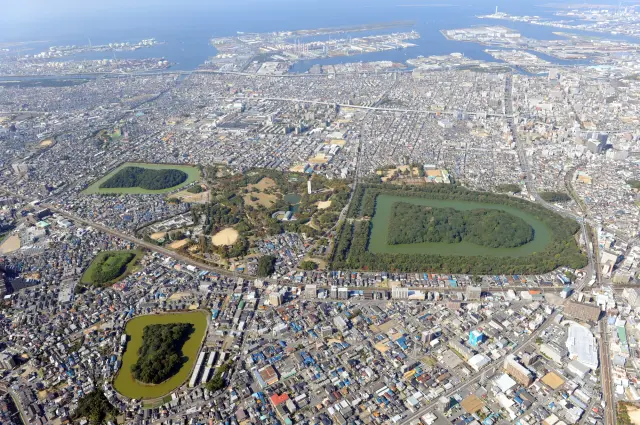
This urban park in Sakai City is located next to the Mozu Kofungun, a UNESCO World Cultural Heritage Site that includes the Nintoku-tenno-ryo Kofun, also known as the Daisen Kofun. The expansive 380,000-square-meter grounds are filled with greenery and seasonal flowers and contain burial mounds of various sizes, including the Osamezuka Kofun and Magodayuyama Kofun. The park centers on the Peace Tower, which stands in front of the ginkgo avenue at the north entrance, and Dora Pond, a renovated irrigation pond dating from the Edo period. Other spaces for enjoying nature include a spacious lawn and the Children’s Forest, which is often bustling with families.
In autumn, around 100 maple and ginkgo trees begin to change color. The scenery in the Japanese Garden is particularly impressive, with reflections of the foliage on the pond creating a distinctly Japanese atmosphere. The golden ginkgo avenue is another highlight. Around the peak of the season, the trees are illuminated, revealing a different side of the foliage from what can be seen during the day.
- Typical best viewing period
- Late November to early December


11. Fall Foliage in the Solemn Setting of Daiitokuji Temple
Daiitokuji is a mountain temple on Mount Ushitaki in Kishiwada City and one of Osaka’s leading fall foliage destinations. The tahoto, a type of Buddhist pagoda found on the temple grounds, was built during the Muromachi period (1336–1573) and has been designated a National Important Cultural Property. The solemn atmosphere of the historic grounds, which evoke the passage of centuries, is another part of the temple’s appeal.
The combination of fall foliage and historic architecture is the main attraction, with the tahoto especially worth seeing. The vermilion pagoda complements the autumn leaves, creating a colorful, almost painting-like scene. It is an ideal destination for anyone who wants to see fall foliage in a distinctly Japanese setting.
- Typical best viewing period
- Mid- to late November


12. Enmeiji Temple in Kawachinagano, Known for Fall Colors Glowing in the Sunset
Enmeiji Temple in Kawachinagano City, Osaka Prefecture, is an ancient temple said to have been founded by the Buddhist monk Kobo Daishi Kukai during the Heian period. It is believed to have begun with a statue of Jizo Bosatsu carved by Kukai himself and enshrined as the temple’s principal image. The temple was later restored during the Edo period by the eminent monk Jogon. The area has long been rich in medicinal plants, reflected in the temple’s mountain name, Yakuju-san, meaning “Mountain of Medicinal Trees.”
In autumn, the maple trees on the temple grounds change color. The main highlight is the Sekisho Maple, said to be approximately 1,000 years old. This massive tree has been designated a Natural Monument of Osaka Prefecture and was named for its appearance when illuminated by the setting sun. Visit around sunset to see the stately old tree surrounded by late-autumn foliage.
- Typical best viewing period
- Late November to early December
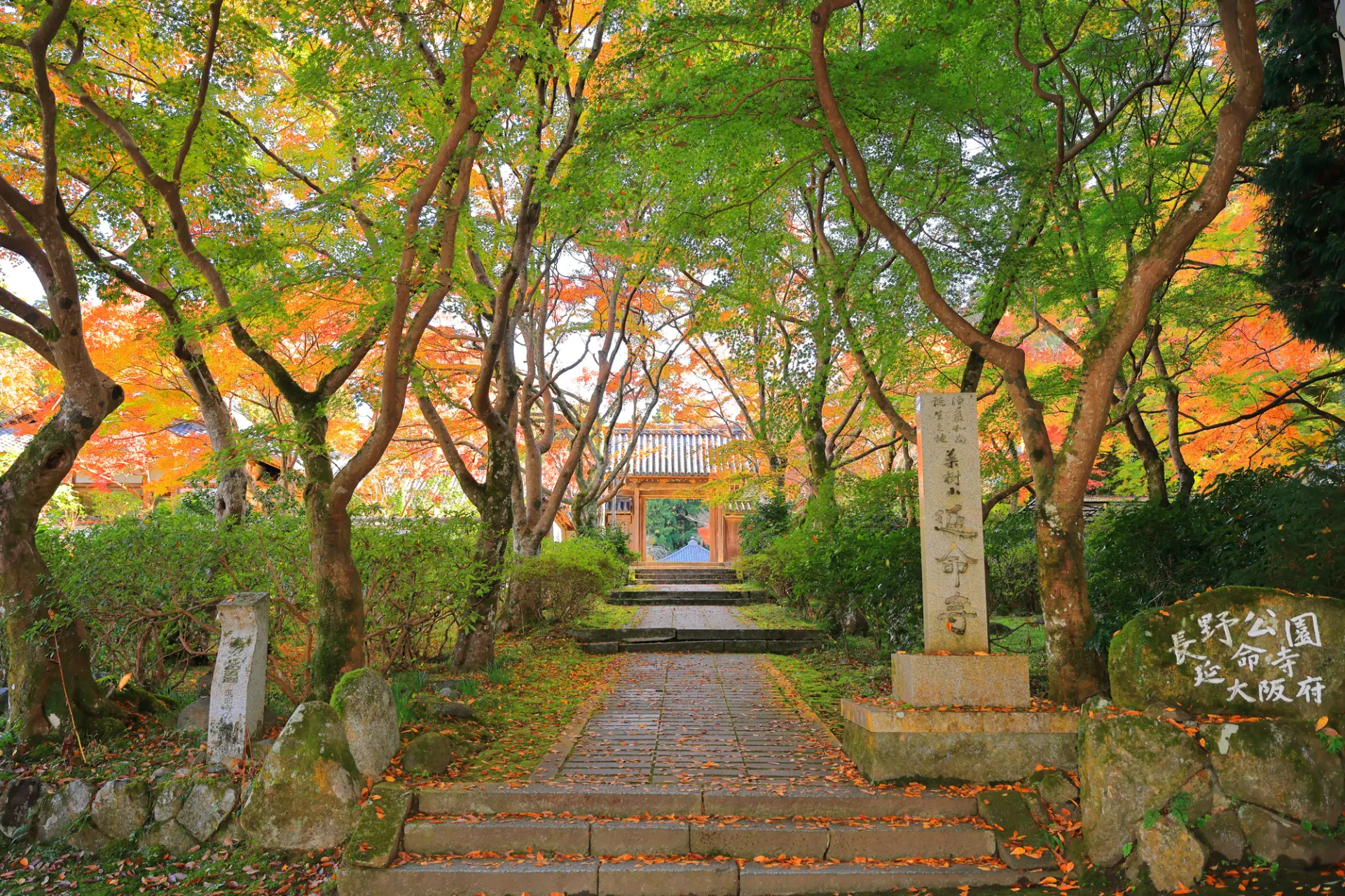
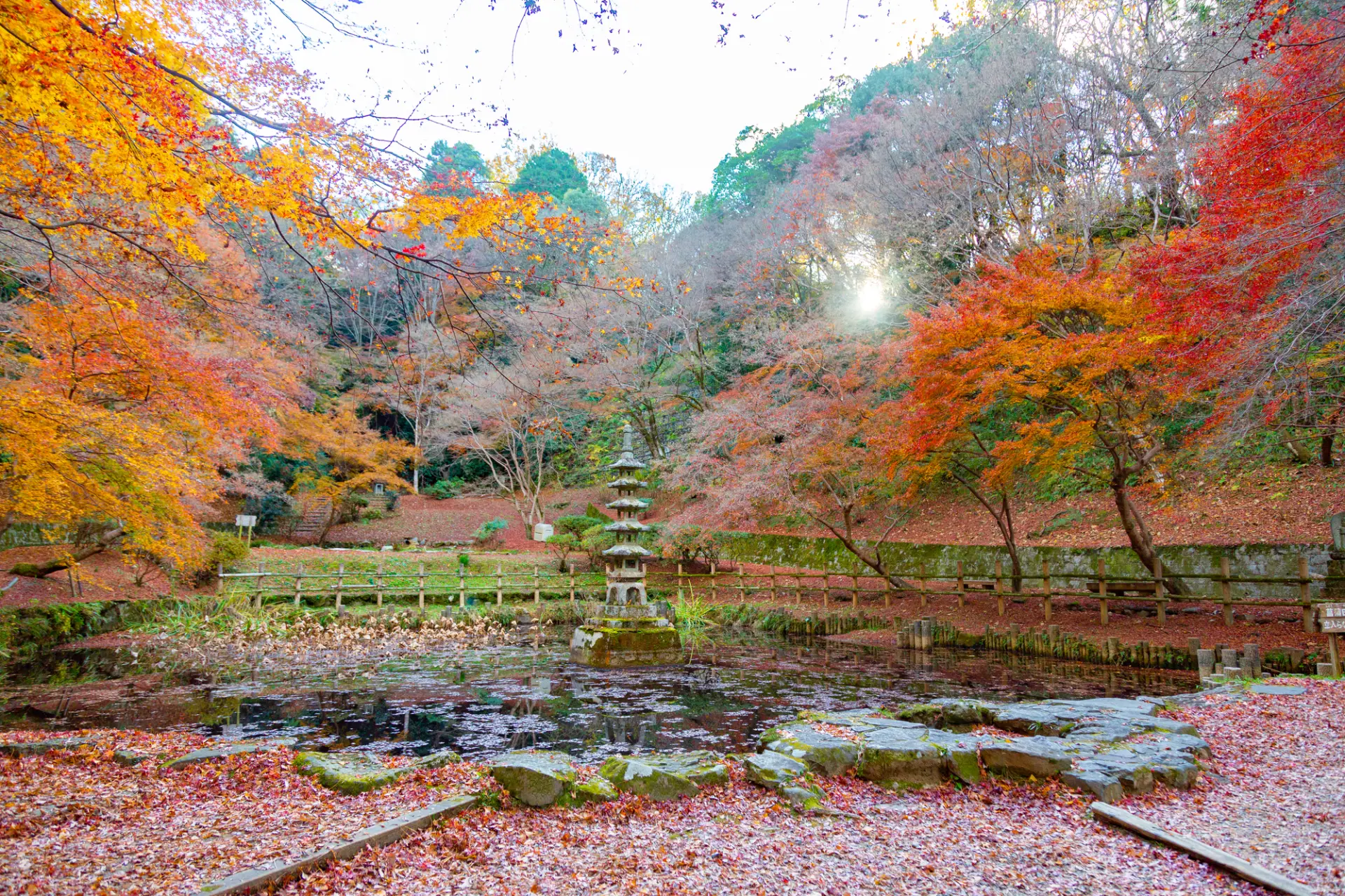
13. A Variety of Scenic Autumn Views at Hirokawa-dera Temple
Hirokawa-dera Temple is located at the foot of Mount Katsuragi in Kanan Town, Minamikawachi District. Well known as a cherry blossom destination, it is also popular as a quieter spot for fall foliage. The temple’s naturally rich grounds are filled with trees and remain very peaceful, making them ideal for a leisurely stroll. Despite the abundance of nature, the walking paths are well maintained and easy to navigate.
Fall foliage can be seen throughout the grounds, with shades of red and yellow mixed with green revealing the gradual progression of the season. The leaves viewed against the temple’s dry landscape garden, a Japanese garden style that represents mountains and water without using actual water, are particularly atmospheric and create scenery characteristic of Japan.
- Typical best viewing period
- Mid- to late November


Frequently Asked Questions About Fall Foliage Spots in Osaka
Q
When is the best time to see fall foliage in Osaka?
Although the timing varies by location, the fall foliage at many spots reaches its peak between mid-November and early December.
Q
Which areas of Osaka have many fall foliage spots?
In addition to Osaka City, many can be found in Suita, Sakai, Minoh, and other cities.
Summary
This article has introduced some of Osaka’s top fall foliage spots and the best times to visit them.
In addition to naturally rich scenery, one of the main attractions of Osaka’s fall foliage is how it complements the area’s distinctive architecture.
If you visit Osaka when the fall colors are at their peak, consider exploring the spots featured in this article.
The following article also presents a carefully selected list of places worth visiting while sightseeing in Osaka.
Use it together with this guide when planning your trip.
Author
Writers & Editors
GOOD LUCK TRIP Editors
Sharing lesser-known ways to experience Japan with the world!