
9 Historical Attractions in Sakai: Explore a City Shaped by Ancient Burial Mounds and Maritime Trade
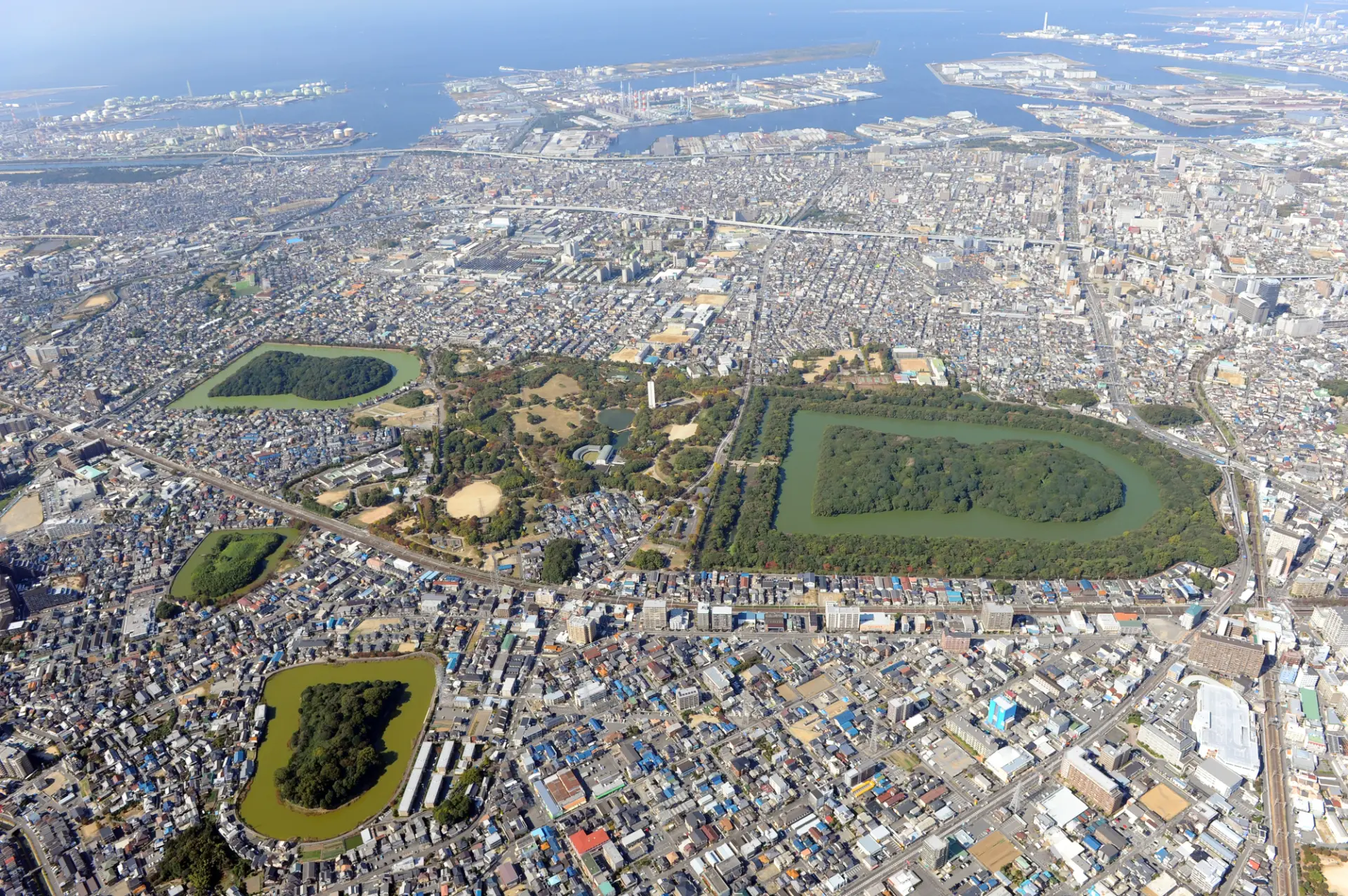
Sakai is a city where enormous kofun (ancient burial mounds) blend into the urban landscape, traditional craftsmanship such as cutlery making continues to thrive, and reminders of its past as a prosperous international trading port can still be found today.
Beyond visiting the Mausoleum of Emperor Nintoku and the historic Old Sakai Lighthouse, you can discover the city’s history at the Sakai City Museum and take in views of its kofun from the Osaka Sakai Balloon.
Explore Sakai and follow the traces of its history through the ages, from ancient times to the present day.
What Is Sakai Like?
Located in south-central Osaka Prefecture, Sakai has played a significant role in Japanese history since ancient times.
After enormous kofun, including the Mausoleum of Emperor Nintoku, were built in the area, Sakai developed into a hub of international trade during the Middle Ages and flourished as a self-governing city and a major center of commerce and culture.
The city also prospered through the production of firearms, and its diverse manufacturing traditions-including cutlery making, chusen dyeing, wazarashi bleaching, and incense making-continue to be passed down today.
From the Mozu area, dotted with kofun, to facilities showcasing traditional industries and the area around the Old Port, visitors can explore different chapters of Sakai’s history while experiencing the city as it is today.
How to Get to Sakai from Kansai International Airport and Osaka City
From Kansai International Airport, it takes about 26 minutes to reach Sakai Station on the Nankai Line by the Rapi β limited express, or about 37 minutes by Airport Express. Alternatively, the JR Kansai Airport Rapid takes about 39 minutes to Sakaishi Station.
From central Osaka, Sakai Station is about 10 minutes from Nankai Namba Station via the Nankai Main Line, while Sakaihigashi Station is about 12 minutes away via the Nankai Koya Line.
If you plan to visit the Mausoleum of Emperor Nintoku or Daisen Park, taking the JR Hanwa Line from Tennoji Station to Mozu Station is a convenient option. You can also take the Hankai Tramway from Tennojiekimae Station and enjoy views of the city along the way to Sakai.
Choose from Sakai, Sakaihigashi, Sakaishi, and Mozu stations depending on your destination.
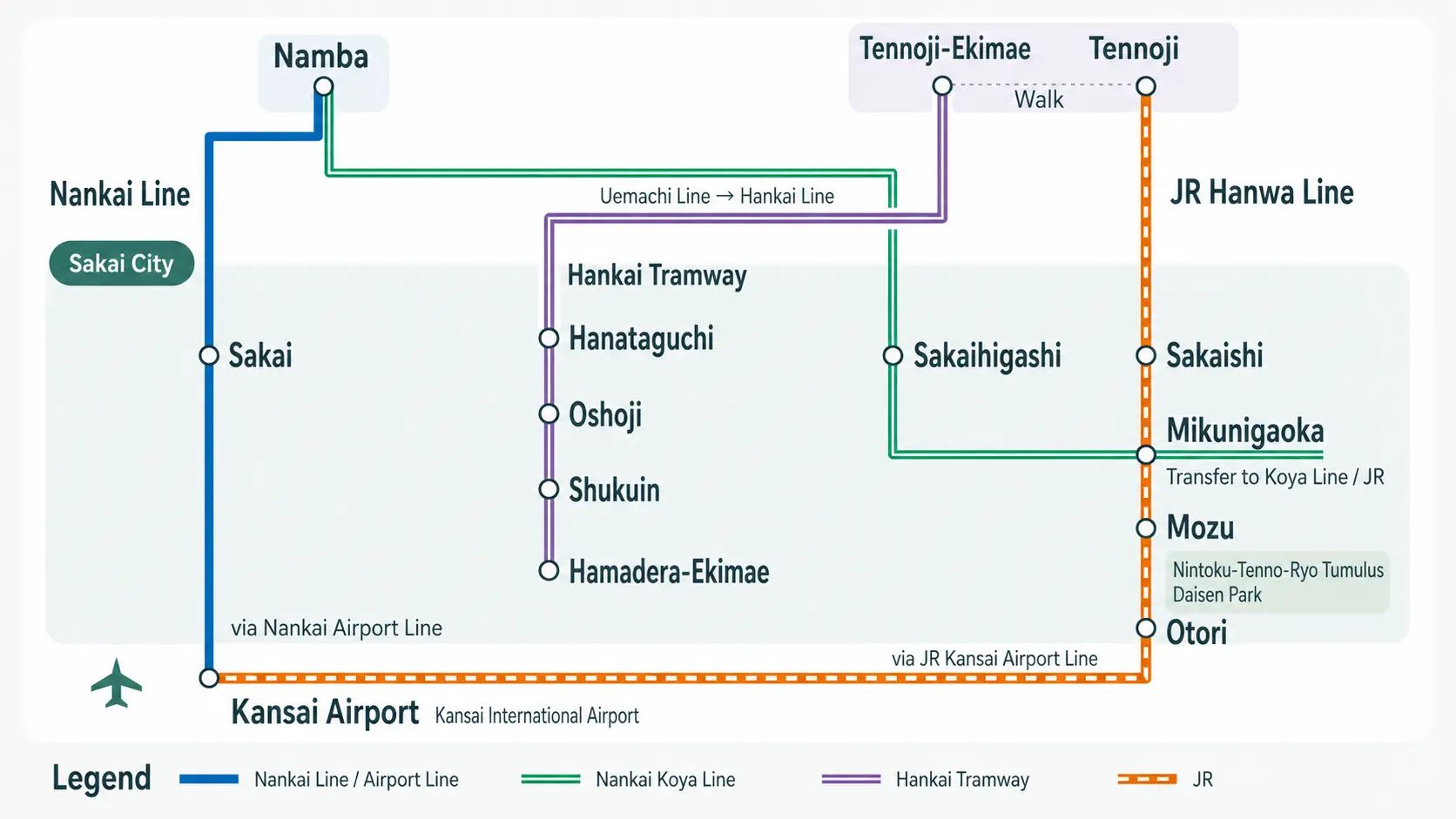
This simplified map shows selected major stations. Distances, directions, and spacing between stations are not to scale. Colors and line styles are used only to distinguish routes.
Intersecting lines without a circle do not indicate transfer stations. Stops and transfers vary depending on the train service.
9 Recommended Places to Discover Sakai Through the Ages
From ancient times, when enormous kofun were built, through the eras when Sakai flourished through manufacturing and trade, to the present day, when its history can be experienced in new ways, the city is dotted with places that tell the story of its development.
Visit historical sites and cultural facilities, take in the cityscape from above, and travel through the streets by tram. Through these varied experiences, discover Sakai across the ages.
1. Mozu-Furuichi Kofun Group
The Mozu-Furuichi Kofun Group is a UNESCO World Heritage Site comprising kofun built for the rulers of the ancient Japanese archipelago.
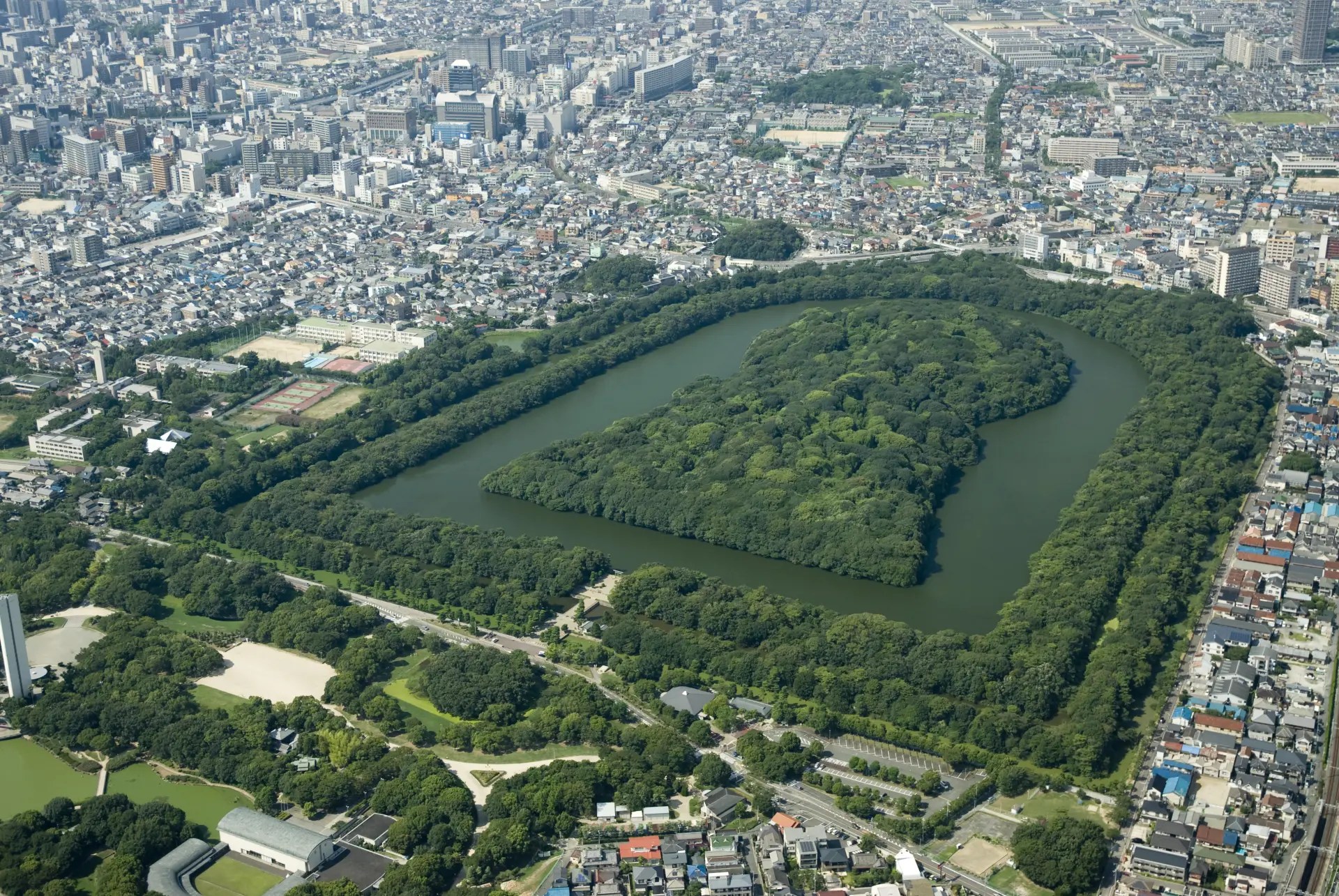
Located in the heart of the Mozu area, the Mausoleum of Emperor Nintoku is often described in Japan as one of the world’s three great tombs, alongside the Great Pyramid of Giza and the Mausoleum of the First Qin Emperor. It is Japan’s largest keyhole-shaped kofun, with a mound length of 486 meters. Walking the path around its perimeter takes about an hour, giving visitors a real sense of its immense scale.
Visit the worship area and stroll along the moat to see this enormous kofun standing side by side with the modern cityscape.
- Name in Japanese
- 百舌鳥・古市古墳群
- Address
-
Nintoku-tenno-ryo Kofun : 7-1 Daisencho, Sakai-ku, Sakai City, Osaka 590-0035
Ojin-tenno-ryo Kofun : 6 Konda, Habikino City Osaka 583-0857
Google Maps - Tel
- 06-6210-9742 (Conference Headquarters for the Promotion of Mozu-Furuichi Kofungun for World Cultural Heritage Inscription <in Osaka Prefectural office>)
- Holidays
- Open year around
- Hours
- Open 24 hours
- Admission
- Open free to the public
- Access
-
Nintoku-tenno-ryo Kofun : About a 5-min walk from Mozu Station on the JR Hanwa line
Emperor Ōjin’s Tomb (Kofun): About A 15-Minute Walk From Kintetsu Hajinosato Station On The Kintetsu Minami-Osaka Semi-Express Line - Official Website
- Official Website (English)

2. Daisen Park
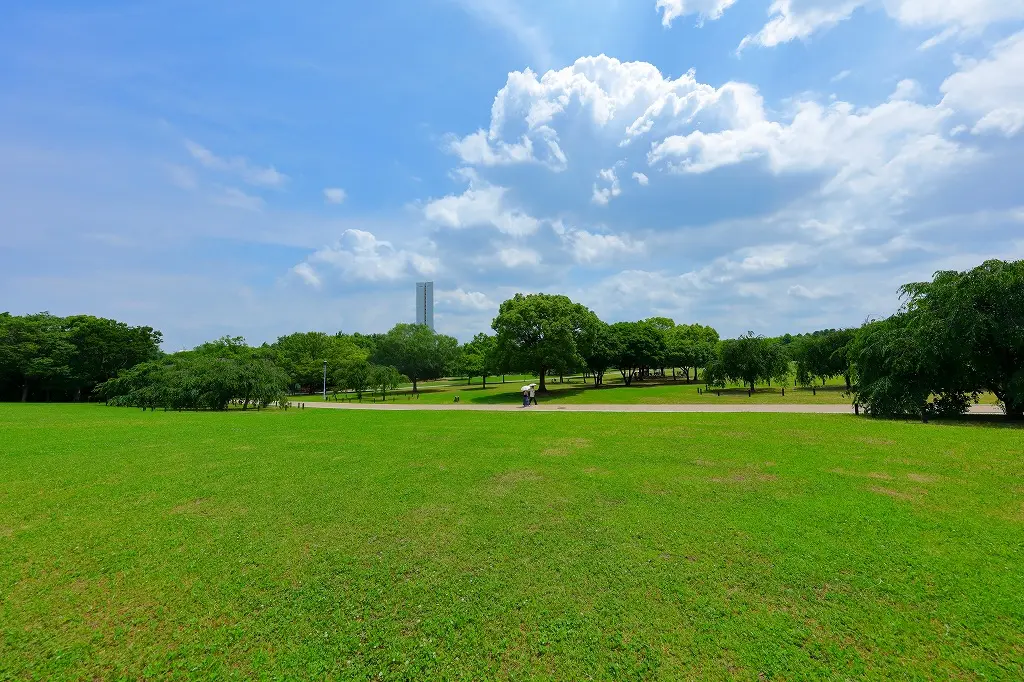
Adjacent to the Mausoleum of Emperor Nintoku, this urban park brings together kofun, abundant greenery, and cultural attractions. Spanning approximately 380,000 square meters, the expansive grounds are filled with lush greenery and seasonal flowers, with kofun of various sizes scattered throughout, including the Osamezuka Kofun and Magodayuyama Kofun.
The park is also home to the Sakai City Museum, the Mozu Kofun Group Visitor Center, and a Japanese garden, allowing visitors to enjoy a leisurely stroll while discovering Sakai’s history and culture. After visiting the Mausoleum of Emperor Nintoku, take a walk through the park to explore some of the kofun that surround it.
- Name in Japanese
- 大仙公園
- Postal Code
- 590-0803
- Address
-
1cho 4-3, Higashiuenoshibacho, Sakai-ku, Sakai City, Osaka
Google Maps - Telephone
- 072-241-0291(Daisen Park Office)
- Holiday
- Open every day
- Hours
- Walk anytime
- Admission
- Free *Sakai City Museum and Japanese Garden are required.
- Directions
- 4 min. walk from Momozu Sta. on JR Hanwa Line.
- Credit Cards
- Not accepted
- Website
- Official Website (Japanese)
3. Sakai City Museum
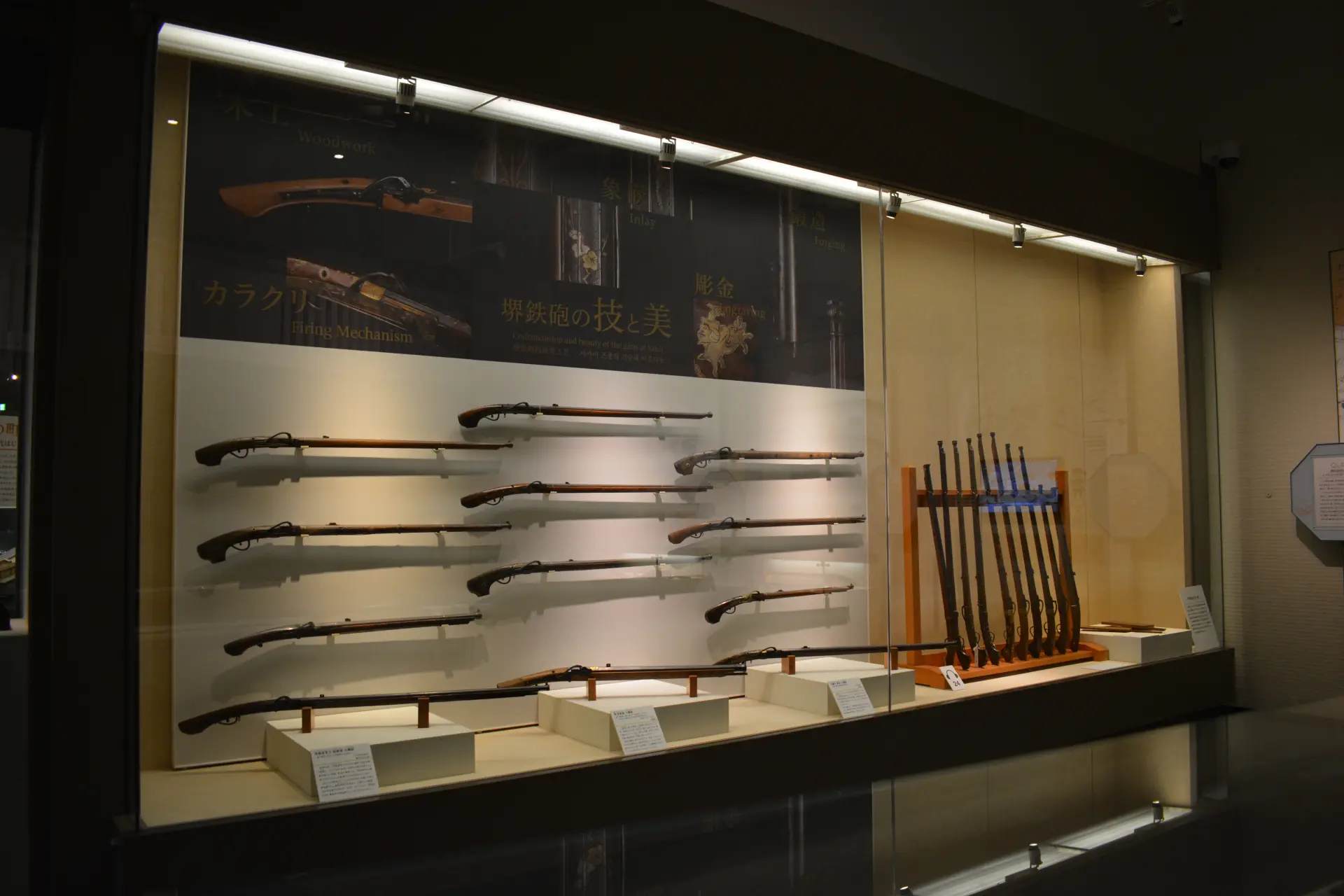
Located in Daisen Park, the Sakai City Museum traces the city’s history from ancient times to the present day. Its collections and exhibitions span archaeology, art, folklore, and other fields, offering visitors an insight into Sakai’s rich history and culture.
The permanent exhibition is organized chronologically into sections covering ancient, medieval and early modern, and modern and contemporary history. Displays include a reconstructed stone coffin and a horse-shaped haniwa figure. At the Mozu Kofun Group Theater, detailed computer-generated imagery is projected onto an approximately 200-inch screen, allowing visitors to see what the kofun looked like when they were built and even explore the interiors of their stone chambers.
- Name in Japanese
- 堺市博物館
- Postal Code
- 590-0802
- Address
-
Inside Daisen Park, 2-cho Mozu Yugumocho, Sakai Ward, Sakai City, Osaka Prefecture
Google Maps - Phone
- 072-245-6201
- Closed on
- Mondays (open if Monday is a national holiday), New Year’s holidays
- Hours
- 9:30am-5:15pm (Last admission at 4:30pm)
- Admission
- Adults 200 yen, high school and university students 100 yen, elementary and junior high school students 50 yen
- Access
- 7 minutes on foot from Mozu Station (JR Hanwa Line)
- Credit Cards
- Accepted
- Official website
- Official website (Japanese)
4. Historic Doto Site
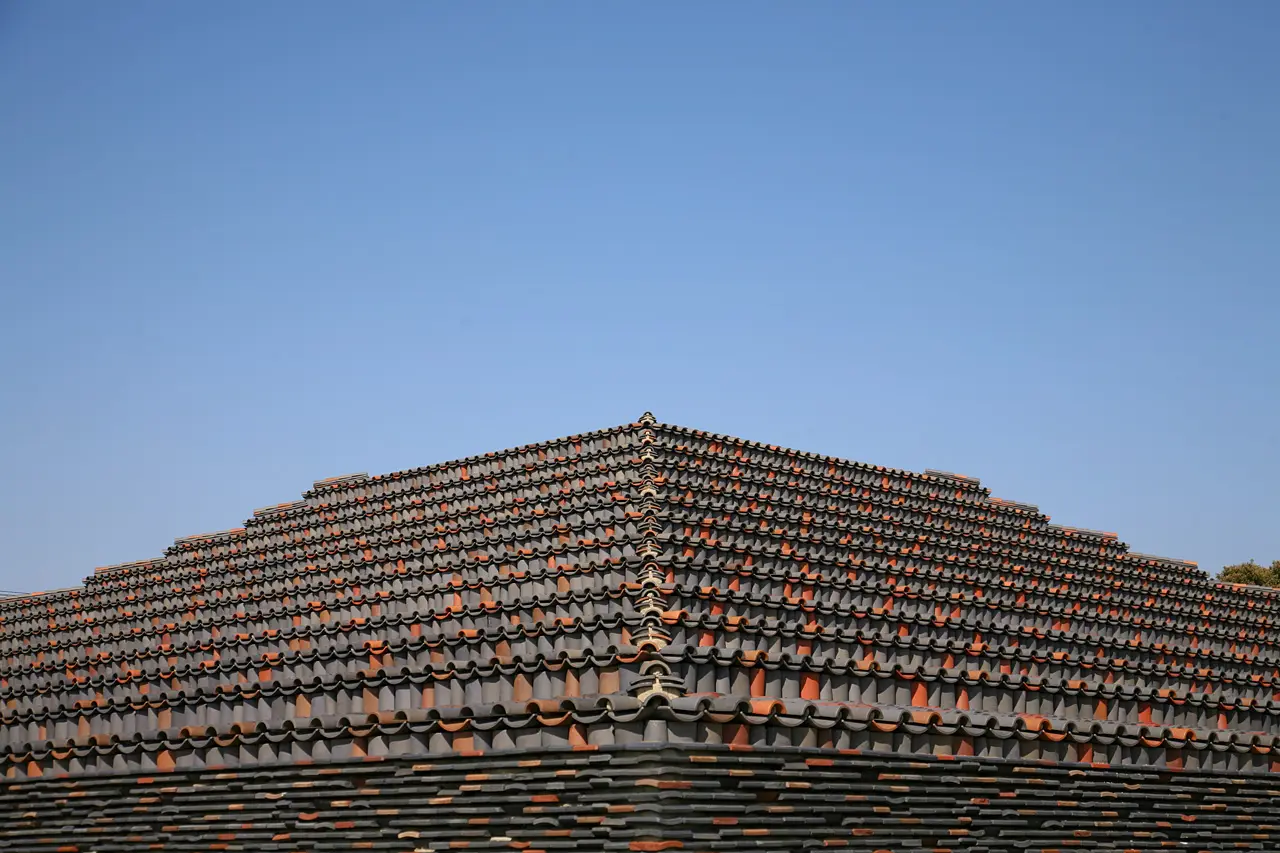
Southeast of Onodera Temple, founded by Gyoki, a prominent Buddhist monk of the Nara period, lie the remains of a pagoda built from earth and roof tiles. This unusual pyramid-shaped, tile-roofed structure is the only known example of its kind in Japan and was designated a National Historic Site in 1953.
Excavations have also uncovered numerous tiles inscribed with the names of people believed to have been involved in its construction. Compare the remains with the nearby three-dimensional model and information panels to imagine what the pagoda looked like during the Nara period.
- Name in Japanese
- 土塔
- Postal Code
- 599-8234
- Address
-
2143-1 Dotocho (inside Dotocho Park), Naka-ku, Sakai, Osaka
Google Maps - Phone
- 072-228-7198 (Sakai City Cultural Tourism Bureau, Historical Heritage Utilization Department, Cultural Properties Division)
- Closed on
- Open daily
- Hours
- Open for visits at any time. Exterior viewing only; the interior is not open to the public (special opening held around once a year)
- Admission
- Free
- Access
- 15-minute walk from Fukai Station on the Nankai Senboku Line
- Official website
- Official website (Japanese)
5. Sakai Denshokan
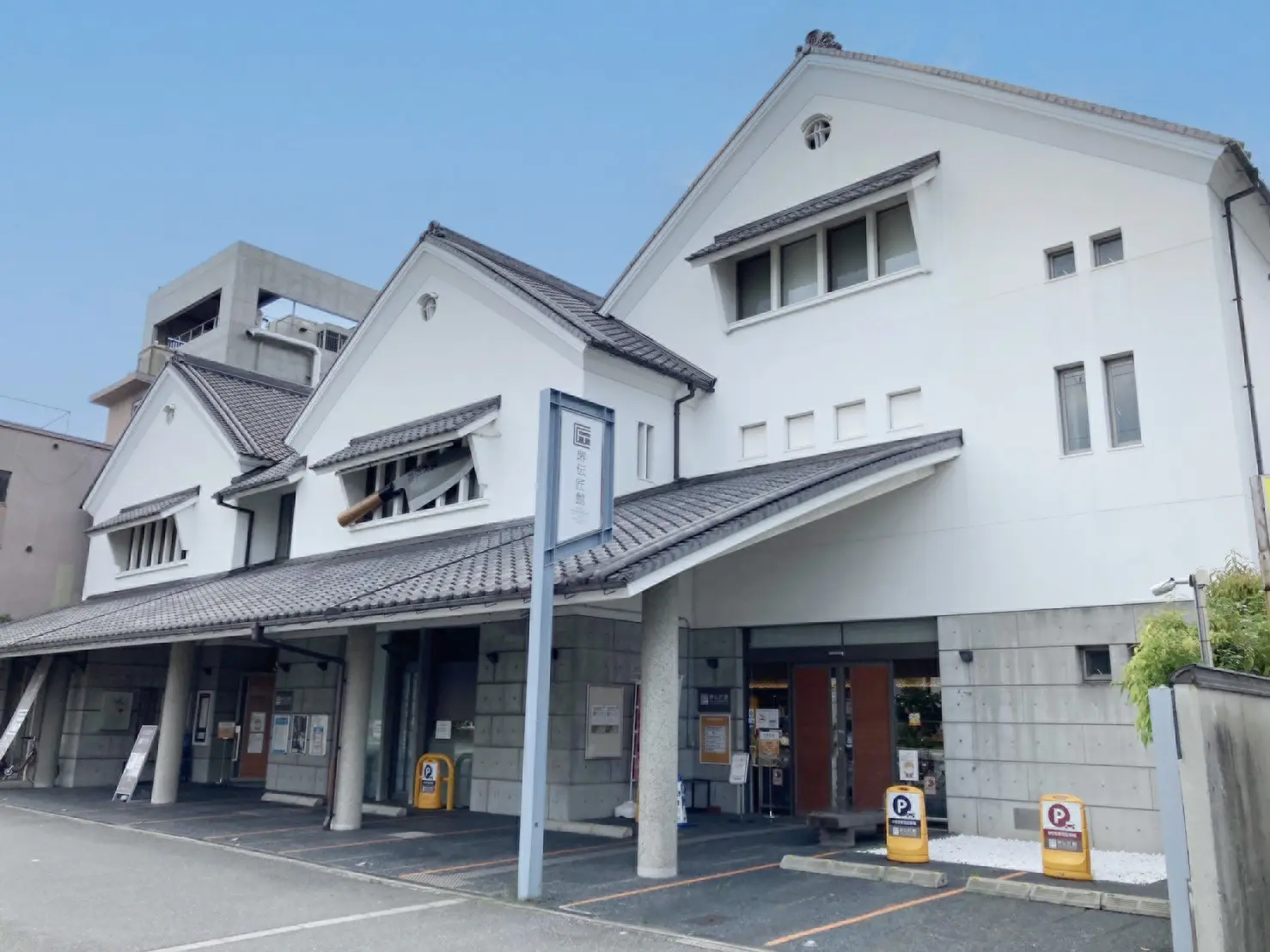
This facility brings together Sakai’s traditional industries, including cutlery making, chusen dyeing, wazarashi bleaching, incense making, kelp products, floor coverings, and carp streamers. A wide range of exhibits and products introduce the history and production methods behind these industries, offering an in-depth look at Sakai’s tradition of craftsmanship.
On the second floor, the Sakai Knife Museum CUT provides a detailed introduction to different types of kitchen knives and how they are made. On the first floor, the TAKUMI SHOP offers traditional craft products and other specialties from Sakai, allowing visitors to see and handle examples of the craftsmanship introduced in the exhibits.
- Name in Japanese
- 堺伝匠館
- Postal Code
- 590-0941
- Address
-
1-1-30 Zaimokucho Nishi, Sakai-ku, Sakai, Osaka
Google Maps - Phone
- 072-227-1001
- Closed on
- The third Tuesday of each month (or the following day if it falls on a national holiday), December 29–January 3, with additional temporary closures possible
- Hours
- 10:00am–5:00pm
- Admission
- Free admission
- Access
-
1) Approx. 1 minute southwest from Myokokujimae Station on the Hankai Tramway Hankai Line (Approx. 100 meters)
2) Approx. 14 minutes northeast from Sakai Station on the Nankai Line (Approx. 1,100 meters) - Credit Cards
- Accepted
- Official website
- Official website (Japanese)
6. Making a Kitchen Knife as a Traditional Craft at Sakai, Osaka - Attaching a Handle & Sharpening
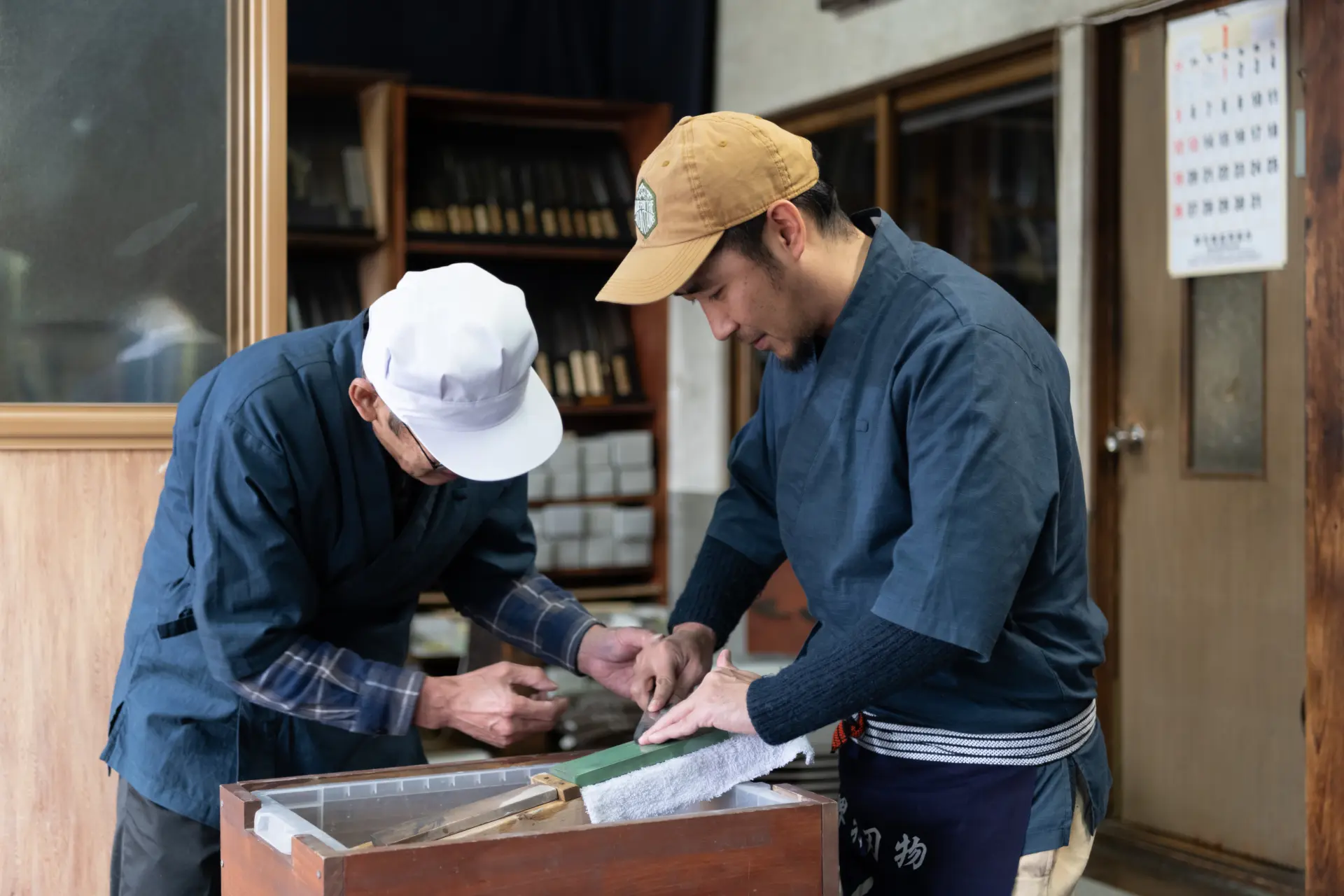
This hands-on program at Wada Shoten, a long-established shop with 150 years of history, offers participants the chance to experience part of Sakai’s traditional knife-making process. Put on the same type of samue workwear worn by the artisans, then choose from a petty knife, deba knife, sashimi knife, or all-purpose knife to work on.
Under the guidance of an artisan, try your hand at sharpening the blade and attaching the handle. By comparing a knife before and after sharpening, you can experience firsthand just how much of a difference sharpening makes to its cutting performance. You can take the finished knife home with you, making it a memorable souvenir from Sakai.
- Name of facility
- Wada Shoten
- Name of experience
- Making a kitchen knife as a traditional craft @ Sakai, Osaka -Attaching a handle & sharpening-
- Address
-
1-1-1 Shinmeichohigashi, Sakai-ku, Sakai City, Osaka 590-0935
Google Maps - Business Hours
- 10:00 a.m. - 6:00 p.m.
- Off days
- Sundays, the 3rd Tuesday of each month, and the New Year holiday period (open if there is a reservation)
- Estimate
- 18,000 yen (this includes the workshop fee and the knife)
- Payment methods
- Cash, credit card (VISA, Mastercard, American Express), PayPay
- Number of guests accepted (groups)
- 2 to 10 people
- Telephone number
- 072-232-1886
- Multilingual support
- English guide (reservation required in advance, and there is a separate fee)
- Official Website
- Official Website (Japanese)
7. Old Sakai Lighthouse
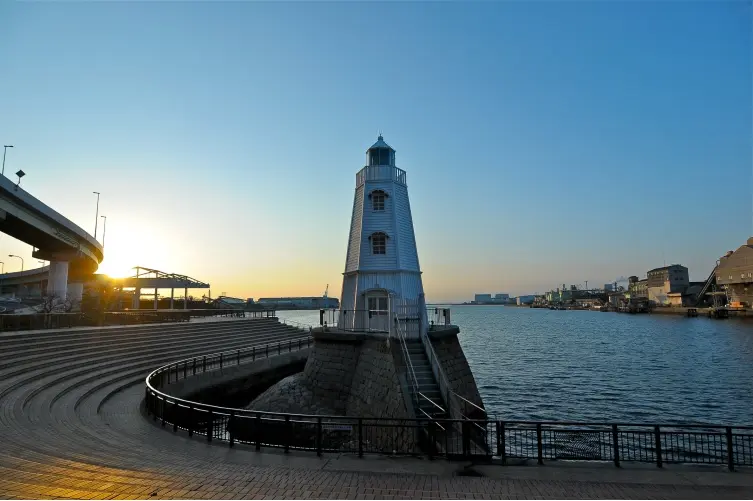
Standing at the tip of Sakai Old Port, which once flourished as an international trading port, this approximately 12-meter-tall wooden lighthouse has a distinctive hexagonal, pyramid-shaped design. Built in 1877, it was constructed with the involvement of carpenters from Sakai, stonemasons from Bizen Province, and a British engineer who installed its lens.
Its green light, produced by an oil lamp, is said to have reached up to 10 nautical miles out to sea, helping guide ships safely for about a century. One of the oldest surviving Western-style wooden lighthouses in Japan, it was designated a National Historic Site in 1972.
- Name in Japanese
- 旧堺燈台
- Postal Code
- 590-0974
- Address
-
5-chome Ohamakitamachi, Sakai-ku, Sakai, Osaka
Google Maps - Phone
- 072-228-7198 (Sakai City Culture and Tourism Bureau, Historical Heritage Utilization Department, Cultural Properties Division)
- Closed on
- None
- Hours
- Open for visits at any time *Exterior only, interior not open to the public (special opening held about once a year)
- Admission
- Free
- Access
- 15-minute walk from Sakai Station on the Nankai Main Line
- Official website
- Official website (Japanese)
8. Osaka Sakai Balloon
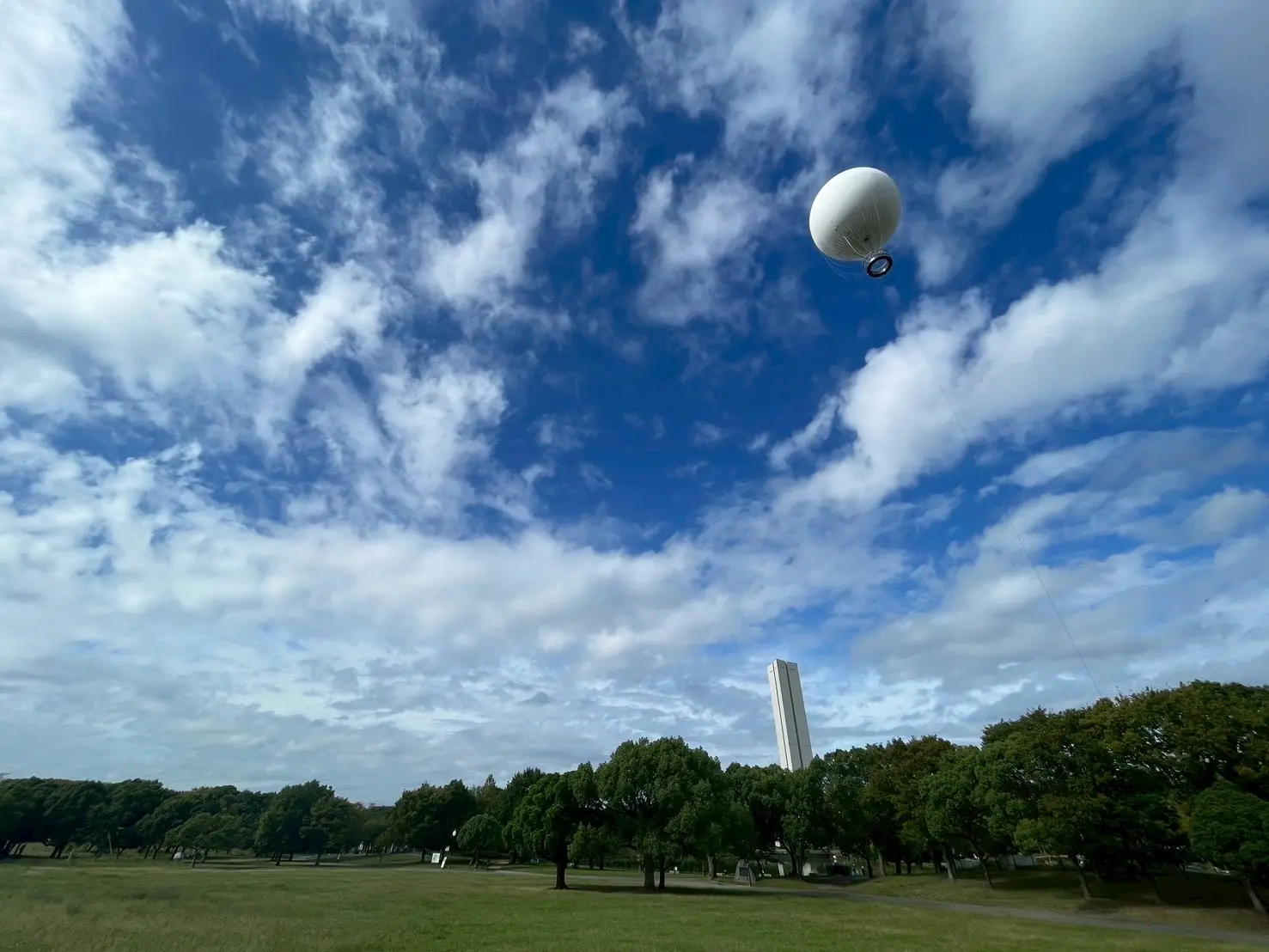
This new sightseeing attraction takes visitors aboard a tethered helium balloon from Daisen Park to a height of about 100 meters above the ground. Rising slowly and quietly into the sky, the balloon offers 360-degree views of the Mozu Kofun Group, the lush greenery of the Daisen area, and the city of Sakai.
From above, visitors can clearly see the full shapes of the kofun, which are difficult to appreciate from ground level, offering a fascinating sense of their immense scale and long history. Taking a ride after walking around a kofun also provides a different perspective on its size and relationship with the surrounding cityscape.
Operations may be temporarily suspended or canceled due to strong winds, rain, snow, dense fog, or other conditions. Check the operating status on the official website before heading out.
- Name in Japanese
- おおさか堺バルーン
- Postal Code
- 590-0802
- Address
-
Daisen Park, 2 Mozusekumocho, Sakai Ward, Sakai City, Osaka
Google Maps - Phone
- 050-1722-4848 (Advance Co., Ltd. Osaka Branch)
- Closed on
- Open daily *Service may be suspended depending on the weather
- Hours
- 10:00am–6:00pm (Reception closes at 5:45pm)
- Admission
- Ages 16 and over: 4,200 yen, ages 3–15: 3,000 yen, under 3: free
- Access
- Get off at Mozu Station on the JR Hanwa Line, then walk 5 minutes west
- Credit Cards
- Accepted
- Official website
- Official website (Japanese)
9. Hankai Tramway
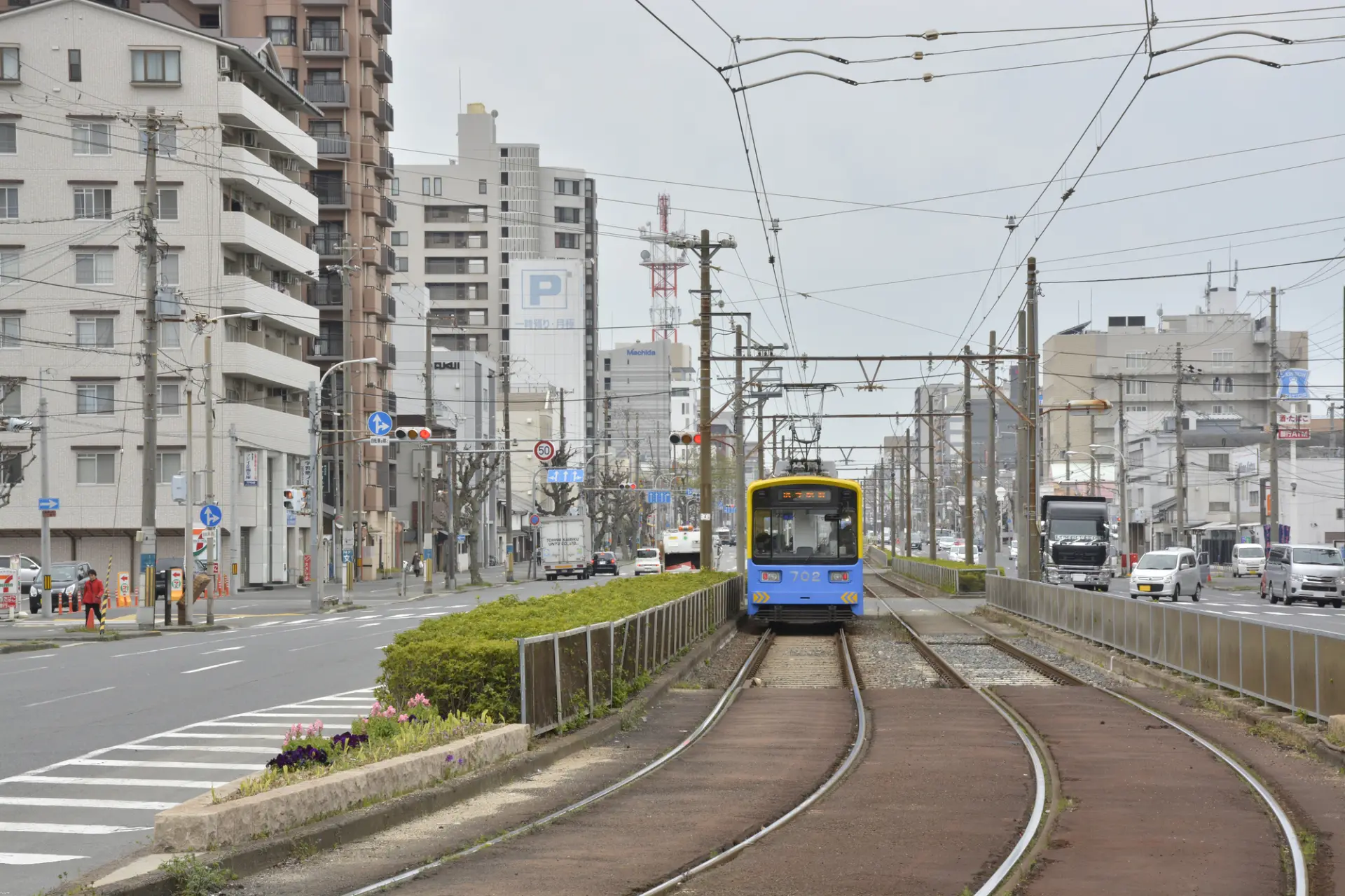
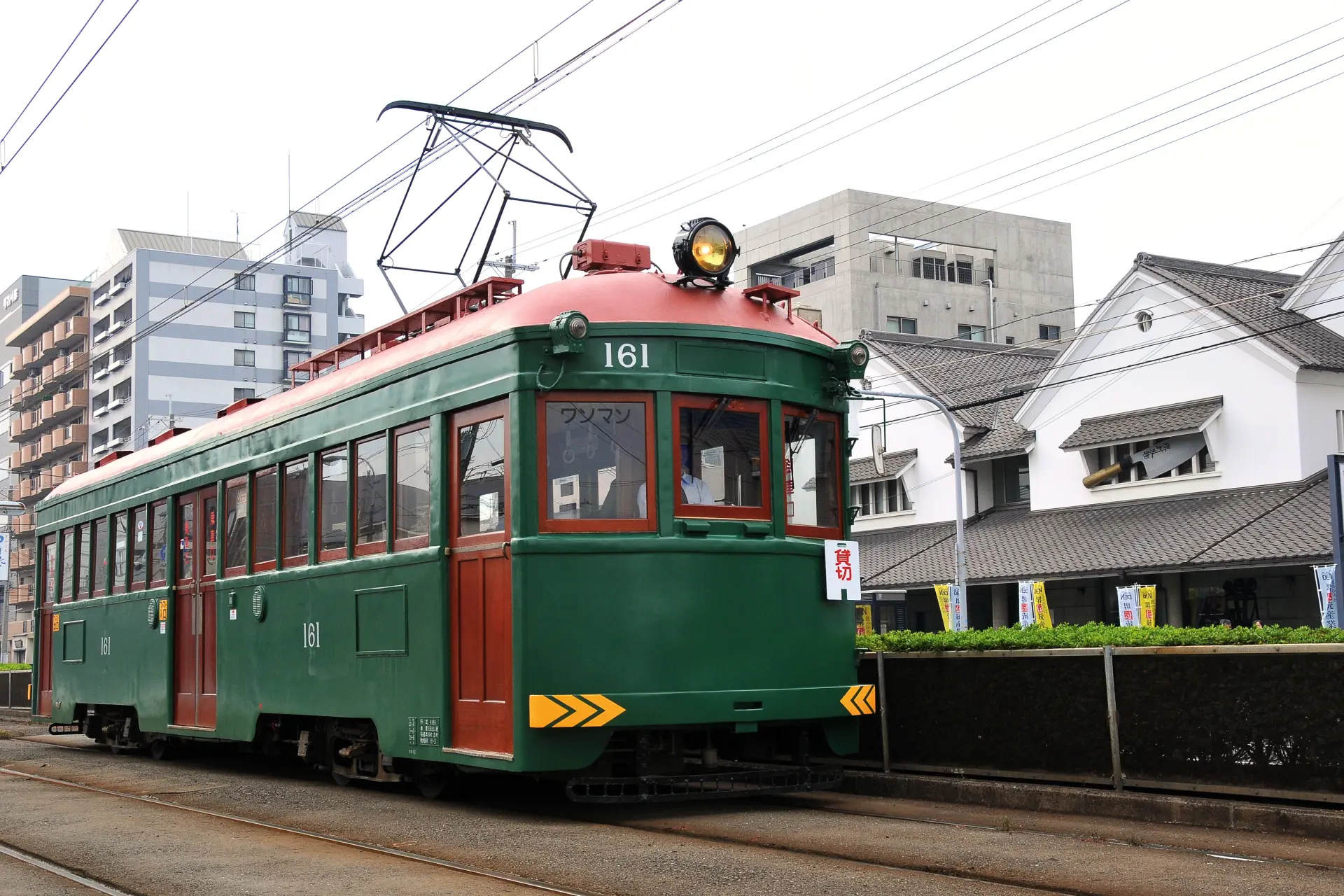
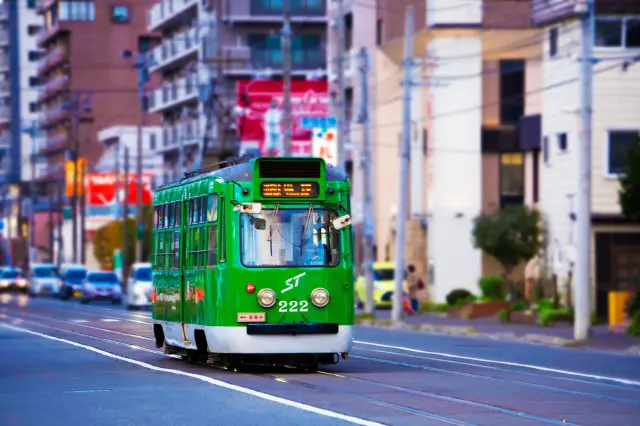
The Hankai Tramway connects Osaka City and Sakai, offering passengers an up-close view of the streets along the way. Affectionately known as the “Chin-Chin Densha,” it is the only streetcar system in Osaka Prefecture and has long been a familiar part of everyday life for local residents.
Alongside its retro-style streetcars, the line also operates the Sakai Tram, an ultra-low-floor vehicle featuring traditional Japanese design elements. Enjoy the changing scenery from the window as the tram travels from urban districts through residential neighborhoods and past the entrances to temples and shrines, hopping off at stops that catch your interest to explore Sakai along the way.
- Name in Japanese
- 阪堺電車
- Tram Fares
- 240yen, 120yen(Children)
- Credit Cards
- Not accepted
- Official Website
- Official Website (English)
3 Recommended Places for Food and Sweets in Sakai
After exploring Sakai’s kofun, museums, and Old Port district, take a break to enjoy some of the city’s local food and sweets.
There are plenty of ways to enjoy Sakai’s flavors, from udon suki simmered in flavorful dashi broth to daifuku filled with seasonal fruit and castella cake enjoyed with a view of a beautiful garden. Whether you’re looking for lunch, a break while exploring the city, or a souvenir to take home, these spots are easy to work into your itinerary.
1. Mimiu Sakai
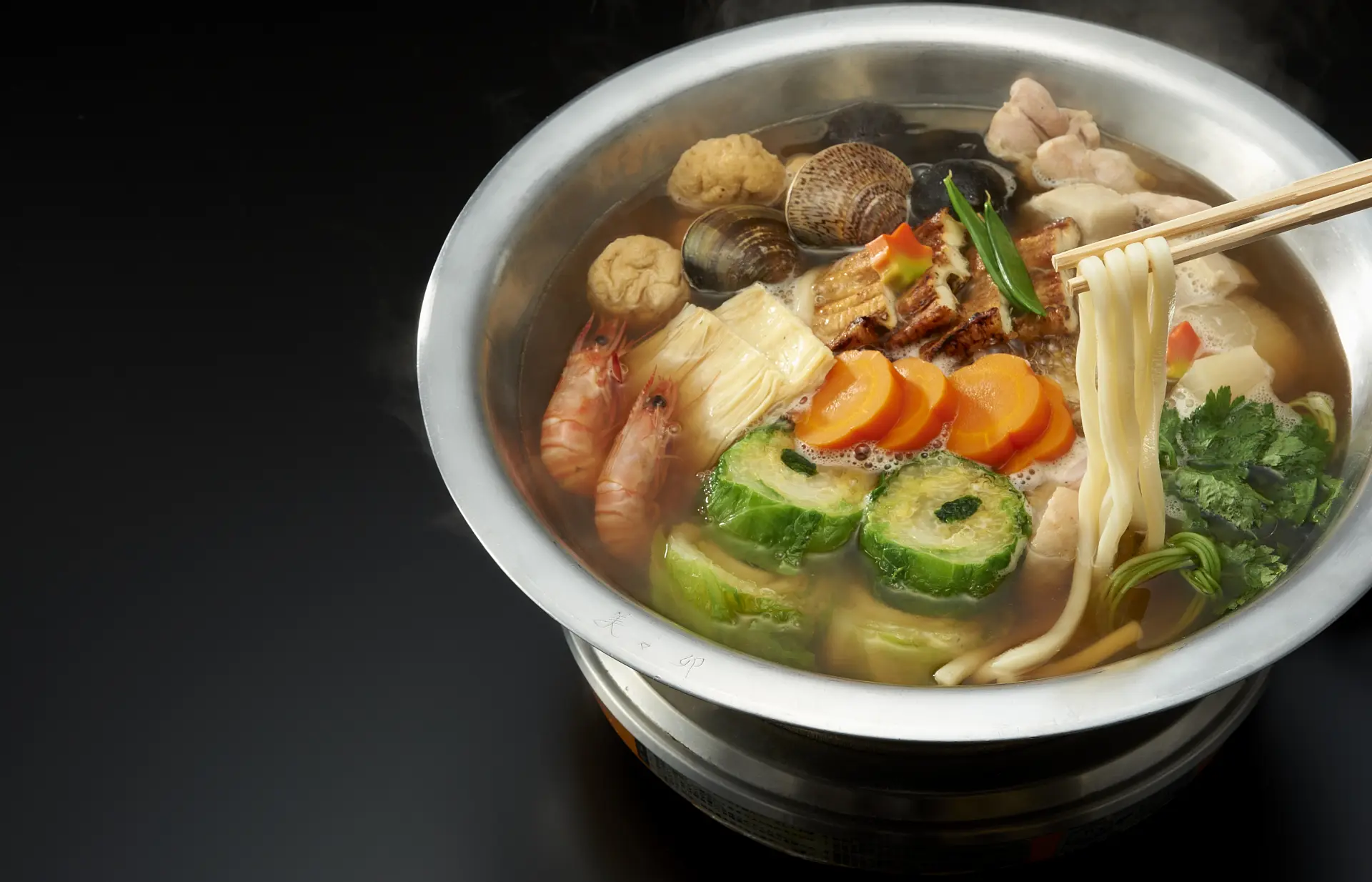
This restaurant is the birthplace of udon suki, a hot pot dish featuring udon noodles simmered with chicken, vegetables, and seafood. Mimiu operates 12 locations, mainly in Osaka, but this is its only restaurant in Sakai, where the business was founded about 250 years ago as the ryotei restaurant Miu-ro.
Take a break from exploring Sakai’s historical attractions and savor the flavorful dashi, carefully prepared over about two hours using Rishiri kombu, soda-bushi, and honkare-bushi. The thick homemade udon noodles become increasingly tender and supple as they simmer, complementing the carefully prepared shrimp, chicken, and vegetables in the pot.
2. Isshindo Main Store
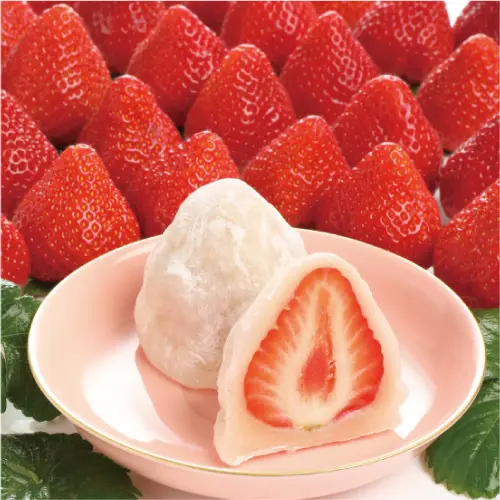
This long-established confectionery has been making wagashi with seasonal ingredients since its founding in 1955. A highlight is its fruit daifuku, featuring seasonal fruit wrapped in soft mochi. More than 10 varieties of fruit, including strawberries, pineapples, melons, and muscat grapes, offer different flavors throughout the seasons.
The chunky red bean paste is made with Tanba Dainagon azuki beans, while the white bean paste is made with tebo beans from Hokkaido. The daifuku are made fresh each day in just the quantities needed for that day’s sales, ensuring their wonderfully fresh and juicy texture. Pick up a few to enjoy as you explore Sakai.
- Name in Japanese
- 一心堂 本店
- Postal Code
- 599-8112
- Address
-
19-7 Haraideracho, Hikisho, Higashi-ku, Sakai, Osaka
Google Maps - Phone
- 072-285-6798
- Closed on
- Wednesday
- Hours
- 9:00am–6:00pm
- Access
- 5-minute walk from Hagiharatenjin Station on the Nankai Koya Line
- Credit Cards
- Accepted
- Official website
- Official website (Japanese)
3. Kokyuan
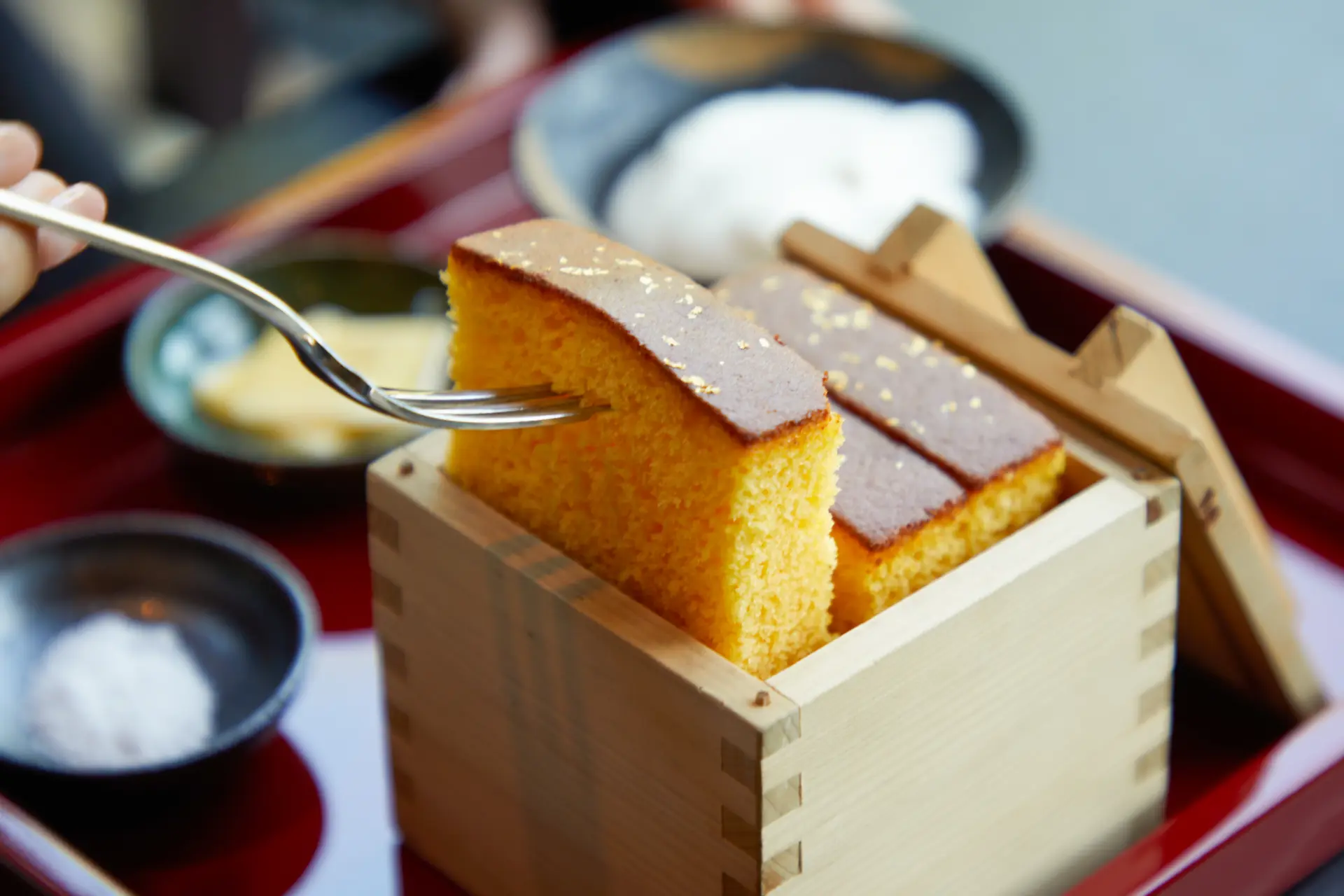
This Sakai confectionery offers a variety of sweets crafted using both Japanese and Western techniques. Its signature product, Ougon no Tetsugaku, created by confectioner Tadanori Kumashiro, is a castella cake known for its naturally golden color, achieved using only eggs, and its moist, fluffy texture.
At the adjoining Rikyu tearoom, visitors can relax while enjoying views of the Japanese garden and tea house. Take a break with freshly baked castella served in a masu box, a special treat available only at the tearoom.
- Name in Japanese
- 江久庵
- Postal Code
- 590-0021
- Address
-
1-2-36 Kitamikunigaokacho, Sakai-ku, Sakai City, Osaka
Google Maps - Telephone
- 072-222-2411
- Closed
- Thursdays (open on holidays and the first day of the month)
- Business Hours
- 9:00am - 6:30pm (Café L.O.6:00pm, Snacks L.O.5:30pm)
- Budget
- 1,000yen-
- Access
- About 5 minutes walk from Northeast Exit of Nankai Electric Railway Line’s Sakaihigashi Station.
- Credit Cards
- Accepted
- Official Website
- Official Website (Japanese)
Notable Events in Sakai
Sakai’s events offer lively ways to experience the city’s history and culture. The autumn Sakai Festival features matchlock rifle squads and futon-daiko floats, while the summer Sakai Grand Fish Night Market features a lively fish auction.
Check the dates, venues, and event details in advance, and plan to enjoy these events alongside your sightseeing around the city.
1. Sakai Festival
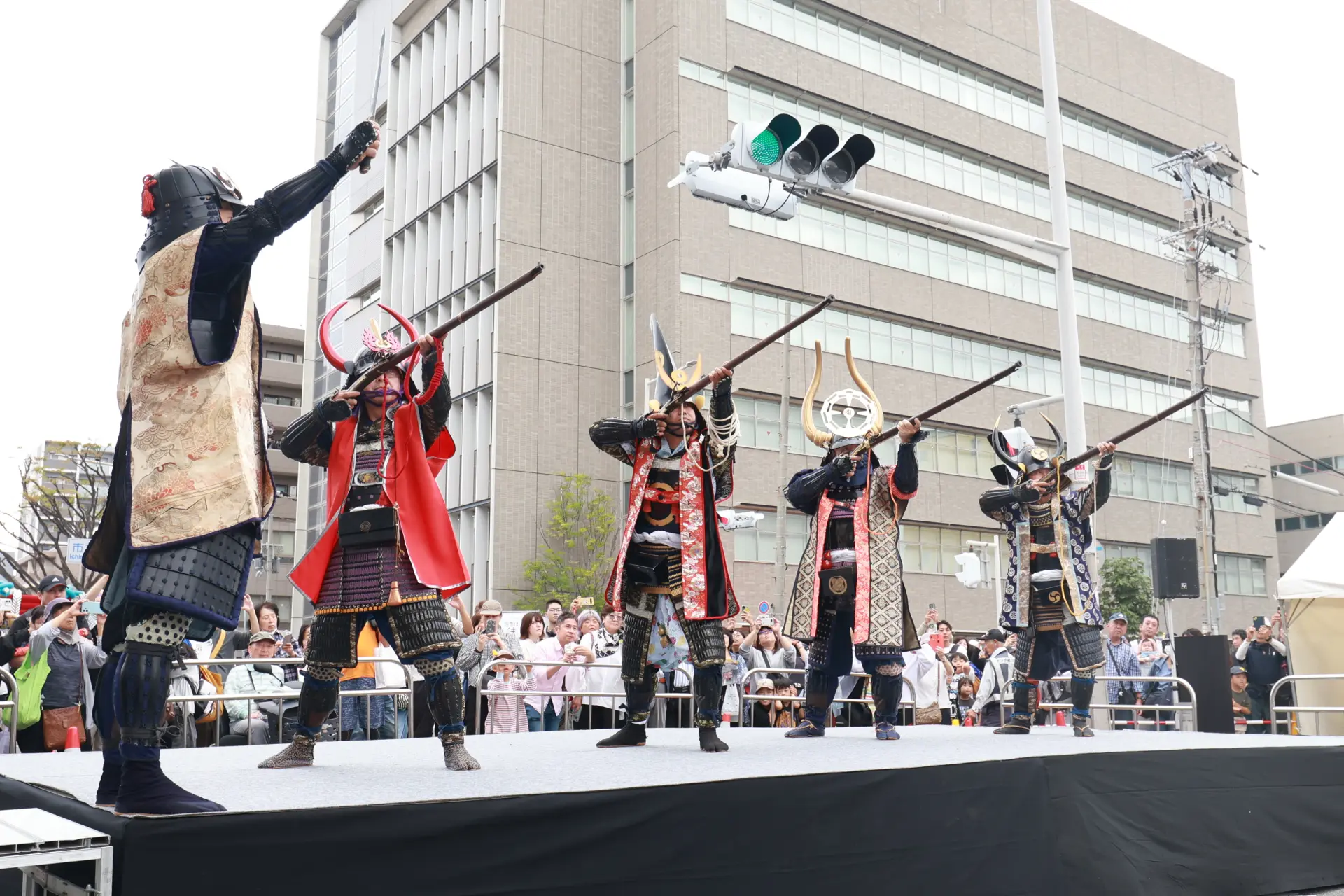
Held every October primarily along Oshoji Avenue, this is Sakai City’s largest festival. The avenue becomes a pedestrian zone filled with a wide variety of events, including dynamic futon-daiko float performances, stage shows, and food and shopping booths.
One of the highlights is a demonstration by matchlock rifle squads, featuring the firing of traditional matchlock guns. With powerful sounds and martial displays, the performance brings to life Sakai’s history as one of Japan’s leading centers of firearm production. The Grand Rikyu Tea Ceremony in Sakai, Rikyu’s Hometown, also offers visitors a chance to experience the city’s tea ceremony culture, as locations throughout Sakai are transformed into festival venues.
- Name in Japanese
- 堺まつり
- Postal Code
- 590-0958
- Venue
- 2-1-1 Shukuincho Nishi, Sakai Ward, Sakai City, Osaka Prefecture (around Oshoji Street)
- Phone
- 072-233-5258 (Sakai Tourism & Convention Bureau)
- Date
- The third Saturday and Sunday of October
- Access
-
1) Approx. 10-minute walk from Sakai Station on the Nankai Main Line or Sakaihigashi Station on the Nankai Koya Line
2) A short walk from Oshoji Stop on the Hankai Tramway Hankai Line - Official website
- Official website (Japanese)
2. Sakai Big Fish Night Market
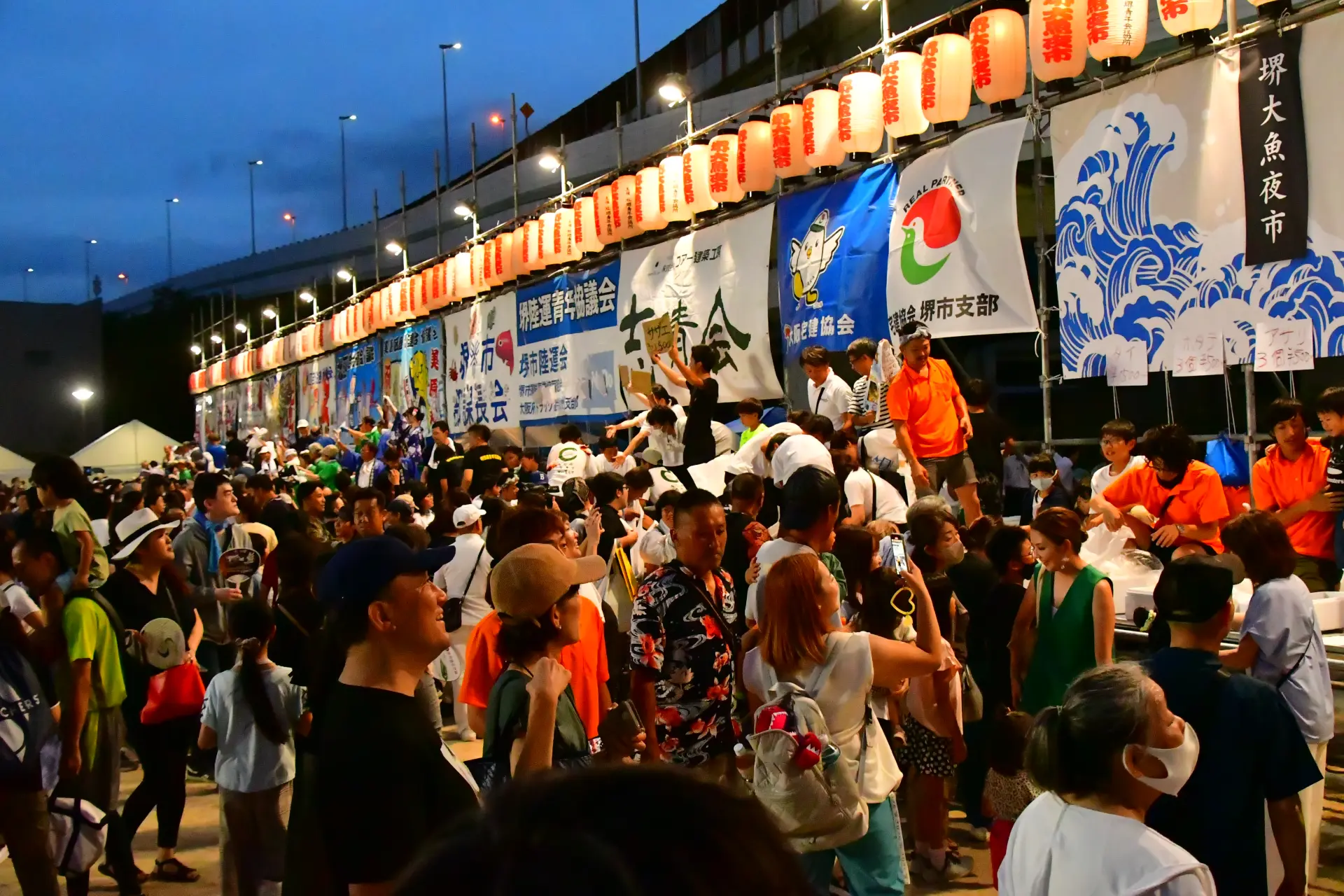
Held at Ohama Park, this beloved summer tradition in Sakai has a history spanning about 700 years. Anyone can participate in the evening fish auction, where the spirited calls of visitors bidding for fish mingle with those of the vendors.
The venue also hosts around 50 food trucks serving local specialties and other dishes. Stage events and fireworks over the water add to the festivities, with the fireworks illuminating the harbor as the festival draws to a close. As the program varies from year to year, be sure to check the latest official information in advance.
- Name in Japanese
- 堺大魚夜市
- Postal Code
- 590-0974
- Venue
- 4-3-50 Ohama Kitamachi (Ohama Park), Sakai-ku, Sakai City, Osaka
- Phone
- 072-233-5258 (Sakai Big Fish Night Market Executive Committee Office)
- Date
- Held every year around late July
- Access
-
1) Approx. 8 minutes on foot from Sakai Station on the Nankai Main Line
2) Approx. 3 minutes by car from Ohama IC on the Hanshin Expressway Route 4 Bayshore Line - Official website
- Official website (Japanese)
A Sample Itinerary for Exploring Sakai’s History
For a day trip to Sakai from central Osaka, a convenient route starts in the Mozu area and continues toward the Old Port.
See the kofun from both ground level and above, then learn about their history at the museum. Afterward, discover the history of Sakai’s old town through places associated with Sen no Rikyu and Akiko Yosano, as well as the city’s traditional craftsmanship. Finally, take the Hankai Tramway back toward central Osaka, enjoying the changing cityscape from the window along the way.
- Travel from central Osaka to the Mozu area
- Mozu-Furuichi Kofun Group
- Daisen Park
- Osaka Sakai Balloon
- Sakai City Museum
- Lunch
- Take public transportation to the old city
- Sakai Risho no Mori
- Sakai Denshokan Museum
- Take the Hankai Tramway → Return trip
Osaka Sakai Balloon operations may be temporarily suspended or canceled due to weather. Before departure, check the day’s operating status on the official website. If service is canceled, adjust your itinerary by allowing more time to explore Daisen Park or the Sakai City Museum.
FAQ About Visiting Sakai
Q
Can I take a day trip to Sakai from central Osaka?
Yes. Sakai Station is about 10 minutes from Nankai Namba Station, making it easy to visit both the Mozu area and Sakai’s old city district on a day trip. If your trip focuses on the kofun, JR Mozu Station is convenient. For the Old Port or the Sakai Denshokan Museum, Nankai Sakai Station is a better choice. Choosing the most convenient station for your destination will make getting around easier.
Q
What transportation is convenient for sightseeing in Sakai?
The JR Hanwa Line is convenient for the Mozu area, while the Nankai lines provide easy access to Sakai Station and the old city district. Local buses and the Hankai Tramway are also useful for getting around the city. Since Sakai’s attractions are spread across several areas, it’s a good idea to decide the order of your visits before planning your routes.
Q
Can the Osaka Sakai Balloon be canceled even if I have a reservation?
Yes. Operations may be temporarily suspended or canceled due to strong winds, rain, snow, dense fog, or other weather conditions that make safe operation difficult. Even if you have a reservation, check the latest operating status on the official website or automated telephone service before heading out that day.
Summary
Walk around the Mausoleum of Emperor Nintoku, take in its immense scale from above, and learn about its history at the Sakai City Museum.
Discover Sakai’s tradition of craftsmanship, including cutlery making, and continue to the historic Old Sakai Lighthouse to see another side of the city shaped by its development as a port.
Finally, ride the Hankai Tramway and watch the cityscape pass by, where traces of Sakai’s history from ancient times to the present day can be seen side by side.