Okayama Korakuen Garden

Verified [Verified] denotes information that has been published with confirmation of its owing parties.

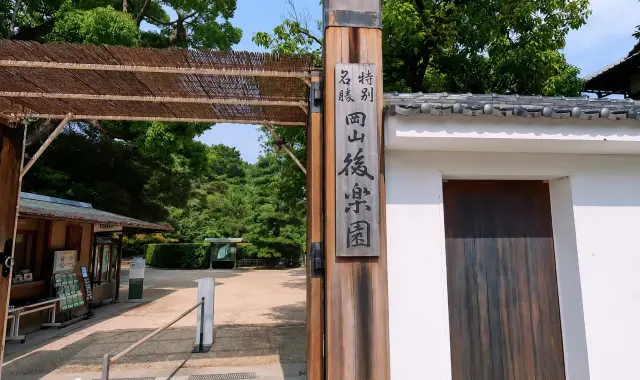
Okayama Korakuen Garden

One of the Three Great Gardens of Japan, preserving the appearance of the Edo period to this day.

3.39 9

Last update :
Supervised by :  Okayama Korakuen Garden

This daimyō garden was commissioned by Ikeda Tsunamasa, lord of the Okayama Domain, as a place of relaxation and was largely completed in 1700. During Tsunamasa’s time, the garden was designed to be viewed from rooms overlooking the grounds. Its landscape later evolved in response to changing social conditions and the preferences of successive lords, gradually becoming more suitable for strolling as streams, ponds, and other features were added.

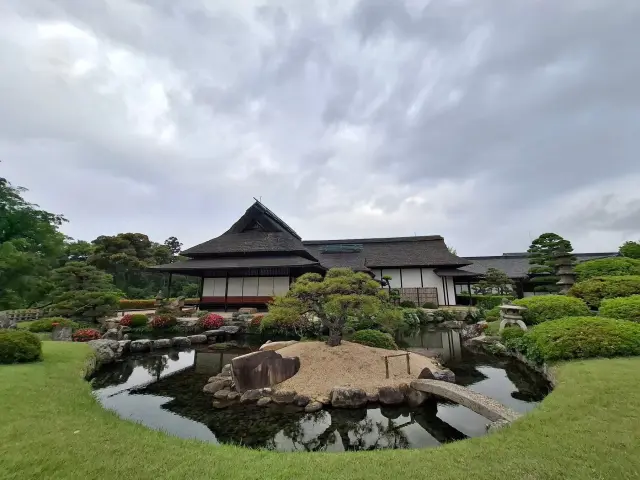
En’yō-tei House, which served as the feudal lord’s living quarters, is the garden’s most important building and was designed to offer a panoramic view of the grounds. Ryūten Rest House was used by the lord during strolls through the garden, as well as for entertaining guests and taking breaks. Its unusual design features a stream running through the center of the building. Red-crowned cranes are kept in the Crane Aviary, and from September through February, visitors can see them strolling through the garden up close about twice a month. Seasonal flowers, including Japanese irises, lotuses, plum blossoms, and azaleas, are another highlight.

Tsunamasa was fond of Noh theater and performed on the Noh stage himself. On designated days, including periods when he was away on the alternate attendance system, the garden was reportedly opened not only to his retainers but also to local residents.

In 1871, the garden’s name was changed from Go-Kōen to Kōrakuen. In 1884, the Ikeda family transferred it to Okayama Prefecture to ensure its preservation as a renowned garden. It suffered extensive damage from the Muroto Typhoon and wartime destruction and was later restored based on maps from the Edo period, although some features differ slightly from their pre-disaster appearance.

Highlights

  • One of the Three Great Gardens of Japan, along with Kairakuen Garden in Mito and Kenrokuen Garden in Kanazawa.
  • Its streams, ponds, buildings, plum grove, Japanese irises, and other features offer seasonal scenery throughout the year.
  • A daimyō garden commissioned by Ikeda Tsunamasa, lord of the Okayama Domain.

Photos

  • Korakuen in spring (Photo courtesy of Okayama Korakuen Garden)

    Korakuen in spring (Photo courtesy of Okayama Korakuen Garden)

  • En’yō-tei House and Satsuki azaleas (Photo courtesy of Okayama Korakuen Garden)

    En’yō-tei House and Satsuki azaleas (Photo courtesy of Okayama Korakuen Garden)

  • Red-crowned cranes strolling through the garden (Photo courtesy of Okayama Korakuen Garden)

    Red-crowned cranes strolling through the garden (Photo courtesy of Okayama Korakuen Garden)

  • Autumn Fantasy Garden (Photo courtesy of Okayama Korakuen Garden)

    Autumn Fantasy Garden (Photo courtesy of Okayama Korakuen Garden)

  • View from Yuishinzan Hill (Photo courtesy of Okayama Korakuen Garden)

    View from Yuishinzan Hill (Photo courtesy of Okayama Korakuen Garden)

Reviews

9

Some reviews are AI-translated.

  • See More

    When I walked into Okayama Korakuen in the morning, the sky was a little overcast and there wasn't much sunlight, but that actually made the whole garden feel very peaceful.

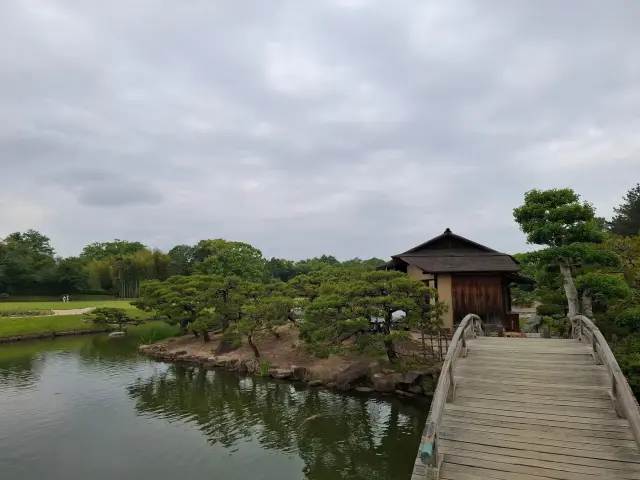
    I slowly followed the paths, surrounded by wide stretches of greenery, with occasional views of ponds and traditional Japanese buildings. It was very pleasant to walk around. My favorite part was the pond in front of Renchiken. The thatched-roof building was reflected in the water, with pine trees and a stone bridge nearby. It really had the feel of a Japanese garden.

    Later, I stood by the pond with the breeze blowing and listened to the birds nearby. I didn't have any particular itinerary planned; I just walked slowly and took my time looking around, which actually felt very relaxing. Korakuen has also preserved many features from the Edo period, and once you actually walk through it, it feels different from a typical tourist attraction.

    Although the weather wasn't very good that day, I actually thought Korakuen had a special charm under the cloudy sky. Taking a quiet walk around the garden was quite pleasant.

  • See More

    If you come to Okayama, I really recommend visiting **Okayama Korakuen and Okayama Castle** together!
    Okayama Korakuen is one of Japan's three great gardens. Built in 1700, stepping into the garden immediately feels like you've suddenly gone back 300 years.

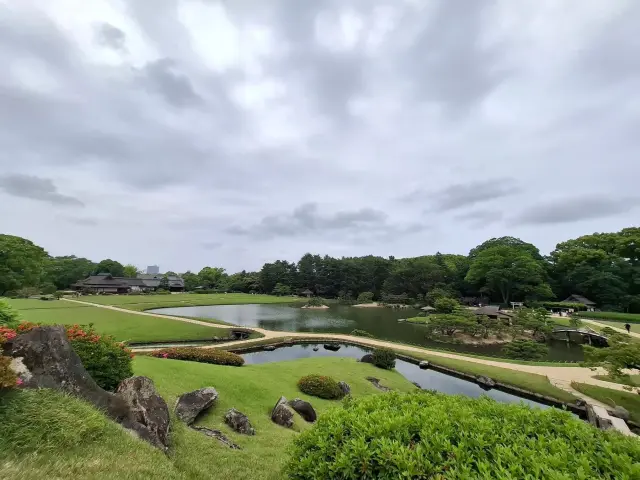
    The entire garden has a strolling layout, with lawns, ponds, small bridges, and teahouses connected along the way. As you walk around, every angle looks like a classical Japanese painting. My favorite part was climbing Yuishinzan Hill for a view over the entire garden, with Okayama Castle visible in the distance. The scenery is really relaxing!

    Sawa-no-ike Pond has artificial islands, and water actually flows through the middle of one of the buildings. It's easy to imagine the feudal lord cooling off and composing poetry here in the past—the scene really comes to life.

    Each season has its own charm: cherry blossoms in spring, lotus flowers in summer, fall foliage in autumn, and plum blossoms in winter. Chishio-no-Mori Grove is especially unbelievably beautiful in the fall.

    If I could visit only one attraction in Okayama, I'd choose this one. If you have enough time, visiting Korakuen and Okayama Castle together is ideal!

  • See More

    Okayama Korakuen is one of Japan's three great gardens, with beautiful scenery and a different charm in every season. Strolling among the lush lawns, ponds, and traditional gardens gives you a sense of peace and relaxation. The carefully designed landscape complements Okayama Castle in the distance, creating a beautiful view.

  • See More

    Korakuen has these wide, open lawns, so if you stand on a higher spot, you can see the whole garden at a glance. Plus, Okayama Castle is nearby, so you can visit both together.

  • See More

    The garden is huge, with lots of lawns and ponds. It's really comfortable to walk around, and the grass is well maintained. You can even sit down for a picnic—super relaxing.

Details

Name in Japanese
岡山後楽園
Postal Code
703-8257
Address
1-5 Korakuen, Kita Ward, Okayama City, Okayama Prefecture
Phone
086-272-1148
Hours
March 20-September 30: 7:30 a.m.-6:00 p.m. (last admission at 5:45 p.m.)
October 1-March 19: 8:00 a.m.-5:00 p.m. (last admission at 4:45 p.m.)
Hours may change when events are held. Please check the official website.
Closed on
Open year-round
Admission
Adults ages 15-64: ¥500; seniors ages 65 and over: ¥200
Admission is free for visitors with a disability certificate or similar documentation.
Please check the official website for details.
Access
1) 10-15 minutes by city bus from JR Okayama Station
2) Take a streetcar from JR Okayama Station to Shiroshita, then walk 10 minutes
Credit Cards
Accepted
Official website
Official website (Japanese)
Hokkaido Tohoku Kanto Chubu Hokuriku Kansai Chugoku Shikoku Kyushu Okinawa