You really have to visit Mount Aso in person to understand its sheer power.
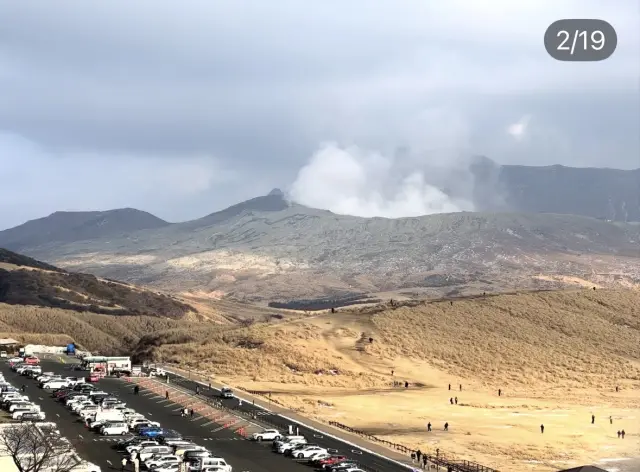
As the car climbed higher along the winding Aso Panorama Line, the view outside the window gradually left behind the small details of the city and opened into an endless, wide stretch of wilderness. These are nature’s most primal lines—majestic and vast. I couldn’t help but roll down the window and let the sulfur-scented breeze brush my face, feeling the surging life force of an active volcano.
Looking at the Nakadake crater from a distance, thick white smoke continuously rose from the deep, massive pit into the blue sky. The shock of standing so close to the heartbeat of the earth was visually overwhelming. After that, I headed back to Kusasenri. Beside the huge crater, waves of green grass reflected against clear pools of rainwater, with the occasional cow or horse grazing quietly. Against the enormous volcanic backdrop, they looked tiny yet perfectly in harmony. What makes this journey so captivating is not only the grandeur of the crater, but also the wide-open feeling of taking in the earth and sky all along the way.
The Aso Nakadake Caldera | Review by Gina C
Other Reviews by Gina C
-
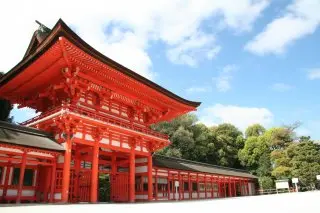
Shimogamo Shrine (Kamomioya-jinja)
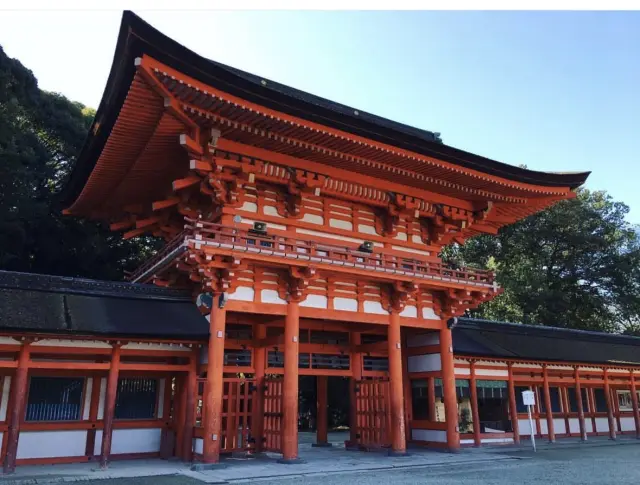
The official name of the Shrine is Kamomioya-jinja. Due to its location downstream of the Kamo River that runs through Kyoto City, it is familiarized by the name “Shimogamo-san” and “Shimogamo Shrine.” The main shrine, consisting of two buildings in the east and west, is designated as a national treasure, and is one of the oldest shrines in Kyoto. It was also registered as a UNESCO World Heritage Site in 1994.
Shimogamo Shrine (Kamomioya-jinja) is the most calming and relaxing place in all of Kyoto.
Before entering the shrine, you first pass through the vast, lush green Tadasu no Mori forest. Walking along the gravel path surrounded by towering old trees, all you hear are your footsteps and birdsong. The traffic and bustle outside suddenly feel cut off. The air feels so clean, almost as if it has been washed. Just this walk alone is incredibly healing.
After passing through the forest, the vermilion Romon Gate opens up in front of you. Besides being one of Kyoto’s oldest shrines, one of the most special spots here is Kawai Shrine, where people pray for beauty. You can use makeup to draw your own beautiful face on a wooden hand-mirror ema plaque. There is also the water fortune experience at Mitarashi Pond. Watching the words slowly appear on a blank fortune slip feels truly ceremonial.
Shimogamo Shrine doesn’t have the noise and crowds of the top tourist spots. Instead, it has a graceful, spiritual atmosphere embraced by nature. -
-
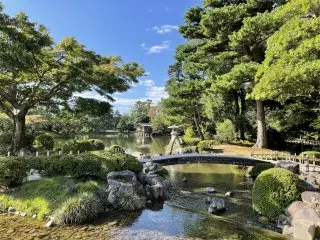
Kenroku-en
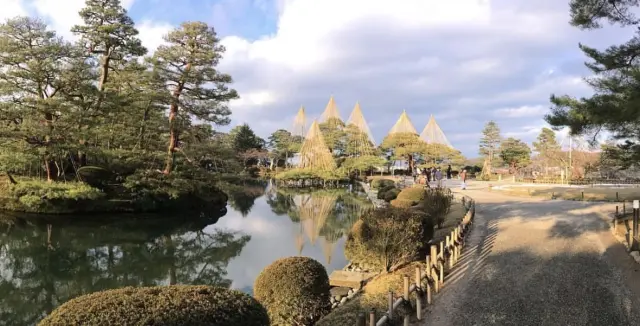
Kenroku-en was founded and developed for about 180 years by the Maeda clan lord in Kaga, which is a strolling-style landscape garden and one of the three most beautiful gardens in Japan.
Kenroku-en in winter is as beautiful as an ink-wash landscape painting.
The most striking sight is the huge yukitsuri on the old pine trees throughout the garden. To keep heavy snow from breaking the branches, craftspeople stretch ropes out from the top to support each branch, making them look like geometric pyramid-shaped tents from a distance. When snow settles on the green pine needles and ropes, the elegant garden instantly takes on a vast, dramatic sense of line.
Walking through the light snow beside Kasumigaike Pond, it was so quiet that all I could hear were my own footsteps. Seeing the Kotoji lantern, the thinly frozen surface of the pond, and the old pines still standing tall in the snow, I could truly feel Japan’s incredible attention to detail. This isn’t a loud, colorful kind of scenery. It’s crisp and serene, with a beauty that hits you straight in the heart. -
-
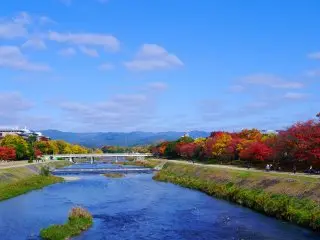
Kamogawa (Kyoto)
Kamogawa has its head in Mt. Sajikigatake, runs through Kyoto north to south, and merges into Katsura River in Toba. Near Shijo, there is downtown such as Gion on the east side and Kawaramachi on the west, the main commercial area representing Kyoto.
If you come to Kyoto’s Kamogawa River, you have to try the super popular “turtle hopping” experience!
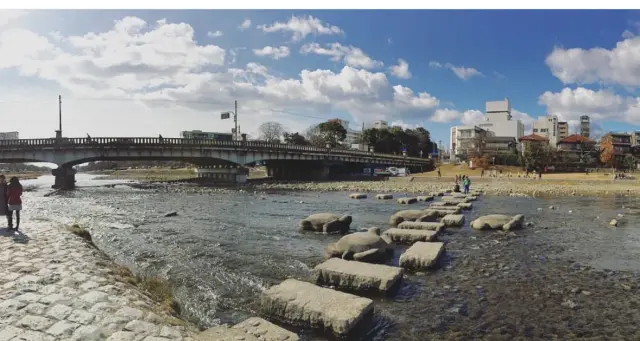
Near the Kamogawa Delta, just a few minutes from Demachiyanagi Station, the stream is crystal clear. Huge stones are lined up neatly across the river. Besides the regular square stepping stones, the cutest ones are carved in the shapes of turtles and plovers.
Spreading your arms out and hopping step by step across the big turtle stones, with the cool river breeze in your face and the sound of flowing water below, is seriously so much fun and a great way to cool off. Lots of locals sit along the riverbank to relax, picnic, and watch people hop across the river. Whether you’re an adult or a kid, the moment you step onto these adorable turtle stones, your mood instantly gets better. It’s one of the most relaxing and local-feeling little experiences you can have in Kyoto! -