Although Omihachiman isn't very far from the station, we rented bicycles near the JR station to save our legs. Luckily, we did, because the sights in Omihachiman were farther apart than expected, and some stretches were sloped. Even if you take a bus to the sights, the actual area to explore is still fairly large, so walking can be a little tiring. Having bicycles was really much more convenient.
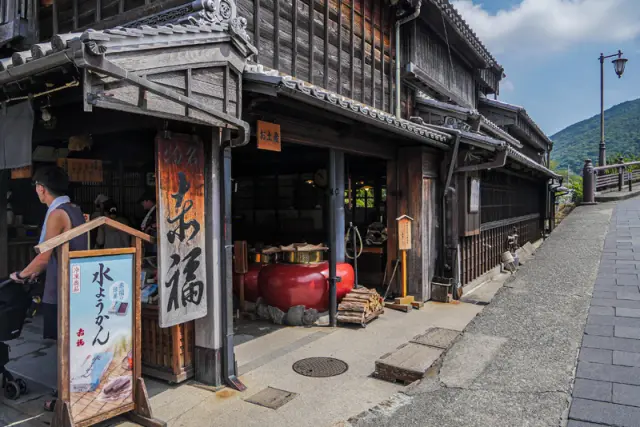
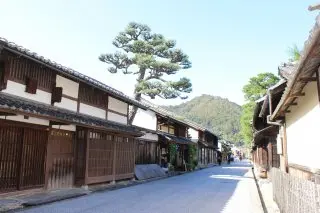
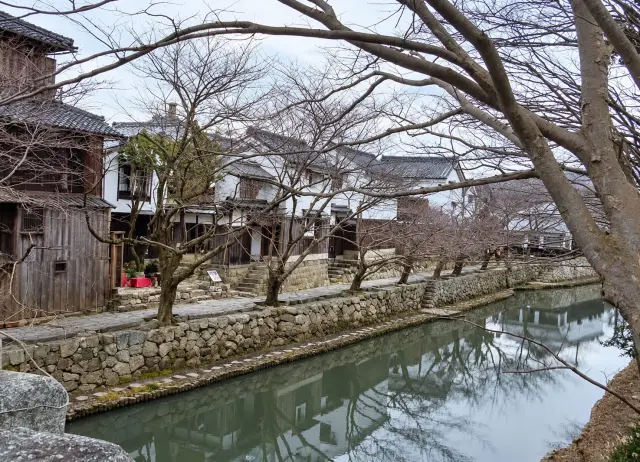
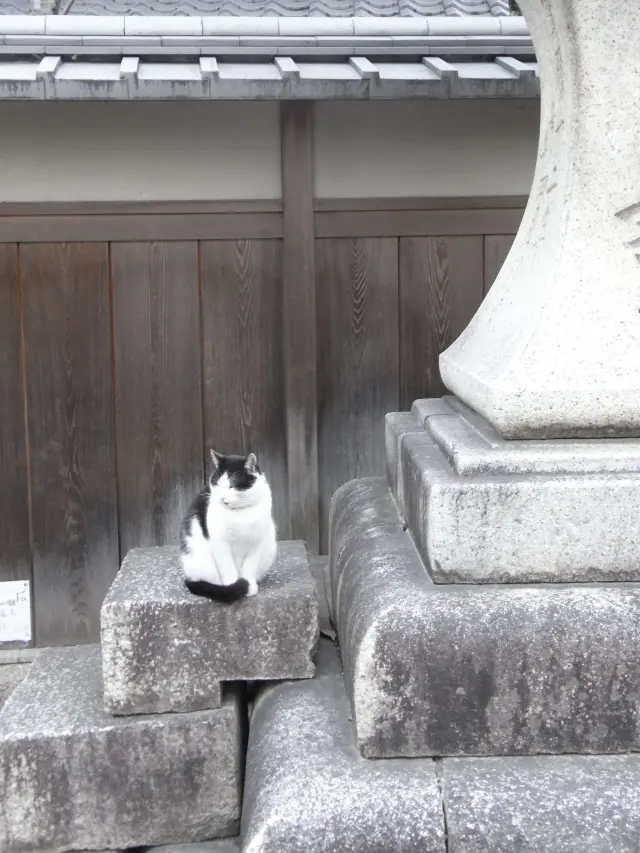
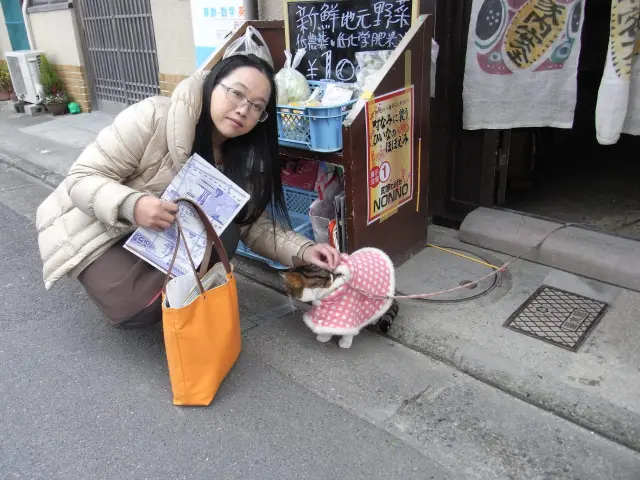
The white walls, lattice windows, traditional machiya houses, and scenery around Hachiman-bori really give Omihachiman the feel of an Edo-period castle town. Almost any angle makes for an atmospheric photo. Although it looks a little like Kurashiki, the two are still different. There aren't as many businesses here as in Kurashiki, but the smaller crowds give it a character of its own. Since we visited in winter, the trees on both sides of the canal were bare. It wasn't as pretty as in other seasons, but the desolate feeling had its own charm. We also ran into lots of cats along the way. They weren't afraid of people and let us take pictures, which made me very happy.
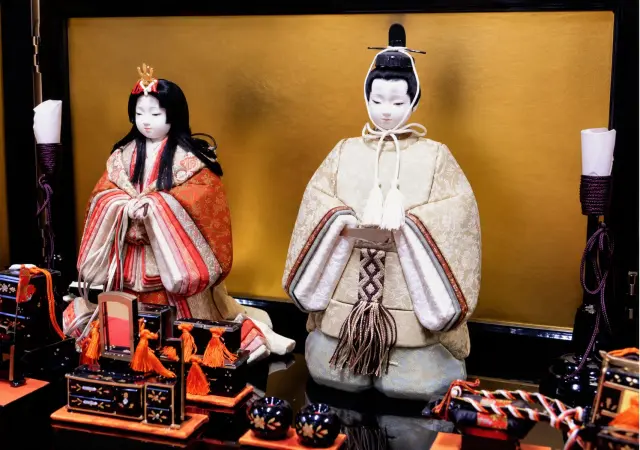
Another main reason we included Omihachiman in this trip was the “Omihachiman Sekku Doll Tour,” because I wanted to see the Hina dolls displayed by local businesses. After actually visiting, I realized that it was more like individual families displaying their treasured Hina dolls in their own stores or homes and opening the spaces to visitors, rather than the kind of large exhibition I had imagined. Since we would have to enter the stores and would feel awkward leaving without buying anything, we didn't go out of our way to see them. However, the restaurant where we ate also had Hina dolls on display, and we found a style we liked, so it still felt worthwhile.
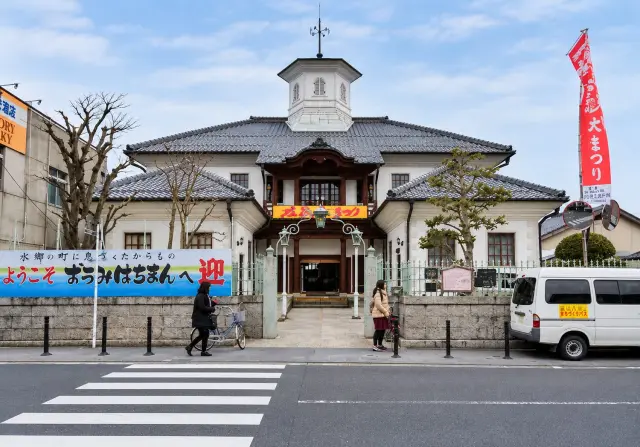
We also stopped by Hakuunkan along the way. This building was originally built in 1877 as Hachiman Higashi School. It combines Western architectural styles with traditional Japanese techniques and is a representative example of pseudo-Western architecture. It is now used as a tourist information center and is a convenient place to rest, ask for information, and buy souvenirs while exploring Hachiman-bori and the old town. We bought a postcard made from rush grass here, printed with a very Japanese-style design. I had already planned to buy a postcard to mail to myself, and when I saw this unusual design, I decided this was the one.
Another thing I was really looking forward to in Omihachiman was CLUB HARIE's baumkuchen. However, the Himure House doesn't directly face the main road, and at first we wandered around for quite a while without finding it. Finally, my friend couldn't take it anymore and rushed straight to Hakuunkan to ask the staff. That's when we learned it was actually nearby. After entering from the road near Hakuunkan, we found it by looking to the left.
In the end, we bought baumkuchen and pudding. The pudding looked delicious at the time, so I picked it up on impulse, but after eating it, I actually regretted it a little. If I'd known, I would have spent the entire budget on baumkuchen. The baumkuchen itself wasn't too sweet, the kind of flavor Taiwanese people would like.