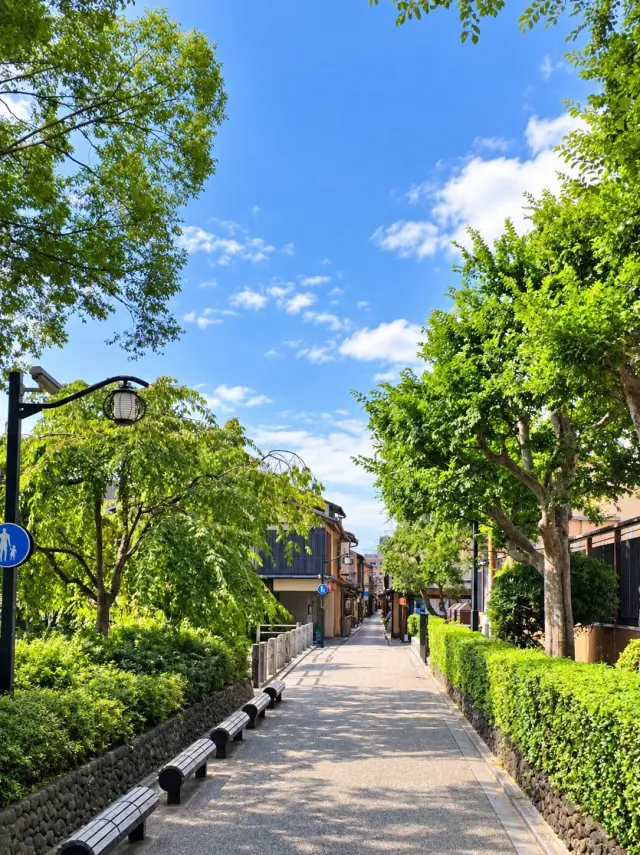
When visiting Kyoto, Pontocho is a street well worth taking your time to explore. It has been a bustling downtown district in Kyoto since the Edo period, and the street still retains a strong sense of old Kyoto. This time, I visited during the day. Without the lively nighttime crowds and noise, the street felt especially quiet and peaceful. Traditional machiya townhouses and narrow alleys line both sides, giving it a uniquely Kyoto charm. Strolling leisurely through the area and experiencing the atmosphere of daily life in the ancient capital has a charm of its own. It's also a great place to take beautiful photos.
Pontocho | Review by wendy
Other Reviews by wendy
-
Moegi House
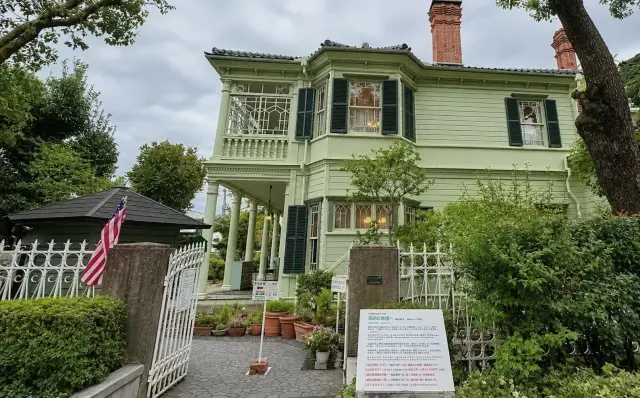
This Western-style residence was built in 1903 as the home of Hunter Sharp, who served as the American consul general. True to its name, the house stands out with its vivid light-green exterior that immediately catches the eye. The two-story wooden structure features weatherboard siding, and its light, colonial-style design has a storybook-like charm. Asymmetrical bay windows project from either side, with a brick chimney rising at the center.
On this trip to Kobe, besides Himeji Castle, another thing I was really looking forward to was walking around the Kitano Ijinkan district! Our first stop was Moegi House, with its very eye-catching exterior.
Before even going inside, I was drawn to this Western-style house in a pale mint green! Paired with dark green window frames, white decorative railings, and a red-brick chimney, the whole building has a very distinctive look and a strong vintage, foreign atmosphere. It was beautiful just taking pictures outside.
Moegi House was formerly the residence of the American consul. Its location makes it one of the more convenient houses to visit in the Kitano Ijinkan district, and admission is also relatively inexpensive. Once I went inside, I found that the displays here were somewhat different from those at the other houses. Instead of deliberately creating themed exhibits about different countries' cultures, it recreates the living spaces of the time as faithfully as possible.
As I toured the rooms and looked at the old furniture, windows, and interior decor, I couldn't help imagining what kind of daily life the people who lived here once had. Although the exhibits aren't as extensive as those at some of the other houses, this sense of being close to real life instead inspired an even greater feeling of nostalgia.
Overall, this stop is easy to explore, and you don't need to set aside too much time for it. For me, visiting Kobe's ijinkan isn't just about seeing beautiful architecture. It's also a way to experience Kobe's past history and culture through these preserved old houses.
-
-

Nankin-machi (Nanjing town)
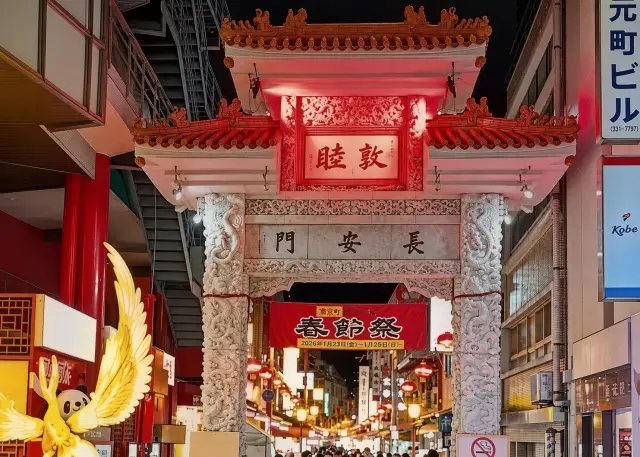
"Nankin-machi" (Japanese name for Nanjing town) in Kobe is one of the three best Chinatowns in Japan, along with Yokohama Chinatown and Nagasaki Shinchi Chinatown. There are more than 100 Chinese restaurants, Japanese and Western restaurants, grocery stores, general stores, and many other stores lining the streets.
On this trip to Kobe, I made a special point of visiting Nankin-machi to walk around and explore! As soon as I arrived, I was drawn in by the Chinese-style streetscape, with red lanterns, traditional gates, and lively streets. The whole atmosphere was really distinctive and gave me the familiar feeling of being in Yokohama Chinatown.
Nankin-machi is Kobe's famous Chinatown and one of the largest Chinatowns in western Japan. It connects to the Motomachi Shopping Street, and the area is lined with all kinds of Chinese restaurants, food stalls, and specialty foods. Just looking at the wide variety of food made me want to keep eating my way through the neighborhood!
Nankin-machi is mainly surrounded by three gates: Chang'an Gate, Nanlou Gate, and Xi'an Gate. Each has its own distinctive features, and they are all must-photograph landmarks here.
It's also very convenient to get to. Take the train to Motomachi Station, and it's just a short walk from there. You can also walk from Sannomiya Station, though it's a bit farther away.
This is a great place for a food-focused stroll. Take some photos, browse the shops, and try a few snacks that catch your eye while experiencing Kobe's lively, international atmosphere!
-
-

Meriken Park
Meriken Park, a park that faces the port of Kobe, was made in 1887. It is a place where one can relax whilst feeling the fresh ocean breeze surrounded by a panorama of open spacious.
If you're visiting Kobe, I really recommend making time for a walk around Meriken Park! It has a wide, comfortable waterfront area. Walking along the harbor, feeling the pleasant sea breeze, and looking out over the expansive ocean view made me feel much more relaxed.
We specifically chose to visit around sunset, and it really didn't disappoint! The setting sun slowly turned the sky red, and the orange-pink glow reflected on the water. Combined with the scenery of Kobe Harbor, it was beautiful from every angle. Even casual snapshots turned into romantic landscape photos.
During the day, the blue sky and ocean feel fresh and refreshing, while the evening brings a softer, more romantic atmosphere. Especially as the sun was setting, I couldn't help but stay a little longer. Kobe's beauty isn't limited to its lively streets; it also has this relaxing and charming harbor atmosphere.
-