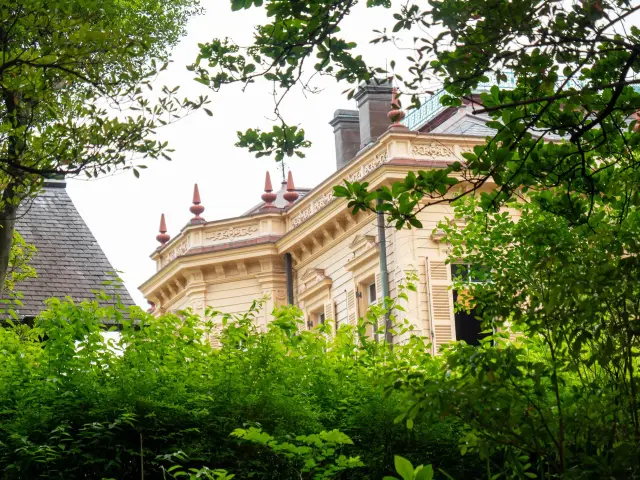
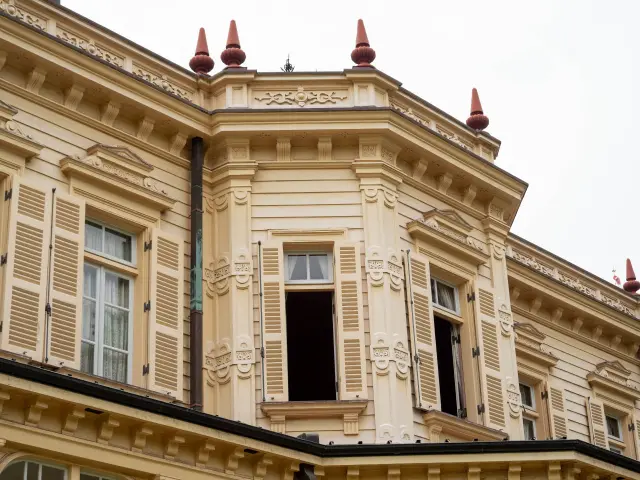
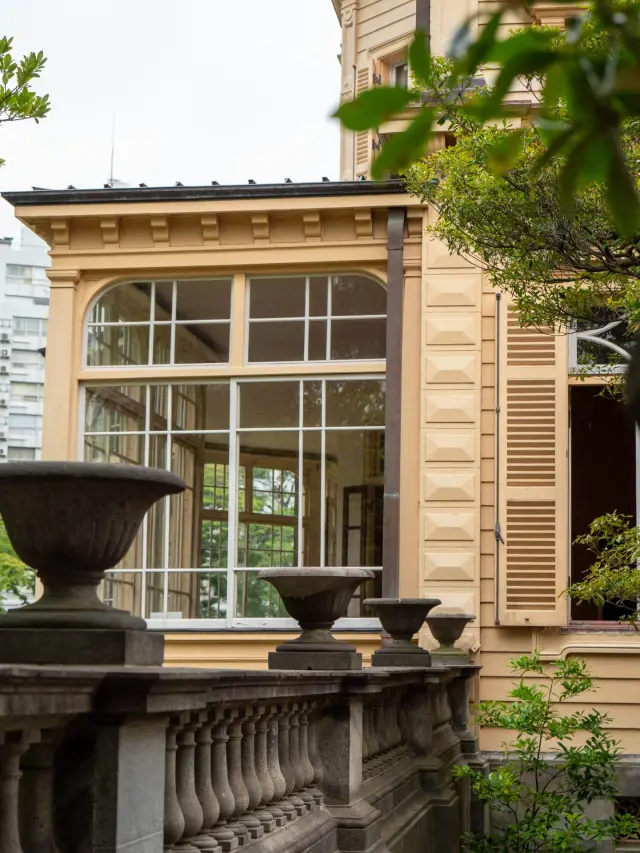
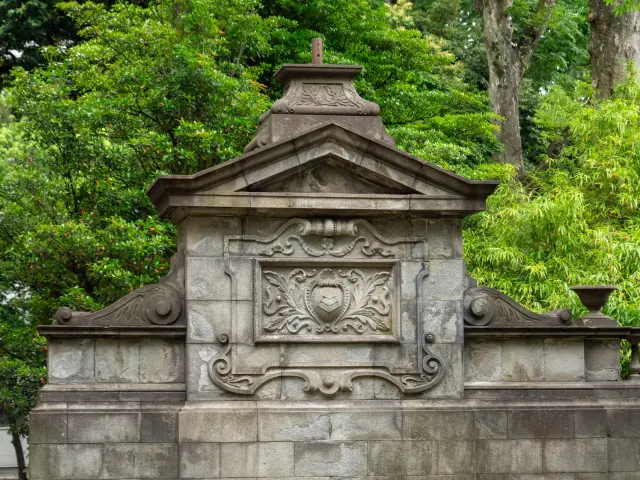
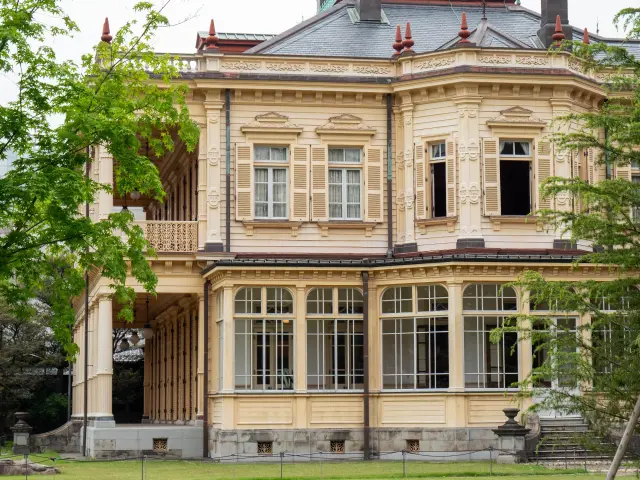
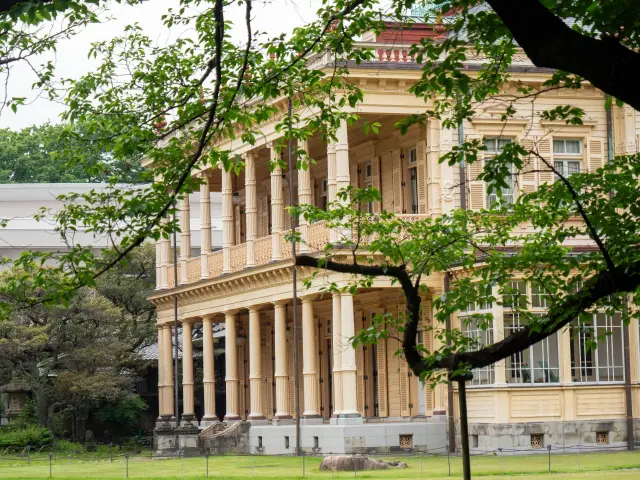
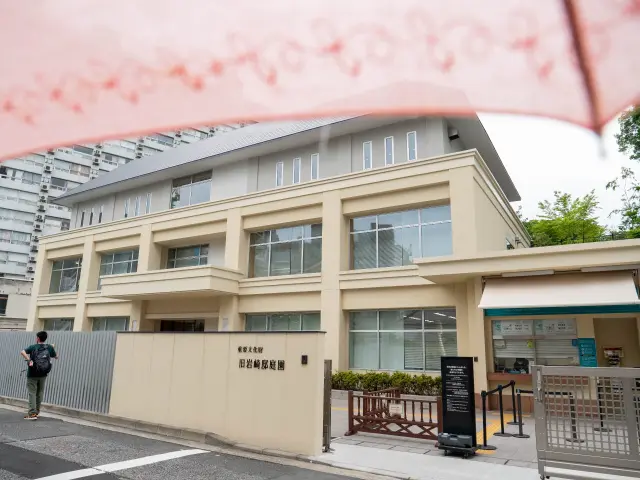
The Former Iwasaki House Garden is a place that I think is well worth taking the time to explore. It was originally the main residence of Hisaya Iwasaki, the third president of Mitsubishi, and was completed in 1896 (Meiji 29). The most interesting thing about the estate is that you can see both an extremely ornate Western-style building and a traditional Japanese-style residence in the same space. This combination of Japanese and Western styles is also a representative feature of upper-class residences from the Meiji era.
The Western-style building is based on the Jacobean style of 17th-century England, with Renaissance, Islamic, and other design elements incorporated into it. Everything from the exterior to the interior details is quite impressive. What particularly stood out to me was the “kinkarakawa-shi” wallpaper inside, which uses washi paper, metal foil, and embossing techniques to create the look of leather wallpaper. It was a very valuable form of interior decoration at the time. Different patterns of kinkarakawa-shi wallpaper can still be seen on the second floor. Unfortunately, photography isn't allowed inside, which was a bit disappointing for me.
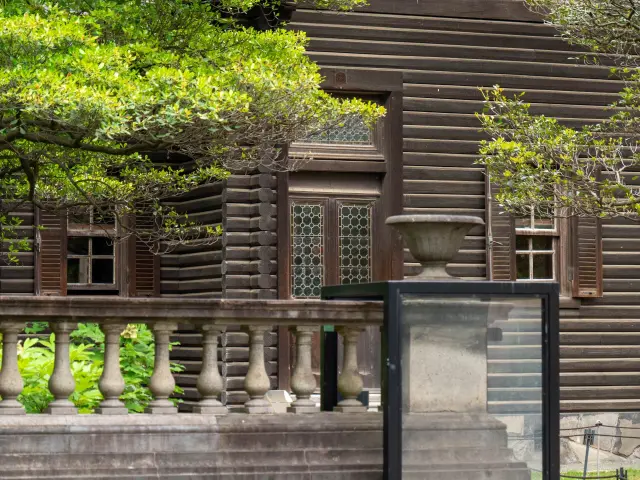
The Western-style building was mainly used for receiving guests and social gatherings, while the adjacent Japanese-style building served as the Iwasaki family's more everyday living space. Seeing two completely different architectural styles side by side really gives you a sense of how Japanese homes changed after Japan began widely adopting Western culture during the Meiji era. In addition to the Western-style building and the main hall of the Japanese-style building, the surviving structures include a very distinctive billiards room. It is a wooden building designed to resemble a Swiss mountain lodge and is connected to the Western-style building by an underground passage.
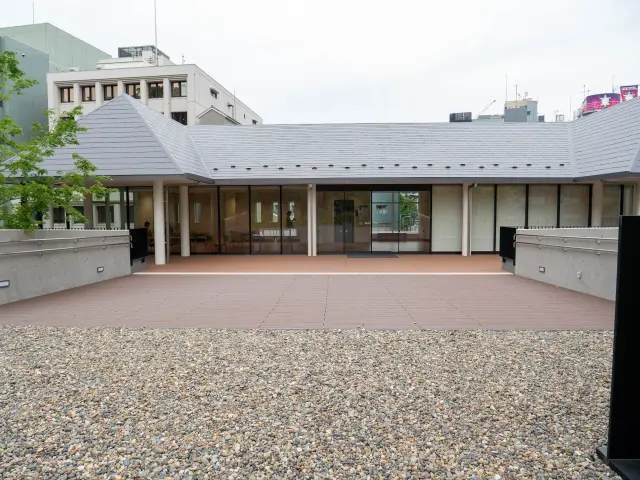
Another thing I really liked here was how distinctive the souvenirs related to kinkarakawa-shi wallpaper were. The bookmarks, card holders, and other items sold on-site aren't exactly cheap, but they may appeal to anyone interested in architecture, paper goods, or historically significant crafts like these. Snacks are also available, so you can take a break while enjoying something to eat.
However, don't underestimate the size of the garden. I felt that it took about five or six minutes just to walk from the ticket booth to the entrance of the residence, and part of the route is uphill. The entire grounds are also much larger than you might imagine from looking at the buildings alone. Although only about one-third of the original property remains today, some elements of a daimyo garden and a large lawn have been preserved.
So, if you want to thoroughly explore the Western-style building, Japanese-style building, and garden, I would recommend allowing at least two to three hours. I was honestly a little tired by the time I finished walking around, but fortunately there is a rest area near the exit. That was very thoughtful for people who have just walked all the way around the grounds.