

17 Famous Festivals in Japan for Special Seasonal Cultural Experiences
Have you ever wanted to experience the unique culture of a place while traveling?
Festivals held across Japan are filled with local history, tradition, and the energy of the people.
Each season, spring, summer, fall, and winter, brings its own distinctive festivals, and one of their biggest appeals is that you can do more than just watch, you can get swept up in the music and dancing and join in the fun.
In this article, we introduce a carefully selected list of Japan’s most famous festivals by season.
On your next trip, try timing your visit so you can join one for yourself.
Festivals Packed with Japanese History and Culture
Japanese festivals originated as religious rituals to give thanks to gods and ancestors, and to pray for nature’s blessings and peace in people’s daily lives.
Their original purpose was to “enshrine the gods,” and even the word “matsuri” comes from “matsuru,” meaning “to enshrine.”
Many festivals are based on Shinto and Buddhist teachings, or on folk beliefs rooted in the local area, and tracing their origins back reveals histories of several hundred years, or in some cases, over a thousand years.
The Uniquely Japanese Concepts of “Hare” and “Ke” You Should Know to Understand Festivals
“Hare” refers to the extraordinary, while “ke” refers to the ordinary. In Japanese life, festivals as special “hare” occasions have long helped reset the fatigue and bad luck that build up in everyday “ke,” restoring balance to both body and mind.
In other words, festivals were not just events, but also important practices that maintained the rhythm of life and encouraged renewal.
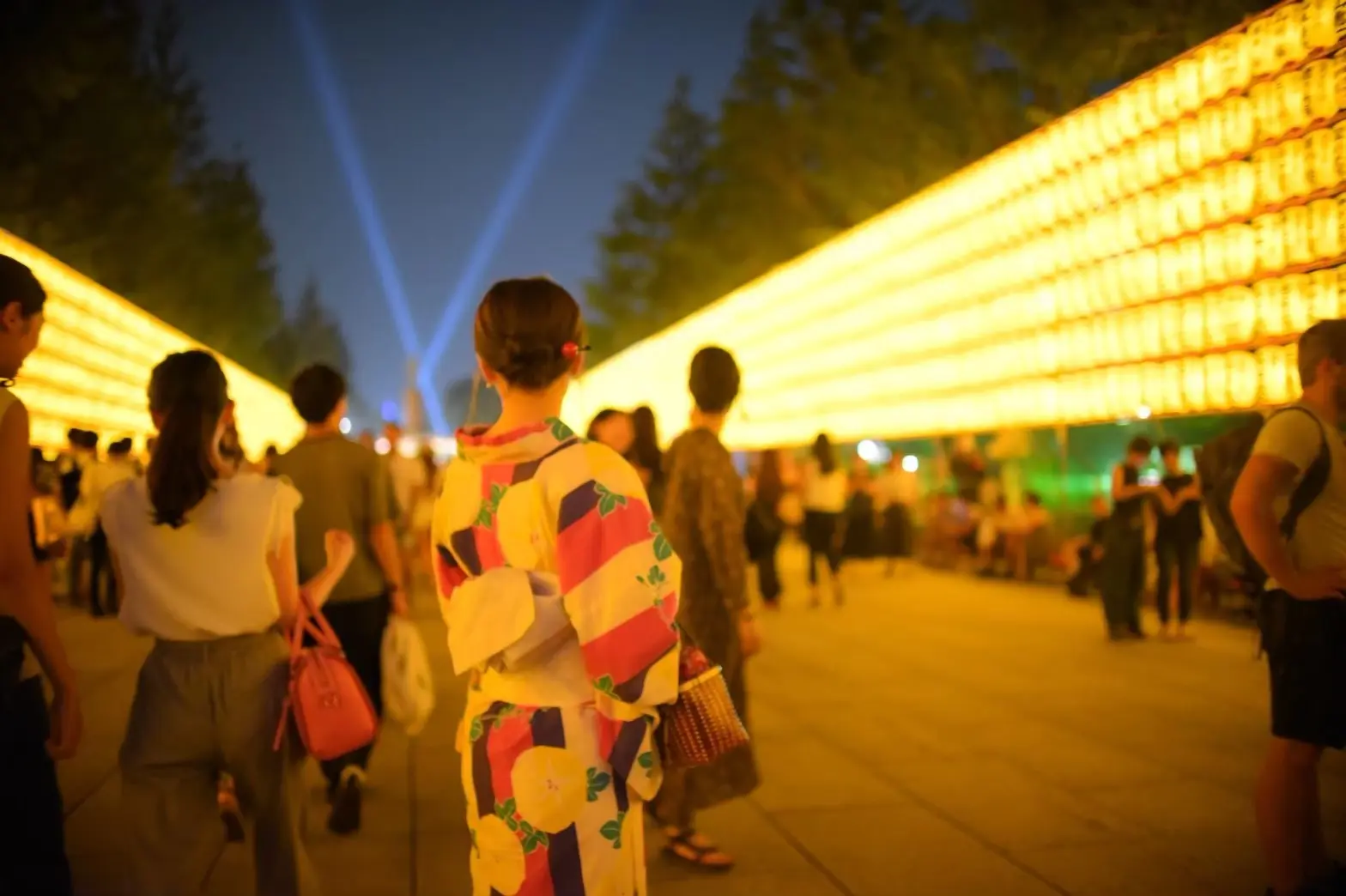
On festival days, people wear special clothing such as kimono, food stalls line the streets, and music and dancing bring energy to the entire town.
Even as a visitor, being surrounded by that atmosphere lets you experience a time and space that feel different from everyday life.
Diversity Is Another Part of Their Appeal
Japan also has too many festivals to count, held all across the country.
Some involve carrying portable shrines through the streets, while others create a dreamlike atmosphere with lights, snow, or dancing, and the form each festival takes differs completely depending on the region and season.
This diversity is one of the great charms of Japan’s festival culture.
Another great point is that even tourists can easily enjoy them, not just by watching, but by joining the dancing or tasting local food.
That chance to step outside the everyday makes travel memories even deeper and more memorable.

Things to Know Before Joining a Festival in Japan
While festivals in Japan are easy for tourists to enjoy, each region also has its own rules and etiquette.
Here are a few points worth knowing in advance so you can enjoy them more comfortably and build good relationships with local people.
Check the Dates, Location, and Access in Advance
Festival dates in Japan vary by season and region, and schedules may shift depending on the year.
Especially for famous festivals, accommodations and transportation can get crowded, so it is important to book early and plan with plenty of time.
It is reassuring to check the latest event dates, venue details, and access information on official websites run by local governments or tourism associations.

Put Some Thought Into What You Wear and Bring
Festivals often involve walking around outdoors for long periods, so comfortable clothing and well-worn shoes are recommended.
Also, for summer festivals, do not forget a hat and enough fluids to help prevent heatstroke. For winter festivals, warm clothing is essential, and for snow festivals, shoes with good grip are a safer choice.
Depending on the situation, it is also a good idea to bring a folding umbrella or a picnic sheet.

Be Mindful of Manners When Taking Photos or Participating
At scenes with religious meaning, such as shrine rituals or sacred dance offerings, the basic rule is to avoid flash photography and loud conversation.
Near portable shrines and floats, be careful not to touch them without permission or block the way.
Respect local people’s feelings and enjoy the festival while observing proper manners.

Bring Cash and Follow Public Etiquette
Many food stalls accept cash only, so it is helpful to prepare plenty of coins and 1,000-yen bills. It is also reassuring to check restroom locations in advance.
Also, when it is crowded, be mindful of Japan’s public manners, such as waiting in line and taking your trash home with you.

The Especially Famous “Three Great Festivals of Japan”
Among the many festivals held throughout Japan, three are especially famous and have long histories. These are known as the “Three Great Festivals of Japan.”
Although there is no strict definition, the term generally refers to Kyoto’s Gion Matsuri, Tokyo’s Kanda Matsuri, and Osaka’s Tenjin Matsuri. Each is a major festival representing its city.
From here, let’s look at the Three Great Festivals one by one.
[Kyoto] Gion Matsuri
This festival, which attracts many visitors from Japan and abroad, began in 869 when epidemics spread widely in the capital of Kyoto and across Japan. Prayers were offered to the deity of Yasaka for protection from misfortune, and the disasters were ritually purified. Today, it is still held as the festival of Yasaka Shrine, with various rituals and events taking place over one month from July 1.
The biggest highlight of Gion Matsuri, which begins with the Kippuiri ritual on July 1, is the procession of 34 yamahoko floats and the mikoshi procession of Yasaka Shrine, held during the Saki Matsuri on the 17th and the Ato Matsuri on the 24th.

[Tokyo] Kanda Matsuri
Because it was once an official festival of the Edo shogunate, it also has the nickname “Tenka Matsuri,” and it is said that Tokugawa Ieyasu prayed for certain victory before battle.
The biggest highlight of Kanda Matsuri is the Shinkosai procession, held on the Saturday closest to May 15 in the main festival year. A parade including mikoshi travels through 108 neighborhood associations in areas such as Kanda, Nihonbashi, Otemachi, Marunouchi, and Akihabara, purifying them along the way.

[Osaka] Tenjin Matsuri
A summer festival representing Osaka, the city of water. It is the festival of Osaka Tenmangu Shrine, which enshrines Sugawara no Michizane, the deity of learning.
Various rituals are held over Approx. one month from around late June.
Among them, the Yoimiya Festival on July 24 and the main festival rites on July 25 draw as many as 3 million visitors from Japan and abroad each year, making them the most exciting part of the celebration.

Beyond the “Three Great Festivals of Japan,” There Are Many Other “Three Great ___ Festivals”
Besides the Three Great Festivals of Japan introduced above, there are various other “Three Great ___ Festivals” by genre, such as the “Three Great Fighting Festivals” and the “Three Great Fire Festivals.”
Among them, the following three especially unusual festivals are known as the “Three Great Strange Festivals of Japan.”
- Namahage Sedo Festival (Akita Prefecture)
- Various events and rituals are held where you can experience the tradition and intensity of Namahage, in which young men wearing demon-like masks, straw capes, and carrying wooden knives go around visiting homes.
- Onbashira Festival (Nagano Prefecture)
- A ritual in which large trees are cut from deep in the mountains to rebuild the shrine buildings of Suwa Taisha, then carried by human hands alone to the shrine grounds and erected as pillars at the four corners of the buildings.
- Yoshida Fire Festival (Yamanashi)
- A festival in which, after the mikoshi of Kitaguchi Hongu Fuji Sengen Shrine and Suwa Shrine are brought to the otabisho, a resting place for mikoshi, large torches lined up over Approx. 2 km are lit.
If you are interested, be sure to look into what other kinds of “Three Great ___ Festivals” there are.

3 Famous Spring Festivals Held from March to May
Spring, when cherry blossoms bloom and new life is in the air, brings elegant and festive celebrations across Japan.
Here are some of the country’s most famous spring festivals.
1. [Tokyo] Sanja Matsuri
Sanja Matsuri is held in Asakusa, Tokyo every year over three days, from Friday to Sunday, starting on the third Saturday of May.
It is the grand festival of Asakusa Shrine, affectionately known as “Sanja-sama,” and is also known as one of Japan’s representative festivals, drawing Approx. 1.8 million visitors over the three days each year.
The celebration begins with a lively grand procession featuring performances by local Asakusa groups, geisha dancers performing tekomai, and kumi-odori, and on the final day, the three main mikoshi head out into the neighborhoods and return to the shrine after sunset.

2. [Gifu] Spring Takayama Festival
Takayama Festival has been carefully passed down for over 300 years in Takayama City, Gifu Prefecture. It is a collective name for two festivals: the Sanno Festival, the annual festival of Hie Shrine, known as the Spring Takayama Festival in April, and the Hachiman Festival, the annual festival of Sakurayama Hachimangu Shrine, known as the Fall Takayama Festival in October. It is also known as one of Japan’s Three Great Beautiful Festivals.
The biggest highlight of Takayama Festival is its gorgeous festival floats. There are 12 in spring and 11 in fall, and all are precious cultural properties designated as Important Tangible Folk Cultural Properties of Japan.

3. [Kyoto] Aoi Matsuri
Held every year on May 15 at Shimogamo Shrine, Kamo Mioya Shrine, and Kamigamo Shrine, Kamo Wakeikazuchi Shrine, in Kyoto, this annual festival is a seasonal symbol of early summer in Kyoto and is known as one of the “Three Great Festivals of Kyoto” alongside Gion Matsuri and Jidai Matsuri.
The highlight is the Roto no Gi procession, in which people dressed in Heian-period costumes parade for Approx. 8 km. The procession starts at Kyoto Imperial Palace, proceeds along Marutamachi Street and Kawaramachi Street to Shimogamo Shrine, and then continues along Kitaoji Street to Kamigamo Shrine.

5 Famous Summer Festivals Held from June to August
Lively summer festivals are what brighten Japan’s hot and humid summer.
They are known for their energetic atmosphere, filled with drumbeats echoing through the night sky, illuminated floats, and dazzling dances.
Among the many large and small festivals held across the country, here are some of the most popular and representative summer festivals.
1. [Aomori] Aomori Nebuta Festival
The Aomori Nebuta Festival is held in central Aomori City between August 2 and 7 every year and attracts as many as 1 million visitors every year. With records dating back to the late Edo period (around 1842), this historic festival is one of the Three Great Festivals of Tohoku and is designated as an Important Intangible Folk Cultural Property of Japan.
The Aomori Nebuta Festival features giant floats Nebuta. The largest dolls are 5 meters high, 9 meters wide, and 7 meters deep and are handmade by craftsmen called "Nebutashi(Nebuta masters)" just for the six days of the festival each year.

2. [Tokushima] Tokushima City Awa Odori
Held every year from August 12 to 15, Tokushima City Awa Odori is a summer festival with over 400 years of history and is one of Japan’s Three Great Bon dances.
Awa Odori is performed by groups called ren. The men’s dance is characterized by powerful, low stances, while the women’s dance is graceful, performed in yukata.
Across the city, you can enjoy it in many styles, from full-scale performances at paid venues, to casual viewing at free venues, to the Niwaka-ren groups that tourists can also join.

3. [Hiroshima] Toukasan Grand Festival
Held every year on the first Friday, Saturday, and Sunday of June in central Hiroshima City, the Toukasan Grand Festival is a festival of Inari Tokadai Myojin, enshrined as the guardian deity of Enryuji Temple, and has a history of over 400 years.
During the festival period, various traditional events are held, including the public opening of the sacred object, and Approx. 1,000 food stalls line the streets around Enryuji Temple, drawing crowds of people in yukata.
Because the city becomes lively with people in yukata in early summer, it is also called the “festival marking the first wearing of yukata,” and has become a seasonal symbol of summer in Hiroshima.

4. [Kochi] Yosakoi Festival
The Yosakoi Festival is held over four days each year, starting with the eve festival on August 9, followed by the main performances on the 11th and 12th, and the closing night festival on the 12th.
It is a major summer event with Approx. 190 teams and Approx. 20,000 participants performing at a total of 16 venues in Kochi City, including nine competition sites and seven performance sites.
On the final day, the 12th, a national competition is also held, where teams entered from across Japan compete with their performances.
The festival can be viewed in parade-style competition sites, where teams perform while moving along streets such as Otesuji, and at performance venues such as Central Park, where they perform on stage.

5. [Okinawa] Okinawa Zento Eisa Festival
The Okinawa Zento Eisa Festival is held on the weekend after the end of the traditional Bon period.
“Eisa” is a nenbutsu dance performed during the lunar-calendar Bon season, currently July 13 to 15, to welcome and send off ancestors. With sanshin players singing local songs and dancers moving to the beat of drums, it is one of Okinawa’s traditional performing arts.
The Okinawa Zento Eisa Festival began in 1956 after the birth of Koza City, and is held on the weekend after the traditional Bon period.
Mainly featuring selected groups from across Okinawa’s main island, it also invites guests such as sister cities and supporting organizations from around Japan, each presenting their own distinctive style of Eisa.

3 Famous Fall Festivals Held from September to November
As temperatures drop and the weather becomes more comfortable, many festivals are held in fall to give thanks to the gods for the harvest.
Historic sacred dances and beautiful festival floats parading through town are part of what makes fall festivals so appealing, blending elegance with a calm atmosphere. Here, we look at three representative fall festivals.
1. [Nagasaki] Nagasaki Kunchi
An autumn grand festival of Suwa Shrine, the guardian shrine of Nagasaki, that has continued since 1634. Every year from October 7 to 9, the entire city of Nagasaki is filled with festival spirit.
It is said to have begun when two courtesans dedicated the komai dance before the deity of Suwa Shrine, and dances are still offered today. Its distinctive feature is its original and dynamic sacred dance performances.
At Suwa Shrine, Central Park, and the otabisho, paid seating such as box seats and bench seats is available, and Suwa Shrine also offers free seats by lottery.

2. [Toyama] Etchu Yatsuo Owara Kaze no Bon
Owara Kaze no Bon is held every year for three days from September 1 in 11 districts including Suwamachi, an area also selected as one of Japan’s 100 Best Roads.
It is thought to have begun around the Genroku era, 1688–1740, and has been carefully passed down by local people for over 300 years as a folk song event.
Thousands of paper lanterns line the streets, and the sight of men and women in matching happi coats or yukata dancing to the sounds of shamisen, kokyu, and drums is graceful and beautiful.

3. [Saitama] Kawagoe Festival
The Kawagoe Festival is an autumn tradition held every year on the third Saturday and Sunday of October.
Many people visit from around the country, and the city of Kawagoe becomes more lively than at any other time of the year.
This festival, which has continued for over 370 years, was designated an Important Intangible Folk Cultural Property of Japan in 2005, and in 2016 it was also inscribed on UNESCO’s Intangible Cultural Heritage list. One of its defining features is its recognized long history and cultural value.
Many visitors come to see the gorgeous festival floats from each neighborhood. They are decorated with intricate embroidery and detailed carvings, stand Approx. 8 meters tall, weigh 3 to 4 tons, and are topped with dolls.

3 Famous Winter Festivals Held from December to February
Festivals are also held around Japan in winter. Among them, winter festivals featuring snowy scenery unique to heavy-snow regions and decorations that can be called snow art are especially popular with international visitors to Japan.
Here are some of the most famous festivals held in winter.
1. [Niigata] Tokamachi Snow Festival
The Tokamachi Snow Festival is a winter event held in Tokamachi City, Niigata Prefecture.
Must-sees include the handmade “snow art” created by local residents and the fantastical Snow Carnival on a giant snow stage, featuring sound and light.
There are also plenty of other highlights, including food stalls where you can enjoy local flavors and activities that let you have fun in the snow.
It is the largest winter event on the Sea of Japan side, born from the idea of “making friends with snow and enjoying snow” and through the efforts of local residents.

2. [Hokkaido] Sapporo Snow Festival
The Sapporo Snow Festival, one of the world’s three great snow festivals, is a major winter event held every February in Sapporo, Hokkaido. It began in 1950 when local junior high and high school students created snow statues in Odori Park, and has since grown into a major festival visited by over Approx. 2 million people from Japan and abroad.
The festival site is mainly divided into three areas: the Odori Site, the Tsudome Site, and the Susukino Site.
At the Odori Site, giant snow sculptures over 10 meters tall and intricately made snow statues by local citizens line the area, overwhelming visitors with their scale and beauty.

3. [Akita] Yokote Kamakura (Yokote Snow Festival)
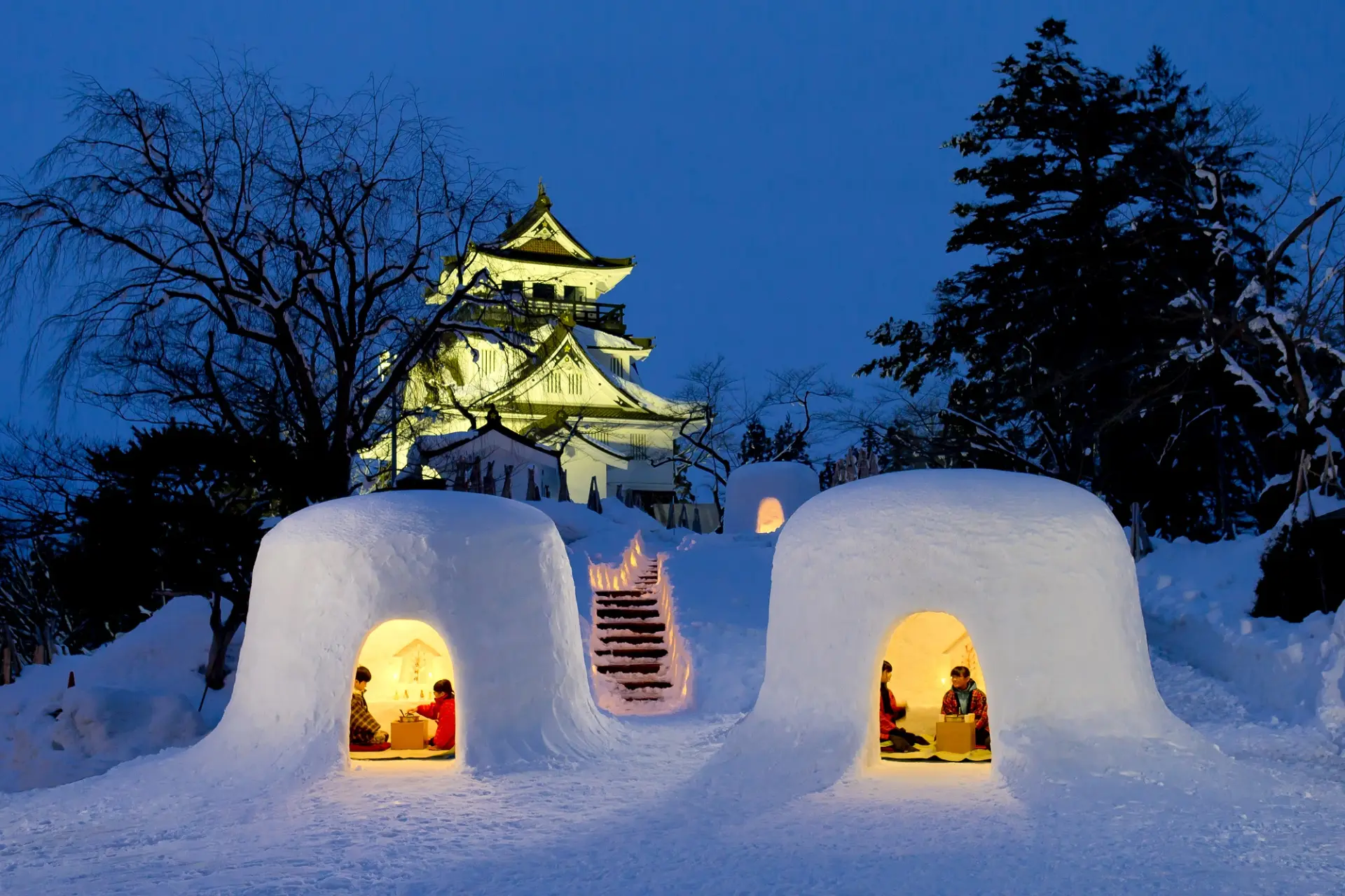
Kamakura, snow huts with altars inside to worship the water deity, are traditional Little New Year events passed down in regions such as Akita and Niigata.
Held every year on February 15 and 16 in Yokote, one of Japan’s best-known heavy-snow areas, the Kamakura Festival is counted among the Five Great Snow Festivals of Michinoku and boasts a history of Approx. 450 years.
There are four main venues. If you want to soak up the festival atmosphere, visit Yokote City Hall Main Building, where there are the most kamakura and many food stalls, while Yokote Park, home to Yokote Castle, is ideal if you want to enjoy a more classic Japanese landscape.
Summary
Festivals are where the history, faith, and feelings of people in each region of Japan have been passed down.
Each one has its own appeal, whether it is enjoying rituals and traditional performing arts, tasting food from stalls, experiencing culture unique to the region, or encountering art made of snow and ice.
Be sure to add this kind of special cultural experience, something only possible by joining a festival, to your next trip.