
Uncover the Secrets of the Mysterious Ninja!
Ninja are one of Japan’s most iconic cultural symbols, yet much about them remains a mystery. Many people probably picture them dressed in dark clothing, attacking enemies with shuriken, and then vanishing with ninja magic...
By learning about ninja, you can also gain insight into the traditional Japanese mindset. In this article, we’ll introduce some of the lesser-known activities of these globally beloved figures, along with museums in Japan where you can experience ninja culture for yourself!
Introduction - What Is a Ninja?
So, what exactly were ninja in reality?
According to the definition of “ninja” by the Japan Ninja Council, the world’s only official ninja organization, made up of national and local governments connected to ninja, descendants of ninja, historians, and others working to share ninja culture with the world:
「忍者は歴史的には「忍び」と呼ばれ、史料上確実に存在が確認できるのは、南北朝時代(1336-1392)以後で、その起源は13世紀後半に荘園制支配に抵抗した悪党にあると考えられる。忍びは、乱波(らっぱ)・透波(すっぱ)・草(くさ)・奪口(だっこう)・かまりなど、地方によりさまざまな名前で呼ばれ、忍者(にんじゃ)という呼び名が定着したのは昭和30年代になってからのことである。戦国時代の忍びは、各地の大名に召し抱えられて、敵国への侵入、放火、破壊、夜討、待ち伏せ、情報収集などを行ったが、最も重要なのは敵方の状況を主君に伝えることであることから、極力戦闘を避け、生き延びて戻ってくる必要があった。
日本忍者協議会
伊賀・甲賀地方は京都にほど近く、まわりを山という天然の要害に取り囲まれていることもあり、大名勢力が弱い一方自治が発達し、一揆を形成して武装していた。そのため、ときには近隣諸国に傭兵として雇われ、堀を越えて城に侵入し、戦闘に加わったことが確認できる。伊賀・甲賀の自治は、織田信長軍によって壊滅的打撃が加えられるが、天正10年(1582)6月2日の本能寺の変後に、徳川家康が堺(大阪府)から伊賀・甲賀を越えて白子(三重県鈴鹿市)を経由して本拠地である岡崎(愛知県)に逃れる際、伊賀者・甲賀者は山中の護衛をしたほか、さまざまな戦いで家康の先陣をきって戦ったことにより、家康は伊賀者・甲賀者を取り立てることとなった。
天正18年(1590)8月1日、徳川家康が江戸に入府すると、伊賀者・甲賀者は江戸城下に住み、大奥や無人の大名屋敷などの警備、普請場の勤務状態の観察などを行うほか、寛永初年(1624)ころまでは隠密としても活動した。また鉄砲隊として甲賀百人組、伊賀百人組に編成され、百人番所に勤番で詰めて、江戸城大手三之門の警備を行ったりしたほか、諸大名が抱えることもあった。『軍法侍用集』などでは、伊賀者・甲賀者は忍びの中でも最も優れていると記述されている。江戸時代になって平和な時代が訪れると、戦闘をすることはなく、情報を得たり警護をすることが主な任務となり、隣国の政治状況を知って自国の政治に活かすということもしていた。忍者というと屋根裏に潜んで会話を盗み聞きするイメージがあるが、実際はその土地の人と仲良くなって情報を聞き出すことの方が多かったようである。
17世紀中葉になると、忍びの方法や心構えなどを記した忍術書が書かれるようになった。延宝4年(1676)には、忍びの間で伝えられてきた技が伝授されなくなってしまうという危機感から、中国古代の兵書『孫子』をはじめ、さまざまな兵法書・忍術書からまとめ上げた『万川集海』が藤林保武によって編纂された。ここには登器・水器・開器・火器などの道具も絵とともに記されているほか、その他忍術書には、交際術・対話術・記憶術・伝達術・呪術・医学・薬学・食物・天文・気象・遁甲・火薬など多様な記述がなされており、忍術とは、総合的知識に基づくサバイバル術と位置づけることができよう。
実在の忍びの者が姿を消していく一方、江戸時代の小説・芸能では、虚像としての忍者が描かれるようになっていった。江戸時代初期の忍者は忍術を使って忍び入り、大切な物を盗んでくるというパターンで描かれた。この話でよく知られているものが、石川五右衛門の話である。ここで用いられる忍術は、妖術の影響を受けて、摩訶不思議な術に変化していった。妖術とは隠形の術、飛行の術、分身と反魂の術、蝦蟇の術、鼠の術、蜘蛛の術、蝶の術などで、中国の小説の影響を受けてさらに発展を遂げたものだが、この結果、巻物を加えて印を結ぶとドロンと消えたり、ガマに変身する忍者が生まれた。また、江戸後期になると、歌舞伎や浮世絵などにおいて黒装束を身につけて手裏剣を打つという現代につながる忍者のイメージが形成された。」
That is how ninja are defined. How close was that to your own image of them, and how different was it?
Ninja were not magicians who vanished into thin air. They were people who served feudal lords during the Warring States period, working as spies who gathered intelligence on enemy domains and sometimes fought as well.
-
-
The image of a ninja
In modern times, ninja came to be portrayed in novels, manga, and anime. That likely gave rise to the image of ninja that differs from what real ninja were like in the past.
Ninja are also hugely popular overseas. Along with Japanese manga and anime such as “NARUTO,” “Nintama Rantaro,” and “Teenage Mutant Ninja Turtles,” ninja-themed films and other visual works have also been produced and released, especially in the United States.
In this way, ninja are one of the cultural icons that represent Japan.
「海外では忍術を武術としてとらえる傾向が強いが、忍者に対して深い関心を示すのは、忍者という「神秘的」な存在にたいする憧れや、「忍術の「忍」は忍耐の「忍」」といった日本の伝統的価値観に対する理解もあってのことだろう。たとえ自分の名が世に知られることがなくとも、実直に耐え忍んで自分に与えられた任務をこなし、最後には大きな仕事を成し遂げるという忍者の精神は、日本人の生き方をよくあらわしていると言えよう。忍者の知恵の中には、近代日本の発展を支えてきた技術力、勤勉さ、組織力、忍耐力といった日本文化の諸相が凝縮されており、まさに忍者は日本を代表する文化と言えよう。」
日本忍者協議会
As this suggests, ninja also embodied traditional Japanese values.
All About Ninja
1. The Work of Ninja
Traces of ninja can be seen throughout Japan’s long history, but they are thought to have been most active during times of unrest, when espionage and surprise attacks were especially important. Ninja work can be broadly divided into two main roles. One was “espionage,” in which they concealed their identity, infiltrated enemy territory, and gathered information. They carefully investigated the enemy’s political movements, military strength, troop numbers, and the characteristics of the land. Above all, their top priority was to gather as much information as possible, return alive to their lord, and report what they had learned. It is also said that while infiltrating enemy territory, they sometimes spread false information about the country they served in order to cause confusion and weaken the enemy. The other role was not direct combat, but participating in war from a different angle than ordinary soldiers, such as setting buildings on fire or digging pitfalls.
They served their lords with loyalty and “endured” while gathering information from enemy lands. Ninja were never allowed to let others know that they were acting on behalf of their lord while infiltrating enemy territory. For that reason, in the work of shinobi, leaving no trace was considered essential. Whether in the places they infiltrated or in history itself, it was seen as a virtue to leave behind no sound, no smell, no wisdom, and no fame for bravery. Considering this, it makes sense that written manuals of ninja techniques, known as ninjutsu books, did not appear until the Edo period, when peace had arrived.
By the way, being a ninja was not a job only for adult men. There were also female ninja. Today they are commonly called “kunoichi,” but it seems that they were not especially referred to by that name at the time. Female ninja also carried out tasks that only women could do. For example, kitchen work in those days was done by women, making it difficult for men to sneak into such areas. For that reason, female ninja seem to have played an active role. They are also thought to have carried out tasks similar to what we now call honey traps. In addition, there were even child ninja, who were reportedly sent into enemy territory as servants to gather information.
2. Ninja in Different Regions
Ninja are thought to have existed in many regions during the Warring States period, and feudal lords across the country used them to gather information on rival domains. Because of this, ninja were found in many places, and the names used for them seem to have differed by region.
In the Tohoku region, some groups were called “Kusa” because they fought by ambushing from the grass. In Shinshu (Nagano) and Kai (Yamanashi), there were reportedly groups called “Suppa,” a word that became the origin of the Japanese expression “suppanuku,” meaning to expose hidden facts or secrets.
3. Ninjutsu
So what kinds of techniques were actually written in those ninjutsu books? To carry out their missions reliably, ninja mastered a wide range of skills. These included how to “hide,” “infiltrate,” and “memorize,” as well as methods like “hiding by imitating animals.” It was also important to “predict the weather” and “remember roads.” In addition, they learned many other things, such as how to relay the information they had obtained back to their lord, and used all of these skills to complete their missions.
・“Hiding”
This was called “Ongyojutsu,” a technique for hiding in a way that exploits blind spots so the enemy does not notice you. When fleeing pursuers, a ninja would hide while pressing close to a rock or similar object. Because the posture involves tucking in the hands, feet, and head and curling up like a quail, it was called “quail hiding.” Another technique, “tanuki hiding,” made use of the fact that people tend to pay less attention upward, so the ninja would climb up into a tree and hide there. There was also “Kannon hiding,” in which one stays motionless behind a wall or tree, covering the face with a sleeve and keeping the eyes half open like the Buddhist figure Kannon. When hiding underwater, there was even a method called “fox hiding,” in which a lotus leaf or similar leaf was placed on the head. From a distance, it looked like nothing more than a leaf floating on the water.
・“Infiltrating”
Failure was not an option when infiltrating. Ninja would enter at moments when gaps in security were most likely to appear, such as the night after a celebration, the night when a sick person in the residence had recovered, the night of a banquet, or the night after a fire or similar incident had occurred nearby. It is also said that, in order to infiltrate, they sometimes had their companions start a fire or cause a quarrel to draw attention away and create an opening. There were also four standard routes for entering a residence: a back entrance with weak security and little foot traffic, the rear side of the house near places that were easy to access such as sleeping quarters or the garden, formal tatami rooms, windows that could be cut and removed easily, verandas, and even the kitchen sink area. They also seem to have used methods such as pretending to be ill and collapsing in front of a residence, getting help and becoming acquainted with the residents, then returning later with a gift and skillfully drawing information out of them. As you can tell from the fact that “extracting information from the other side” was their most important mission, ninja are thought to have been highly skilled communicators.
・“Hiding by imitating animals”
When a ninja made a noise while infiltrating and was close to being discovered, they would imitate the cry of an animal. By doing so, they could make the enemy let their guard down and think, “Oh, it’s just a dog.”
・“Predicting the weather”
Ninja had to be highly sensitive to the weather, since the enemy’s behavior patterns could change depending on whether it was raining or sunny, and rainy days were better for sneaking around because sound and smell were harder to detect. For that reason, ninja are said to have predicted the weather based on experience, reading the sky and the behavior of living creatures, and they may also have possessed knowledge of astrology.
4. Ninja Tools
The first ninja tool that probably comes to mind is the “shuriken.” However, there are no detailed descriptions of it in the ninjutsu books discovered so far, and it is thought that the popular image of ninja using shuriken was shaped through kabuki theater in the Edo period.
Ninja hid not only themselves, but also their weapons. That was because they could not carry conspicuous weapons while infiltrating. Swords or spears were hidden inside walking sticks, and daggers were hidden inside long smoking pipes called kiseru, which are thought to have been used for self-defense.
When sneaking into a residence, ninja used climbing tools called “toki.” These were tools for climbing walls and fences. One essential item was the “kaginawa,” a hooked rope tool in which the hook was thrown onto a wall or tree and the rope was used to climb up and down.
Other tools were also used, such as “kaiki,” for opening doors easily, and “suiki,” tools for crossing water or muddy ground.
Places Where You Can Experience Ninja Culture
Overview of Samurai Ninja Museum Kyoto
There are places in Kyoto and Tokyo where you can learn about and experience the mysterious world of ninja. One of them is the Samurai Ninja Experience Museum Kyoto. It is located in central Kyoto, just a 1-minute walk from Nishiki Market, known as “Kyoto’s Kitchen,” a hugely popular sightseeing spot.
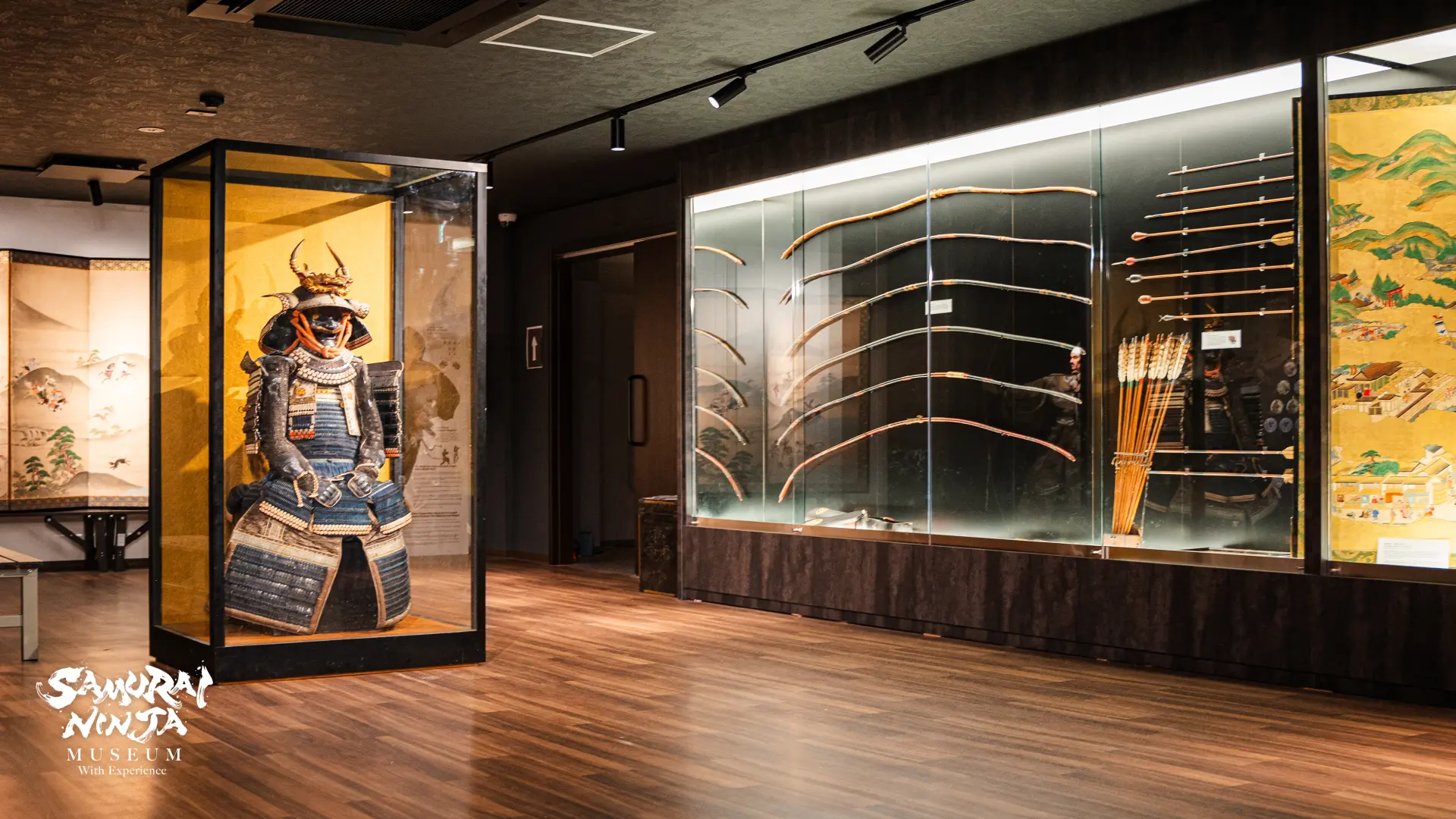
There is a recommended tour for international visitors, where staff guide you in English through the museum’s four floors. On each floor, you can learn plenty of trivia and fascinating facts about the history and culture of ninja, as well as samurai, whom ninja once served. Knowledgeable staff explain everything in English, from technical aspects to the interesting background of the displayed items, making this an excellent tour for exploring exhibits related to samurai and ninja. The staff are extremely knowledgeable not only about samurai and ninja, but also about Japanese history and culture more broadly, and they can answer almost any question you may have, including questions about the exhibits. Many of the displays also include explanations in English. Just by touring this museum, you might end up knowing more about ninja than the average Japanese person!
What’s more, this tour lets you change into ninja costumes or samurai armor for photos! You can also try activities such as shuriken throwing and blowgun practice, so by the end of the tour, you won’t just have gained a lot of knowledge about ninja, you’ll also feel like you became one yourself. Since you’ve come to Japan, don’t miss the chance to become a ninja and enjoy an unforgettable experience! The museum welcomes hundreds of visitors a day on both weekdays and weekends, so making a reservation before your visit is highly recommended!
Facility Information
- Name in Japanese
- サムライ忍者ミュージアム 京都
- Address
- 109 Horinouecho, Rokkaku-dori Sakaimachi Higashi-iru, Nakagyo-ku, Kyoto, Kyoto Prefecture Google Maps
- cs@maikoya.com
- Phone
- 075-366-5250
- Hours
- 9:30am - 6:30pm (closes at 7:30pm)
- Official website
- Official website (Japanese)
Learn About Ninja!
At this facility, you can learn about ninja through a wide variety of exhibits. One of the highlights is the display of many tools believed to have been actually used by ninja, the so-called “ninja gear.”
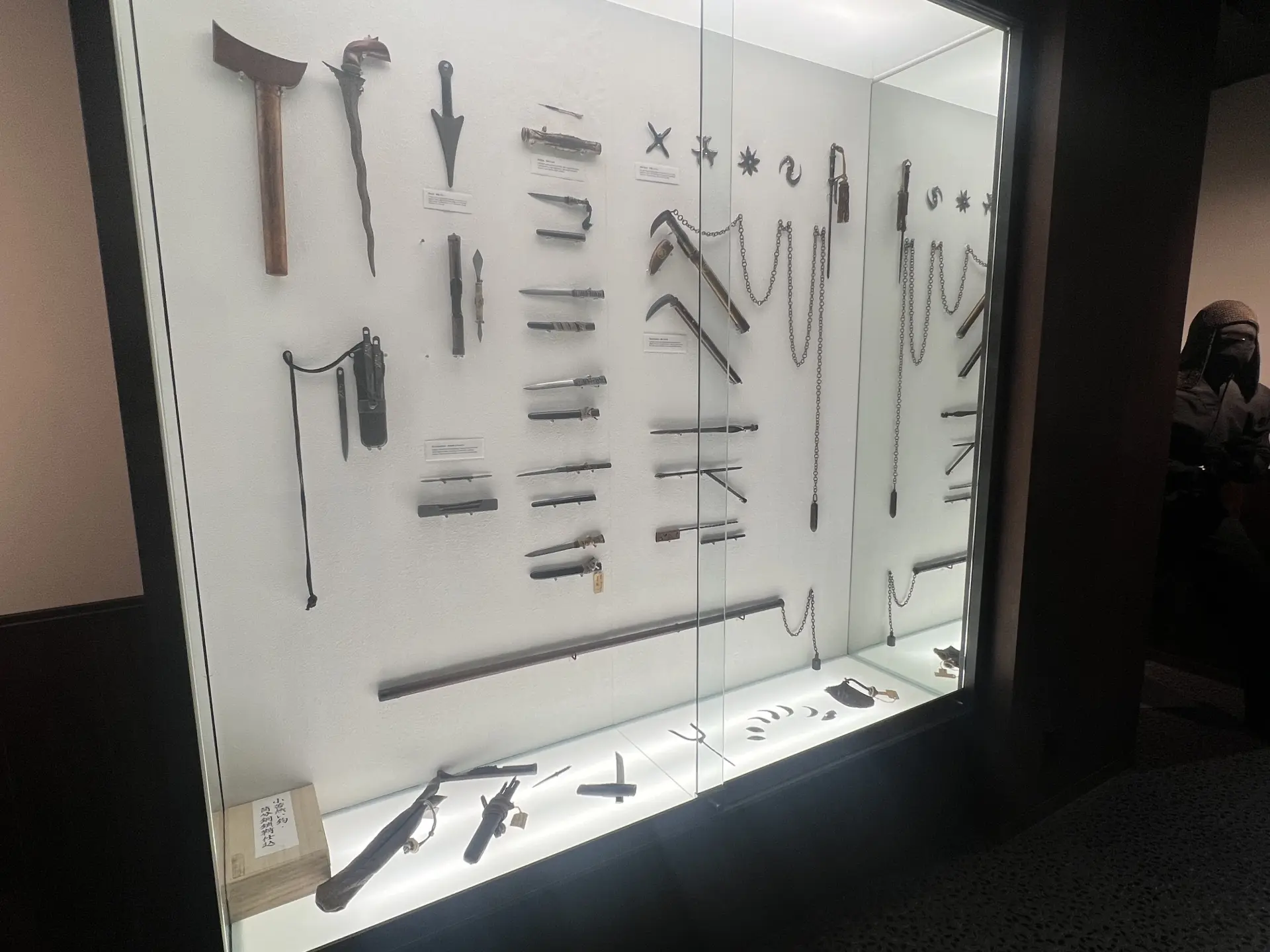
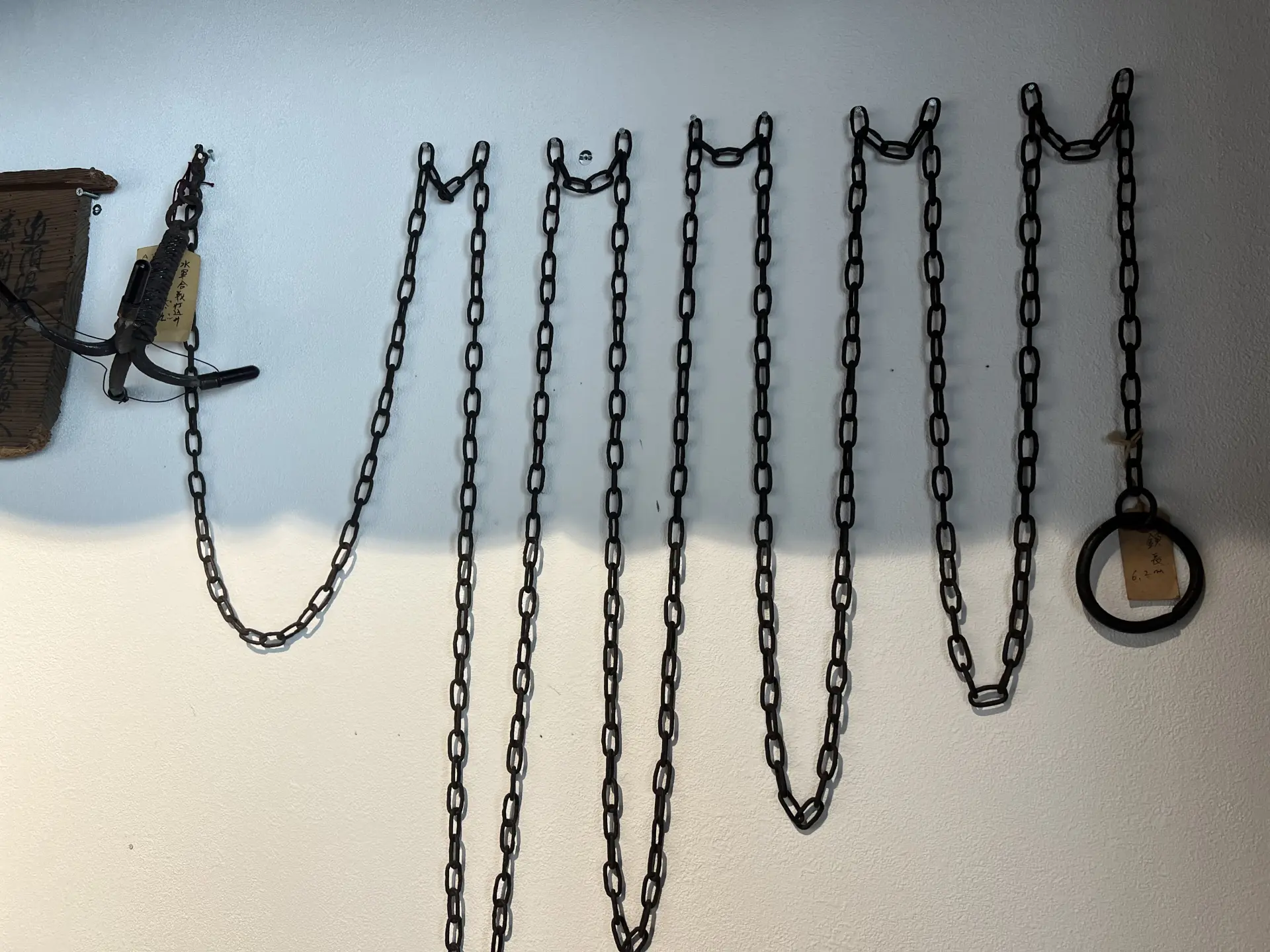
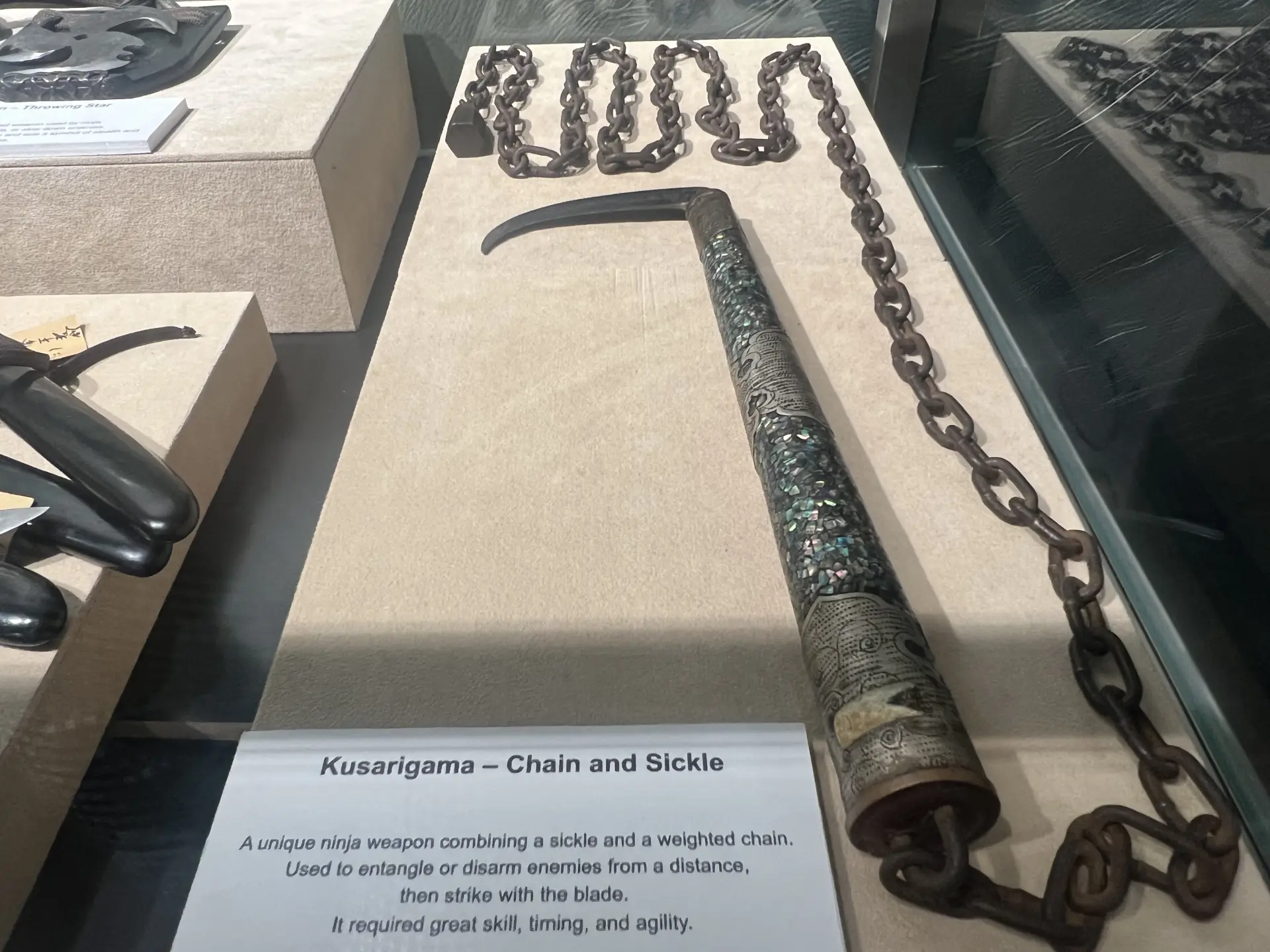
This is a “kusarigama.”
In fact, many ninja are thought to have also worked as farmers, and this was one of their concealed weapons, made from the sickle used in farm work. A weight made of copper or another metal was attached to the end of the chain, and it was used by striking the enemy with the weight or wrapping the chain around the enemy’s weapon, then attacking with the sickle once the enemy was thrown off balance.
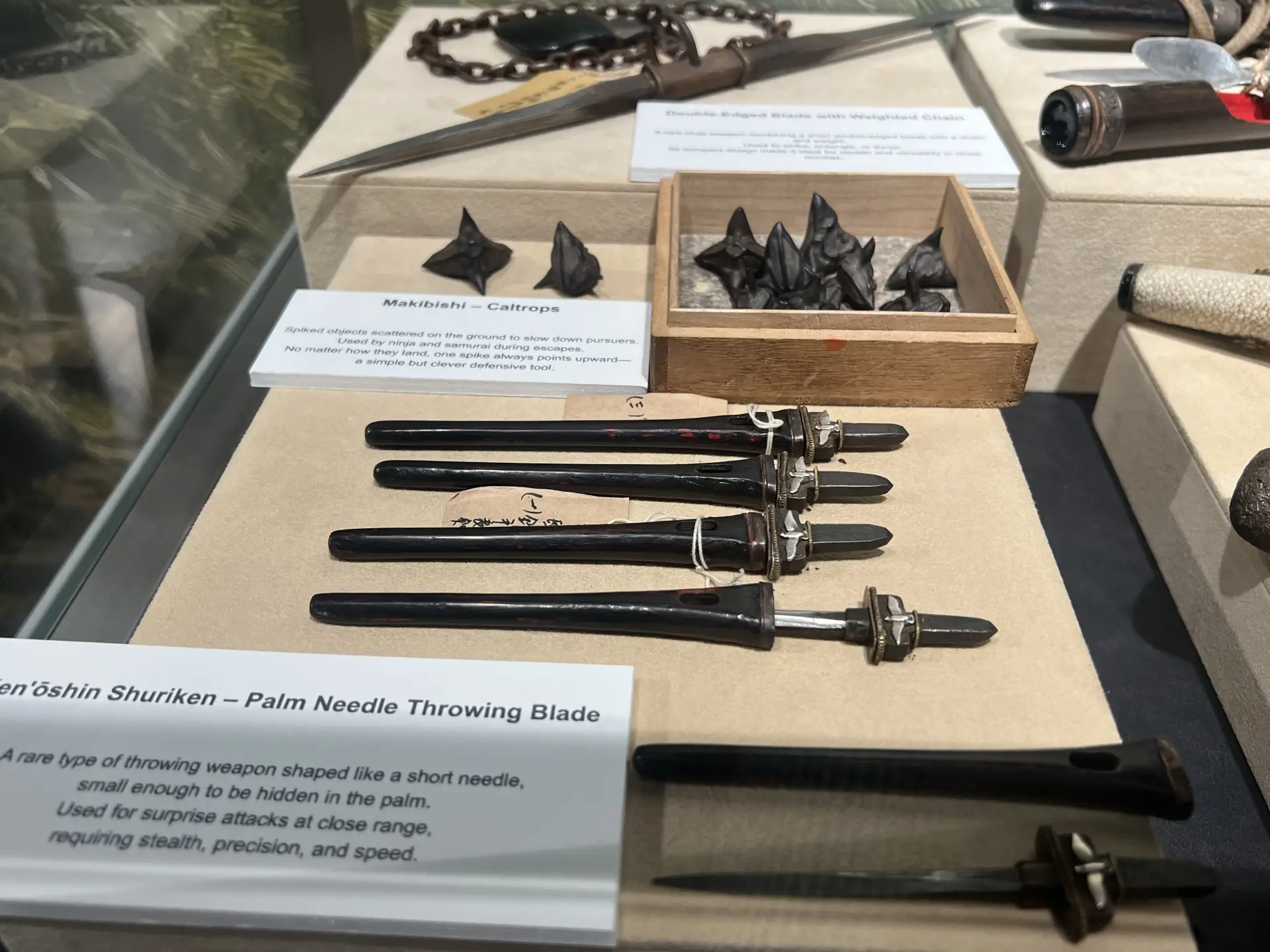
Another example is “makibishi,” spiked objects that ninja scattered on the ground when fleeing from pursuers.
They were used both to injure pursuers and to slow them down, since the pursuers had to avoid stepping on them, buying time for escape. As the name “maki-bishi” suggests, makibishi were made from dried water chestnut seeds. In an age when they did not have access to a wide variety of weapons like we do today, ninja turned everyday items around them into weapons.
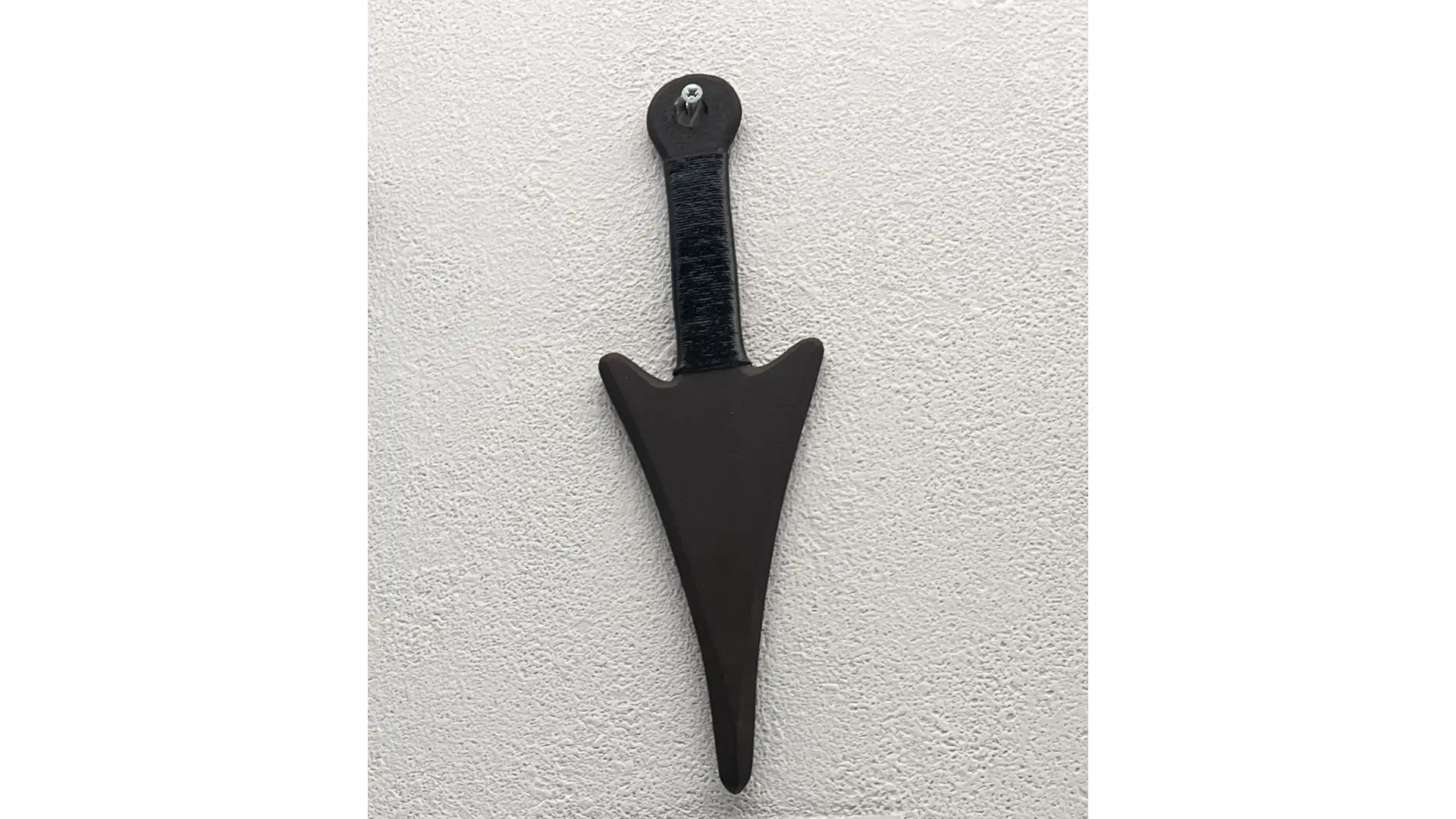
To sneak into an enemy residence, ninja had to climb over walls, and that is where “toki” came in. As the name suggests, they were tools for climbing. One of them, the “kunai,” was an all-purpose tool for shinobi.
They would drive it into a wall and use it as a foothold to climb. Because it had a sharp point, it is also thought to have been used as a weapon.
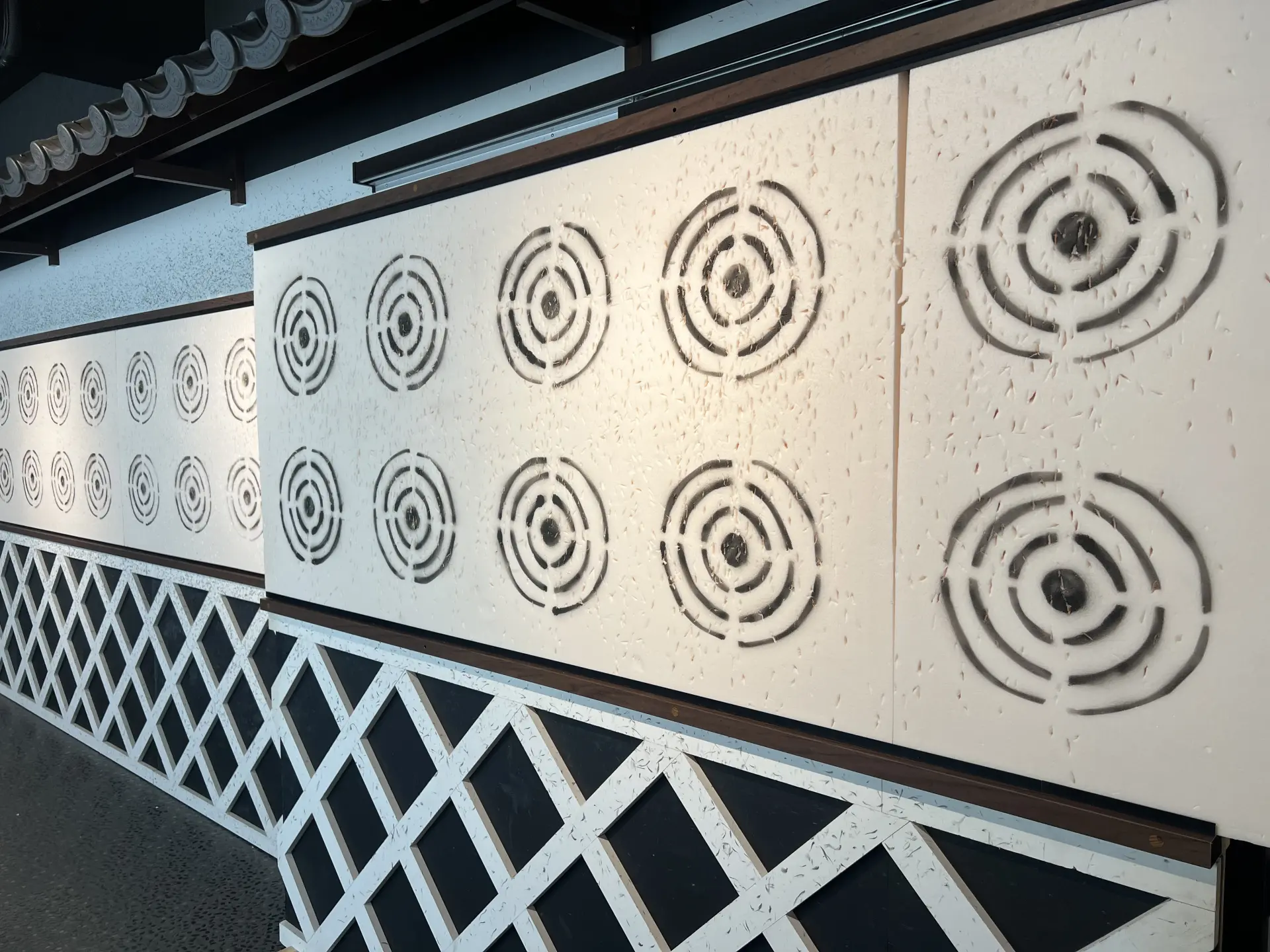
Try a Ninja Experience!
You can try throwing shuriken at a row of targets lined up in a dojo-like space.
First comes practice. You’ll be taught how to hold a shuriken and how to throw it with a snap of the wrist.
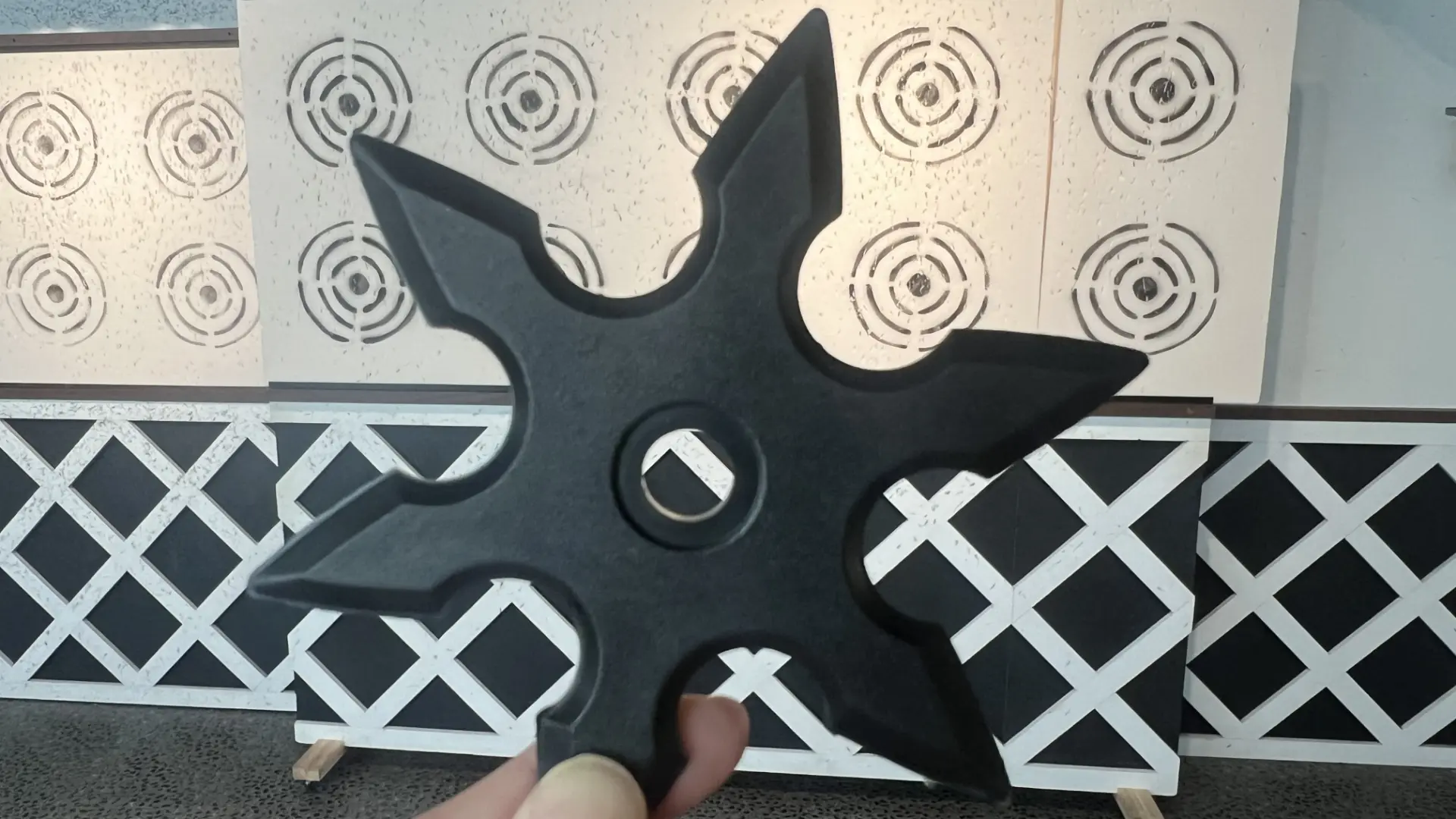
At the signal, everyone throws at the target all at once with full force. It’s harder than it looks. After a few practice rounds, it becomes a contest to see who can throw a shuriken closest to the center of the target. Try competing with your family or friends to see who has the best shuriken skills. It’s guaranteed to be a lot of fun!

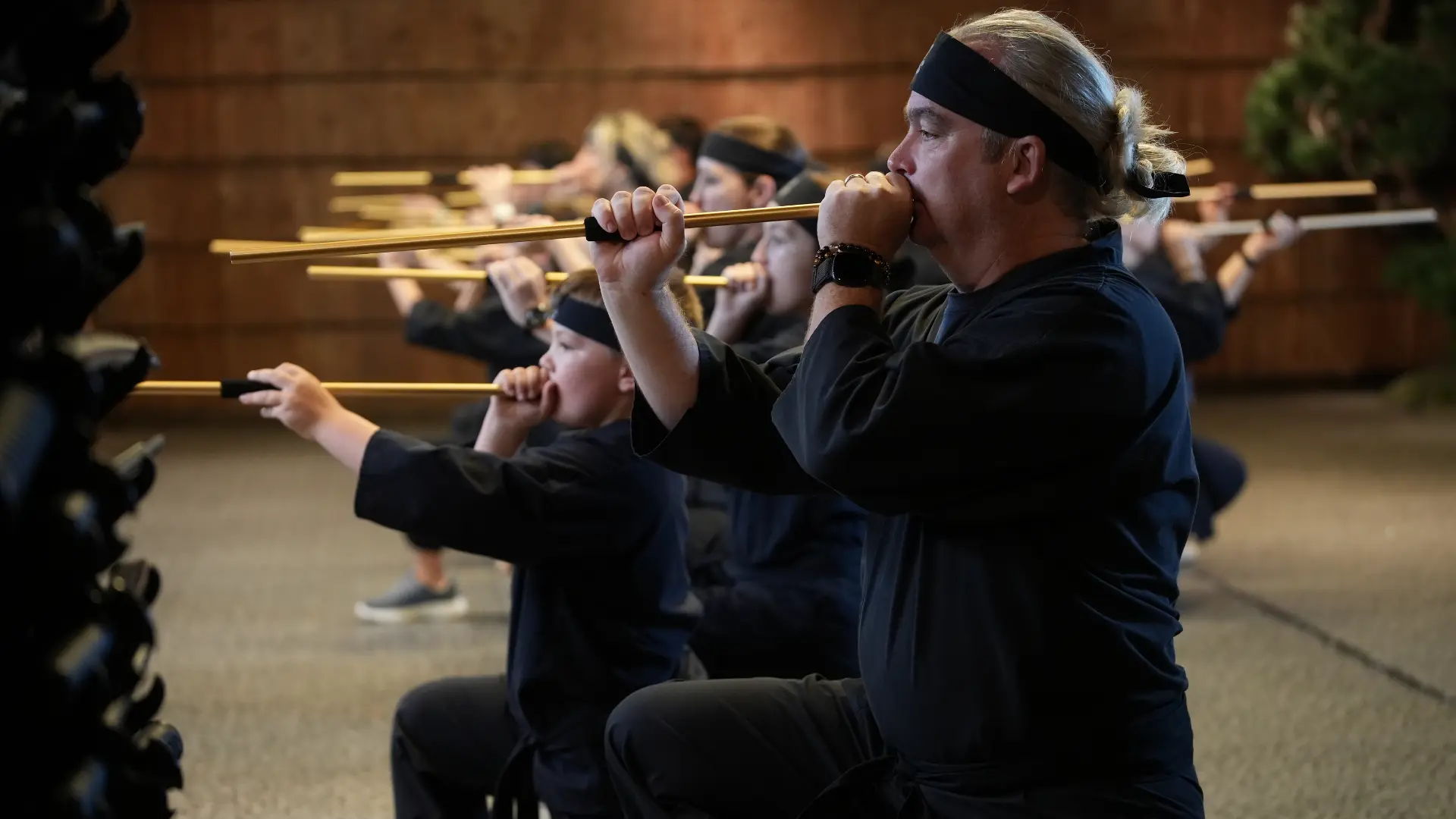
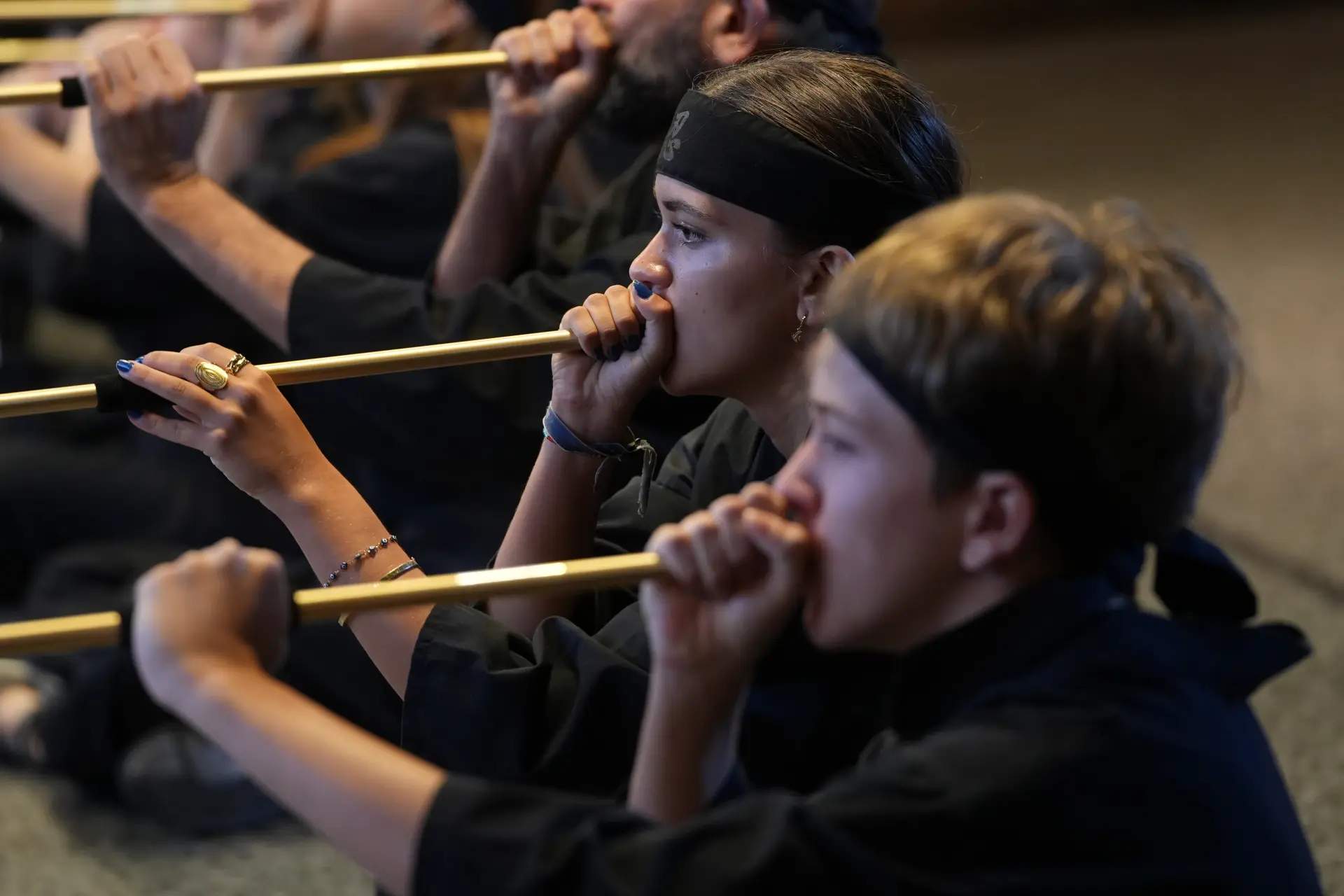
There is also a blowgun experience, where you place your mouth on a tube containing a dart and send it flying with a sharp puff of air!
-
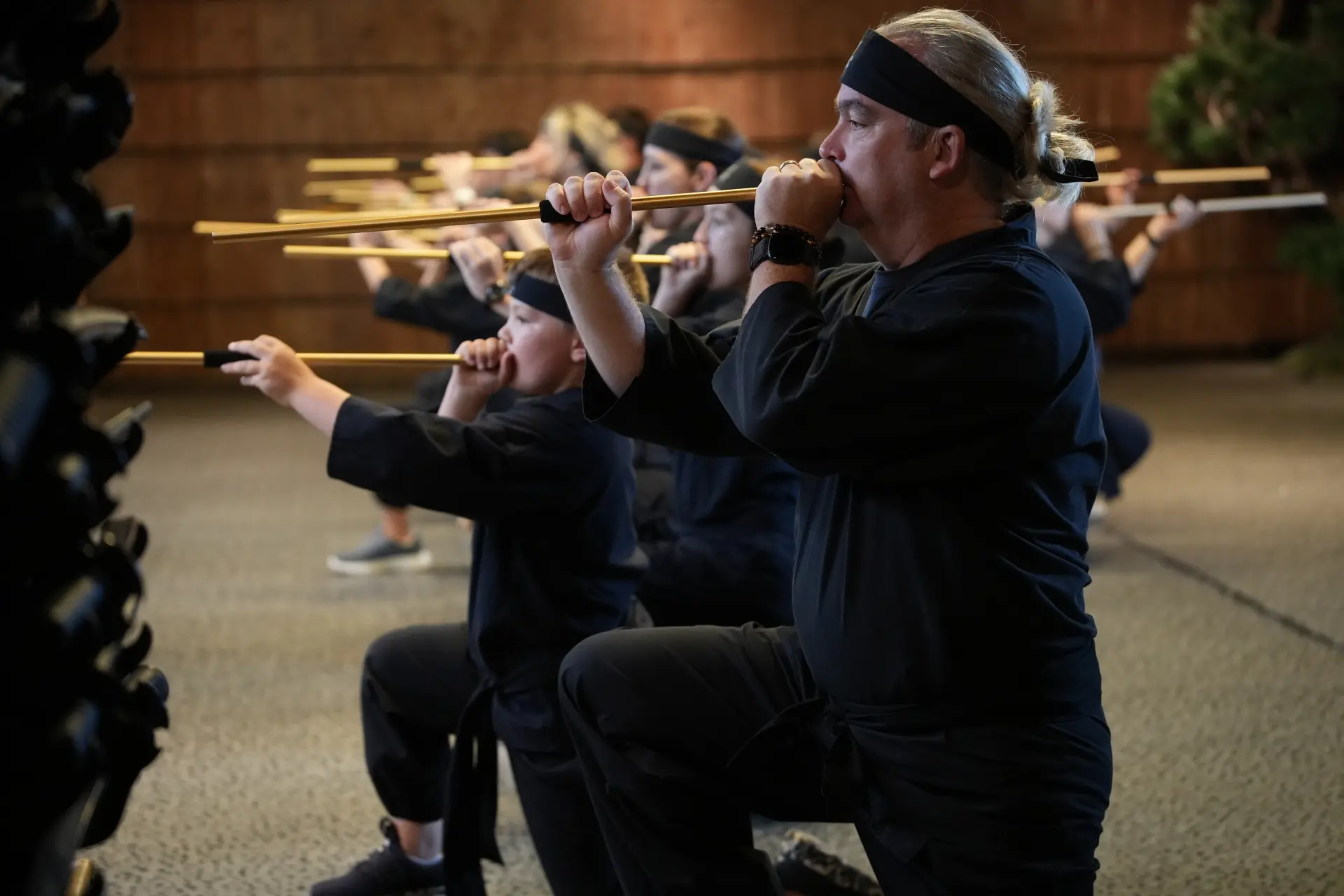
Blowgun experience
-
You Can Also Learn About the Samurai Served by Ninja!
Here, you can learn not only about ninja, but also about the samurai they served, and even enjoy hands-on experiences. Amazingly, real samurai armor worn in the past is on display.
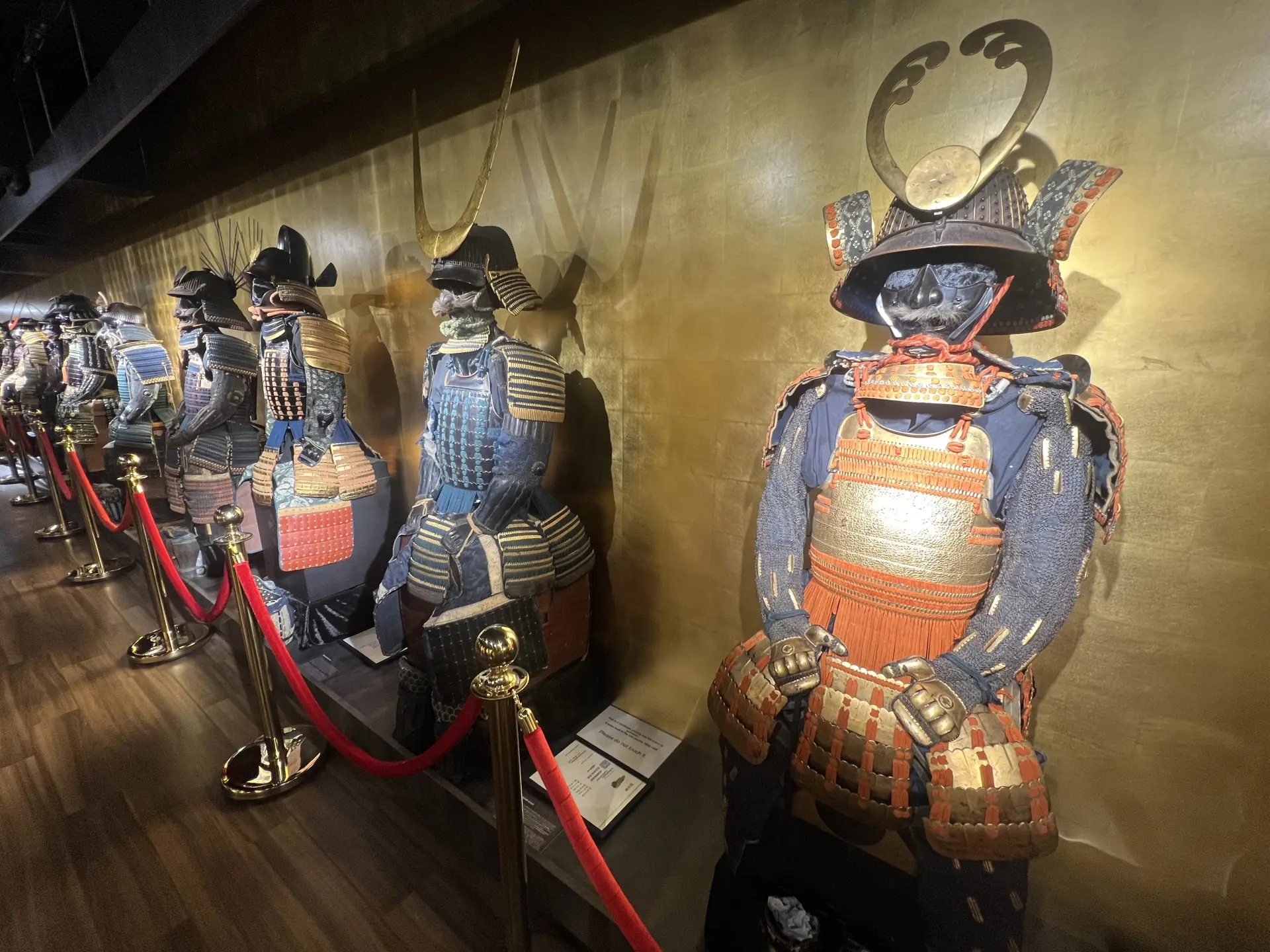
Many of the suits of armor on display date from before or during the Edo period, mainly from the Azuchi-Momoyama period, the Muromachi period, and the Edo period. Nearly 20 suits of armor lined up on both sides create an impressive sight. Samurai wore this kind of armor in battle. Because these are suits from before the peaceful Edo era, you can see traces of lead if you look closely.
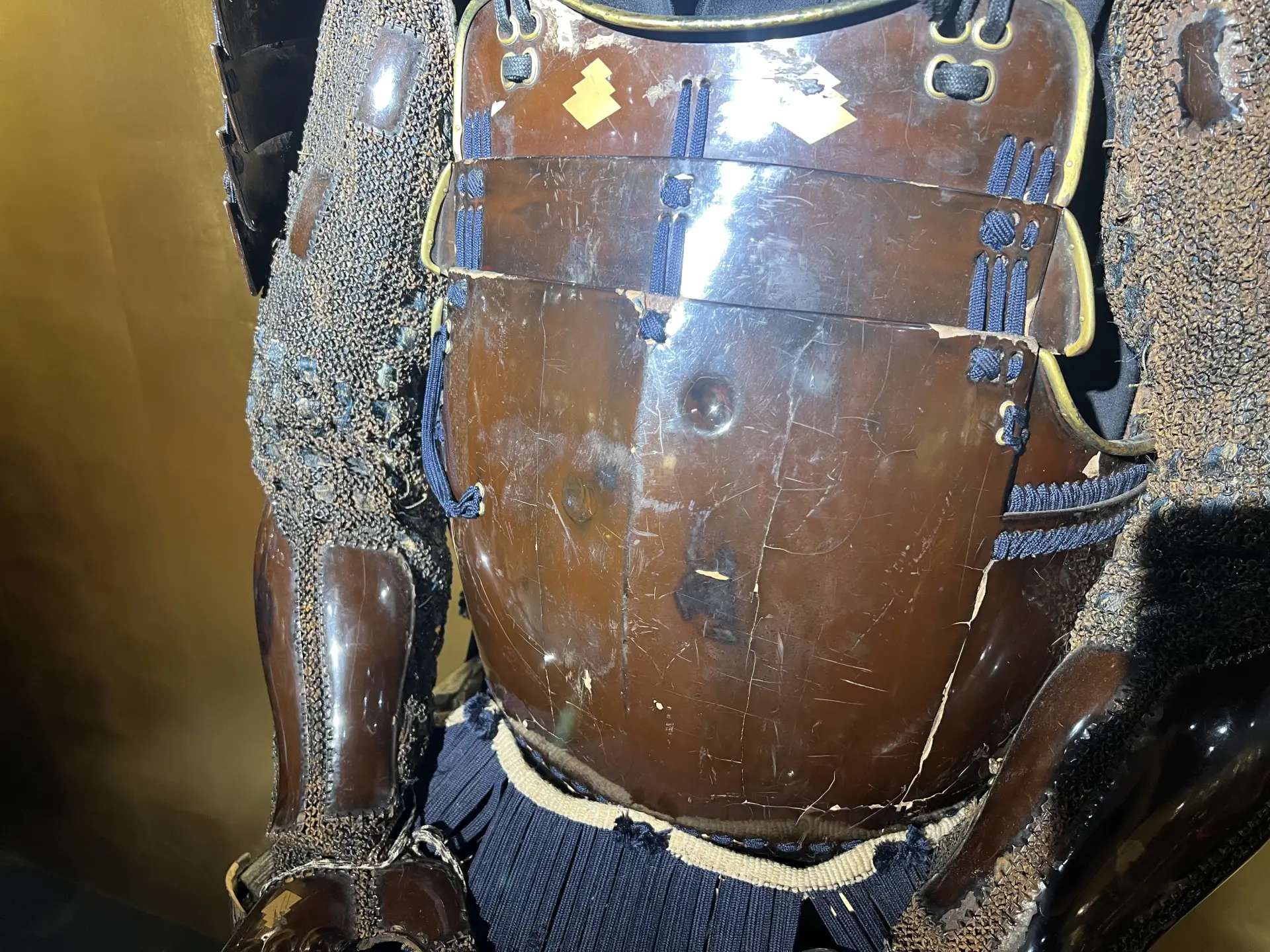
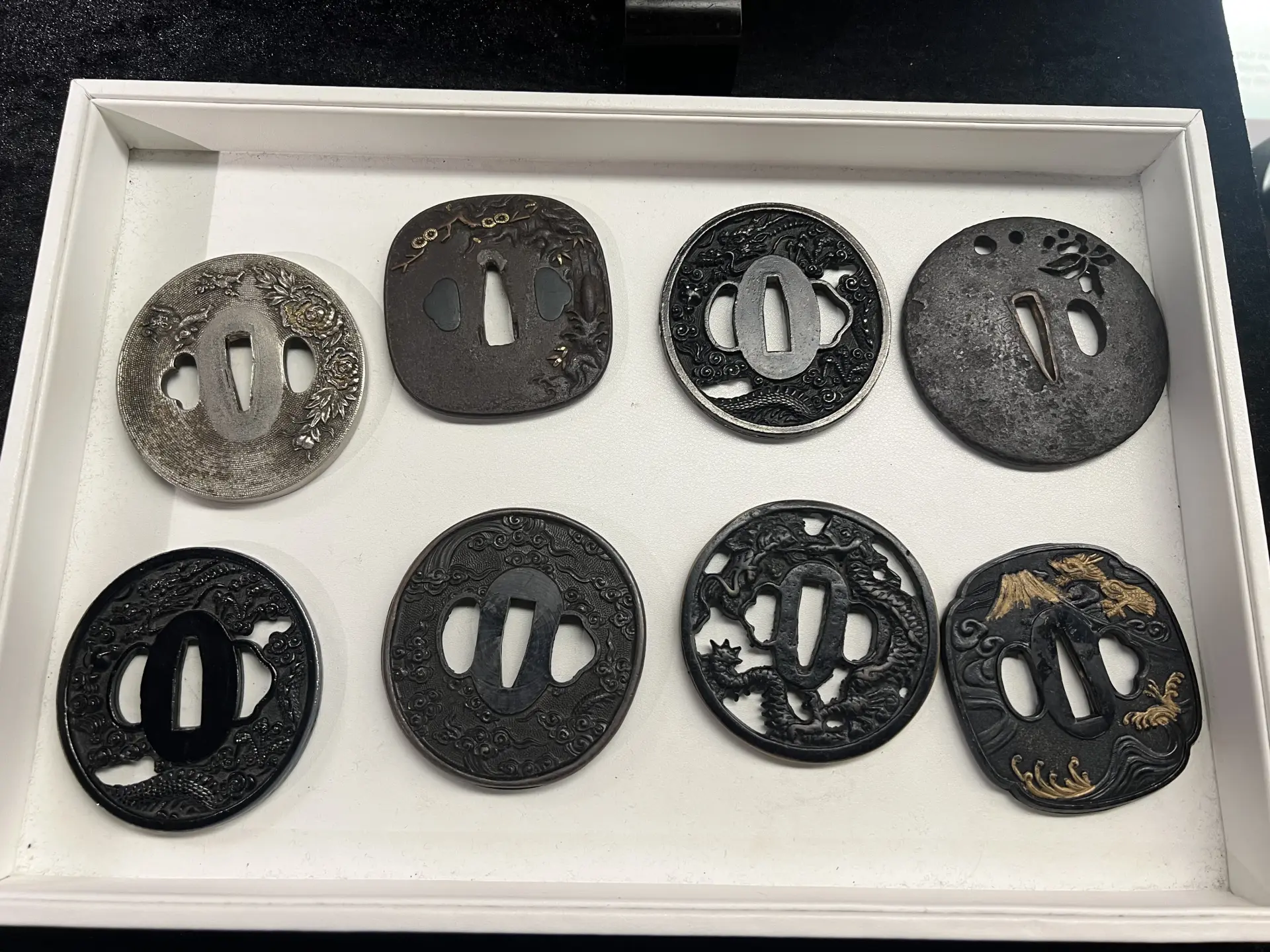
These marks are said to be from test-firing guns to check whether lead bullets would penetrate the armor. There are also marks left by sword strikes, letting you see up close that these pieces were truly worn in battle. Helmets, meanwhile, represented the authority of the warlord or warrior, and some are made in an especially lavish style. Valuable armor and helmets like these are usually kept behind glass in ordinary museums, but at the Samurai Ninja Museum, they are not enclosed, so you can view them from an incredibly close distance. And it is not only armor and helmets on display. You can also see the many weapons used in battle at the time. You can even hold a matchlock gun, one of the representative firearms of the era. Of course, it cannot be fired, but by holding it yourself, you can really feel its weight. There are also sword displays, where you can closely examine each stage of the sword-making process and the beautiful temper patterns on the blades. Scabbards for storing the swords and tsuba, the metal guards fitted between the blade and the handle, are also displayed. Tsuba in particular have a strong design element, showing the samurai’s eye for detail.
You can also take photos here while holding a replica sword.
Take Commemorative Photos!
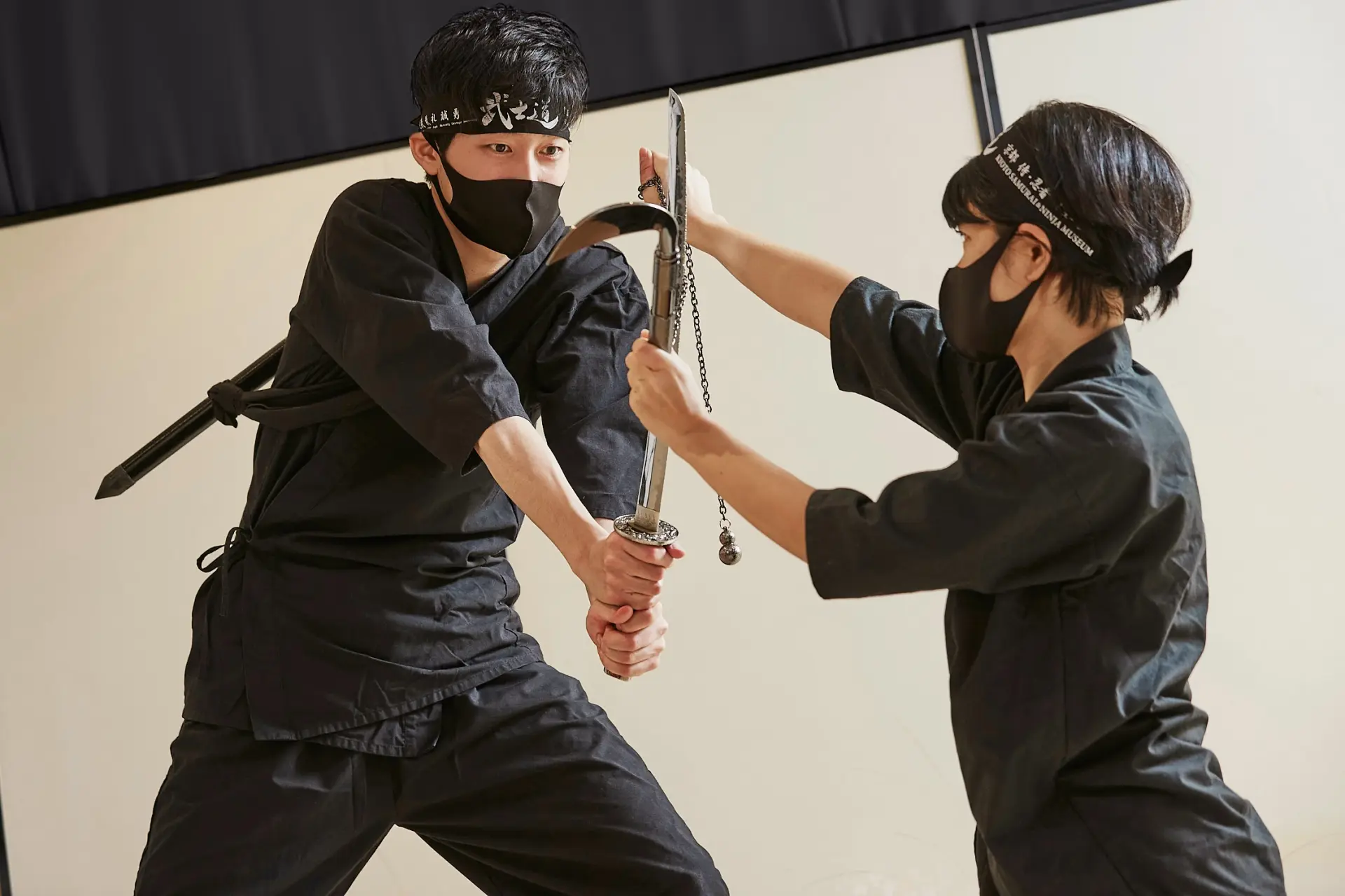
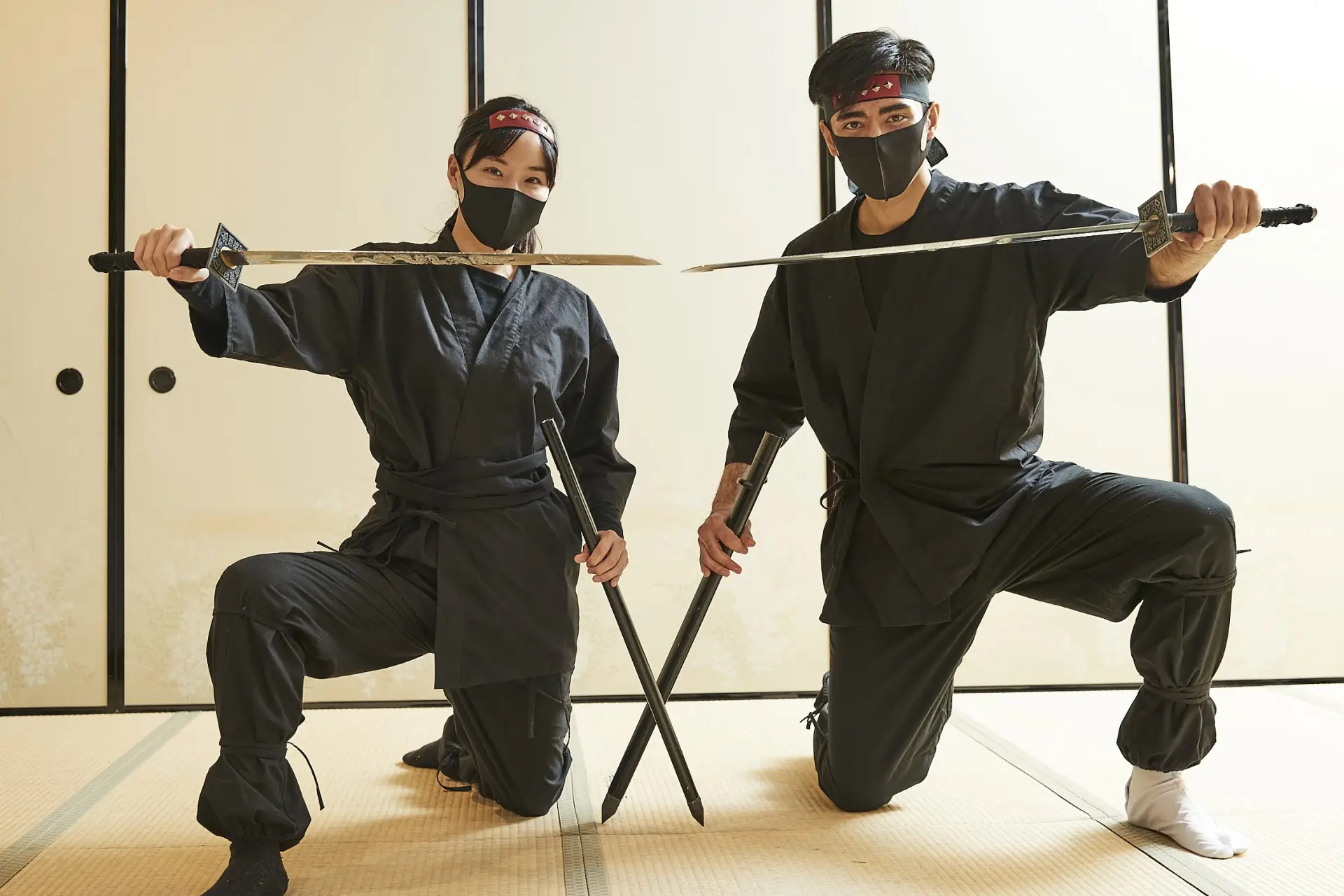
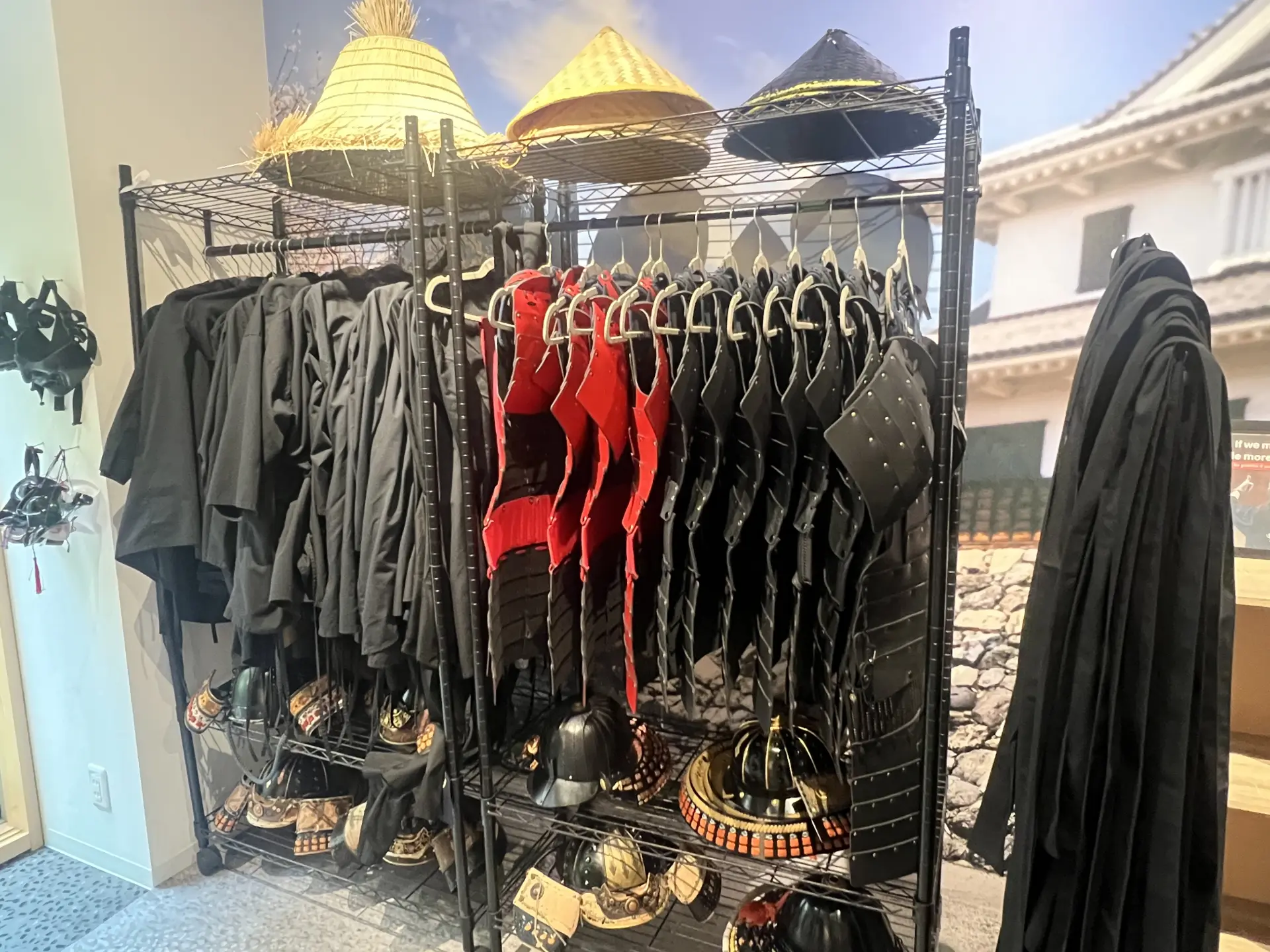
At the end of the tour, you can change into ninja or samurai outfits and take photos. You can choose and wear your favorite from a wide selection of costumes lined up for you. The straw hat is called an “amigasa.” Samurai and ronin wore it, but for ninja it was also a useful tool for concealment, allowing them to hide their face while still observing the other person and the surrounding scenery.
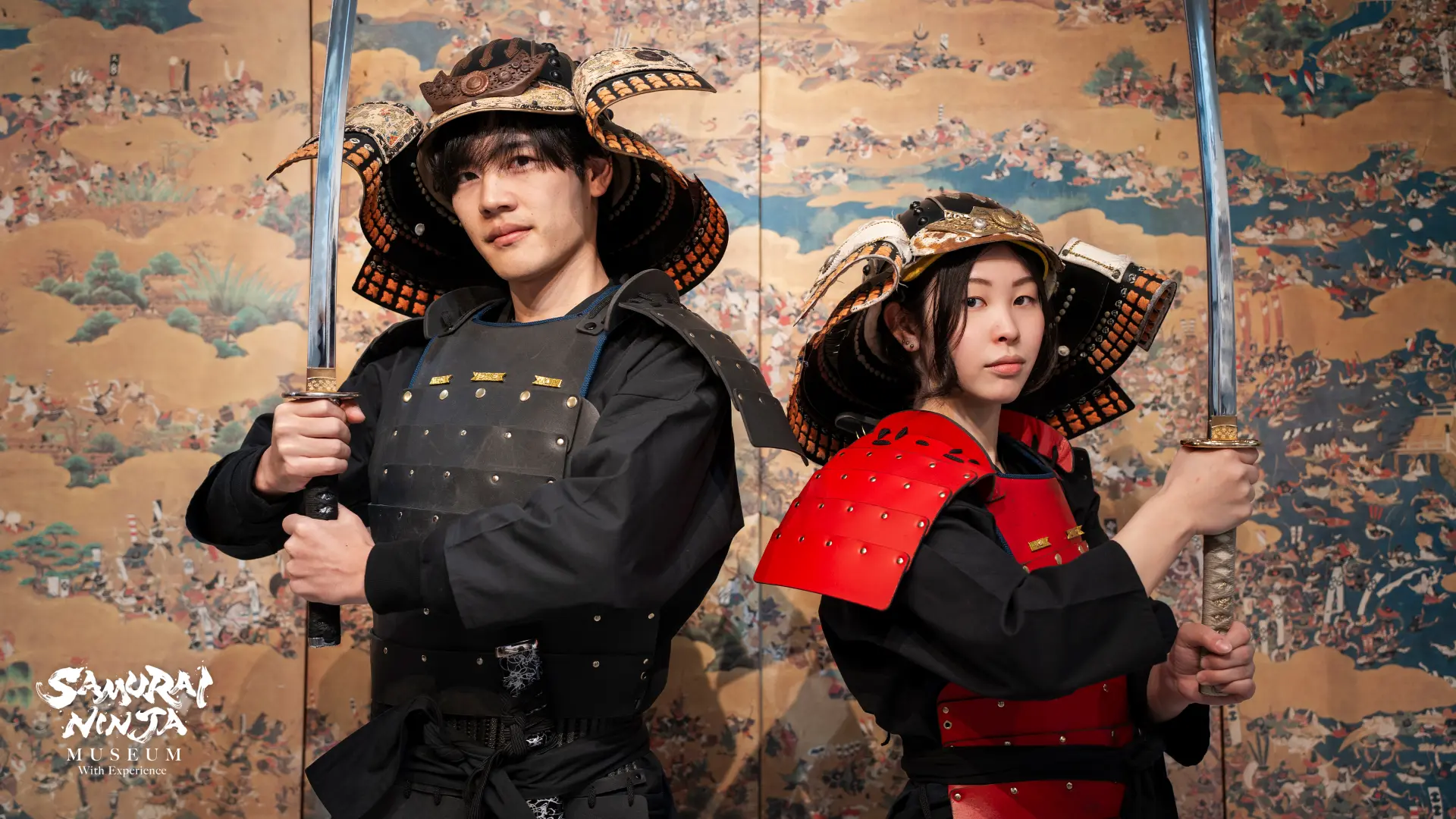
You can also hold a sword and have the staff teach you how to pose in a photogenic way.
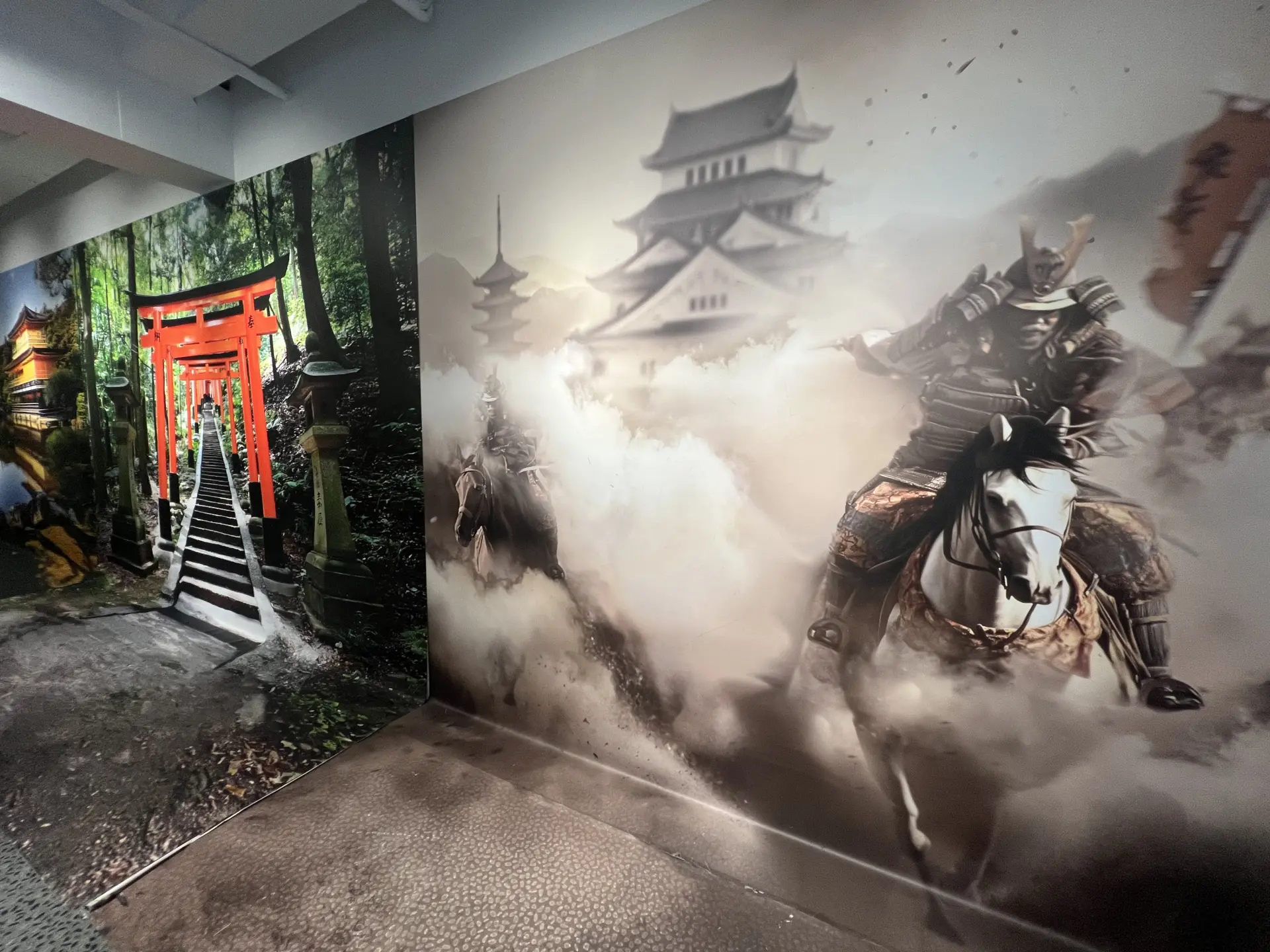
For your photos, you can choose backgrounds such as a Sengoku-period scene showing samurai fighting on horseback, or famous Kyoto landmarks like Fushimi Inari Taisha and Kinkaku-ji. Be sure to take lots of pictures to remember your trip!
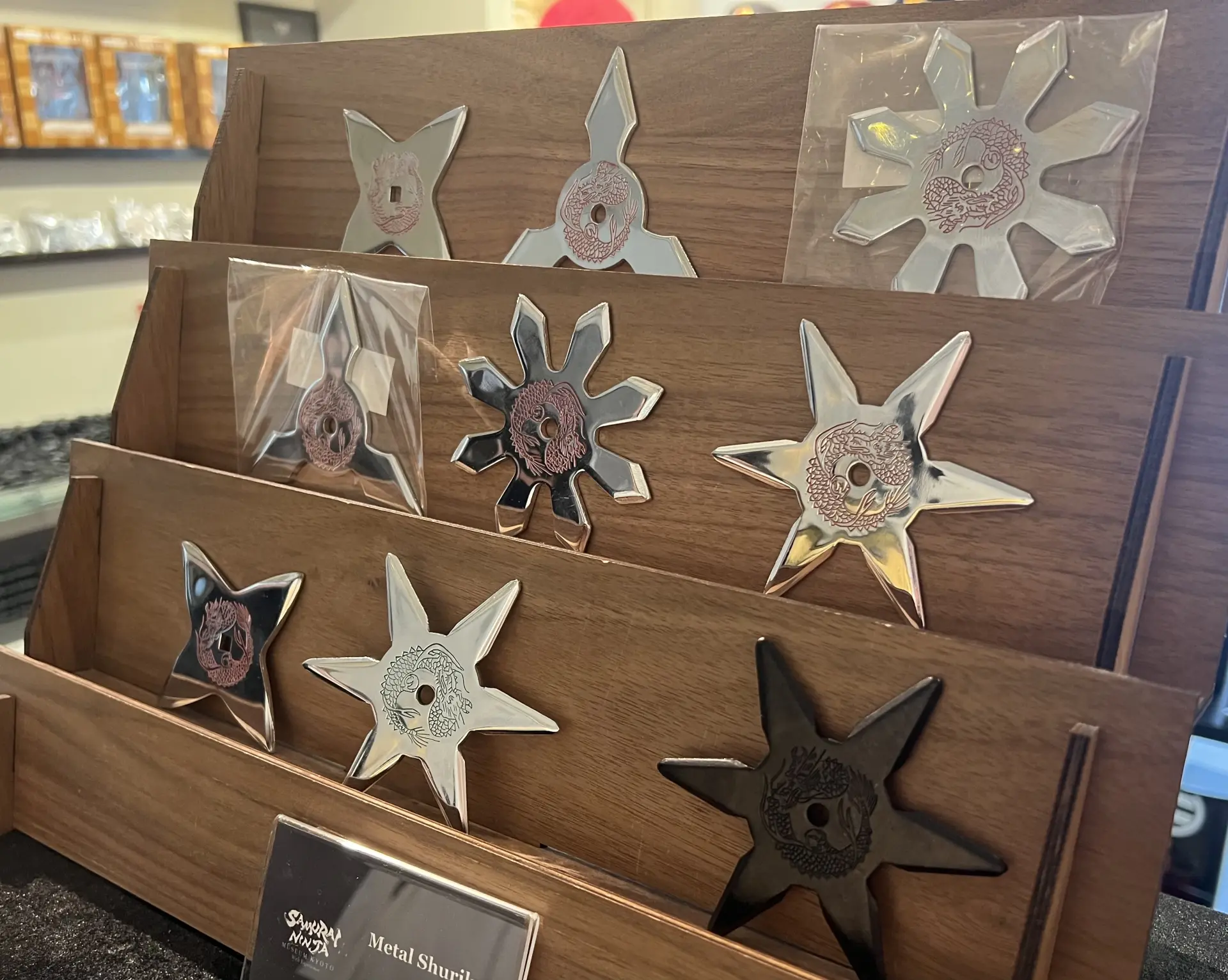
Buy Souvenirs!
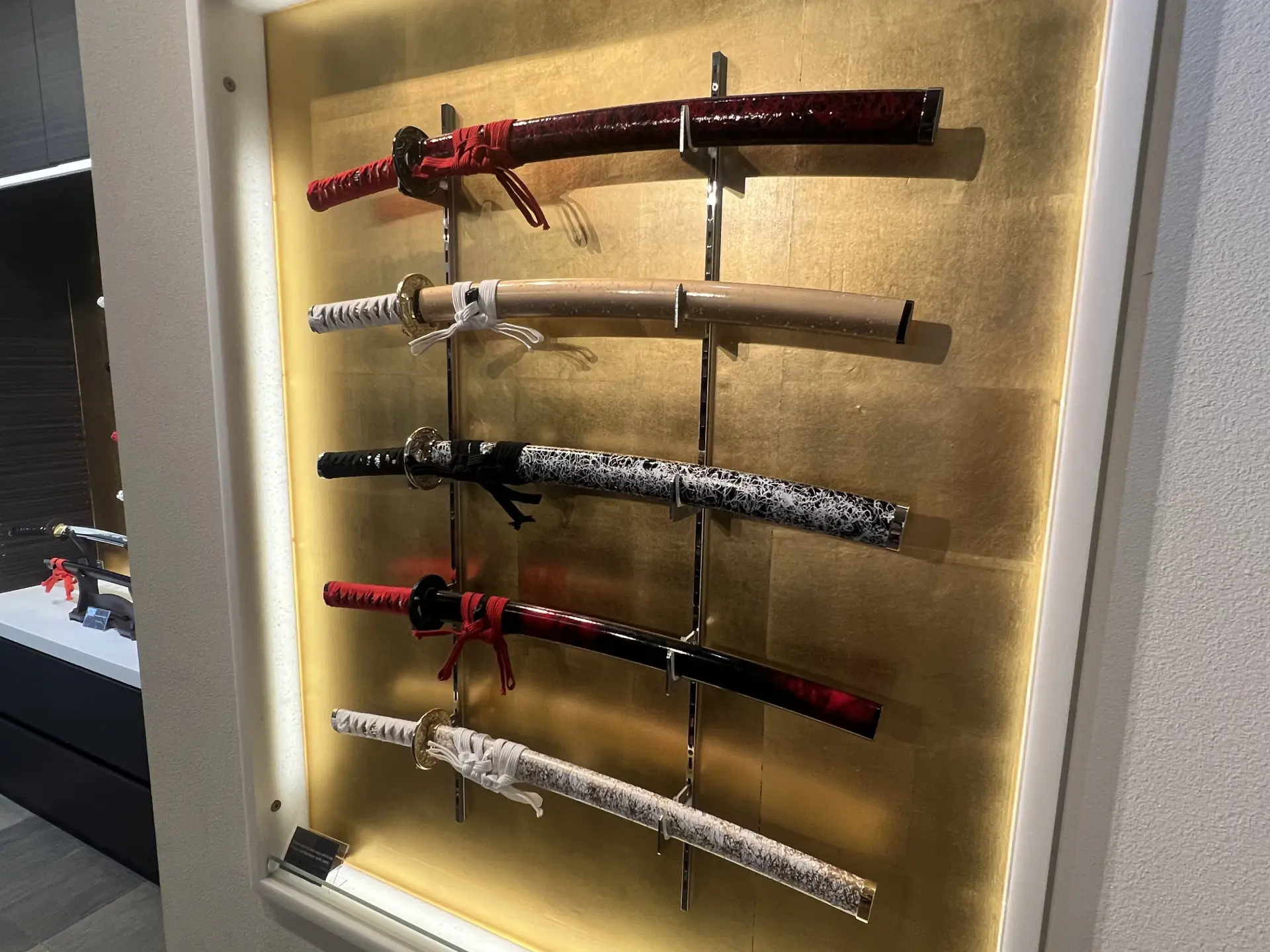
After the tour, you can shop for souvenirs at the gift shop. It sells a variety of ninja goods such as shuriken in different materials and shapes, as well as replica swords.
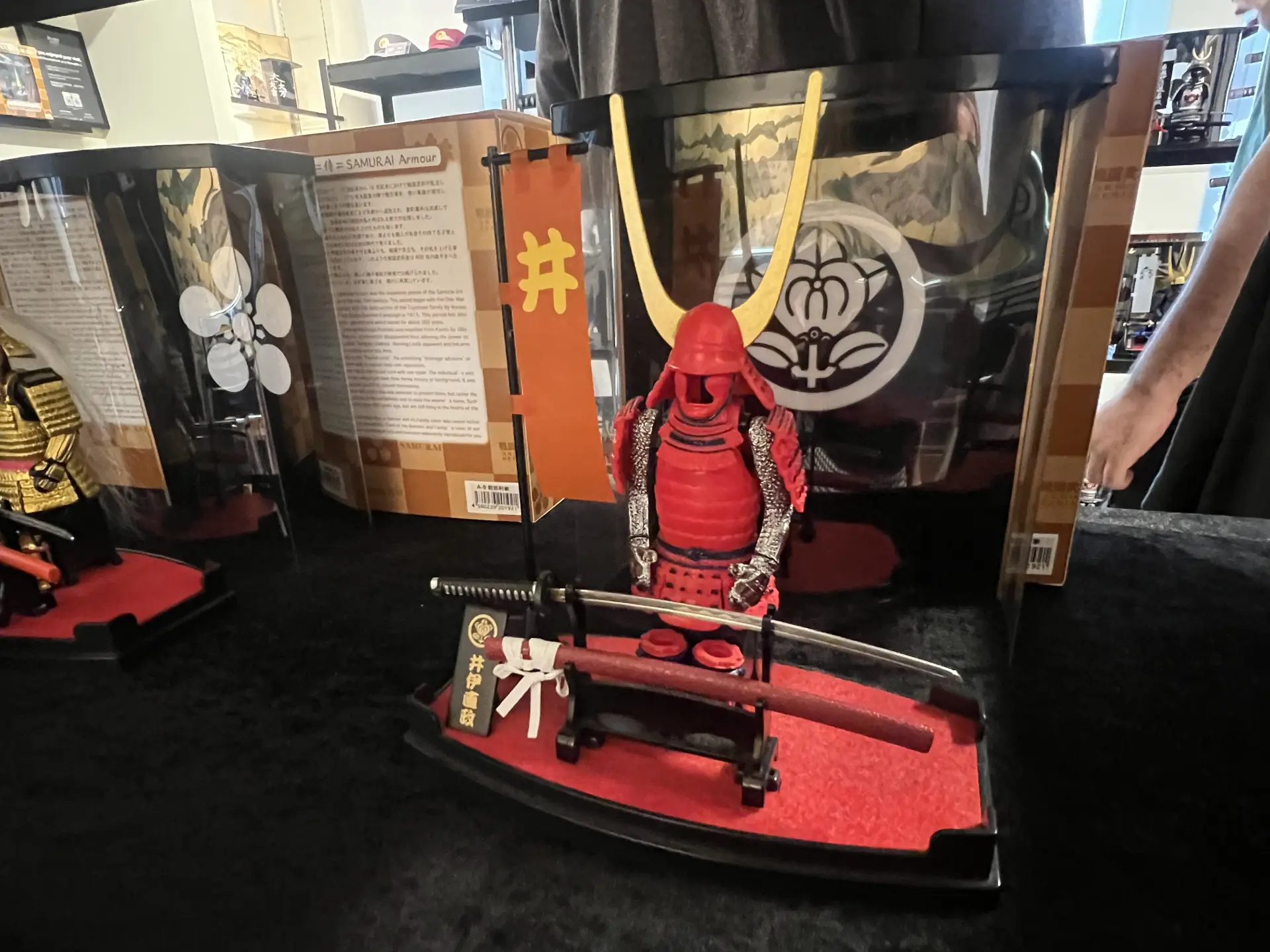
There are also miniature suits of armor inspired by Sengoku warlords.
There are plenty of ninja- and samurai-related souvenirs for sale, making them great picks for gifts for friends and family as well!
You Can Experience Ninja Culture in Tokyo Too!
This facility also has a sister location in Tokyo. It is the “SAMURAI NINJA MUSEUM TOKYO With Experience,” located just a 3-minute walk from Senso-ji Temple in Asakusa and close to Tokyo’s iconic Skytree. Here too, you’ll find a rich collection of exhibits, including various antiques related to ninja and samurai, making it well worth a visit.
Be sure to enjoy a ninja experience in Tokyo as well!
-
Hands-on museum: Visitors can enjoy authentic activities such as shuriken throwing, trying on samurai armor, sword training, and ninja experiences.
-
See antiques up close: Genuine Edo-period swords and armor are on display, and you can view them from a close distance.
-
Guided tours (available in English): Guided tours are held every 15 minutes, allowing you to enjoy the exhibits even more.
-
Both samurai and ninja: With the basic ticket, you can enjoy both samurai and ninja experiences, including trying on armor and throwing shuriken. For those looking for something more immersive, special plans are also available, such as ninja training in full ninja attire and other specialized experiences.
-
Kabuki and sumo: This museum blends Japanese popular culture and history, allowing you to experience the past as it is often depicted in manga and anime.
-
Real swords / gift shop: Inside the museum, there is a samurai gift shop with real swords and souvenirs for enthusiasts.
Facility Information
- Name in Japanese
- サムライ忍者体験ミュージアム東京
- Address
- 1-8-13 Nishi-Asakusa, Taito-ku, Tokyo Google Maps
- Phone
- 075-366-5250
- Hours
- 9:00am - 6:00pm (closes at 7:00pm)
- Tickets
-
Basic Ticket: A complete package for adults at 3,000 yen (excluding tax) and children at 2,700 yen (excluding tax), including admission, a guided tour introducing Japanese history (available in English), shuriken throwing, samurai armor try-on, samurai shows, and more.
※10% discount for online ticket reservations
Special Tickets: Starting from 6,000 yen (excluding tax), these tickets offer a more authentic experience, including wearing real armor and joining hands-on samurai or ninja training lessons. - Official website
- Official website (English)
Summary
During the Warring States period, ninja served their lords with sworn loyalty. For their masters, they carried out their missions faithfully without revealing their identities and without leaving traces behind. Their devotion and humility feel closely connected to qualities still seen in Japanese people today. At the Samurai Ninja Museum, keep that spirit in mind, dress in black, become a ninja, and enjoy the experience to the fullest!
References:
・“The NINJA - 忍者ってナンジャ⁉ -” Executive Committee (2016). The NINJA - 忍者ってナンジャ⁉ - Official Book. KADOKAWA Corporation
・Yuji Yamada (2016). History of Ninja. KADOKAWA Corporation

Author
Freelance Announcer
Sayaka Motomura
Focused on sharing insights related to traditional culture, performing arts, and history.