Kiyosumi Gardens

Verified [Verified] denotes information that has been published with confirmation of its owing parties.

Kiyosumi Gardens

A strolling-style landscape garden where visitors can experience Japanese beauty through the celebrated harmony of renowned stones gathered from throughout Japan and pine trees.

3.32 6

Last update :

Kiyosumi Gardens is a strolling-style landscape garden centered on a pond, artificial hills, and dry landscape features. In 1878, businessman Yataro Iwasaki purchased the site of a dilapidated former estate and began planning a garden. It was largely completed in 1880 as Fukagawa Shinbokuen. Construction continued after Iwasaki’s death, resulting in a strolling-style landscape garden featuring a large pond fed by water from the Sumida River and renowned stones brought from throughout Japan. The garden was later developed by the City of Tokyo, as it was then known, and opened to the public in 1932. In March 1979, it was designated a Place of Scenic Beauty by the Tokyo Metropolitan Government. In 1977, the adjoining land to the west was added as an open park, giving the garden its present form.

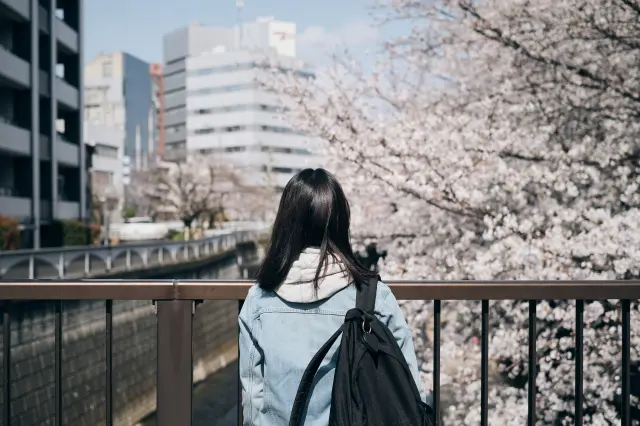
The garden has three distinctive iso-watari stepping-stone paths, offering scenery that changes with every step. On days of gentle rain and after rainfall, the many stones throughout the garden glisten beautifully, revealing a different side of the landscape. Since the garden tends to have fewer visitors on rainy days, this view has quietly gained popularity. The park section on the garden’s west side includes a lawn and pergola. Around 20 cherry trees are also planted there, making it a popular spot for cherry blossom viewing in spring.

Garden tours are held twice daily at 11:00 a.m. and 2:00 p.m. on Saturdays, Sundays, and public holidays. English-language tours and special tours requested by visitors are also available.

Highlights

  • A strolling-style landscape garden centered on a pond, artificial hills, and dry landscape features.
  • Three iso-watari paths allow visitors to cross the pond on stepping stones placed near the water’s edge.
  • The garden is also a popular cherry blossom viewing spot in spring.
  • The renowned stones glistening after light rain or a shower are well worth seeing.

Photos

  • Mt. Fuji, the tallest and largest artificial hill in Kiyosumi Gardens

    Mt. Fuji, the tallest and largest artificial hill in Kiyosumi Gardens

  • Panoramic view of the garden

    Panoramic view of the garden

  • Sensui pond, featuring three islands

    Sensui pond, featuring three islands

  • Iso-watari stepping stones and the Ryotei pavilion

    Iso-watari stepping stones and the Ryotei pavilion

  • Autumn at Kiyosumi Gardens, with the fall foliage of wax trees and the Ryotei pavilion (Photo: PIXTA)

    Autumn at Kiyosumi Gardens, with the fall foliage of wax trees and the Ryotei pavilion (Photo: PIXTA)

Reviews

6

Some reviews are AI-translated.

  • See More

    You can see thoughtful design everywhere here. The pond, plants, and buildings are all carefully maintained.

  • See More

    The garden is really well maintained. When I stood on the little bridge, the koi and turtles came right up to me. I felt a bit bad about not feeding them anything.

  • See More

    The entrance fee is pretty cheap—just JPY 150. You can easily spend an afternoon in the garden. The plants and landscaping are really well maintained.

  • See More

    You can enjoy the garden's scenery as you walk along the paths, and even cross a small bridge into the pond area. The beautiful views of the garden are all right there.

  • See More

    Wandering freely in this elegant Japanese garden is such a relaxing experience. If I could enjoy a cup of green tea with some wagashi here, that would be pure happiness.

Details

Name in Japanese
清澄庭園
Postal Code
135-0024
Address
3-3-9 Kiyosumi, Koto City, Tokyo
Phone
03-3641-5892 (Kiyosumi Gardens Office)
Closed
Year-end and New Year holidays (December 29–January 1)
Admission
General: ¥150; ages 65 and over: ¥70
Free for elementary school students and younger; middle school students who live in or attend school in Tokyo; holders of a Physical Disability Certificate, Ai no Techo, Mental Disability Certificate, or Rehabilitation Certificate; and one accompanying caregiver
Access
3 minutes on foot from Kiyosumi-shirakawa Station on the Toei Oedo Line and Tokyo Metro Hanzomon Line
Credit Cards
Accepted
Official website
Official website (Japanese)
Hokkaido Tohoku Kanto Chubu Hokuriku Kansai Chugoku Shikoku Kyushu Okinawa