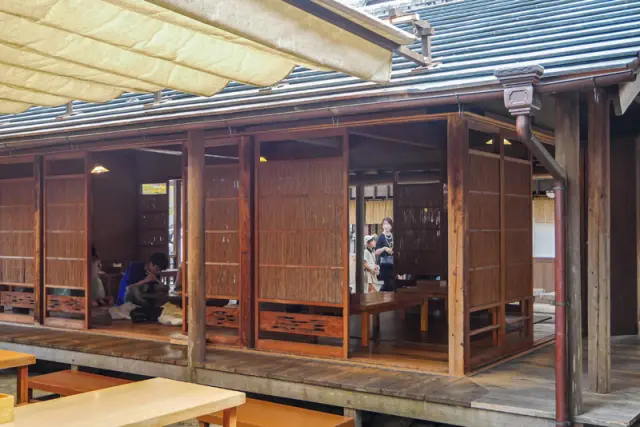
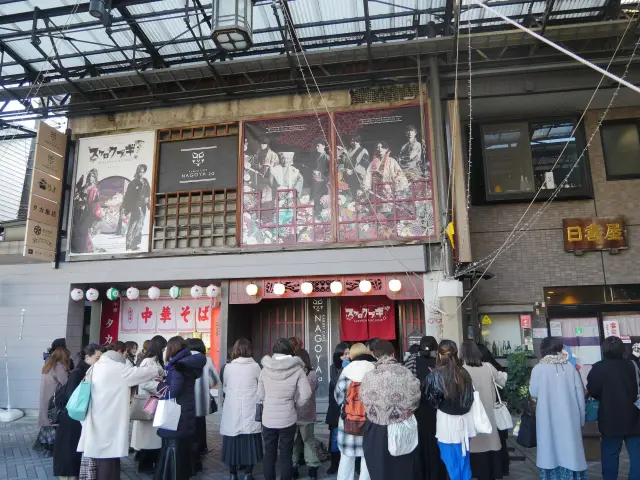
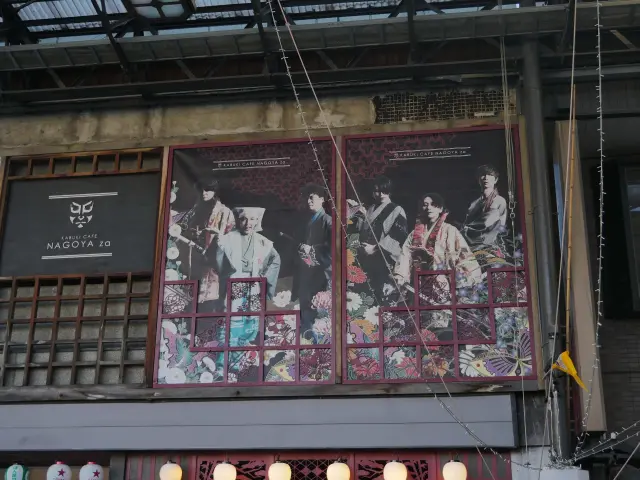
I originally came just to explore Endoji Shopping Street, but after walking around, I found the area much quieter than I had expected. As I approached KABUKI CAFE NAGOYA za, the atmosphere suddenly changed completely. Quite a few people had gathered outside, and the place felt especially lively, bringing a burst of energy to the quiet shopping street.
The contrast was so striking that I couldn't help stopping to look into it. The sign seemed to indicate that it had something to do with kabuki and stage performances. From the enthusiasm and anticipation of the girls waiting there, it was obvious that this was a very local cultural event. I looked it up on my phone and learned that it was a small theater combining kabuki elements, sword fighting, dance, comedy, and audience interaction. It seemed like it might be easier to understand than kyogen. I actually considered going in to join the fun, but it looked like there might not be any tickets left, so I gave up.
But because of that, it ended up being the most memorable place from my visit to Endoji Shopping Street. In a relatively quiet old shopping street, there was suddenly this energetic little theater surrounded by enthusiastic fans. The contrast was huge.
KABUKI CAFE NAGOYA za | Review by Holly
Other Reviews by Holly
-

TOKYO Solamachi
With a wide variety of over 300 shops gathered in this retail complex, you can feel the liveliness of Tokyo’s shitamachi downtown.
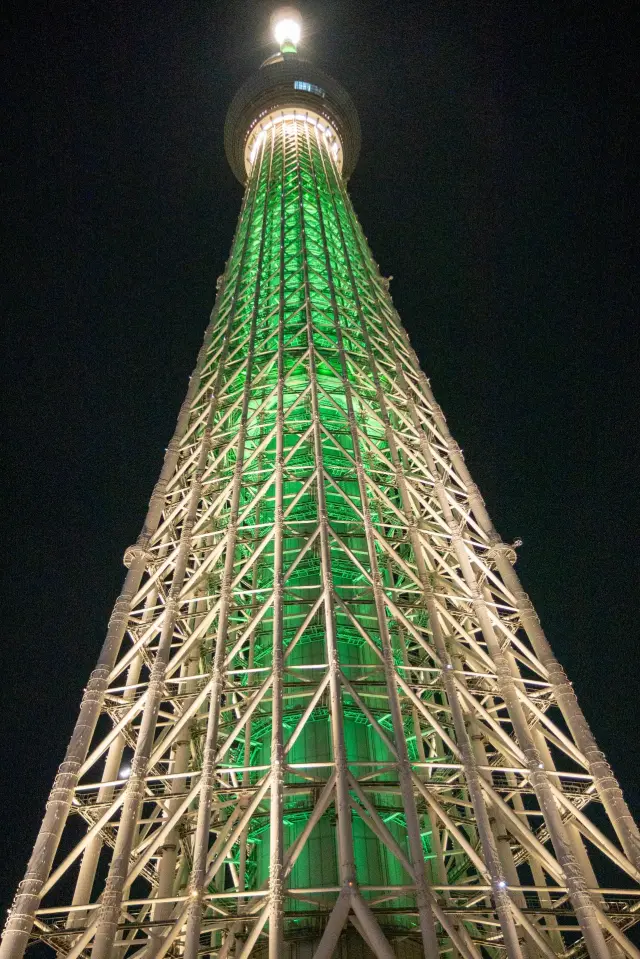
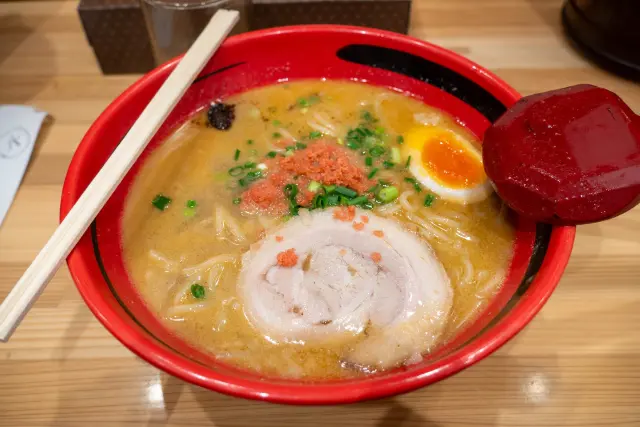
This time, after visiting the Christmas market at Tokyo Skytree, I stopped by Tokyo Solamachi to look around. My main reason for coming was to eat the famous Ebisoba Ichigen shrimp ramen from Hokkaido, but once I walked in, I was surprised by the sheer number of stores here! I really liked the Japanese-style atmosphere created on the fourth floor. You can find plenty of Japanese crafts, Japanese-style goods, and all kinds of small items featuring Japanese culture here. I almost got so caught up browsing that I forgot to go eat ramen.
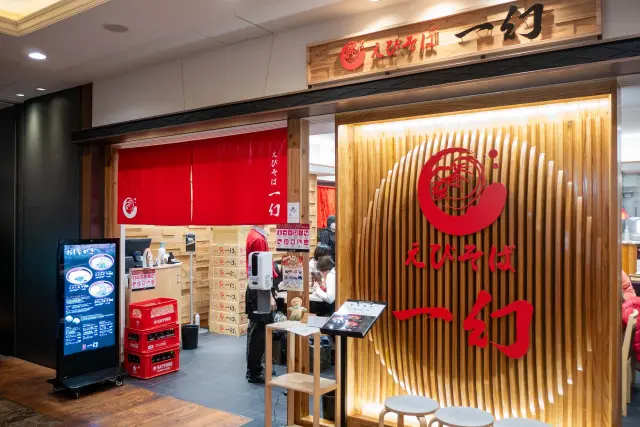
Fortunately, I still remembered that the main reason for this visit was to eat Ebisoba Ichigen's famous Hokkaido shrimp ramen. In addition to its locations in Hokkaido, Ichigen has three locations in Tokyo: Shinjuku, Yaesu Underground Shopping Mall near Tokyo Station, and Tokyo Solamachi. The Shinjuku location often has a line, while the Yaesu Underground Shopping Mall location is relatively small, so I ultimately chose the one on the sixth floor of Solamachi. You don't need to buy a meal ticket in advance at this location. You can order directly from the menu, and a Chinese menu is also available, which is very convenient for tourists who aren't familiar with Japanese. More importantly, there is seating suitable for groups. Unlike some ramen restaurants that mainly have counter seating, it's easier for larger parties to be seated and eat together.
I think Tokyo Solamachi is a good shopping destination to pair with a visit to Tokyo Skytree, especially for independent travelers. Not only is it conveniently located, but it also has a very wide variety of stores. Whether you want to buy Japanese souvenirs, look for unique goods, or simply find a restaurant for a meal, you can take care of it all in one place. However, since my main purpose this time was to eat ramen and I had already visited the Christmas market beforehand, I didn't spend much time exploring the other floors, which felt like a bit of a shame. -
-
Oharai Machi, Okage Yokocho
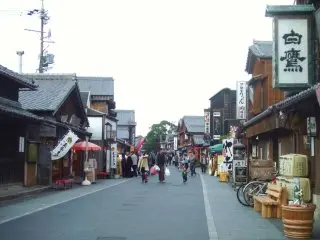
In front of the Inner Shrine of Ise Jingu Shrine, there's a street called Oharai Machi that bustles with numerous worshippers every year. From the Edo Period to early Meiji Period, many people called Onshi lived here and performed Shinto dance and music for their worshippers (Oharai), thus, the name Oharai Machi is believed to have come about.
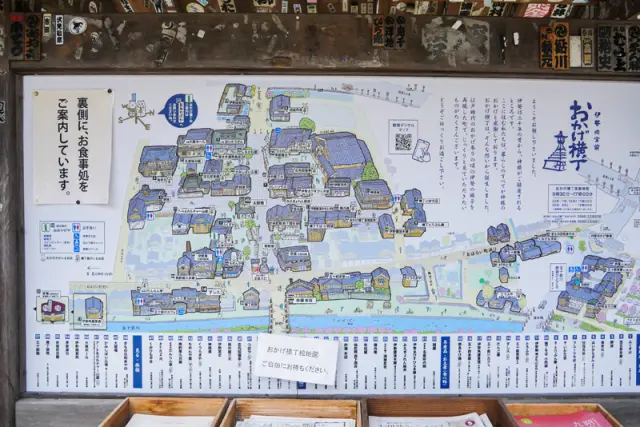
On this visit to Oharai Machi and Okage Yokocho near the Inner Shrine of Ise Jingu, I originally thought that setting aside two hours after visiting the shrine would be enough time to browse the shops and get something to eat. But once I actually started exploring, I realized that this area had far more to offer than I had imagined.
Although Oharai Machi and Okage Yokocho are right next to each other and it is almost impossible to notice the boundary between them while walking around, they actually have different backgrounds. Oharai Machi is a historic street that gradually developed alongside the culture of visiting Ise Jingu, and many long-established shops and local businesses remain along the way. Okage Yokocho, meanwhile, is a neighborhood revitalization project led by Akafuku that combines traditional architecture with local culture to recreate the lively atmosphere of the old town outside Ise Jingu. The former has a sense of history and everyday life built up over many years, while the latter feels more like an area that brings together Ise's culture, food, and traditional crafts. Each has its own character, yet they blend together naturally, making the entire walking route more varied.
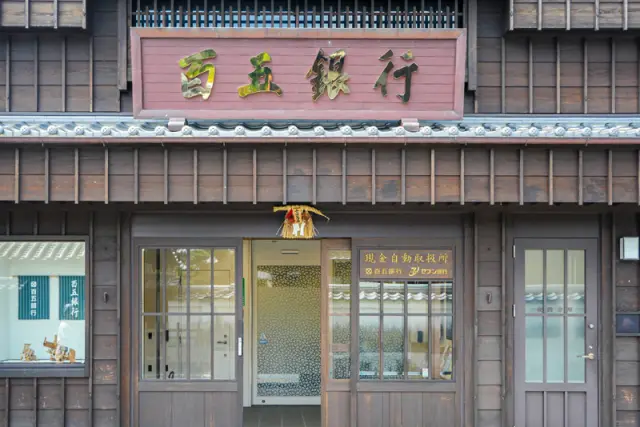
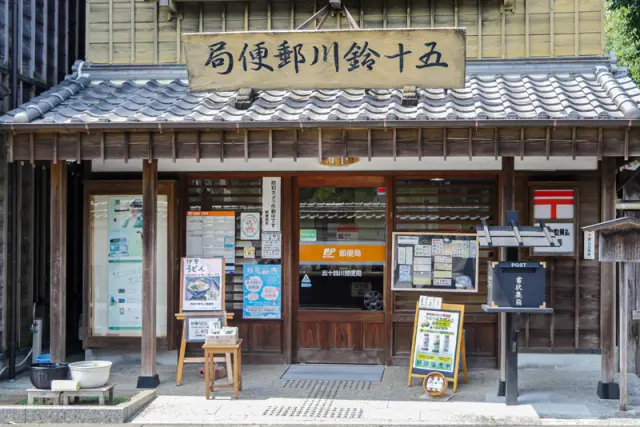
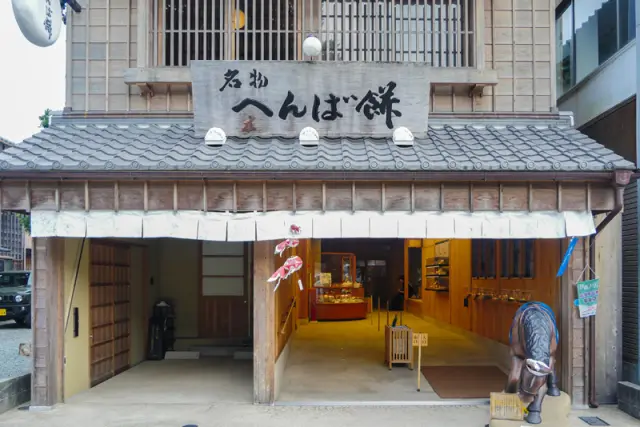
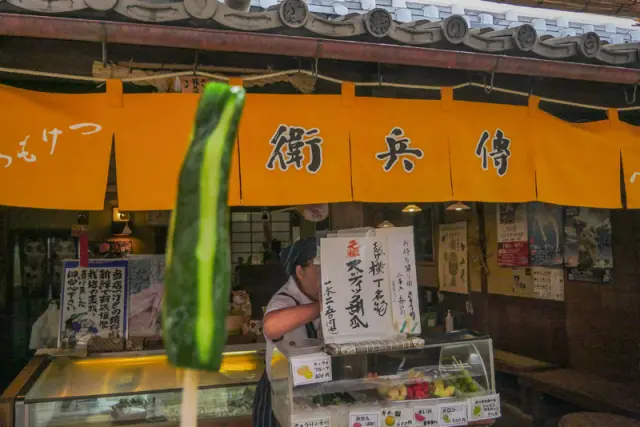
I especially liked that even though this is already a well-established tourist shopping area, it does not feel overly uniform. In addition to historic shops such as Akafuku and Henba Mochi, there are all kinds of local brands, distinctive goods, traditional crafts, and restaurants along the way. Even banks, post offices, and modern brand-name stores try to blend into the overall Japanese streetscape. I really appreciated this because it is not simply a matter of remodeling a few buildings in a retro style. Even the everyday functions of the street are designed to maintain a consistent atmosphere.
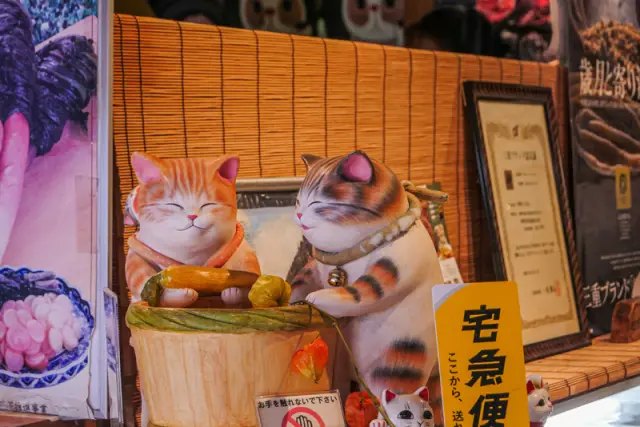
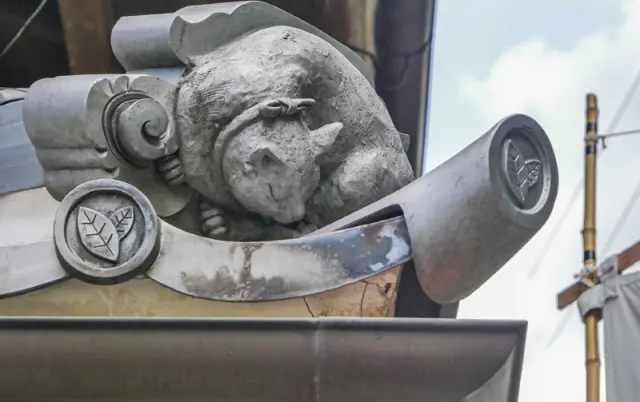
Another thing I found interesting about Okage Yokocho was the shop cat statues scattered throughout the area. Each cat has a different pose and personality, and some even reflect the character of the shop where they are located. Although I did not specifically try to find all 18 shop cats on this visit, occasionally spotting one while browsing still made me want to stop and take a picture. This small sense of discovery also made what would otherwise have been a simple shopping trip more fun.
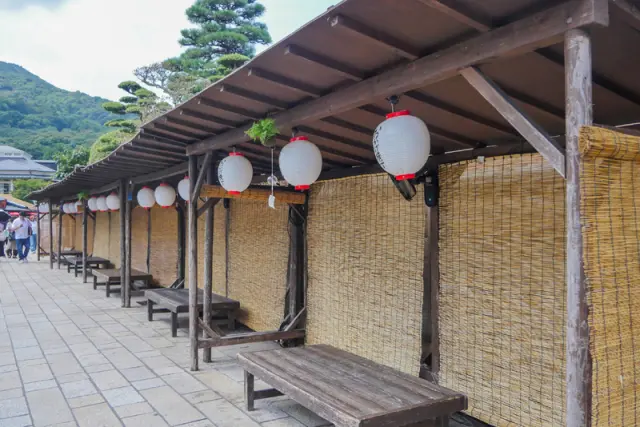
I visited in August, and summer in Ise really is quite hot. However, some areas had reed screens for shade, and there were also plenty of seats where visitors could rest. After buying snacks, you can find somewhere to sit down and enjoy them slowly instead of having to stand by the roadside while eating. That was a big plus for me. The streetscape of Okage Yokocho itself is especially distinctive, so even just sitting and resting while looking at the surrounding buildings and passing crowds lets you experience an atmosphere unlike that of an ordinary shopping street.
The unfortunate part was that I seriously underestimated how much there was to explore in this area. I had originally scheduled only two hours, but visiting shops, taking pictures, and sampling food already took quite a bit of time. After eating at two or three wagashi shops and trying some fried foods, I simply had no room left and did not even get to try the Ise udon I had planned on eating. By the end, I almost resented my stomach for not being bigger. There were still so many shops I wanted to visit and foods I wanted to try, but I had no choice but to save them for my next visit. -
-
Daigoji Temple
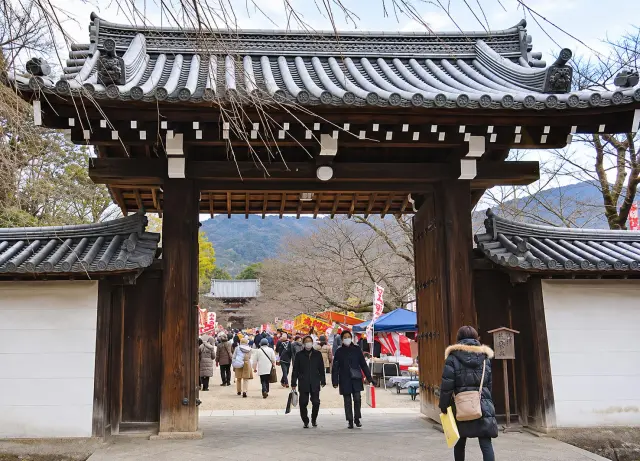
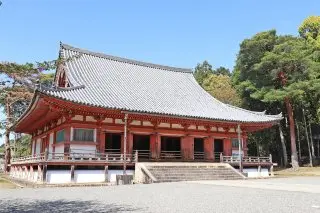
Daigoji Temple was founded in 874 (Jogan 16), during the early Heian period, by Shobo, also known as Rigen Daishi. A grand-disciple of Kobo Daishi Kukai, he is regarded as a key figure in the revival of Shugendo. Daigoji is the head temple of the Daigo school of Shingon Buddhism. Its grounds cover approximately 1,630 acres across Mount Daigo, making it one of the largest temple complexes in Kyoto. The grounds are divided into Kami-Daigo at the top of the mountain and Shimo-Daigo at its foot, with more than 80 halls and pagodas scattered throughout. The temple initially developed around Kami-Daigo. It later received the strong patronage of Emperor Daigo as an imperial temple, and an extensive temple complex was established at the foot of the mountain.
This time, I happened to catch Daigoji Temple’s annual “Godairiki-san” festival (Godairiki Son Ninno-e), so even though it wasn’t cherry blossom season, I made a special trip to attend. This festival has continued for over a thousand years and is also one of Daigoji Temple’s most important annual events. When traveling in Japan, most traditional festivals you encounter are Shinto rituals held at shrines, so having the chance to personally experience a large-scale Buddhist prayer ceremony at a temple was quite rare.
The Godairiki Son Ninno-e mainly offers prayers for peace throughout the country, the happiness of its people, and protection from misfortune. Before the main festival, Daigoji Temple holds seven consecutive days of preliminary services, during which monks chant sutras and offer prayers. On the day of the festival, visitors receive blessed “Godairiki Son sacred images,” which are talismans believed to protect against disasters and theft. They can be seen posted at the entrances of many long-established shops and private homes in Kyoto. Many people were also lined up to receive one that day, and seeing the long line, I almost wanted to join it too.
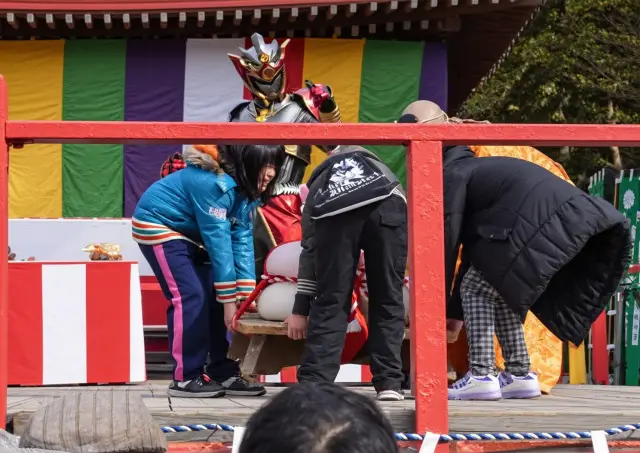
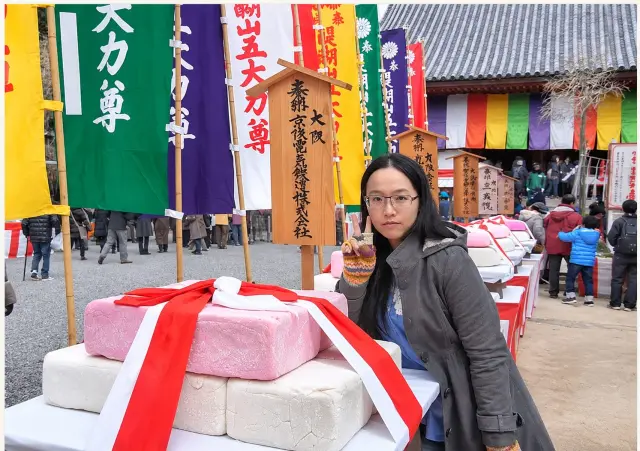
One of the festival’s most distinctive events is the “Mochi-Lifting Strength Offering” held in front of the Kondo Hall. Participants must lift and hold enormous red-and-white kagami mochi, offering their strength to the Five Great Wisdom Kings and praying for good health and protection from misfortune. The competition has divisions for elementary school students, men, and women. I looked it up afterward, and the kagami mochi used at the event are truly heavy: 150 kilograms for the men’s division and 90 kilograms for the women’s division. They certainly aren’t easy to lift, though I’m not sure whether advance registration is required.
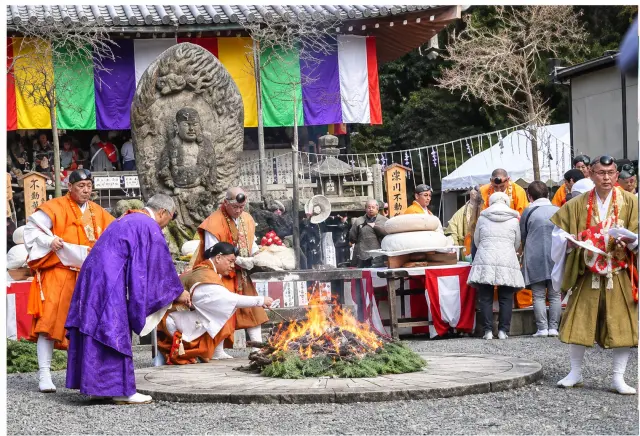
There were also many large kagami mochi specially offered by worshippers in front of the Kondo Hall. The sight of them neatly lined up was quite impressive. These were all offerings made by worshippers specifically for the Godairiki Son Ninno-e. Seeing the astonishingly large kagami mochi arranged one after another in front of the hall really showed how important this festival is to local worshippers.
In front of Fudodo Hall on the other side, a Saito Goma prayer ceremony is held, with monks offering prayers through a ritual in which wooden goma prayer sticks are burned. From sutra-chanting services and the goma ritual to the lively mochi-lifting event, being able to see several different forms of Buddhist prayer ceremonies all at once is one of the things that makes this festival so special.
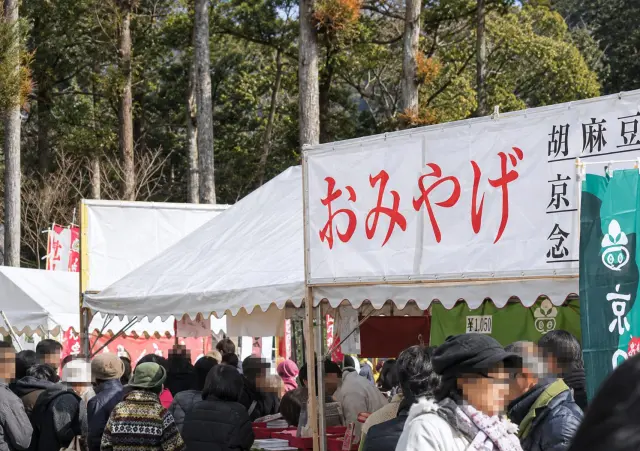
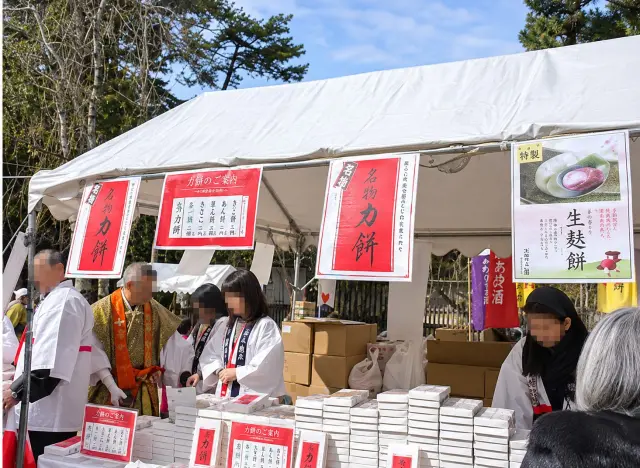
Besides the religious events, the temple grounds also had plenty of seasonal products and food stalls, including five-colored sweets, limited-edition brown rice tea created in collaboration between Daigoji Temple and Ito En, and Heian porridge offered free to worshippers. These added an extra sense of lively festivity to the event. The item most worth noting was the Godairiki mochi sold only during the festival. It’s actually a type of mochi. I bought two bags at the time, planning to take them back to Taiwan and grill them little by little. I even went out of my way to buy a special grilling rack for mochi, but unexpectedly, they were all moldy the day after I got home! If I’d known, I would have grilled and eaten them in the hotel kitchenette while I was still in Japan. The grilling rack ended up being a wasted purchase too, which was really frustrating QQ.
Overall, the Godairiki Son Ninno-e is a large-scale event that combines religious culture, traditional rituals, and the character of a local festival. It offers an experience different from the Japanese shrine festivals that most tourists are more familiar with. If you have the chance to catch it, it’s well worth making a special trip to Daigoji Temple to experience this traditional festival that has continued for a thousand years.
-