• See More

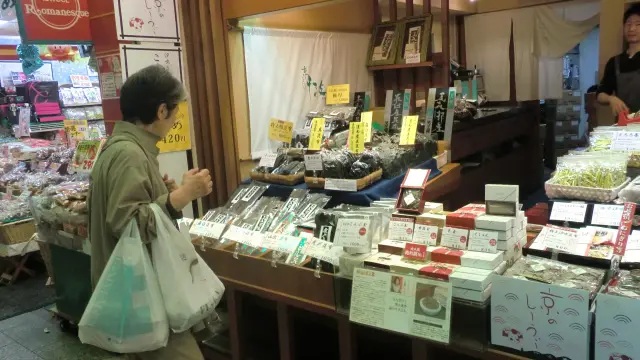
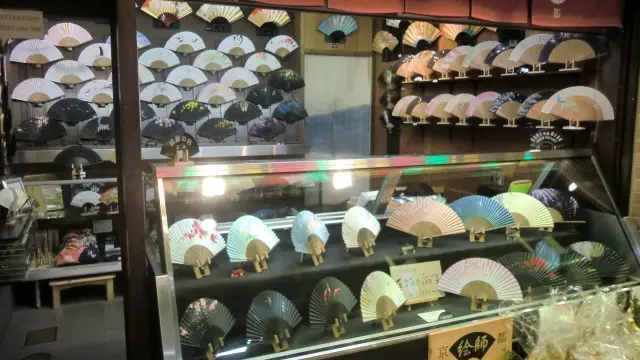
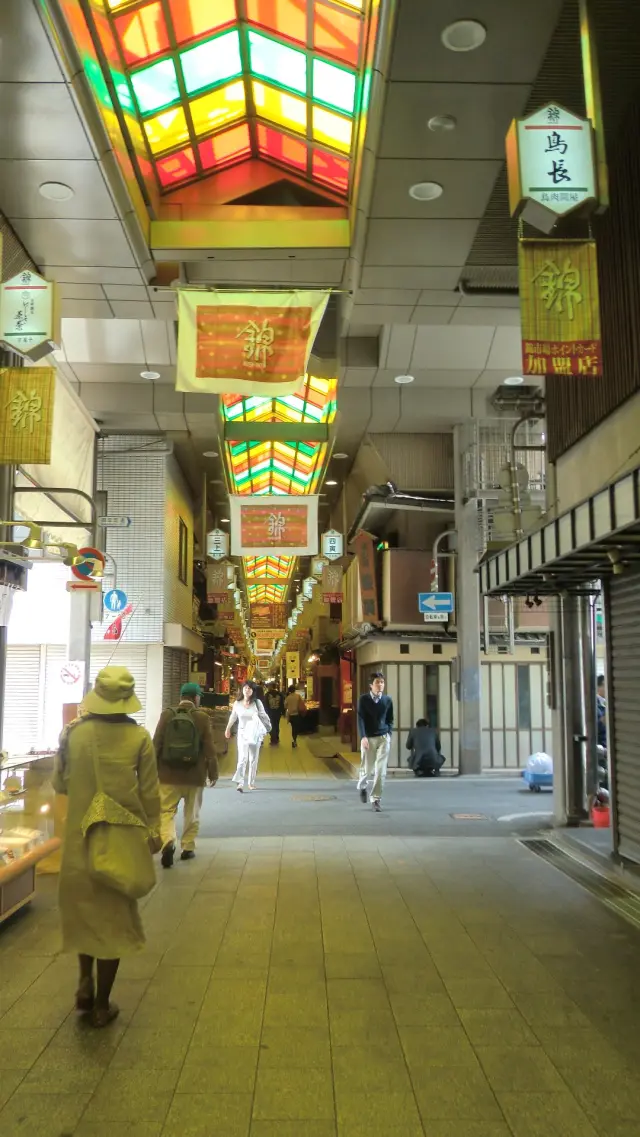
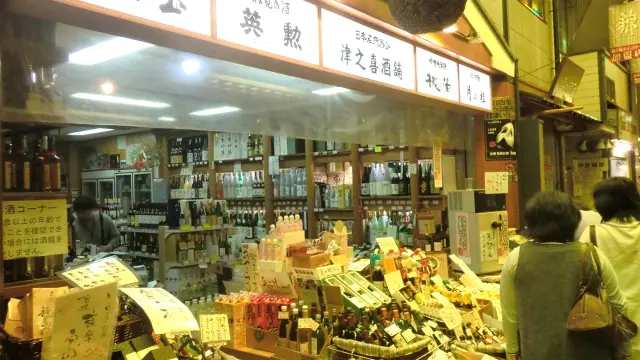
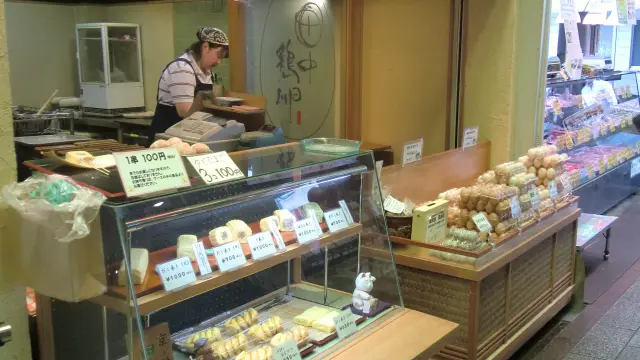
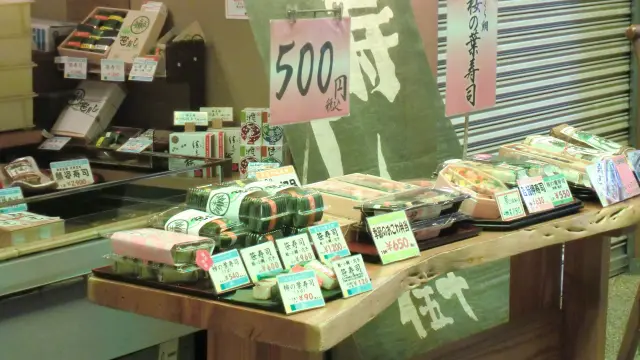
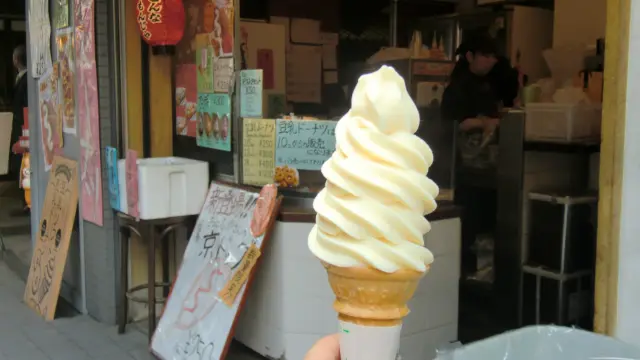
    Nishiki Market felt to me like a blend of a Japanese shopping street and traditional markets such as Kizu Market and Omicho Market. The entire street is packed with shops selling everything from Kyoto pickles, tofu, tamagoyaki, seafood, and dried goods to wagashi and matcha desserts. However, Nishiki Market now officially reminds visitors not to eat while walking. After purchasing food, it is best to eat in front of the shop or in a designated area inside.

    That said, there aren't many places where you can sit down and eat, so you may want to have something beforehand and then come browse. It's good for trying small snacks, while many items are better bought to eat back at your hotel. This time, I also bought tamagoyaki from one shop. I had high expectations, but after eating it, I realized I really do seem to prefer the Kanto style. I looked it up afterward and learned that Kansai-style tamagoyaki mainly features the flavor of dashi and is lighter, while I prefer the sweeter Kanto version with a more pronounced flavor. Another interesting item commonly seen in the market is baby octopus stuffed with a quail egg. A whole baby octopus has a quail egg inside, giving it a very distinctive appearance. This was also my first time trying it here, and it was a memorable snack.

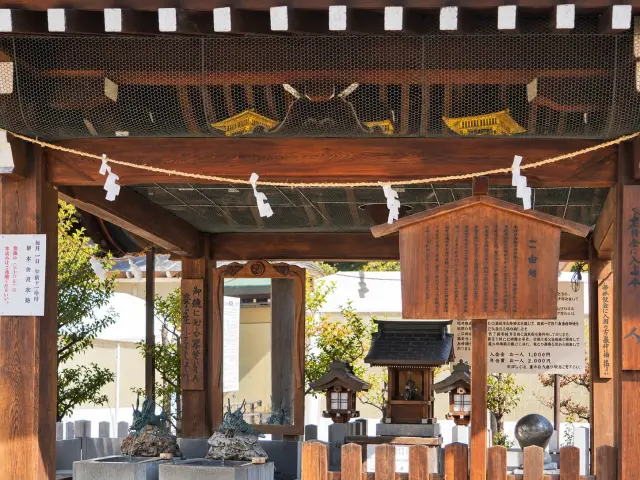
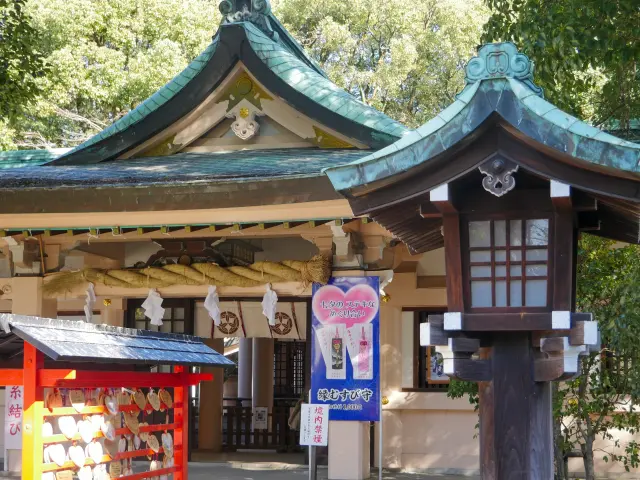
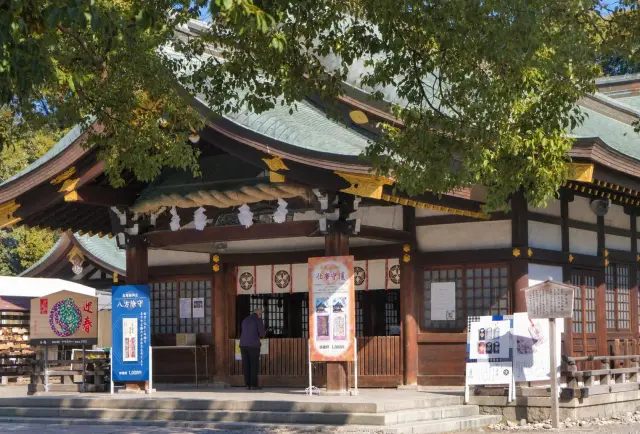
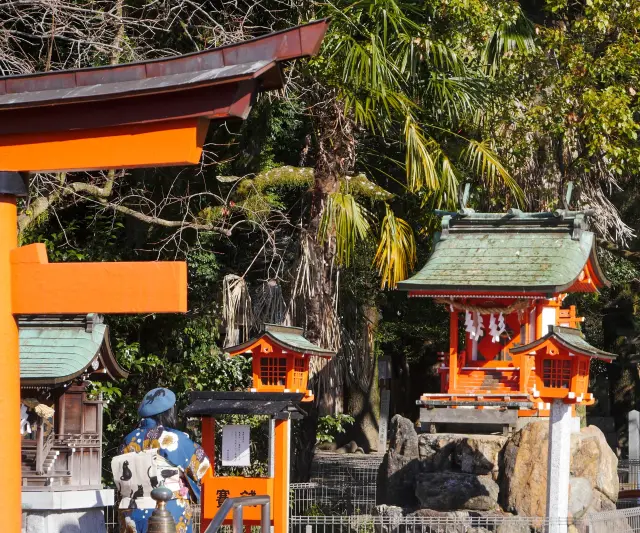
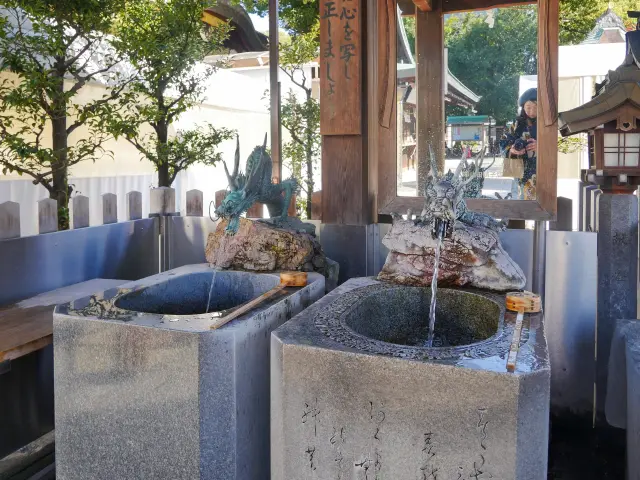
    At the eastern end of Nishiki Market is Nishiki Tenmangu Shrine. The main deity enshrined here is Sugawara no Michizane, so like other Tenmangu shrines, it is known for worship related to learning and wisdom and is very popular. After all, who wouldn't want to pray for knowledge and wisdom? The grounds also have “Nishiki Water,” which springs from about 30 meters underground. It's very convenient to stop by and pray after reaching the end of the market.

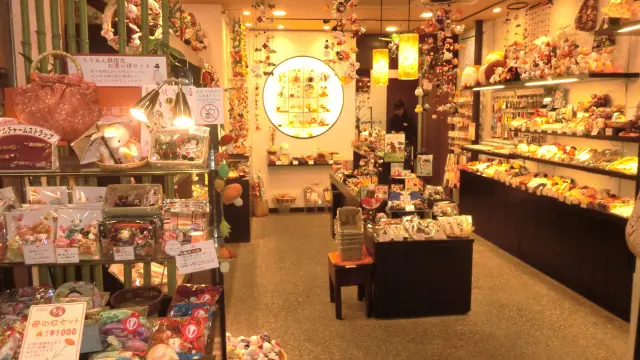
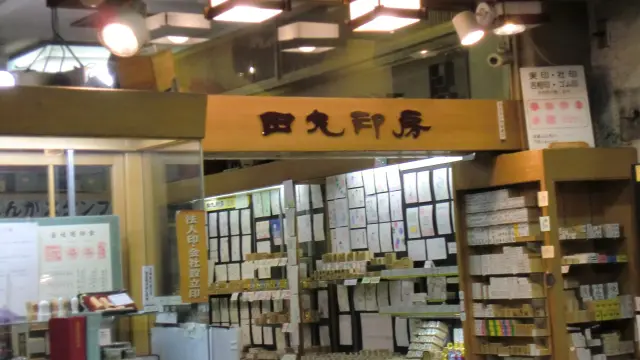
    Next to Nishiki Tenmangu Shrine is the Shinkyogoku branch of Tamaru Inbo, which I make a point of visiting every time I come. Their “Kyo Ufufu Stamps” come in around 1,000 designs, ranging from Japanese-style patterns and Kyoto themes to amusing text stamps. If you like planners and stamps, it's really easy to lose control here. The prices certainly aren't cheap, but the stamp designs and craftsmanship are excellent, and I personally feel the quality justifies the price.
Other Reviews by Holly

  • Tsukiji Hongwanji Temple

    Located near the Tokyo Tsukiji Market, Tsukiji Hongwanji is a temple of the Jodo Shinshu Hongwanji Sect, whose head temple is Nishi Hongwanji in Kyoto.

    • Tsukiji, Odaiba, Toyosu
    • Shrines & Temples
    See More

    Tsukiji Hongwanji Temple was originally just a place I planned to stop by on my way to Tsukiji Market, but after seeing it in person, its architecture ended up leaving a deep impression on me. The current main hall was designed by architectural historian Chuta Ito, and its exterior has a strong Indian and South Asian Buddhist architectural style. The dome, stonework, and overall silhouette are completely different from what you would normally picture as a Japanese temple.

    But what is really interesting is that when you get closer, you notice that it still retains much of the refinement distinctive to Japanese architecture. The animal carvings, decorative details, stained glass, and interior furnishings do not simply copy an Indian style. They incorporate a lot of Japanese aesthetics and craftsmanship, so the building looks very foreign overall, yet very Japanese when viewed closely. This kind of blend is truly uncommon among Japanese temples.

    There is also a large pipe organ inside the main hall, which is quite unusual in a Buddhist temple. Unfortunately, photography is prohibited in the worship area. Otherwise, the contrast between the interior and exterior would be even more striking, since the inside of the main hall looks much like many other Hongwanji temples.

    The Tsumugi cafe next to Tsukiji Hongwanji Temple is also well known, and its signature offering is the “18-Dish Breakfast,” which lets you try a variety of small Japanese dishes at once. I did not pay much attention to the breakfast hours this time, which was a bit of a shame. If you are planning to continue on to Tsukiji Market for food afterward, I would recommend watching how much you eat, or you may end up full before you even explore the market.

  • Osu Kannon Temple

    This temple is the branch headquarters of Shingon Sect, Chisan School, officially called “Kitanosan Shinpukuji Hoshoin Temple ”. It started in Hashima City, Gifu and moved to the current location by General Tokugawa Iyeyasu’s order. It is regarded as one of Japan’s Three Kannon Temples along with Asakusa Kannon in Tokyo and Tsu Kannon in Mie.

    • Nagoya
    • Shrines & Temples
    See More

    Osu Kannon Temple itself is well worth exploring carefully. Its vermilion main hall is quite striking, and the temple grounds feel more lively and down-to-earth than I had expected, without an overly formal sense of distance. The temple enshrines Kannon Bodhisattva and is one of Nagoya’s most prominent temples devoted to Kannon worship. What impressed me most during my visit was actually the large number of pigeons on the grounds. They often fight over food in front of the main hall, and it can be a little scary when a large flock takes off at once. They are not particularly aggressive, but you should still be careful if you feed them.

    Like Sensoji Temple, this temple is often said to be a place where it is relatively easy to draw a bad-luck fortune. Fortunately, I have visited several times and have always drawn good luck, so I am quite grateful for Kannon’s care. In addition to the main hall, the grounds also include a bell tower, Niomon Gate, and purification pavilion. The amulets and other items available here are also distinctive.

    Near the bell tower, there is also a mechanical puppet display called “Muneharu Ranman,” which performs automatically every day at 11:00, 13:00, 15:00, 17:00, and 18:30. It is themed around Tokugawa Muneharu, lord of the Owari Domain. If you are interested, you can time your visit to see it.

  • Kurashiki Denim Street

    Kurashiki Denim Street is a specialty spot for denim from Kojima, Kurashiki City, known as the birthplace of Japanese-made jeans. It offers a wide range of denim products, including Kojima-made jeans, bags, accessories, and interior goods, with easy-to-shop sections for men, women & kids, and miscellaneous goods. One of its charms is being able to casually experience “Kurashiki denim” while comparing differences in texture and finish.

    • Okayama
    • Miscellaneous Goods
    See More

    Kurashiki Denim Street is located in the Kurashiki Bikan Historical Quarter. I had seen it featured on a Japanese TV show before, and it is best known for its blue “denim buns” and “denim soft-serve ice cream.” But after seeing the actual color, I suddenly lost my appetite and decided not to try them after all.

    Although it is called “Denim Street,” it is actually more like a small alley-style shopping area with denim products from brands based in Kojima. Everything throughout the area, from the signs and decorations to the merchandise, uses a lot of blue, making it stand out sharply amid the white walls and black roof tiles of the Kurashiki Bikan Historical Quarter.

    What is interesting about this place is that it is not just a “blue photo spot.” It is genuinely connected to Kurashiki’s local industries. Kojima in particular has a long history of developing textile- and denim-related industries and is also an important birthplace of domestically produced Japanese jeans. So the abundance of denim elements in Kurashiki is not a forced tourism theme, but part of the local industry.

    Once, while riding the train, I happened to see high school students heading home from school, and their uniform jackets had a denim-like look. That was something I never could have imagined when I was a student. It was really unique to see the local industry blend so naturally into everyday life.

    If your itinerary does not leave enough time for a separate trip to Kojima, Kurashiki Denim Street is a good alternative for a simple introduction to denim culture. People interested in jeans, canvas, and fabric products will find more to browse. Even for general tourists, it can be treated as a small, highly distinctive spot within the Bikan Historical Quarter.

    As a side note, the public restroom near the back of Denim Street is also very nicely designed and blends harmoniously with the surrounding scenery. Even small details like this make it clear that Kurashiki puts a lot of care into its tourist spaces.

Hokkaido Tohoku Kanto Chubu Hokuriku Kansai Chugoku Shikoku Kyushu Okinawa