• See More

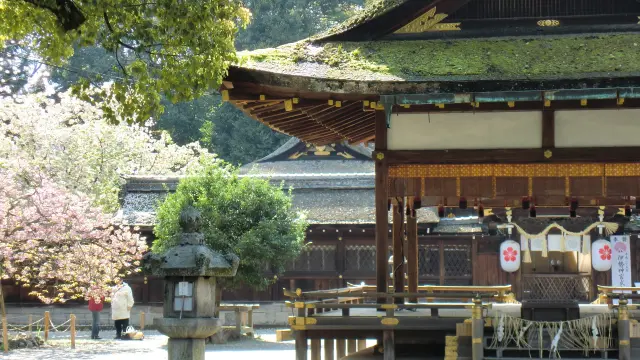
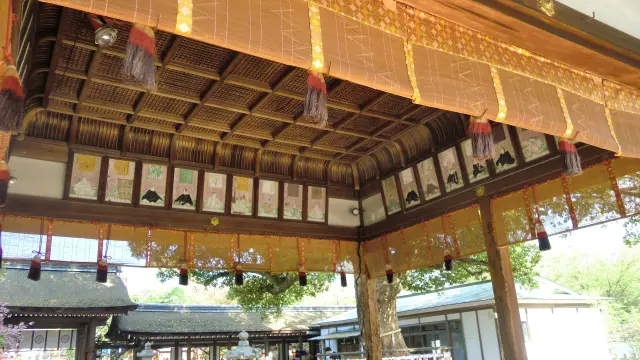
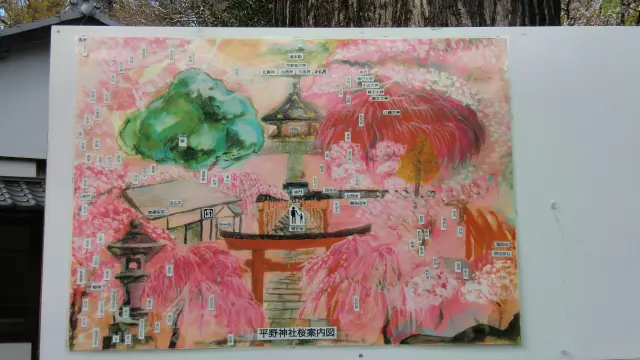
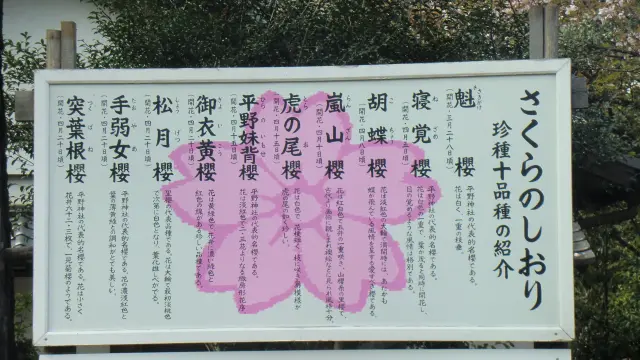
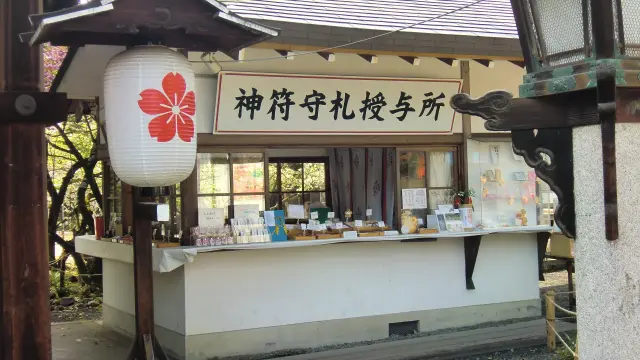
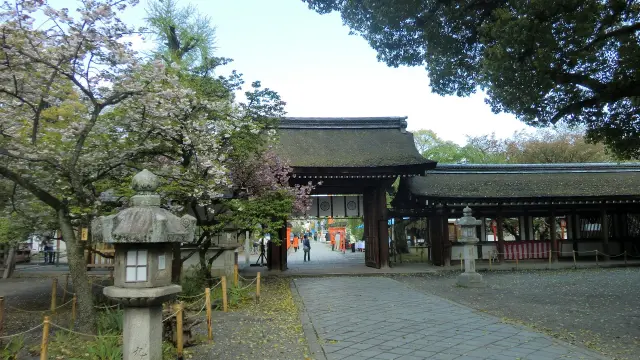
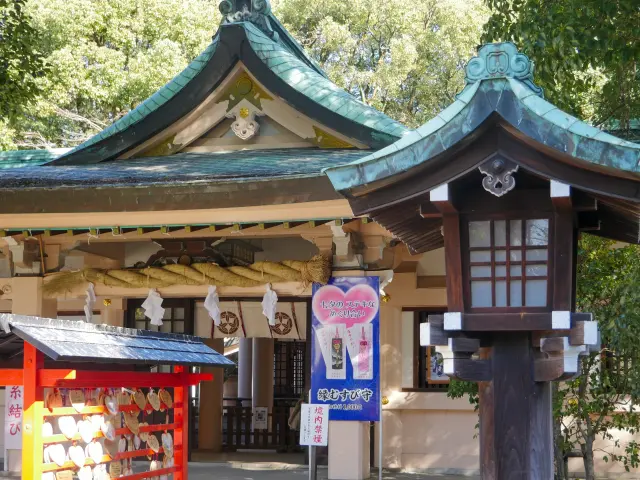
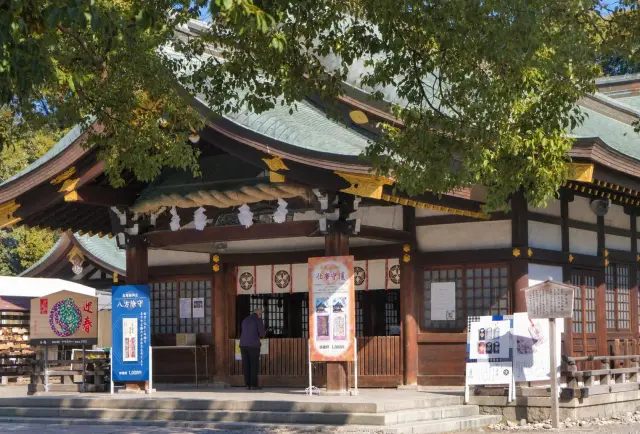
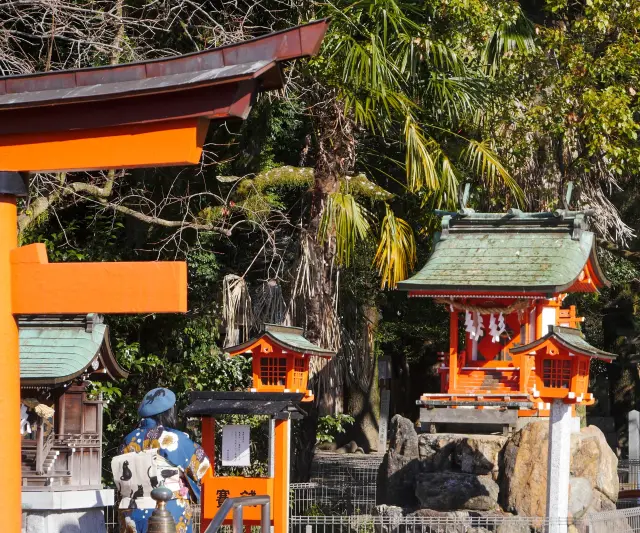
    I hadn't specifically planned to visit Hirano Shrine. I just happened to go to nearby Kitano Tenmangu that day and wandered all the way here, where I discovered that Hirano Shrine is actually quite a famous cherry blossom spot in Kyoto. What surprised me most was that the cherry trees here aren't limited to the common Somei Yoshino. There are about 400 cherry trees of roughly 60 varieties on the grounds, and the different varieties bloom at different times, making the viewing season much longer than at typical cherry blossom spots. Even though we visited toward the end of the season, we were still able to enjoy the blossoms.

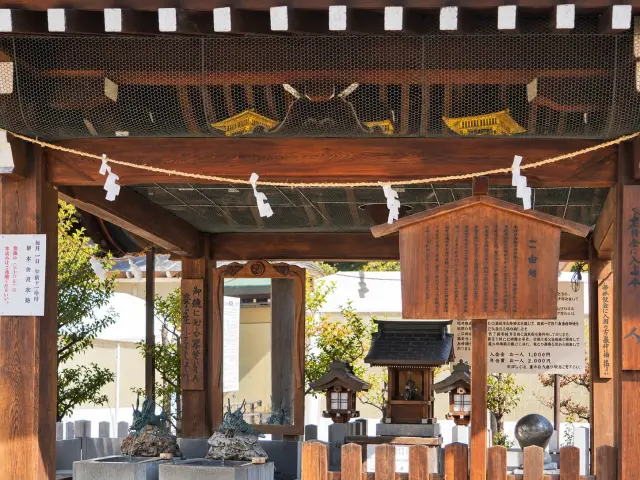
    Unfortunately, I didn't visit during the most beautiful peak bloom. But while exploring the shrine, we met an older man who kindly took us to touch the sacred stone called “Suehirogane.” After reading the explanation, I learned that it is a magnetic iron meteorite or iron-rich rock that the shrine regards as a sacred stone and an object of prayer. At the time, I was a little confused about why I had suddenly been taken to touch a rock, but it still made for an interesting travel memory.

    Hirano Shrine isn't a large tourist shrine, but its wide variety of cherry blossoms and long history alone make it well worth visiting. If you can choose when to go, I still recommend cherry blossom season most of all. It's especially convenient to visit together with Kitano Tenmangu since they're not far apart. If you can make it during peak bloom, the scenery will probably be much more spectacular than what I saw this time.

Other Reviews by Holly

  • Byodoin

    An imperial authority in the Heian Period, Fujiwara Michinaga used this place as a vacation home. His son Yorimichi inherited, converted and opened it as a temple in 1052. It was designated as a World Heritage Site in 1994. The remodeling in 2014 brought it back closer to its original state. The main Amida Buddha statue in Amida Hall is worth a look. You will be amazed by the symmetrical beauty of the building.

    • Uji, Joyo, Yawata
    • Shrines & Temples
    See More

    It happened to be raining when I visited Byodoin this time. Maybe there were fewer visitors because of the rain, so even though it's a popular attraction, it wasn't very crowded. The grounds have gravel paths, so they were still fairly easy to walk on in the rain. My visit also happened to fall during cherry blossom season. Although the rain had already caused some of the blossoms to fall, it also meant there wasn't the usual cherry blossom season congestion. The cherry blossoms, pond, and Heian-period-style architecture in the gloomy rain instead created a more tranquil beauty, making the entire visit unexpectedly pleasant.

    It only started raining after I arrived in Kyoto, so I bought a clear umbrella at a convenience store at the last minute. Because of my budget, I chose the cheapest umbrella there, which happened to be clear. I didn't realize how convenient it was until I actually used it. Especially when taking photos under the cherry trees or in front of Byodoin, the clear umbrella didn't block the scenery in front of me. It was only then that I truly understood why clear umbrellas are so common on the streets of Japan.

    The grounds of Byodoin were larger than I had originally imagined. Once inside, I found that it wasn't just Phoenix Hall itself that was worth seeing. The surrounding gardens, pond, and views from different angles were also very interesting. The architecture has a very distinctive Heian-period style, especially the sight of Phoenix Hall standing in front of the pond, which easily brings to mind the ideal residences sought by aristocrats at the time. Byodoin was originally created when Fujiwara no Yorimichi converted his villa in Uji into a temple. With that background in mind, it's easy to understand why the entire setting has such a strong atmosphere of Heian aristocratic culture.

    If time allows, I also highly recommend visiting the Byodoin Museum Hoshokan. It houses many important cultural properties and precious artifacts from Byodoin, where you can learn historical details that aren't directly apparent from outside Phoenix Hall. Still, this part depends on your personal interest in historical artifacts, since there is an admission fee, but I personally thought it was well worth it.

    Byodoin also has a very special meaning for me. I received my first goshuin here, and you could say that visit began my later habit of collecting goshuin.

    Overall, although it rained during this visit to Byodoin and some of the cherry blossoms had already fallen, I actually really liked this less-than-perfect spring scenery. It left a completely different impression from a sunny-day visit. On top of that, the clear umbrella unexpectedly became a useful prop for taking photos, adding another interesting memory to this rainy-day trip.
  • Itohkyuemon Uji Main Store Tea Room

    Itohkyuemon, a long-established tea shop founded in 1832 (Tenpo 3), is located in Uji, one of Japan's leading producers of high-quality tea leaves. While preserving the traditions passed down since its founding, the shop continuously develops new matcha sweets, introducing new values of tea to the world.

    • Uji, Joyo, Yawata
    • Cafés
    See More

    It happened to be raining when I visited the Itohkyuemon Uji store this time. Maybe because of the weather, it wasn't as crowded inside as I had expected. This was also my first time trying a matcha dango parfait. The matcha flavor was quite rich, and it came with a wide variety of toppings that gave it different textures. Overall, it was better than I expected.

    Overall, I think Itohkyuemon's matcha desserts are worth trying, especially for people who like a rich matcha flavor. However, the Uji store is a little far from the main attractions in central Uji. If your itinerary is mainly focused around the Uji River and Byodoin, you'll need to set aside some extra time to make a special trip here.

  • Tsukiji Hongwanji Temple

    Located near the Tokyo Tsukiji Market, Tsukiji Hongwanji is a temple of the Jodo Shinshu Hongwanji Sect, whose head temple is Nishi Hongwanji in Kyoto.

    • Tsukiji, Odaiba, Toyosu
    • Shrines & Temples
    See More

    Tsukiji Hongwanji Temple was originally just a place I planned to stop by on my way to Tsukiji Market, but after seeing it in person, its architecture ended up leaving a deep impression on me. The current main hall was designed by architectural historian Chuta Ito, and its exterior has a strong Indian and South Asian Buddhist architectural style. The dome, stonework, and overall silhouette are completely different from what you would normally picture as a Japanese temple.

    But what is really interesting is that when you get closer, you notice that it still retains much of the refinement distinctive to Japanese architecture. The animal carvings, decorative details, stained glass, and interior furnishings do not simply copy an Indian style. They incorporate a lot of Japanese aesthetics and craftsmanship, so the building looks very foreign overall, yet very Japanese when viewed closely. This kind of blend is truly uncommon among Japanese temples.

    There is also a large pipe organ inside the main hall, which is quite unusual in a Buddhist temple. Unfortunately, photography is prohibited in the worship area. Otherwise, the contrast between the interior and exterior would be even more striking, since the inside of the main hall looks much like many other Hongwanji temples.

    The Tsumugi cafe next to Tsukiji Hongwanji Temple is also well known, and its signature offering is the “18-Dish Breakfast,” which lets you try a variety of small Japanese dishes at once. I did not pay much attention to the breakfast hours this time, which was a bit of a shame. If you are planning to continue on to Tsukiji Market for food afterward, I would recommend watching how much you eat, or you may end up full before you even explore the market.

Hokkaido Tohoku Kanto Chubu Hokuriku Kansai Chugoku Shikoku Kyushu Okinawa