
Japanese Beauty at Your Fingertips: Experience Traditional Tsumami-zaiku at Oharibako in Kyoto
For centuries, Japanese people have cherished the beauty of each season and incorporated it into everyday life. Many aspects of Japanese culture, including wagashi sweets and kimono, delicately express the changing seasons. Tsumami-zaiku is one such tradition.
However, opportunities to wear kimono in everyday life have declined considerably, and people now have fewer occasions to wear tsumami-zaiku hair ornaments. The number of tsumami-zaiku artisans has also fallen sharply, putting these carefully preserved skills at risk of disappearing. To introduce more people to the remarkably intricate craftsmanship behind its delicate appearance, workshops in Kyoto now offer the chance to learn how to make tsumami-zaiku directly from artisans.
Tsumami-zaiku is made by folding small pieces of fabric and shaping each petal individually. This traditional Japanese craft has been passed down from the Edo period to the present day. In addition to adorning the hair of maiko, it is commonly worn on special occasions such as Shichi-Go-San and Coming-of-Age Day. In recent years, it has also attracted attention as jewelry and home decor.
This article explores the history and techniques of tsumami-zaiku and introduces the tsumami-zaiku workshop at Oharibako. Visit Kyoto and discover the Japanese aesthetic sensibility embodied in flowers created from a single piece of fabric.
What Is Tsumami-zaiku?
Tsumami-zaiku is believed to have originated in the mid-Edo period. Its name comes from the way small squares of fabric are folded and pinched, or <i>tsumamu</i>, one by one to form flowers and animals. There are several theories about its origins. One suggests that it developed from the imperial court's tradition of making artificial flowers. Its roots are thought to lie in cherry and tachibana orange blossoms made from silk fabric or folded washi paper and displayed alongside hina dolls during the Hina Matsuri festival.
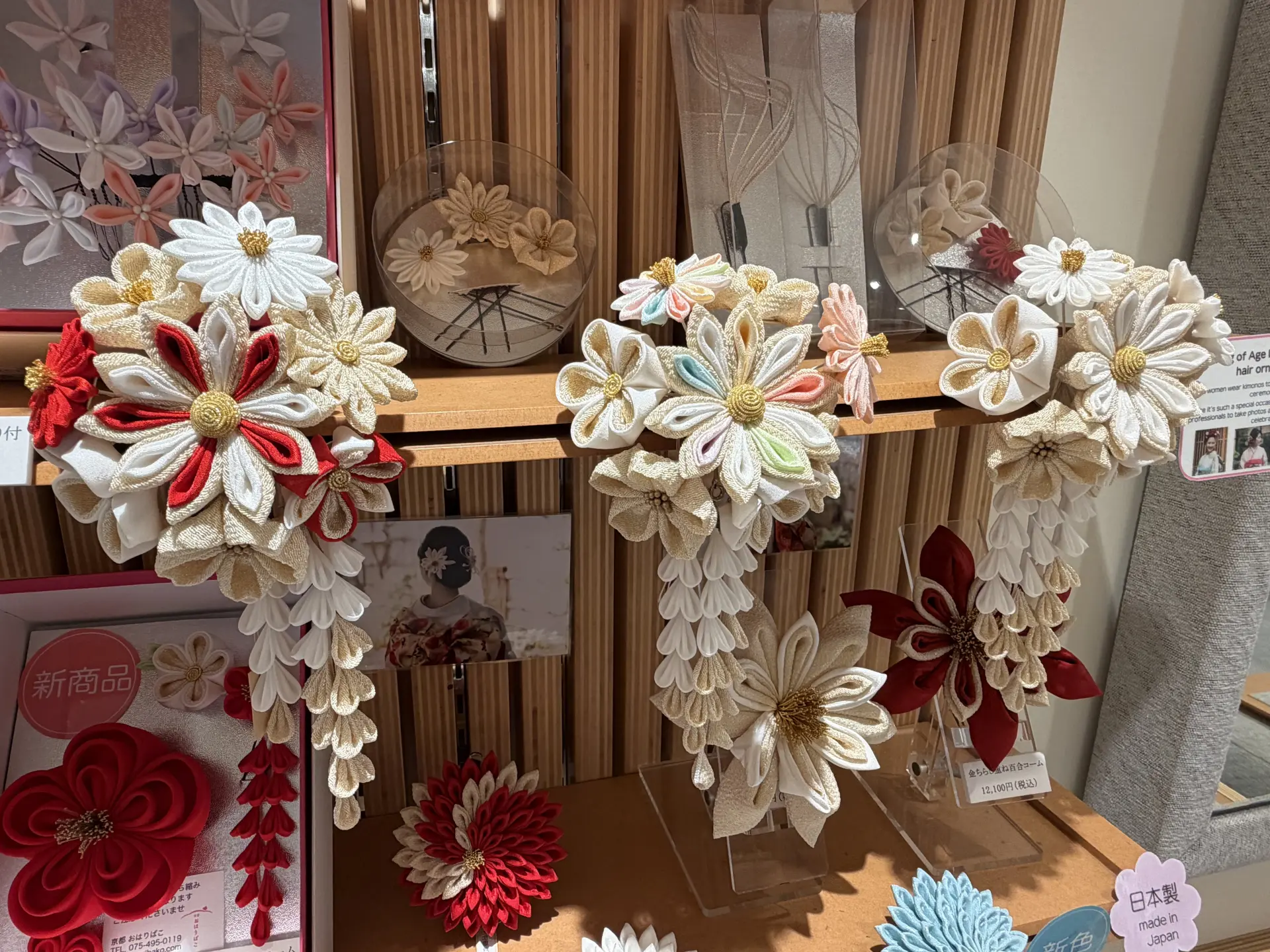
According to the <i>Complete Book of Tsumami-zaiku for Women</i>, published during the Taisho period, kusudama ornaments originally made with fresh flowers were later created using fabric flowers and displayed at the imperial court. Court ladies who saw them began making their own, and the craft subsequently spread.
The technique of shaping flowers from fabric later spread among women of samurai and merchant households. Tsumami-zaiku's fabric flowers were also well suited to the culture of the geisha districts and came to be used as maiko hair ornaments known as hana kanzashi. These ornaments are made from habutae silk and delicately depict seasonal flowers such as cherry blossoms, chrysanthemums, plum blossoms, and wisteria. Worn according to the season, they brightened the attire of women in the geisha districts and samurai households. The craft is believed to have developed primarily in Kyoto and Edo.
During the Meiji period, tsumami-zaiku became popular among the general public. At girls' schools in the Taisho period, students apparently learned sewing and tsumami-zaiku as part of their education alongside tea ceremony and flower arrangement. In the Showa period, before the outbreak of World War II, rising prosperity allowed people to welcome the New Year and other celebrations in fine kimono with elaborate tsumami-zaiku hair ornaments. Lines reportedly formed outside hair ornament stores at the end of the year.
Today, opportunities to wear kimono have declined considerably, but ornate tsumami-zaiku ornaments are still worn with kimono for major life milestones and celebrations such as Shichi-Go-San and Coming-of-Age Day.
Tsumami-zaiku is therefore an essential part of the story of Japanese fashion culture since the Edo period.
Tsumami-zaiku Techniques
There are just two basic techniques: maru-tsumami and ken-tsumami.
Maru-tsumami involves folding layers of square fabric and rounding the tip to form a petal. Its soft curves are used to depict rounded flowers such as cherry blossoms, plum blossoms, camellias, and hydrangeas. The rounded form creates a gentle, charming impression, so it is often incorporated into hair ornaments for occasions such as Shichi-Go-San.
Ken-tsumami involves folding layers of square fabric and forming a sharply pointed tip. Its crisp shape is used to depict chrysanthemums, wisteria, bamboo grass, and leaves. Compared with maru-tsumami, it creates more depth and movement and helps give the overall piece definition.
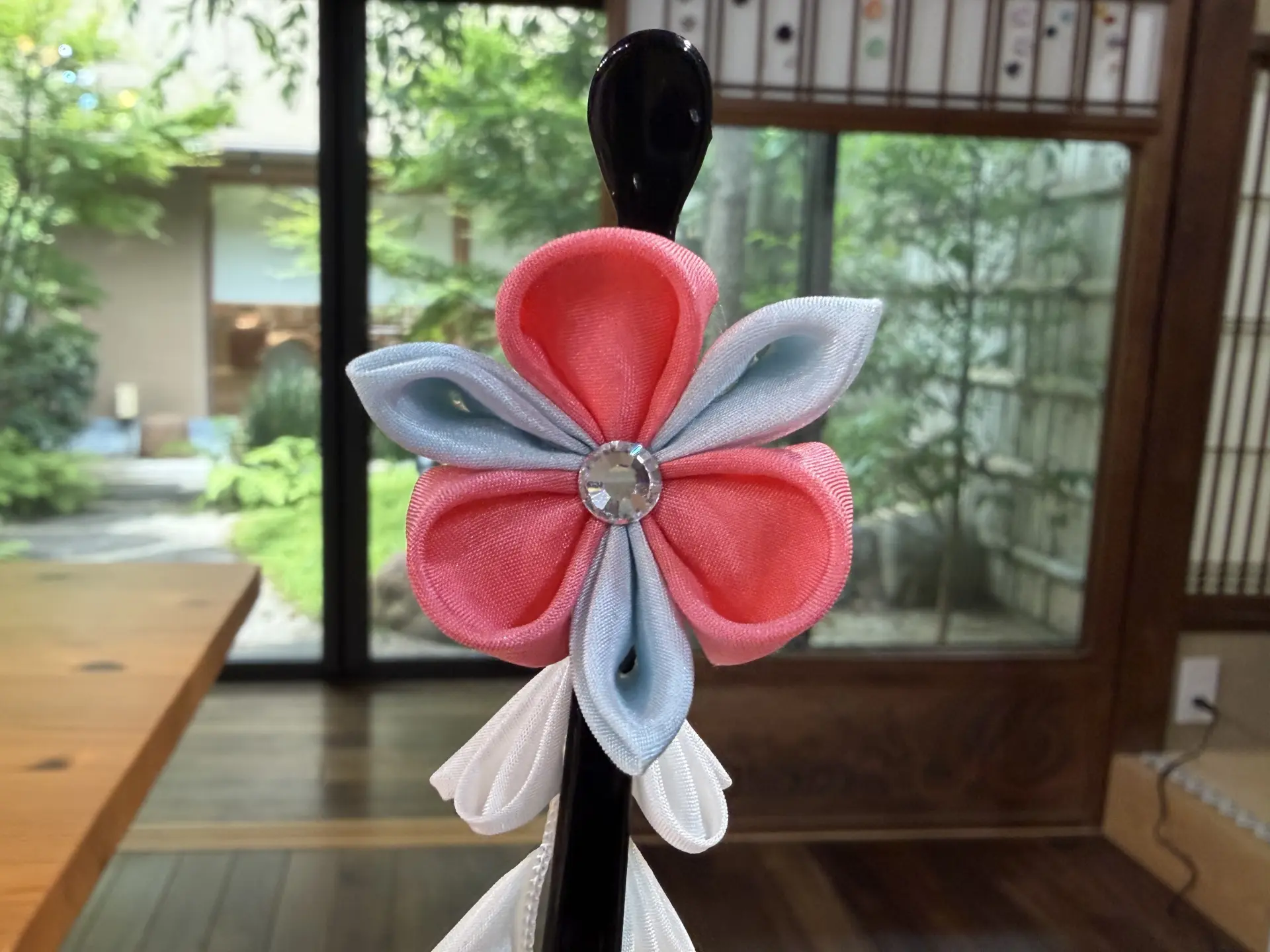
Both maru-tsumami and ken-tsumami are made by folding square pieces of fabric. The only difference is the direction of the third fold. It is surprising how dramatically this small change transforms the petals.
Combining these two techniques makes it possible to depict a wide variety of flowers, plants, and animals—one of the craft's defining features and attractions. Both methods are often used in a single piece, with maru-tsumami for the flowers and ken-tsumami for the leaves, for example. The countless flowers created from just two basic techniques reveal the remarkable depth of tsumami-zaiku.
Wearing the Seasons with Tsumami-zaiku
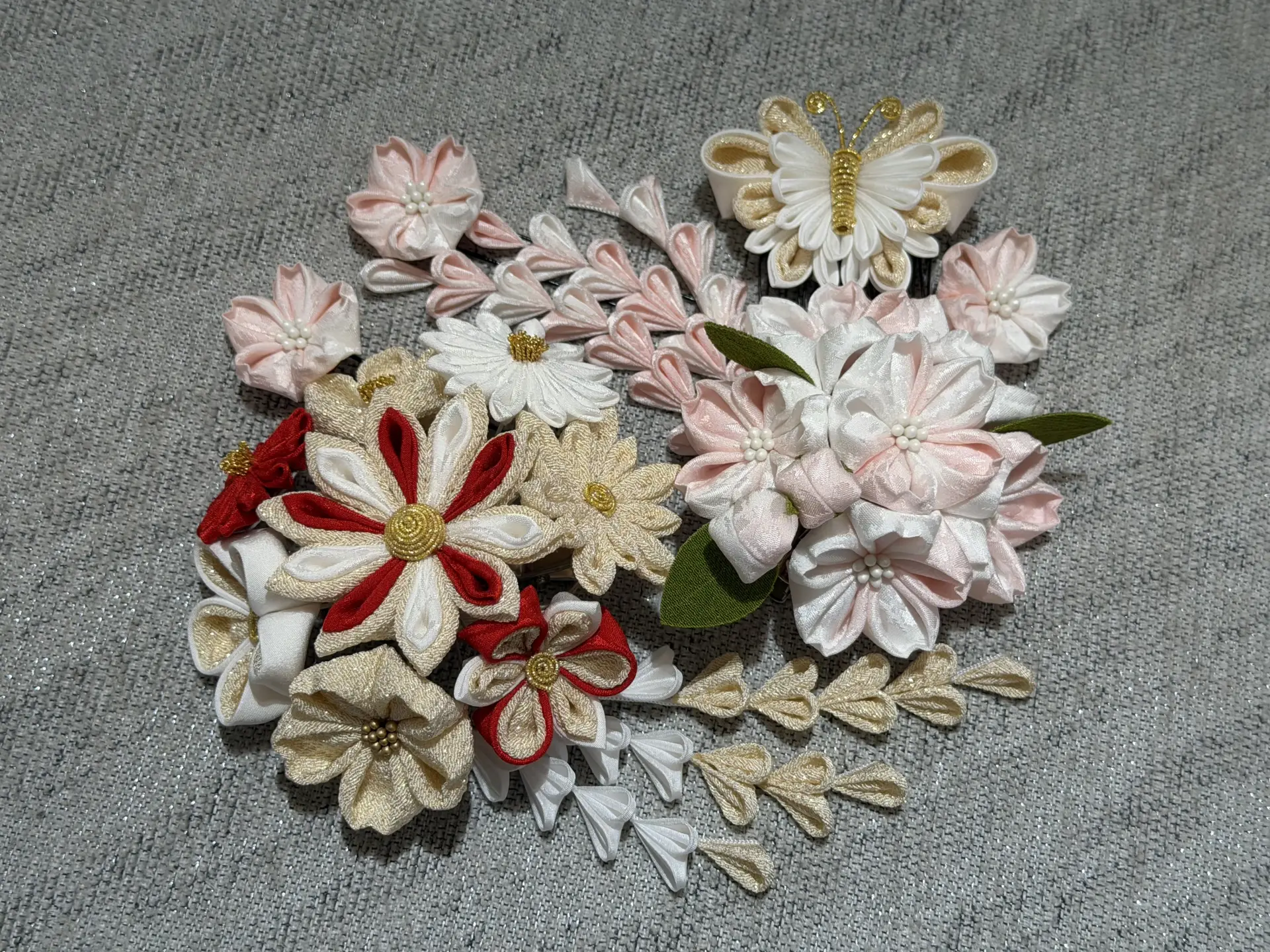
Japanese people have expressed the four seasons through many cultural forms, including wagashi sweets, tea rooms, kimono, flower arrangement, and fragrances. The same is true of tsumami-zaiku, which uses fabric to depict flowers and nature while celebrating the changing seasons. Each flower also carries a meaning. The plum blossom, a classic tsumami-zaiku motif, represents the arrival of a new spring because it is the first to bloom amid the bitter cold. Wisteria symbolizes elegance and prosperity through its long, trailing clusters, while maple leaves represent the deepening of autumn. The portrayal of the seasons in tiny pieces of fabric reflects the Japanese appreciation of nature. Maiko, in fact, wear different hana kanzashi each month. This custom is another example of the Japanese culture of wearing the seasons.
Create Your Own Tsumami-zaiku at Oharibako!
Here we introduce a Kyoto workshop where you can experience tsumami-zaiku and create an original hana kanzashi or clip. The workshop is accessible to anyone, but trying the craft firsthand will give you a new appreciation for the exceptional skill of tsumami-zaiku artisans.
What Is Oharibako?
Oharibako, located in Kyoto's Kita Ward, offers hands-on workshops where visitors can make their own tsumami-zaiku. It stands near Daitoku-ji Temple in an area dotted with historic temples and traditional townhouses that evoke the atmosphere of the ancient capital. Oharibako was founded in 1945 as a thread wholesaler in Nishijin, Kyoto's major center for Nishijin textiles. At the time, it supplied thread for fine Nishijin textiles to artisans throughout Kyoto. The company later became involved in making braided cords and obijime sash cords and now handles every stage of tsumami-zaiku production and sales. Its seven artisans create exquisite pieces each day.
At this workshop, you can make tsumami-zaiku items such as kanzashi hair ornaments and clips. An artisan guides you through the entire process, from selecting colors to adding the finishing touches. Another advantage is that everything you need is provided. The workshops began about 20 years ago, and more than 20,000 people have participated. Despite that impressive number, every participant has successfully completed their piece. Anyone can take on the project and have fun. Instruction is available in both Japanese and English, making the experience particularly popular with international visitors.
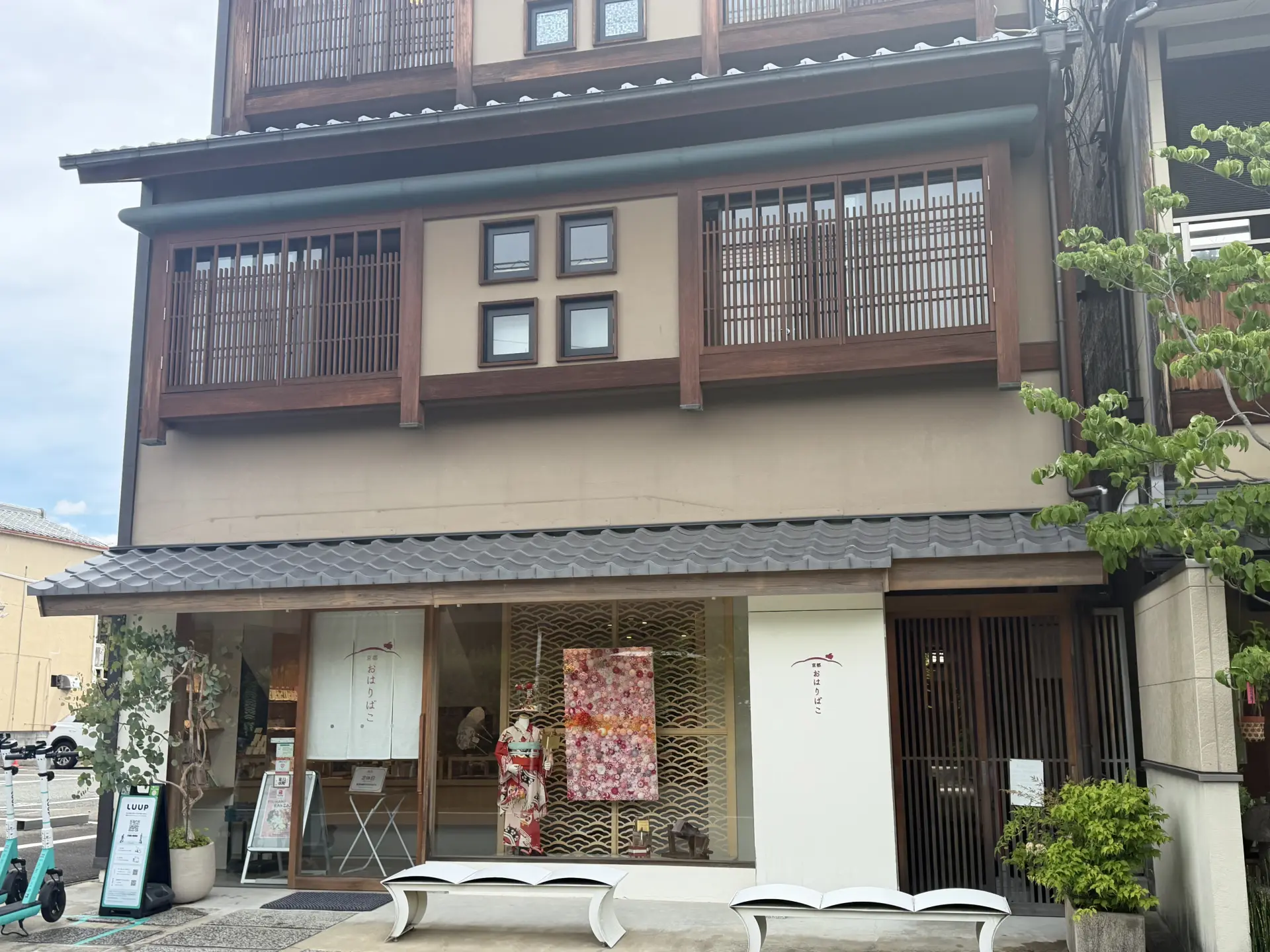
Kyoto Oharibako Basic Information
- Postal Code
- 603-8215
- Address
- 25 Murasakino Shimomonzen-cho, Kita Ward, Kyoto, Kyoto Prefecture Google Maps
- Access
- 3-minute walk from the Daitokuji-mae Kyoto City Bus stop
- Hours
- 10:00 a.m.–5:00 p.m.
- Closed on
- Wednesdays
- Phone
- 075-495-0119
Tsumami-zaiku Workshop Information
- Fee
- ¥3,300 (tax included)
- Duration
- Approximately 1 hour 30 minutes
- Age Requirement
- 10 and older
- Languages
- Japanese and English
- Reservations
-
Reserve a Workshop
*Reservations must be submitted through the form, preferably by 5:00 p.m. 3 days before your desired date. For later reservations, please call to inquire.
Make Your Own Tsumami-zaiku!
The tsumami-zaiku workshop is held in a separate annex, a renovated Taisho-period Kyoto townhouse. Its windows overlook a lovely small courtyard garden.
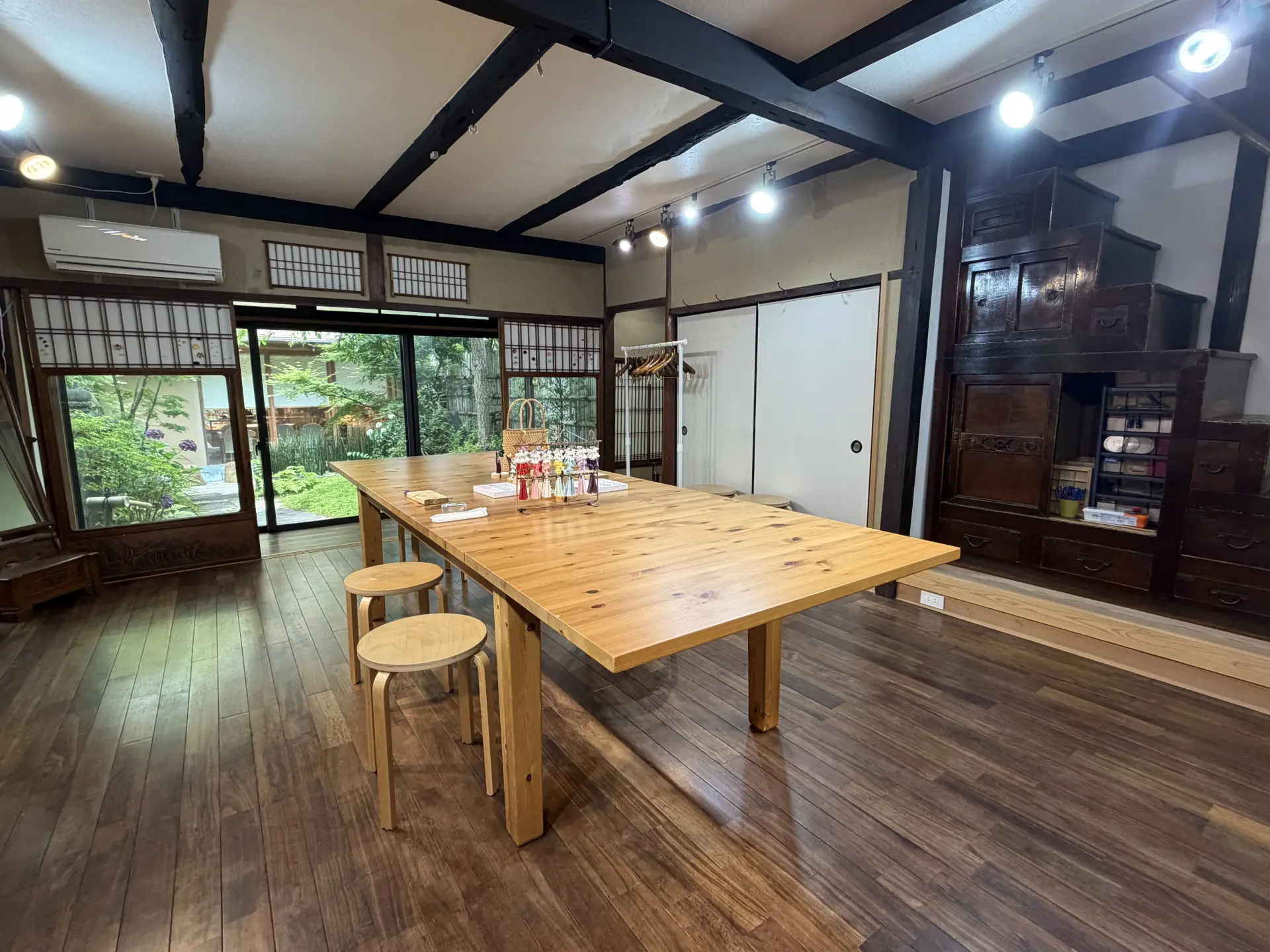
The workshop lets you create an original tsumami-zaiku piece by choosing your preferred flower shape and petal colors from a wide range of options.
First, choose the flower shape. There are three options: plum blossom, chrysanthemum, and mixed flower. The petal-folding method varies with the shape you select. I chose the chrysanthemum. It is helpful that you can look at samples and take your time deciding on the day. Many participants have trouble choosing, so there is no need to rush.
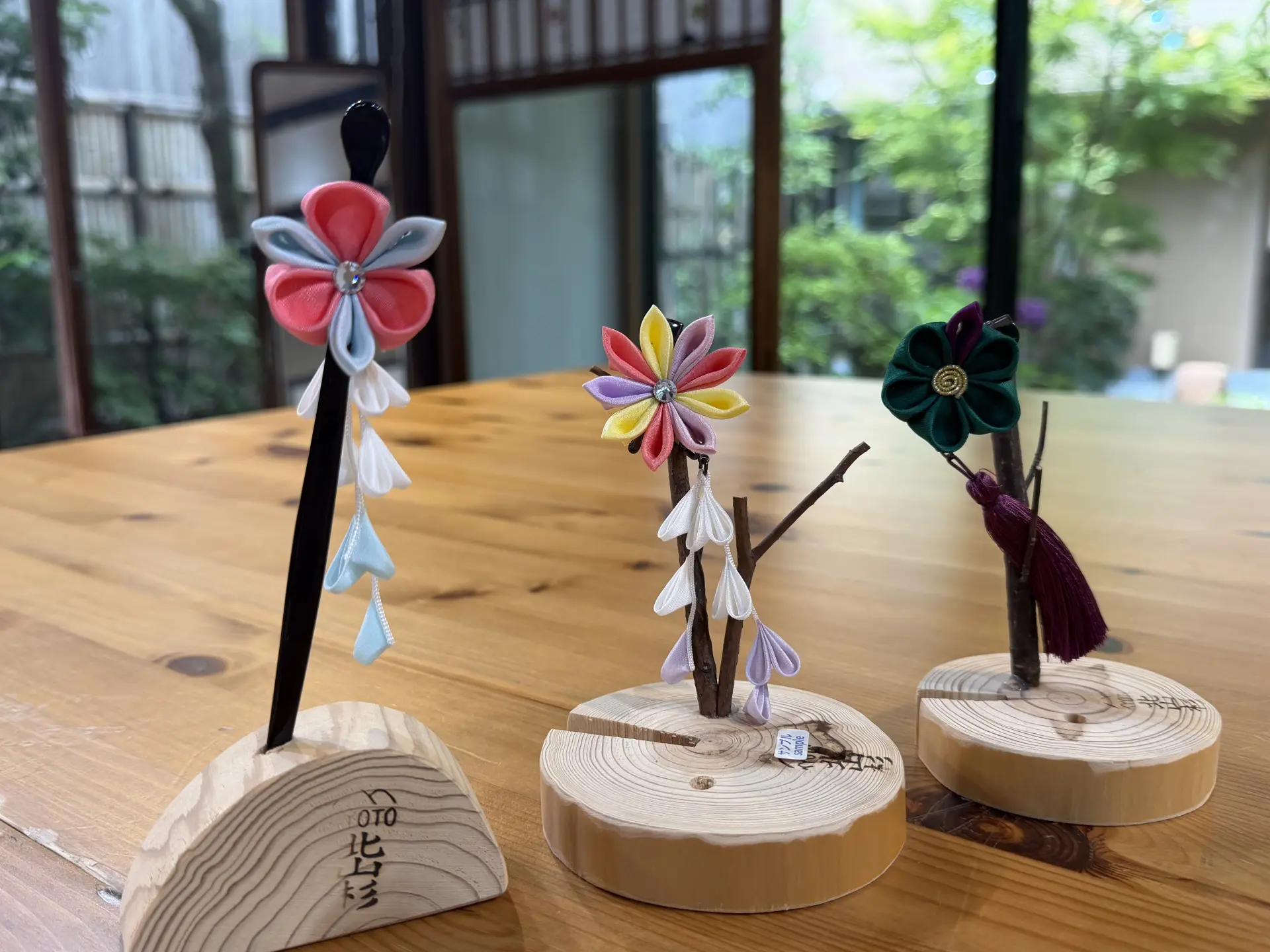
Next, choose the base. The three options are a clip, kanzashi, or bag charm. The bag charm costs an additional ¥200. Since the kanzashi does not secure the hair on its own, it is inserted into hair that has already been styled up. This time, I chose the easy-to-wear clip.
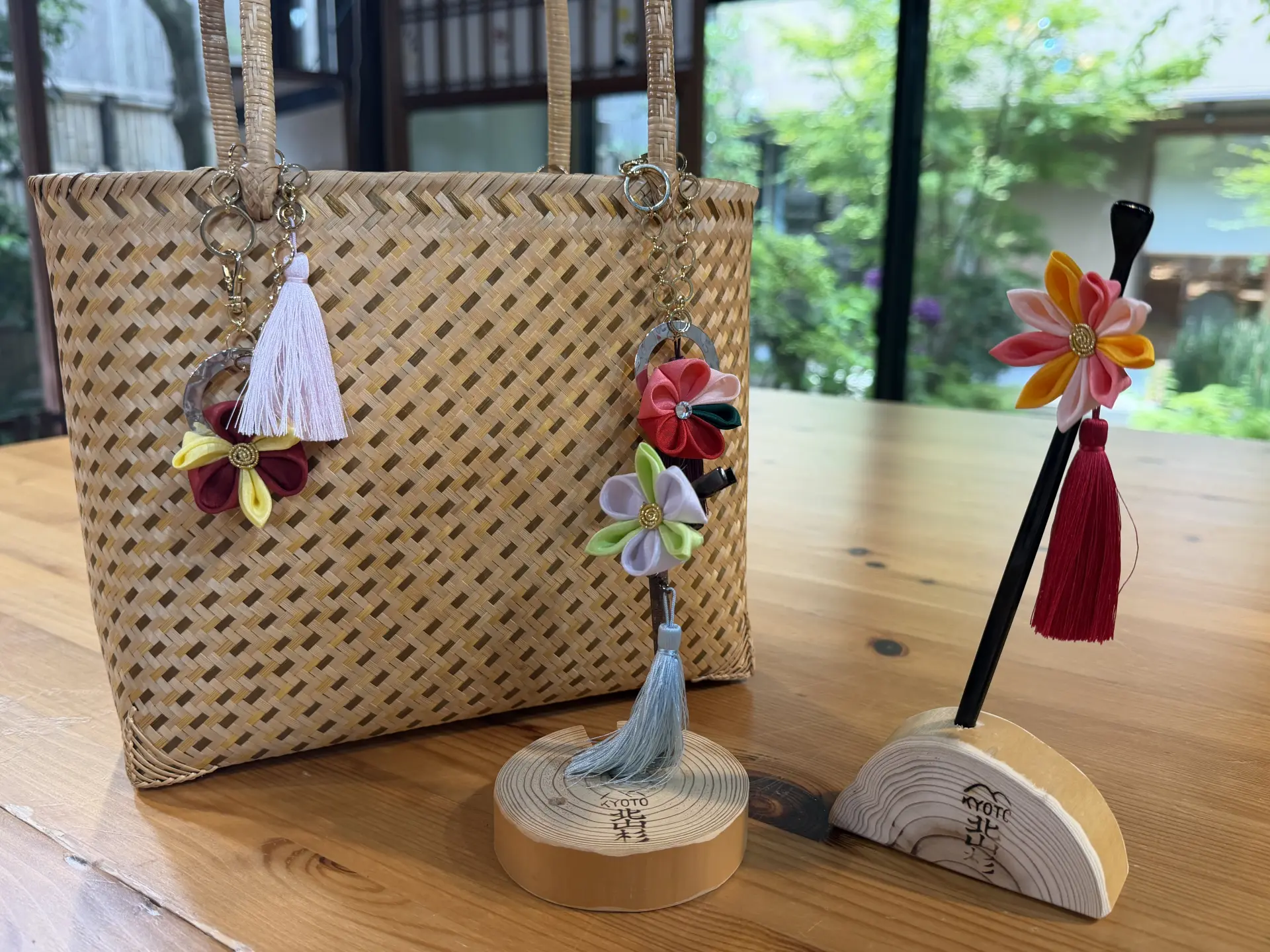
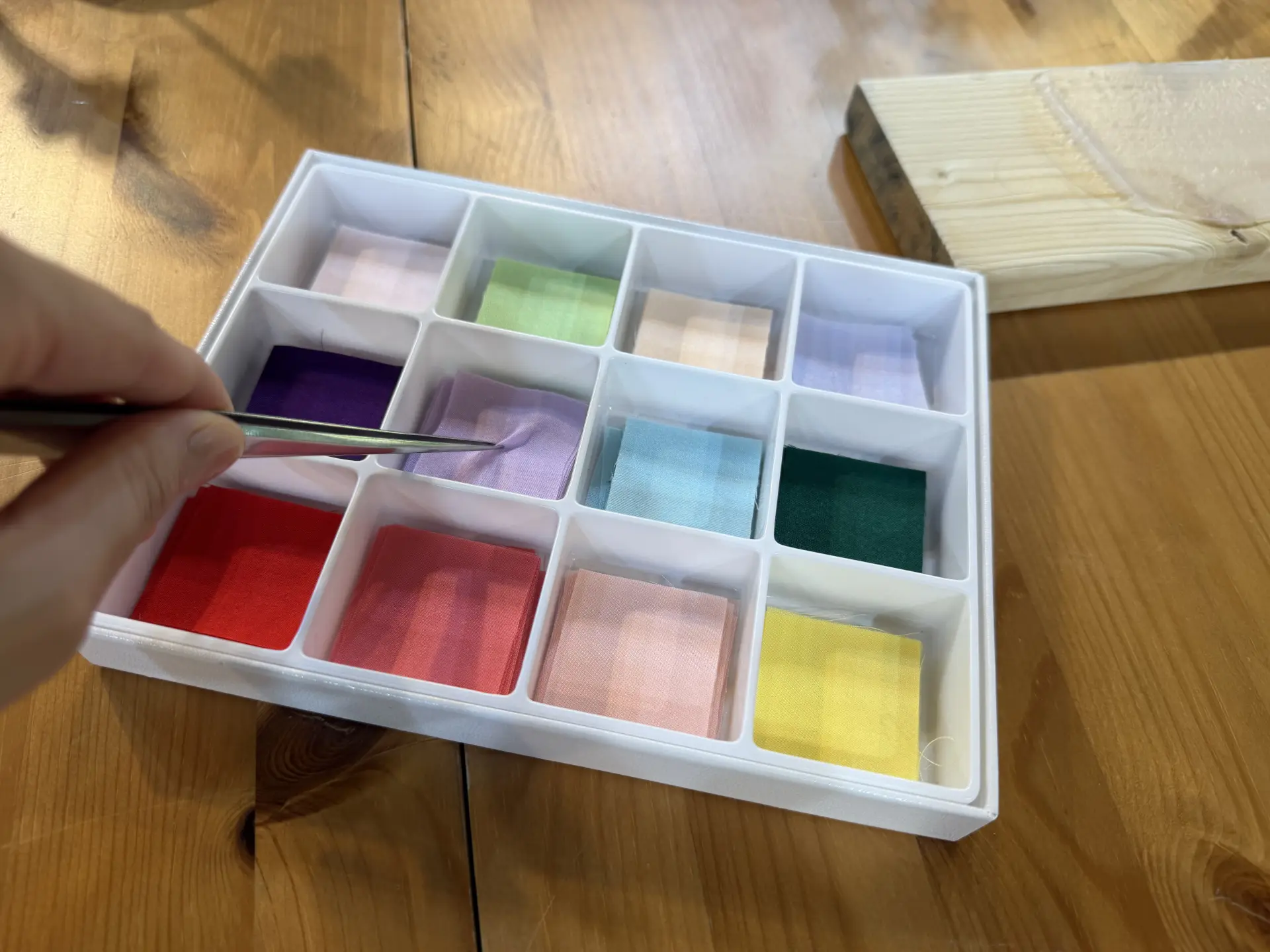
Next, select the flower colors. There are 12 colors to choose from. You will need six pieces for the plum blossom or mixed flower and nine for the chrysanthemum. You can use a single color or combine two or three. The workshop uses pure habutae silk, the same fabric used for maiko hair ornaments. Since my chrysanthemum required nine pieces, I used tweezers to select three dark pink, three light blue, and three pale purple squares.
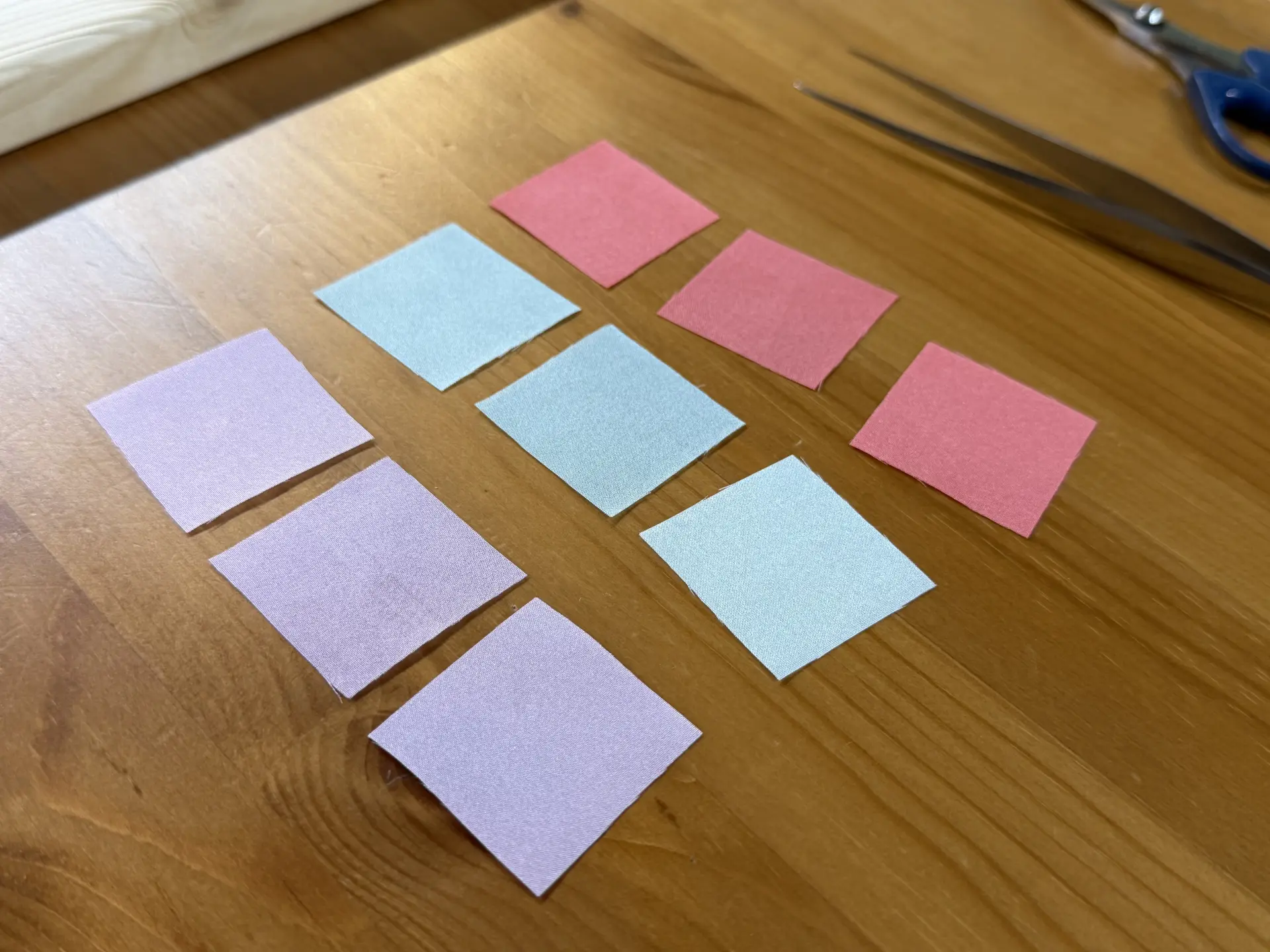
Now it is time to start making the piece. Beginners and those who are not confident in their dexterity need not worry, as an artisan stays by your side and offers patient guidance. The chrysanthemum consists of nine pointed petals made using the ken-tsumami technique. The plum blossom uses six maru-tsumami petals, while the mixed flower combines three ken-tsumami and three maru-tsumami petals.
First, hold one piece of fabric with the tweezers. Grip the square along its diagonal, making sure the tips of the tweezers are positioned precisely at the corners. Fold it in half. Once folded, reposition the tweezers toward the right-angle corner of the triangle.
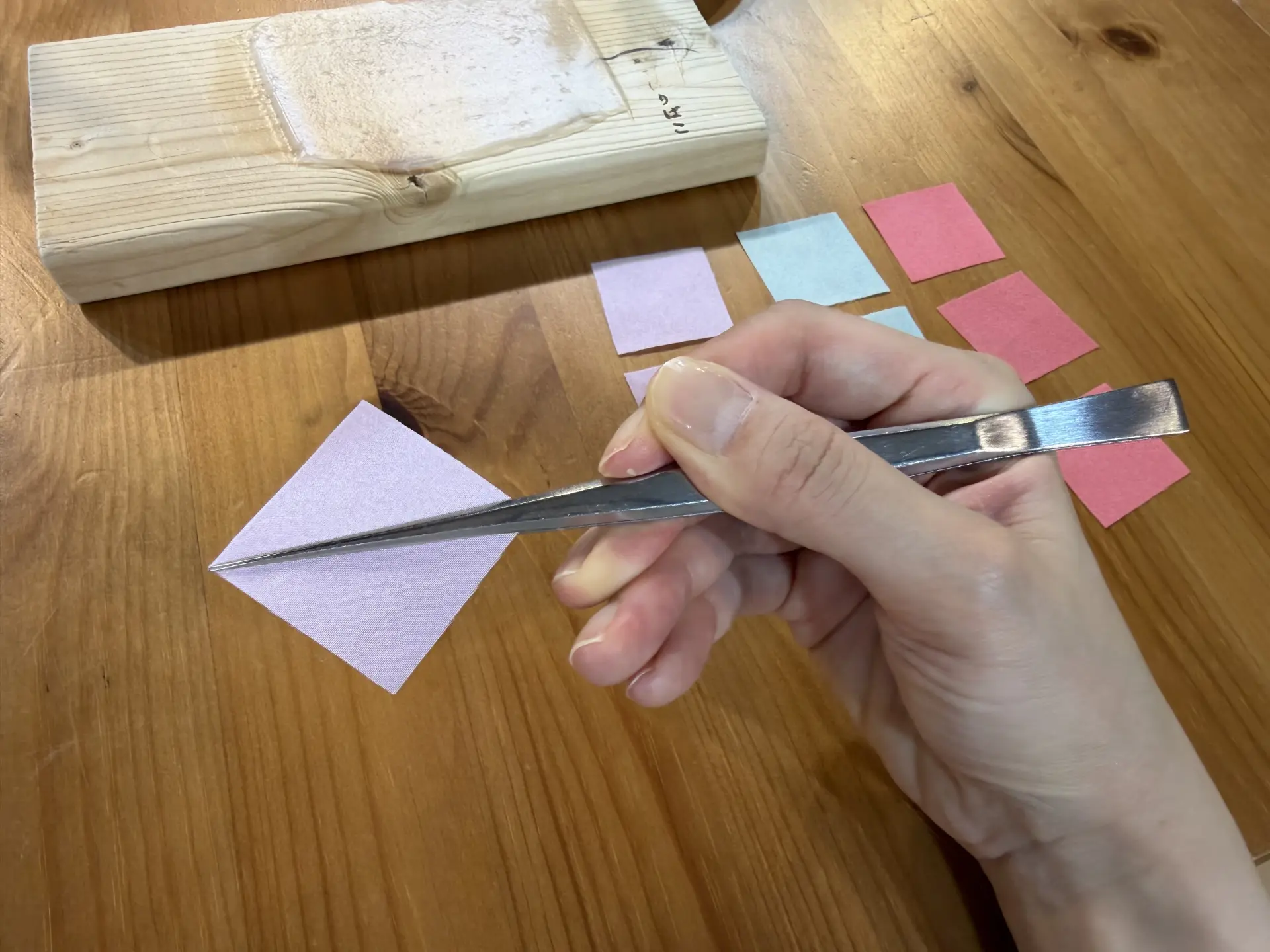
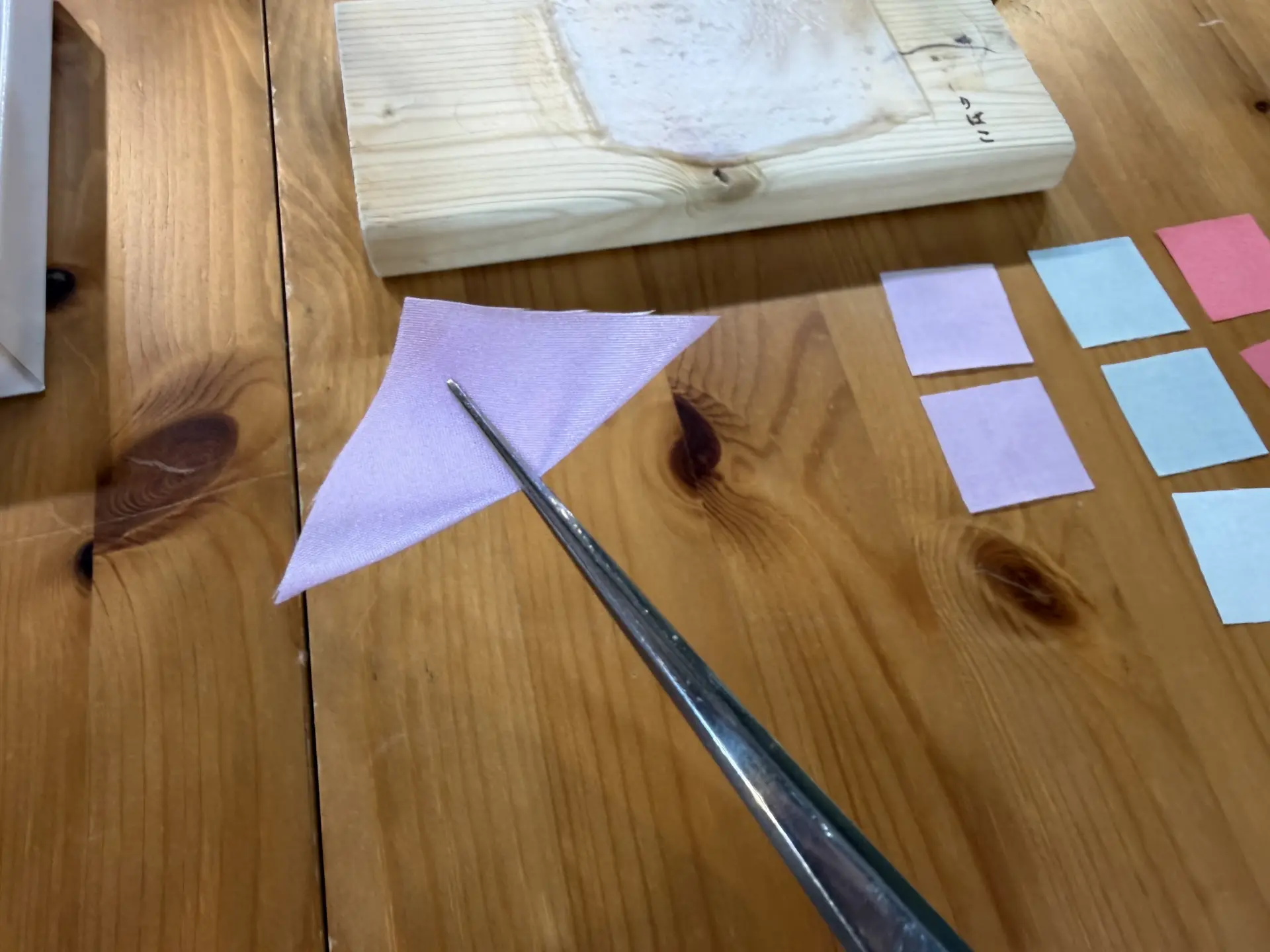
Rotate the tweezers to the left and fold the fabric in half again. Then remove the tweezers, grip the fabric from the triangle's right-angle side, and fold it in half once more.
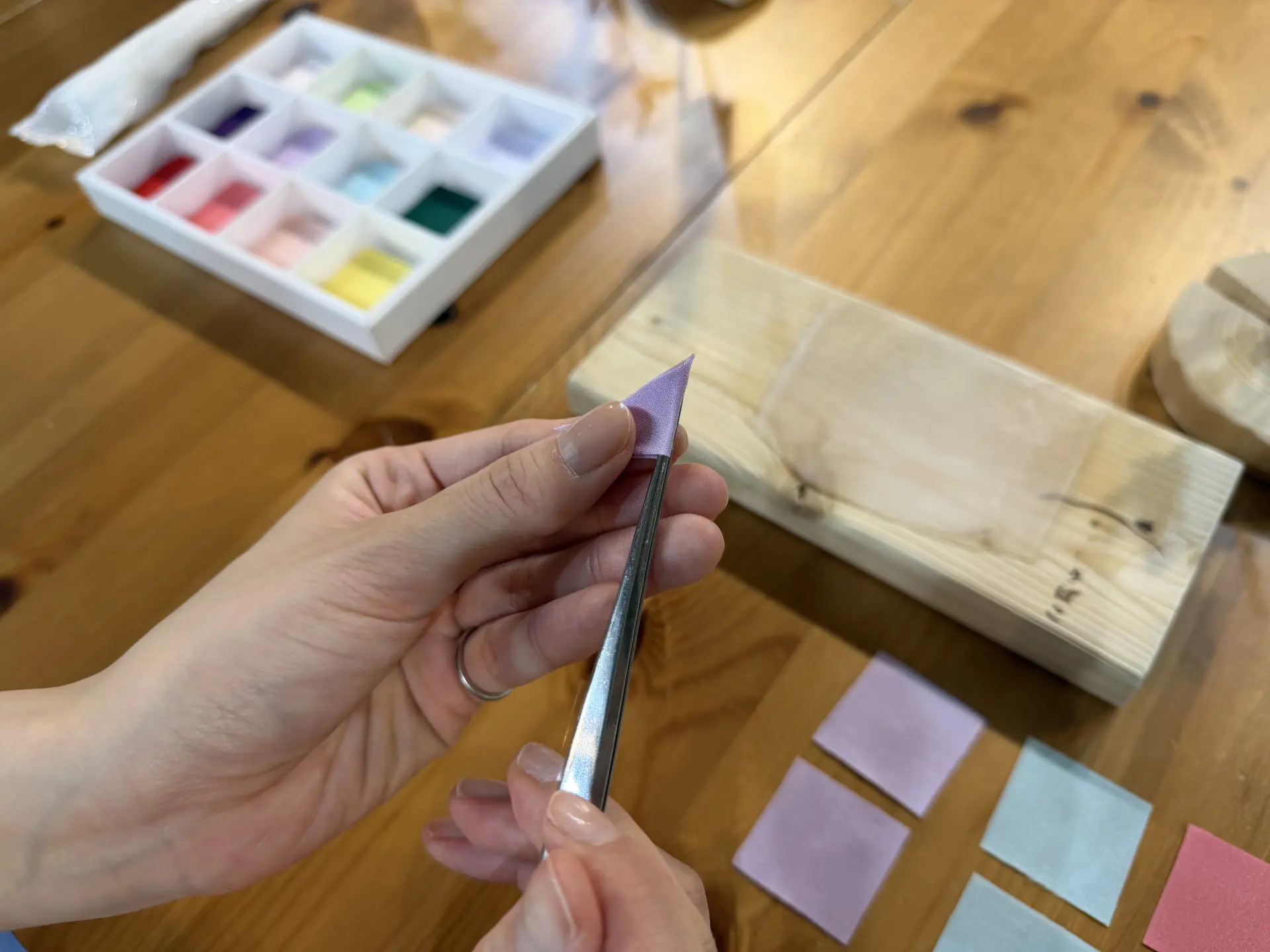
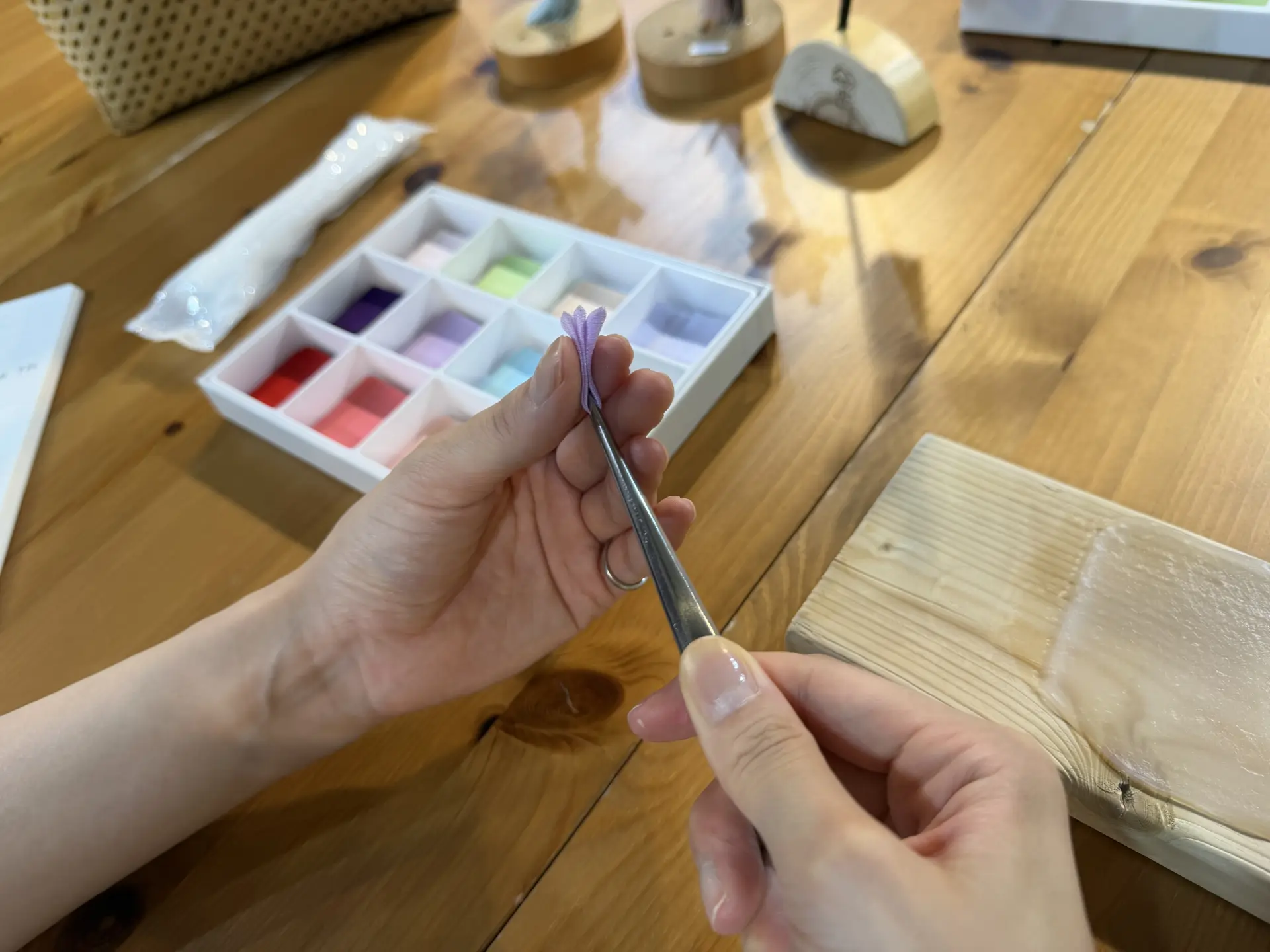
Reposition the tweezers toward the layered tip. Use scissors to trim the protruding edges so they are even. Since you will trim them at this stage, there is no need to worry if the edges were slightly uneven during the earlier steps.
Press the trimmed end into the paste. At last, one petal is complete.
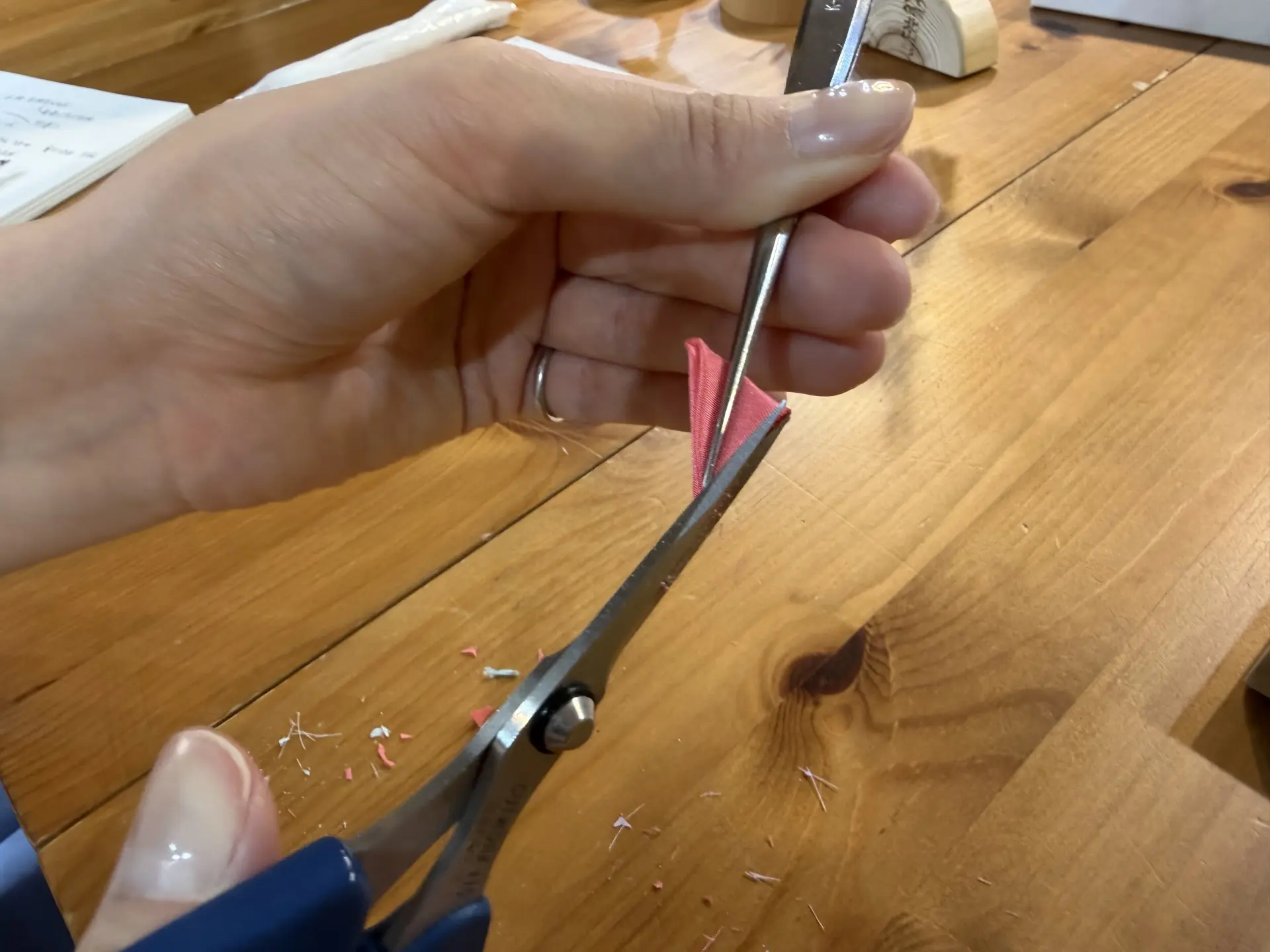
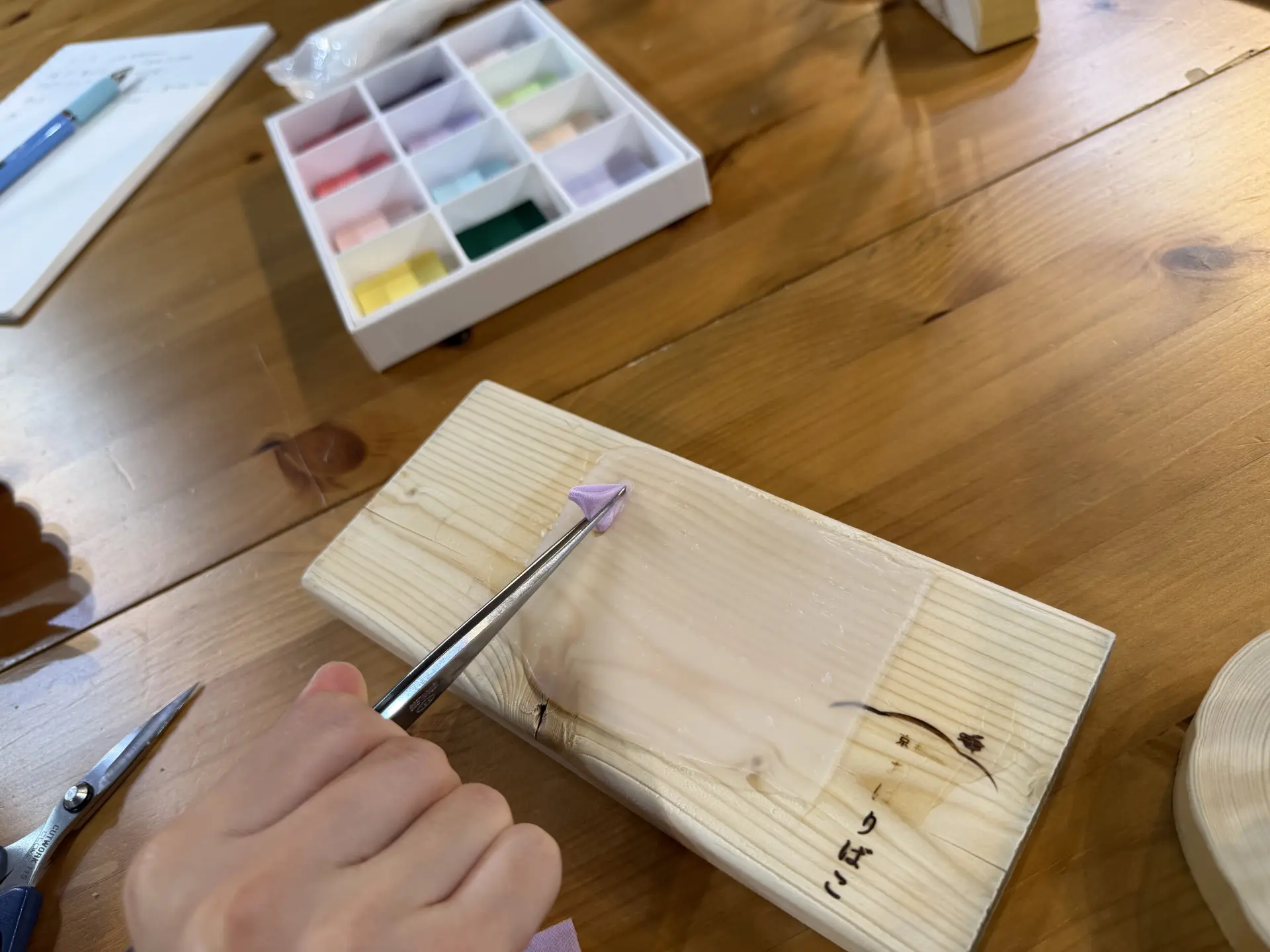
Repeat the process for all nine petals. You can feel yourself improving as you become accustomed to the technique. The detailed work made it easy to focus fully on the task.
The nine petals nestled in the paste look charming, almost like rabbit ears. Apparently, many participants find this stage so cute that they stop to take photos.
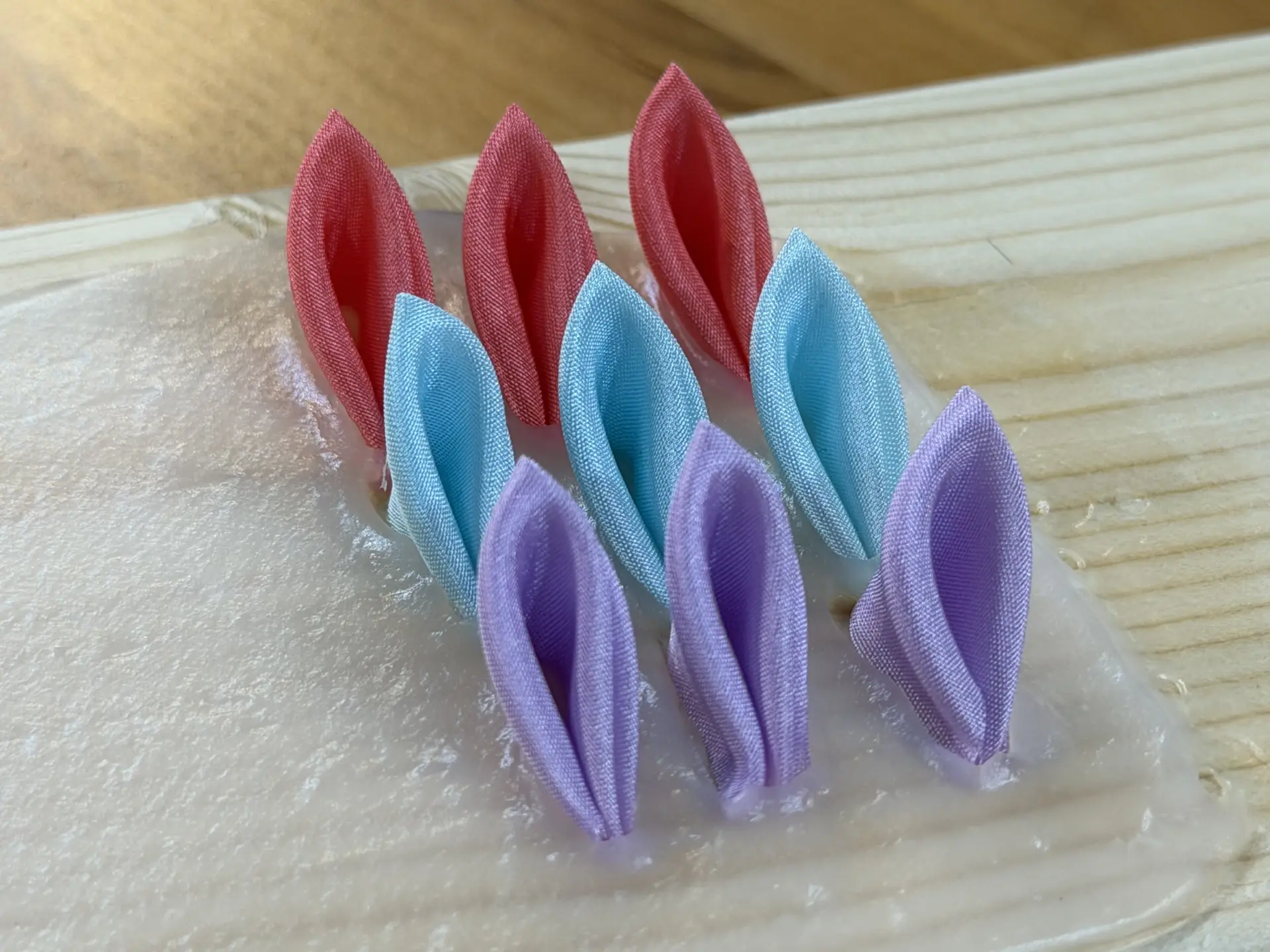
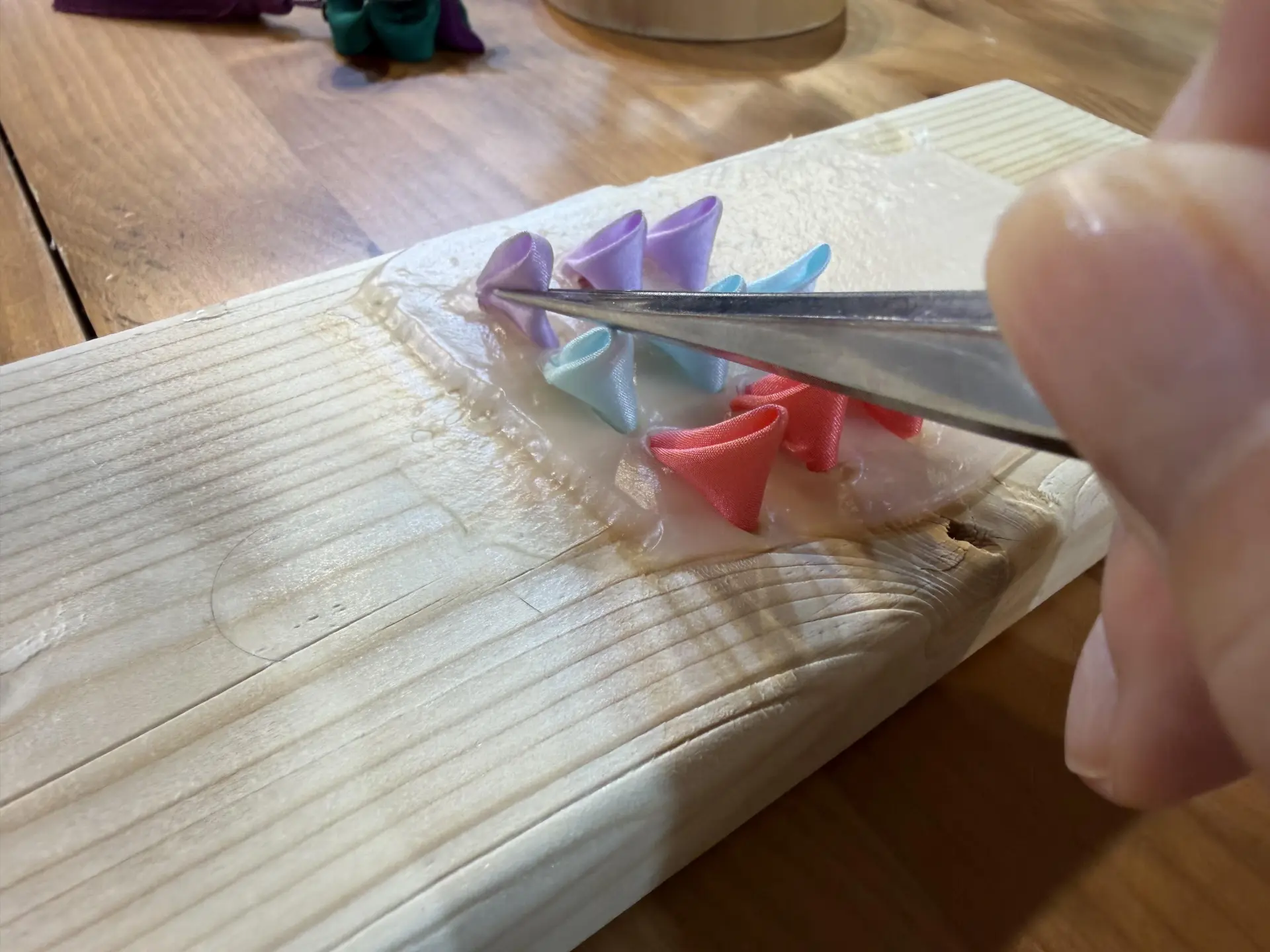
Once the petals are finished, attach them to the base. Use the tweezers to pick up each petal and place it individually on the paste-covered foundation. Begin by positioning three petals of the first color at equal intervals. Repeat with the second and third colors, then adjust the overall balance of the petals to complete the chrysanthemum!
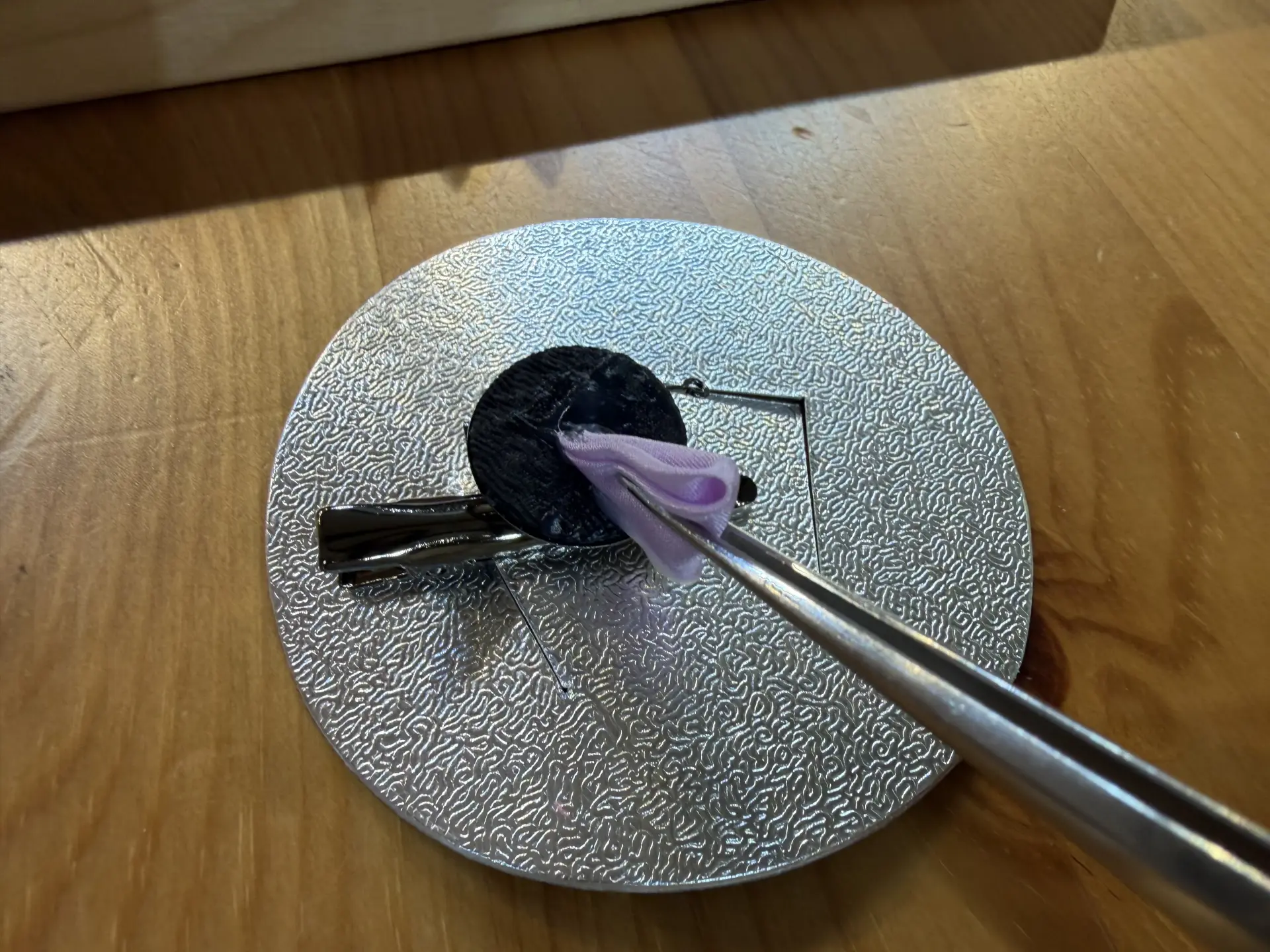
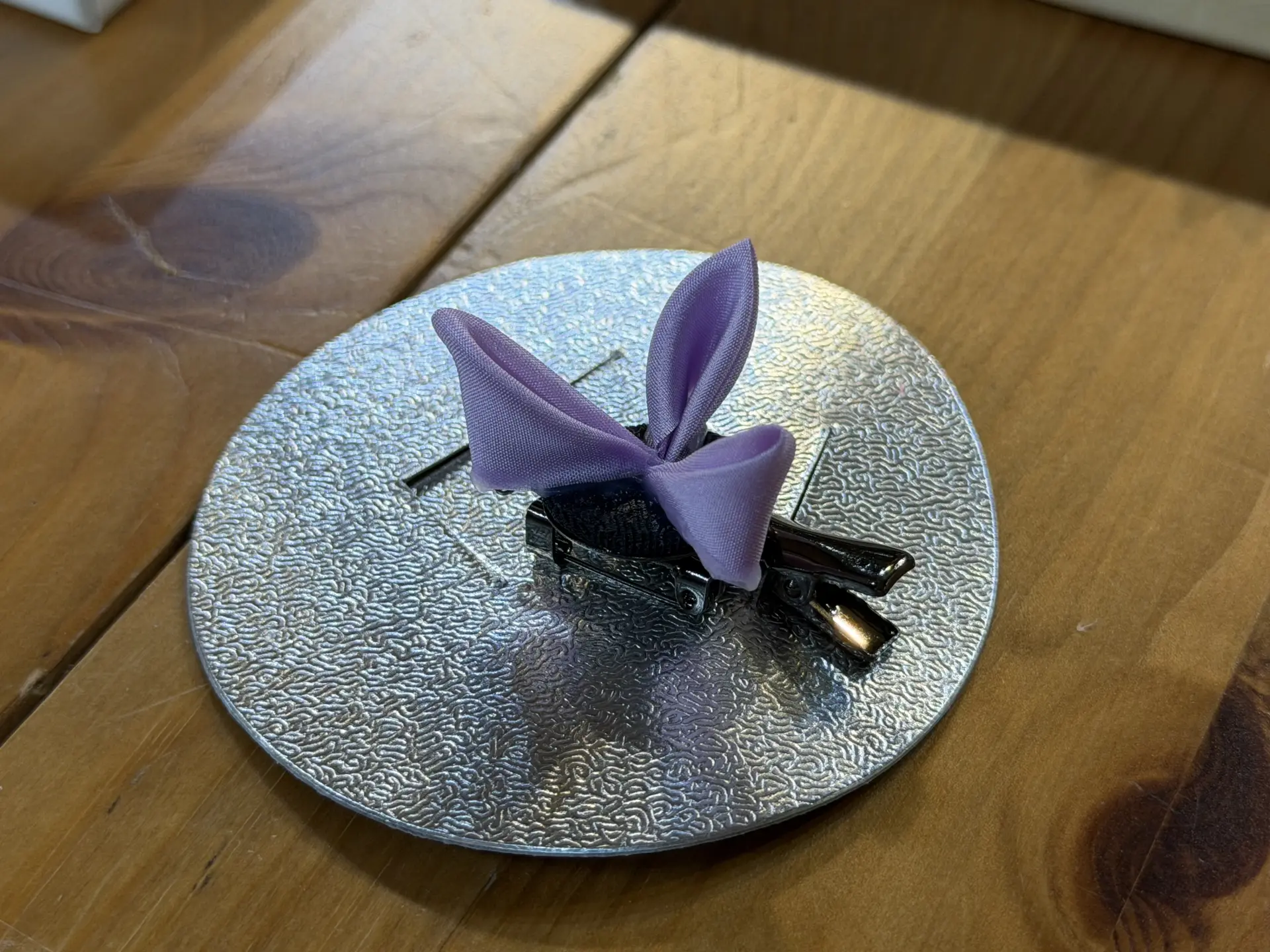
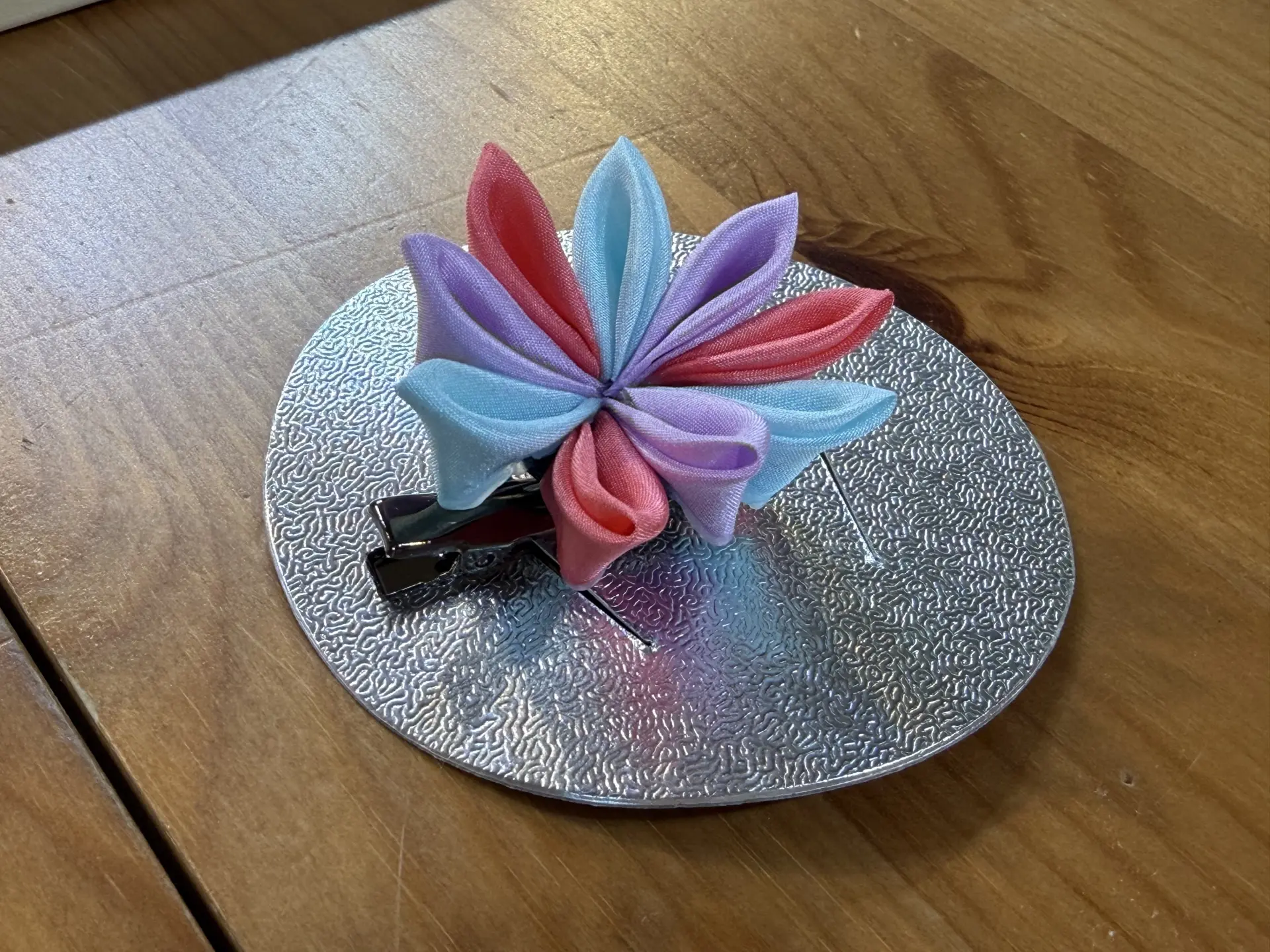
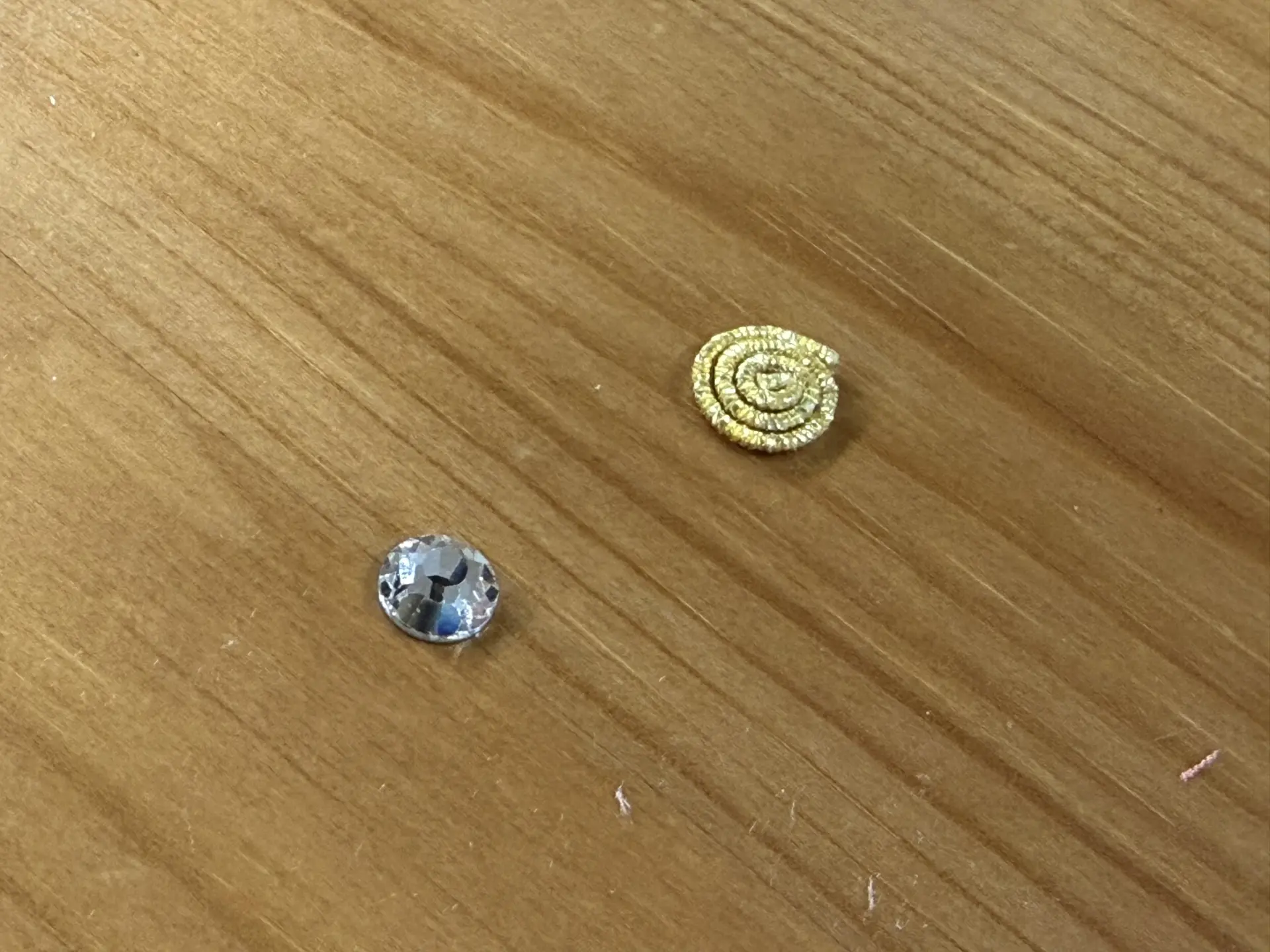
Next, choose a single flower center. There are two options: crystal or gold cord. The choice apparently changes the overall impression considerably. The gold cord creates a charming look, while the crystal gives a more sophisticated impression, so I chose the crystal.
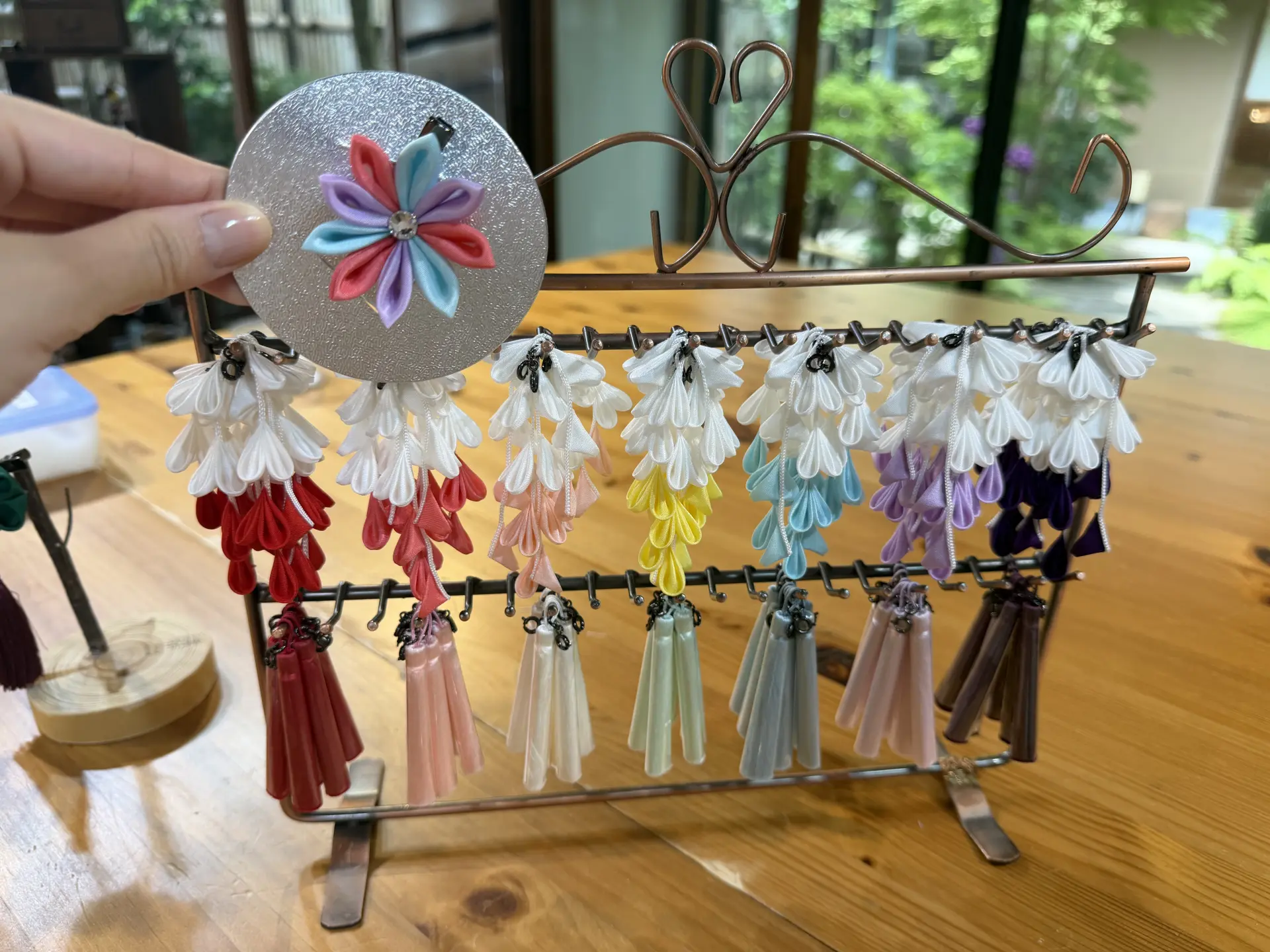
After attaching the flower center, the final step is to choose the color and style of the trailing ornament, which adds an elegant finishing touch. The tsumami-zaiku wisteria style is available in seven colors, as is the pure-silk tassel style. (Those who selected a bag charm may choose only the tassel style.)
I compared the finished flower with each trailing ornament before making my choice. Since the crystal center gave the flower a slightly sophisticated look, I chose the charming tsumami-zaiku wisteria style for contrast. You can select a color that matches the petals or choose something entirely different. I wanted a cohesive look, so I chose the same pale purple as the petals.
Once the trailing ornament is attached, the piece is complete! Thanks to the artisan's careful guidance, I created a tsumami-zaiku piece I truly loved.
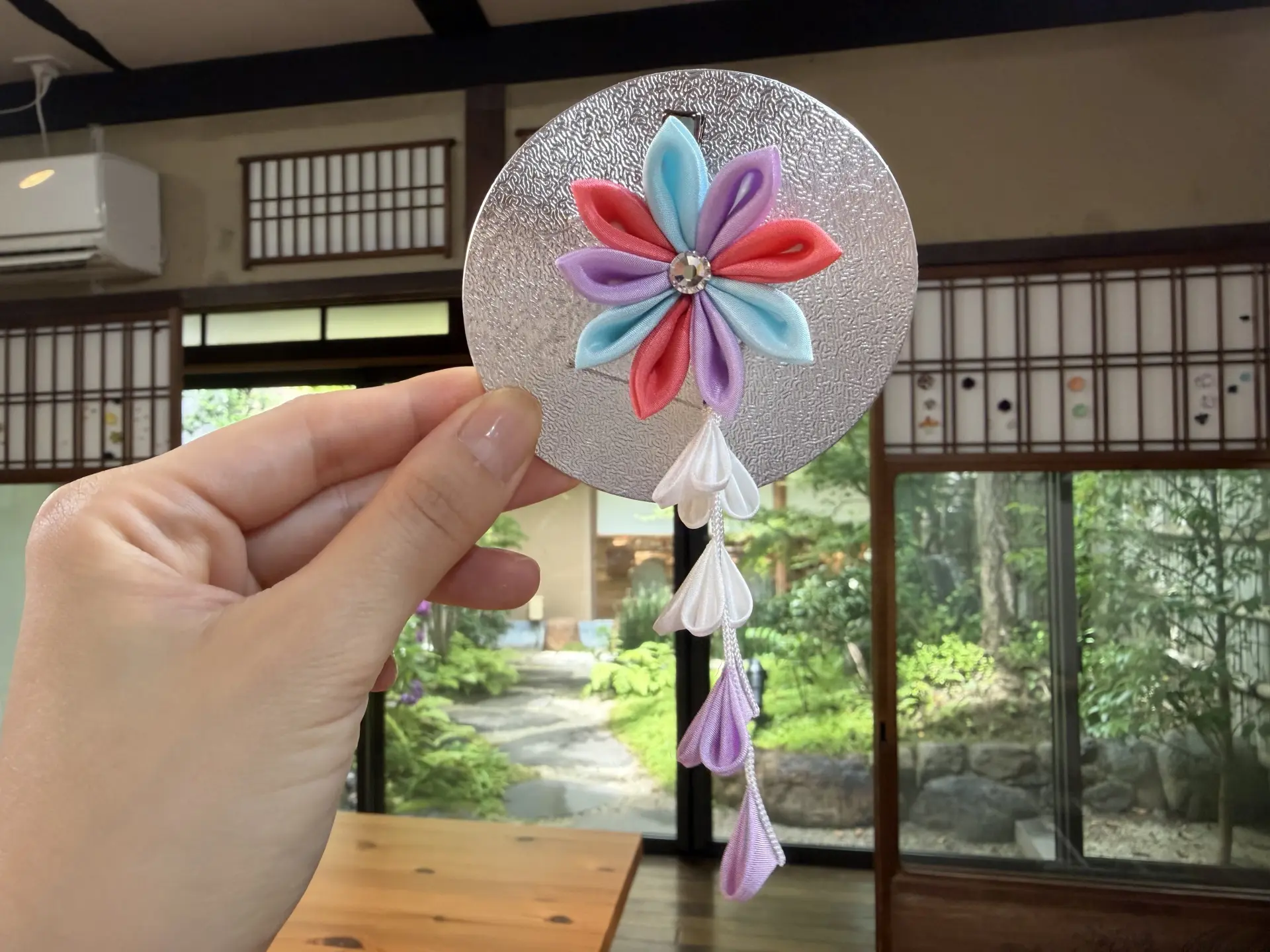
The piece is transferred to a base made from Kitayama cedar, a renowned Kyoto timber, so you can take it home that day.
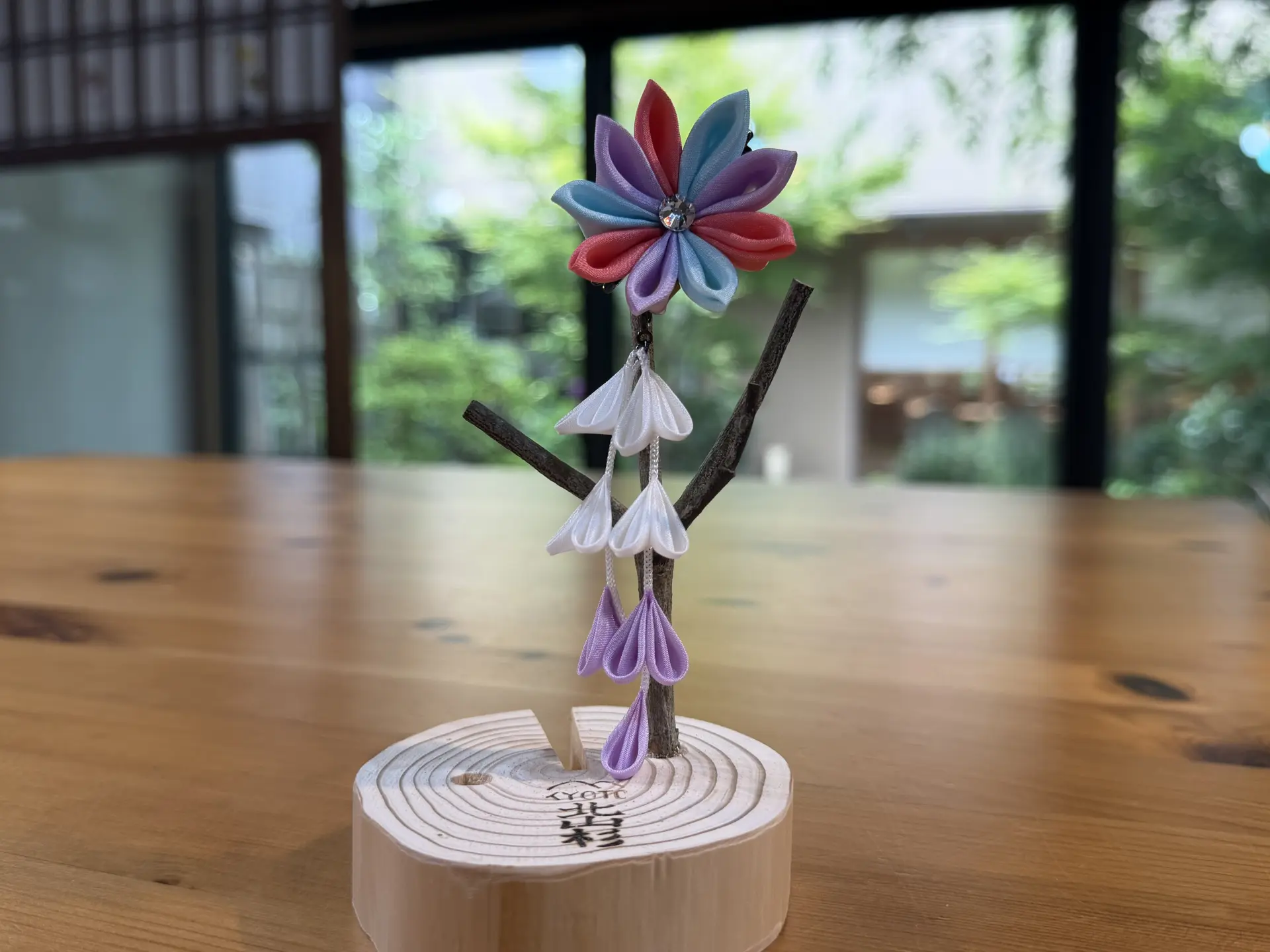
However, the paste will not yet be completely dry, so you cannot wear the piece on the day it is made. If you would like to wear your handmade tsumami-zaiku during your Kyoto trip, it is best to take the workshop by the day before you plan to wear it. On a later day, consider renting a kimono, wearing your handmade ornament in your hair, and strolling through Kyoto♪
My Experience
This workshop teaches authentic tsumami-zaiku techniques using traditional materials and tools. For example, the fabric is habutae, the traditional pure-silk material used for tsumami-zaiku. It is hand-dyed in Kyoto, resulting in distinctive color variations. The workshop also uses the same traditional starch paste as professional artisans. Because starch paste dries slowly, it allows time to correct fine details and offers greater flexibility. I had worn tsumami-zaiku hair ornaments many times for special occasions such as Shichi-Go-San, Coming-of-Age Day, and graduation ceremonies, but I had never imagined I could make one myself. Even though I am not particularly dexterous, I found it easy to make. The artisan corrected the difficult parts, helping me achieve a polished result. Making every petal by hand gave me a real attachment to the finished piece. I would love to wear my handmade tsumami-zaiku the next time I put on a yukata or kimono.
Artisan-Made Tsumami-zaiku Souvenirs
In addition to taking the workshop, you can purchase tsumami-zaiku made by the artisans themselves.
The selection ranges from charming children's hair ornaments for Shichi-Go-San to sophisticated, elaborate pieces for Coming-of-Age Day. Find a favorite to take home as a souvenir.
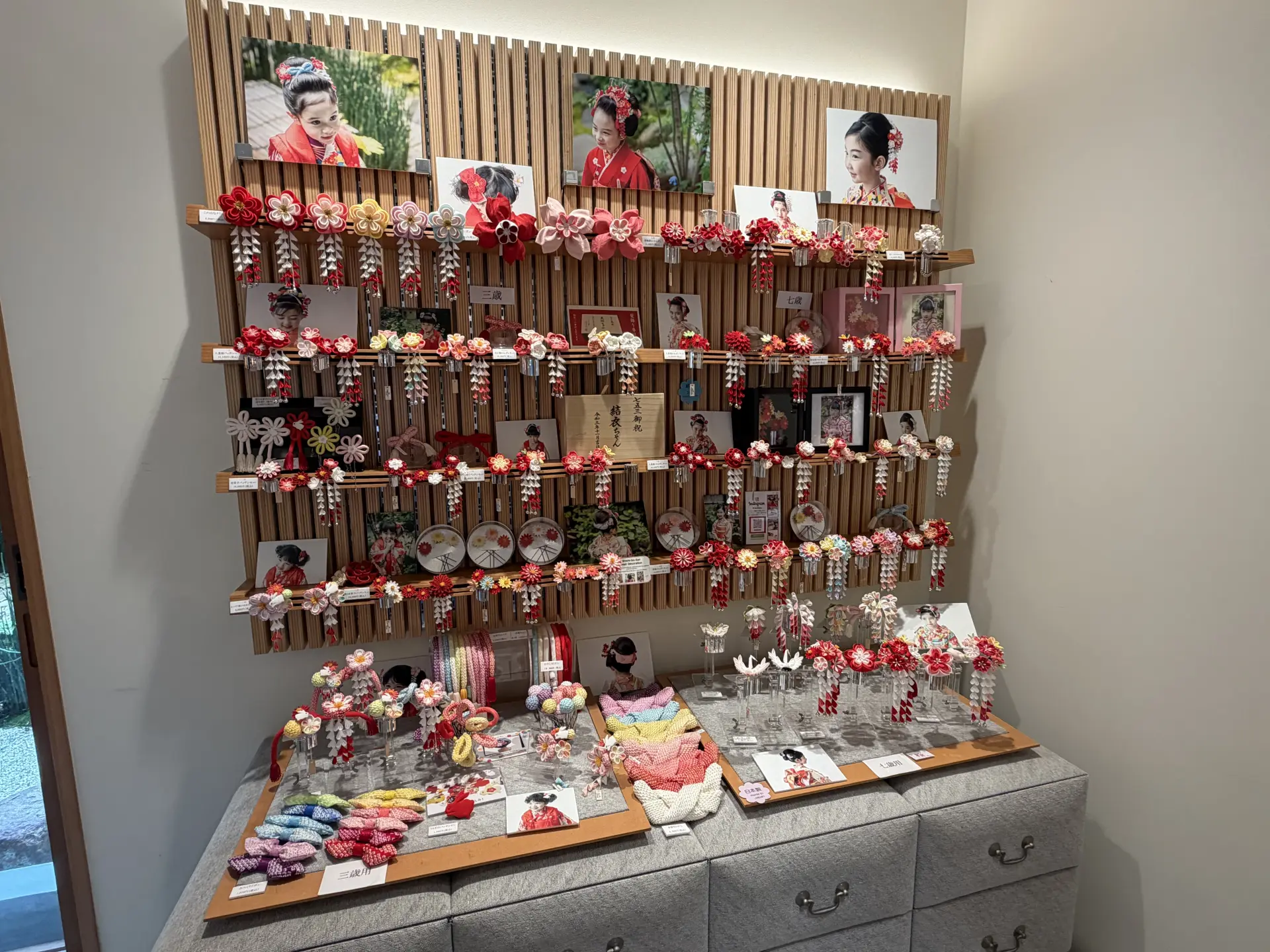
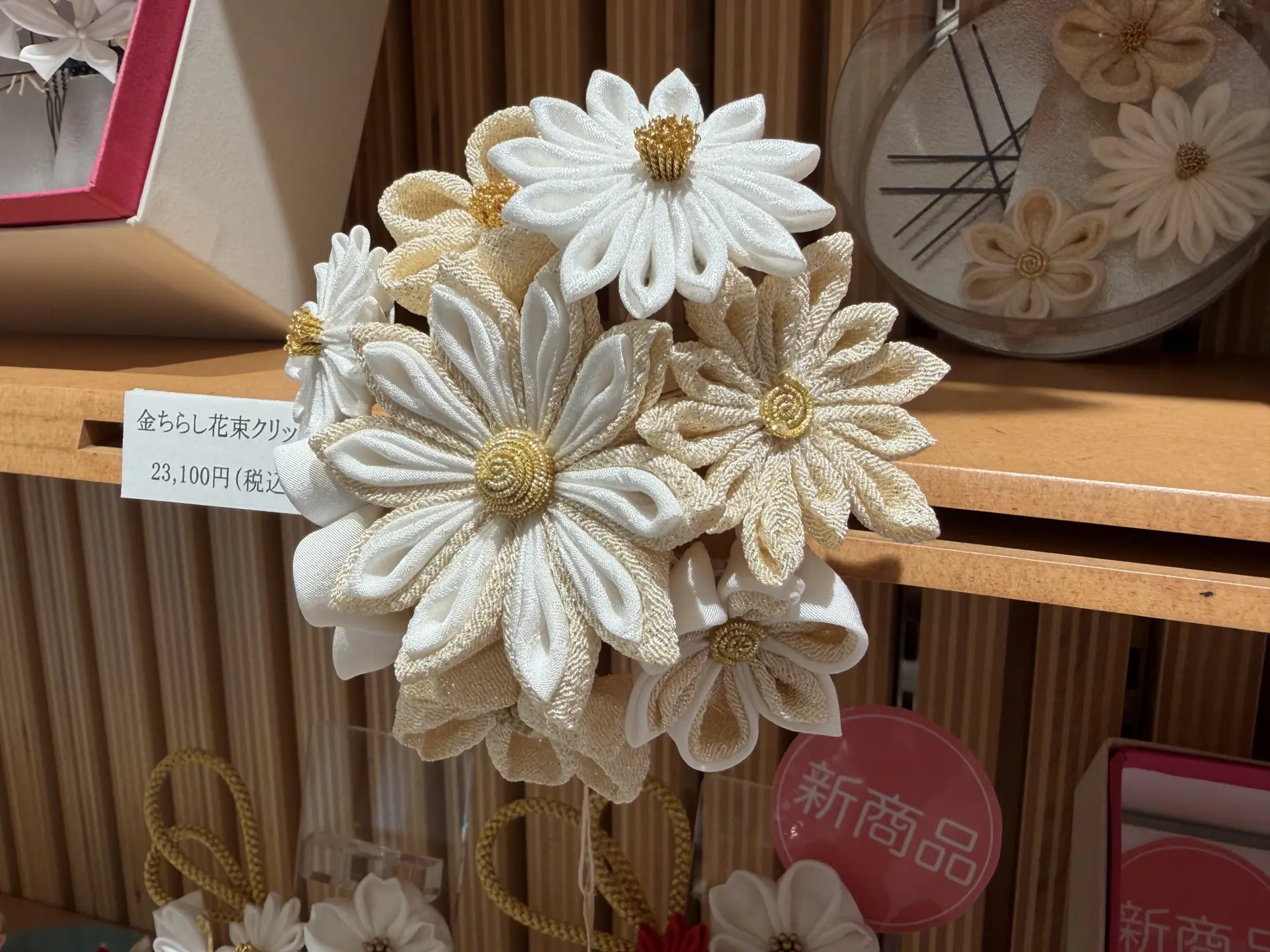
Tsumami-zaiku designs include flowers, birds, animals, and many other motifs. Different combinations of petal forms make countless creations possible—there are said to be as many shapes as there are types of flowers.
For those who wish to pursue tsumami-zaiku as a hobby, the store also sells materials such as habutae fabric and tassels.
Apparently, many participants leave the workshop wanting to continue the craft as a hobby. Oharibako also offers year-round tsumami-zaiku classes for them. Participants can learn to make a different seasonal flower for each of the 12 months, such as hydrangeas in June.
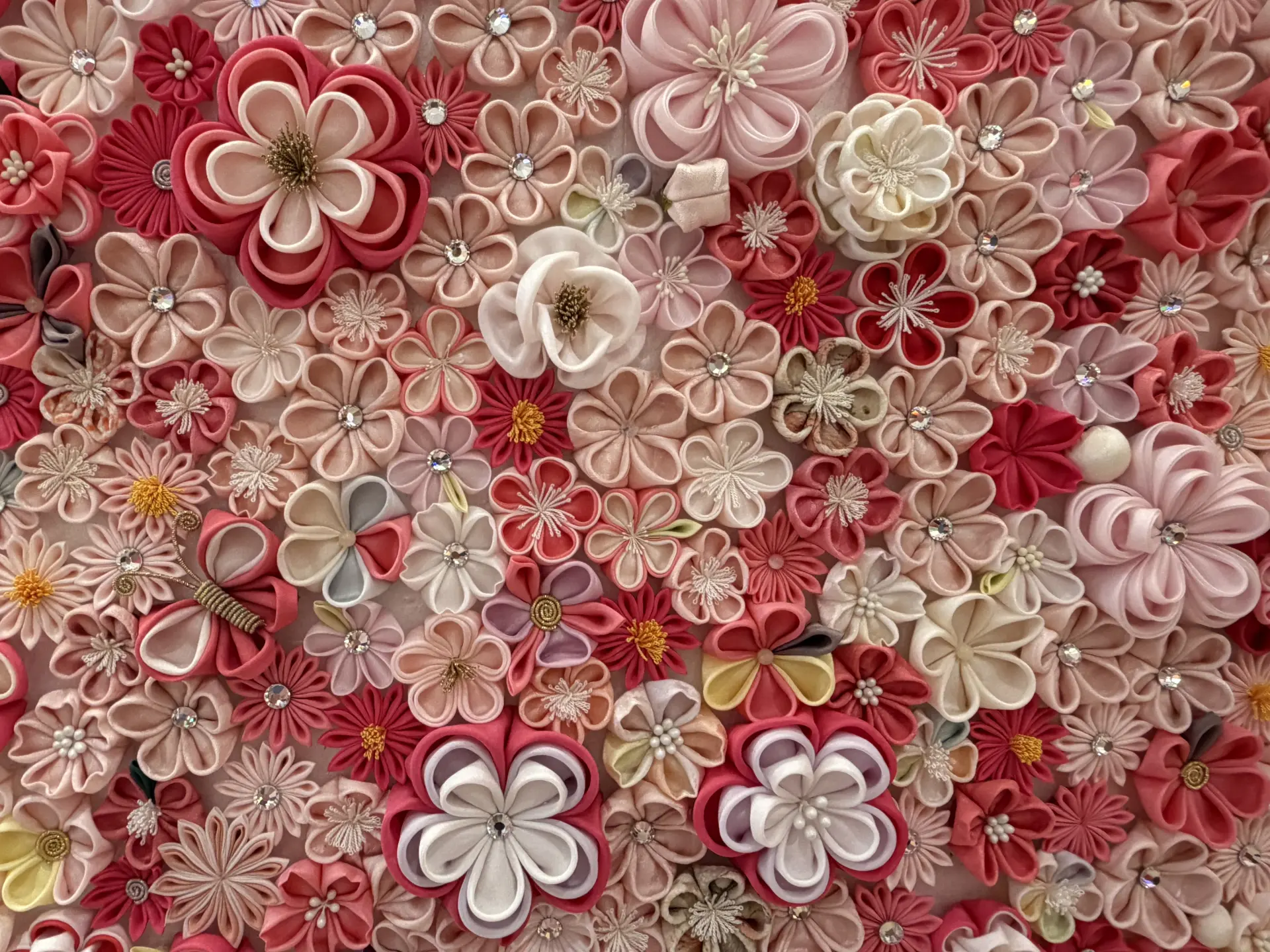
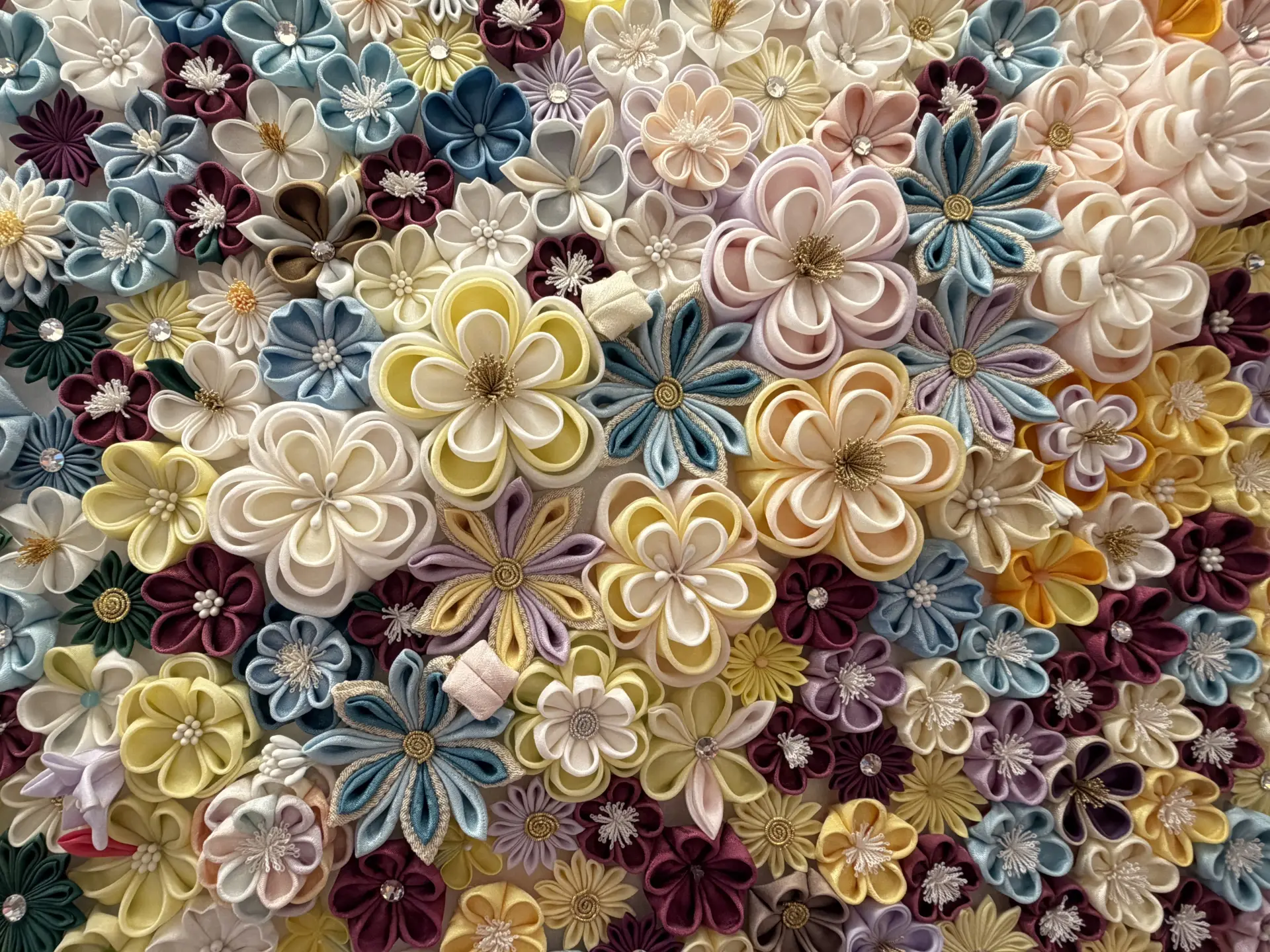
One particularly eye-catching feature inside Oharibako is a wall covered entirely with tsumami-zaiku. It is store decor rather than merchandise, but the densely arranged pieces create an impressive sight, almost like a field of flowers. The display was so vibrant that I could not help admiring it. Be sure to look for it when you visit.
Summary
The tsumami-zaiku flowers created from tiny pieces of fabric embody Japan's long-cherished appreciation of the changing seasons, its aesthetic sensibility, and, above all, the exceptional skill of its artisans. Making tsumami-zaiku myself revealed just how much care and precision each individual petal requires and gave me a firsthand appreciation of the depth of handmade craftsmanship. When visiting Kyoto, go beyond sightseeing and consider experiencing a traditional craft like this. It is also an excellent way to deepen your understanding of Japanese culture.