
Complete Guide to Akō Dantsū, Japan’s Traditional Handwoven Rugs
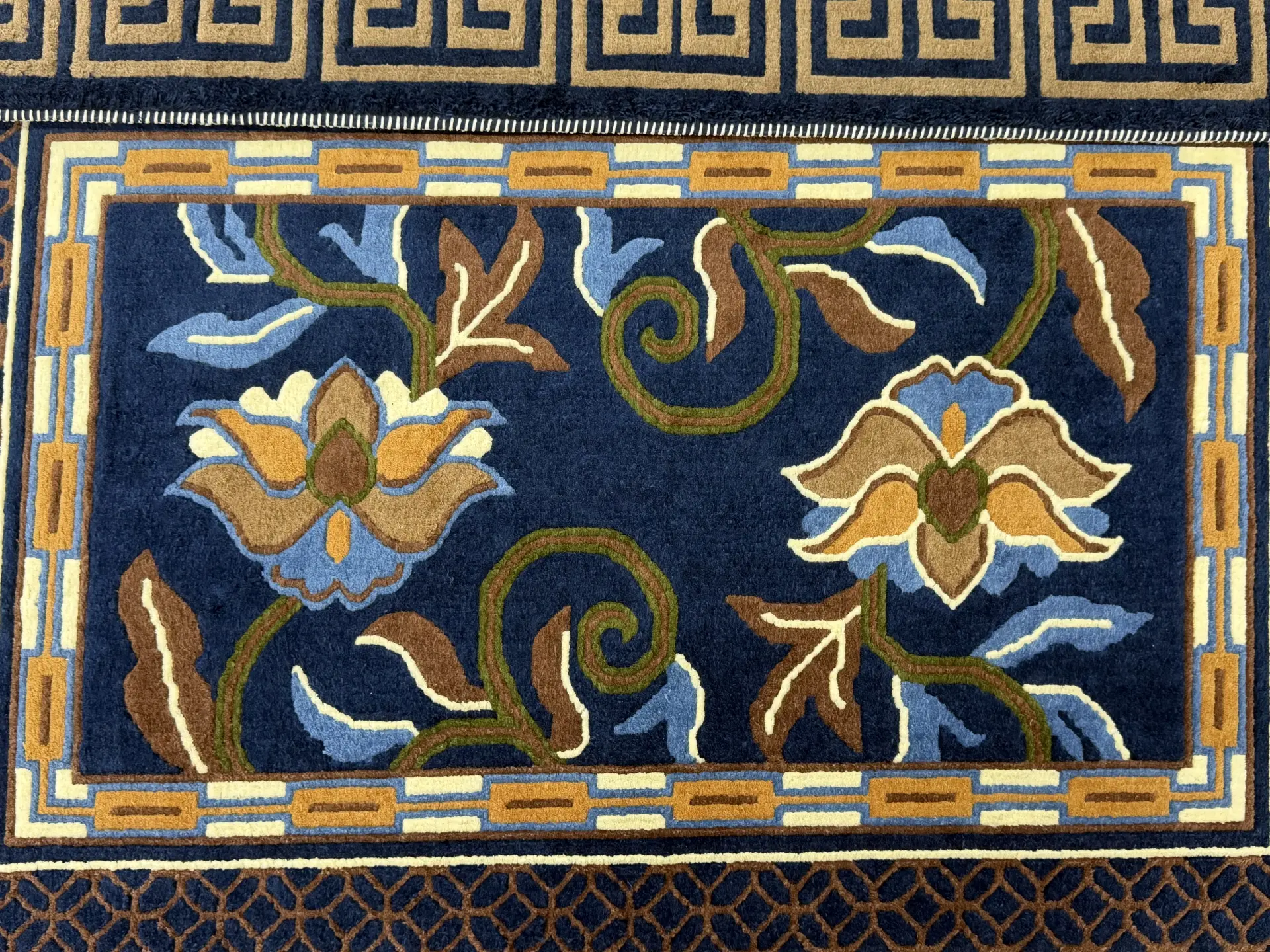
Akō Dantsū rugs feature auspicious motifs associated with good fortune. The craft began with a woman in Akō City, Hyogo Prefecture, more than 150 years ago, and its techniques continue to be passed down within the city today. Together with Nabeshima Dantsū from Saga Prefecture and Sakai Dantsū from Osaka Prefecture, Akō Dantsū is known as one of Japan’s three major dantsū traditions.
However, around 35 years ago, the line of Akō Dantsū artisans nearly died out. Today, efforts are being made to train new artisans and preserve these long-protected techniques for future generations. Workshops are also offered so that visitors can discover the appeal of the craft through hands-on experience.
This article introduces the history of Akō Dantsū, the appeal of its beautiful patterns created entirely by hand, and a facility where you can try making it yourself. Through these carefully crafted rugs, which require extraordinary patience and attention to detail, experience the spirit of Japanese craftsmanship.
What Is Akō Dantsū?
The term “dantsū” refers to handwoven textiles used as indoor floor coverings. The name is said to have developed from a variation in the pronunciation of the Chinese word “tanzi,” meaning a woven floor covering.
Akō Dantsū rugs originated in Akō City, Hyogo Prefecture, and every stage of their production is completed by hand.
The most distinctive feature of Akō Dantsū is a special process known as “tsumi,” or clipping.
During this process, spring scissors are used to sharpen the outlines of the patterns. This brings the motifs into clear relief, creates a smooth finish, and makes the rug durable and resistant to losing its shape. Every step, from weaving to clipping, is done by hand. Remarkably, a rug measuring about 37 by 75 inches takes more than six months to complete. Known for their distinctive colors and patterns, these prestigious rugs have been used in the Empress’s imperial railway carriage and at traditional festivals.
Akō Dantsū is one of Hyogo Prefecture’s traditional crafts and has a history spanning more than 150 years. Its distinctive colors and patterns have made it highly sought after. It has been used as flooring in the Empress’s imperial railway carriage, as decoration and floor covering in waiting rooms for tea ceremonies, and beneath the folding screens displayed by historic families in Kyoto’s festival districts during the Byōbu Matsuri, held during the Gion Festival.
- Name in Japanese
- 祇園祭
- Performance
- July 1-31
- Directions
-
To Yasaka Shrine:
1) From Keihan Oto Line, Gion-Shijo Station, walk 5 min.
2) From Hankyu Kyoto Line, Kyoto-Kawaramachi Station, walk 8 min.
3) From JR Kyoto Station, ride Kyoto City Bus’ Line 206, get off at Gion Stop, and walk a short distance - Official Website
- Yasaka Shrine (English)
About Akō City, the Birthplace of Akō Dantsū
Akō City lies at the southwestern edge of Hyogo Prefecture, along the border with Okayama Prefecture. Its location on the Seto Inland Sea made it a renowned salt-producing region during the Edo period, when its salt was praised as the finest in Japan. Even today, Akō accounts for approximately 20% of Japan’s domestic salt production. Akō Dantsū weaving was once a source of off-season income for women who worked in the salt fields.
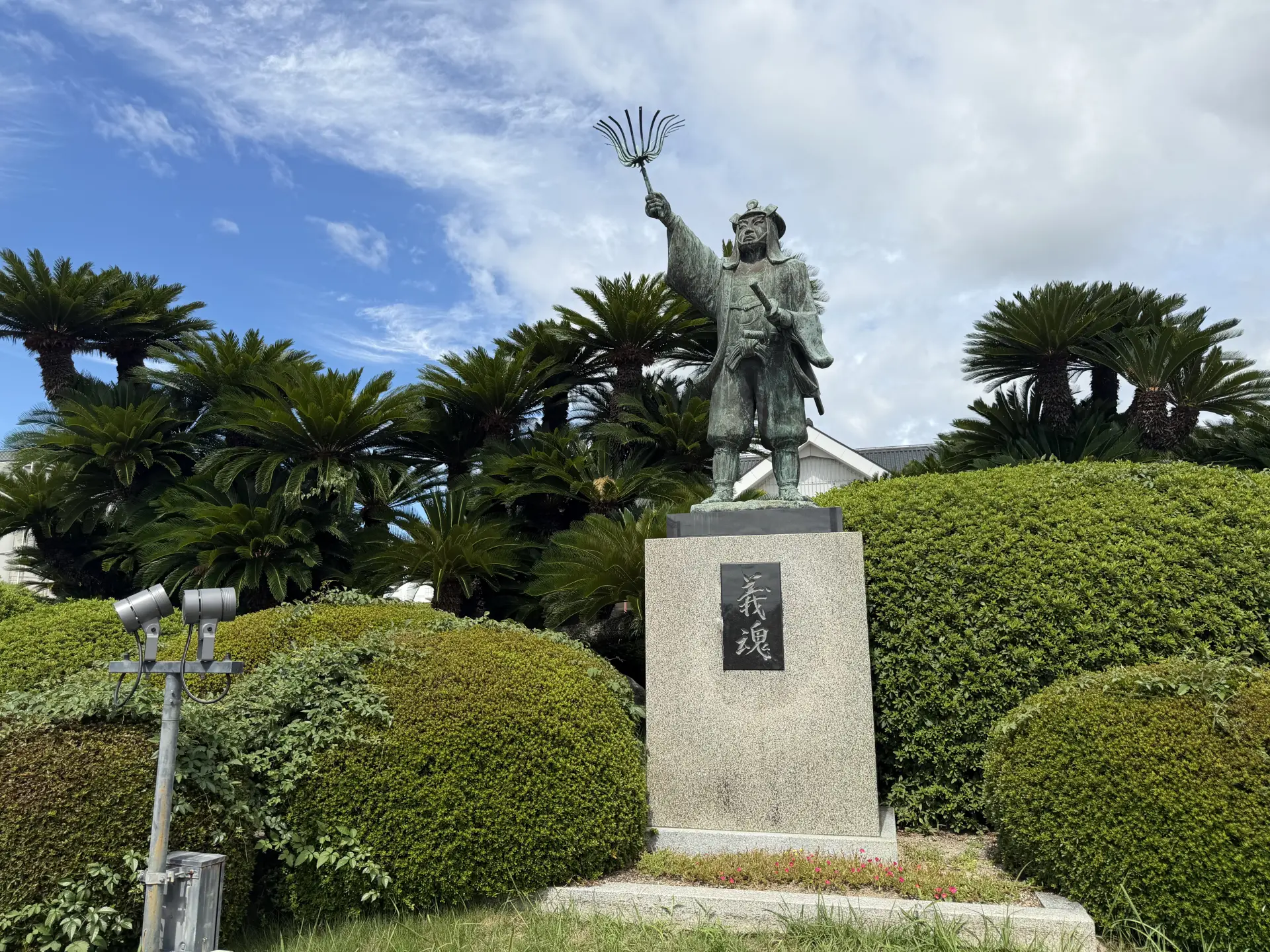
Akō is also historically significant. The real-life Edo-period vendetta carried out by the Akō retainers to avenge their lord inspired “Chūshingura,” one of Japan’s best-known historical dramas, as well as “Kanadehon Chūshingura,” a famous bunraku puppet theater and kabuki production. The city attracts history enthusiasts with temples connected to the Akō retainers and the Akō Gishi Festival, held twice a year. Statues and stone monuments honoring the retainers can be found throughout the area around JR Banshū-Akō Station, offering visitors a sense of the city’s history.
- Official Name
- Banshozan Sengakuji
- Founded
- 1612
- Postal Code
- 108-0074
- Address
-
2-11-1 Takanawa, Minato-ku, Tokyo
Google Maps - Telephone
- 03-3441-5560
- Admission
-
Free
*The Ako-Gishi Memorial Hall and Wooden Statue Museum facilities are charged a joint admission of ¥500 - Closed
- No holidays
- Hours
- [April-September] 7:00am - 4:00pm
- Access
- About 1 minute on foot from Exit A2 of Sengakiji Station on the Toei Subway Asakusa Line
- Official Website
- Official Website (Japanese)

The History of Akō Dantsū
The history of Akō Dantsū began in the late Edo period with a woman named Naka Kojima, who lived in Akō. While traveling with her husband, she encountered an intricately made Chinese rug known as a Banrekisen in Takamatsu, Shikoku. Fascinated by its workmanship, she wondered whether a similar rug could be woven from domestically produced cotton. After years of trial and error, Naka successfully wove a nearly perfect cushion-sized dantsū in 1870. She continued researching thread-dyeing and weaving methods while developing original designs. In 1874, she created a loom capable of producing rugs measuring about 37 by 75 inches. This allowed her to commercialize Akō Dantsū and establish sales channels in Osaka and Kyoto. The entire process took an astonishing 26 years, and Naka was 52 years old by the time she succeeded.
The weaving techniques developed by Naka subsequently spread, and by the late Meiji period, more than 150 artisans are said to have been involved in producing Akō Dantsū. Demand began to rise around 1897, and the rugs came to be regarded as luxury floor coverings.
During wartime, however, government controls made cotton, the primary material, increasingly difficult to obtain. As a result, Akō Dantsū factories were gradually forced to close from 1935 onward. Although some resumed operations after the war, the mechanization and mass production of Japan’s rapid economic growth period placed further pressure on this painstaking, handmade craft. Akō Dantsū continued to decline, and all remaining factories had closed by 1991.
Determined not to let techniques dating back to the Meiji period disappear, the Akō City Board of Education launched an Akō Dantsū Weaving Techniques Course in 1991. Graduates of the course formed the Akō Dantsū Preservation Society in 1999. In addition to passing down the craft, the group collected surviving Akō Dantsū rugs featuring various historic patterns. To reproduce them, members counted the individual stitches in each motif and converted the designs into diagrams. Akō Dantsū rugs are now produced based on these diagrams. Several weaving studios operate within Akō City, where artisans work together to preserve the techniques for future generations.
Characteristics of Akō Dantsū
Three types of thread are required to make Akō Dantsū: warp threads, weft threads, and hase yarn. All three are made from cotton. Hase yarn is also called colored yarn and is used to create the patterns.
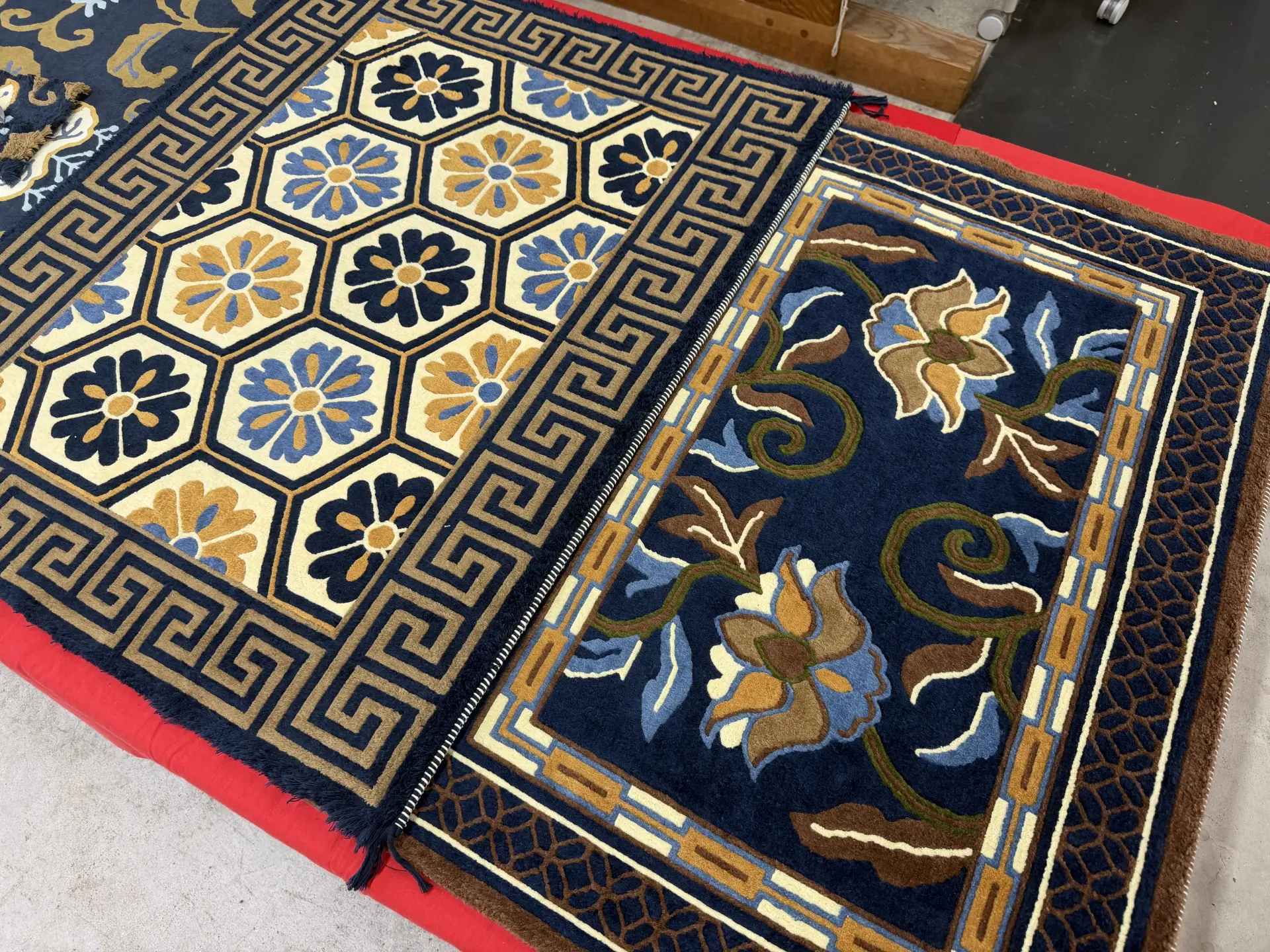
Akō Dantsū rugs traditionally measure about 37 by 75 inches. Their most distinctive feature is the use of scissors along the boundaries between colors. This process, known as suji-tsumi, or groove clipping, emphasizes the patterns and gives them a three-dimensional appearance.
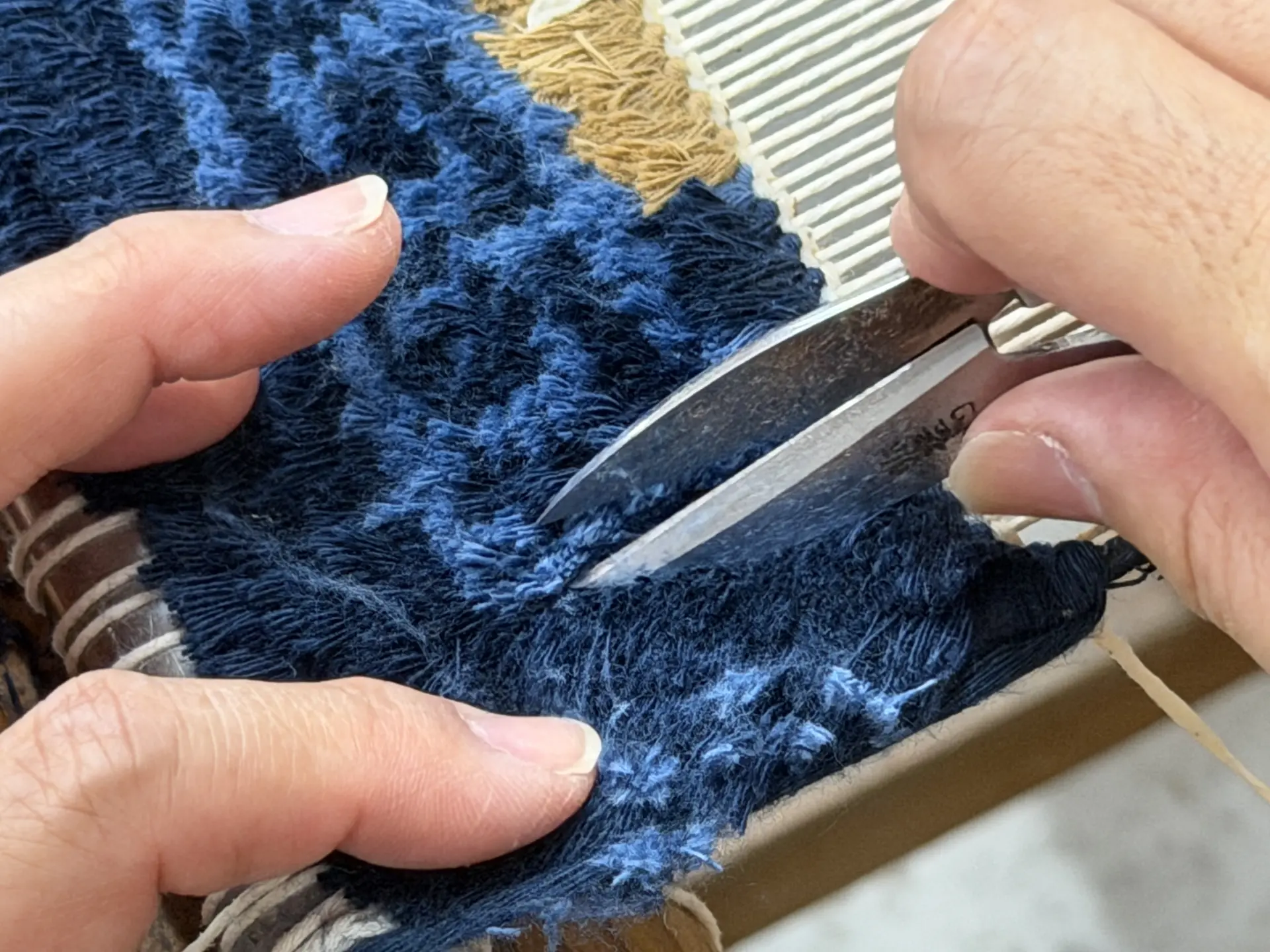
This suji-tsumi process is not found in Saga’s Nabeshima Dantsū or Osaka’s Sakai Dantsū, introduced in the following section. Because Akō Dantsū is made with cotton yarn, it has a soft texture.
Japan’s Three Major Dantsū Traditions
Japan has three major dantsū-producing regions, collectively known as Japan’s three major dantsū traditions. In addition to Akō Dantsū, they include Nabeshima Dantsū from Saga Prefecture and Sakai Dantsū from Osaka Prefecture. Here is an introduction to their respective histories and characteristics.
Nabeshima Dantsū
Nabeshima Dantsū is one of Saga Prefecture’s traditional local industries and is said to be Japan’s oldest cotton dantsū tradition. Its weaving yarn is made from high-quality cotton, giving it a softer feel than silk or wool. The colored yarn is left untrimmed, and the surface is not leveled through ji-tsumi, or surface clipping, so many examples have a long pile. The warp threads at the ends are also often left as fringe.
The tradition originated around the Genroku era of the Edo period, from 1688 to 1704. Seiemon Koga, who was born into a farming family in Ōgimachi near Saga Castle, learned dantsū-weaving techniques from a Chinese artisan in Nagasaki. He began producing rugs known as Ōgimachi Mōsen. During the Edo period, the lord of the Saga Domain admired their intricate craftsmanship and bold, ornate patterns and encouraged their production. Because the rugs were made for the domain’s official use, their sale to ordinary people was prohibited. They became available to the general public after the Meiji period began, and at their peak, more than a dozen weaving studios were in operation.
Sakai Dantsū
Sakai Dantsū is a handwoven rug tradition that originated in Sakai City, Osaka Prefecture, and is designated as an Intangible Folk Cultural Property of Osaka Prefecture. It began in 1831, when Sakai textile merchant Shōzaemon Fujimoto commissioned Rihei Izumi to weave a rug based on Nabeshima Dantsū and Chinese floor coverings. During the Meiji period, Shōzaemon’s grandson, Sōtarō Fujimoto, known as the “Dantsū King,” improved the rugs and worked to introduce them to Europe and the United States. Thanks to his efforts, Sakai Dantsū reached its peak in the mid-Meiji period, when it was sold both domestically and overseas. The number of weaving studios rose to 90, and annual production reached the equivalent of 1.17 million traditional tatami mats. In addition to cotton, hemp was widely used. These hemp rugs were made from discarded threads from imported rice sacks and other materials. Their low prices meant that most were exported overseas. Some Sakai Dantsū rugs depict scenes of the city in addition to decorative motifs, a characteristic not found in other dantsū traditions. Cotton, hemp, and silk were once used, but most Sakai Dantsū rugs are now made from wool. Their distinctive vertical looms occupy relatively little space and are well suited to weaving large products.
The Akō Dantsū Production Process
The production process consists of 15 steps, introduced below in order.
The first stage is preparing the loom.
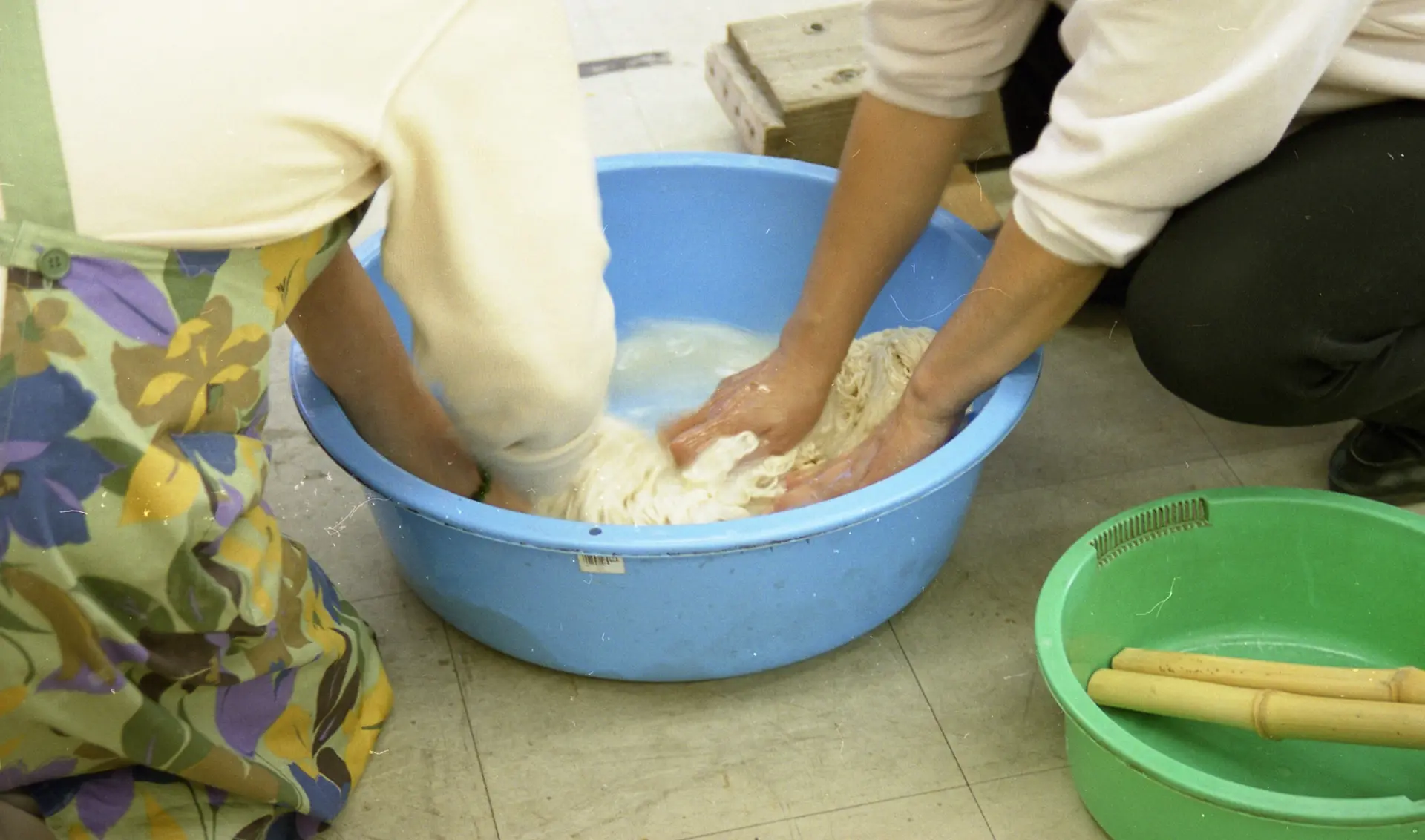
(1) Applying Starch to the Warp Threads
Rice flour and glutinous rice flour are cooked together, and vinegar is added to make a starch paste. The vinegar prevents the paste from spoiling. The paste is thoroughly worked into the warp threads to keep them from breaking or becoming tangled during weaving. This is a particularly important step.
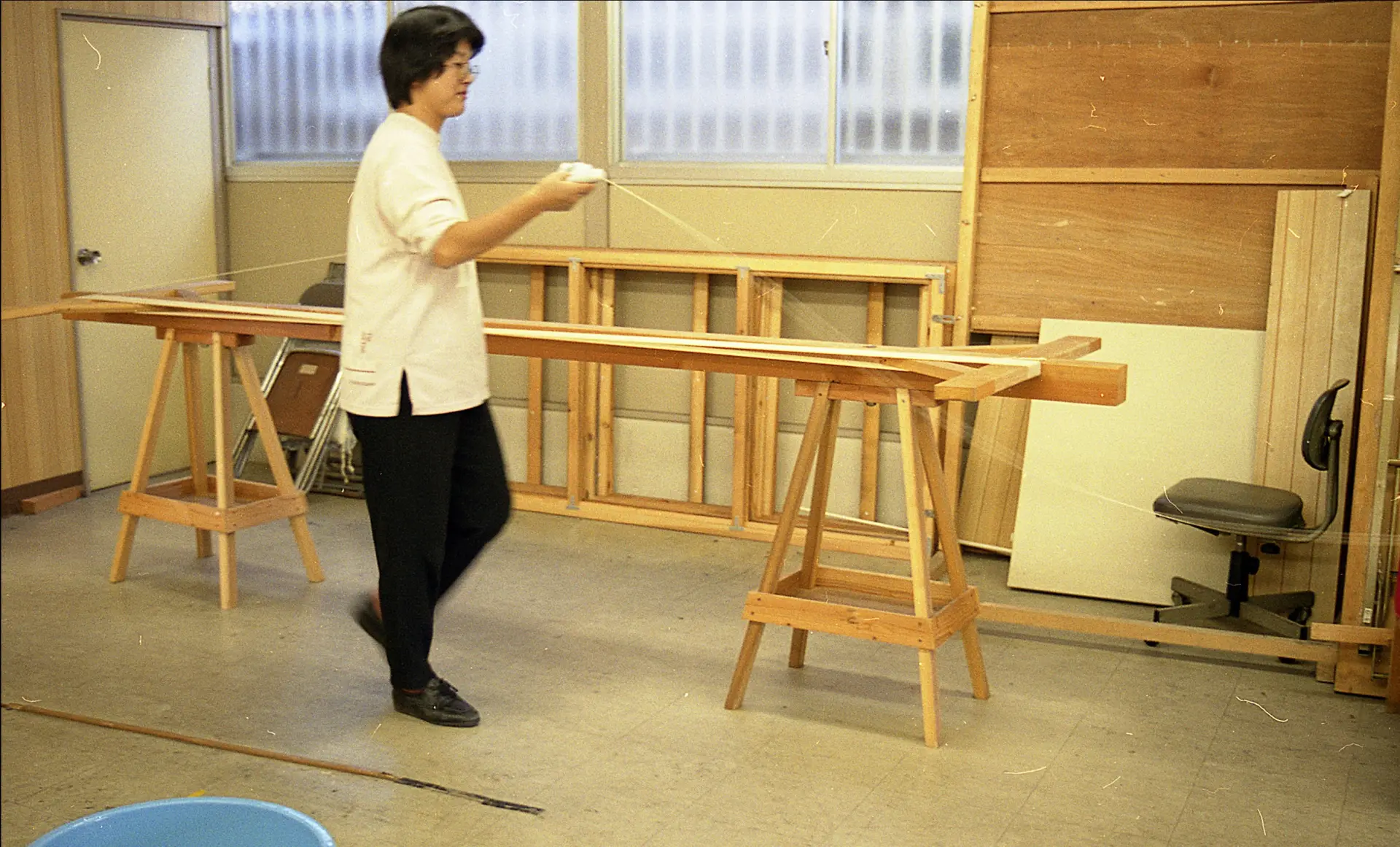
(2) Setting the Warp Threads
The starched warp threads are arranged in a figure-eight pattern around a frame called a hedai, which determines their length.
(3) Threading the Heddles
Each warp thread is passed through the front and rear heddles so that it can be raised and lowered. This task is performed by two people working together.
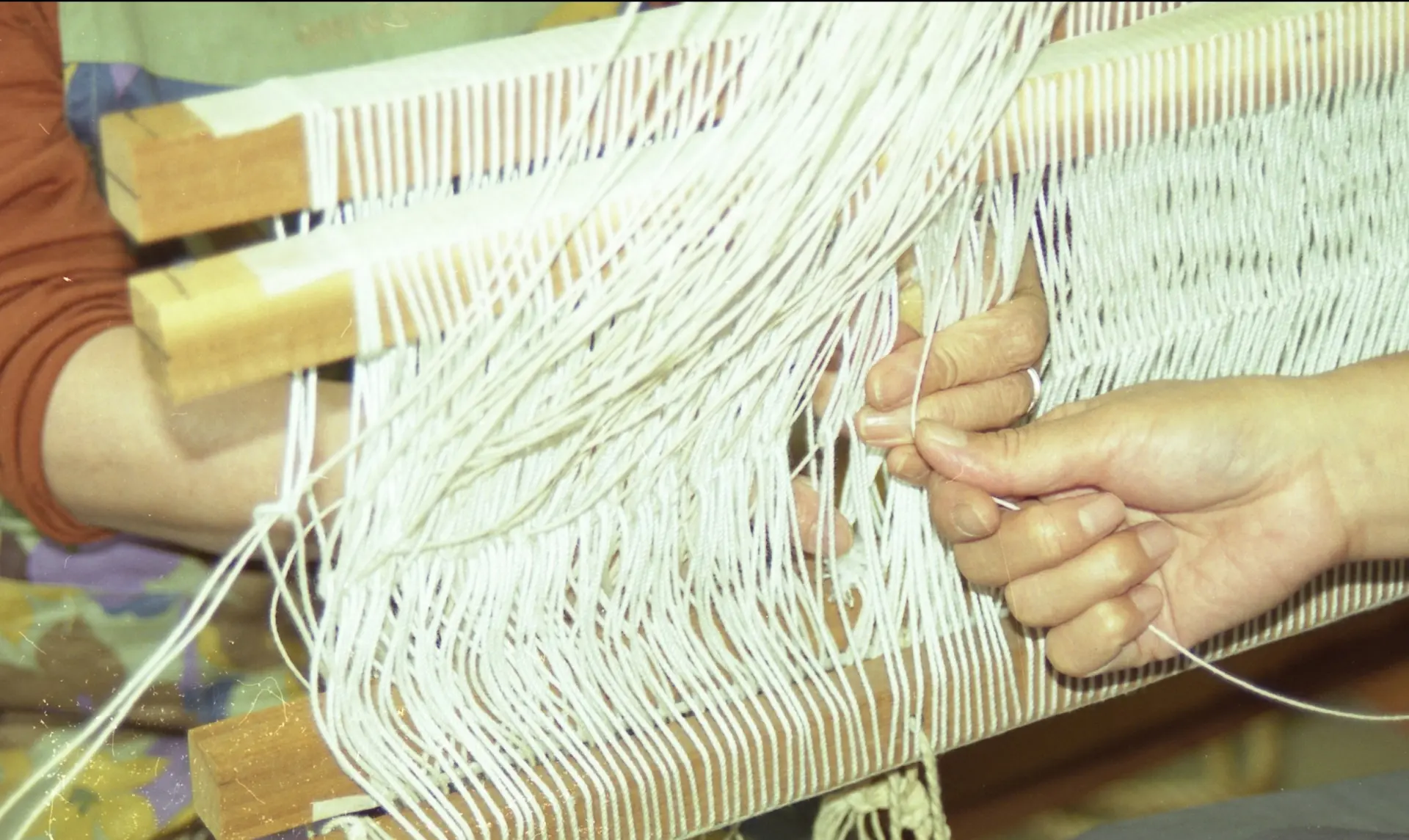
(4) Tying the Loom Knots
The upper and lower warp threads that have been passed through the heddles are paired, and their ends are tied securely together.
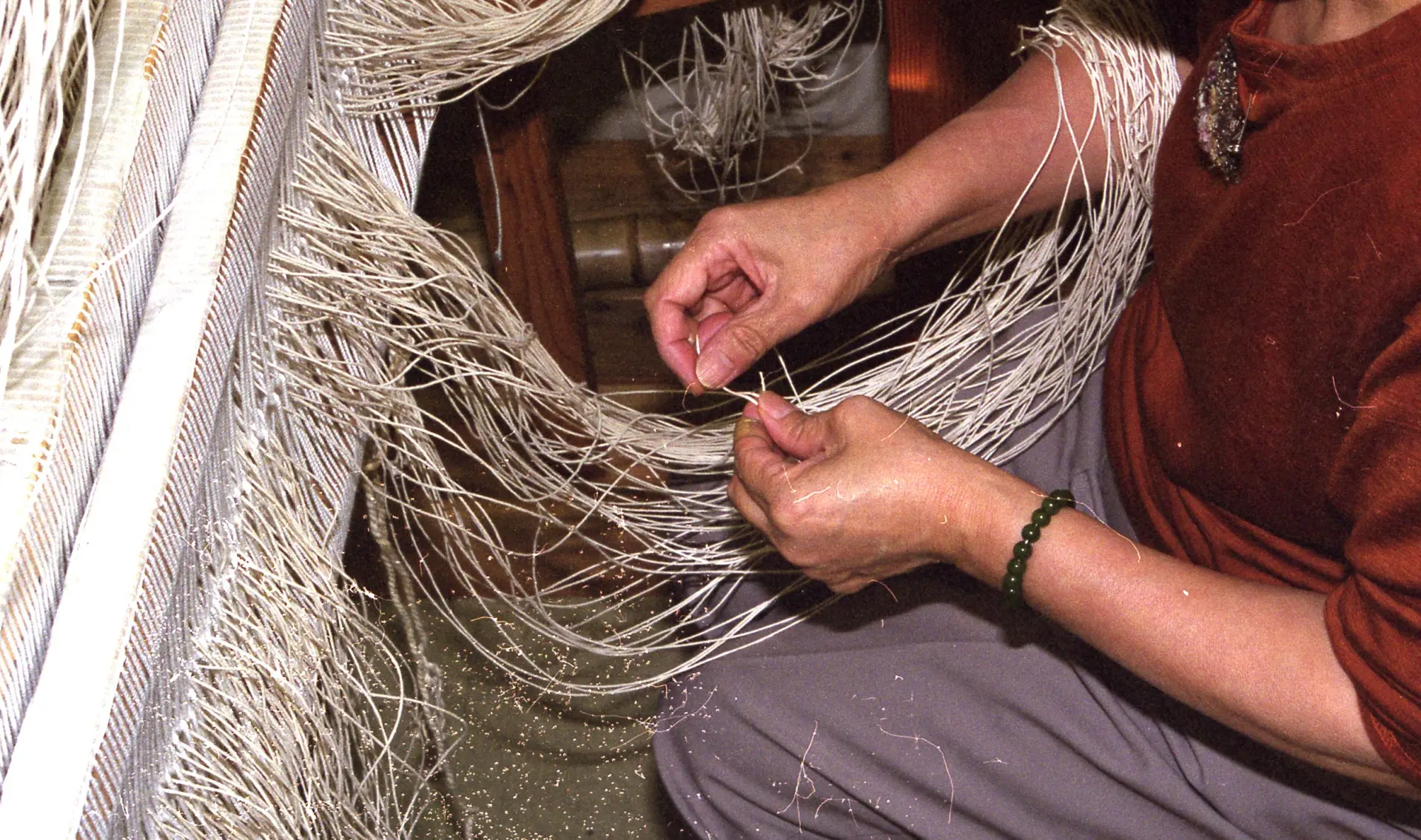
(5) Threading the Bōbai Cord
The tied warp threads are gathered into bundles of five or six pairs. Loops are formed at the ends and passed through the bōbai cord.
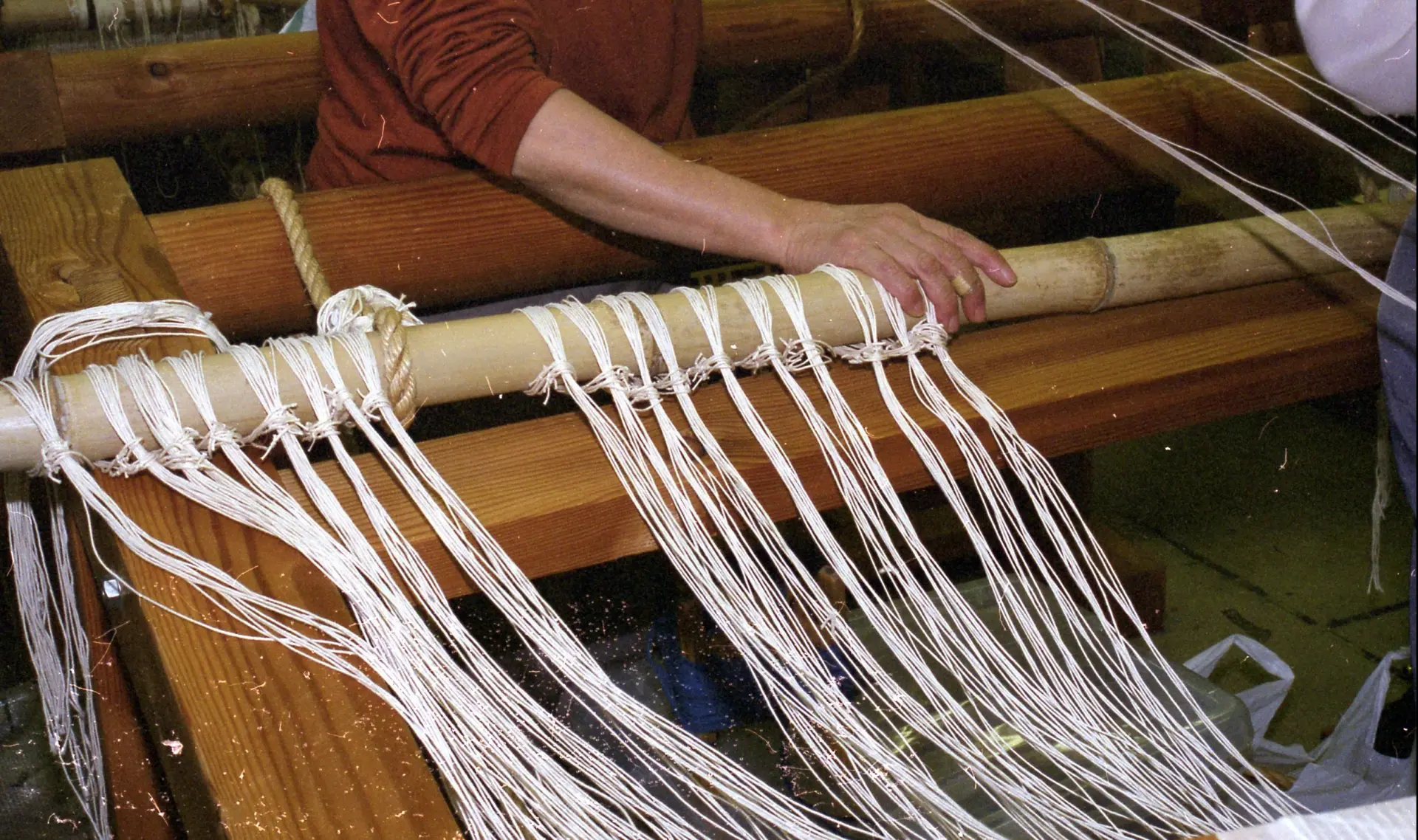
(6) Threading the Reed
The warp threads at the front are passed through the reed without allowing them to cross.
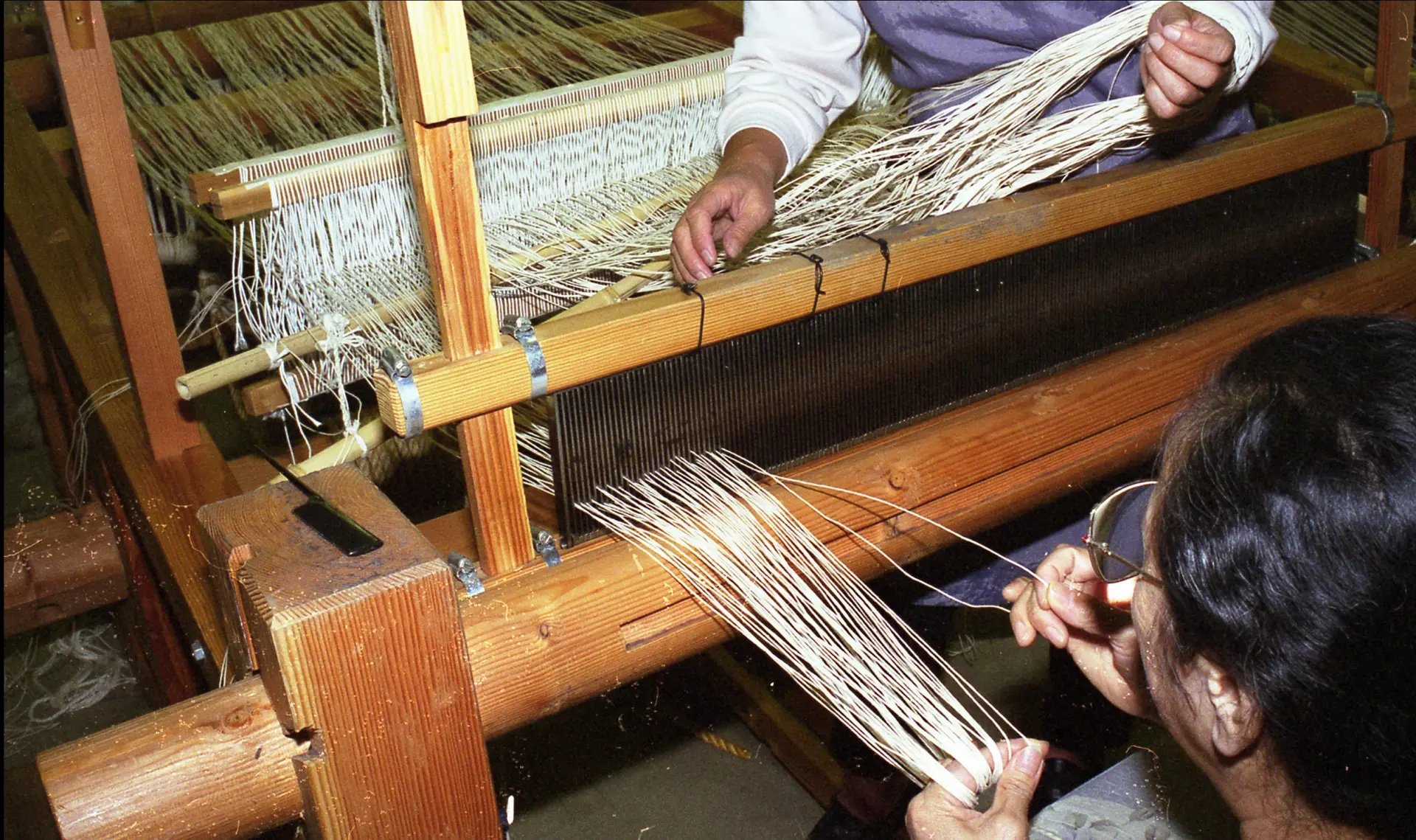
(7) Fastening the Warp to the Metal Rod
The warp threads are tied to an iron rod known as the kanabō.
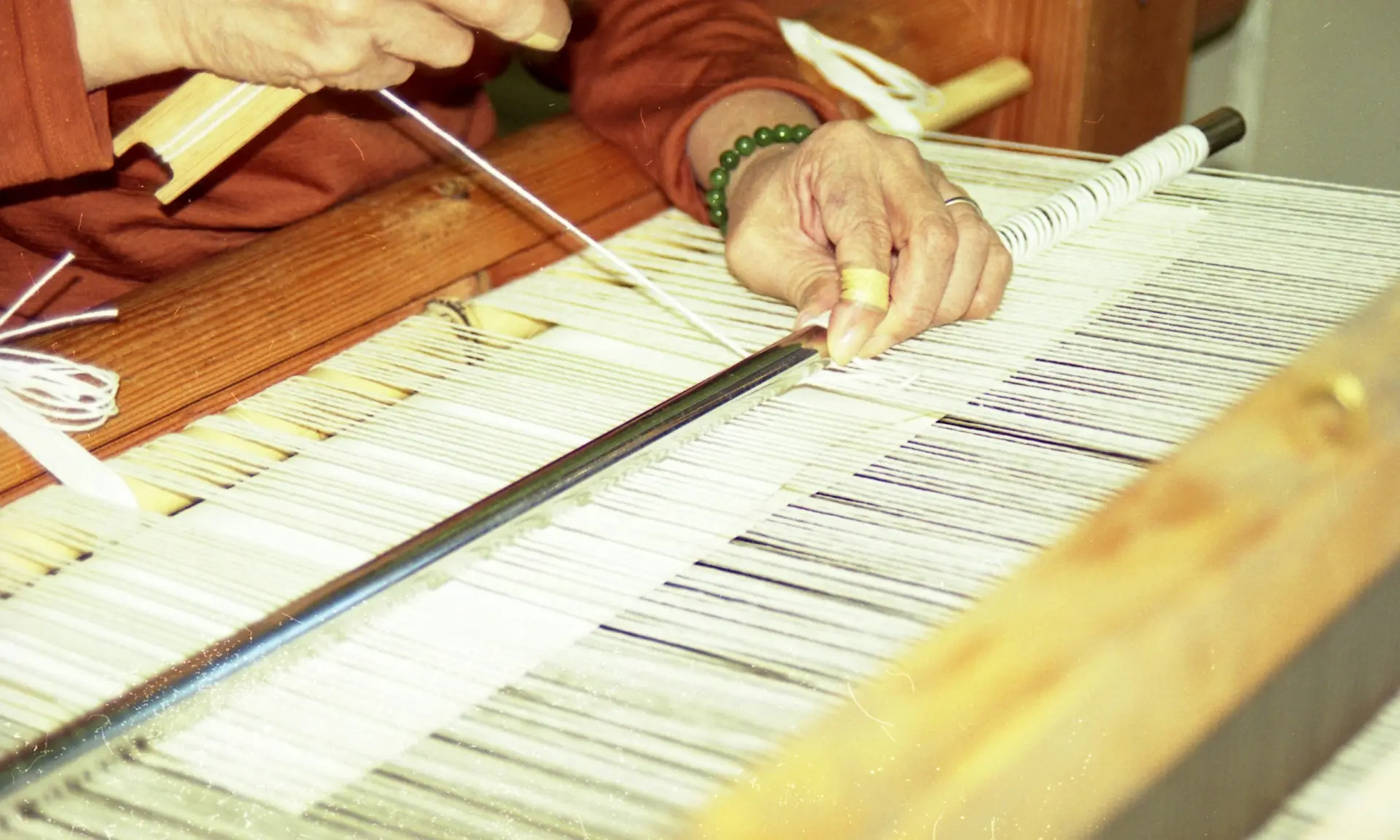
The weaving stage comes next.
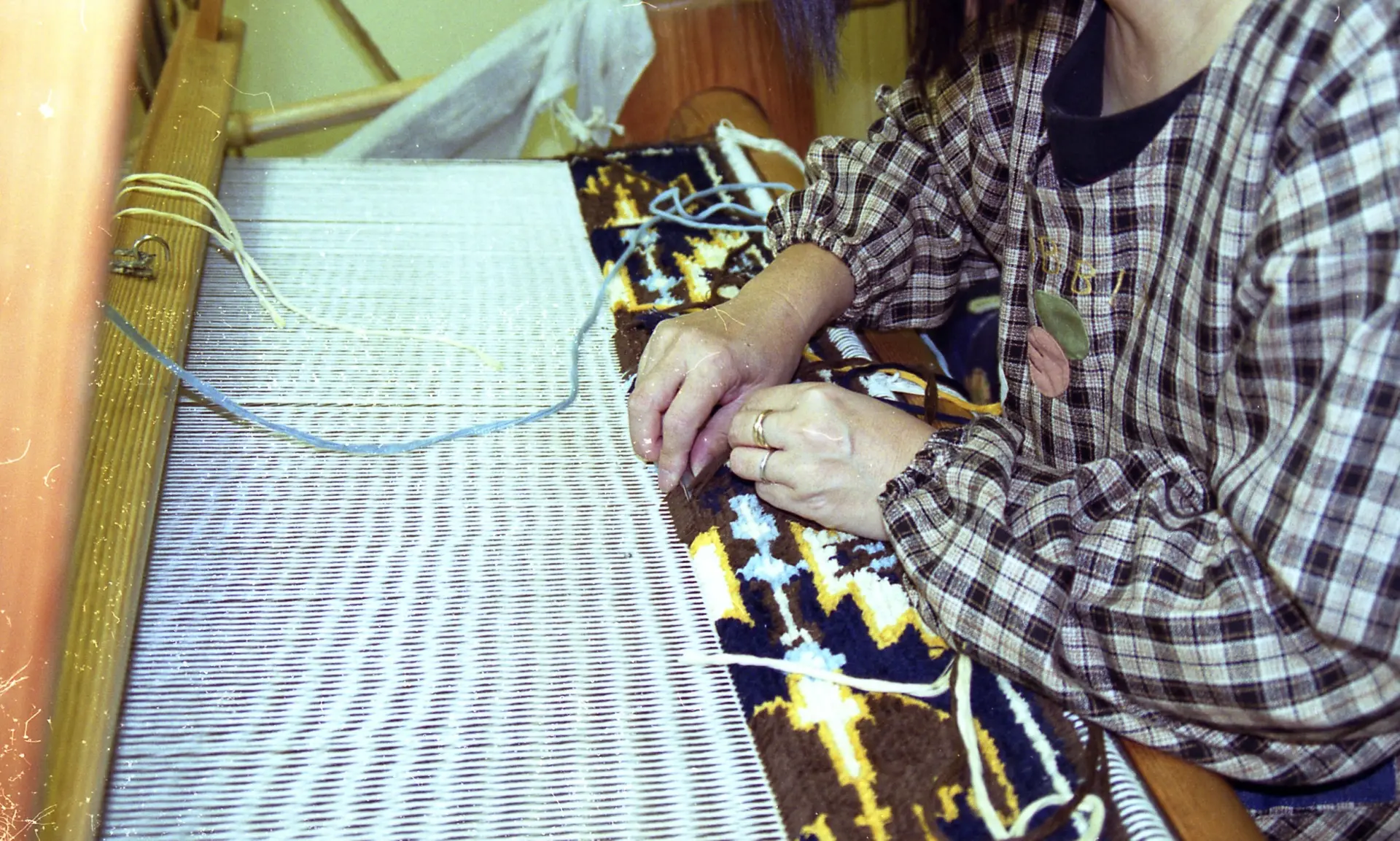
(8) Inserting the Colored Yarn
Following the design diagram, colored yarn is inserted between the upper and lower warp threads using Persian knots.
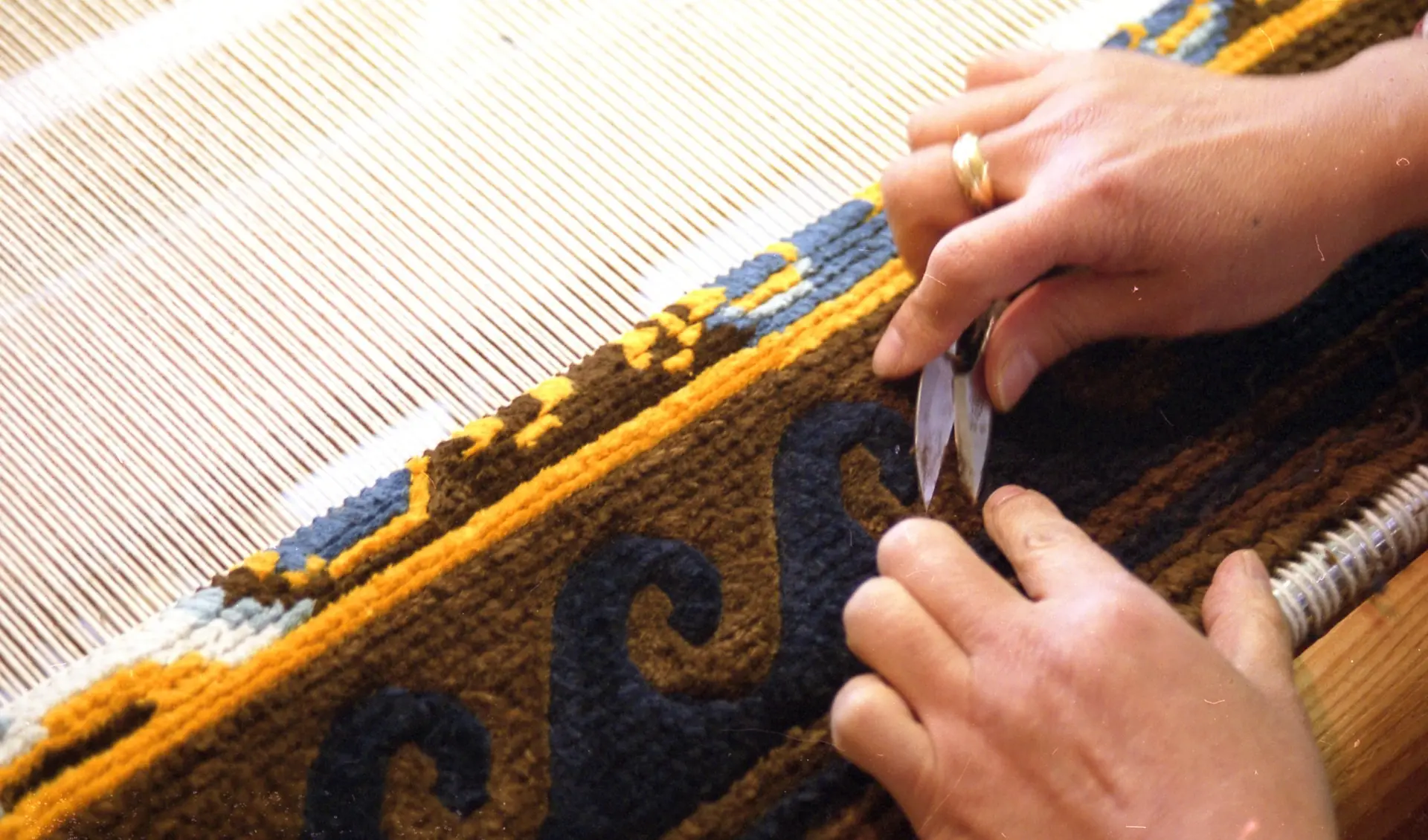
(9) Groove Clipping
To bring the patterns into relief, the colored yarn between motifs is separated into distinct lines. Spring scissors are then used to cut the yarn and create groove-like divisions.
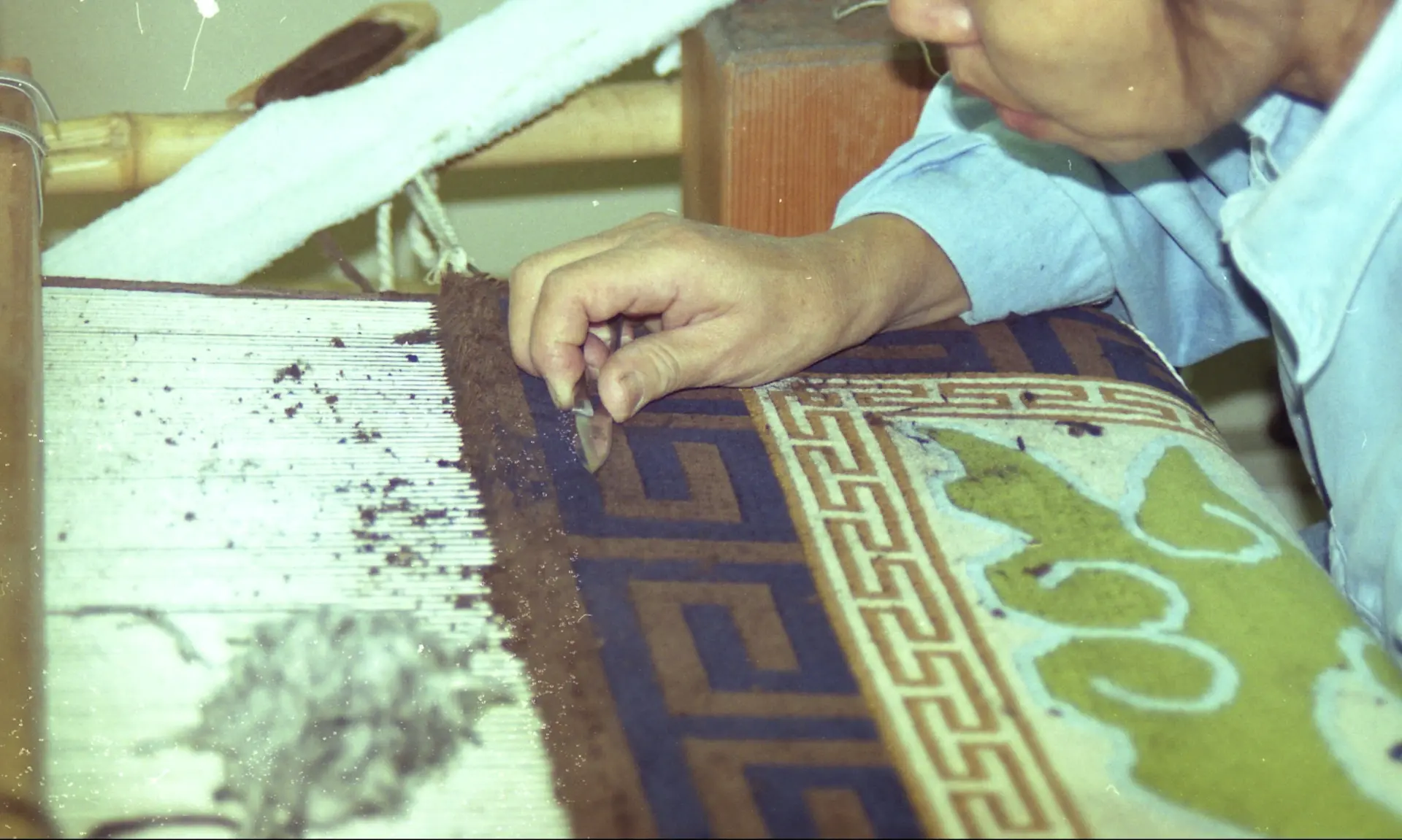
(10) Surface and Edge Clipping
Spring scissors are used to trim the yarn until the surface is level. This step determines the thickness of the rug, so great care must be taken not to cut too much. Finally, the edges are clipped to refine the patterns.
(11) Cutting the Warp Threads
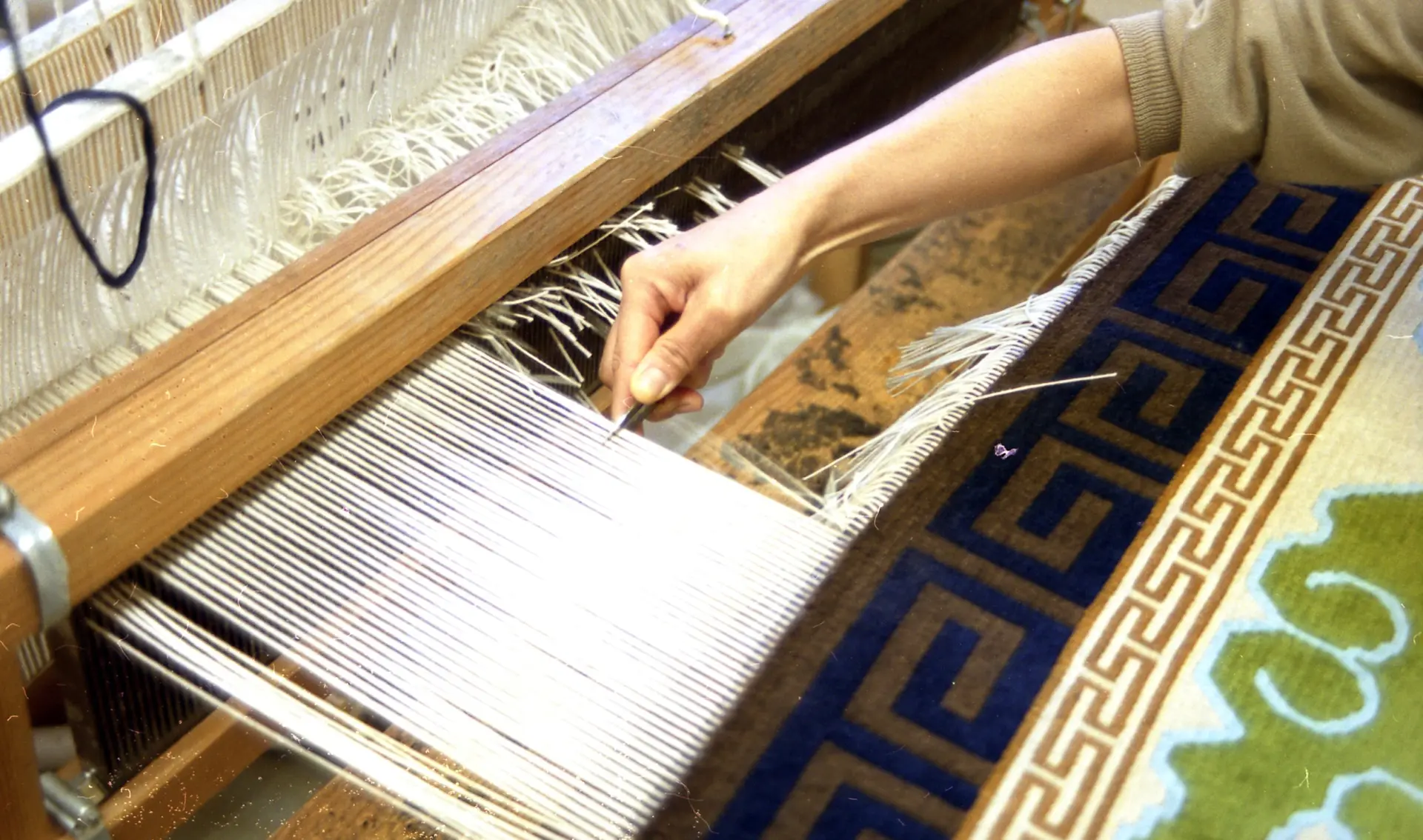
The warp threads are cut approximately 4 to 6 inches from the finished edge of the rug.
(12) Tying the Warp Threads
Taking care not to mix up the upper and lower threads, the cut warp threads are tied securely with overhand knots.
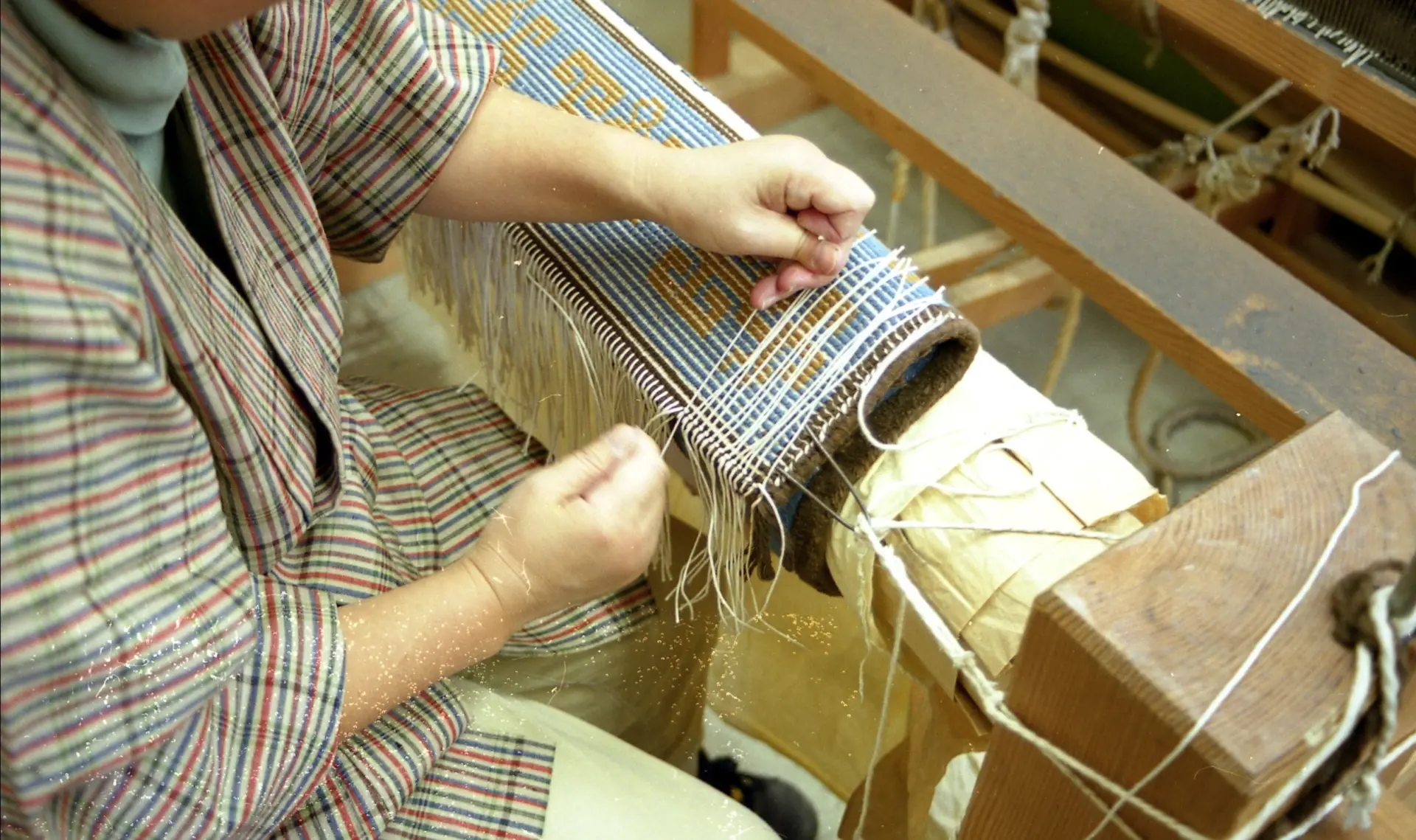
The final stage is finishing.
(13) Attaching the Rug to the Finishing Board
The rug is stretched face down across a door-sized finishing board and nailed in place to adjust its shape.
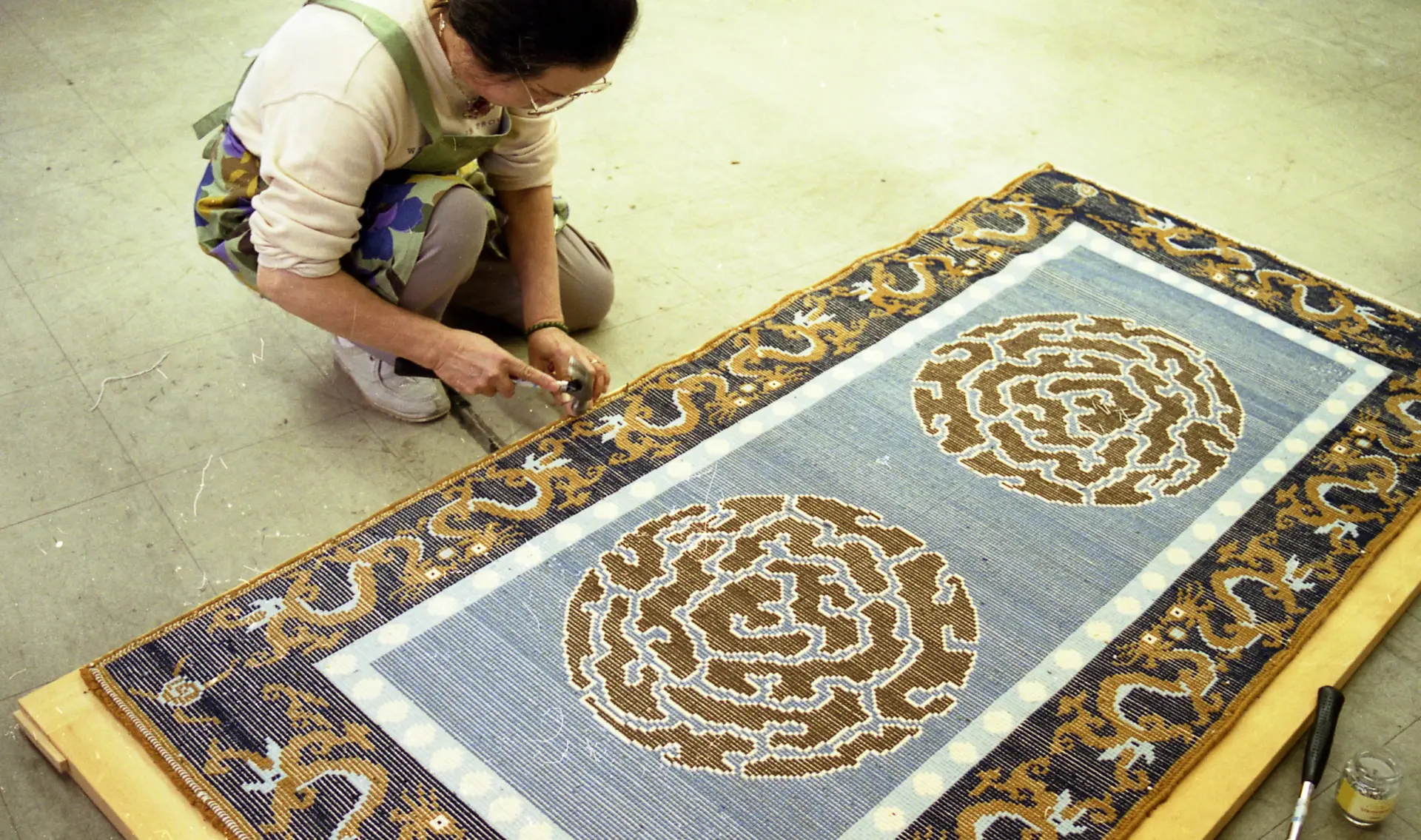
(14) Wet Blocking
A sprayer is used to apply a fine mist of water, allowing the shape to be adjusted further. The rug is then dried in the sun.
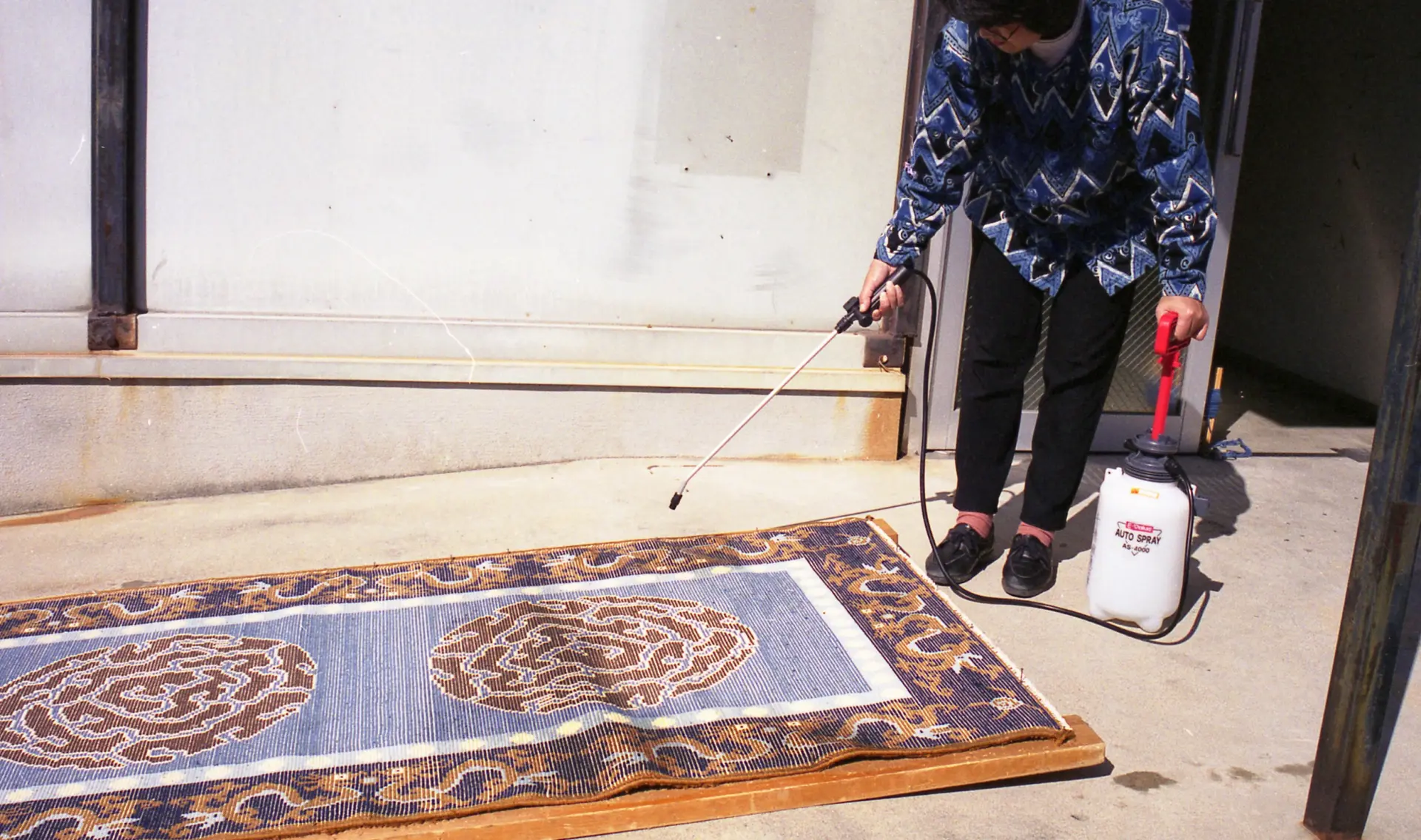
(15) Completion
The rug is complete once all these steps have been finished.
A rug measuring about 37 by 75 inches takes more than six months to produce through this process. It includes many exceptionally detailed tasks and requires not only precise technique but also patience. This meticulous work results in rugs with clearly defined patterns, making Akō Dantsū a true expression of Japanese craftsmanship.
Hands-On Akō Dantsū Experience
A facility offering hands-on Akō Dantsū experiences is located about a 10-minute walk from JR Banshū-Akō Station, making it easy for visitors to stop by. Participants receive direct instruction from Akō Dantsū artisans. Tours of the workshop are also available.
About the Akō Dantsū Technical Training Workshop Tsumugu
The Akō Dantsū Technical Training Workshop Tsumugu serves as a center for training future artisans so that the craft, which once nearly died out, will not face the same danger again. Trainees are recruited on an ongoing basis and taught the skills required to become artisans. After completing their training, graduates become instructors and carefully teach the next group of trainees every stage of production, from setting up the loom to finishing the rug. Because both trainees and instructors work in the workshop, visitors can observe the production process up close. Several Akō Dantsū workshops operate in the city, but this one houses six looms, the largest number at any single workshop in Akō.
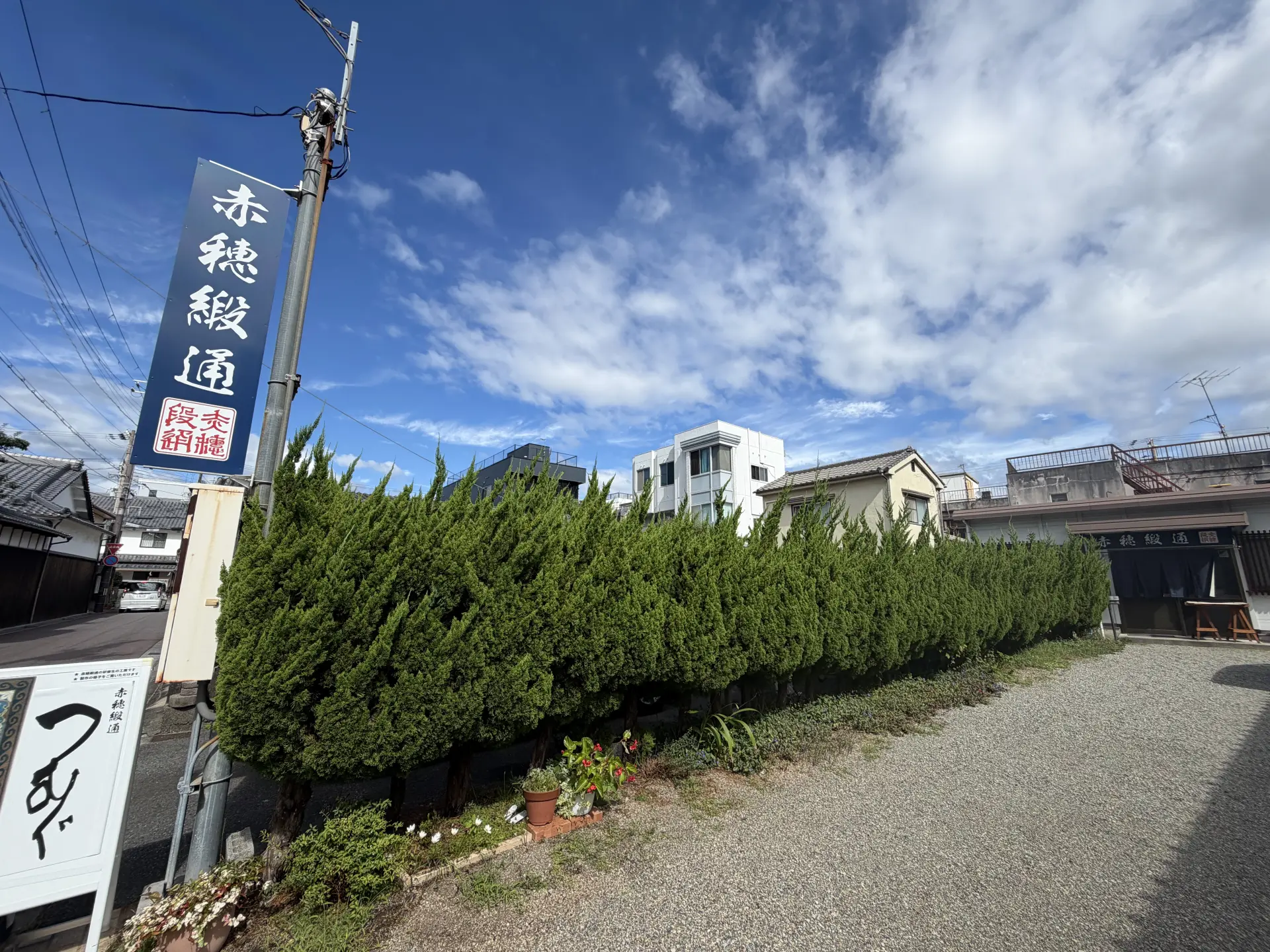
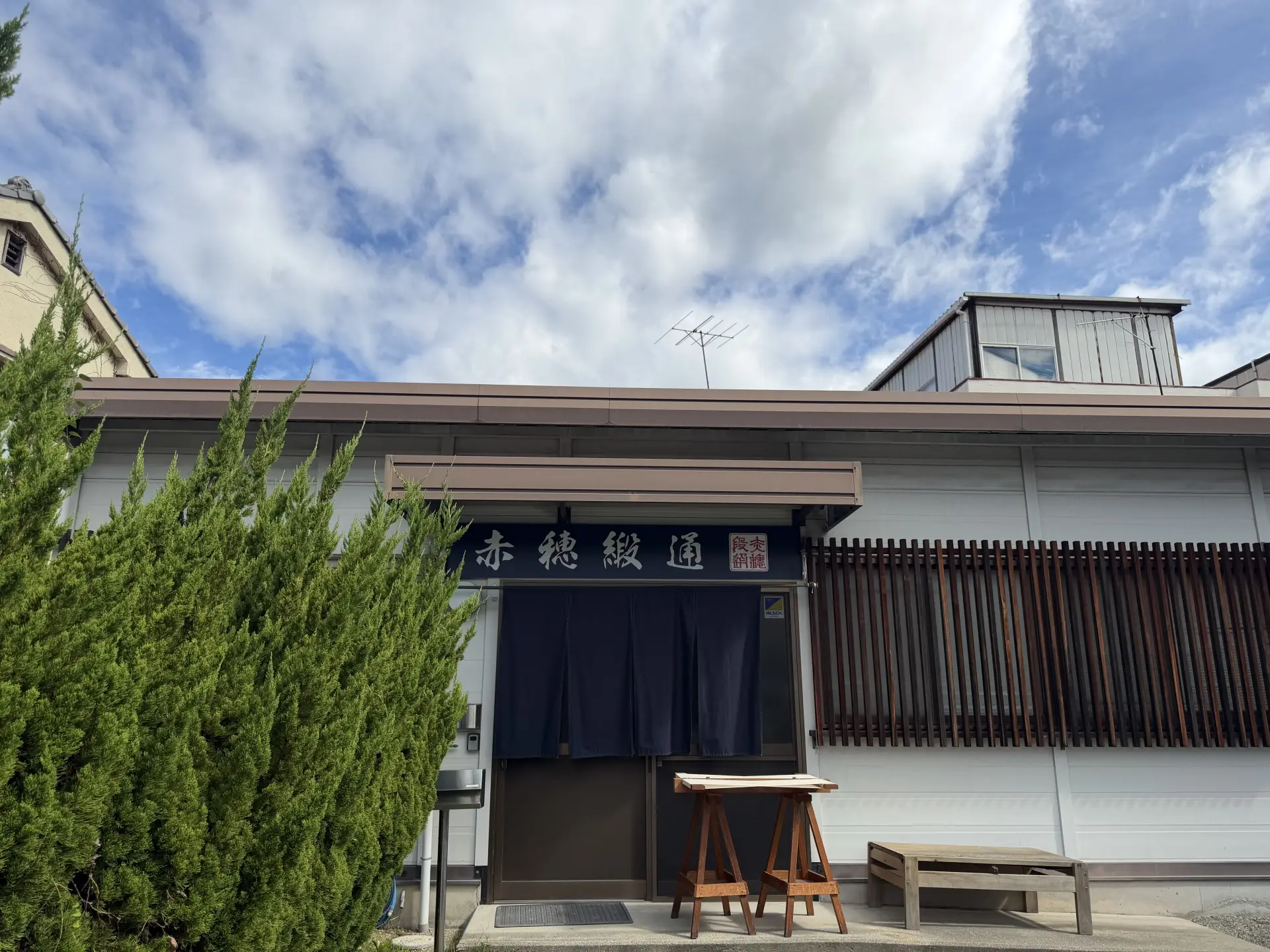
Touring the Workshop
Upon entering the workshop, you will find large looms filling the space, offering a tangible sense of how this tradition continues to be passed down.
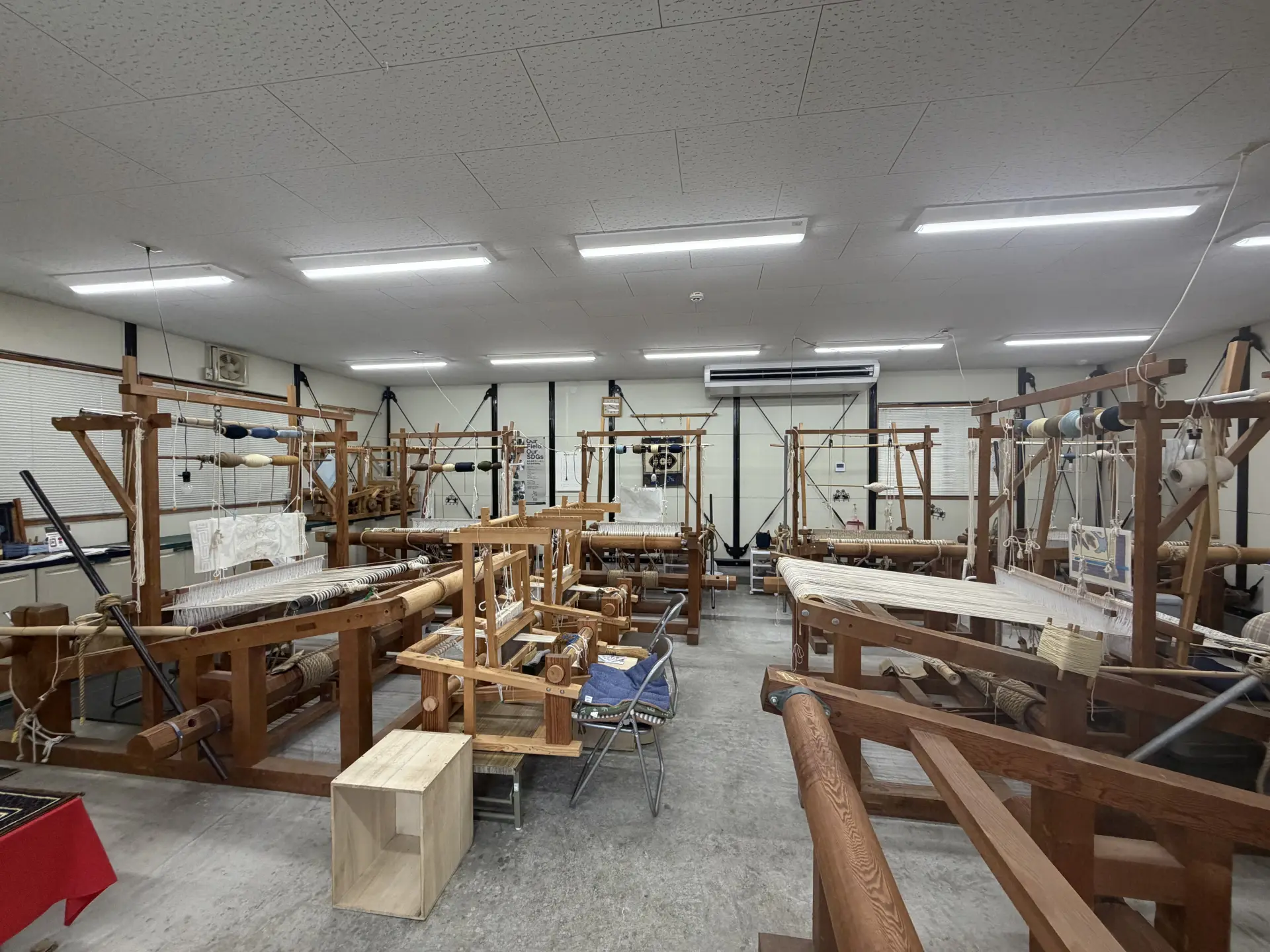
The artisans offer a warm welcome and provide detailed explanations of the history and production process of Akō Dantsū.
We began by touching an actual rug to experience its patterns and texture. Its smooth, pleasant feel clearly reflects the care taken in its production.
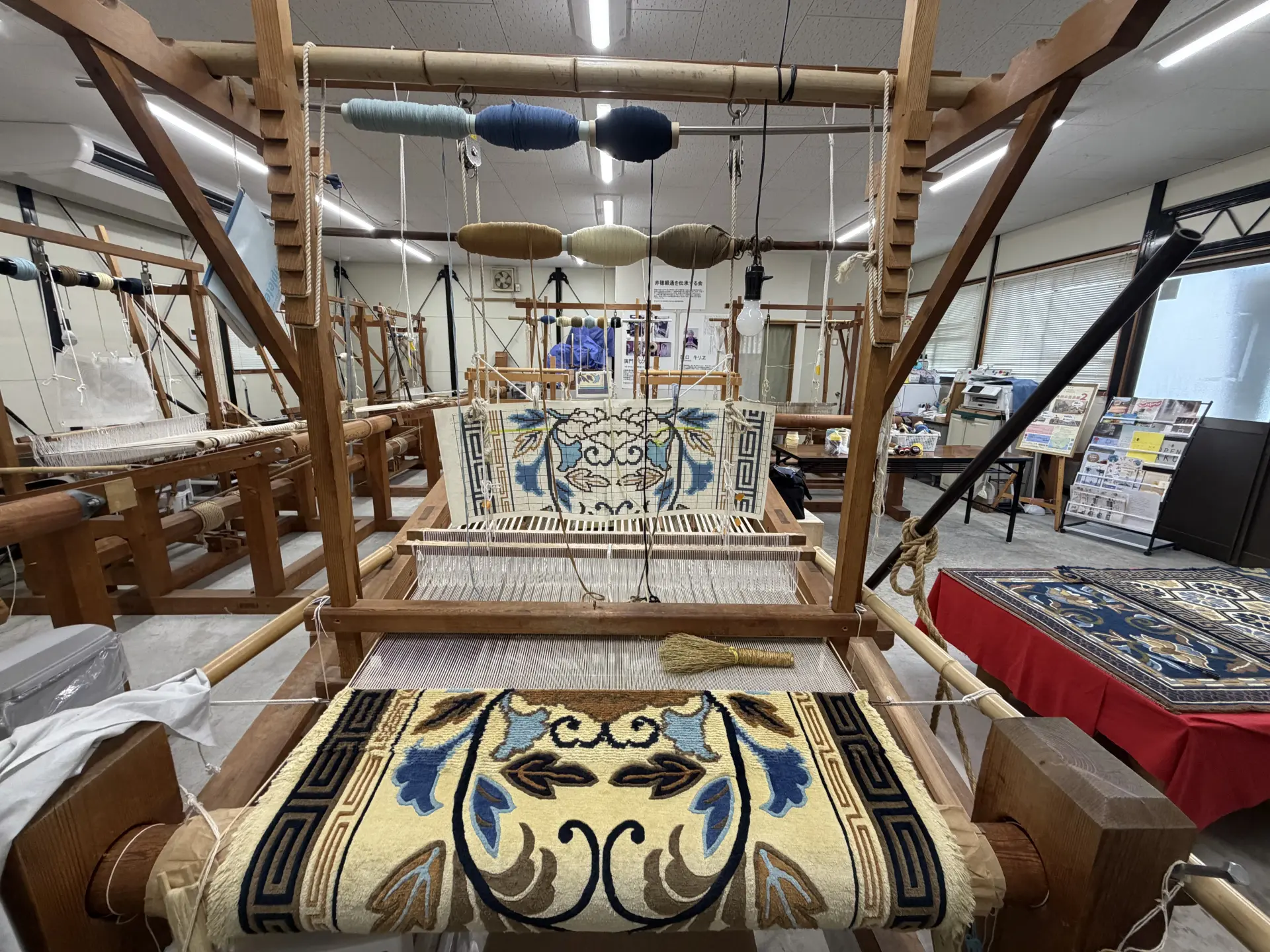
You can also view a partially completed rug on a loom. This offers a clear look at tsumi, the clipping process that is Akō Dantsū’s most distinctive feature.
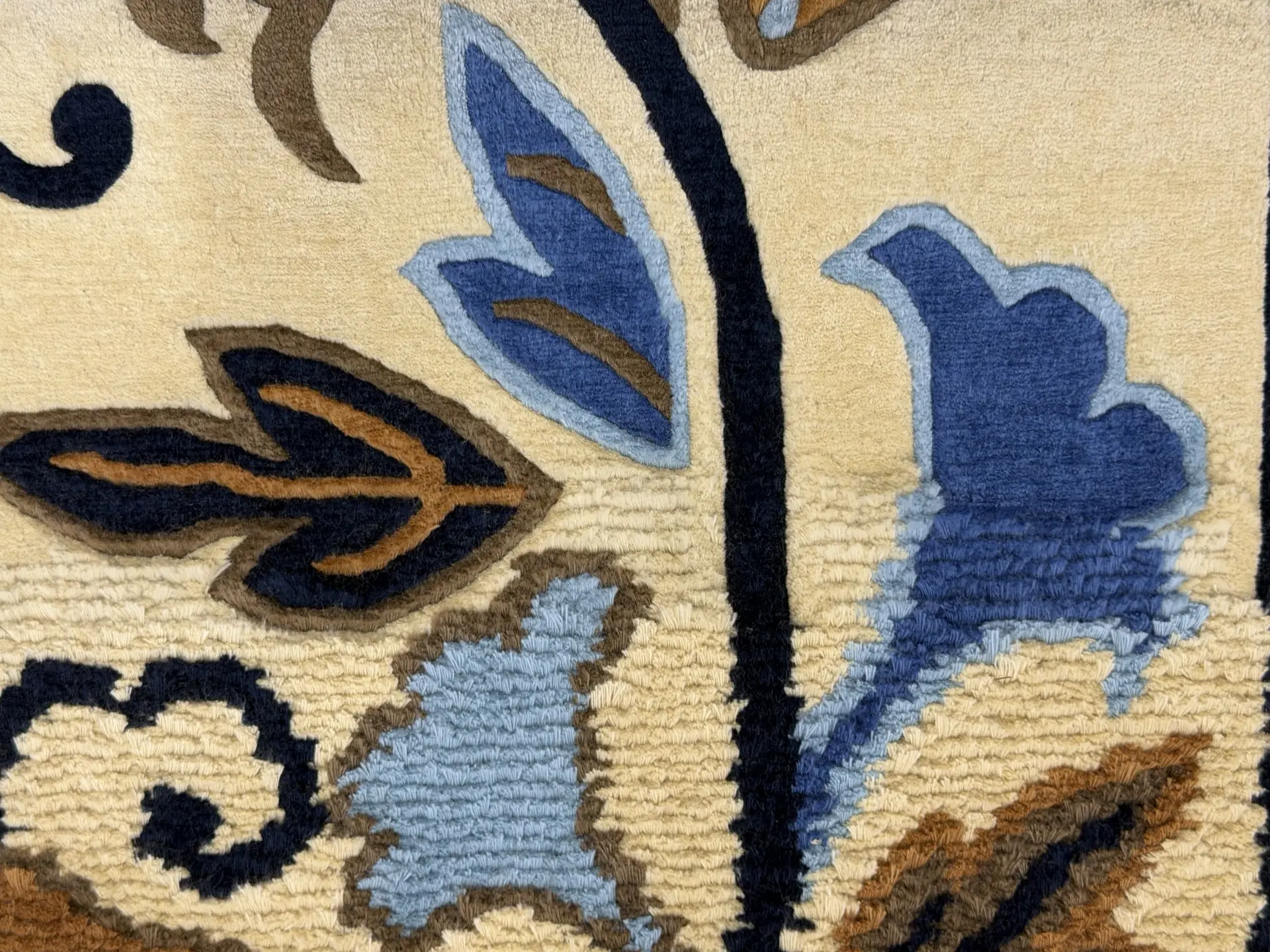
Here is an example. The section at the back has already been clipped, while the section at the front has not. The difference is immediately apparent. The unclipped front section looks fuzzy, and its patterns appear blurred. The clipped section at the back, however, is smooth, with clearly defined motifs. This is the secret behind the beauty of Akō Dantsū patterns. Even an independent artisan working from morning to evening five days a week requires approximately six to ten months to complete a rug measuring about 37 by 75 inches. Inserting the colored yarn takes around two months, while the clipping process takes roughly three times as long. After inserting approximately 30 rows of yarn, covering about 6 to 8 inches, the artisan clips that section. Repeating this cycle eventually produces a full-sized rug over a period of more than six months. The artisans’ patience and determination to create something beautiful and satisfying embody the spirit of Japanese craftsmanship.
Each artisan works at their own pace, so the particular process you will see depends on what is being done on the day of your visit.
Workshop Tours
- Hours
- 10:00 a.m.-12:00 p.m. and 1:00 p.m.-4:00 p.m.
- Open
-
Saturday, Sunday, and Monday; temporary closures may occur
Reservations are required on Tuesday, Wednesday, Thursday, and Friday; the workshop is closed if no reservations have been made - Closed on
- New Year holidays
For details, check the tour calendar on the official website.
A maximum of 20 people may tour the workshop at one time.
Free and Paid Experiences: The Free Experience
Visitors touring the workshop can try part of the Akō Dantsū production process free of charge. A full-sized rug is made on the loom used for the experience, so the particular step available depends on the stage of production on the day of your visit. On the day of our visit, we tried inserting colored yarn and clipping.
Inserting the colored yarn involves placing it between the upper and lower warp threads. You must compare your work carefully with the design diagram and count the threads precisely to determine how far the colored yarn should extend. If the yarn is inserted across six threads when the pattern calls for five, the design will become distorted. Counting the threads required the greatest concentration.
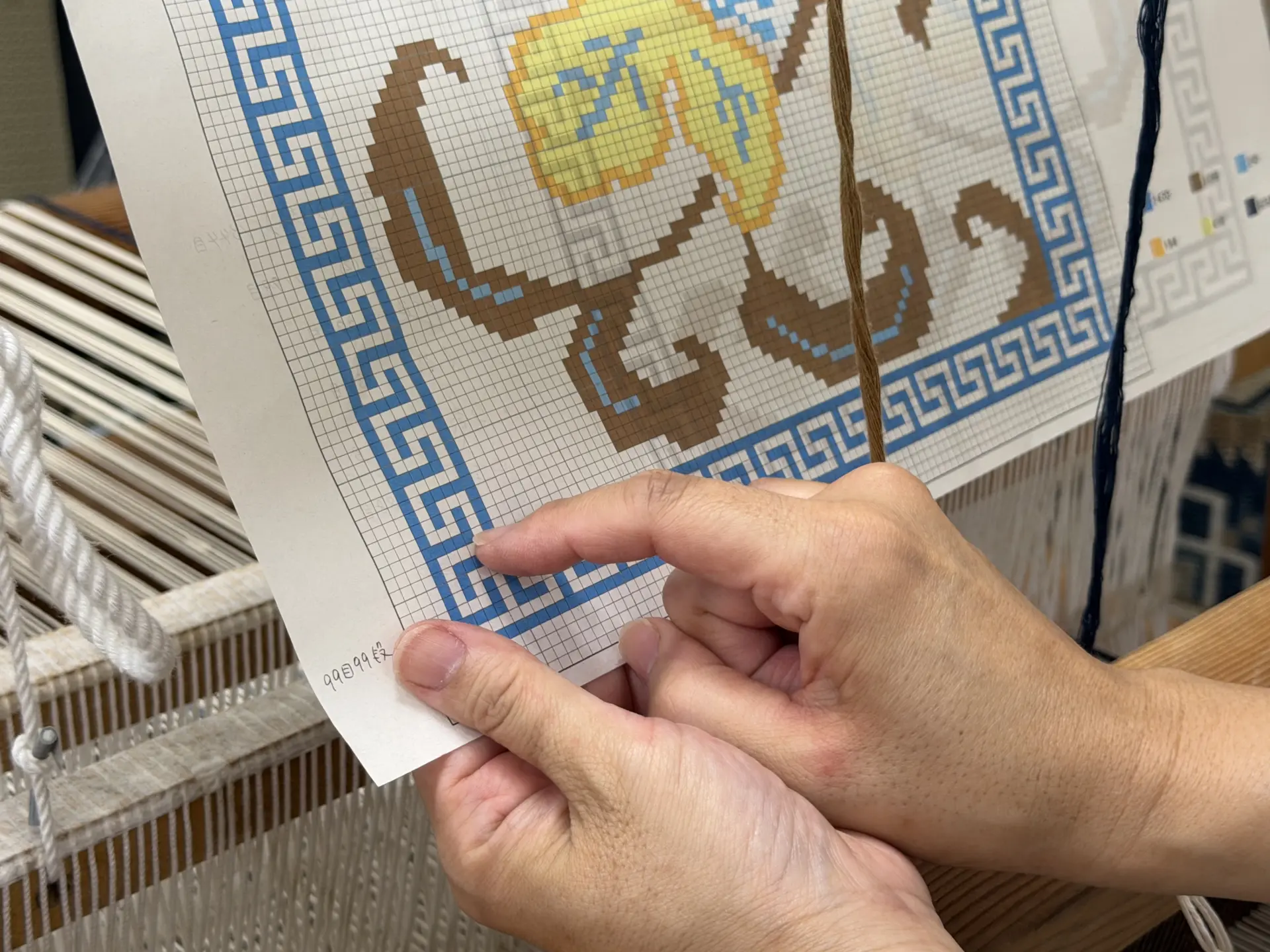
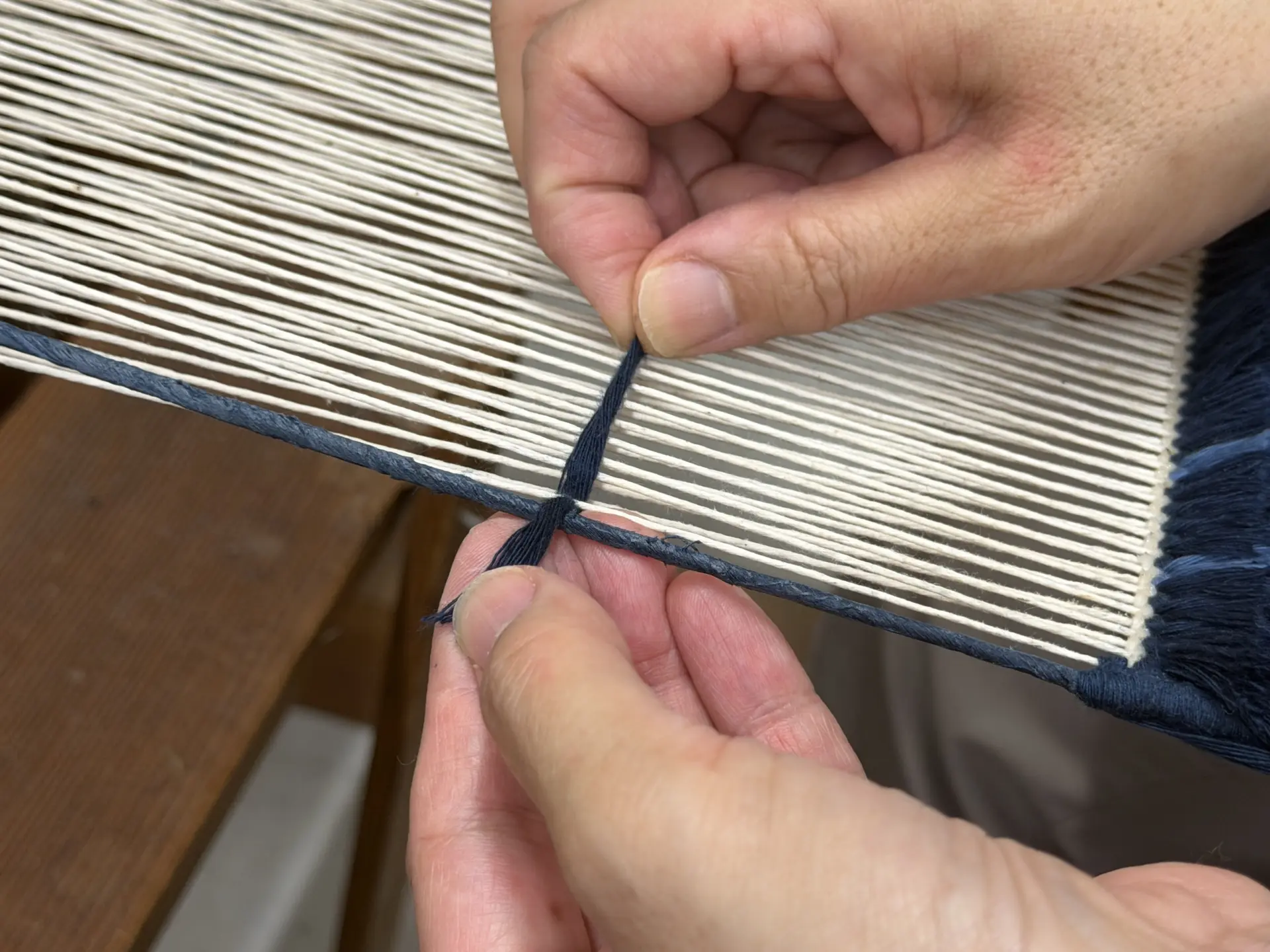
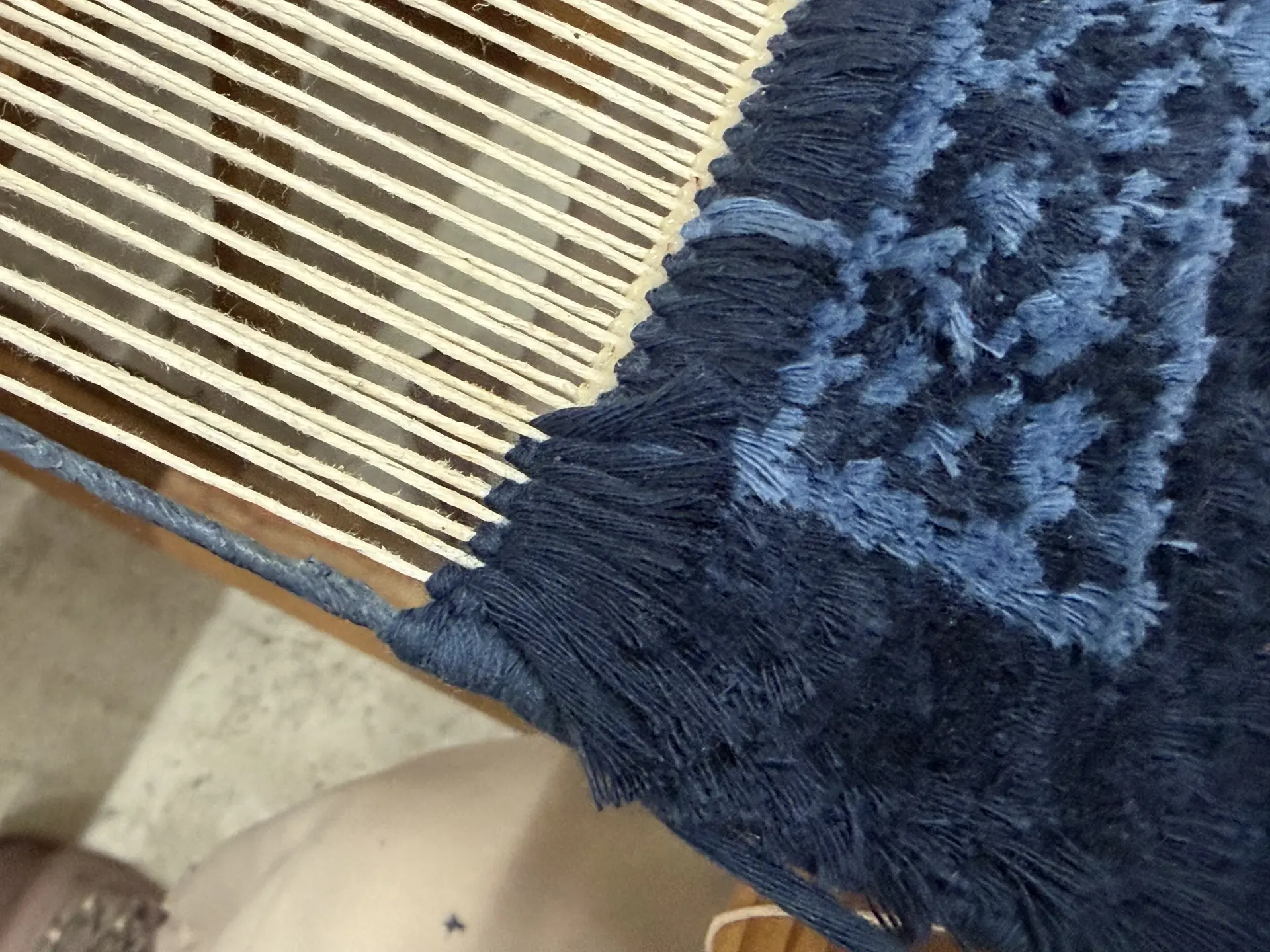
After inserting the colored yarn, we tried suji-tsumi, or groove clipping, and ji-tsumi, or surface clipping.
For groove clipping, the light blue and dark blue yarns are separated precisely at the boundary between the two colors so that not even a single strand crosses over.
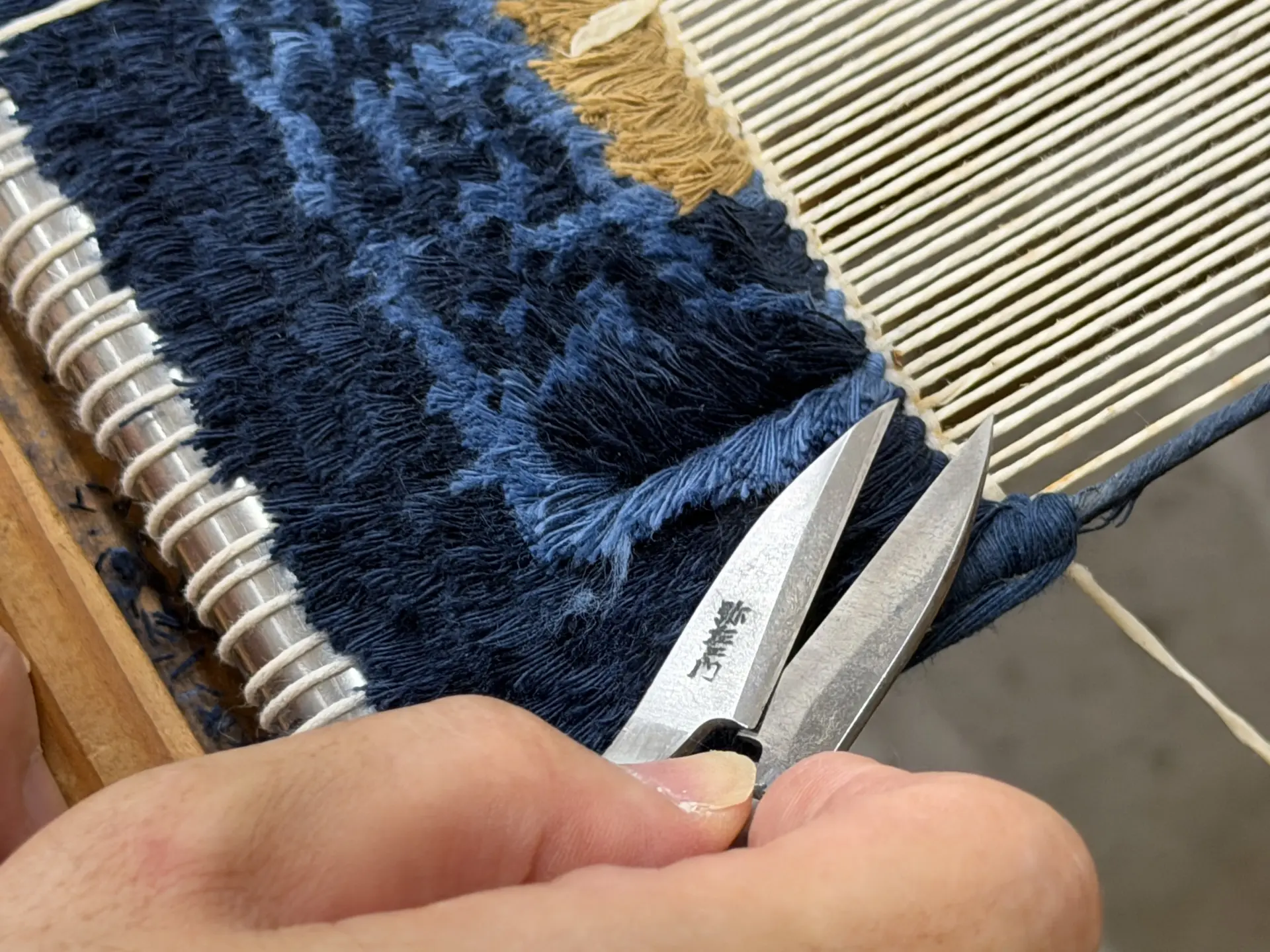
Once the colored yarn has been separated, the yarn along the boundary is cut with spring scissors. These scissors have angled blades that bend near the base. This shape makes them easier to use for detailed work, such as creating grooves along the edges of motifs and smoothing the surface.
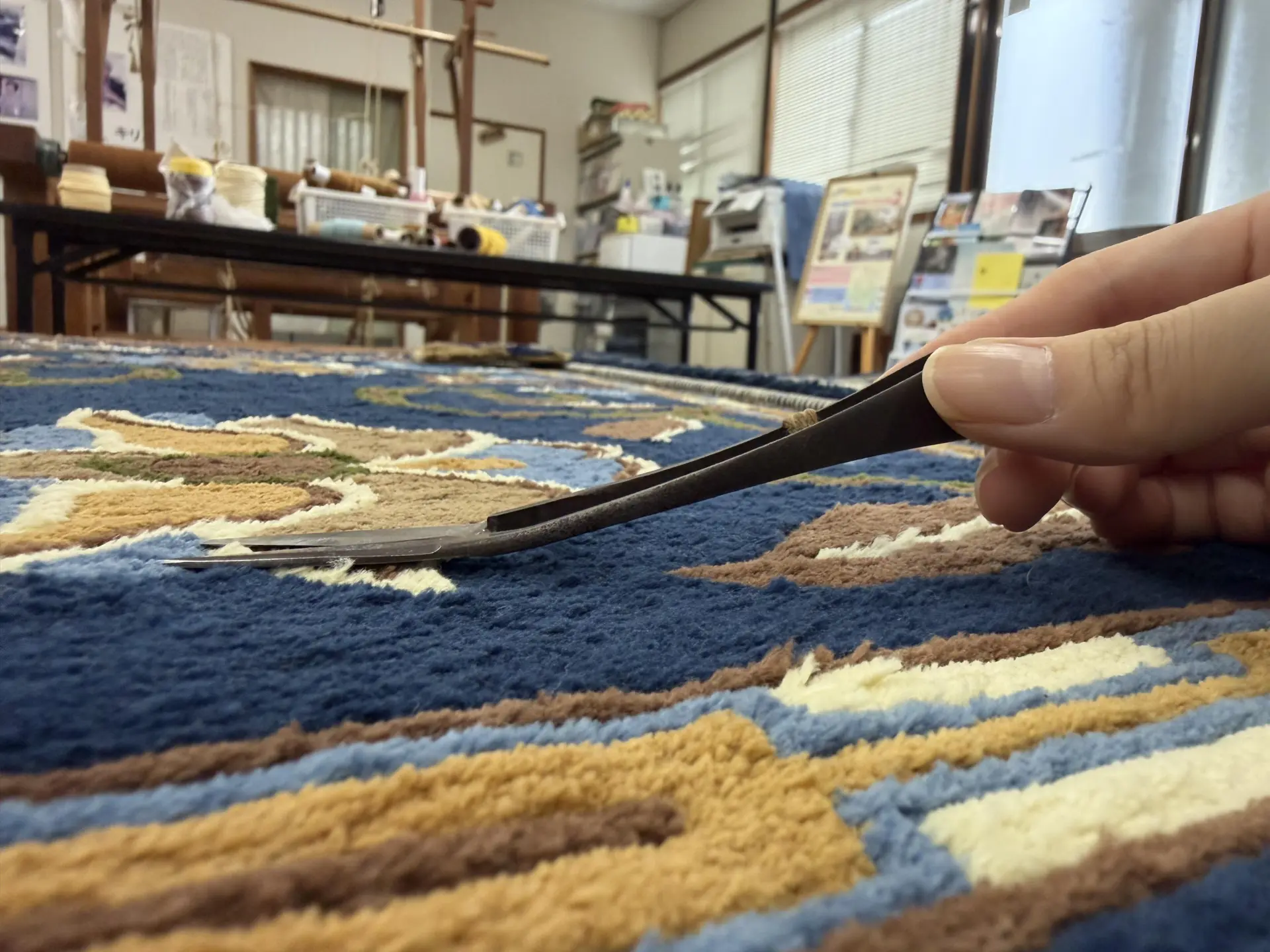
During groove clipping, the yarn should be cut to create a clean groove that clearly defines the boundary between colors. This gives the finished pattern a more three-dimensional appearance. Once the groove has been created, surface clipping is performed to smooth the rug. Although we clipped only a small section of the pattern, even that limited amount produced a noticeable difference in depth.
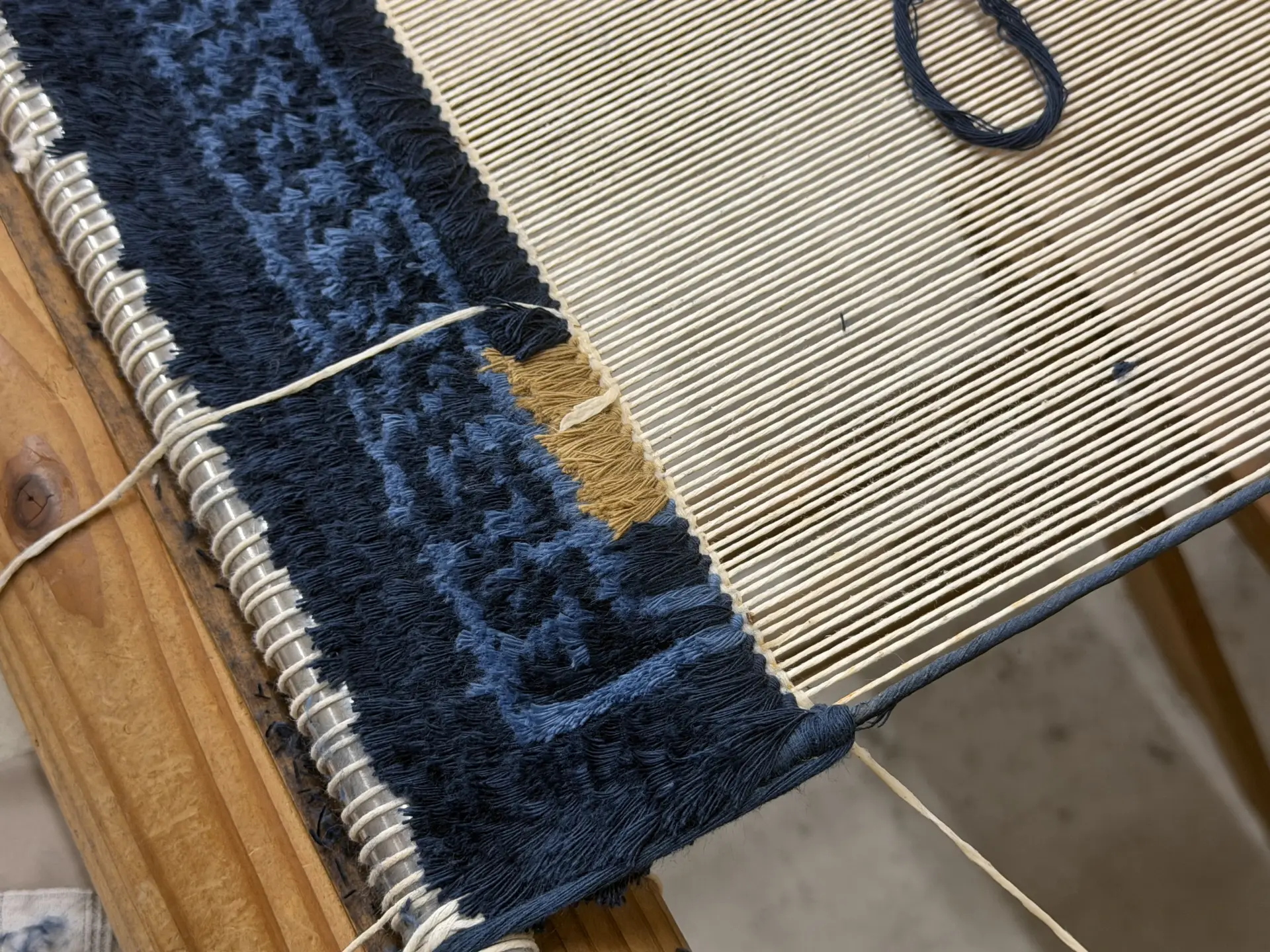
This clipping process is the most distinctive feature of Akō Dantsū and the most time-consuming stage of production. Separating the colors, cutting grooves with spring scissors, and leveling the surface to improve its texture are all difficult, detailed tasks that demand concentration. I felt that bringing the beautiful patterns into relief also requires the mental discipline to work patiently for long periods and finish every detail with precision. The free experience is hands-on only, and participants cannot take the piece home.
Free and Paid Experiences: The Paid Experience
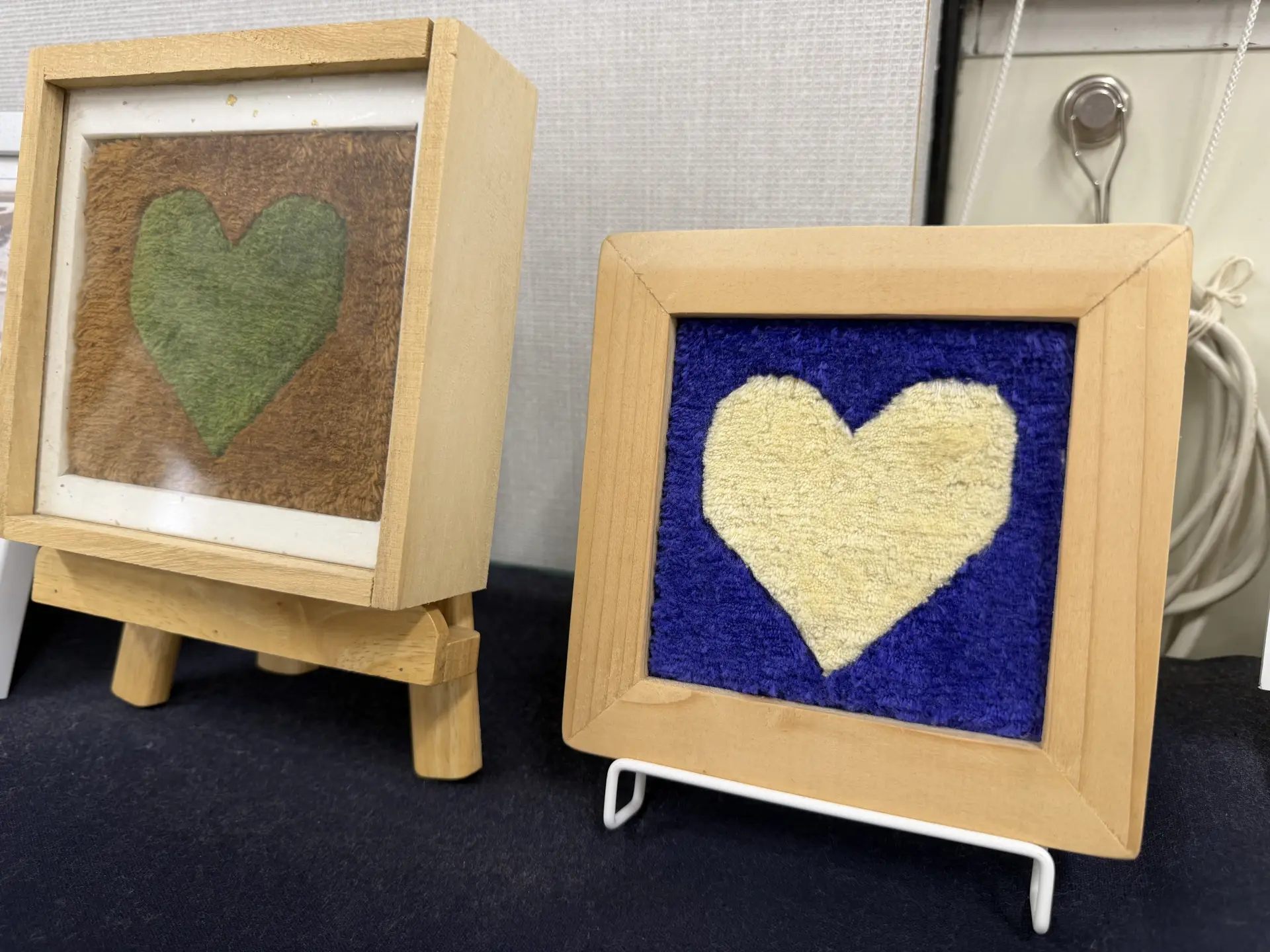
The paid experience allows participants to create a piece measuring approximately 4 by 4 inches. You can choose from around eight designs featuring motifs actually used in Akō Dantsū, including flowers and waves.
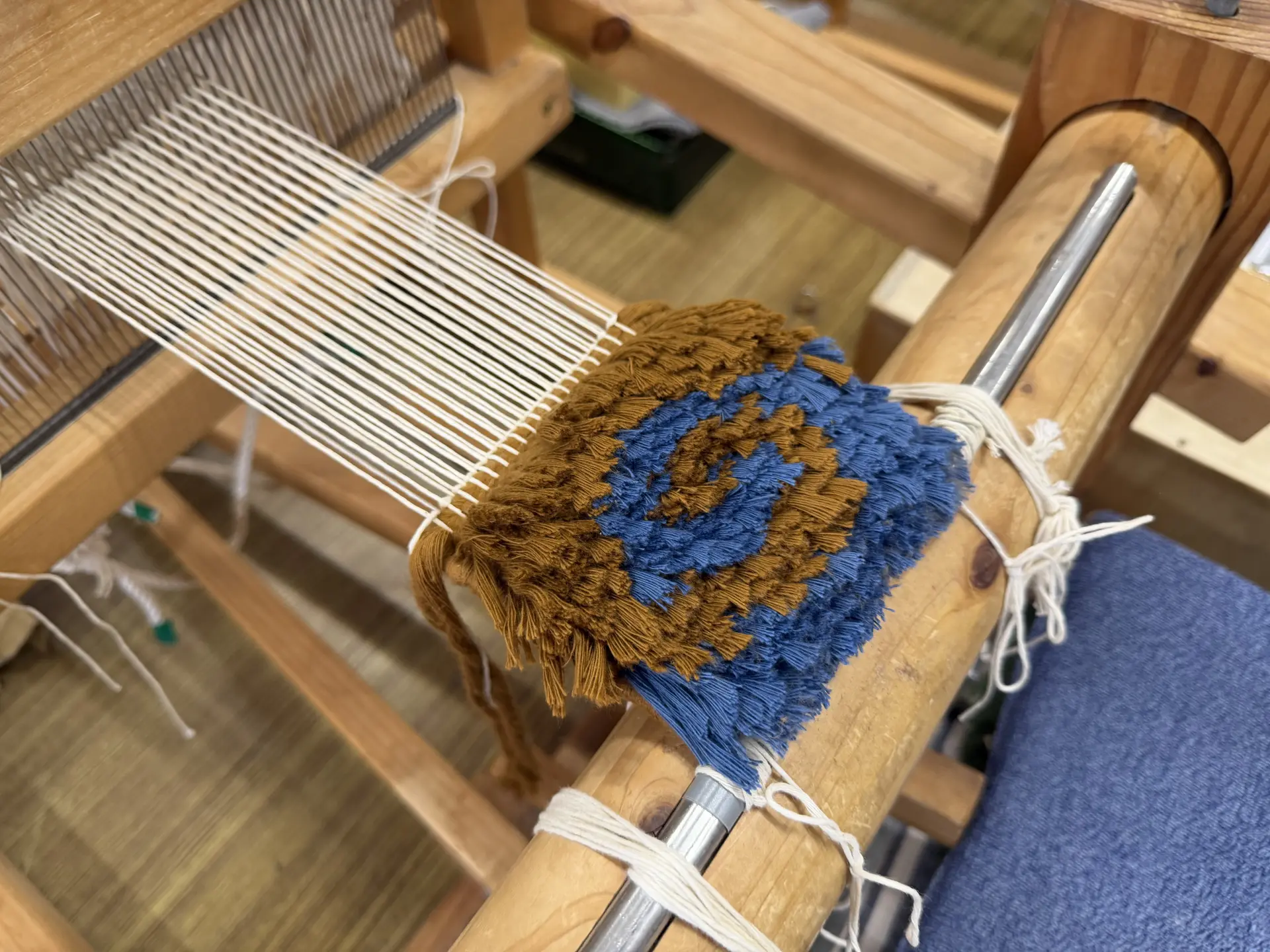
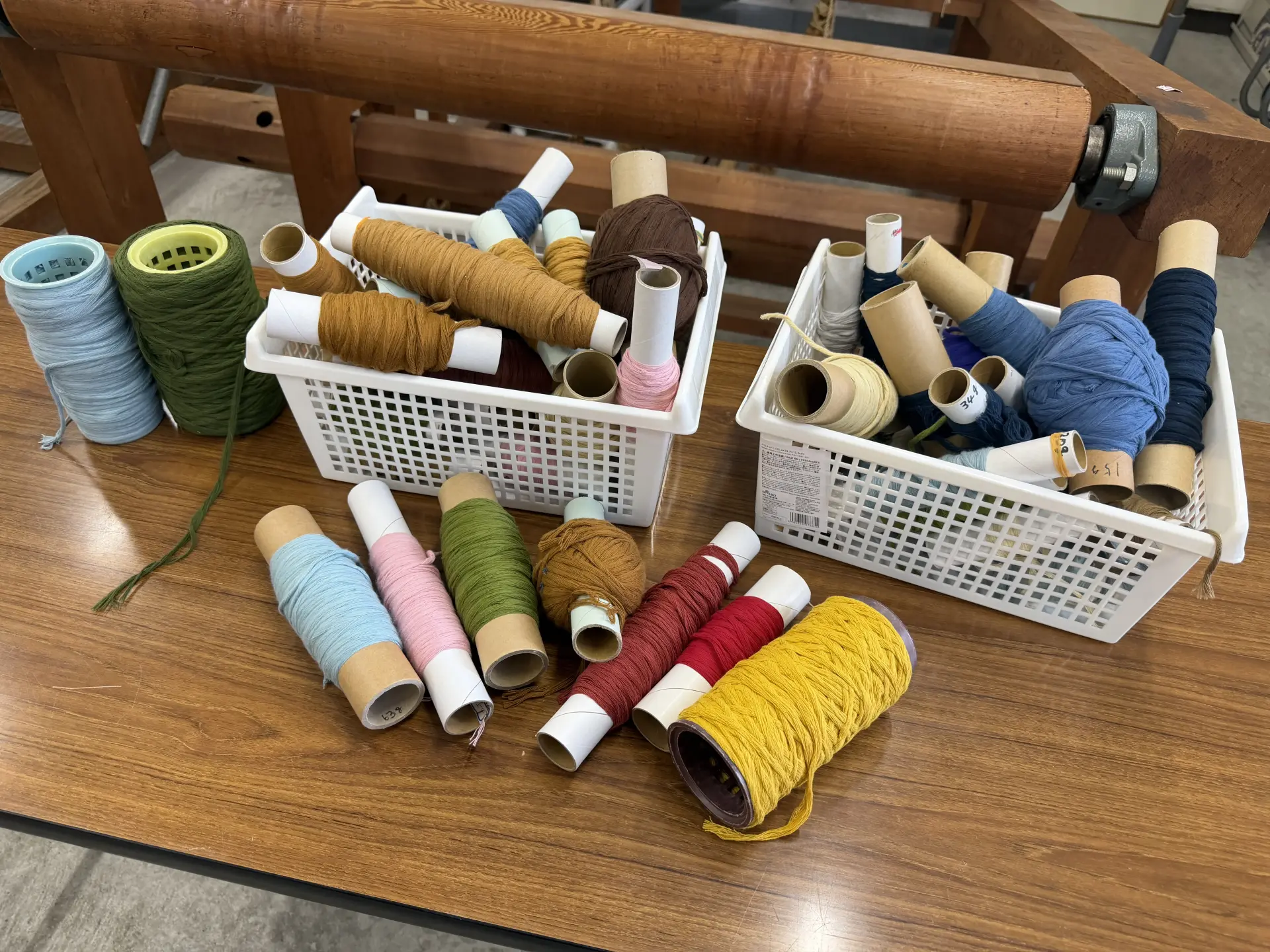
Next, choose the colors of hase yarn to use for your design. Many colors are available, so pick up the yarn and compare different combinations before making your selection.
During the experience, you insert the hase yarn according to the design diagram and then clip the piece. Creating even a small 4-inch-square piece takes an astonishing six hours. The detailed work may initially feel difficult, but as you become accustomed to it, you will be able to compare your work with the diagram and rhythmically insert the yarn between the warp threads one stitch at a time. Once enough yarn has been inserted, the clipping begins. First, use spring scissors to perform groove clipping, cutting channels along the boundaries of the motifs to create a three-dimensional effect.
Next comes surface clipping. Move the blades of the spring scissors parallel to the face of the rug, trimming the yarn evenly to create a level surface. The final step is finishing clipping, in which groove and surface clipping are carefully repeated to refine the entire piece. The hands-on process allows you to experience the difference in depth between the patterns before and after clipping. While the production step available during the free experience depends on the day, the paid experience allows you to create an entire piece yourself and try all the key stages of Akō Dantsū production.
However, you cannot take your finished piece home immediately after the six-hour experience. Some work still remains, so an artisan completes the final steps and mails the piece to you at a later date. Once it arrives, you can display it in your room as an interior decoration.
Reflections on the Experience
Trying the process firsthand gave me a much better understanding of the time and effort required to create the patterns’ three-dimensional depth. These rugs are more than simple floor coverings; they also have a strong artistic quality. A miniature rug can make a stylish interior accent when hung on a wall or displayed in an entryway.
Because pieces made during the paid experience are mailed at a later date, the free experience is recommended for international visitors. If you would like to take an Akō Dantsū rug home as a souvenir, some nearby workshops sell miniature pieces. The artisans at Tsumugu can tell you where to purchase them. After the free experience, consider visiting other workshops and galleries to find an Akō Dantsū souvenir.
Full-Day Akō Dantsū Production Experience
- Duration
- Approximately 6 hours, from 10:00 a.m. to 5:00 p.m., including a 1-hour lunch break
- Fee
- ¥6,000, including materials, production, and domestic shipping; international shipping costs extra
- Reservations
- Production Experience Reservation Form
Advance reservations are required.
Submit the reservation form at least one week before your preferred experience date.
A maximum of two people may participate at the same time.
Summary
I knew that dantsū rugs were luxury floor coverings made entirely by hand, but touring the workshop and trying the process myself gave me a renewed appreciation for how the patterns’ rich depth and beauty emerge from the artisans’ meticulous work. Changes in everyday life once brought these techniques to the brink of disappearing. Yet the Akō Dantsū artisans are demonstrating remarkable determination not only by passing the craft down but also by introducing it to a wider audience through hands-on experiences. Visit Akō on the Seto Inland Sea to experience the beauty and pleasant texture of its traditional dantsū rugs.
Author
Freelance Announcer
Sayaka Motomura
Focused on sharing insights related to traditional culture, performing arts, and history.
Supervising Editor
Writers & Editors
GOOD LUCK TRIP Editors
Sharing lesser-known ways to experience Japan with the world!