
A Complete Guide to Hida Takayama’s Old Town: Experience the Timeless Scenery of Traditional Japan
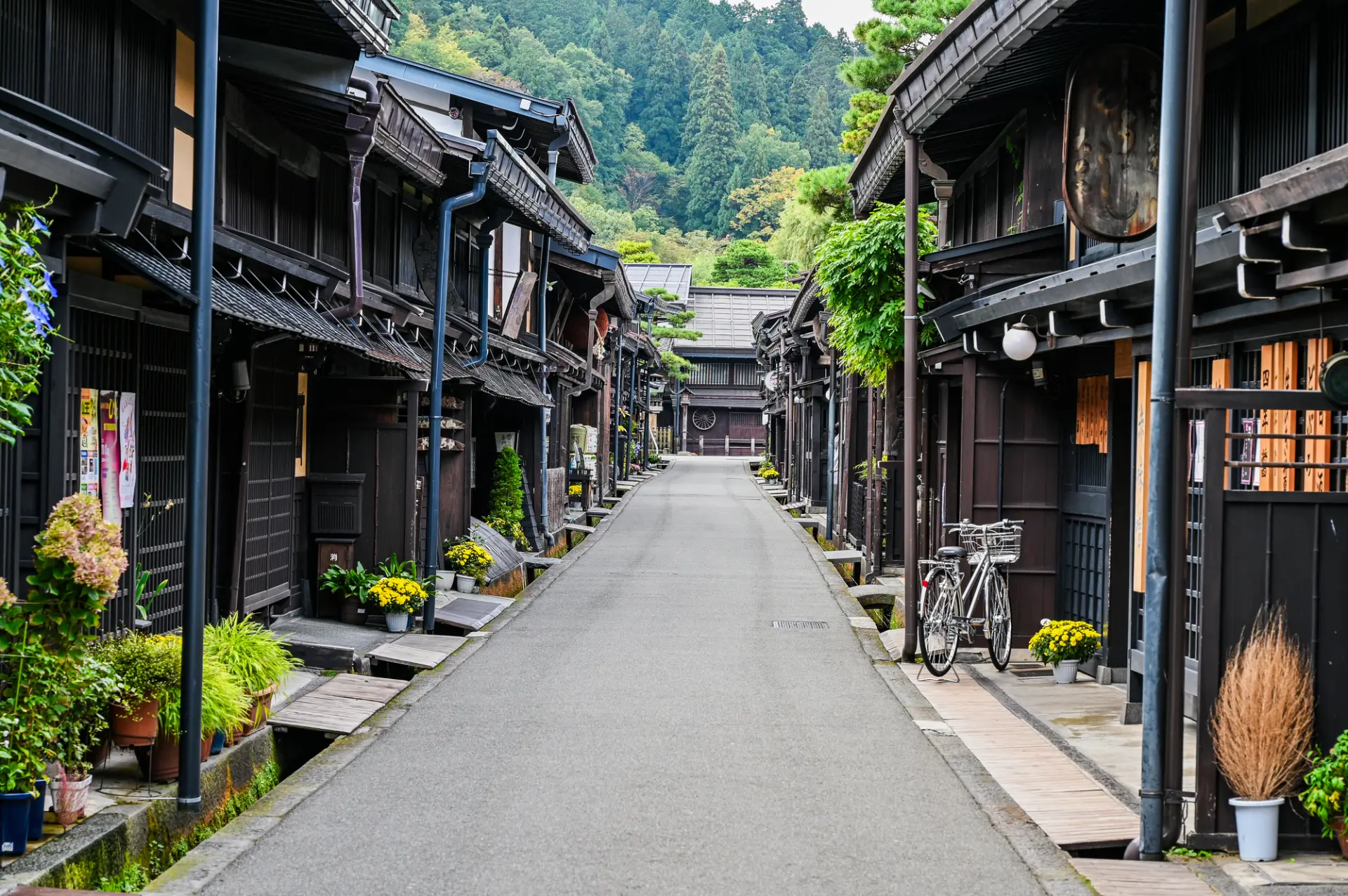
Located in central Takayama, Gifu Prefecture, Hida Takayama’s Old Town is a historic district that retains much of the atmosphere of the Edo period (1603–1868).
Streets lined with black-lacquered lattice doors, projecting lattice windows, and traditional storehouses possess a quiet, timeless beauty. Simply walking through the area offers a glimpse into daily life when Takayama flourished as a castle town.
This article begins with an overview of the Old Town before introducing its highlights and the best ways to experience it.
It brings together everything first-time visitors need to make the most of their trip, so be sure to read to the end.
What Is Hida Takayama’s Old Town Like?
Located in central Takayama, Gifu Prefecture, the Old Town is a historic district that retains the atmosphere of the Edo period.
The name “Old Town” collectively refers to three streets each in Kamimachi and Shimomachi, two districts that developed as merchant quarters. It primarily means the area around Kami-Sannomachi, Kami-Ninomachi, and Kami-Ichinomachi, commonly known as Sanmachi Street.
Traditional scenery remains part of everyday life here, including wooden merchant houses, projecting lattice windows, waterways running beneath the eaves, and cedar balls hanging outside sake breweries. Together, they transport visitors into a world removed from the ordinary.
Known as the “Little Kyoto of Hida,” this atmospheric district has been designated a National Important Preservation District for Groups of Traditional Buildings and awarded the highest rating of three stars in the Michelin Green Guide Japan.
The streets are lined with traditional craft stores, cafés in renovated historic homes, and restaurants, making even a simple walk through the neighborhood a rewarding experience.
The district takes on a different character in every season and offers a chance to experience a nostalgic vision of traditional Japan.
History of Hida Takayama’s Old Town
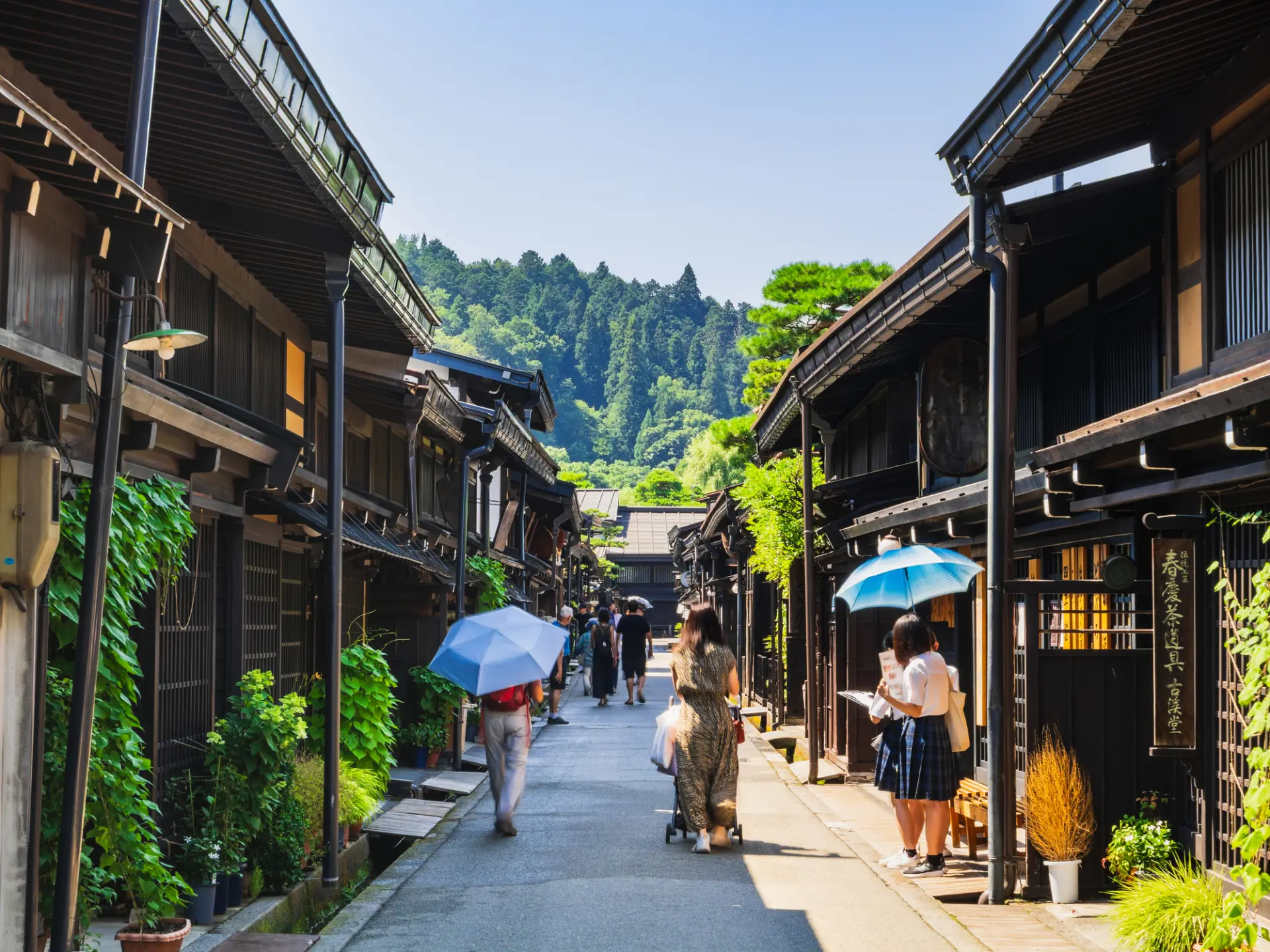
The Old Town began to take shape during Japan’s Warring States period, when warlord Kanamori Nagachika built Takayama Castle and developed the surrounding castle town.
Drawing inspiration from Kyoto, Nagachika planned the town’s layout, including its temple district and street divisions, and helped transform Hida Province, now part of Gifu Prefecture, into a prosperous region.
During the Edo period, the Hida region became territory directly governed by the shogunate and prospered as a political and economic center, forming the foundation of today’s Old Town.
Merchant houses gathered along Sanmachi Street, and even after Takayama Castle was demolished in 1695, shogunate policies and the work of local merchants continued to preserve the townscape.
Many of the surviving buildings date from the late Edo period to the middle of the Meiji period, and measures are still taken throughout the district to protect its scenery.
With more than 400 years of history, the townscape will likely continue to fascinate visitors for generations to come.
How to Get to Hida Takayama’s Old Town
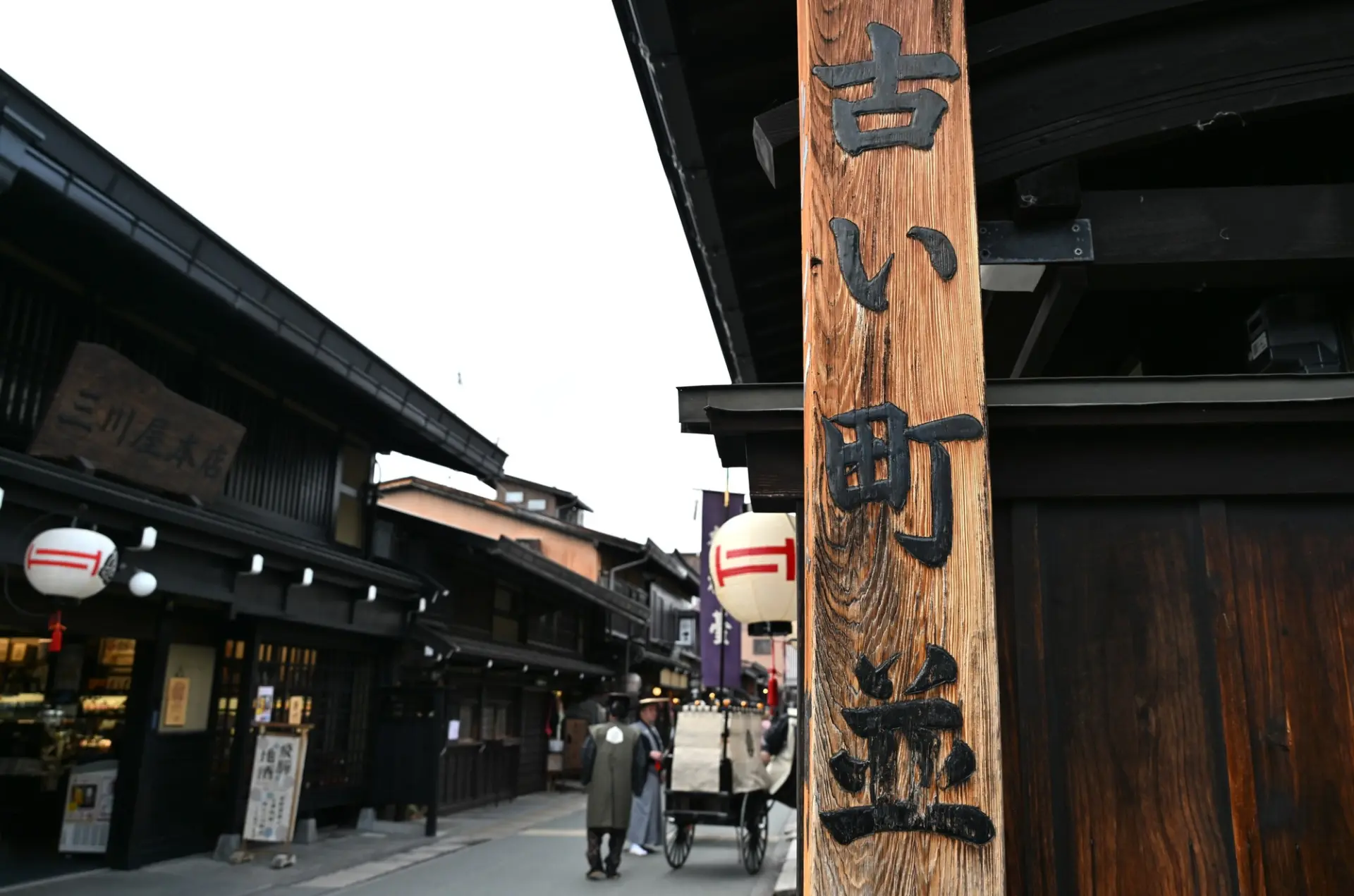
The nearest station to Hida Takayama’s Old Town is Takayama Station on the JR Takayama Main Line.
It is about a 15-minute walk from the station. Head straight along Ekimae-dori Street and cross the Miyagawa River to reach the Kami-Sannomachi area.
You can also use the bus terminal at the Takayama Nohi Bus Center, but the route from the station is lined with cafés and souvenir stores and is easy to follow, even on your first visit. Walking there while exploring the area is recommended.
By car, the Old Town is about 10 minutes from the Takayama Interchange on the Chubu-Jukan Expressway. Several municipal and coin-operated parking lots are available nearby.
The following table summarizes routes from Chubu Centrair International Airport, Gifu Station, and Tokyo Station.
| Starting Point | Route | Travel Time |
|---|---|---|
| Chubu Centrair International Airport |
1. Take a Meitetsu Airport Line μ-SKY Limited Express from Central Japan International Airport Station to Meitetsu Nagoya Station, then transfer to the JR lines 2. Take the JR Limited Express Hida from JR Nagoya Station and get off at Takayama Station |
Approx. 3 hours 15 minutes |
| Gifu Station | Take the JR Limited Express Hida from JR Gifu Station and get off at Takayama Station | Approx. 2 hours 10 minutes |
| Tokyo Station |
1. Take a Nozomi Shinkansen from JR Tokyo Station and get off at Nagoya Station 2. Take the JR Limited Express Hida from JR Nagoya Station and get off at Takayama Station |
Approx. 4 hours 15 minutes |
Hours for Hida Takayama’s Old Town
As an outdoor historic district, Hida Takayama’s Old Town can be explored 24 hours a day.
However, individual stores and attractions have their own hours. The morning markets generally operate from 7:00 a.m. to noon, while souvenir stores and restaurants are usually open from around 9:00 or 10:00 a.m. until about 5:00 p.m.
Closing days vary by store, although Tuesdays and Wednesdays are relatively common.
If there is a particular store you want to visit, checking its official website in advance is recommended.
The crowds thin out in the evening, allowing you to leisurely experience the illuminated townscape.
When Is the Best Time to Visit Hida Takayama’s Old Town?
Spring and fall are the recommended seasons for visiting Hida Takayama’s Old Town.
Both offer mild weather that is comfortable for walking, sampling food, and visiting the morning markets.
These seasons also coincide with the Spring Sanno Festival in mid-April and the Autumn Hachiman Festival in mid-October, when lavish festival floats and mechanical puppet performances bring color to the town.
Cherry blossoms or fall foliage reach their peak around the Old Town during these periods, creating a striking contrast with the Edo-period scenery and providing ideal photo opportunities.
Fall also brings an abundance of seasonal foods, while the crisp air adds to the tranquil atmosphere associated with Hida Takayama.
5 Highlights of Hida Takayama’s Old Town
Here are five highlights of Hida Takayama’s Old Town.
Its long history of commerce, government, everyday life, and food culture is interconnected, allowing visitors to experience the traditions of Takayama as a whole.
Use the following information to plan a trip filled with distinctive experiences amid a historic townscape that remains alive today.
1. A Townscape Filled with Edo-Period Atmosphere
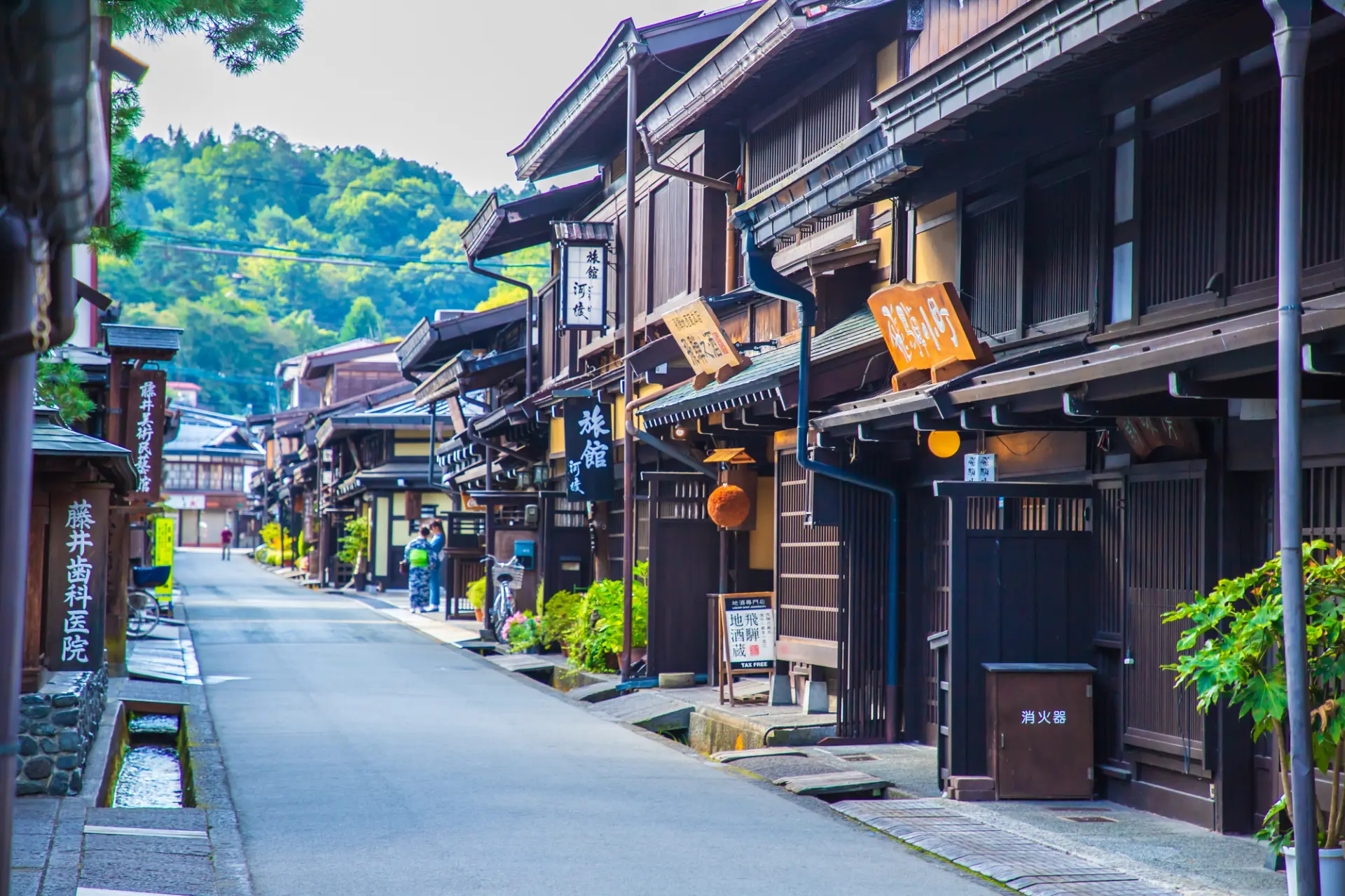
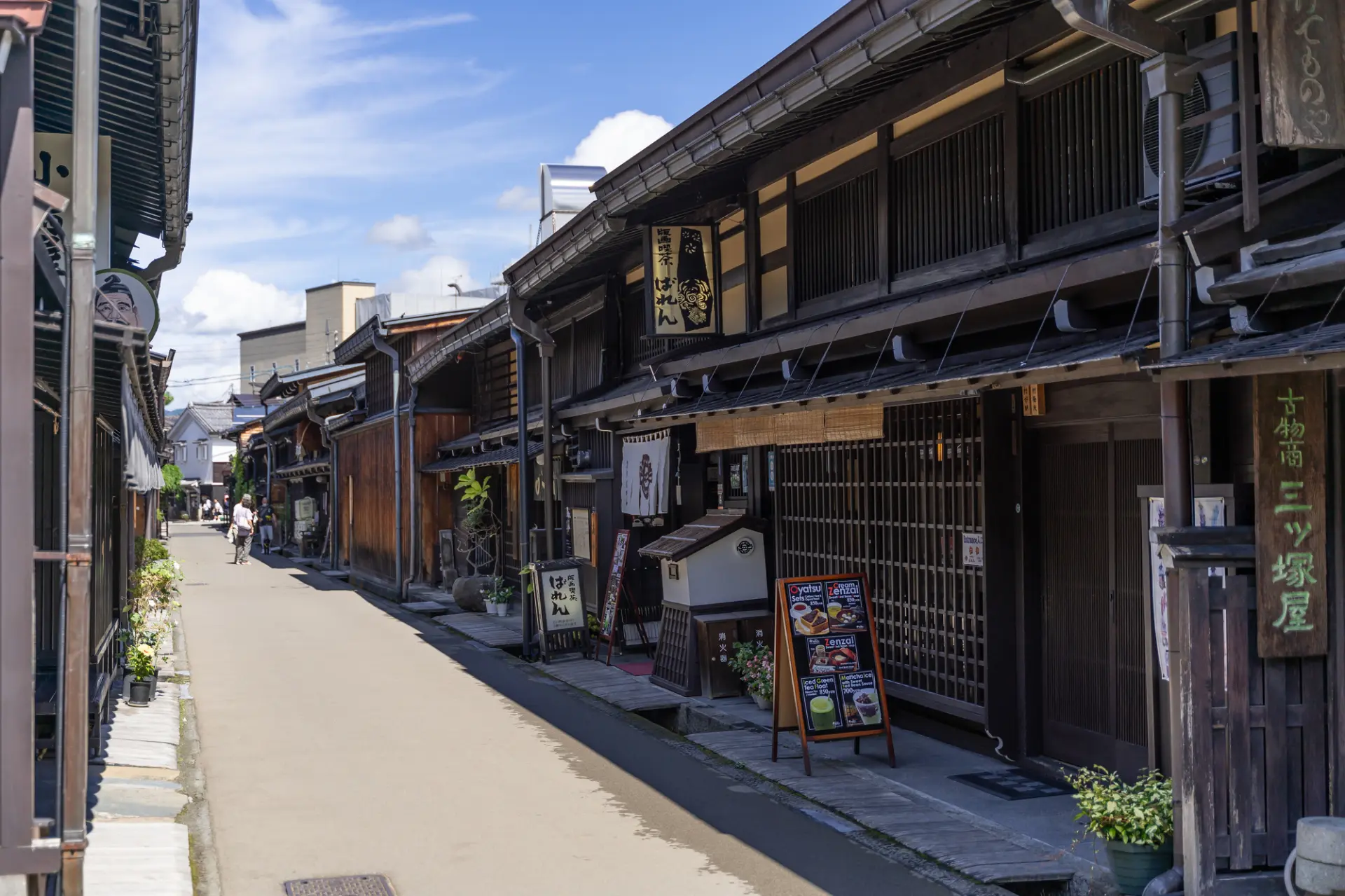
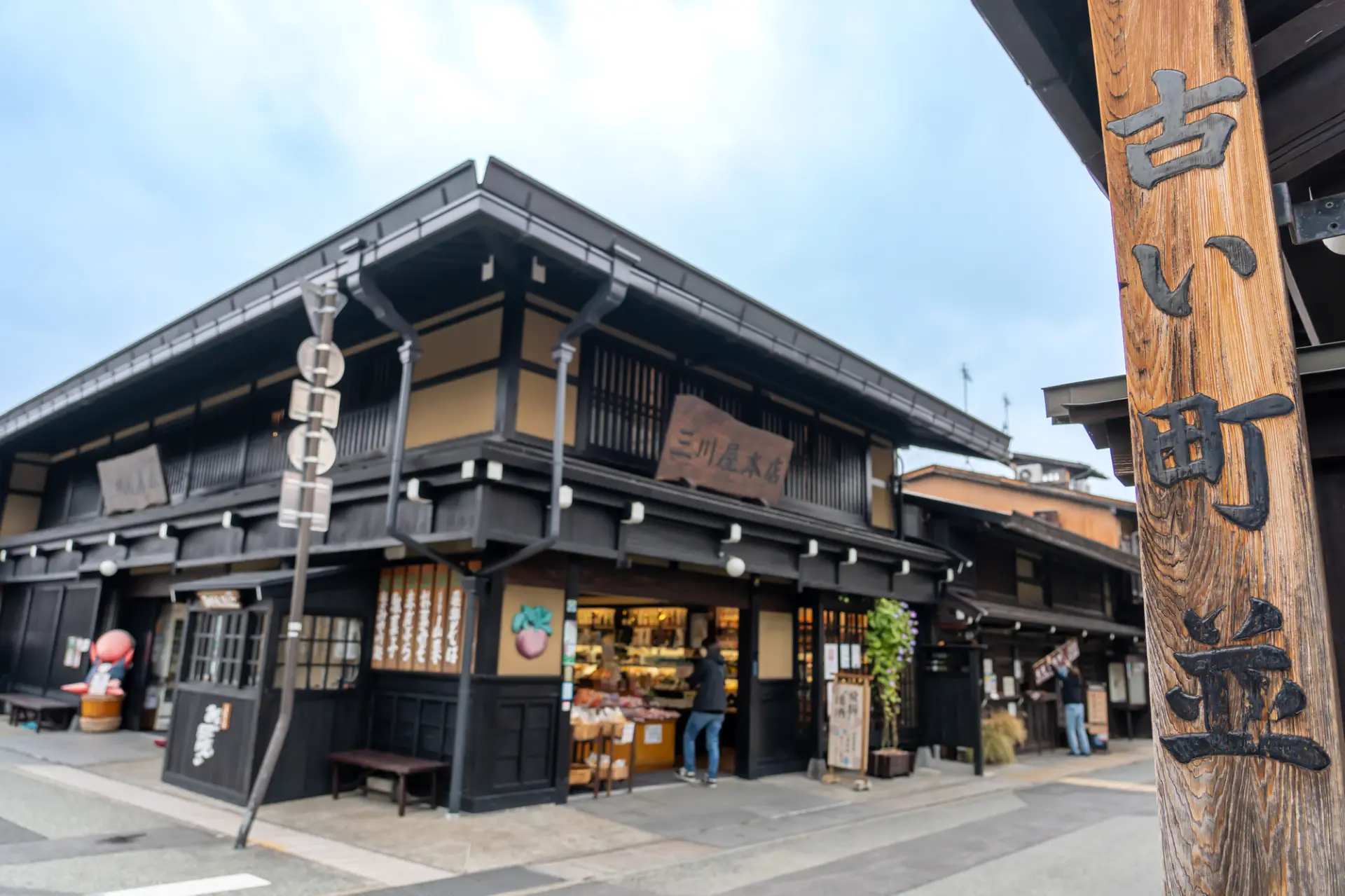
One of the first things you will notice when walking through the Old Town is the row of projecting lattice windows on its traditional merchant houses.
The orderly sight of these wooden lattice frames extending beneath the eaves is deeply nostalgic and may make you feel as though you have stepped back into the Edo period.
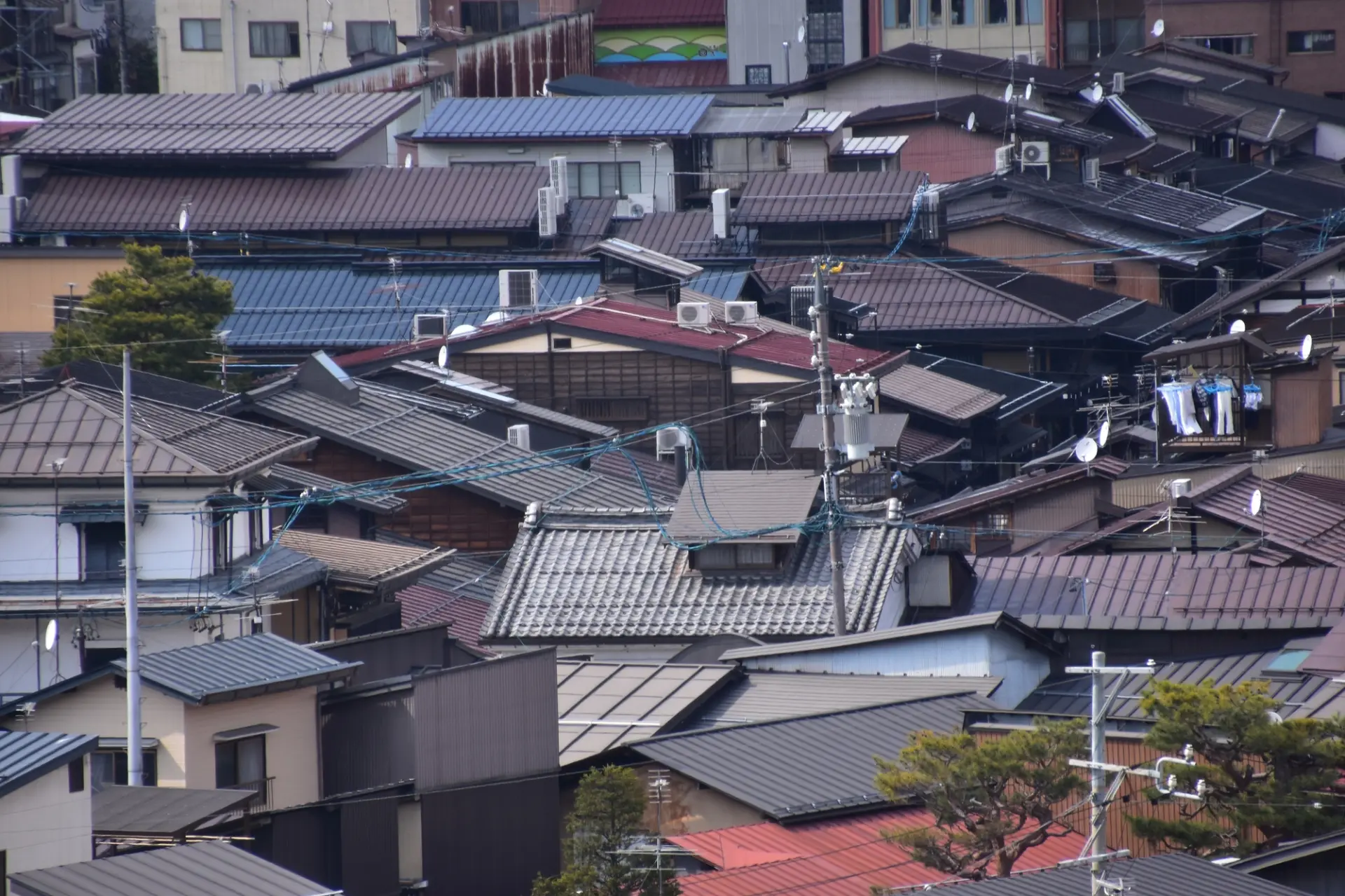
Modern fixtures such as outdoor air-conditioning units and fire hydrants have also been designed to blend into the traditional surroundings, creating picturesque views wherever you look.
Many of the buildings were originally merchant houses and now serve as souvenir stores, cafés, and sake breweries.
This living cultural heritage, where traces of the Edo period remain naturally present, is sure to leave an impression.
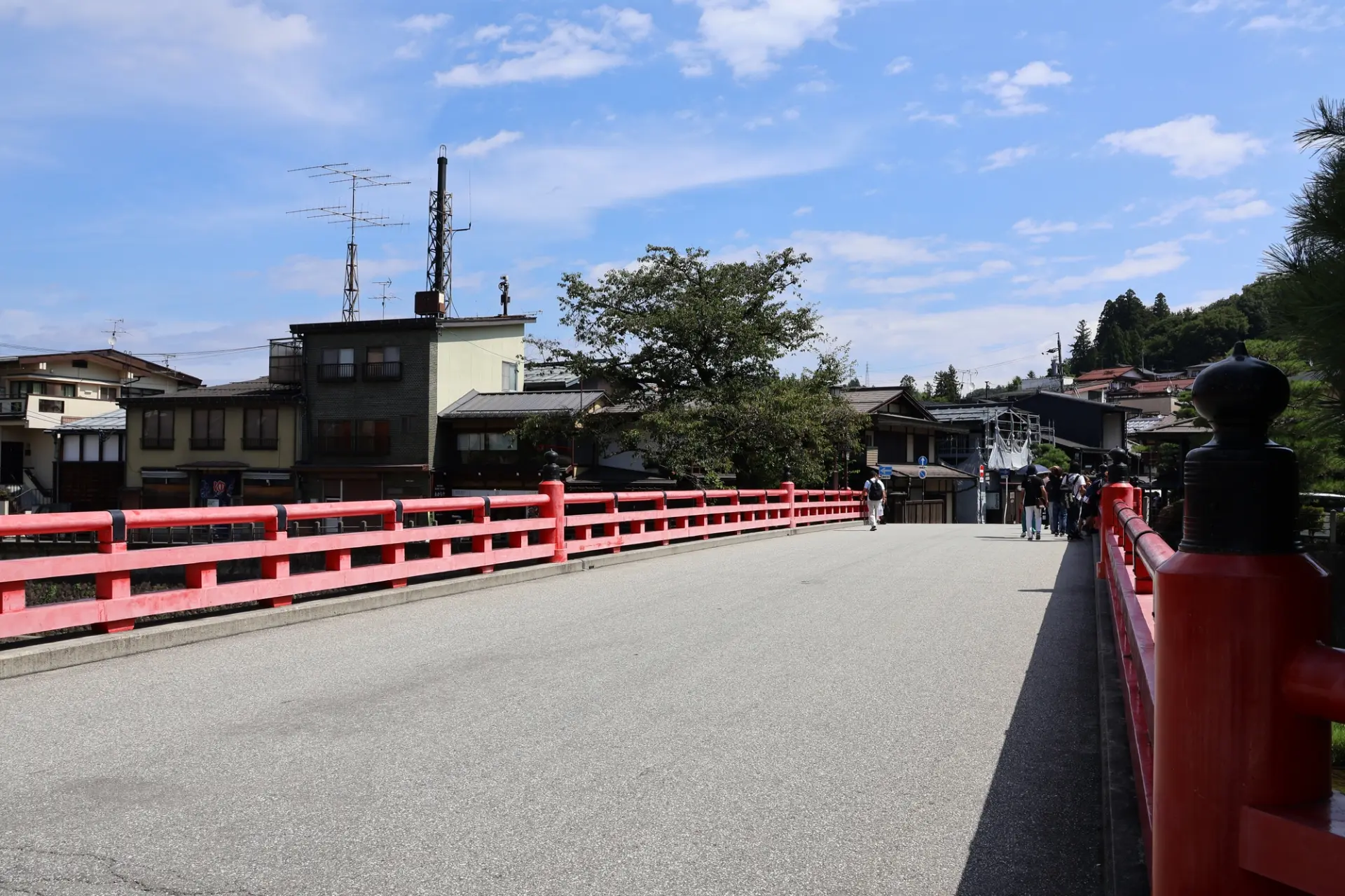
2. A Quintessential Hida Takayama View from Nakabashi Bridge
A walk through the Old Town begins at Nakabashi Bridge, located at its entrance.
The bridge once played an important role in connecting the central parts of the castle town and supported the movement of residents for many years.
The view of the Old Town and the flowing Miyagawa River beyond its red railings is one of Hida Takayama’s most iconic scenes.
Its appearance changes with the seasons: cherry blossoms decorate the bridge in spring, the clear water sparkles in summer, fall foliage stands out against the merchant houses’ black latticework, and snow adds a quiet beauty in winter.
At dusk, light spilling from the lattice windows reflects on the river, creating a warm and nostalgic scene.
Take in the panoramic view found only in this historic town.
3. A Morning Market Tradition Dating Back to the Edo Period
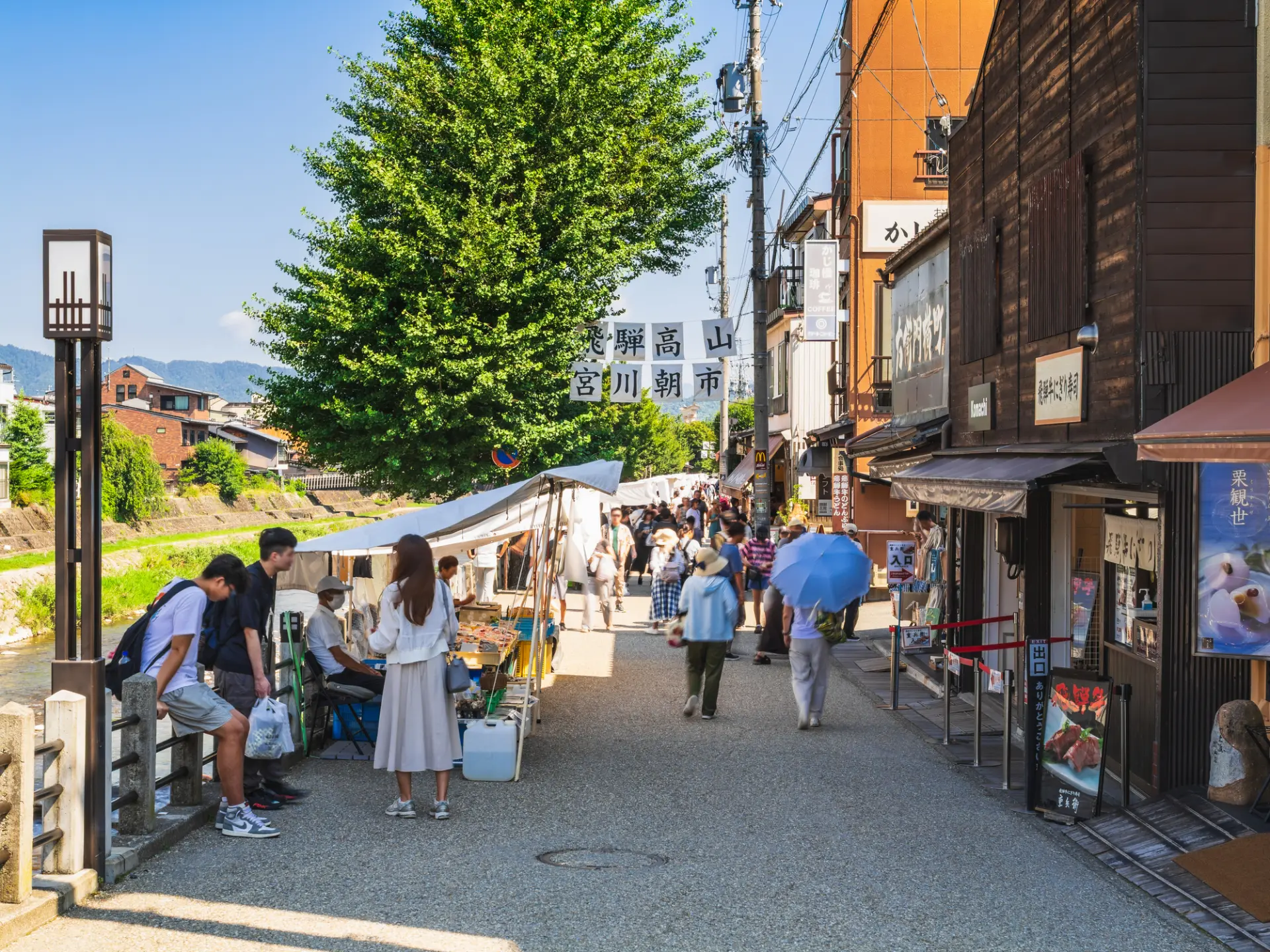
Be sure to include Hida Takayama’s morning markets, a tradition dating back to the late Edo period, in your sightseeing plans.
Recognized as one of Japan’s three major morning market destinations, Hida Takayama has two popular markets: the Miyagawa Morning Market and the Jinya-mae Morning Market.
At the Miyagawa Morning Market, freshly harvested vegetables, pickles, folk crafts, and other goods line a pleasant, breezy street beside the Miyagawa River, offering a close look at the lifestyle and food culture of the Hida region.
The Jinya-mae Morning Market began around 1820 as a mulberry market on the grounds of Takayama Betsuin Temple. After moving several times, the tradition was passed down at its present location in front of Takayama Jinya, giving the market a distinctive atmosphere.
Both have a lively yet down-to-earth character and offer warm interactions with producers and local residents.
4. Takayama Jinya, the Only Surviving Site of Its Kind in Japan
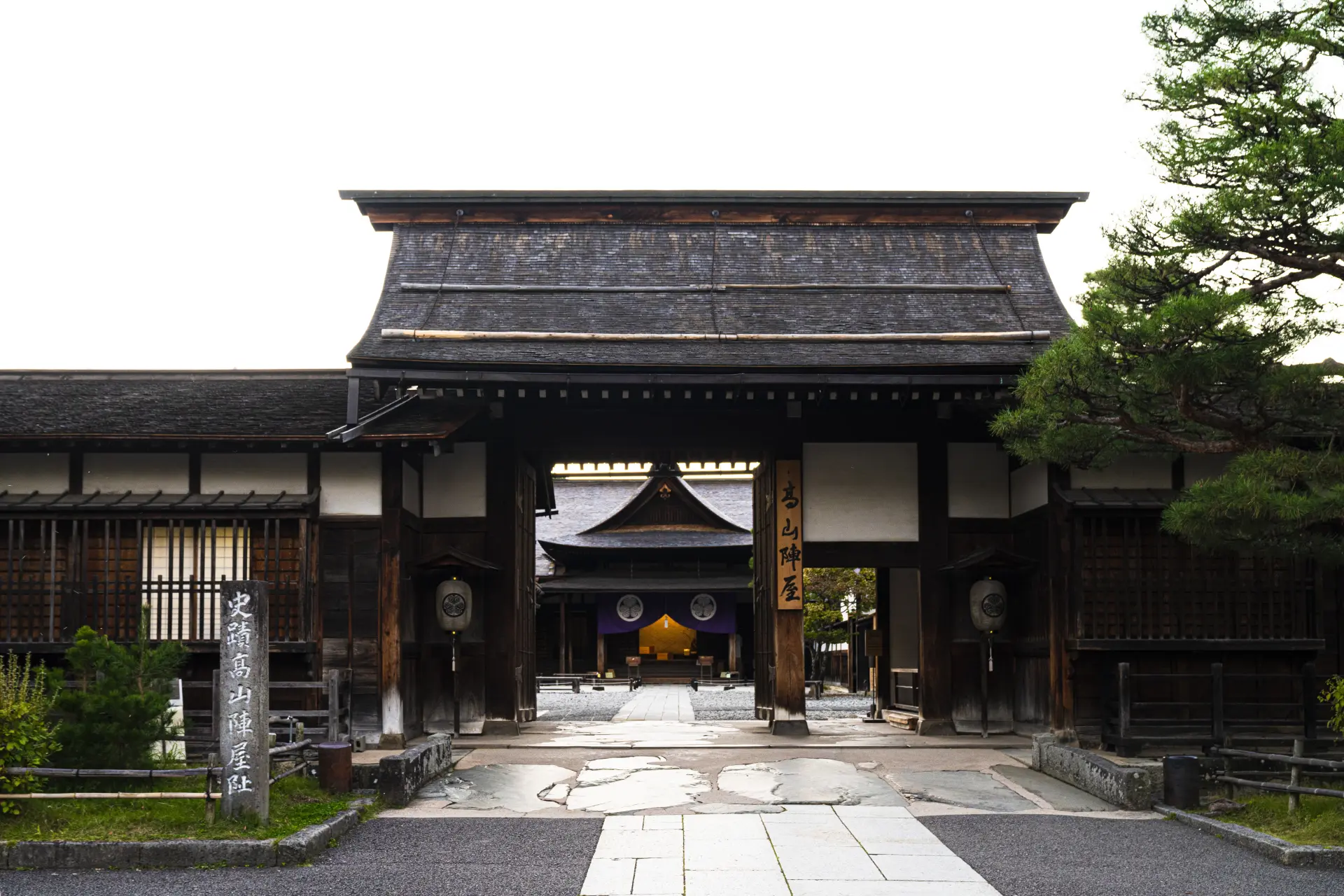
Takayama Jinya was a government office where officials known as daikan and gundai administered local affairs during the Edo period. The complex consists of government offices, official residences, storehouses, and other buildings. For 176 years beginning in 1692, when Hida became territory directly governed by the Tokugawa shogunate, officials dispatched from Edo administered the region from this site.
More than 60 shogunate administrative offices of this kind reportedly existed across Japan at the end of the Edo period, but Takayama Jinya is the only one whose principal buildings survive. It has been designated a National Historic Site.
- Name in Japanese
- 高山陣屋
- Postal Code
- 506-0012
- Address
-
1-5 Hachikenmachi, Takayama City, Gifu
Google Maps - Telephone
- 0577-32-0643
- Holiday
-
December 29th-January 3rd
*May change depending on the number of visitors, - Hours
- 8:45am - 5:00pm(From November 1st to March 31th: 8:45am - 4:30pm)
- Admission
- Adult: 500 yen, High schoolers and younger: Free (may need to show student ID)
- Directions
- From JR Takayama Main Line, Takayama Station, walk 10 min.
- Credit Cards
- Accepted (Visa, Mastercard, American Express, JCB, DC, UFJ, NICOS, Diners Club, DISCOVER, MUFG)
- Official Website
- Official Website (English)
5. Learn About Local History and Daily Life at the Hida Takayama Museum of History and Art
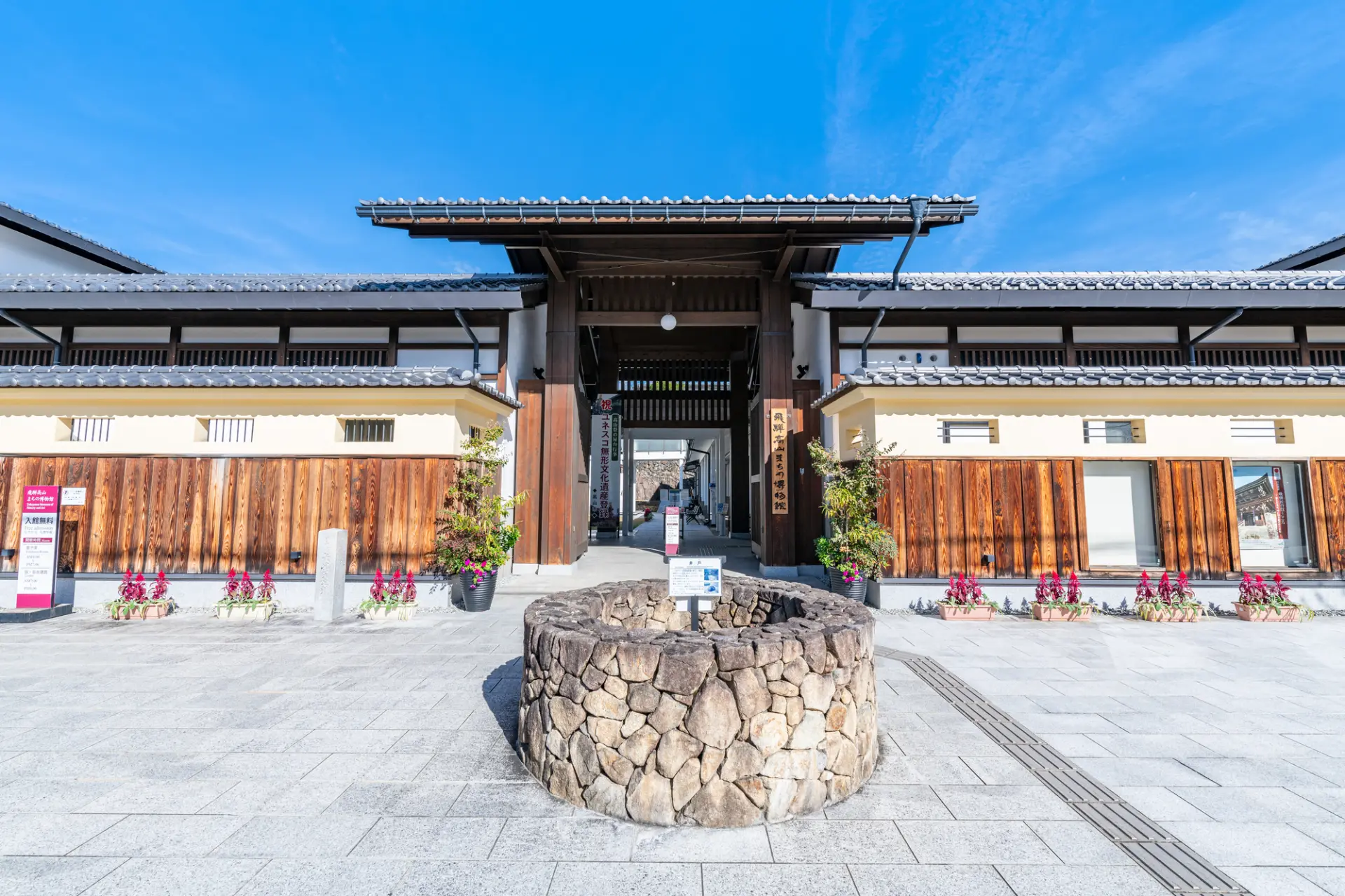
Located just beside the Old Town, the Hida Takayama Museum of History and Art introduces the history and daily life of the region.
The museum occupies renovated cypress storehouses built in 1875 and features 14 exhibition rooms covering topics such as the origins of Takayama and materials related to the Kanamori clan, the lords of Takayama Castle.
Each room offers substantial displays organized around a different theme, using authentic artifacts and models to clearly explain the historical background of the Old Town.
Admission is free, making it an easy place to visit during a walk through the area.
5 Ways to Make the Most of Hida Takayama’s Old Town
Next are some recommended ways to experience Hida Takayama’s Old Town.
Each allows you to take home a personal experience of the area’s food, sake, clothing, or craftsmanship against the backdrop of its historic streets.
Although you are visiting as a traveler, these activities let you step briefly into everyday life in Takayama and experience its history and culture with all five senses.
They are also likely to become lasting memories and offer a pleasant way to extend your time in the area, so use them as inspiration for your visit.
Sample Hida Specialties as You Walk
Sampling Hida specialties while walking is one of the pleasures of visiting the Old Town.
A wide variety of establishments line Sanmachi Street and the surrounding area, offering new discoveries as you explore the townscape.
One especially recommended choice is mitarashi dango, a soul food of Hida Takayama.
Unlike sweeter versions found elsewhere, Takayama’s dango are generally seasoned with a mildly sweet soy sauce and have a simple, savory flavor and appetizing toasted aroma.
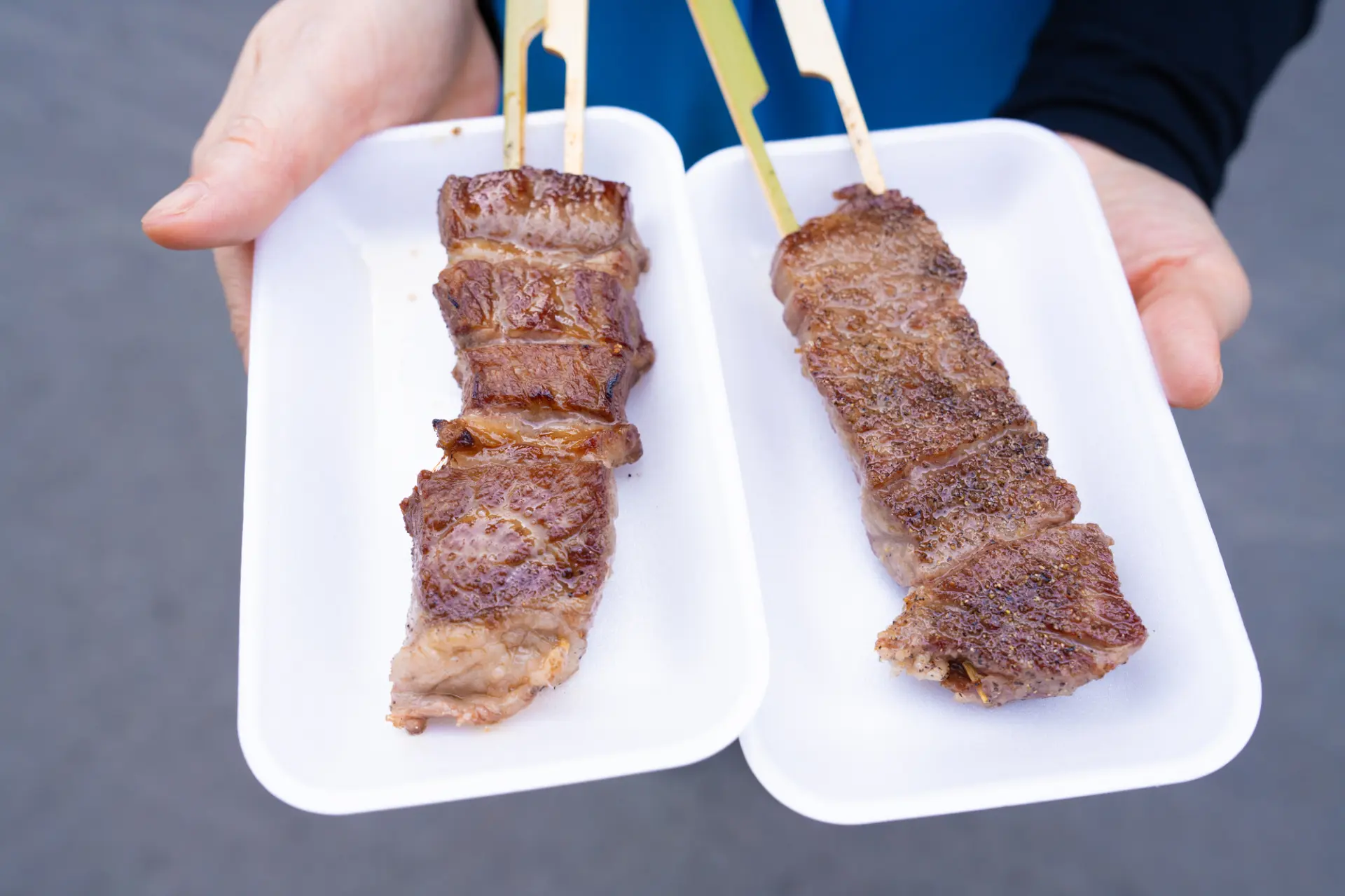
Hida beef, a renowned brand of wagyu with fans throughout Japan, is another specialty not to miss.
It is served in forms such as grilled skewers, sushi, and steamed beef buns, with affordable bite-sized portions making it easy to sample.
A leisurely walk with something delicious in hand is all it takes to enjoy a rewarding taste of Hida Takayama.
Visit Sake Breweries to Experience Local Sake and Culture
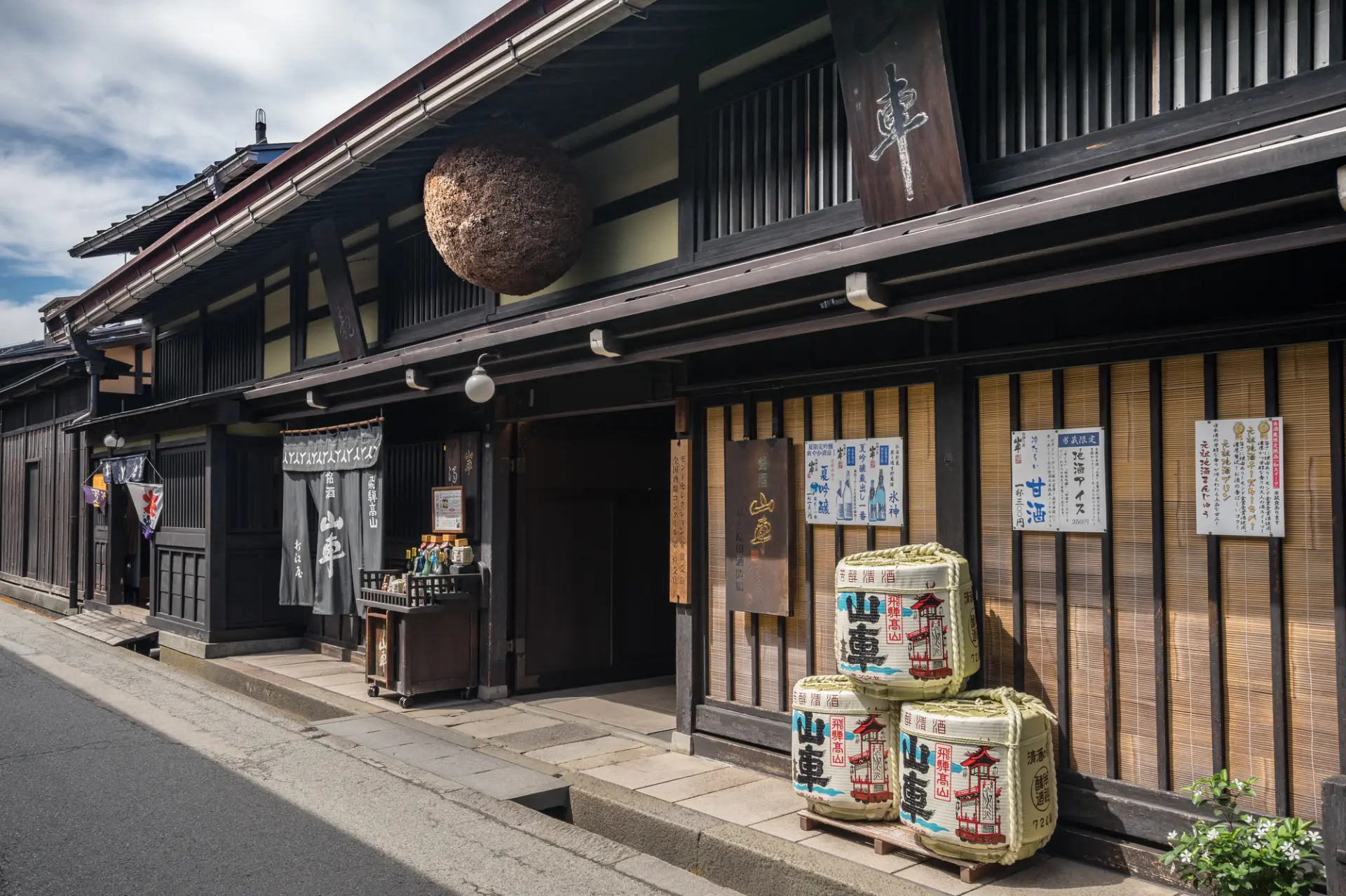
Seven sake breweries, each with its own history and approach to brewing, are located within walking distance of one another in the Old Town.
At the breweries, visitors can learn about sake production using Hida’s water and cold climate while sampling local sake with characteristics that vary by producer.
Many breweries offer tastings for a few hundred yen per glass, presenting a surprisingly broad range of flavors, from aromatic ginjo sake to dry local varieties that pair well with meals.
Comparing several labels and finding a personal favorite is part of the experience.
The sakebayashi, or cedar balls, hanging beneath the eaves indicate that new sake is ready. Their gradual change from green to brown also adds seasonal character to the streets.
Take a Break at a Retro Café
After exploring the streets, take a break at one of the retro cafés scattered around the district.
Several establishments occupy renovated traditional merchant houses, welcoming travelers into spaces filled with the warmth of wood and soft lighting.
In many cases, the buildings themselves are attractions, offering a chance to relax amid light streaming through lattice windows and interiors filled with old-fashioned character.
Another appeal is the selection of distinctly Hida flavors, including rich pudding made with Hida milk, locally roasted coffee, and creative sweets inspired by regional confections.
Rest your feet while lingering over the atmosphere of the Old Town.
Rent a Kimono or Yukata
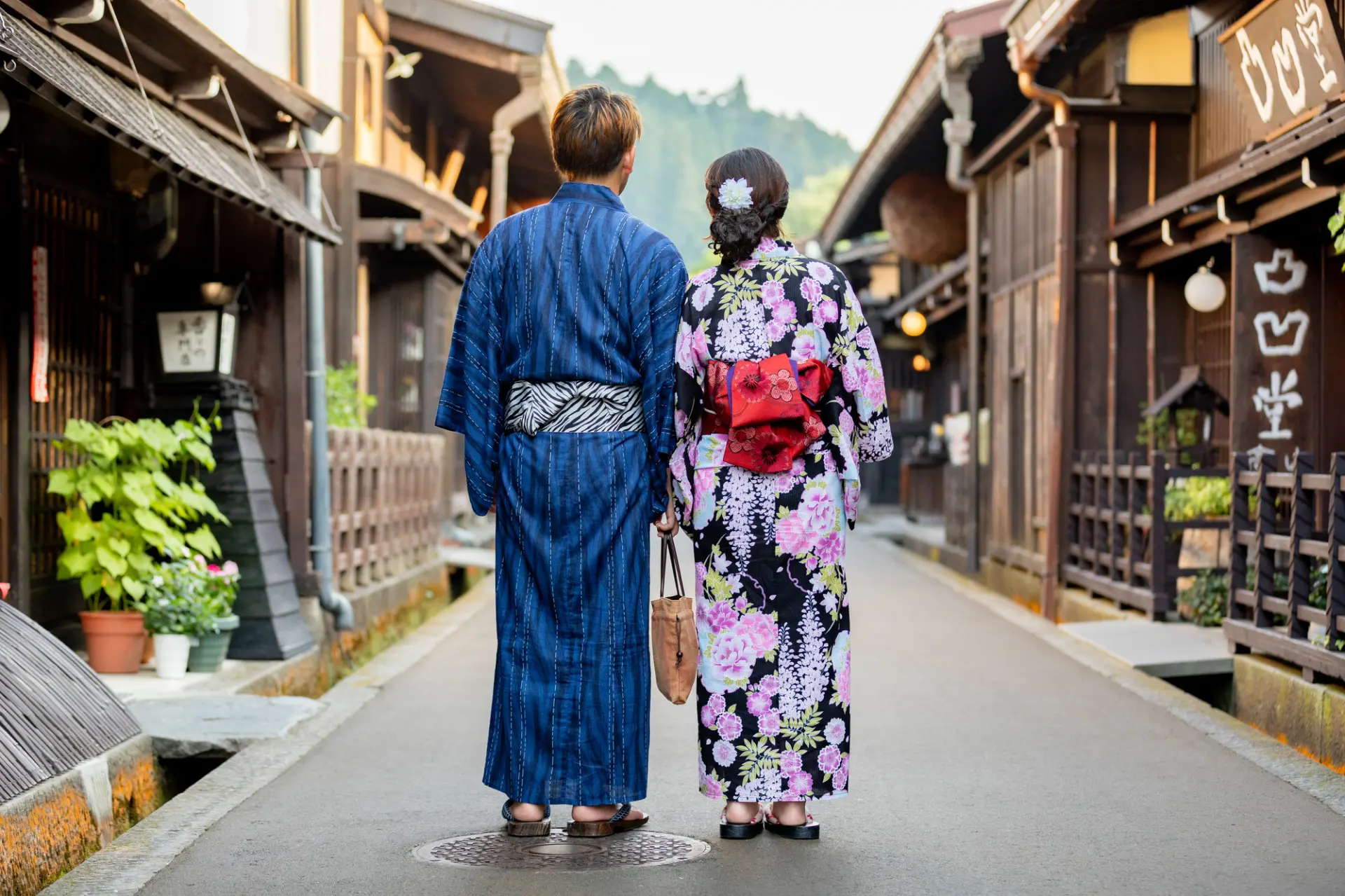
For a more memorable walk through the Old Town, consider renting a kimono or yukata.
Traditional clothing complements the atmospheric streets lined with lattice windows and black-lacquered merchant houses, making photography even more enjoyable.
Rental stores generally provide a complete set, including a kimono, obi sash, bag, and zori sandals, so you can arrive empty-handed.
Many stores also provide dressing services, allowing international visitors unfamiliar with traditional Japanese clothing to participate with confidence.
This experience is especially popular with couples and groups of women and is ideal for creating lasting travel memories.
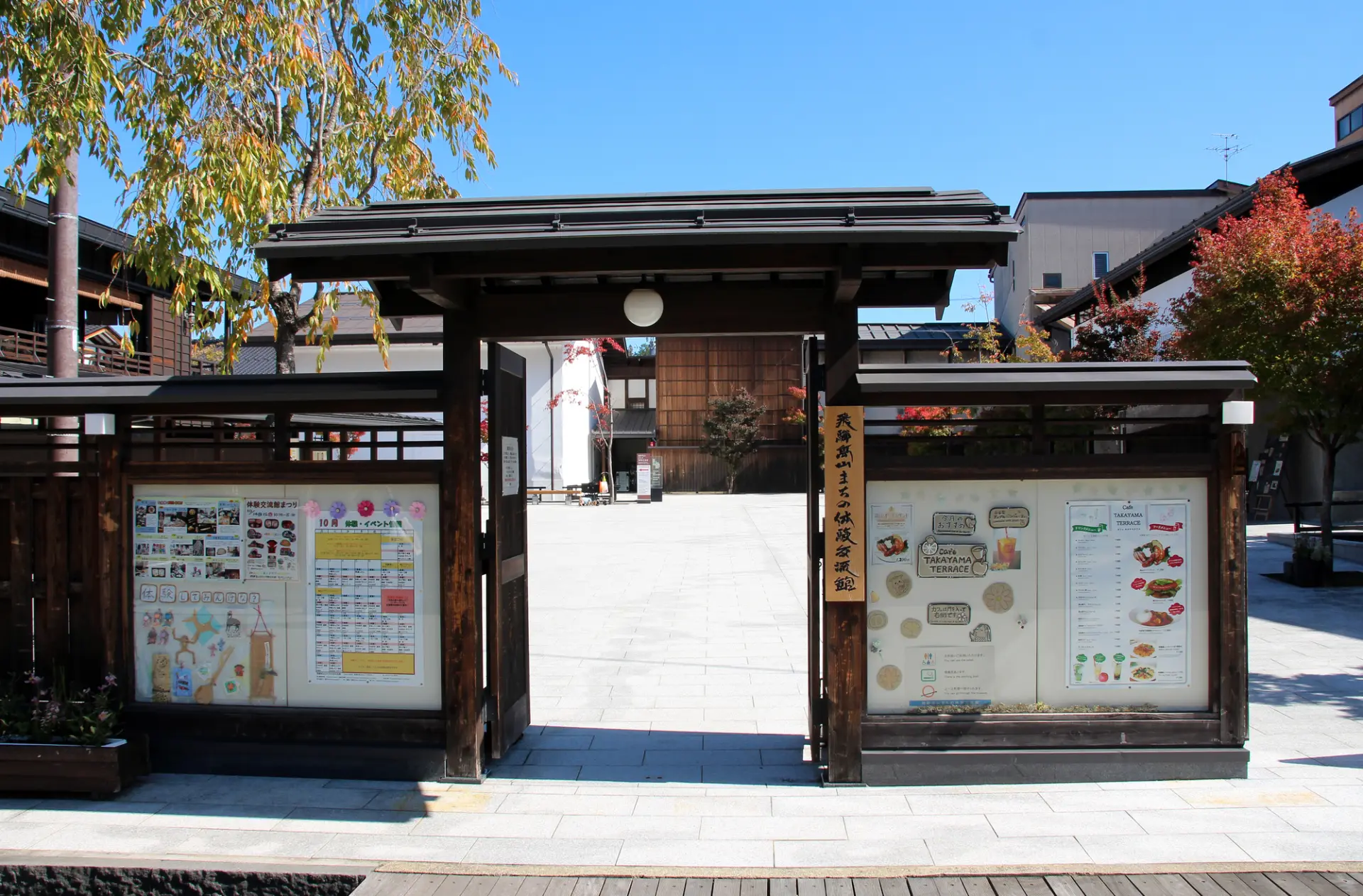
Try Traditional Craftsmanship at the Hida Takayama Crafts Experience Center
Located just beside the Old Town, the Hida Takayama Crafts Experience Center is a cultural facility occupying renovated historic buildings that once served as the soy sauce and grain storehouses of the wealthy Mori merchant family.
The center offers hands-on activities and demonstrations introducing Hida’s craft culture, including Ichii Itto-bori woodcarving, a nationally designated traditional craft, and sarubobo folk dolls.
Especially popular activities include making traditional Uto ladles and creating kumihimo braided cords by combining colorful threads.
Even first-time participants can join with ease, and taking home something made with your own hands is part of the appeal.
Memorable Souvenirs to Buy in Hida Takayama’s Old Town
The Old Town offers a wide selection of appealing souvenirs that reflect Hida’s natural environment and culture of craftsmanship.
Searching for the right item for yourself or as a gift is part of the fun, and you can take home something distinctly Hida along with your travel memories.
Some representative souvenirs are listed below.
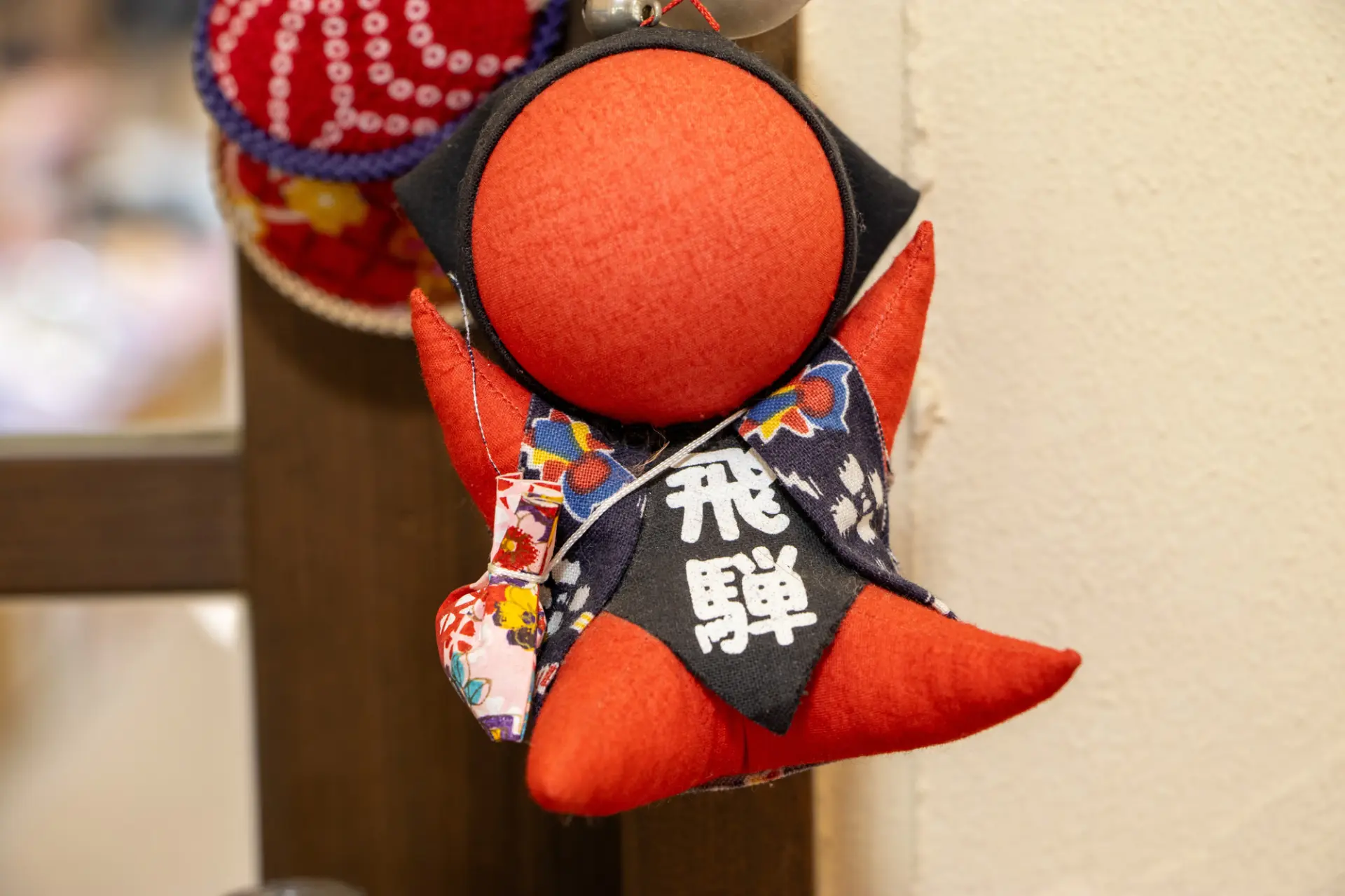
- Sarubobo
- A traditional doll from the Hida region, popular as an amulet for family safety and good relationships.
- Hida Shunkei Lacquerware and Chopsticks
- Traditional lacquerware that highlights the natural wood grain and showcases the craftsmanship of Hida artisans.
- Hida Beef Rice Crackers
- A savory snack that makes use of the rich flavor of Hida beef.
- Local Hida Sake
- Sake produced using the region’s cool climate and renowned water, with flavors that vary by brewery.
- Ichii Itto-bori Woodcarving
- A nationally designated traditional craft featuring delicate carvings made from Japanese yew wood.
5 Nearby Attractions to Visit Along with Hida Takayama’s Old Town
Here are five popular attractions near Hida Takayama’s Old Town.
Although each offers different highlights, all convey the character of Hida Takayama through scenery, natural beauty, and historic atmosphere.
They are within day-trip distance of central Takayama, so combine them with a visit to the Old Town for a fuller experience.
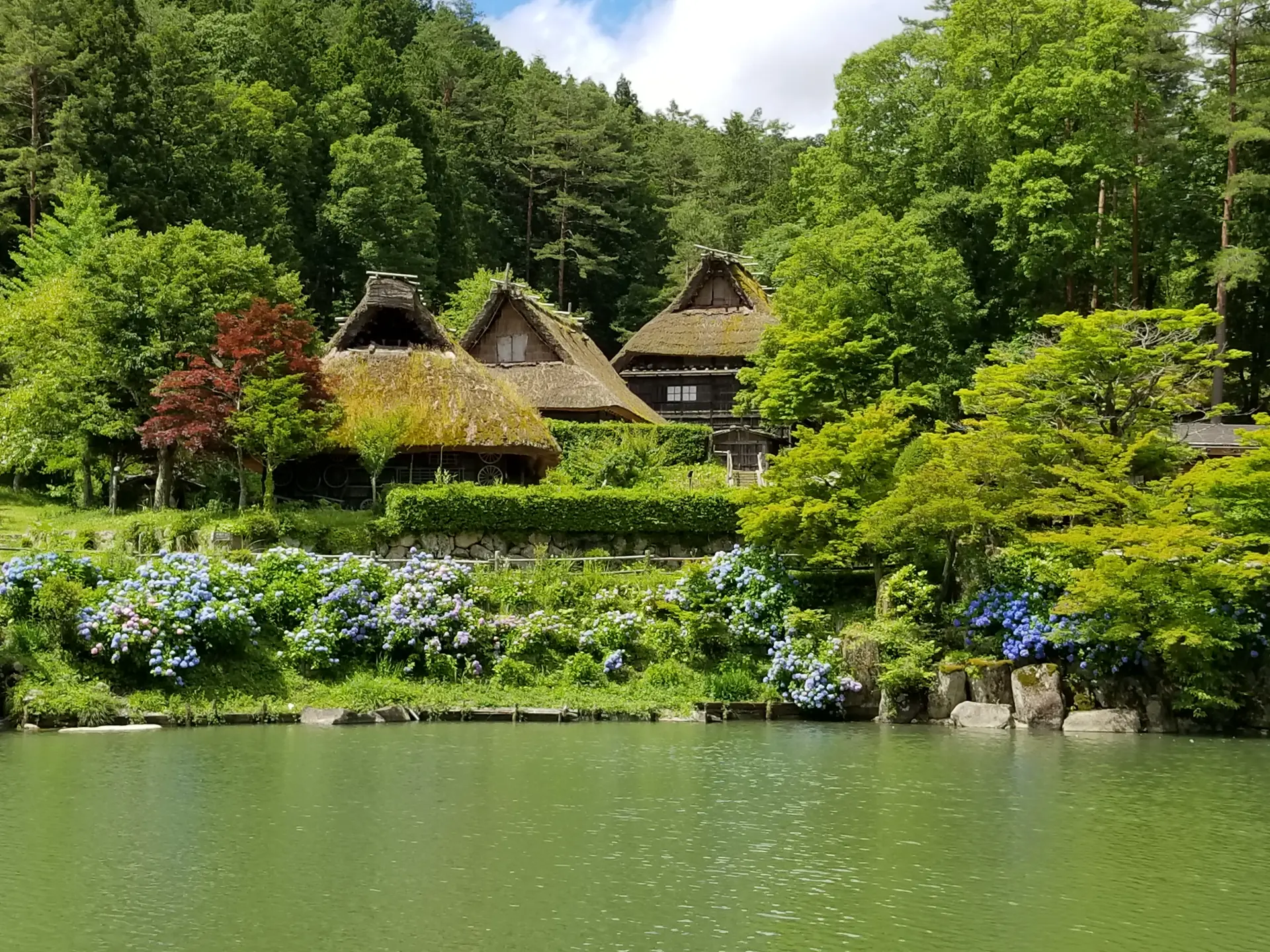
1. Hida Folk Village
Hida Folk Village is an open-air museum where valuable historic homes from the Hida region have been relocated and restored. Its collection includes four National Important Cultural Properties and features houses with gassho-style architecture and wooden shingle roofs designed to withstand heavy snow, preserving the appearance of a traditional rural mountain village for future generations.
The houses display numerous tools once used in rural work and daily life. Demonstrations of crafts such as straw work and sashiko stitching are also held on a rotating basis. Visitors can try traditional games such as bamboo stilts and kendama, making this a recommended destination for families.
- Name in Japanese
- 飛騨の里
- Postal Code
- 506-0055
- Address
-
1-590 Kamiokamotomachi, Takayama City, Gifu
Google Maps - Tel
- 0577-34-4711
- Admissions
- Adult: 700yen (including tax), Children (elementary, middle schooler) 200yen (including tax)
- Parking
- 300yen/car
- Closed
- Open every day
- Business Hours
- 8:30am - 5:00pm
- Access
- From JR Takayama Station, take a bus or taxi for 10 min
- Official Website
- Official Website (Japanese)
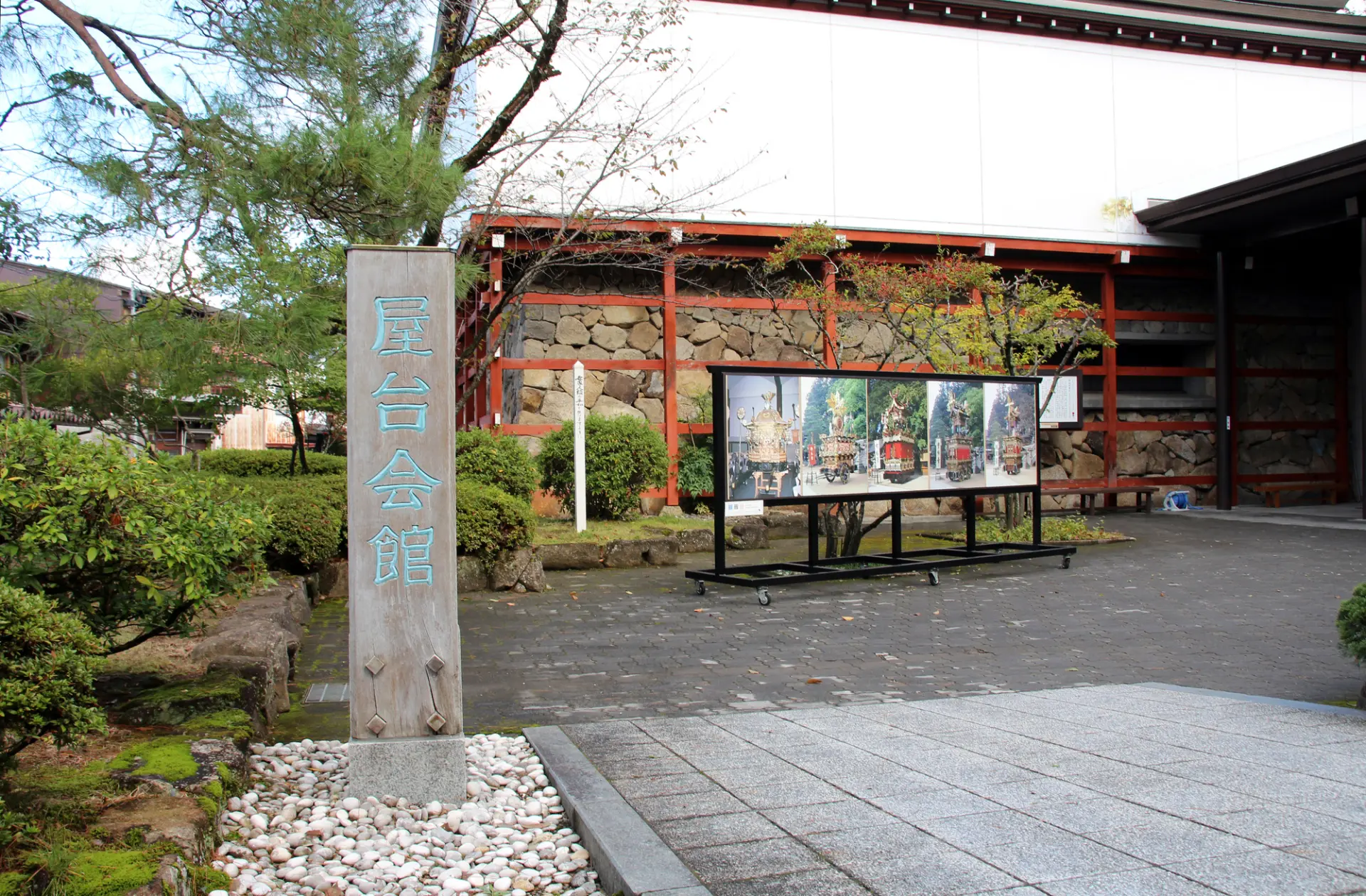
2. Takayama Festival Floats Exhibition Hall
The Takayama Festival Floats Exhibition Hall displays authentic floats used in the Takayama Festival, allowing visitors to see their intricate craftsmanship and impressive scale up close.
These festival floats, called yatai in Takayama and also known as dashi elsewhere in Japan, are carried or pulled during festivals.
They are often decorated with animal-shaped figures and lavish ornamentation. Their finely detailed designs reveal the skill and aesthetic sensibilities of Japanese craftspeople.
3. Shinhotaka Ropeway
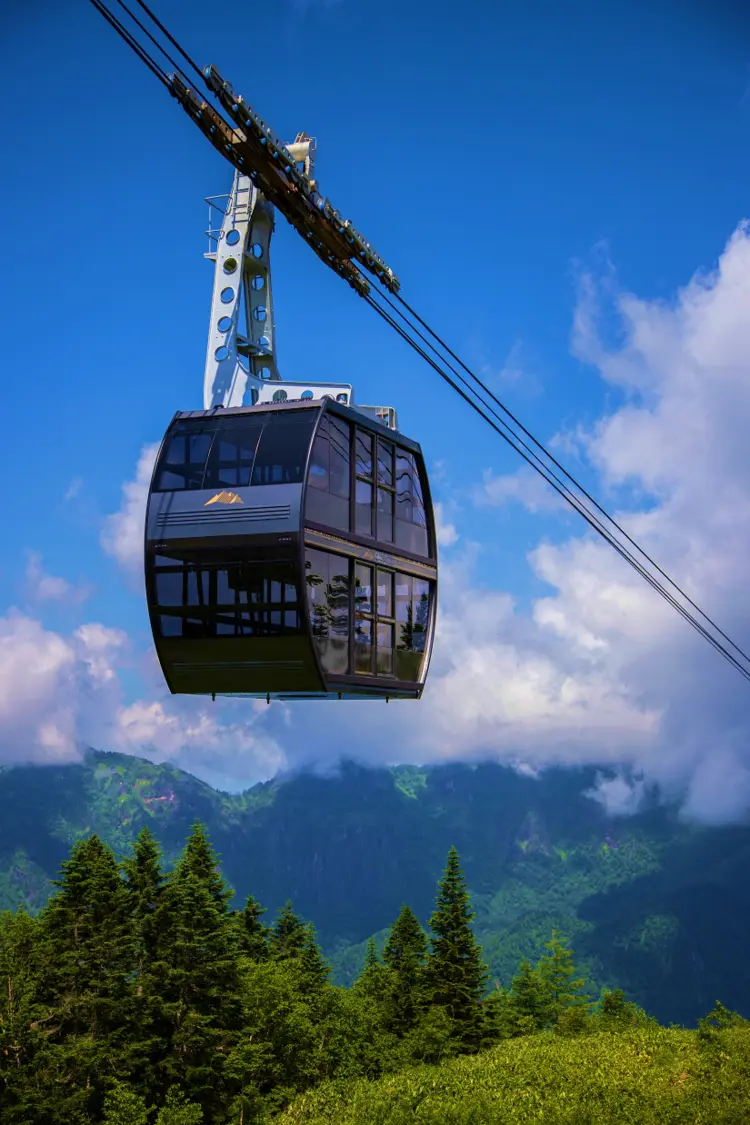
This ropeway is located at Shinhotaka Onsen in the Okuhida Hot Spring Villages, deep in the mountains of Takayama. Passengers transfer between the No. 1 and No. 2 ropeways for a 3,200-meter journey through the sky from Shinhotaka Onsen Station to Nishi-Hotakaguchi Station.
After arriving at Nishi-Hotakaguchi Station at an elevation of 2,156 meters, head to the observation deck on the station roof. A 360-degree panorama of the Northern Japan Alps unfolds before you, including Mount Nishihotaka, Mount Yari, and Mount Kasa. The magnificent view earned two stars in the Michelin Green Guide Japan.
- Name in Japanese
- 新穂高ロープウェイ
- Postal Code
- 506-1421
- Address
-
Sinhodaka Onsen, Okuhidaonsengo, Takayama City, Gifu
Google Maps - Telephone
- 0578-89-2252
- Closed
- Open every day (may be closed for bad weather or regular safety maintenance)
- Hours
- 8:30am - 4:00pm. Last descending at 4:45pm. * May change depending on season
- Fare
- 1st & 2nd Ropeway linked round trip: Adult (Age 13 and older) 3,800 yen, child (Age 6 and older) 1,900 yen
- Directions
-
1) From Chubu Jukan Expressway, Takayama Interchange, drive for 70 min.
2) From JR Takayama main Line, Takayama Station, ride the Nohi Bus, HIrayu/Shin-hotaka Line for 100 min. and get off at Shinhotaka Ropeway stop. - Credit Cards
- Accepted (Visa, Mastercard, JCB, American Express, Diners Club, UnionPay)
- Official Website
- Official Website (English)
4. Hida-Furukawa Station
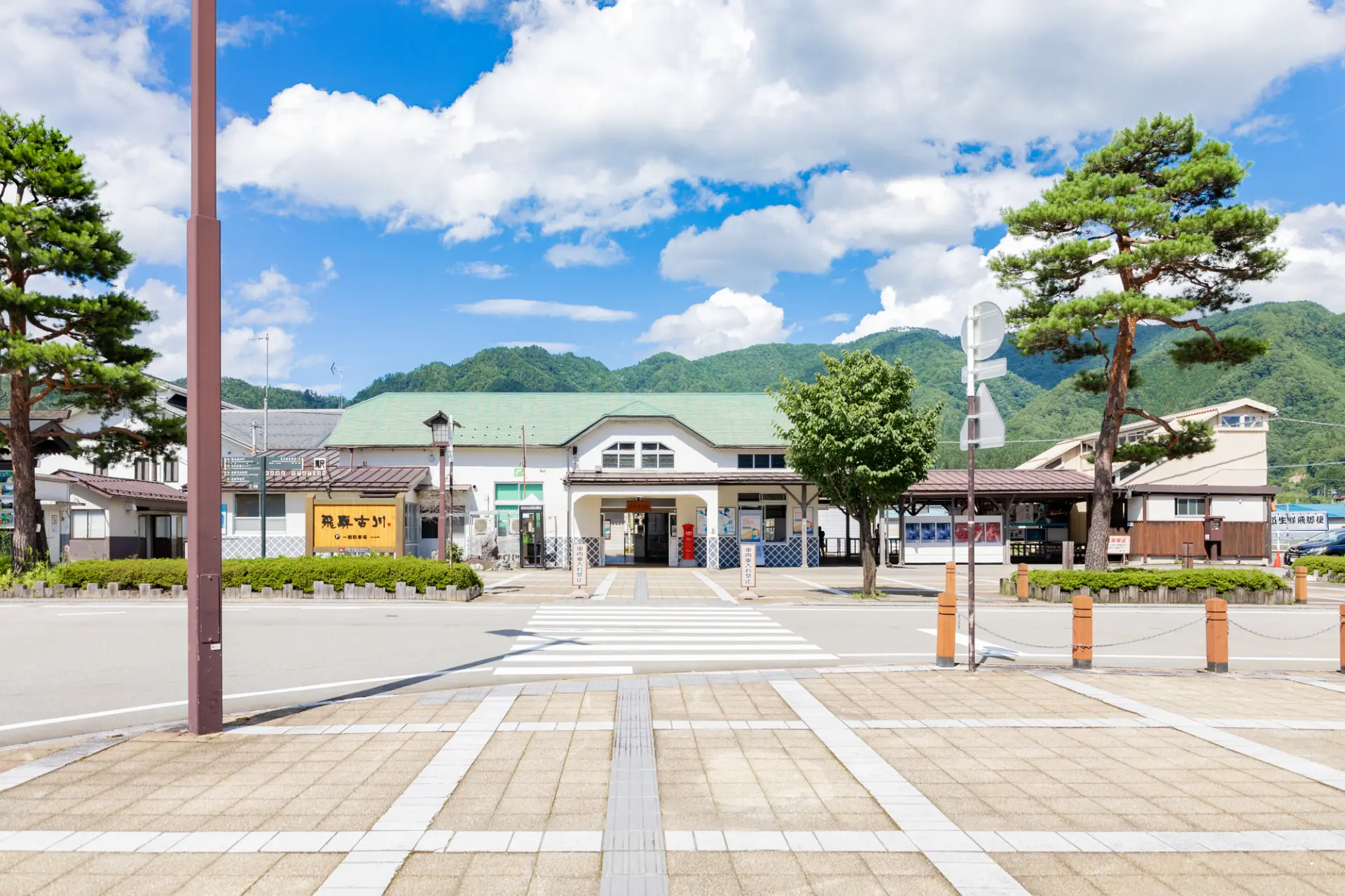
Hida-Furukawa Station is a station on the JR Takayama Main Line in Hida City, Gifu Prefecture. Its wooden station building opened in 1934 and features white walls and a tiled roof that blend into Furukawa’s traditional townscape. The adjacent tourist information center distributes brochures and provides a convenient starting point for exploring the town.
About a five-minute walk from the station are the Setogawa Canal, where carp swim, and a district of white-walled storehouses. Visitors can stroll through the area while experiencing the traditional atmosphere of Hida. Restaurants and accommodations are also available around the station, making it a convenient sightseeing base.
- Name in Japanese
- 飛騨古川駅
- Postal Code
- 509-4225
- Address
-
8 Kanamori-cho, Furukawa-cho, Hida City, Gifu
Google Maps - Closed on
- Open daily
- Access
- JR Takayama Main Line, Hida-Furukawa Station
5. Hida Great Limestone Cave
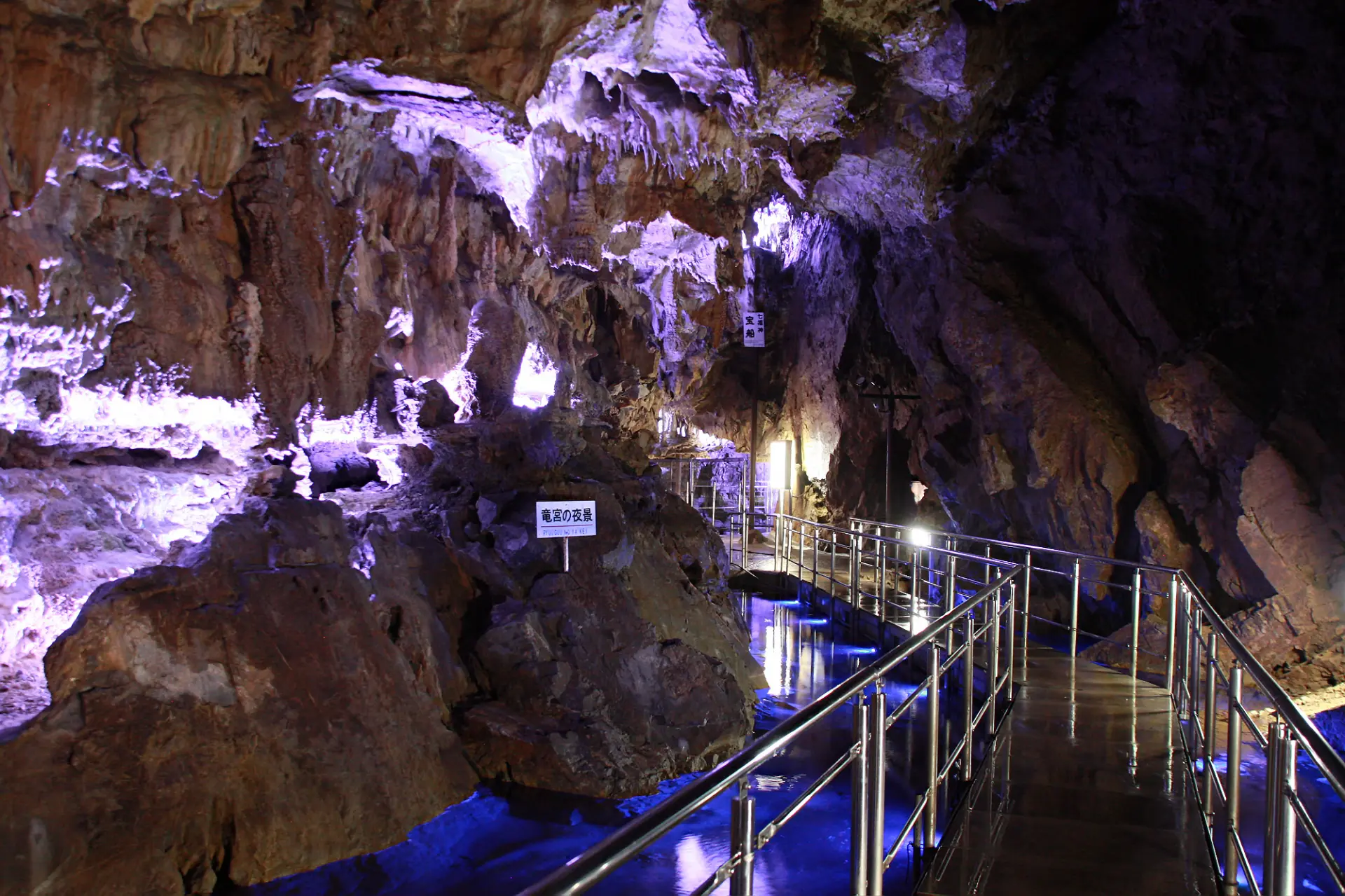
Located midway between Hida Takayama and the Okuhida Hot Spring Villages, the Hida Great Limestone Cave is one of Japan’s leading limestone caves, extending approximately 800 meters. It is also the country’s highest-elevation limestone cave open to tourists. Inside the cave, which nature formed over vast stretches of time from a coral reef dating back 250 million years, visitors can see delicate white stalactites. Another notable feature is the abundance of rare formations known as helictites, found here in greater numbers than in any other limestone cave in Japan.
The illuminated interior creates an otherworldly atmosphere. On March 1, 2017, the site was designated a Lovers’ Sanctuary. Couples can display Padlocks of Promise and votive plaques inscribed with their pledges.
- Name in Japanese
- 飛騨大鍾乳洞&大橋コレクション館
- Postal Code
- 506-2256
- Address
-
1147 Nyukawacho Hiyomo, Takayama City, Gifu
Google Maps - Tel
- 0577-79-2211
- Admission
- Adults (High school student and older): 1,100 yen, Children (Primary school and Junior high school students): 550 yen
- Regular Holidays
- None
- Business hours
-
April-October 8:00am - 5:00pm (closing at 5:30pm),
November-March 9:00am - 4:00pm (closing at 4:30pm) - Access
- 30 minutes by bus from JR Takayama Station
- Official Website
- Official Website (English)
5 Popular Restaurants Near Hida Takayama’s Old Town
Travelers looking for a memorable meal around Hida Takayama’s Old Town should consider the following five restaurants.
Although they cover different cuisines, all offer menus with a strong local character and make it easy to sample specialties associated with Takayama.
In addition to receiving positive reviews for their food, these popular establishments have welcoming interiors that will add to your travel memories.
1. Folk Restaurant Suzuya
Folk Restaurant Suzuya is located in Takayama, Gifu Prefecture. It is a folk-style restaurant housed in a renovated historic residence and has long been cherished by both travelers and local residents.
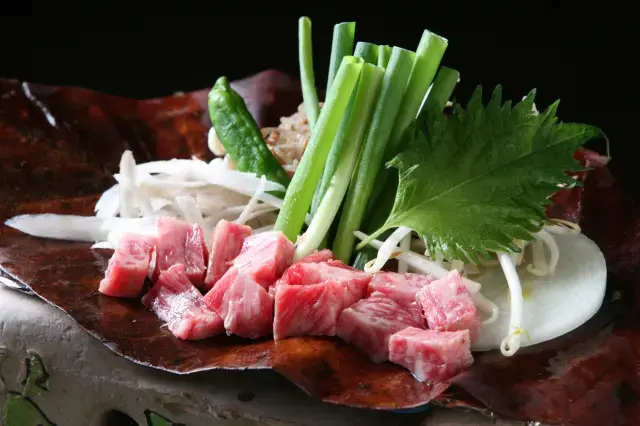
The restaurant features an extensive selection of dishes centered on Hida beef. One of the most popular is hoba miso steak, in which Hida beef, vegetables, and a specially blended miso are cooked on a large magnolia leaf to create a dish rich in both flavor and aroma. Another favorite is charcoal-grilled Hida beef, which slowly cooks rare cuts using the far-infrared heat of the charcoal. The menu also includes makiyaki, featuring concentrated Hida beef flavor paired with a sweet sauce.
- Name in Japanese
- 民芸食事 寿々や
- Postal Code
- 506-0015
- Address
-
24 Hanakawa-machi, Takayama, Gifu 506-0015
Google Maps - Phone
- 0577-32-2484
- Hours
- 11:00am–2:00pm (Last admission at 1:30pm), 5:00pm–9:00pm (Last admission at 7:30pm)
- Closed on
- Tuesdays, irregular holidays
- Price Range
- 2,000 yen and up
- Access
- Approx. 6-minute walk from Takayama Station on the JR Takayama Line
- Credit Cards
- Accepted
- Official website
- Official website (Japanese)
2. Hida Kotte Ushi
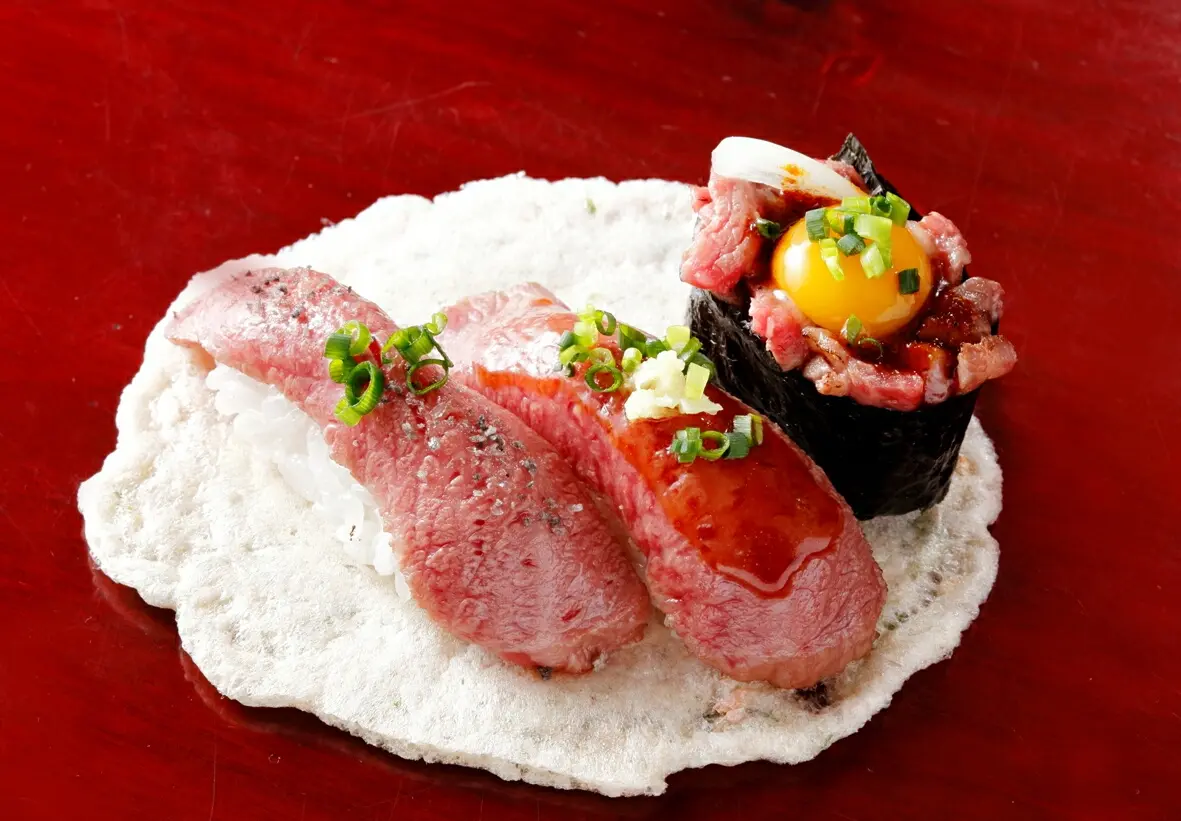
Located within Hida Takayama’s popular Old Town, Hida Kotte Ushi is a takeout-only restaurant specializing in Hida beef nigiri sushi. Lines regularly form with customers seeking high-quality food to enjoy while walking through the neighborhood at an accessible price.
The restaurant serves carefully prepared Hida beef nigiri made with rare cuts of Grade 5 Hida beef, the highest grade available. No compromises are made in the other ingredients or seasonings used to bring out the beef’s full flavor, including Hida-grown Hitomebore rice and an original reduced soy sauce. Each order is prepared after it is placed, from slicing the beef to shaping, plating, and finishing the sushi, ensuring that it is always served freshly made.
- Name in Japanese
- 飛騨 こって牛
- Postal Code
- 506-0846
- Address
-
82 Kamisannomachi, Takayama, Gifu
Google Maps - Telephone
- 0577-37-7733
- Closed
- Open every day
- Business Hours
- 10:00am - 5:00pm
- Budget
- 700 yen〜1,000 yen
- Access
- About 15 minutes’ walk from Takayama Station on the JR Takayama Line
- Credit Cards
- Not accepted
- Official Website
- Official Website (Japanese)
3. CENTER4 HAMBURGERS
CENTER4 HAMBURGERS is a specialty burger restaurant extremely popular with both Japanese customers and international travelers in Hida Takayama’s Old Town area, one of Gifu Prefecture’s leading tourist destinations. The restaurant is hidden at the back of a historic house on a street just outside the Old Town, and the sense of anticipation while searching for its entrance is part of the fun.
The menu offers 14 types of hamburgers, including a rich cheeseburger made with red cheddar, an avocado burger generously topped with fresh avocado, and a blue cheese burger served with optional honey. Each is generously portioned and full of flavor.

- Name in Japanese
- CENTER4 HAMBURGERS
- Postal Code
- 506-0844
- Address
-
94 Kami1-machi, Takayama City, Gifu
Google Maps - Telephone
- 0577-36-4527
- Closed
- Wednesdays, other temporary closures
- Business Hours
- 11:00am - 2:30pm(L.O.), 5:30pm - 8:00pm(L.O.)
- Budget
- Lunch: around 1,500 yen, Dinner: around 2,000 yen
- Access
- Approx. 15 min. walk from Takayama Station on the JR Takayama Main Line.
- Credit Cards
- Accepted (Visa, Mastercard, JCB, American Express, Diners Club, DISCOVER)
- Official Website
- Official Website (Japanese)
4. CAFÉ GOKAN
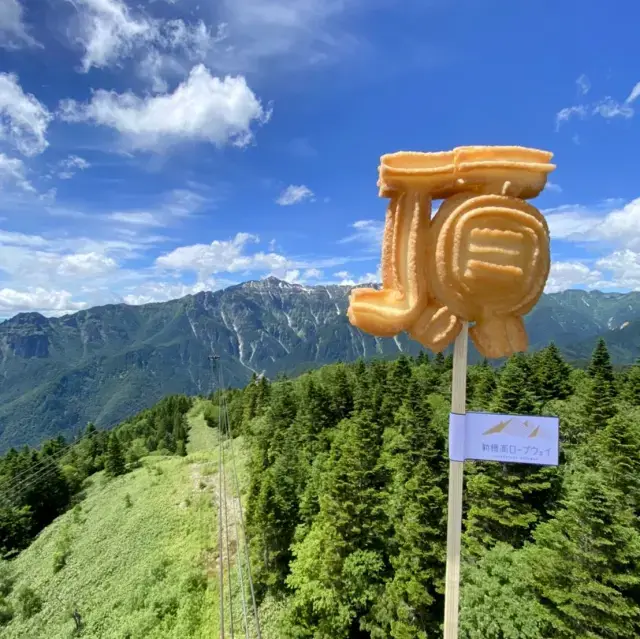
CAFÉ GOKAN is located inside Nishi-Hotakaguchi Station at the summit of the Shinhotaka Ropeway. Renovated and reopened in 2025, the café stands at a regional sightseeing hub and welcomes many travelers visiting the mountaintop area.
The café focuses on helping visitors feel closer to nature through a menu featuring locally produced ingredients. Its signature items include Itadaki Soft Serve and Itadaki Churros. The distinctive shape of the Itadaki Churros makes them especially popular for photos. The menu also includes items made with local wagyu, such as a Hida beef cutlet sandwich set. Everything is available for takeout, and many guests enjoy their food while admiring the outdoor scenery.
- Name in Japanese
- CAFÉ GOKAN
- Postal Code
- 506-1421
- Address
-
Sinhodaka Onsen, Okuhidaonsengo, Takayama City, Gifu
Google Maps - Telephone
- 0578-89-2252
- Business Hours
- Same as the operating hours of the Shinhotaka Ropeway
- Closed
- Open year-round (closed about once or twice a year on days that coincide with Shinhotaka Ropeway safety inspections)
- Budget
- From 500 yen
- Access
-
1) About 70 minutes by car from Takayama IC on the Chubu Jukan Expressway
2) About 85 minutes by car from Matsumoto IC on the Nagano Expressway - Credit Cards
- Accepted
- Official Website
- Official Website (English)
5. Menya Shirakawa
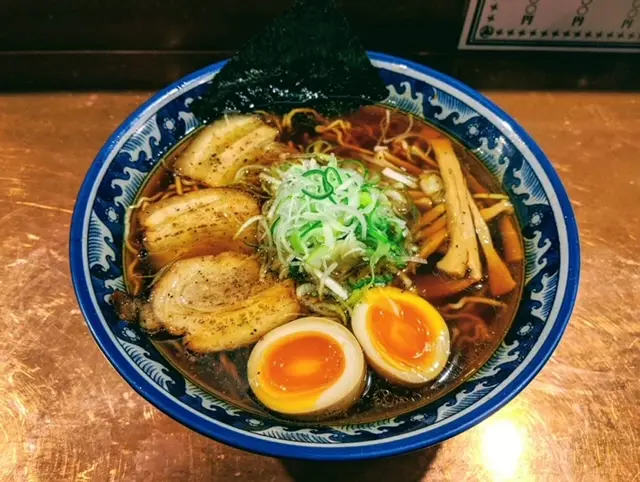
Takayama ramen is one local specialty worth trying during a visit to Hida Takayama. It is characterized by a simple combination of thin, curly noodles and a soy sauce-based broth and is known locally as chuka soba.
Located in the Takayama Kokubunji-dori Shopping Street between JR Takayama Station and Hida Takayama’s Old Town, Menya Shirakawa is one of the city’s most popular ramen restaurants, with lines forming almost every day. Since opening in 2012, it has gained a loyal following for bowls based on traditional Takayama chuka soba while pursuing a distinctive flavor of its own. The restaurant was also featured in the Michelin Guide Aichi, Gifu, Mie 2019 Special Edition.
- Name in Japanese
- 麺屋しらかわ
- Postal Code
- 506-0014
- Address
-
56-2 Aioimachi, Takayama City, Gifu
Google Maps - Telephone
- 0577-77-9289
- Closed
- Tuesdays
- Business Hours
- 11:00am - *Closed when the soup runs out
- Budget
- 1000 yen〜
- Access
- 8-minute walk from Takayama Station on the JR Takayama Line.
- Credit Cards
- Not accepted
- Official Website
- Official Website (Japanese)
3 Recommended Places to Stay Near Hida Takayama’s Old Town
Here are three recommended accommodations for a trip to Hida Takayama.
These popular hotels offer convenient access to the Old Town and other major attractions, making them ideal sightseeing bases.
They also feature hot springs, large communal baths, or spa facilities where guests can rest after exploring the town.
Each provides a sense of the region even within the property and can make your trip more satisfying.
1. Wat Hotel & Spa Hida Takayama
Opened in 2018, Wat Hotel & Spa Hida Takayama is a stylish business hotel located about a seven-minute walk from JR Takayama Station. It is also close to the Old Town, making it an excellent base for exploring Hida Takayama.
The chic, relaxing guest rooms come in 12 types suited to stays ranging from business trips to vacations. All rooms offer Wi-Fi, Simmons mattresses, and a separate bathroom and toilet, although some rooms have compact modular bathrooms. A wide selection of other facilities and amenities supports a comfortable stay.

- Name in Japanese
- ワットホテル&スパ飛騨高山
- Postal Code
- 506-0026
- Address
-
3-39-1 Hanasatomachi, Takayama City, Gifu
Google Maps - Telephone
- 0577-57-5570
- Check-in
- 3:00pm
- Check-out
- 11:00am
- Room Price
- one-night stay (hot springs not included) 6,800yen and up, breakfast-included for an additional 1,000yen
- Access
- Approx. 7 min. walk from JR Takayama Station on the JR Takayama Main Line.
- Credit Cards
- Accepted (Visa, JCB, Mastercard, American Express, Diners Club, UnionPay)
- Official Website
- Official Website (English)
2. Spa Hotel Alpina Hida Takayama
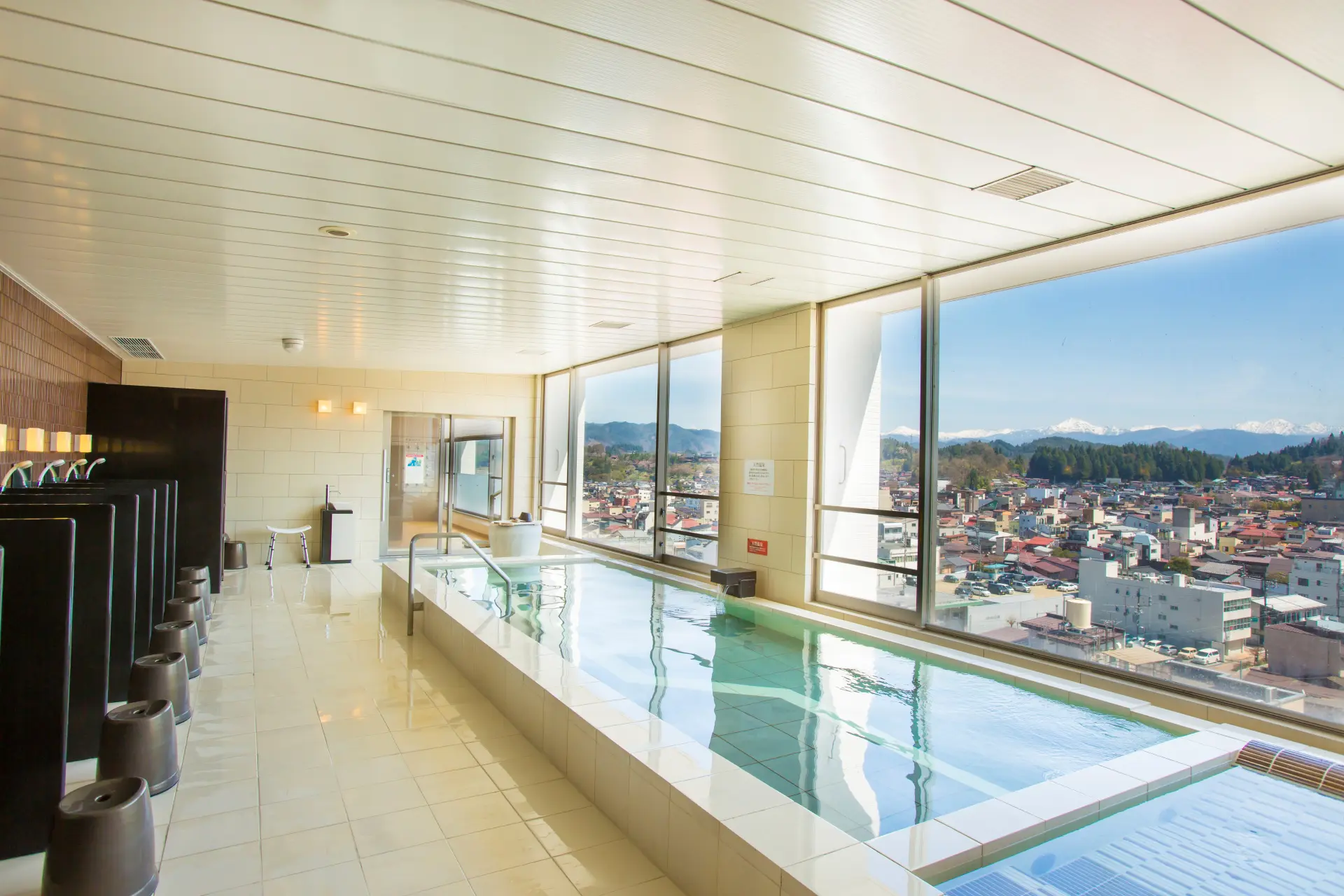
Spa Hotel Alpina Hida Takayama is about a three-minute walk from JR Takayama Station. In addition to its outstanding location within walking distance of the Old Town, this casual resort hotel is popular for its large natural hot spring bath supplied entirely by the hotel’s own source.
The large bath area is on the ninth and top floor. It includes an indoor observation bath overlooking Takayama, an open-air observation bath, a ceramic pot bath, and a reclining bath.
The guest rooms have natural, relaxing interiors and are available in nine types. Despite the hotel’s reasonable rates, every room offers generous space, including single rooms furnished with beds 140 centimeters wide.
- Name in Japanese
- スパホテルアルピナ飛騨高山
- Postal Code
- 506-0021
- Address
-
5-41 Nadamachi, Takayama City, Gifu
Google Maps - Telephone
- 0577-33-0033
- Check-in
- 3:00pm
- Check-out
- 10:00am
- Room Price
- 12,000 yen〜 per night including breakfast
- Access
- 3 minutes’ walk from Takayama Station on JR Takayama Line
- Credit Cards
- Accepted (Visa, JCB, Mastercard, American Express, UnionPay, etc.)
- Official Website
- Official Website (Japanese)
3. Hoshokaku
Hoshokaku is a hot spring ryokan located on a hill in the nature-filled Shiroyama Park, about a three-minute walk from the Old Town.
It has been named among the 100 Best Hotels and Ryokan Selected by Travel Industry Professionals, organized by Ryoko Shimbun, for 16 consecutive years and is highly regarded for its warm, unpretentious hospitality.
The interior features tatami-covered corridors and Japanese-style furnishings showcasing the craftsmanship of Hida artisans. The comfort of walking barefoot through the property adds to the traditional travel experience.
The guest rooms and open-air baths overlook the cityscape, presenting a view that the region’s feudal lords may once have seen. At night, it transforms into an atmospheric panorama of city lights.
The illuminated footbath on the fifth floor is an especially relaxing place to admire the view.
Dinner is another highlight, featuring seasonal ingredients such as Hida beef, mountain vegetables, and river fish.
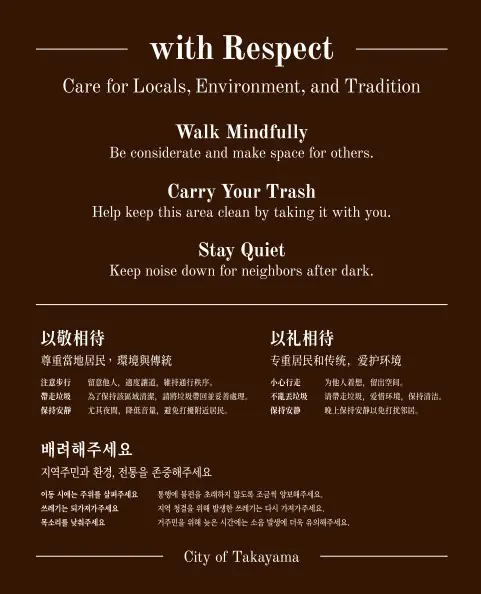
What Is Takayama City’s “with Respect” Visitor Etiquette Campaign?
The Old Town is popular with visitors from Japan and overseas, but the growth in tourism has made concerns about visitor behavior more noticeable in recent years.
In response, Takayama City is promoting the development of a sustainable destination where residents and visitors respect one another under the slogan “with Respect.”
The campaign focuses on the following four points.
- Care for Locals, Environment and Tradition: Respect local people and their daily lives, the environment, and traditions
- Walk Mindfully: Be considerate of others and share the streets
- Carry Your Trash: Help keep the town clean by taking your trash with you
- Stay Quiet: Keep noise down after dark out of consideration for the neighborhood
Each point asks visitors to be considerate of the local community, and none is particularly difficult to follow.
Residents warmly welcome travelers, so remember to show respect for local people and traditional culture during your visit.
One-Day Itinerary and Map for Hida Takayama’s Old Town
Based on the information introduced above, the following is a suggested itinerary for exploring Hida Takayama’s Old Town.
The major attractions can be covered in a single day, so this is a day-trip itinerary. However, travelers coming from farther away or wishing to explore at a slower pace should consider a two-day, one-night schedule.
- 8:00 a.m. Walk from Takayama Station toward the Old Town while exploring the streets
- 8:15 a.m. Photograph the vermilion Nakabashi Bridge in the morning light
- 8:25 a.m. Visit both the Hida Takayama Miyagawa Morning Market and Jinya-mae Morning Market and interact with local residents
- 9:00 a.m. Learn about Takayama’s history at Takayama Jinya, Japan’s only surviving Edo-period regional government office of its kind
- 10:00 a.m. Have a kimono or yukata fitted at a rental store near the Old Town, then set out to explore
- 10:30 a.m. Walk along Sanmachi Street in Hida Takayama’s Old Town in traditional clothing while sampling food, taking photos, and visiting sake breweries
- 12:30 p.m. Take a lunch break at a restaurant of your choice
- 1:30 p.m. Learn about Takayama’s development, the Takayama Festival, and traditional crafts at the Hida Takayama Museum of History and Art
- 2:30 p.m. Try traditional Hida crafts at the Hida Takayama Crafts Experience Center
- 3:30 p.m. Walk through the town in the late afternoon while shopping for souvenirs
- 4:30 p.m. Return to Takayama Station and begin your journey home
Frequently Asked Questions About Hida Takayama’s Old Town
Q
How long does it take to explore the Old Town?
Allow around one hour for a simple walk or about half a day if you plan to sample food and visit attractions.
Q
Is parking available near the Old Town?
Yes. Numerous paid parking lots are within walking distance, including the Soramachi Parking Lot and Shinmei Parking Lot.
Q
Can I enjoy the Old Town at night or on a rainy day?
Yes. Illumination gives the streets additional character at night, while rain further enhances their atmosphere.
Summary
This article has introduced the highlights of Hida Takayama’s Old Town, with a particular focus on a suggested one-day sightseeing itinerary.
The Old Town brings together Hida’s culture, history, and cuisine, offering a wide range of experiences such as sampling food, visiting sake breweries, and trying traditional crafts.
The attractions are also located close to one another, making the compact district easy to explore in a single day.
Why not walk through streets where time seems to have stopped and experience traces of the lifestyles once found here?
For more help planning your trip, read the following article covering Takayama’s popular attractions, restaurants, and other useful information.