
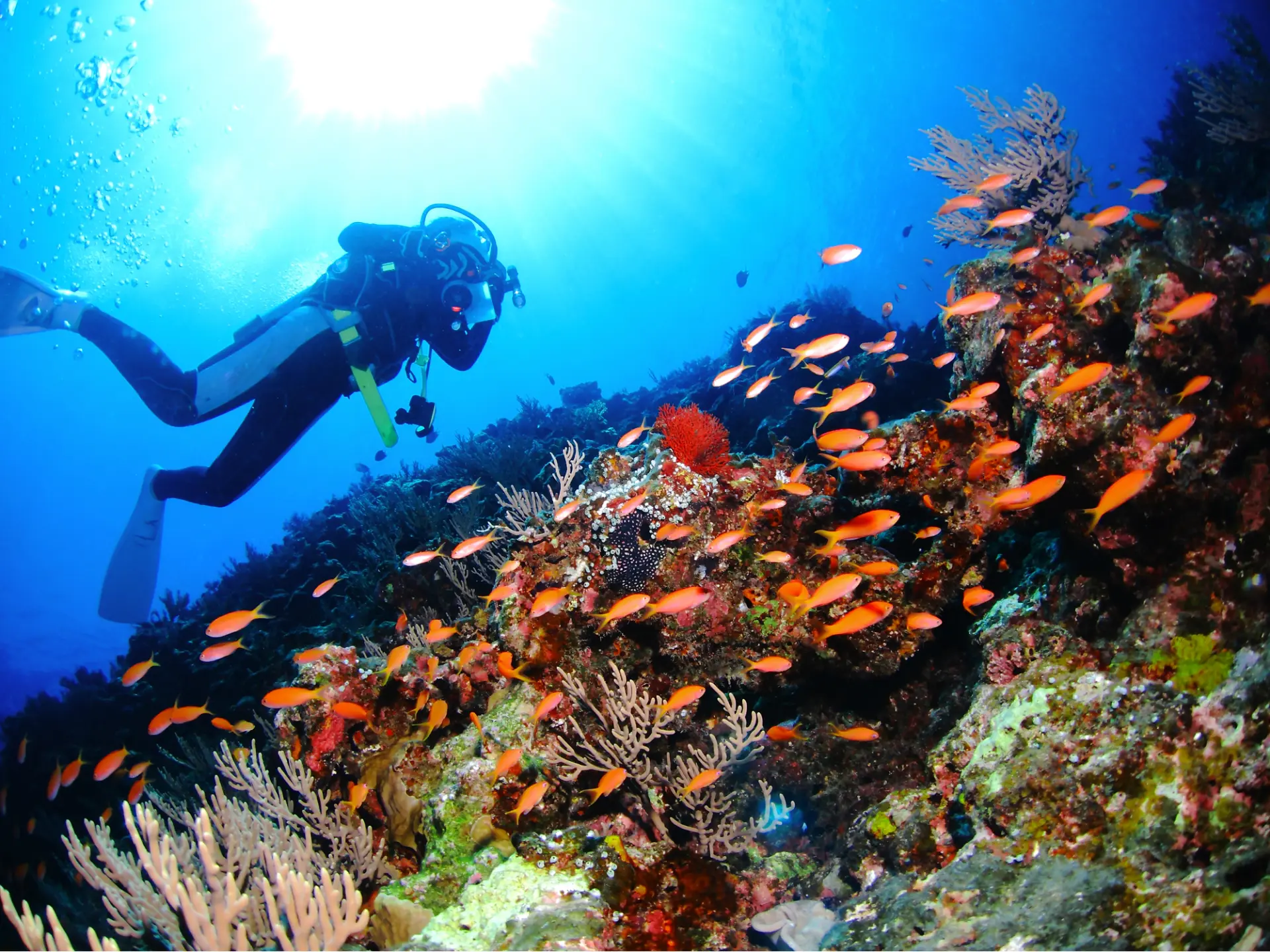
Where to Go Diving in Japan: 12 Recommended Spots and How to Choose
Diving spots with a wide variety of attractions can be found throughout Japan, from the crystal-clear southern seas to the extraordinary experience of swimming beneath drift ice.
However, many people may wonder whether beginners can participate, where to dive, and when the best season is.
This article provides an in-depth look at the appeal of diving in Japan, how to choose a destination, and recommended diving spots.
Use this guide to find the right destination for you and start planning your diving trip.
3 Reasons to Go Diving in Japan
When people think of diving, many may picture overseas resorts.
However, Japan’s ocean currents, underwater topography, and ecosystems vary by region, and its seas take on different appearances with each season.
Here are three reasons to go diving in Japan.
1. Rich Ecosystems Created by Seas Extending from North to South
The Japanese archipelago stretches approximately 1,864 miles from Hokkaido in the north to Okinawa in the south.
Its seas are influenced by currents with different characteristics, including the warm Kuroshio Current and the cold Oyashio Current, creating diverse marine environments where species from both southern and northern waters coexist.
Japan also has an intricate coastline and varied underwater terrain. Rocky reefs, sandy beaches, tidal flats, seaweed beds, and coral reefs support a wide range of marine life.
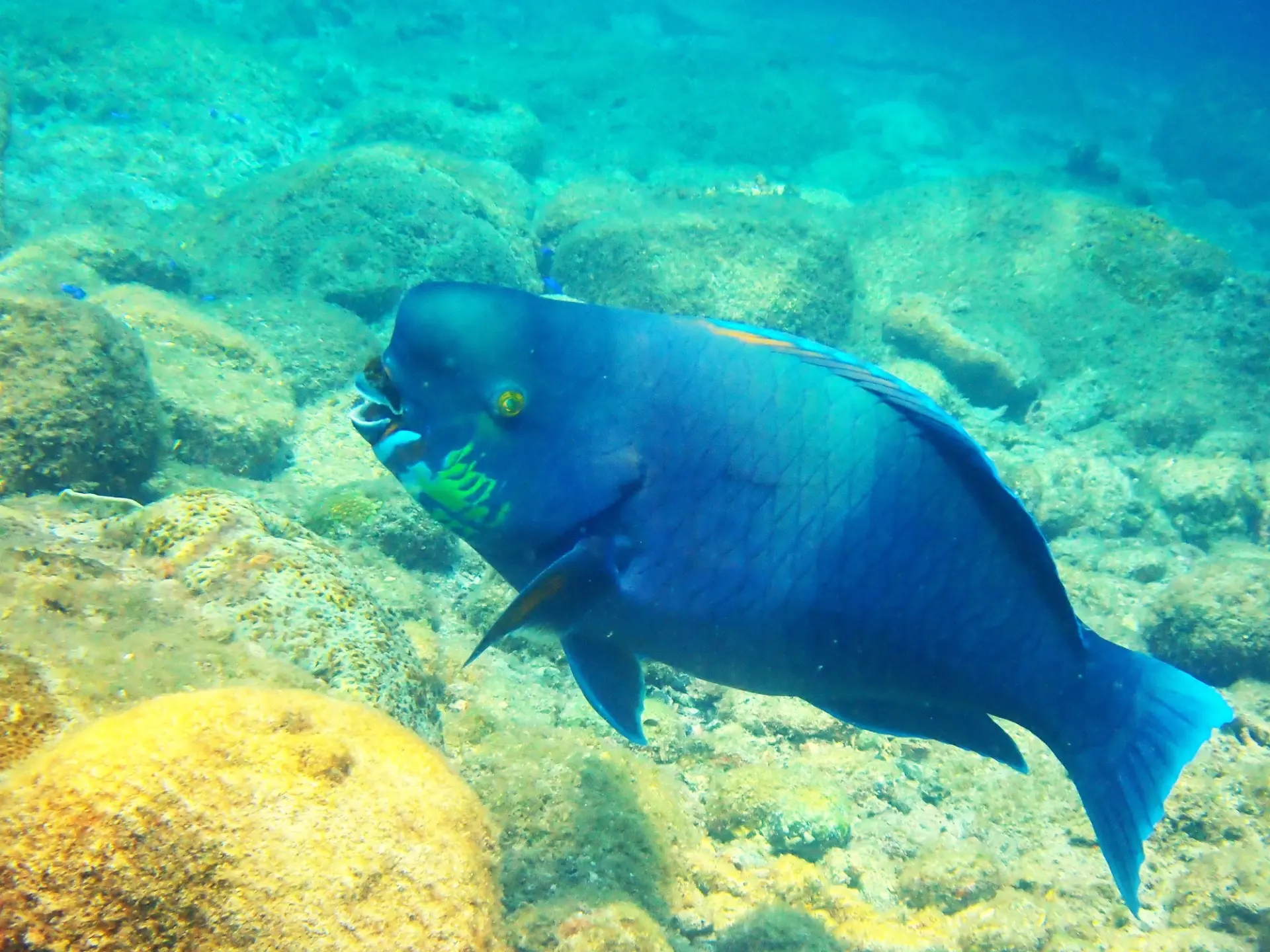
Japan’s waters offer opportunities to encounter everything from large animals such as sea turtles and manta rays to smaller creatures such as nudibranchs and frogfish, as well as schools of migratory fish.
For example, the waters around Kashiwajima in Kochi Prefecture are said to be home to one-third of the fish species found in Japan and are known as a place where many species have been recorded in the country for the first time.
2. Distinctive Underwater Scenery in Each Region
Another reason to dive in Japan is the dramatic variation in underwater scenery from one region to another.
There are many styles of diving to experience, from southern seas filled with coral reefs to caves, rocky reefs, varied terrain, and waters with abundant seaweed forests.
Even around Okinawa, the scenery is remarkably diverse: Miyako Island is known for arches illuminated by shafts of sunlight, Ishigaki Island for its variety of fish, and Yonaguni Island for its enormous underwater formation known as the “Underwater Ruins.”
In Shiretoko, Hokkaido, visitors can also try drift ice diving beneath floating ice in winter, an experience rarely found anywhere in the world.
As the sea presents a different side with every season, you can return with a new purpose each time, such as exploring underwater terrain on one trip and observing marine life on the next.
3. Many Diving Areas Are Easily Accessible from Major Cities
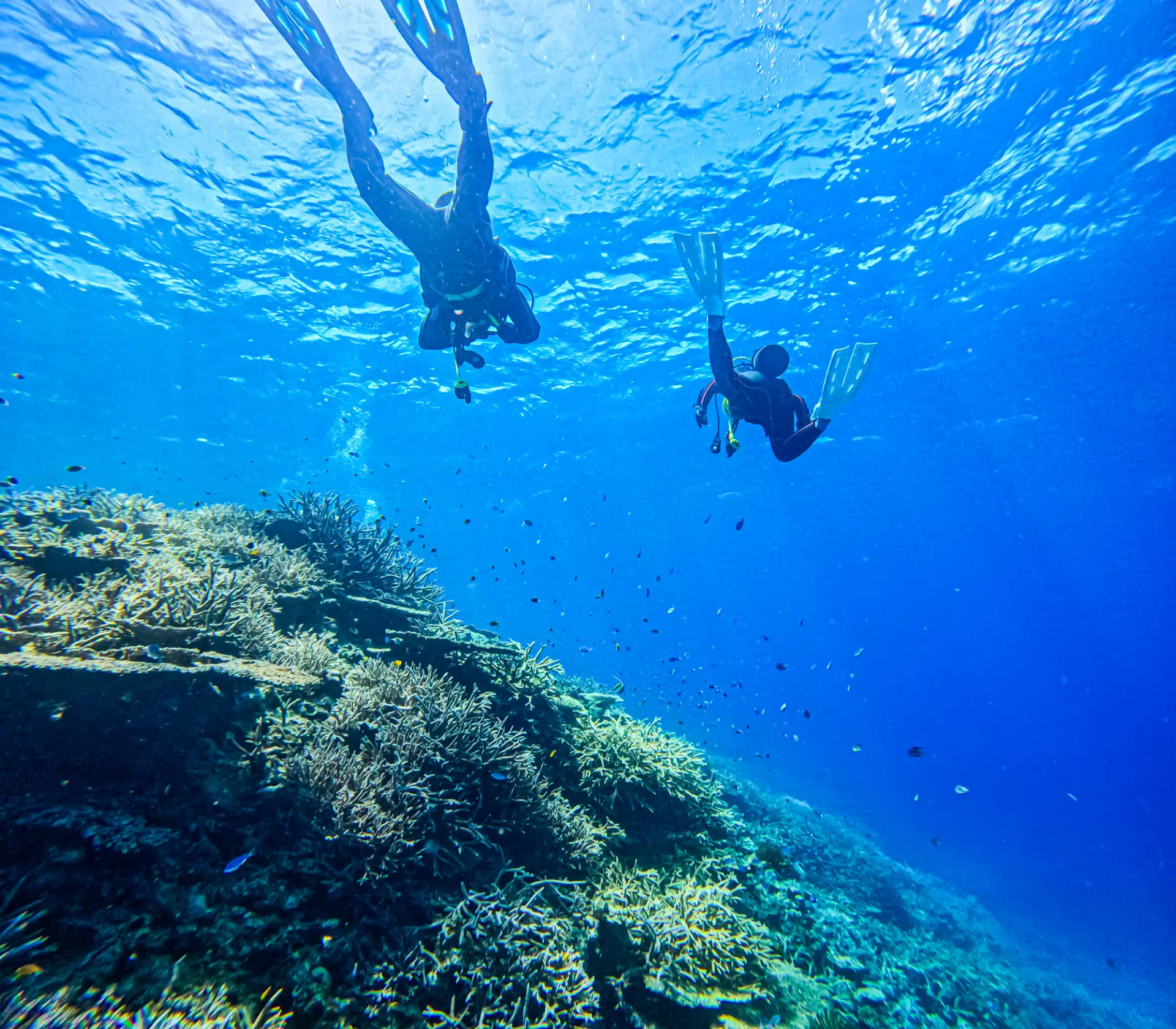
Japan has many diving areas that can be reached relatively quickly from major cities.
Izu is particularly accessible, and some areas can be visited on a day trip or a one-night weekend getaway.
Alternatively, travelers can use a longer vacation to explore the waters around remote islands such as Okinawa, Amami Oshima, and the Ogasawara Islands.
The ability to choose a destination that suits your schedule and budget is another advantage.
How to Choose the Right Diving Spot for You
Japan has a wide range of diving spots, but not every destination will be right for everyone.
The experience differs from place to place, and the best choice depends on the marine environment, the type of diving you want to do, and the experience required.
Here are three key factors to consider when choosing a spot.
1. Your Purpose for Diving
The diving spot you should choose will vary significantly depending on what you want to experience.
- Swim at a relaxed pace in crystal-clear water
- Seek encounters with large animals such as manta rays and sharks
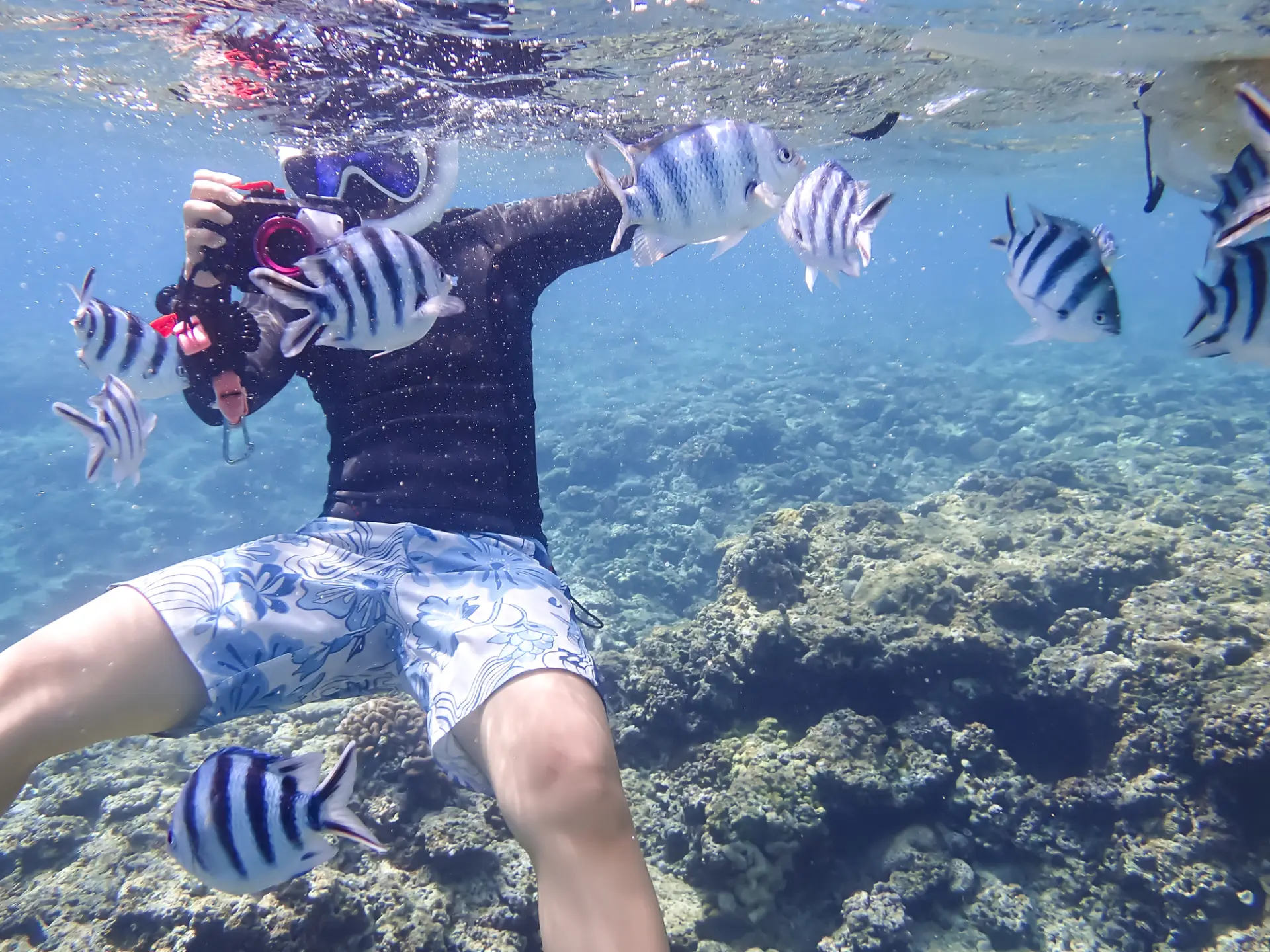
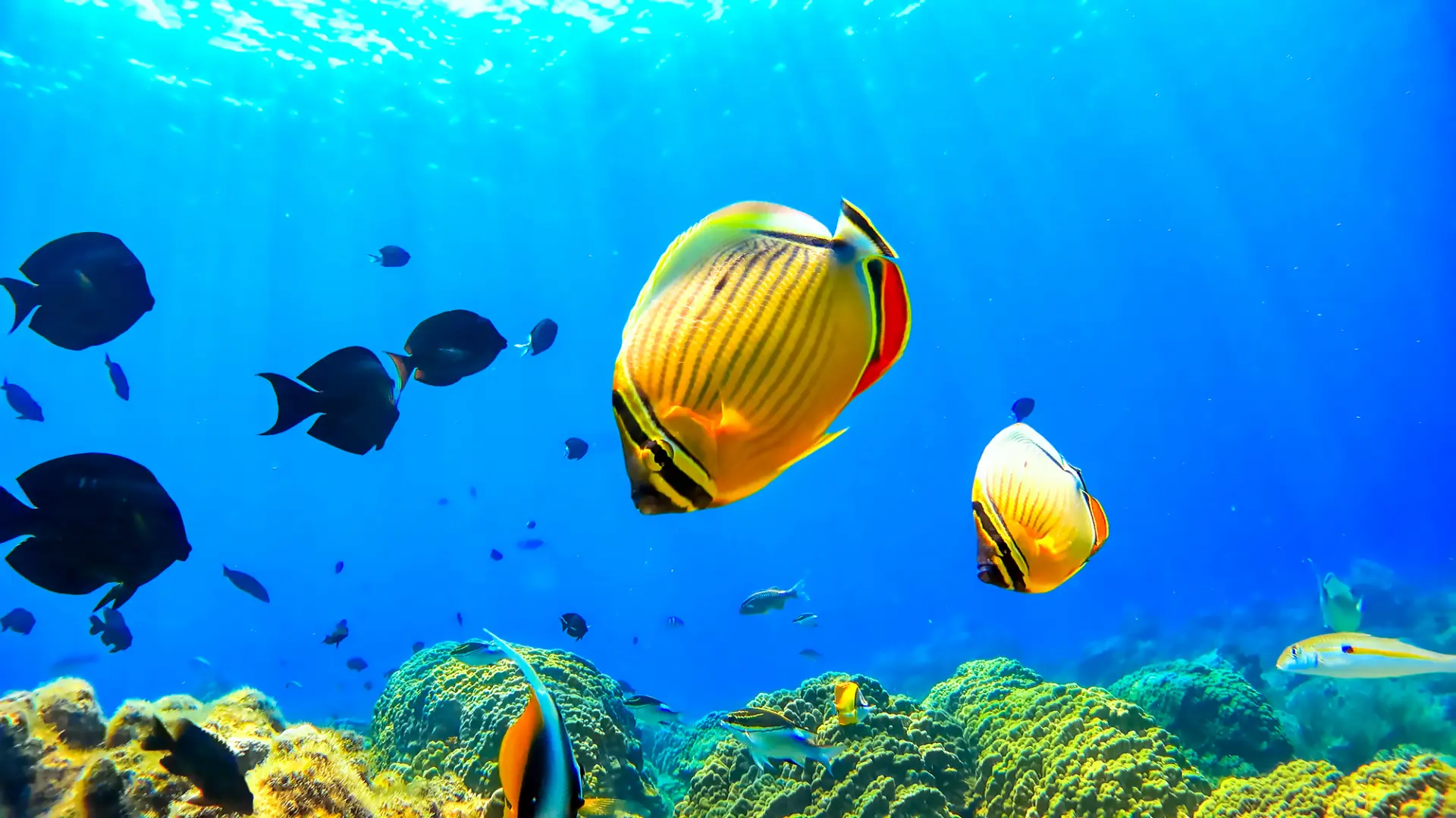
- Observe colorful fish and rare small creatures
- Explore dramatic terrain such as caves and arches
- Photograph memorable underwater moments
- Experience the quiet and weightless sensation of being underwater
If your priorities are unclear, the actual environment may not match the sea you imagined.
The best season and required skills also vary depending on your objective.
Rather than choosing a destination based only on popularity or name recognition, clarify your priorities before looking for an area or spot.
2. Your Diving Experience and Skill Level
Your diving experience and skill level are just as important as your objectives when choosing a spot.
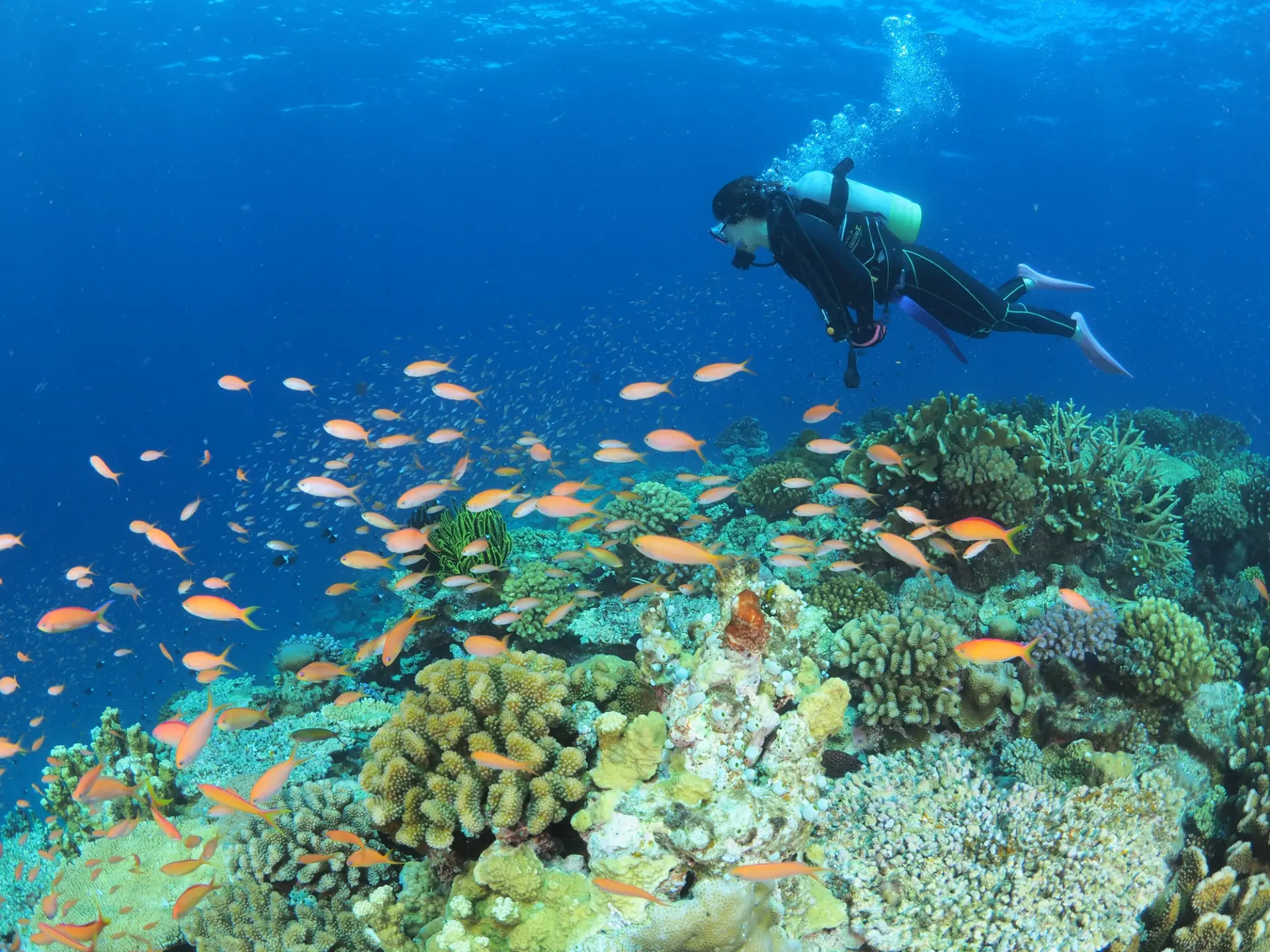
Some locations are suitable for beginners, with calm, weak currents, while others require the ability to handle strong currents, greater depths, or complex terrain.
Choosing an overly difficult location can compromise safety and leave you with little opportunity to appreciate the underwater experience.
Use the following table as a general guide to determine your current level.
If you are unsure, do not decide on your own; consult the dive shop when making your reservation.
| Experience Level | Typical Diving Experience | Suitable Spots |
|---|---|---|
| Introductory Diving | No previous experience | Calm, shallow, and stable environments |
| Beginner | Starting to gain experience after several dives | Relatively calm spots with weak currents |
| Intermediate | Experience diving in multiple environments | Spots with a range of depths and sea conditions |
| Advanced | Extensive experience in a variety of environments | Spots requiring specific experience or skills to handle currents, deep water, or complex terrain |
These are general guidelines only. Required experience and certifications vary by diving spot, dive shop, and tour.
3. Access, Travel Schedule, and Budget
No matter how appealing a spot may be, planning a trip will be difficult if it does not fit your available vacation time or budget.
Start by determining how many days you can devote to the trip, then calculate how much time you will actually have at the destination after accounting for transportation.
In addition to transportation and accommodations, it is helpful to research typical diving fees and whether lodging and transportation services are available.
Transportation options, departure frequency, and travel times vary considerably among remote islands, so consider your overall itinerary and choose a practical destination.

Choose by What You Want to See: Quick Guide to Diving Spots in Japan
For anyone interested in trying diving, deciding where to go can be difficult.
Even after learning the key factors to consider, narrowing the options down to one spot is not always easy.
The following table organizes 12 recommended spots by what you want to see or experience.
Once you find a destination that interests you, continue to the detailed explanation of the corresponding area.
| What You Want to See or Experience | Recommended Spot | Suggested Level | Approximate Access |
|---|---|---|---|
| Swim in exceptionally clear water | Kerama Islands, Okinawa | No experience required | Approximately 35 minutes to 2 hours by boat from Tomari Port in Naha |
| Dive in search of manta rays | Ishigaki Island, Okinawa | No experience required | Approximately 30 minutes by car from Ishigaki Airport to the city center |
| Explore dramatic caves and arches | Miyako Island, Okinawa | Beginner and above | Approximately 10 to 15 minutes by car from Miyako Airport to the city center |
| Find a spot with convenient access from Tokyo | Osezaki, Shizuoka | No experience required | Approximately 1 hour by bus or other transportation from Numazu Station |
| Experience the marine life and terrain characteristic of Izu | Izu Oceanic Park | No experience required | Approximately 10 minutes by car from Izu-Kogen Station |
| See tropical-style coral reefs without leaving Honshu | Kushimoto, Wakayama | No experience required | Approximately 5 to 10 minutes by car from Kushimoto Station |
| Discover as many different species as possible | Kashiwajima, Kochi | Beginner and above | Approximately 50 minutes by car from Sukumo Station |
| Combine diving with an island trip rich in nature | Amami Oshima, Kagoshima | No experience required | Approximately 50 minutes by car from Amami Airport to central Naze |
| Experience remote waters and encounter wild dolphins | Ogasawara Islands, Tokyo | Intermediate and above | Approximately 24 hours by ferry from Takeshiba, Tokyo |
| See large migratory fish and the mysterious Underwater Ruins | Yonaguni Island, Okinawa | Intermediate and above | Approximately 10 minutes by car from Yonaguni Airport to the town center |
| Swim beneath drift ice | Shiretoko, Hokkaido | Intermediate and above | Approximately 2 hours by car from Memanbetsu Airport to Utoro |
| See the blue waters known as “Shakotan Blue” | Shakotan, Hokkaido | Beginner and above | Approximately 1 hour and 30 minutes by car from Otaru Station |
1. Marine life and sea conditions vary by season and location.
2. Suggested levels: “No experience required” refers to introductory diving, “Beginner” refers to certified divers, and “Intermediate” includes spots requiring additional experience and skills.
3. Access times are from the nearest major transportation hub to the area.
12 Recommended Diving Spots Across 5 Areas of Japan
Based on the points covered so far, here are 12 representative diving spots across 5 areas of Japan.
Compare the distinctive features and attractions of each spot to find the right destination for you.
1. Okinawa Area: Kerama Islands, Ishigaki Island, and Miyako Island
Okinawa is an essential destination when discussing diving in Japan.
Its clear waters are filled with coral reefs, colorful fish, large marine animals, and distinctive underwater terrain, offering a different underwater world in each region.
With a broad selection of spots around Okinawa’s main island and its remote islands, the area accommodates divers of many different levels.
| Kerama Islands | Known for the clarity of the water called “Kerama Blue,” the islands offer coral reefs, sea turtles, and other marine attractions. Beginner-friendly tours are available around Zamami Island, which is conveniently located approximately 50 minutes from Naha by high-speed ferry. |
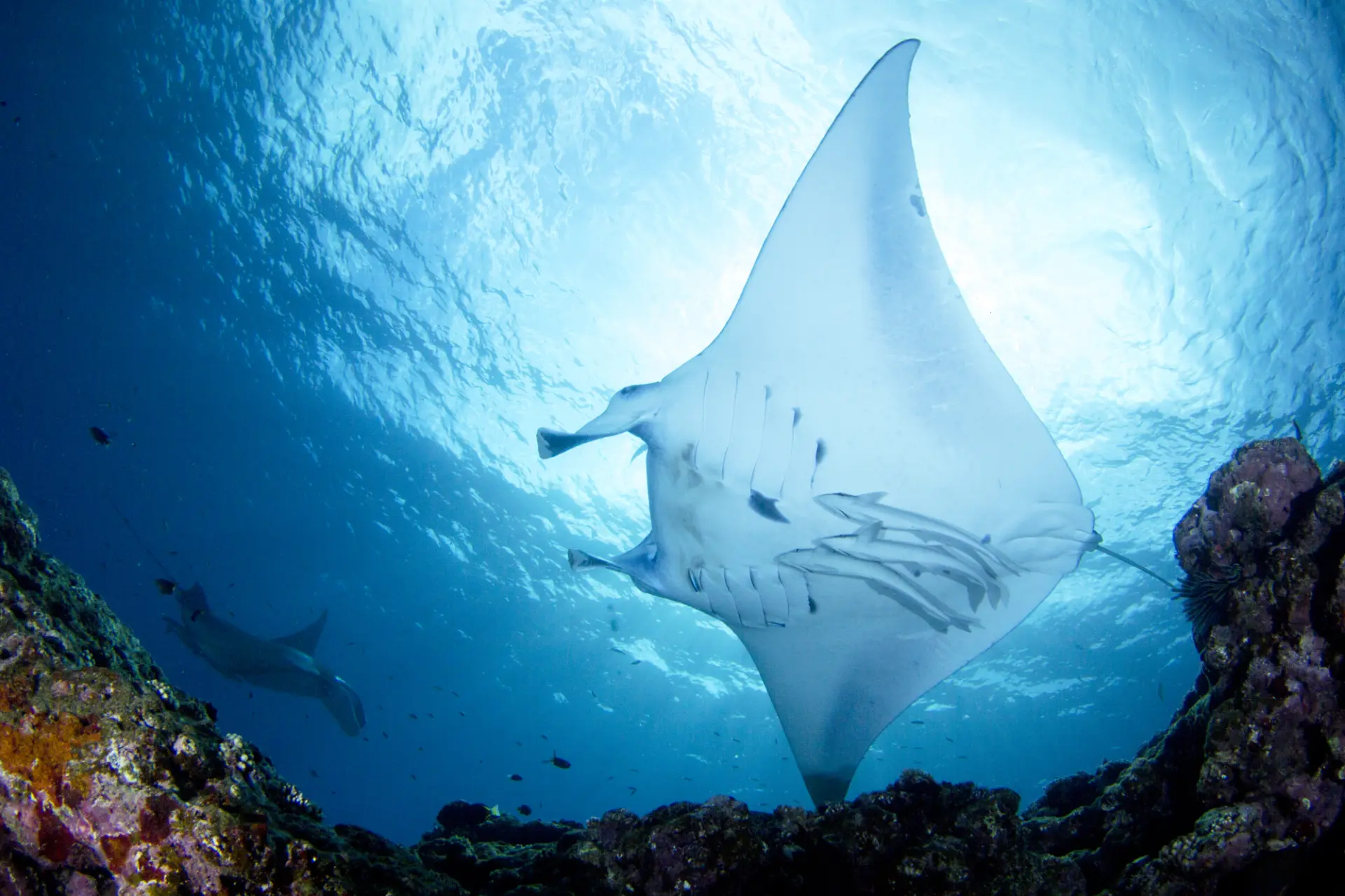
| Ishigaki Island | The island is known for spots where divers can seek encounters with manta rays, including Manta Scramble off Kabira Ishizaki. It is recommended for those hoping to see large marine animals and colorful fish. |
| Miyako Island | The island is known for dramatic underwater terrain, including caves, arches, and atmospheric scenery illuminated by shafts of sunlight. Difficulty varies by spot, allowing visitors to experience different styles of diving. |
2. Izu and Kanto Area: Osezaki and Izu Oceanic Park
The Izu and Kanto area is convenient even for travelers who have difficulty taking an extended vacation.
Despite being relatively close to the Tokyo metropolitan area, it offers fascinating underwater terrain and marine life.
Osezaki and Izu Oceanic Park in Shizuoka Prefecture are particularly well-known diving spots, each with its own distinct character.
Other recommended destinations include Tateyama in Chiba Prefecture and Jogashima in Kanagawa Prefecture.
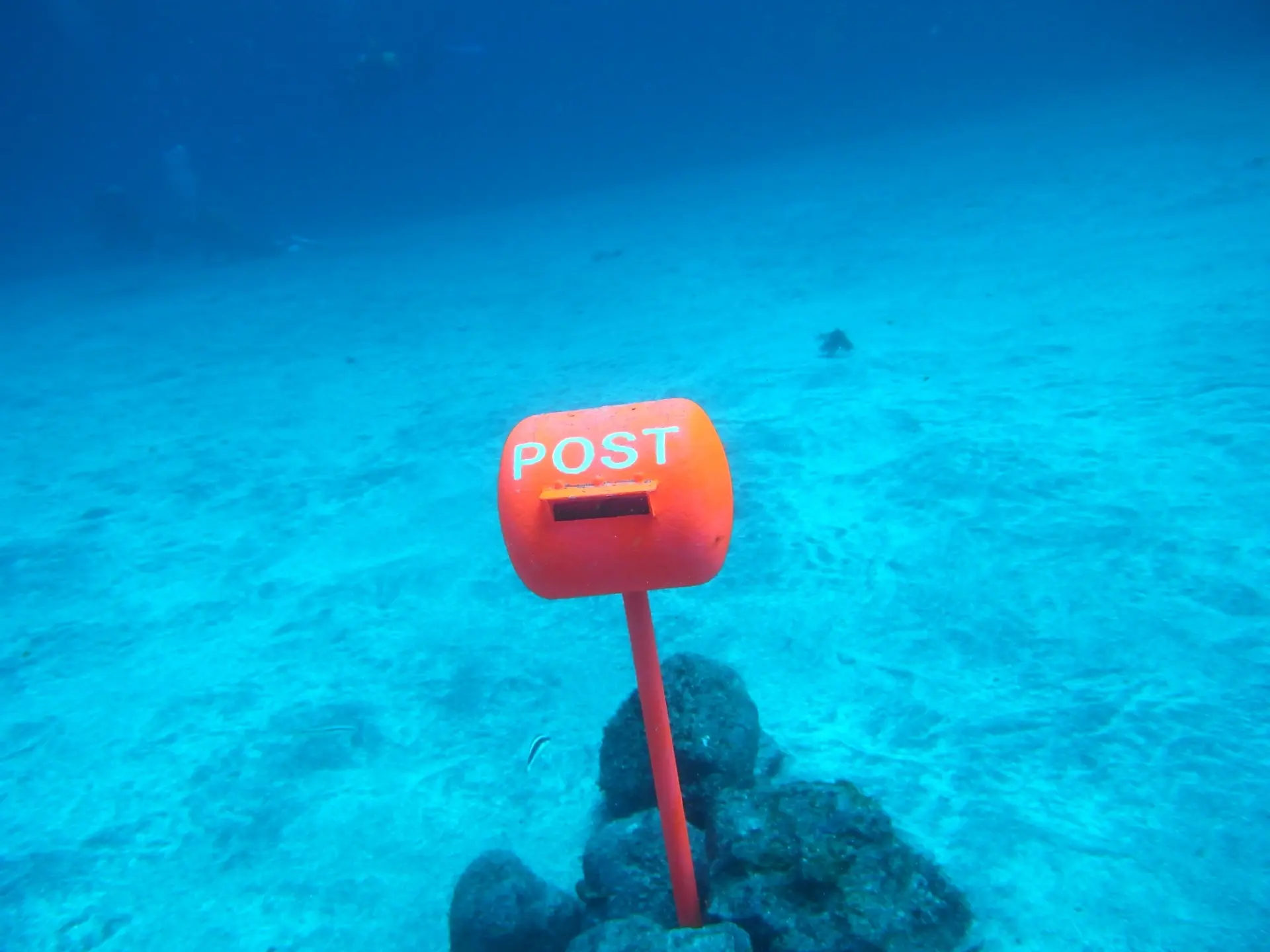
| Osezaki | A calm inner bay and the open sea lie next to each other, accommodating a wide range of diving styles. Visitors can also observe diverse marine life that changes with the seasons. |
| Izu Oceanic Park | Regarded as the birthplace of recreational diving in Japan, the park features underwater terrain formed by an eruption of Mount Omuro approximately 4,000 years ago. A variety of marine life can also be seen, including schools of yellowtail and greater amberjack. |
3. Kansai and Shikoku Area: Kushimoto and Kashiwajima
The Kansai and Shikoku area is suited to those who want to experience tropical-style seas while remaining on Honshu or encounter as many different species as possible.
Kushimoto in Wakayama Prefecture lies where temperate and subtropical environments meet and is also famous as the location of the world’s northernmost large coral community.
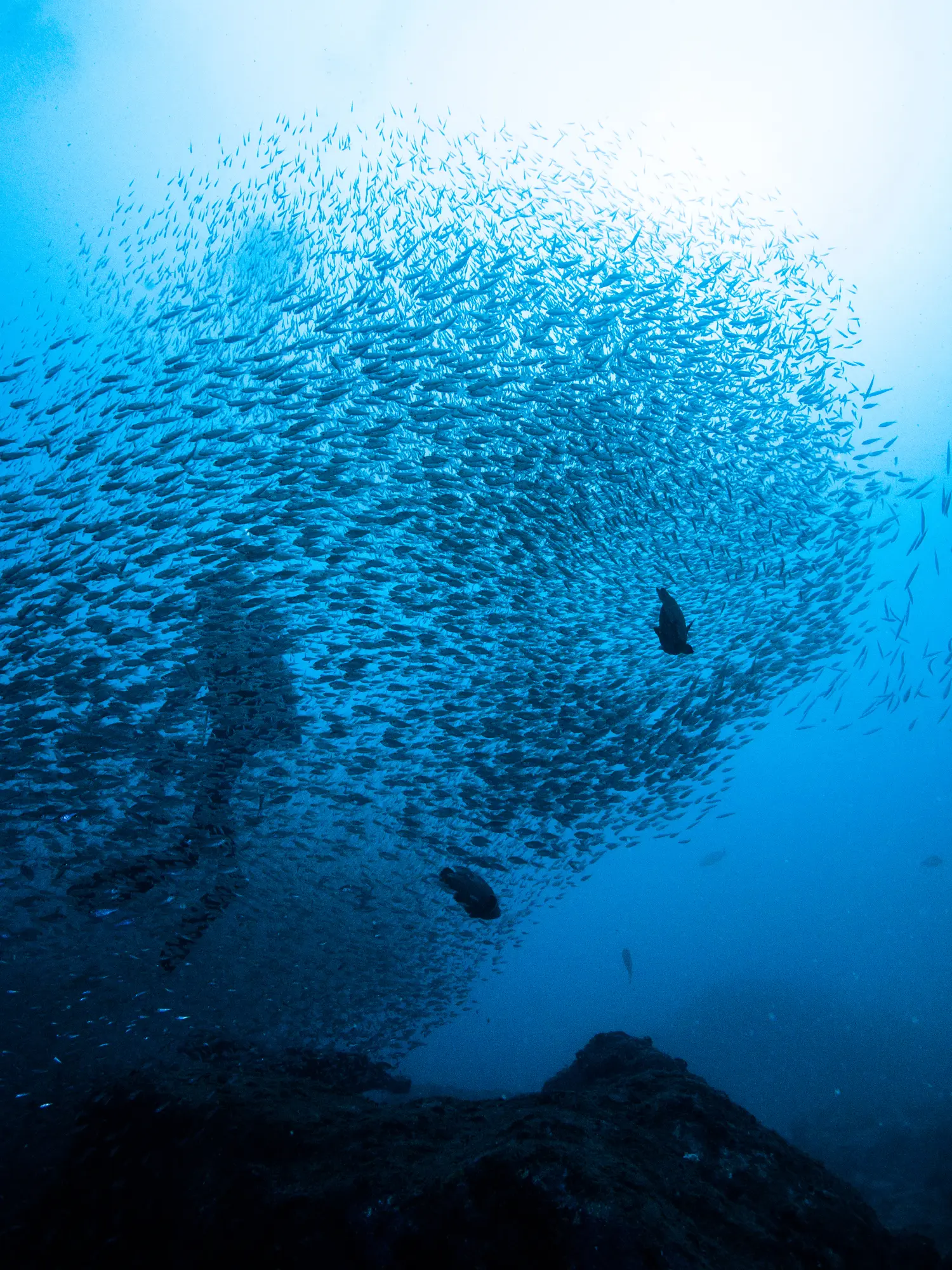
Kashiwajima in Kochi Prefecture, meanwhile, is located where the Kuroshio Current meets the Bungo Channel and supports a wide range of fish, from temperate to tropical species.
| Kushimoto | Colorful coral and tropical fish create a southern-style underwater world without leaving Honshu. |
| Kashiwajima | Located where the Bungo Channel meets the Kuroshio Current, the waters support a wide variety of fish and coral. Its abundant marine life is a major attraction, and it is said to be home to approximately one-third of all fish species found in Japan. |
4. Remote Islands: Ogasawara Islands, Yonaguni Island, and Amami Oshima
If you want to immerse yourself in an environment different from mainland Japan and make diving the main purpose of your trip, consider the remote islands.
Although some destinations take considerable time to reach, they offer distinctive experiences in seas surrounded by rich natural environments.
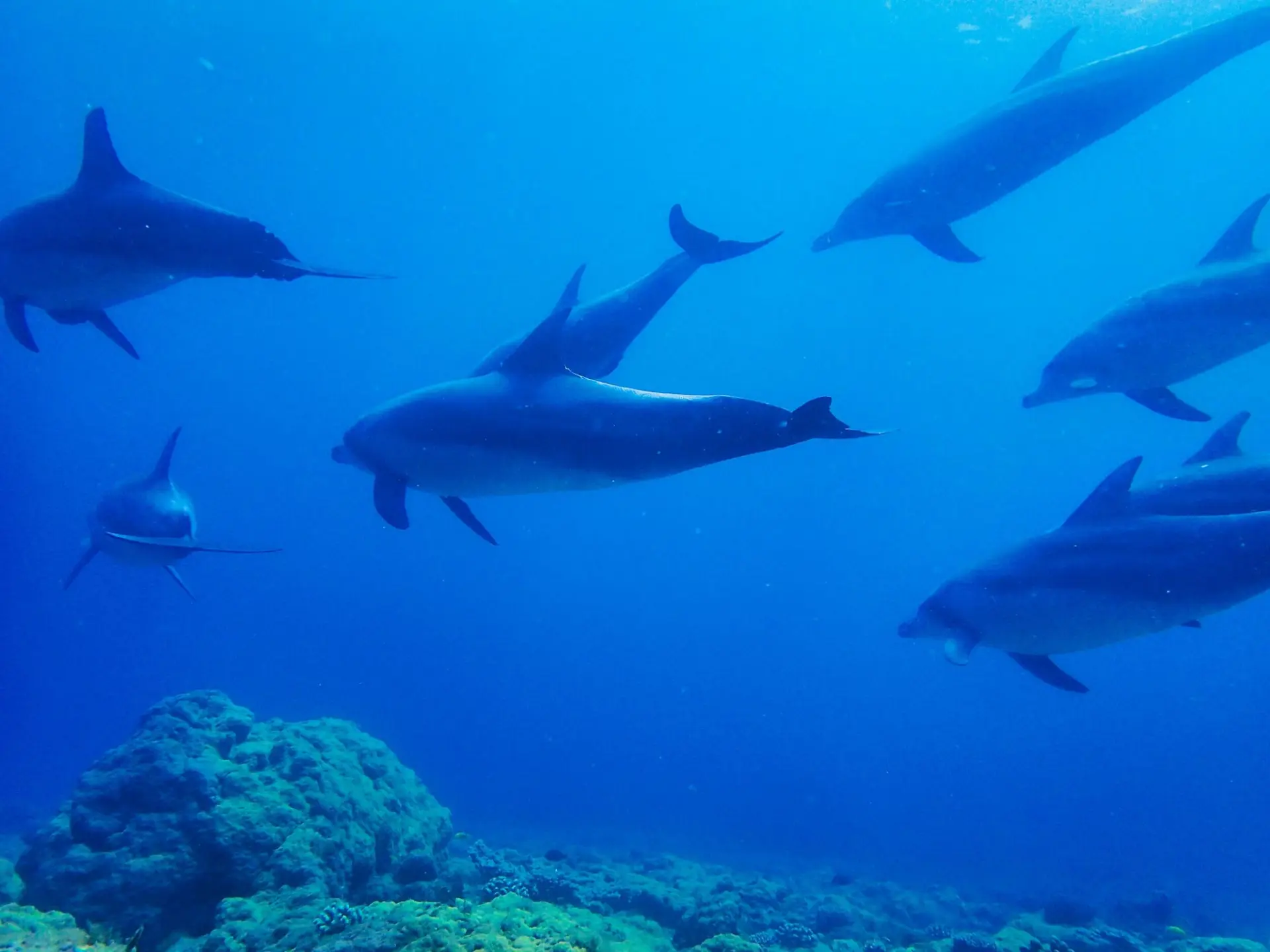
| Ogasawara Islands | Known as the “Galapagos of the East,” the islands have a distinctive ecosystem. Visitors can observe a wide range of marine life, from large animals such as dogtooth tuna and spotted eagle rays to rare fish. Encounters with wild dolphins are also common. |
| Yonaguni Island | Divers can seek encounters with hammerhead sharks and explore the enormous formation known as the “Underwater Ruins.” Some spots have strong currents and require experience and skill. |
| Amami Oshima | The island’s waters are home to coral reefs and tropical fish and are suitable for diving and snorkeling. Its attractions also include nature beyond the sea, such as its World Natural Heritage forests and the mangroves of Sumiyo. |
5. Hokkaido Area: Shiretoko and Shakotan
Hokkaido offers the chance to experience cool northern waters unlike those of Okinawa or Izu.
Northern marine life and clear blue seas provide a different kind of experience from tropical destinations.
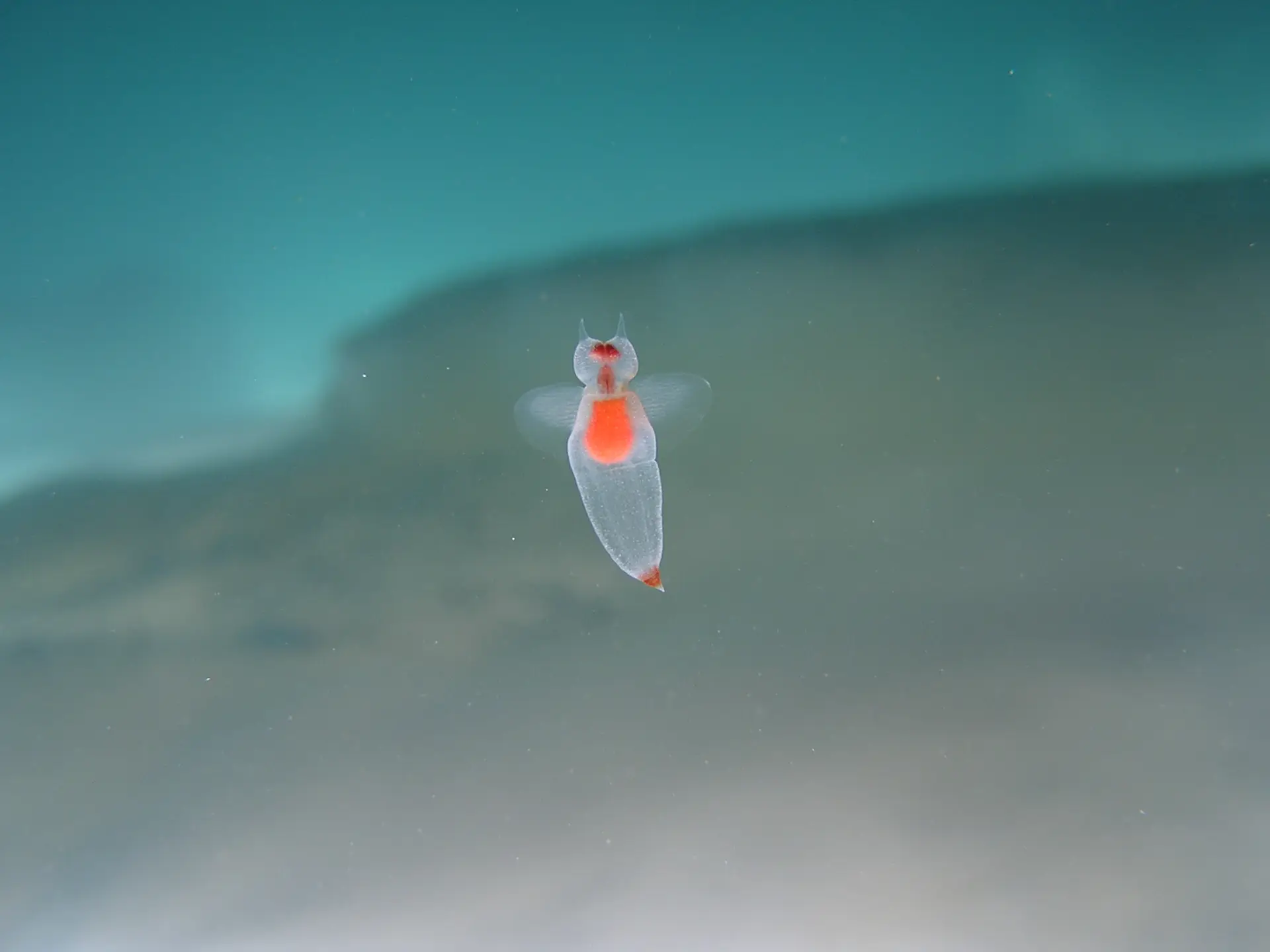
| Shiretoko | Drift ice reaches the coast in winter, allowing divers to experience “drift ice diving” beneath the ice. The contrast between the white world beneath the drift ice and the light shining through it creates striking scenery. Divers may also encounter sea angels and other creatures associated with the drift ice season. |
| Shakotan | The area is known for its clear waters called “Shakotan Blue.” In summer, visitors can admire the clear blue sea and rocky scenery while observing northern marine ecosystems featuring sea urchins, kelp, and other species. |
When Is the Best Season for Diving in Japan?
Diving is possible throughout the year in Japan, but sea conditions, water temperatures, and seasonal characteristics vary by area.
At some spots, the main attractions and marine life also change depending on the time of year.
Consider the timing of your visit when planning your itinerary.
| Area | Jan. | Feb. | Mar. | Apr. | May | June | July | Aug. | Sept. | Oct. | Nov. | Dec. |
|---|---|---|---|---|---|---|---|---|---|---|---|---|
| Kerama Islands | Good | Good | Good | Good | Best | Best | Best | Best | Best | Best | Good | Good |
| Ishigaki Island | Good | Good | Good | Best | Best | Best | Best | Best | Best | Best | Best | Good |
| Miyako Island | Good | Good | Good | Good | Best | Best | Best | Best | Best | Best | Good | Good |
| Osezaki and Izu Oceanic Park | Conditional | Conditional | Good | Good | Good | Best | Best | Best | Best | Good | Good | Conditional |
| Kushimoto | Conditional | Conditional | Good | Good | Good | Best | Best | Best | Best | Good | Good | Conditional |
| Kashiwajima | Conditional | Conditional | Good | Good | Good | Good | Best | Best | Best | Best | Good | Conditional |
| Ogasawara Islands | Good | Good | Good | Good | Good | Good | Good | Good | Good | Good | Good | Good |
| Yonaguni Island | Best | Best | Best | Best | Good | Good | Good | Good | Good | Good | Good | Best |
| Amami Oshima | Conditional | Conditional | Good | Good | Best | Best | Best | Best | Best | Best | Good | Conditional |
| Shiretoko (Drift Ice Diving) | Conditional | Best | Best | Good | Off-season | Off-season | Off-season | Off-season | Off-season | Off-season | Off-season | Off-season |
| Shakotan | Conditional | Conditional | Conditional | Good | Good | Good | Best | Best | Best | Good | Good | Conditional |
Key: Best = recommended season; Good = generally favorable for diving; Conditional = best chosen according to your objectives and sea conditions; Off-season = outside the drift ice diving season
These periods are general guidelines. Water temperatures, visibility, and marine life vary by year and location, so check the latest information before participating.
Essential Preparation and Basic Knowledge for First-Time Divers
Some people may be interested in diving but unsure where to begin.
Learning the basics in advance will help you understand what to expect on the day and reduce anxiety.
Here are the key points that first-time divers should know.
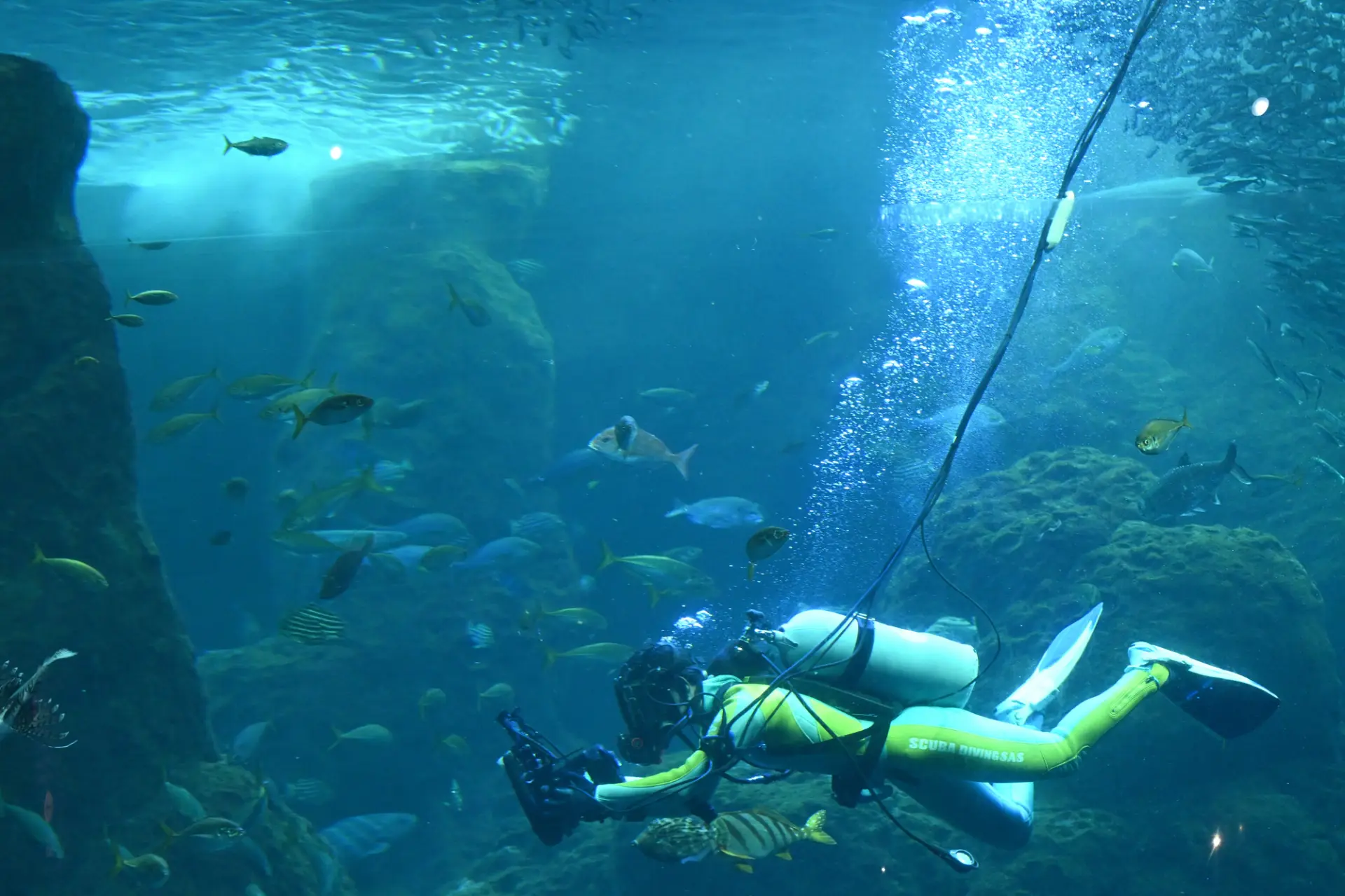
The Difference Between Introductory Diving and a Diving Certification Card
There are two main ways to start diving: joining an introductory diving program or earning a diving certification card, commonly called a C-card in Japan.
Introductory diving is an entry-level program open to people without certification, subject to age, health, and other requirements.
Because participants experience the underwater world with support from an instructor, it is suitable for beginners and those who simply want to try diving. Programs generally last half a day to a full day.
A diving certification card, meanwhile, certifies that you have acquired the knowledge and skills required for diving.
After completing the designated training, you may dive with a buddy without direct supervision from an instructor, provided you remain within the limits of your certification level and experience.
Training takes several days, but certification is worth considering if you want to pursue diving seriously and regularly.
What to Expect Before and During a Dive
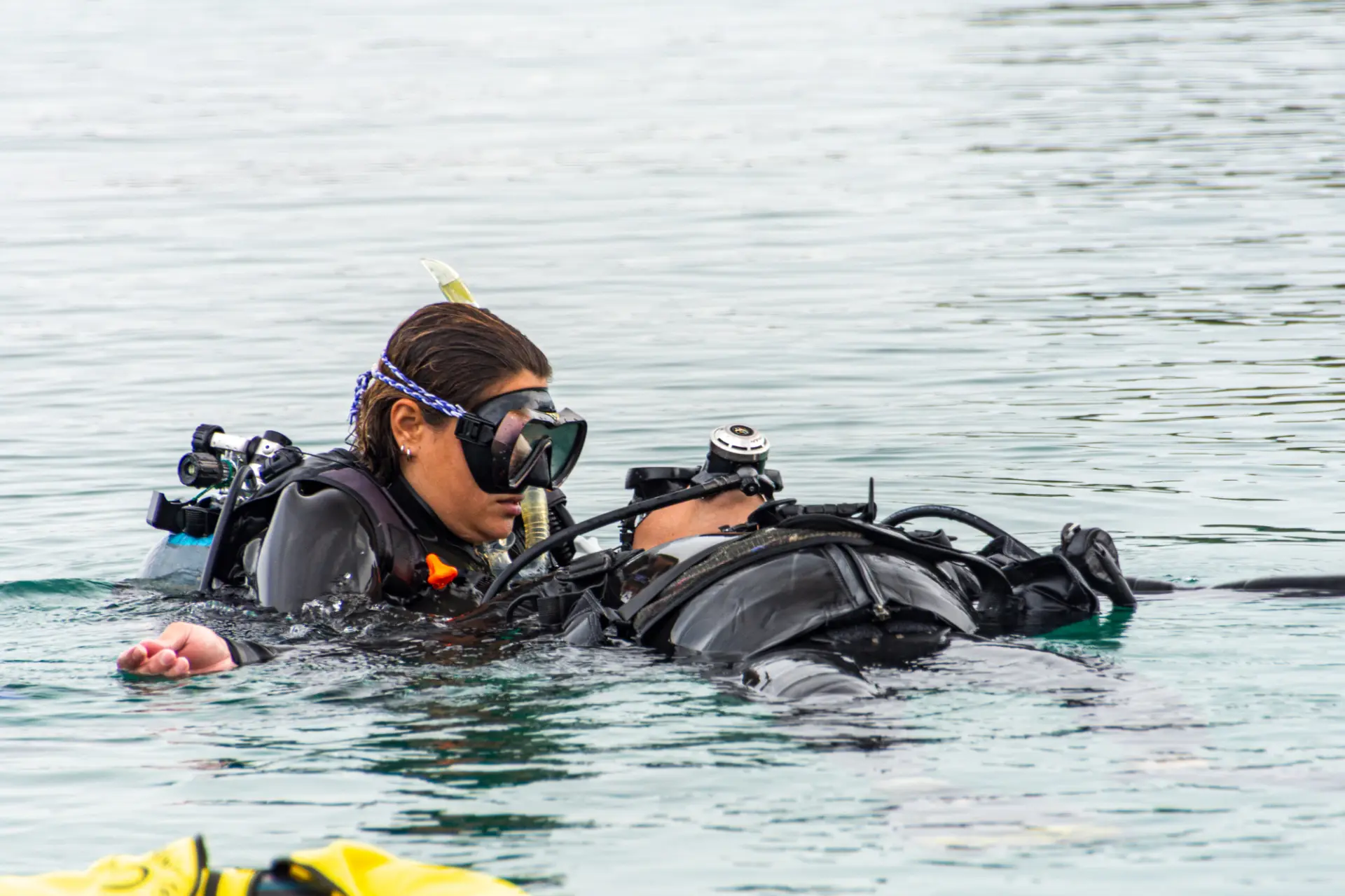
Even if it is your first time diving, knowing the basic process in advance can help you feel more comfortable.
In general, you select and book a dive shop or plan, then check in, receive instructions, prepare your equipment, and participate on the day.
During introductory diving, an instructor supports you throughout the experience, so following the explained procedures will help everything go smoothly.
Beginners should check participation requirements, fees, and whether equipment rental is included, and allow plenty of time in their schedule.
| 1. Choose and book a dive shop or tour | Some shops accept online reservations. Early reservations are recommended for popular seasons and areas. |
| 2. Complete a health questionnaire | This form is used to confirm your medical history and current health. A doctor’s medical clearance may be required in some cases. |
| 3. Receive instructions and prepare your equipment | After meeting the staff, you will receive instructions on equipment use, breathing underwater, hand signals, safety precautions, and other important information. |
| 4. Go diving | Follow the staff’s instructions and dive within your limits. An instructor provides support during introductory diving. |
| 5. Put away equipment, change, and leave | Put away or return the equipment, shower, change clothes, and conclude the program. |
The exact order, participation requirements, and confirmation procedures vary by shop and plan.
What to Bring for Diving
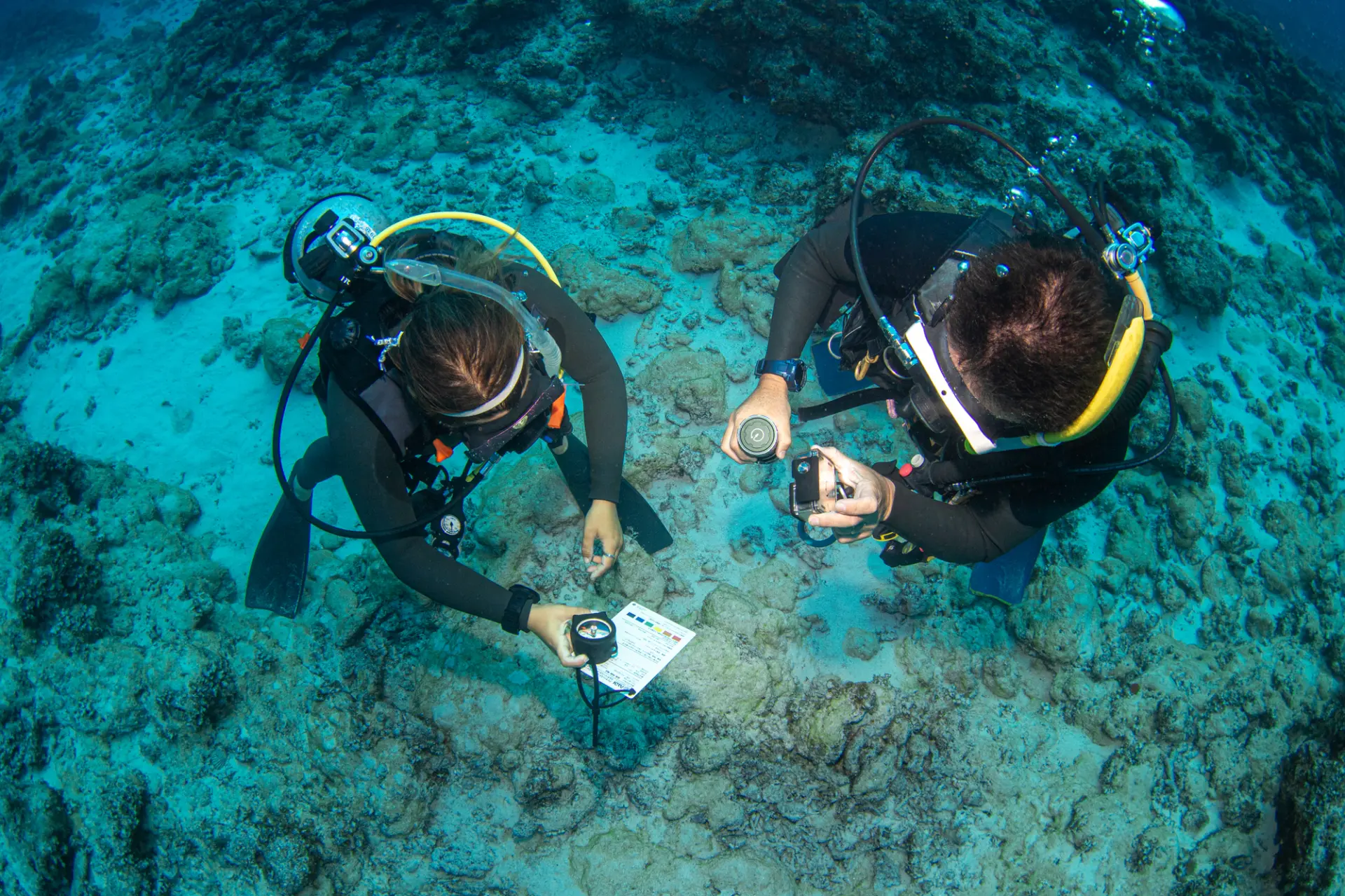
Requirements vary by shop and plan, but you will generally need to bring your own swimsuit, towel, and change of clothes.
Specialized equipment such as masks, fins, and wetsuits is often available to rent, but check exactly what is included when making your reservation to avoid problems.
Depending on your needs and the season, bringing motion sickness medication, sunscreen, hair ties, and a light outer layer can help reduce concerns at the destination.
Contact lens wearers should consider using disposable lenses because lenses may be lost underwater.

What to Check When Choosing a Dive Shop
Choosing the right tour and dive shop is also important for a satisfying experience.
Before booking, check the following key points.
- Beginner plans: Whether introductory diving or beginner-friendly tours are available
- Support system: What support instructors provide and the number of participants in each group
- What the price includes: Whether equipment rental, boat fees, facility fees, and other charges are included
- Cancellation policy: How cancellations due to weather or sea conditions are handled and what cancellation fees apply
- Access and transportation: The meeting point and whether transportation is available from accommodations, train stations, or other locations
- Pre-booking assistance and reviews: Whether the shop responds carefully to questions and what previous customers have said
When comparing prices, consider the total cost, including required options, rather than only the advertised price.
Beginners should also check how many participants are assigned to each instructor.
Small-group plans may make it easier for instructors to give each participant individual attention.

Important Things to Know When Diving in Japan
Diving can be enjoyed safely, but because it takes place in a natural environment, there are important precautions to keep in mind.
Diving while traveling may involve unfamiliar surroundings, so make reasonable decisions based on the day’s conditions and your physical health.
Finally, here are some basic points that both beginners and experienced divers should know.
Dives May Be Canceled Due to Weather or Sea Conditions
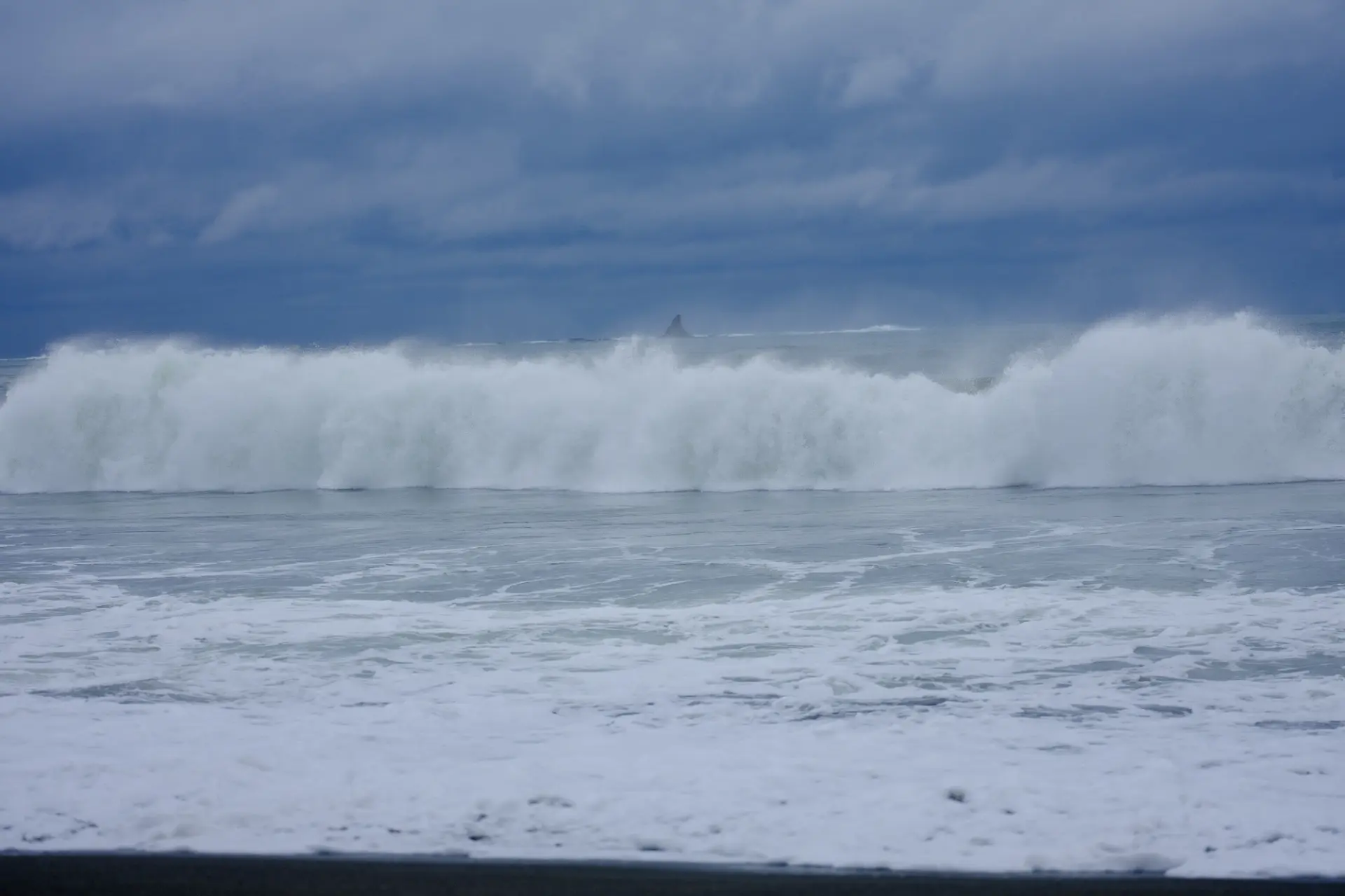
Because diving takes place in the ocean, there is no guarantee that you will be able to dive on your reserved date.
Weather conditions such as typhoons, strong winds, and high waves, as well as strong currents or poor visibility, may result in a same-day cancellation or a change of diving location.
The dive will be canceled if the local shop or operator determines that it cannot ensure safety under the day’s conditions.
Check weather forecasts and sea conditions regularly, especially during the rainy and typhoon seasons, when the weather can change quickly.
Do not pressure the operator to proceed simply because you have traveled a long way. It is also reassuring to prepare an alternative plan in case diving is not possible.
Cancellation fees and refund policies vary by shop, so check them when applying.
Take Care of Your Health and Do Not Push Yourself
Because diving involves breathing underwater, managing your health is particularly important.
Try to be well rested and in good condition on the day of your dive. If you feel unwell, do not push yourself and consider withdrawing from the activity.
For example, diving with a cold or congested nose and ears can make it difficult to equalize pressure and may cause ear barotrauma.
You should also make a careful decision if you are sleep-deprived or still tired from traveling, taking the possible physical effects into account.
Avoid drinking alcohol before diving, as it can contribute to dehydration and affect sleep quality and judgment.
If you have any concerns, including an existing medical condition, consult the dive shop in advance and seek advice from a doctor if necessary.

Be Careful When Flying After Diving
One important point that is often overlooked is the need to avoid flying immediately after diving.
The lower air pressure inside an aircraft can cause nitrogen remaining in the body to form bubbles, increasing the risk of decompression sickness, sometimes called “the bends.”
It is generally recommended to wait at least 12 hours before flying after a single dive and at least 18 hours after multiple dives in one day or diving over multiple days.
An even longer surface interval is required after dives involving decompression stops.
When planning your trip, allow sufficient time between your final dive and your flight. You may also want to leave a more generous interval of approximately 24 hours.

Frequently Asked Questions About Diving in Japan
Q
Can I go diving without certification?
Yes, you can participate in an introductory diving program. Because you will experience the underwater environment under an instructor’s guidance, it is suitable for first-time divers.
Q
How much does one diving session typically cost?
Introductory diving typically costs between ¥10,000 and ¥19,999 for one dive and around ¥20,000 for two dives. Equipment, boat fees, and other items included in the price vary by shop and plan, so check before booking.
Q
Can I dive if I cannot swim?
A certain level of comfort and ability in the water is required, such as being able to keep yourself afloat at the surface. If you have a strong fear of water, consult the dive shop in advance.
Q
Can I participate alone?
Yes. On many diving tours, solo participants join a group with other guests.
Q
Which diving spots are recommended for beginners?
The Kerama Islands in Okinawa and the Izu Peninsula are representative options, with introductory diving offered at spots known for relatively calm sea conditions. Joining a beginner-friendly tour is recommended.
Summary
Japan has appealing diving spots across the country for different objectives and skill levels, from the exceptionally clear waters of Okinawa to drift ice diving in Hokkaido.
When choosing a destination, consider what you want to see, your experience, and your travel schedule, and make a realistic plan.
Introductory diving does not require certification, so start by finding a sea that suits you and experience the distinctive appeal of diving in Japan.